How Pole Distribution Transformers Work
If you’ve ever looked up at a pole-mounted distribution transformer and wondered what it actually does, here’s the simple version: it quietly takes medium voltage from the utility lines and safely converts it to the low voltage your home or business can use.
Basic Voltage Step‑Down: Medium to Low Voltage
A pole distribution transformer is a step‑down transformer. In a typical US overhead distribution system, it:
Receives medium voltage on the primary side (commonly 7.2 kV, 12.47 kV, 13.2 kV, or 24.9 kV line‑to‑ground, depending on the utility).
Delivers low voltage on the secondary side (most often 120/240 V single phase for homes, or 120/208 V, 277/480 V for small commercial loads).
The basic job:
High voltage in → low voltage out → safer, usable power for end users.
Electromagnetic Induction in the Core and Windings
Inside every utility pole transformer, the physics is straightforward:
The primary winding connects to the medium‑voltage overhead line.
When AC power flows through this winding, it creates a changing magnetic field in a laminated steel core.
That magnetic field induces a voltage in the secondary winding (electromagnetic induction).
The ratio of turns between primary and secondary windings sets the voltage step‑down.
No moving parts. Just magnetic coupling between windings doing the work 24/7.
Main Components of a Pole-Mounted Distribution Transformer
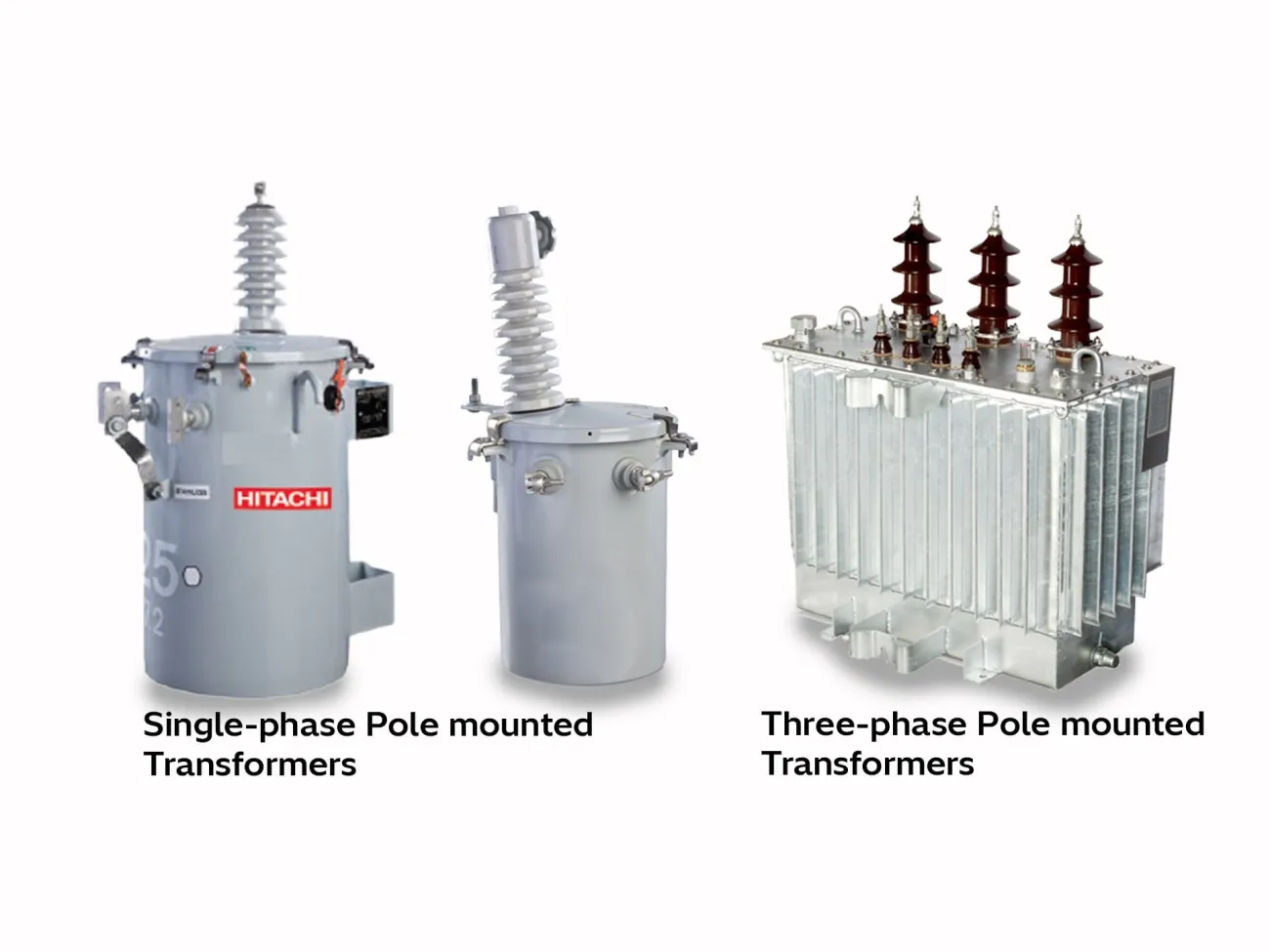
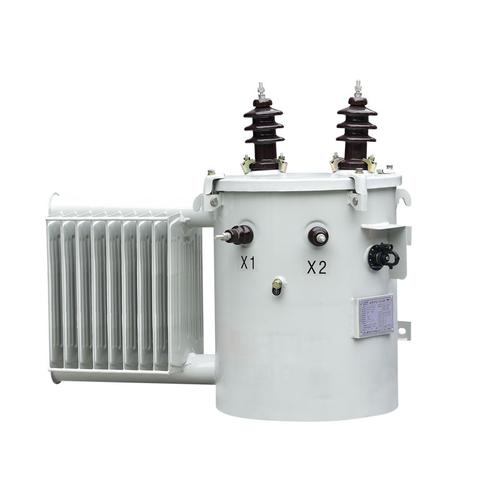
A typical single-phase pole-mounted distribution transformer or three phase pole mounted distribution transformer includes:
Core – laminated silicon steel core that guides the magnetic flux.
Primary winding – connected to the medium‑voltage overhead distribution system.
Secondary winding – provides the low‑voltage output to customer service drops.
Tank – sealed steel tank housing the core and windings.
Insulating/cooling medium
Oil‑immersed pole transformer: filled with mineral oil or FR3‑type fluid for insulation and cooling.
Dry-type pole-mounted transformer: uses solid insulation and air for cooling (used where oil is restricted).
Bushings – insulated terminals where primary and secondary conductors connect.
Cooling surfaces – smooth or finned tank walls that radiate heat to the air.
Every component is there to keep the transformer electrically safe, thermally stable, and mechanically robust on the pole.
Connection to Overhead Power Lines
A pole-mounted distribution transformer ties directly into the overhead power distribution system:
The primary bushing connects to the medium‑voltage phase conductor through a fuse cutout or surge arrester.
The tank and neutral bushing are bonded to a ground wire and ground rod at the base of the pole.
The secondary bushings connect to insulated service drop cables that run to the building’s service entrance.
For single-phase pole transformers, you’ll typically see one high‑voltage bushing and one neutral.
For three-phase pole-mounted transformers, you may see three separate cans or one three‑phase unit feeding a larger load.
Power Flow: Substation to Pole Transformer to End User
Here’s the usual power path in a US utility distribution network:
1. Distribution substation transformer steps transmission voltage down to medium voltage (e.g., 69 kV → 12.47 kV).
2. Medium‑voltage feeders run along streets and rural roads on distribution poles.
3. A line distribution transformer (your pole distribution transformer) taps the feeder and drops voltage to 120/240 V or another low‑voltage level.
4. The secondary side feeds:
Residential pole transformer loads (single homes or small clusters of houses).
Commercial pole transformer loads (small shops, farms, light commercial).
5. From there, energy flows through the customer’s meter, panel, and branch circuits to serve actual appliances and equipment.
That’s how a compact can on a pole reliably connects a medium voltage distribution transformer network to safe, usable low voltage power at the point of use.
Types of Pole Distribution Transformers
Single phase pole distribution transformer
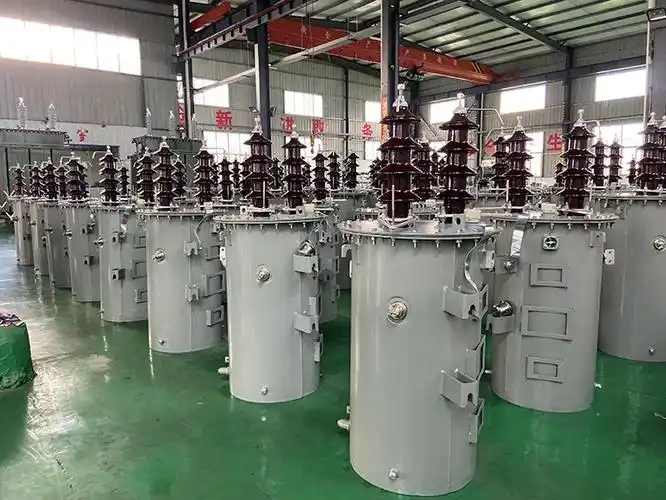
A single phase pole mounted distribution transformer is what you usually see feeding U.S. homes in residential neighborhoods and rural lines. It’s simple, cost‑effective, and ideal for lighting and small residential loads. We size these units to match typical household demand plus some margin for EV chargers, heat pumps, and future load growth.
Three phase pole mounted distribution transformer
A three phase pole mounted transformer is the go‑to for small commercial buildings, farms with big motors, and light industrial loads. We’ll either use three single phase units banked together or one three phase can, depending on load size, future expansion, and utility standards.
Conventional pole distribution transformer
A conventional pole transformer needs external protection on the pole (cutouts, fuses, lightning arresters). Utilities like this style because every function is separate and easy to swap out. It’s flexible for different overhead distribution system designs.
CSP pole transformer (Completely Self Protected)
A CSP pole transformer has built‑in protection: primary fuse, secondary breaker, and surge protection inside the tank. That cuts down on extra hardware on the pole and speeds up installation. CSP units cost more up front but often save labor and reduce outage time for smaller residential and commercial services.
Oil immersed pole distribution transformer
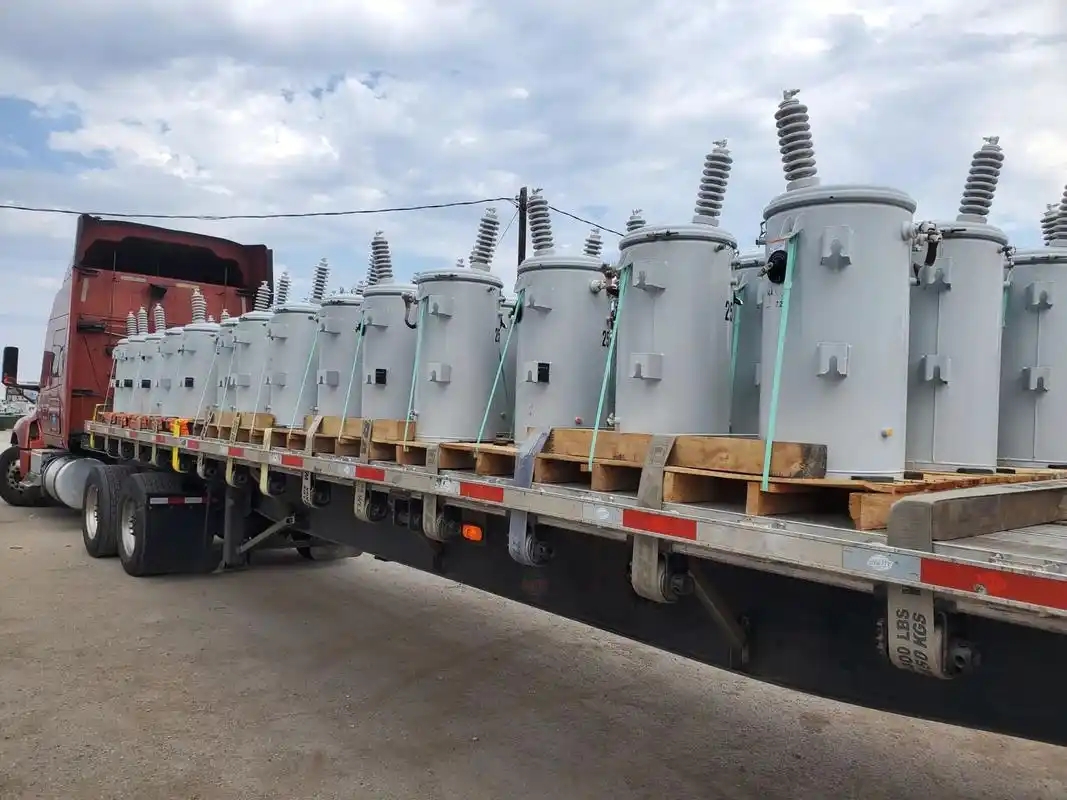
An oil immersed pole distribution transformer is still the workhorse in the U.S. grid. Mineral oil (or FR3/ester for higher fire safety) cools and insulates the windings, giving you high kVA in a compact size with long service life. These are the “standard cans” most utilities stock on their trucks.
Dry type pole mounted distribution transformer
Dry type pole mounted distribution transformers are niche outdoors, but we use them where fire risk is a big concern or environmental rules make oil less attractive—near waterways, dense urban areas, or sensitive sites. They run a bit larger and louder, but remove oil spill issues.
Rural vs urban pole transformer configurations
Rural distribution transformer setups:
More single phase pole transformers spread over long feeders
Higher primary voltages for long-distance efficiency
Larger kVA per unit to cover wide spacing between customers
Urban and suburban configurations:
Mix of single phase and three phase pole units on shorter feeders
More CSP pole transformers for faster restoration
Smaller kVA units but more of them to segment loads and improve reliability
By matching the type of pole distribution transformer and configuration to your area (rural, suburban, or urban), we keep costs down, reliability up, and maintenance straightforward for U.S. utilities and contractors.
Key specs for pole distribution transformers
When you’re choosing a pole mounted distribution transformer for U.S. utility or commercial work, a few core specs matter more than anything else.
Common kVA ratings
For most overhead distribution jobs, you’ll see:
Single phase pole transformers: ~10–167 kVA (25, 37.5, 50, 75, 100, 167 kVA are very common for residential and light commercial)
Three phase pole transformers (banked or single tank): ~45–500 kVA for small commercial and rural feeders
We size kVA based on:
Peak demand (kW), diversity, and future load growth
Motor starting and EV/heat pump loads
Local utility loading rules (often 50–75% continuous loading target)
Primary & secondary voltage classes
Typical U.S. primary voltages on a pole distribution transformer:
4.16 kV, 7.2 kV, 7.62 kV, 12.47 kV, 13.2 kV, 13.8 kV, 24.9 kV, 34.5 kV (usually line-to-line)
Matching the utility’s medium-voltage distribution is non‑negotiable
Typical secondary voltages:
Single phase: 120/240 V for residential; 240/480 V or 277/480 V for small commercial
Three phase: 208Y/120 V, 480Y/277 V, 240/120 V delta, etc.
If you need a standard U.S. primary/secondary combo in an oil immersed single phase pole mounted distribution transformer, we typically build it straight off our single phase pole transformer lineup.
Insulation level & BIL
Insulation is rated by voltage class and BIL (Basic Insulation Level), which is the impulse level the transformer survives during lightning/switching surges.
Common BIL values (examples only):
15 kV class: 95 kV BIL
25 kV class: 150 kV BIL
35 kV class: 200+ kV BIL
In the U.S., we always match or exceed the utility’s insulation and BIL requirements for the overhead distribution system and the local lightning profile.
Efficiency & loss standards
Pole transformers in the U.S. must meet DOE efficiency rules:
Core (no‑load) loss and copper (load) loss are tightly controlled
Higher-efficiency units use better steel or amorphous metal cores (like our sealed amorphous units similar to this amorphous alloy distribution transformer design)
For utilities, we usually:
Provide guaranteed loss figures at rated kVA
Optimize total owning cost (purchase price + energy loss over 25–30 years)
Cooling methods (ONAN and variants)
Most pole mounted distribution transformers are:
ONAN (Oil Natural Air Natural):
– Mineral oil or ester fluid circulates naturally
– Radiators/corrugations cool by natural air flowLarger or special units may use same principle with enhanced tank/radiator design, but fans are rare on poles due to complexity and maintenance.
Standards & codes (IEEE, ANSI, IEC, DOE, CSA)
For U.S. projects, we design and test to:
IEEE / ANSI C57 series for distribution transformers
DOE energy efficiency rules (mandatory in the U.S.)
NESC and local utility construction standards for application
CSA requirements for cross‑border North American projects
IEC if you’re mixing U.S. voltages with global specs for export or multi‑standard systems
Every pole distribution transformer we supply is type‑tested and routine‑tested to the relevant IEEE/ANSI and DOE requirements so it can drop straight into U.S. utility, co‑op, or commercial networks with no surprises.
Benefits of Pole Distribution Transformers
Pole distribution transformers are still the most cost‑effective way to get power to homes, farms, and small businesses across the U.S. They fit overhead systems perfectly and keep total lifecycle costs down.
Why a Pole Mounted Distribution Transformer Makes Sense
Key benefits at a glance
| Benefit | What it means in practice |
|---|---|
| Lower install cost | Uses existing poles, less civil work, faster crews |
| Space saving | No pad, no fenced area, no parking loss |
| Safer height | Live parts are out of reach from people and vehicles |
| Easy to scale | Simple to add more kVA or extra units along the line |
| Fast to service | Linemen can inspect, test, or swap a unit quickly |
| Perfect for low density | Best fit for rural, suburban, and long feeders |
Lower installation cost
For an overhead distribution system, a pole mounted distribution transformer is almost always cheaper than a ground unit because:
It hangs on a standard wood or concrete pole.
Little to no excavation or concrete is needed.
Crews install it with a bucket truck in one visit.
Less permitting and site prep compared with a pad‑mount.
Space saving on streets and rural roads
Space is tight along U.S. streets and rural rights‑of‑way. A single phase pole mounted distribution transformer or a three phase pole mounted distribution transformer:
Doesn’t eat up sidewalk, yard, or parking space.
Avoids blocking driveways or farm equipment paths.
Keeps the ground clear for drainage, snow plows, and landscaping.
Improved safety from elevated mounting
By lifting the utility pole transformer above head height, we:
Keep energized parts away from kids, pets, and vandals.
Reduce risk of vehicle impact compared with pad‑mounts.
Limit accidental contact during floods or heavy snow.
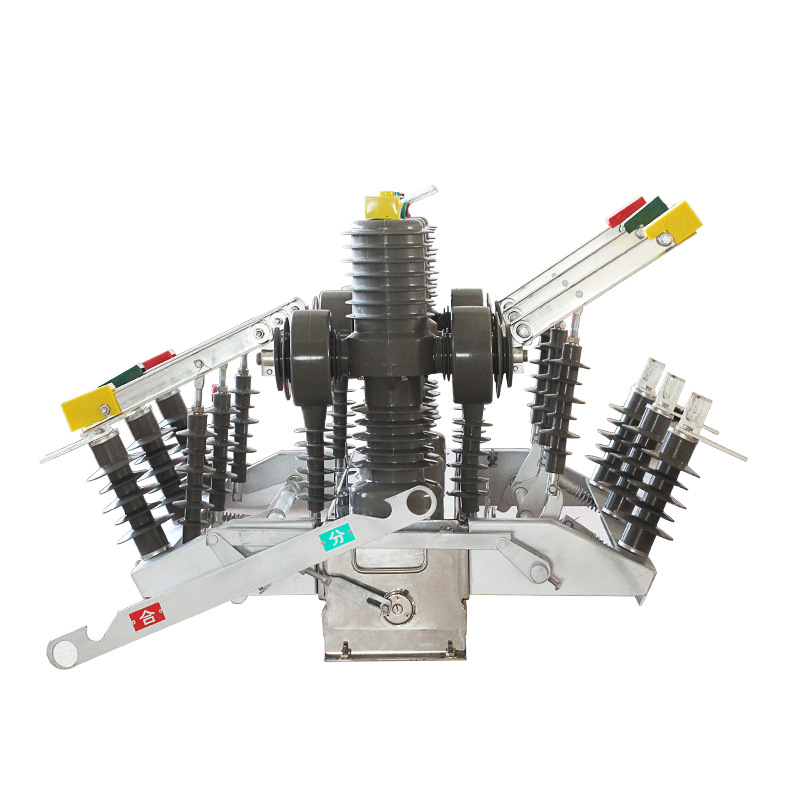
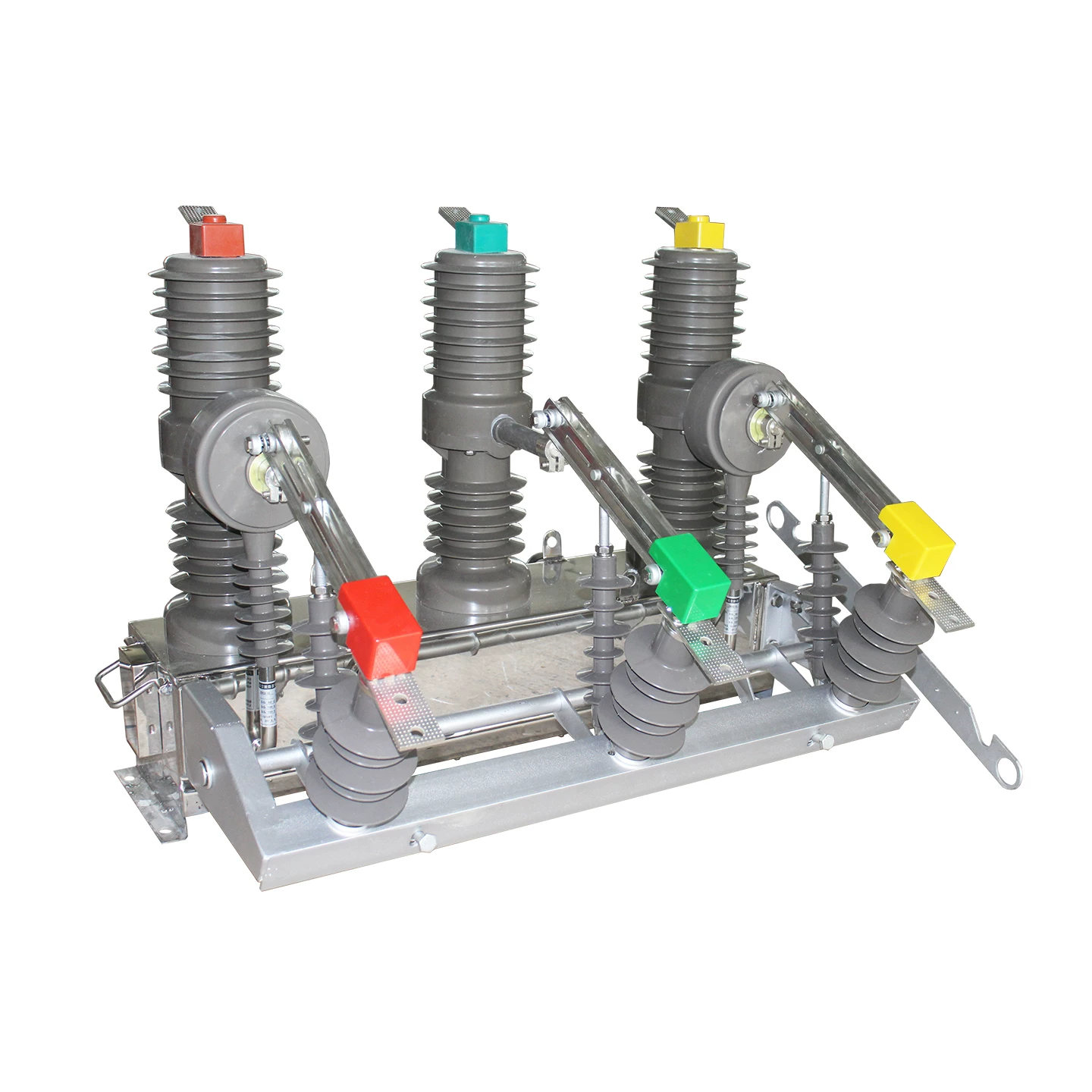
Utilities often pair pole transformers with protective devices and upstream switching (for example, using an outdoor vacuum circuit breaker similar to our ZW43A-12F overhead breaker solution) to further improve local safety and reliability.
Flexible for load growth and expansion
As neighborhoods and rural feeders grow, overhead distribution transformers are easy to upgrade:
Swap a 25 kVA residential pole transformer for a 50 kVA or 75 kVA unit.
Add extra line distribution transformers further down the line.
Reconfigure from single phase to three phase where small commercial loads appear.
This “add as you grow” model fits U.S. suburbs and rural electrification projects very well.
Easy inspection, maintenance, and replacement
Pole distribution transformers are simple for line crews to live with:
Oil level, leaks, rust, and bushings can be checked visually from a bucket.
Connections and hardware are easy to torque and clean.
Failed units can be replaced quickly to restore service.
For oil immersed pole transformers, utilities also like that oil tests and simple visual checks tell a lot about health—similar to larger 6–22 kV oil immersed transformers used at substations.
Ideal for rural, suburban, and low‑density areas
In most of the U.S., especially:
Rural feeders and agricultural loads
Suburban streets with overhead lines
Small commercial strips on two‑lane roads
a pole mounted distribution transformer is the most practical choice. It hits the right balance of cost, reliability, and ease of access where underground and pad‑mounted systems are harder to justify.
Pole Distribution vs Pad Mounted Transformers
When a pole distribution transformer makes more sense
I’ll go with a pole mounted distribution transformer when:
The line is already overhead (typical for rural and small-town feeders).
Loads are small to medium (single homes, small businesses, farms).
The site is narrow, rocky, or flood-prone, where concrete pads are costly.
The utility wants fast, low-cost installs and easy change-outs.
Pole distribution transformers shine on:
Rural distribution feeders
Long overhead residential streets
Agricultural and light commercial loads
When a pad mounted transformer is a better choice
A pad mounted transformer tends to win in:
Urban and suburban neighborhoods with underground distribution.
Areas with public access where locked, tamper-resistant gear is required.
Commercial/industrial sites with higher kVA demand.
Projects with strict aesthetic rules (no equipment on poles).
If you’re planning an underground network with tight safety and appearance requirements, pad mounted is usually the right call.
Cost, safety, and accessibility comparison
Cost
Pole transformer: lower installed cost where poles already exist.
Pad mounted: higher civil cost (pad, trenching), but better for dense developments.
Safety
Pole units: energized parts are elevated, away from the public.
Pad units: locked enclosure, but located at ground level where damage from vehicles or vandalism is possible.
Accessibility
Pole units: need bucket trucks and trained line crews.
Pad units: easier ground-level access for testing and switching.
Both designs typically integrate surge protection and grounding; in high lightning areas, we often pair transformers with dedicated lightning arresters and proper grounding layouts similar to those used in substation lightning protection and grounding systems.
Impact on aesthetics and right of way
Pole mounted:
Visually noticeable on the pole, but no extra ground space required.
Helpful where sidewalk and roadside right of way is tight.
Pad mounted:
Lower profile, can be screened by landscaping.
Needs clear working space in front and around the pad per utility rules.
For HOAs and upscale developments, architects usually push for pad mounted; for rural counties, poles are the norm.
Typical applications: residential, commercial, rural feeders
Residential
Overhead streets: single phase pole mounted distribution transformer on each pole or serving a small cluster of homes.
Underground subdivisions: pad mounted feeding laterals.
Commercial
Small strip malls on overhead feeders: larger three phase pole mounted transformer.
Big box stores, campuses, industrial parks: mostly pad mounted units.
Rural feeders
Almost always pole distribution transformers—simple, reliable, easy to extend as new loads appear along the line.
If you’re unsure which way to go, I usually start by asking: Is your system overhead or underground, and how sensitive is the project to appearance and public access? That answer normally decides pole vs pad in a few minutes.
Pole Transformer Installation Basics
Installing a pole distribution transformer isn’t guesswork—if you want reliability and safety, the details matter.
Pole strength and height
For a pole mounted distribution transformer, I always start with the structure:
Pole class & material: Match or exceed your utility’s spec; most U.S. utilities use Class 2–4 wood or steel poles for typical residential pole transformers.
Height: Common heights are 35–45 ft for suburban/urban, 40–55 ft for rural feeders, allowing proper line sag and clearances.
Load & wind check: Factor in transformer weight, conductors, crossarms, wind and ice. Don’t hang a three phase pole mounted transformer on a marginal pole.
Mounting hardware, brackets and crossarms
Use hardware that’s built for distribution duty:
Galvanized steel brackets and double-arm crossarms for heavier units or three phase pole mounted distribution transformers.
Through-bolts, pole bands, and channels sized per transformer kVA and pole class.
Keep the center of gravity tight to the pole to reduce bending and sway.
If you’re integrating switching or protection on the same pole, pair the transformer with a proper pole-mounted vacuum circuit breaker, like an outdoor ZW32-24F high-voltage breaker, to keep fault isolation clean and safe: ZW32-24F outdoor pole mounted high voltage vacuum circuit breaker.
Grounding and surge protection
For any overhead distribution transformer in the U.S., grounding is non‑negotiable:
Dedicated ground rod(s) at the pole, bonded to the transformer tank and neutral.
Multi-grounded neutral tied into the utility’s grounding system.
Lightning arresters on the primary side, mounted close to bushings with short, straight leads.
Bond all metal parts—brackets, arresters,
Operation, Maintenance and Troubleshooting of Pole Distribution Transformers
Keeping a pole distribution transformer in good shape is mostly about tight inspections and acting early when something looks off. Here’s how I treat routine O&M so units stay reliable and safe on the line.
Routine inspection: oil level, leaks and rust
For oil-immersed pole mounted distribution transformers:
Check oil level in the sight glass or gauge on a regular route. A sudden drop usually means a leak or internal fault.
Look for leaks around gaskets, welds, valves, and radiators. Even a light oil stain on the tank or crossarm is a red flag that needs a work order.
Watch for rust and corrosion on the tank, mounting hardware, and nameplate. Touch up paint and replace badly corroded brackets before structural strength is compromised.
If the area uses a lot of metalwork (switchgear, insulators, etc.), I always remind teams to follow the same safe operation mindset they use around medium-voltage switchgear.
Checking bushings, connections and hardware
Pole mounted transformers live in the weather, so outdoor terminations are always a priority:
Inspect bushings for cracks, chalking, contamination, or tracking. Clean lightly contaminated bushings; replace cracked or severely tracked ones.
Verify connections on primary and secondary terminals: tight, no discoloration, no arcing marks, and properly crimped lugs.
Check hardware (bolts, straps, eye bolts, crossarms) for looseness or deformation. Re-torque to spec and replace anything bent or undersized.
Make sure grounds and bonding are intact from transformer tank to pole ground and system neutral.
Recognizing overload and hot spot signs
Overload kills a utility pole transformer faster than anything else:
Visual clues: darkened paint near the top of the tank, oil that looks or smells burnt, discolored nameplate or labels.
Operational signs: frequent nuisance fuse operations, CSP pole transformer breakers tripping, voltage sag complaints on the secondary.
Load checks: pull recent AMI/SCADA or field measurements. If the single phase pole transformer is consistently above its kVA rating during peaks, plan for upsizing or load balancing.
Dealing with noise, vibration and overheating
Noise and vibration changes usually point to something real:
Normal hum is expected; a sudden increase or a harsh “buzz” can indicate loose core laminations, loose windings, or harmonic issues.
Vibration at the pole may come from loose mounting hardware or unbalanced loads on a three phase pole mounted transformer. Tighten brackets and re-check loading.
Overheating signs:
Tank too hot to touch for more than a moment (in mild ambient conditions)
Oil temp gauge running high compared to similar nearby units
Protective devices operating in hot weather peaks
If a unit is running hot but not yet failing, confirm loading, check for blocked airflow around the tank, and verify tap settings.
Extending service life in coastal, hot or polluted areas
Harsh environments are where specs and coatings really matter:
Coastal: use higher-grade paint systems, stainless or hot-dip galvanized hardware, and regular washing to remove salt deposits.
Hot climates: choose transformers with the right kVA margin, ONAN cooling, and higher temperature rise class that still meets U.S. efficiency rules. Avoid chronic overloading in summer peaks.
Polluted/industrial areas: schedule more frequent cleaning of bushings and insulators, and monitor for contamination that can cause flashover.
When to repair, refurbish or replace a pole transformer
From an owner’s perspective, I look at safety, reliability, and total cost:
Repair on pole when:
Minor oil leaks can be fixed with gasket replacement or tightening
Bushings, fuses, or external hardware are damaged but the tank and core are solid
Refurbish in-shop when:
Insulation tests are acceptable but oil needs treatment and gaskets/coatings need full refresh
Age is high but the transformer still passes routine electrical tests
Replace outright when:
Insulation resistance and dielectric tests fail
Multiple internal faults are suspected (e.g., recurring outages, gas in oil, severe overheating history)
The unit is undersized for current loads and you’re already paying for truck rolls
The tank is badly rusted, dented, or structurally compromised
Staying disciplined with inspections and quick corrective work is the easiest way to keep a medium voltage distribution transformer on a pole delivering safe, stable low-voltage power for decades.
Choosing a Pole Distribution Transformer Supplier
When you’re buying a pole distribution transformer for U.S. projects, the supplier you pick matters as much as the
FAQs About Pole Distribution Transformers
How do I size a pole distribution transformer for a house or small business?
For most U.S. homes, a 25–50 kVA single phase pole mounted distribution transformer is common. For small businesses, you’ll often see 50–150 kVA depending on HVAC, motors, and equipment.
Quick rule of thumb:
Add up your peak kW load (HVAC, lighting, appliances, EV chargers, motors).
Add 20–30% margin for startup currents and future growth.
Match primary/secondary to your local utility (for example: 7.2 kV / 120–240 V).
Your utility or engineer will usually confirm the final kVA rating and voltage class before installation.
How long does a pole mounted distribution transformer last?
A quality pole mounted distribution transformer in normal U.S. service typically lasts:
25–35 years: standard expectation
40+ years: very common with proper loading and maintenance
Life is shortened by:
Chronic overloading
High ambient temperatures
Coastal/salt or heavy industrial pollution
Lightning/surge events without proper protection
Routine inspection of oil level, bushings, and connections goes a long way toward getting full life out of the unit.
Are CSP pole transformers worth the higher price?
In many cases, yes. A CSP pole transformer (Completely Self Protected) includes:
Internal primary fuse
Surge arrester
Secondary breaker/overload protection
You save on:
Extra external protection hardware
Labor and time in the field
Truck rolls after minor faults
For rural lines, residential feeders, and small commercial services, CSP designs usually reduce lifetime operating cost even if the upfront price is higher.
Can you get custom primary and secondary voltages?
Yes. We regularly supply custom primary and secondary voltages to match U.S. utility systems and special loads. Common examples:
Primary: 4.16 kV, 7.2 kV, 13.2 kV, 13.8 kV, 24.9 kV
Secondary: 120/240 V, 120/208 V, 240/480 V, 277/480 V, and specials for legacy systems
Custom taps and special configurations are available, but must comply with ANSI/IEEE distribution transformer specifications and local utility standards.
What about noise, safety, and EMF from pole transformers?
Noise:
Modern oil immersed pole transformers are designed to meet strict sound limits.
Normal sound is a steady hum; loud buzzing or sudden changes usually mean an issue.
Safety:
Mounted high on a pole, the live parts are out of reach.
Proper grounding, surge protection, and upstream switching (often via an indoor load break switch) further increase safety.
EMF:
EMF levels at ground level under a typical utility pole transformer are very low and drop off quickly with distance.
In most U.S. installations, readings are well below international and U.S. guideline limits.