A CVT (Capacitor Voltage Transformer) and a CCVT (Coupling Capacitor Voltage Transformer) are fundamentally the same voltage transformer for transformation, measurement, and protection; the real difference is that CCVT adds a power-line carrier communication interface. In practice, that means this article will help you stop procurement mistakes fast: no carrier communication requirement, choose CVT; carrier communication required, choose CCVT. I have seen projects lose weeks not because of insulation level or accuracy class, but because someone assumed these two were interchangeable just by looking at the porcelain housing.
CVT and CCVT Look the Same—So What Is the Real Difference?
Let’s go straight to the answer.
Both devices do the same core job: voltage transformation, voltage measurement, relay protection input, and metering support. The only difference that really matters is whether the unit includes a power-line carrier communication coupling function.
So the decision is simple.
CVT: voltage measurement + relay protection + metering support.
CCVT: everything a CVT does, plus coupling for carrier communication, teleprotection, dispatching, and remote signaling.
That is why many field engineers say the transformer part is “the same thing,” while system engineers insist the communication interface changes the selection completely. Both views are correct.
Quick Answer Table: CVT vs CCVT Comparison
| Item | CVT | CCVT |
|---|---|---|
| Core function | Voltage transformation, measurement, and protection | Voltage transformation, measurement, protection, and carrier communication coupling |
| Communication capability | No | Yes |
| Internal structure | Capacitive divider + intermediate transformer | Capacitive divider + intermediate transformer + coupling coil + matching/filter network + carrier terminals |
| Typical application | Standard substations without PLCC | Transmission lines and substations using PLCC, teleprotection, and remote signaling |
| Appearance | Nearly identical to CCVT | Nearly identical to CVT |
| Price | Lower | Slightly higher |
| Selection rule | Use when no carrier channel is required | Use when a carrier channel is required |
What Is a CVT in Power Systems?
A Capacitor Voltage Transformer is an instrument transformer used mainly on medium-, high-, and extra-high-voltage systems where using a conventional electromagnetic voltage transformer becomes less practical in cost and insulation size.
Its job is straightforward: step down primary voltage through a capacitive divider and an intermediate transformer so that protection relays, meters, and indication devices receive a manageable secondary voltage.
In real substation practice, a CVT is chosen when the design team only needs measurement and protection. There is no requirement for line carrier coupling through the same apparatus.
Under IEC 61869 and related legacy instrument transformer frameworks, engineers typically evaluate CVTs by insulation level, accuracy class, burden, transient performance, ferroresonance behavior, and suitability for protection circuits.
What Is a CCVT in Power Systems?
A Coupling Capacitor Voltage Transformer is essentially a CVT with an added communication role. It still provides the same stepped-down voltage output for measurement and protection.
But it also includes the hardware needed to couple carrier-frequency signals onto the power line. That is why CCVT in power systems is common, where PLCC remains part of dispatching, teleprotection, line signaling, or remote control architecture.
In many specifications, the confusion starts because different owners, consultants, and utilities use the terms loosely. In tender clarifications, I have repeatedly seen “CVT” written in the bill of quantity while the single-line diagram clearly showed line trap and carrier equipment. In that case, the required product is CCVT, not a plain CVT.
CVT vs CCVT Working Principle: Same Core, One Extra Module
From an electrical principle standpoint, both products begin the same way. They use a capacitive voltage divider to reduce high voltage, then feed an intermediate electromagnetic transformer for secondary output.
The difference appears after the common core.
CCVT adds a coupling path for high-frequency communication signals. That extra path is built with coupling coils, tuning, filtering, and matching elements, plus dedicated carrier terminals.
CVT Transformer Working Principle
The CVT transformer working principle is based on a stack or series arrangement of capacitors forming a divider. A reduced voltage appears across the lower capacitor section.
That reduced voltage is then applied to an intermediate transformer, which provides the standard secondary output used by meters and protection relays. Damping and compensation components are added to improve stability and performance.
This is why capacitive voltage transformer applications are common in higher-voltage systems: the design is compact relative to a fully electromagnetic voltage transformer at the same insulation class.
CCVT Working Principle in Power Systems
The CCVT working principle in power systems starts with the same divider and transformer path. For measurement and protection, it behaves like a CVT.
The extra function is the coupling of carrier-frequency communication signals onto the transmission line. The communication path uses a coupling network so the high-frequency signal can pass while the power-frequency system remains properly isolated and controlled.
That is the full engineering truth behind the naming issue: CCVT is not a different family of voltage transformer in its core role; it is a CVT with an additional communication interface.
The 4 Practical Differences Between CVT and CCVT
In projects, buyers and engineers do not argue about theory. They care about what changes the specification, delivery, and commissioning result.
1) Function: Measurement and Protection vs Measurement, Protection, and Carrier Communication
CVT only handles voltage-related tasks. It feeds relays, meters, and indication circuits.
CCVT does all of that, plus supports PLCC communication links. This can include dispatching channels, teleprotection, permissive tripping, remote signaling, and legacy communication schemes on long overhead lines.
If the communication design includes a line trap, a carrier set, and a tuning unit, a plain CVT is not enough.
2) Internal Structure: Basic Divider and Transformer vs Added Coupling Network
Internally, the structural difference is small but decisive.
CVT: capacitive divider + intermediate transformer.
CCVT: capacitive divider + intermediate transformer + coupling coil + filter/matching components + carrier connection terminals.
On paper, this looks minor. In manufacturing, testing, and commissioning, it affects wiring, accessories, documentation, and communication integration.
3) Application Scenario: Standard Substations vs Long Transmission and Dispatch Systems
A normal substation without line carrier communication generally uses CVT. That is the common answer for standard AIS yard measurement and protection duties.
But long transmission lines, utility dispatch systems, teleprotection schemes, and older or hybrid communication networks often require CCVT. In those cases, omitting the coupling function creates immediate system-level gaps.
In several utility forum discussions, one recurring point is that PLCC has not disappeared everywhere. Fiber is widespread, but not universal, and redundancy strategies still keep CCVT relevant in many networks.
4) Appearance and Price: Nearly Identical Outside, Slightly Higher Cost for CCVT
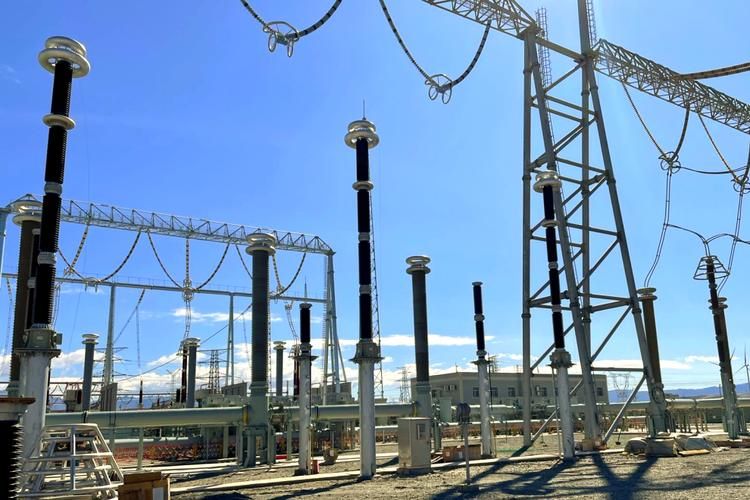
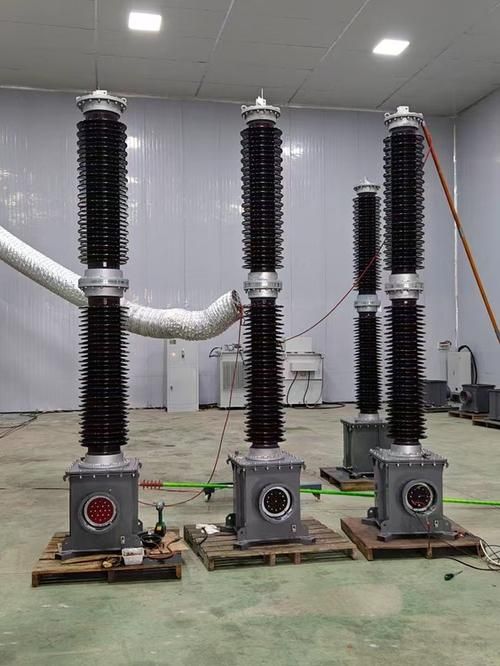
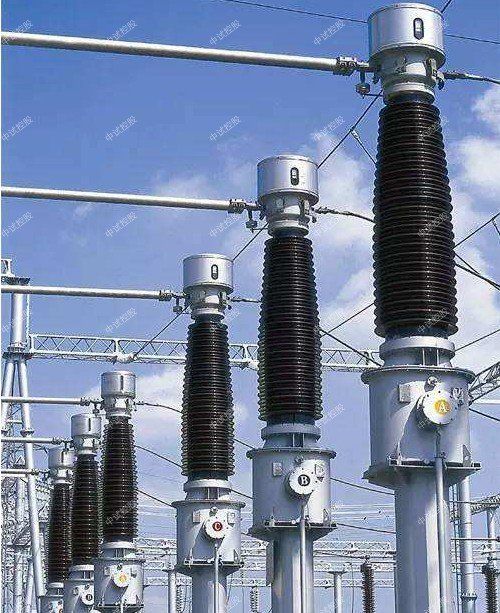
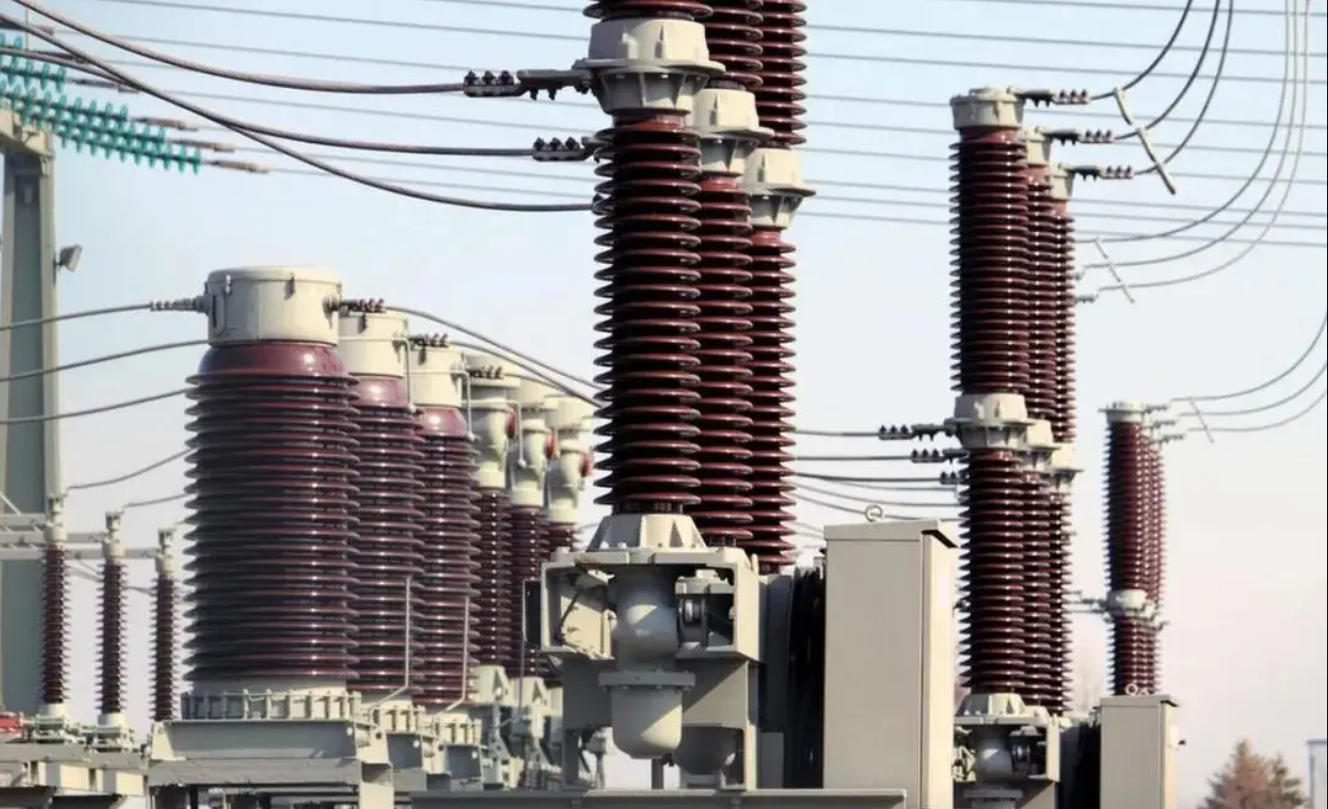
Externally, the two units can look almost the same. Non-specialists often cannot distinguish them from the yard side.
Price is where the extra function appears. CCVT is usually slightly more expensive because of the added coupling and matching components, terminals, and communication-related accessories.
The cost difference in many procurement cases is not dramatic at the unit level. But the cost of ordering the wrong one can be dramatic once retrofit, outage, engineering change, and communication rework are included.
CVT vs CCVT Selection Guide: Which One Should You Choose?
Here is the simplest decision rule.
No carrier communication requirement → choose CVT.
Carrier communication requirement exists → choose CCVT.
That rule solves most selection cases immediately.
Then verify the rest: system voltage, insulation level, accuracy class, burden, protection transient requirements, seismic or pollution class, and applicable utility standard. IEEE and IEC requirements should be aligned with the owner's specification from the start, especially for testing, insulation coordination, and protection performance.
Selection Table by Operating Condition
| Operating Condition | Communication Need | Protection/Control Context | Budget Sensitivity | Recommended Device |
|---|---|---|---|---|
| Standard substation bus/feeder bay | None | Metering and relay voltage input only | High | CVT |
| Long-distance transmission line | PLCC required | Teleprotection and dispatch integration | Medium | CCVT |
| Legacy grid with existing carrier equipment | The existing carrier channel must remain | Communication continuity critical | Low to medium | CCVT |
| New substation using only fiber communication | No PLCC | Protection over fiber | High | CVT |
| Retrofit where drawings are unclear | Must verify before order | Risk of wrong procurement | Variable | Check the carrier interface first |
Real-World Use Cases from Substations and Transmission Lines
Case 1: Standard AIS substation. A 132 kV outdoor bay needed voltage input for metering and distance protection only. No line carrier equipment was in the communication scope, so the correct and economical choice was CVT.
Case 2: Long transmission line with teleprotection. A 220 kV line used carrier-based signaling as part of the protection and dispatch strategy. The transformer function alone was not enough; the bay required CCVT to support the communication path.
Case 3: Legacy PLC communication network. In several utility upgrades, engineers expected to replace “old CVTs” one-for-one, then discovered the existing units had carrier terminals integrated into the original scheme. That mistake is common in brownfield projects.
Case 4: Dispatch-integrated installation. Where remote signaling and operational communication are still tied to PLCC architecture, CCVT remains the correct choice even if fiber exists elsewhere in the station.
Across practitioner discussions, one strong field message appears repeatedly: the risk is not misunderstanding how the transformer works; the risk is forgetting how the communication system is built around it.
Field Pain Points Engineers Mention Most Often
Mistaken procurement: ordering CVT when the single-line and telecom documents actually require CCVT.
Missing carrier terminals: unit arrives on site and cannot connect to the carrier panel.
Retrofit difficulty: replacing a plain CVT with a CCVT later may require redesign, outage planning, and additional interface hardware.
Footprint assumptions: teams assume the same external size means the same functionality.
Communication integration delays: the electrical team finishes first, and the telecom team later discovers there is no coupling path.
I have seen this exact pattern in factory clarification meetings: mechanical dimensions were approved early, but no one checked the telecom interface schedule. That kind of oversight does not show up until FAT documents or commissioning punch lists.
What Practitioners Discuss on Reddit, Quora, and Engineer Forums
Across public engineer communities and Q&A discussions, the same themes come up again and again.
Why do CVT and CCVT look almost identical if one has extra functionality?
Is CCVT just another name for CVT, or is it a different device?
When is PLCC still used if fiber optic communication is available?
Can a standard CVT replace a failed CCVT temporarily?
Why does the project drawing say CVT, but the telecom scope says coupling capacitor?
A useful non-specialist insight appears often in these discussions: people outside protection and telecom engineering assume “voltage transformer is voltage transformer.” That assumption is exactly what causes wrong purchasing decisions.
Another recurring real-world point is that many grids still keep PLCC for redundancy, legacy compatibility, or route constraints. So the idea that CCVT is obsolete is simply not true everywhere.
Community Insight Table: Real Questions and First-Hand Concerns
| Discussion Theme | User Concern | Practical Takeaway | Article Response Angle |
|---|---|---|---|
| Naming confusion | Are CVT and CCVT the same thing? | Same core VT function, different communication capability | Clarify the one real difference immediately |
| Visual similarity | Why can’t I tell from appearance? | External form is often nearly identical | Check nameplate, terminals, and drawings |
| PLCC relevance | Is CCVT outdated now that fiber exists? | Not always; it depends on the grid architecture and redundancy | Selection must follow the actual communication design |
| Replacement risk | Can CVT replace CCVT? | Only if the carrier function is not needed | Never assume interchangeability |
| Cost tradeoff | Why pay more for CCVT? | Because communication hardware is included | Wrong selection costs more than a small unit premium |
Why Non-Specialists Often Confuse CVT and CCVT
The confusion is understandable.
Procurement teams focus on voltage level and quantity. Project managers focus on the schedule. Junior engineers often look at the primary function and see both as voltage transformers.
Since the main transformer body, installation location, and core measurement roles are similar, they appear interchangeable. But the communication interface changes the actual application value.
This is especially common when the electrical package and telecom package are handled by different teams. One side sees “instrument transformer.” The other side sees “carrier coupling point.” If those scopes are not cross-checked, mistakes happen.
Common Buying and Specification Mistakes
Ignoring communication interfaces in the datasheet.
Omitting coupling requirements from the purchase specification.
Assuming visual identification is enough.
Reading only the one-line diagram and not the telecom documents.
Underestimating retrofit cost if the wrong unit is installed.
Failing to verify standards, test duties, and owner-specific requirements.
Good specifications should explicitly state whether the carrier coupling function is required, identify all carrier terminals and accessories, and tie the product to the complete communication and protection design.
For authority and compliance, engineers should cross-check applicable owner requirements with IEC instrument transformer standards and relevant IEEE utility practice for insulation, performance, testing, and communication interface coordination.
CVT and CCVT Applications by Voltage Level and Grid Design
Capacitive voltage transformer applications are most common where system voltage is high enough that a capacitive divider solution becomes technically and economically attractive. This often includes transmission-class substations and line bays.
CVT applications typically include:
Voltage measurement in HV/EHV substations
Relay protection voltage input
Metering support
Bus, feeder, and line bays without PLCC requirements
Coupling capacitor voltage transformer applications typically include:
Transmission lines using PLCC
Teleprotection channels
Dispatch communication systems
Remote signaling on utility transmission networks
Legacy or hybrid communication architectures
In other words, the voltage level may suggest a CVT-type solution, but the grid design determines whether that solution should be a plain CVT or a CCVT.
Data Table: Typical Functional and Cost Comparison
| Comparison Factor | CVT | CCVT | Practical Impact |
|---|---|---|---|
| Measurement and protection output | Yes | Yes | No major difference in core VT role |
| PLCC support | No | Yes | Decides telecom compatibility |
| Component complexity | Standard | Higher | More interface elements to specify and test |
| Maintenance scope | Lower | Slightly broader | More communication-related points to inspect |
| Replacement flexibility | High in non-PLCC bays | Required in PLCC bays | A wrong substitution can disable the communication path |
| Relative unit cost | Baseline | Typically 5% to 15% higher, depending on design and accessories | Small premium versus potential retrofit loss |
The relative cost premium above is a practical market range often discussed by project teams, not a universal rule. Actual pricing depends on voltage class, insulation level, accuracy class, accessory package, manufacturer design, and utility-specific testing requirements.
Best One-Line Memory Rule
CCVT = CVT + power-line carrier coupling function.
That is the easiest way to remember it.
If there is no carrier communication need, use CVT. If there is a carrier communication need, use CCVT. The voltage transformer itself is fundamentally the same type of equipment.
FAQ
What is the main difference between CVT and CCVT?
The main functional difference is whether the unit includes carrier communication coupling. Both provide voltage transformation, measurement, and protection functions, but CCVT adds the communication interface.
Can a CVT be used instead of a CCVT?
Only when no power-line carrier communication function is required. If the system depends on PLCC, teleprotection, or carrier-based remote signaling, a plain CVT is not an acceptable replacement.
Is CCVT always more expensive than CVT?
Typically yes. CCVT is usually slightly more expensive because it includes added coupling, matching, filtering, and terminal components for the communication service.
Do CVT and CCVT have the same measurement and protection functions?
Yes. Their core voltage transformation, measurement, and relay protection roles are essentially the same. The difference is the added communication capability on CCVT.
How can I identify a CCVT on-site?
Do not rely on appearance alone. Check the nameplate, carrier terminals, technical drawings, terminal schedule, and communication interface details. Externally, CVT and CCVT are often too similar for reliable visual identification.
Where is CCVT used in power systems?
CCVT is commonly used on transmission lines and substations requiring PLCC, dispatch communication, teleprotection, or remote signaling. It is especially relevant in long-line and legacy carrier-based grid designs.
Is CCVT still relevant if fiber communication is available?
Yes, depending on the grid architecture. The answer depends on legacy systems, redundancy strategy, protection design, route constraints, and whether PLCC remains part of the communication scheme.
Final Recommendation for Engineers, Buyers, and Project Teams
If your project only needs voltage transformation for measurement, metering support, and relay protection, specify a CVT. It is the correct and more economical solution.
If your project needs power-line carrier communication for dispatching, teleprotection, or remote signaling, specify a CCVT. Do not let similar appearance or loose terminology hide a critical system function.
From an engineering lifecycle perspective, this is the right selection logic: choose by communication requirement first, then confirm electrical performance, standard compliance, and utility-specific details. That approach aligns both technical correctness and commercial practicality.
CTA: Need Help Choosing CVT or CCVT for Your Project?
If you want a fast and accurate recommendation, send us your voltage level, substation type, communication requirement, protection scheme, and whether PLCC is involved. We can help you identify whether your project needs a CVT or CCVT and suggest a suitable model direction quickly.
Send us an inquiry today, or contact us directly on WhatsApp for a faster discussion on drawings, specifications, and model selection.