The Working Principle in One Minute
A three-phase transformer works by electromagnetic induction: when a three-phase AC supply is applied to the primary winding, alternating magnetic flux is created in the core, that flux induces a voltage in the secondary winding, and once a load is connected, energy transfers from the primary to the secondary without direct electrical contact. If you read this article carefully, you will be able to judge and analyze the three-phase transformer working principle, connection behavior, voltage relationships, and common faults by yourself.
This is not merely a textbook definition. In practice, whether a transformer runs cool, hums normally, survives harmonics, regulates voltage acceptably, or fails during energization depends on how well you understand the interaction between flux, winding arrangement, connection type, load, and insulation system.
In field commissioning and maintenance work, the biggest mistake beginners make is assuming “input voltage goes in, output voltage comes out” is enough. It is not enough. A real transformer must be read through its vector group, turns ratio, line-to-line and line-to-neutral relations, thermal condition, and load symmetry.
Why Understanding 3-Phase Transformer Operation Matters
Many engineers, technicians, and students know that a transformer steps voltage up or down, yet they cannot confidently explain why secondary current depends on load, why a delta can trap triplen harmonics, why a wye neutral changes system behavior, or why paralleling fails even when nameplate voltages look similar.
That knowledge gap becomes expensive in substations, factories, commercial buildings, and renewable plants. Wrong assumptions can cause nuisance tripping, overheating, circulating current, mis-phasing, insulation stress, and poor power quality.
Understanding how a 3-phase transformer operates matters because it lets you do three things fast:
Predict behavior before energization.
Diagnose abnormalities during operation.
Choose the right connection and rating for the actual load.
What Is a 3-Phase Transformer?
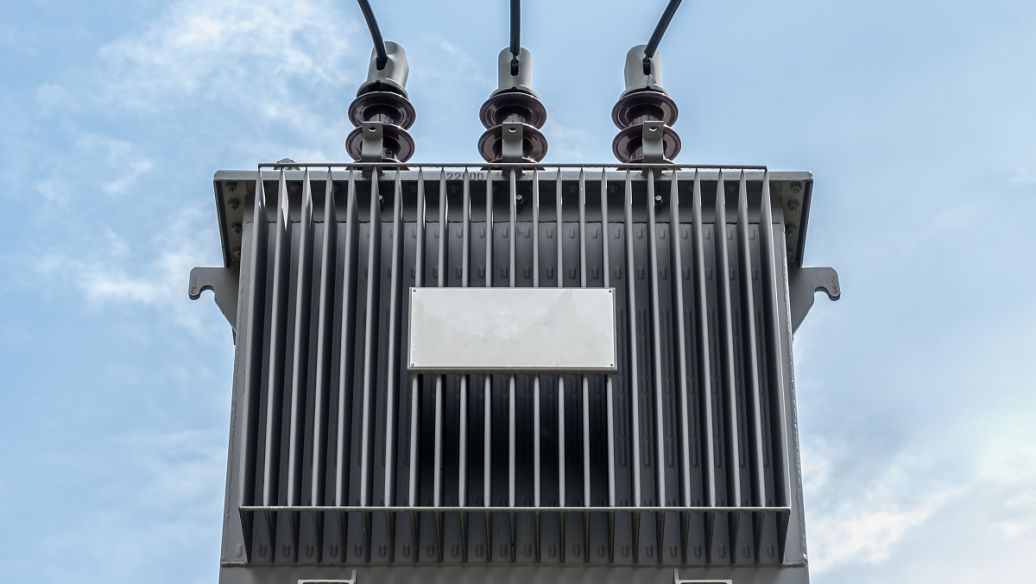
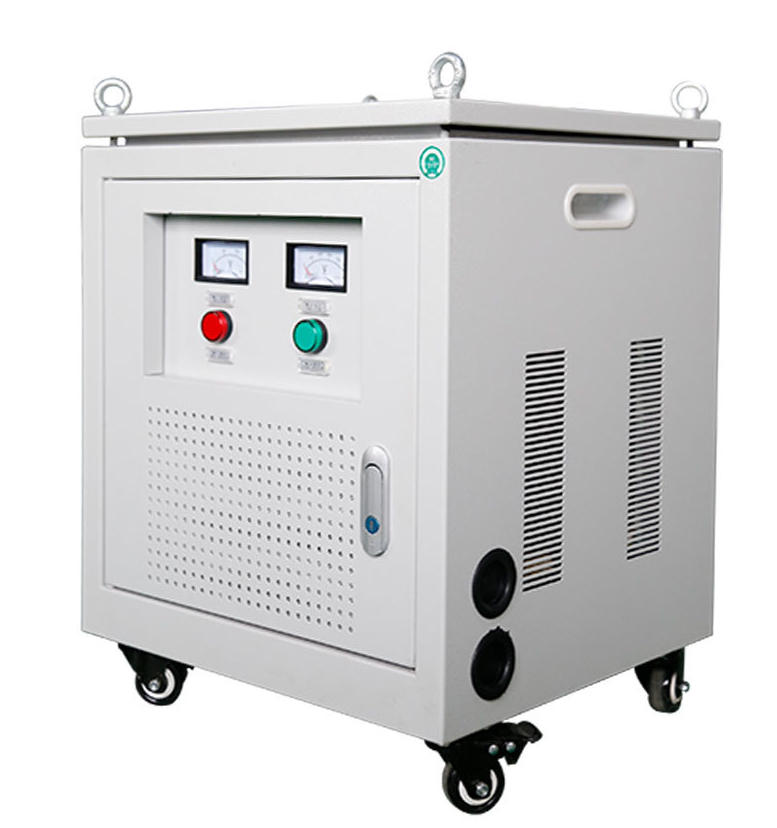
A three-phase transformer is a transformer designed to transfer electrical energy between three-phase circuits while stepping voltage up or down with high efficiency. It is a fundamental asset in generation stations, transmission networks, substations, process plants, data centers, commercial buildings, mining operations, and motor-driven industrial systems.
It may be built either as one integrated three-phase unit or as a bank of three single-phase transformers connected together. In both cases, the objective is the same: maintain electromagnetic coupling between primary and secondary circuits so voltage transformation and energy transfer occur efficiently.
Its importance is enormous because modern power systems are overwhelmingly three-phase. Motors, distribution feeders, large HVAC systems, industrial furnaces, rolling mills, and utility grids all depend on stable, balanced three-phase transformation.
Three-Phase Transformer Working Principle
The three-phase transformer working principle is based on Faraday’s law of electromagnetic induction and mutual induction. A time-varying magnetic flux linking a winding induces an electromotive force in that winding proportional to the number of turns and the rate of change of flux.
For sinusoidal operation, the induced RMS phase voltage is commonly expressed in engineering analysis as proportional to 4.44 × frequency × turns × maximum flux. This is the bridge between physical design and electrical performance.
In a three-phase transformer, the three-phase windings are arranged so that the magnetic fluxes are phase-displaced by 120 electrical degrees. In a balanced condition, these fluxes interact in a way that supports smooth and continuous power transfer.
Primary Side Input: Three-Phase AC Creates Alternating Flux
When three-phase voltage is applied to the primary winding, each phase drives a current that produces alternating magnetic flux in the iron core. Because the three phase voltages are displaced by 120°, the resulting fluxes are also time-shifted.
In a core-type three-limb transformer, the instantaneous sum of the three phase fluxes is close to zero under balanced conditions. This is one reason the magnetic circuit can be efficient and compact.
Magnetic Coupling Between Primary and Secondary Windings
The shared core channels the magnetic flux so that each secondary winding is linked by changing flux. That changing flux induces voltage in the secondary according to the turns ratio between primary and secondary windings.
The energy transfer is magnetic, not conductive. There is no metallic continuity required between primary and secondary circuits unless the system is intentionally grounded or otherwise interconnected at some point external to the transformer windings.
Secondary Side Output: Voltage Induction and Power Transfer
As long as flux varies in time, the secondary winding has induced voltage. But secondary current appears significantly only when a load is connected.
Once the load is connected, current flows in the secondary. That current creates its own opposing magnetomotive force, and the primary draws additional current to maintain core flux and supply the required power. This is the practical meaning of load-dependent transformer action.
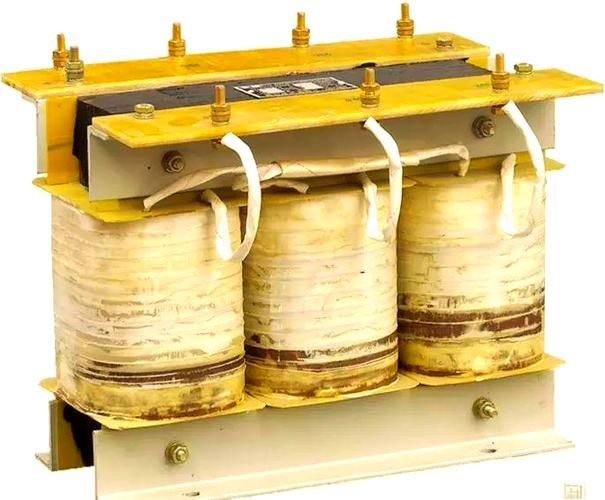
How a 3-Phase Transformer Operates Step by Step
To understand how a 3-phase transformer operates, it helps to break the process into a simple sequence used in both teaching and field analysis.
Step 1: Apply Three-Phase Supply to the Primary
A balanced three-phase source is connected to the primary terminals. The three phase voltages are displaced by 120°.
If the connection is delta, each winding sees line voltage. If the connection is wye, each winding sees phase voltage, which is line voltage divided by √3.
Step 2: Core Produces Time-Varying Flux
The applied voltage drives magnetizing current, which establishes time-varying flux in the core. Under balanced conditions, the vector interaction of the three limb fluxes supports continuous electromagnetic coupling.
This is where practical problems begin if frequency is wrong, voltage is excessive, or residual flux from previous de-energization is ignored. Overfluxing can sharply increase magnetizing current and heat.
Step 3: EMF Is Induced in the Secondary Windings
Because the secondary windings are linked by the changing core flux, an EMF is induced in each secondary phase. The induced voltage depends primarily on turns ratio, frequency, and flux level.
This is the core of three-phase transformer turns ratio and voltage transformation. Change the ratio of turns, and you change the phase voltage ratio.
Step 4: Load Connection Enables Energy Delivery
When a load is connected to the secondary, current flows according to the load impedance and the available induced voltage. The primary current correspondingly increases so real power can be transferred from source to load.
This is why technicians often say, correctly, that a transformer “draws what the load demands,” within design limits. Nameplate current is a thermal and design boundary, not a fixed operating value.
Three-Phase Transformer Construction and Operation
Three-phase transformer construction and operation are inseparable. The electromagnetic principle is universal, but real performance depends on core geometry, conductor arrangement, insulation coordination, cooling path, and enclosure design.
Three-Phase Transformer Bank
A three-phase transformer bank consists of three single-phase transformers connected to operate as one three-phase unit. Utilities and industrial users choose this arrangement when flexibility, transport constraints, or maintenance strategy matters more than compactness.
One practical advantage is serviceability. In some installations, if one unit fails, replacement may be easier than replacing a large integrated tank-type transformer.
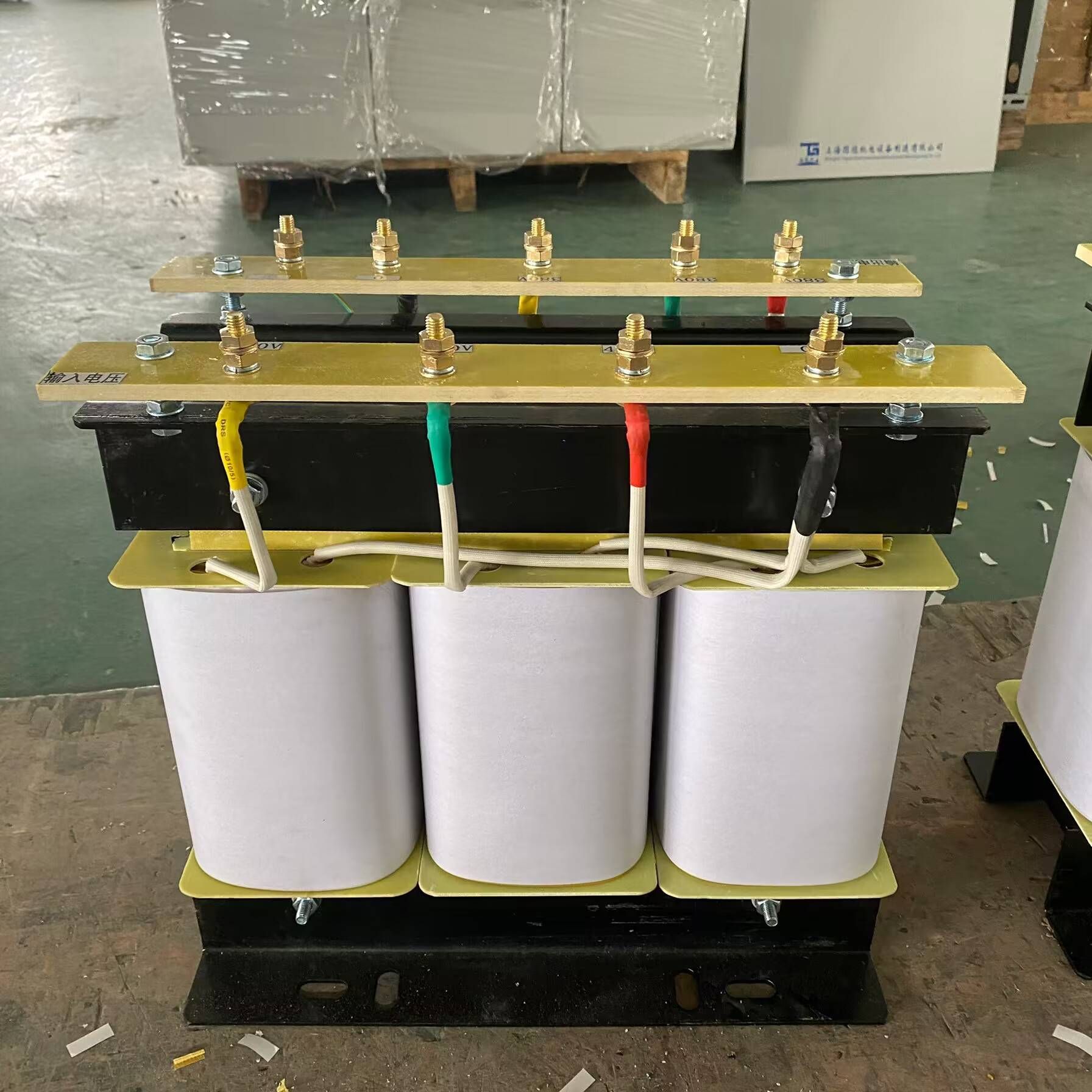
Three-Phase Core-Type Transformer
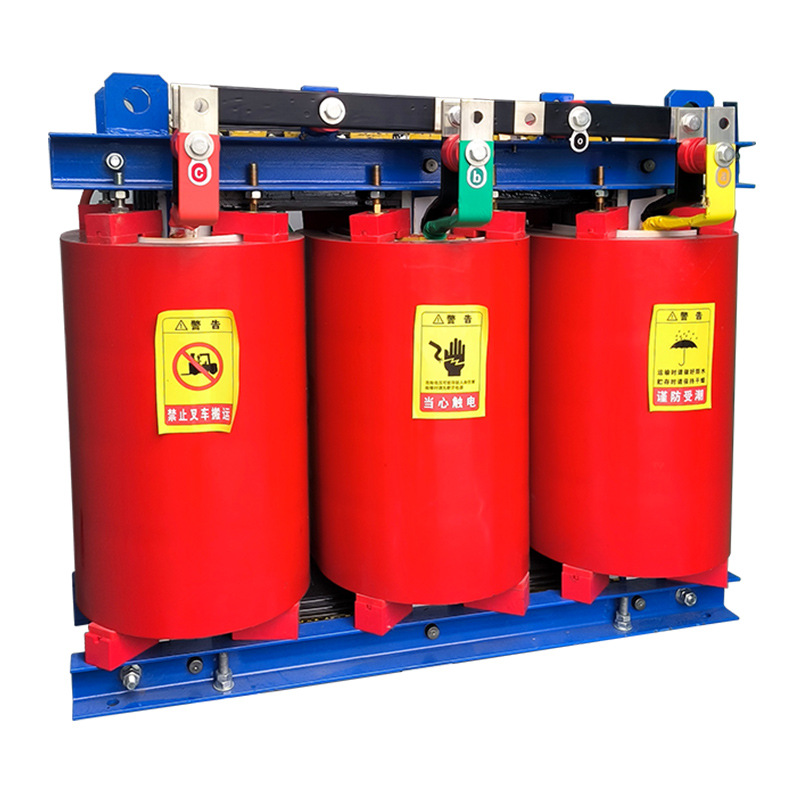
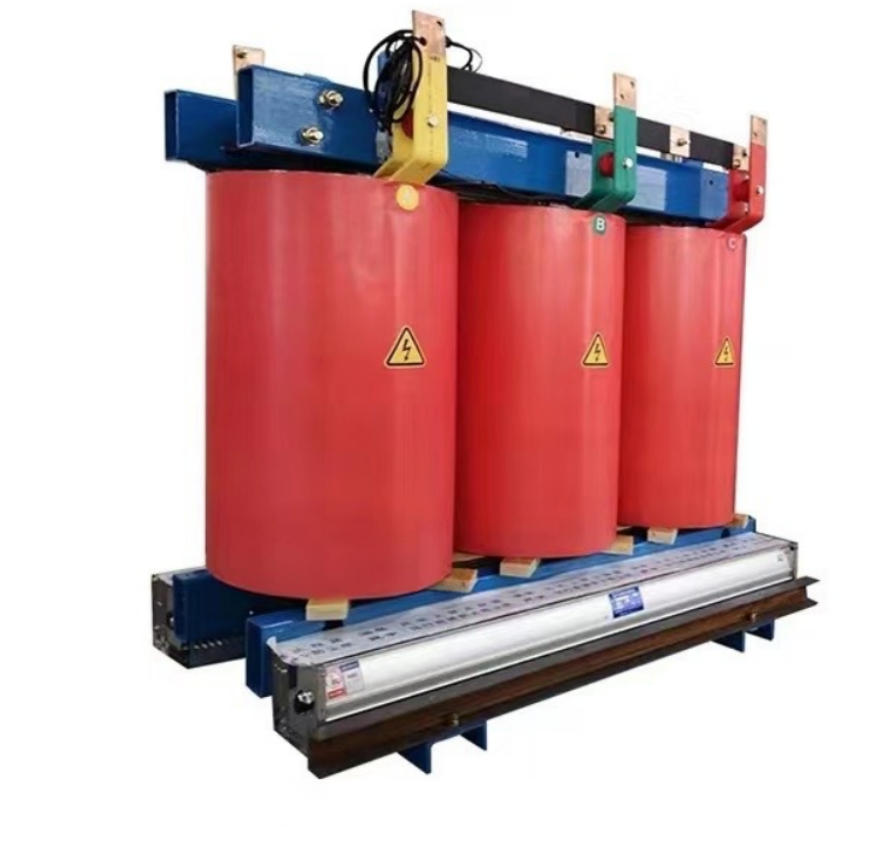
A three-phase core-type transformer integrates all three phases into one magnetic structure, typically a three-limb core. This design is more compact, usually more material-efficient, and common in utility substations and industrial power distribution.
It generally offers lower total footprint and lower cost per kVA than an equivalent bank. That is why it is widely preferred when redundancy through separate units is not the first priority.
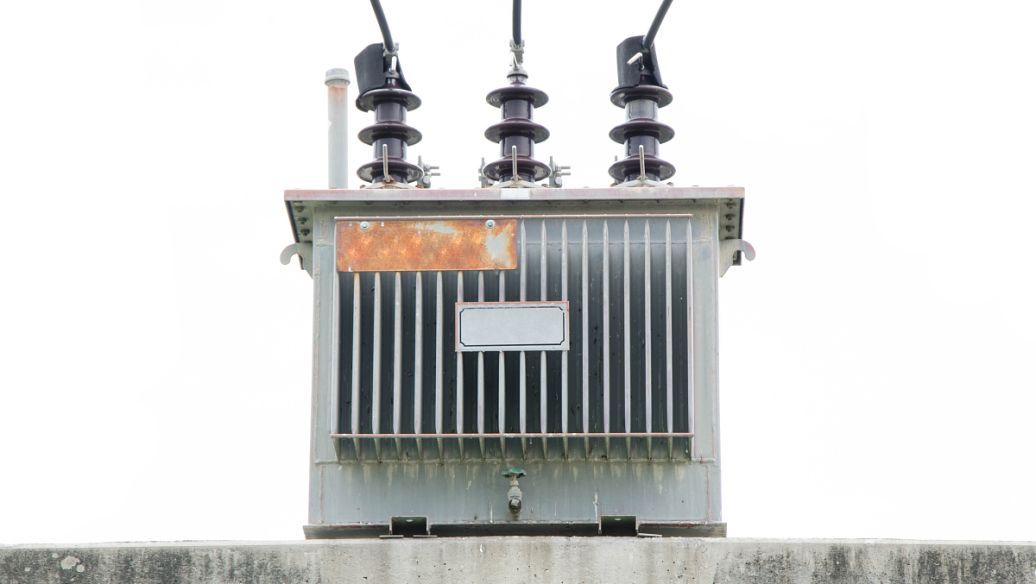
Core, Windings, Insulation, Tank, and Cooling
The essential structural elements are straightforward but decisive:
Core: laminated silicon steel or advanced electrical steel to reduce eddy current and hysteresis losses.
Windings: copper or aluminum conductors arranged to control resistance, leakage reactance, and thermal rise.
Insulation: paper, pressboard, enamel, resin, oil barriers, and solid insulation systems coordinated for impulse and power-frequency stress.
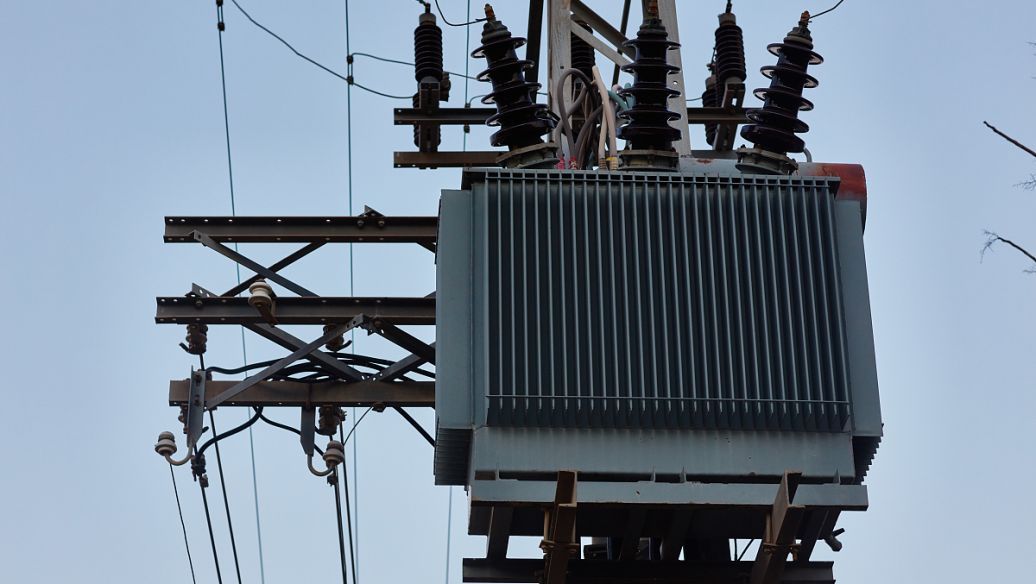
Tank: mechanical enclosure that provides protection and, in oil-filled units, serves as part of the thermal management system.
Cooling: natural air, forced air, oil natural air natural, oil natural air forced, oil forced air forced, and related methods depending on rating.
According to common utility practice and standards such as IEC 60076 and the IEEE C57 series, thermal limits, insulation class, dielectric performance, short-circuit withstand, and temperature rise are not optional details. They define whether the transformer survives real service life.
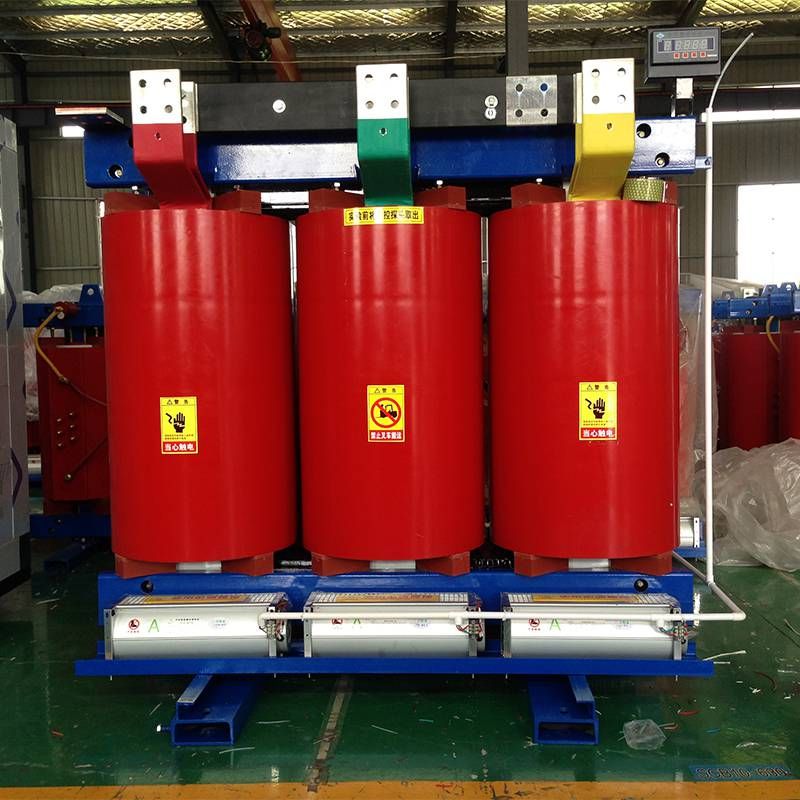
Delta and Wye Transformer Connections
The subject of delta and wye transformer connections is where theory meets system behavior. The same core and turns ratio can produce very different line voltages, grounding options, harmonic responses, and fault characteristics depending on the chosen connection.
Delta-Delta Connection
In a delta-delta connection, both primary and secondary windings are connected in delta. There is no neutral point.
This connection is robust under certain unbalanced loads and can continue operation in reduced-capacity open-delta scenarios if one unit in a bank is lost. It is often chosen where a neutral is unnecessary and harmonic behavior can be tolerated or managed.
Delta-Wye Connection
In a delta-wye connection, the primary is delta and the secondary is wye. This is one of the most common distribution arrangements because it provides a neutral on the secondary side, enabling line-to-neutral loads.
It also introduces a 30° phase shift, which matters in system studies and when paralleling transformers. In practice, this is a point many non-specialists miss until they see circulating current or phasing mismatch during commissioning.
Wye-Wye Connection
In a wye-wye connection, both sides are connected in wye. It offers straightforward voltage relationships and can provide neutrals on both sides.
However, grounding and harmonic control must be handled carefully. Without proper grounding or tertiary treatment, the connection may show poor behavior under unbalanced or distorted conditions.
Wye-Delta Connection
In a wye-delta connection, the primary is wye and the secondary is delta. It is used in certain transmission and industrial applications, especially where a delta secondary is beneficial for motor loads or harmonic circulation.
Like delta-wye, it introduces a phase shift. In practical relay coordination and parallel operation, vector group awareness is mandatory.
Three-Phase Transformer Turns Ratio and Voltage Transformation
The phrase three-phase transformer turns ratio and voltage transformation refers to one of the most important analytical rules: the turns ratio determines the ratio of phase voltages, not always directly the line voltages seen by the external system.
How Turns Ratio Determines Output Voltage
If the primary phase winding has N1 turns and the secondary phase winding has N2 turns, then the ideal phase-voltage ratio is approximately V1phase / V2phase = N1 / N2.
This is true whether the transformer steps voltage up or down. But the external line voltage depends on whether the winding is connected in delta or wye.
Line Voltage vs Phase Voltage in Delta and Wye Systems
In a wye connection, line voltage equals √3 × phase voltage. In a delta connection, line voltage equals phase voltage.
This is why two transformers with the same turns ratio can present different measured line voltages depending on the primary and secondary connections. Many exam errors, commissioning mistakes, and purchase misunderstandings come from ignoring this distinction.
Sample Calculation Table
| Primary Line Voltage | Primary Connection | Secondary Connection | Turns Ratio (N1:N2) | Primary Phase Voltage | Secondary Phase Voltage | Expected Secondary Line Voltage |
|---|---|---|---|---|---|---|
| 11 kV | Delta | Wye | 27.5:1 | 11,000 V | 400 V | 693 V |
| 11 kV | Delta | Wye | 15.88:1 | 11,000 V | 693 V | 1,200 V |
| 33 kV | Wye | Delta | 47.63:1 | 19,053 V | 400 V | 400 V |
| 13.8 kV | Delta | Wye | 19.92:1 | 13,800 V | 693 V | 1,200 V |
| 480 V | Wye | Delta | 1:1 | 277 V | 277 V | 277 V |
The table shows the point clearly: turns ratio acts on phase voltage. You must convert between line and phase values according to the connection.
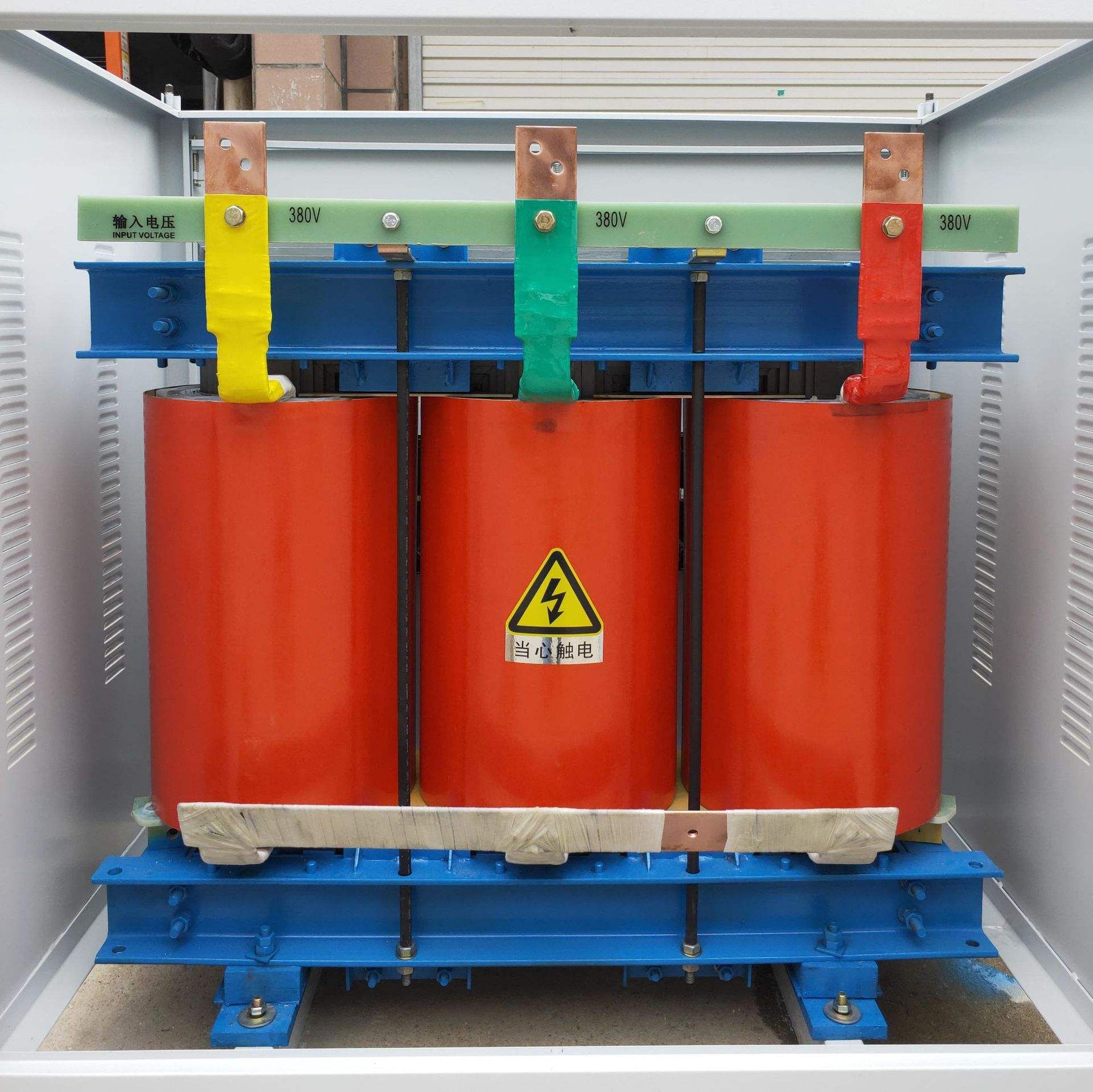
Vector Relationships, Phase Shift, and Balanced Operation
Vector relationships are central to correct transformer analysis. A transformer is not just a voltage-changing device. It is also a phase relationship device.
Vector groups define how primary and secondary phasors are displaced. This matters in system grounding, relay settings, harmonic paths, and especially parallel operation. Two transformers with equal voltage ratios but different vector groups cannot simply be paralleled safely.
Balanced loading is equally important. In textbooks, load is usually symmetrical. In plants, it often is not. Welding loads, VFD clusters, single-phase office feeders on one section, or uneven process duty can cause current imbalance, neutral stress, and uneven heating.
Equivalent Circuit, Losses, and Efficiency
The transformer equivalent circuit helps explain actual behavior beyond ideal theory. It includes winding resistance, leakage reactance, core loss resistance, and magnetizing reactance.
Main losses include:
Core loss: hysteresis and eddy current loss, present even at no load.
Copper loss: I²R loss in the windings, increasing strongly with load current.
Stray loss: structural eddy effects caused by leakage flux.
Dielectric and auxiliary losses: smaller but relevant in large units.
High efficiency is one reason three-phase transformers dominate power systems. Large power transformers often exceed 98% to 99% efficiency near rated conditions, while distribution units commonly operate in the high 97% to 99% range depending on size and loading.
Authoritative guidance on testing, temperature rise, and loading appears in standards and references such as IEC 60076, IEEE C57.12, IEEE C57.91, and manufacturer performance data published by major transformer OEMs.
Why 3-Phase Transformers Are More Efficient Than Single-Phase Banks
An integrated three-phase transformer is often more efficient than three separate single-phase units because it uses less core material, less tank material, less auxiliary structure, and a more compact magnetic path.
Main advantages include:
Higher efficiency in many practical ratings.
Smaller footprint in substations and switch rooms.
Lower capital cost per unit of capacity.
Less material use for the same three-phase duty.
Wider use in modern power systems because of compactness and standardization.
The tradeoff is that a three-unit bank can offer flexibility and redundancy in specific operational strategies. So “better” depends on the application, not only on efficiency.
Real-World Operating Data and Application Examples
Real systems show how theory translates into design. In utility transmission, generator step-up transformers may raise voltage from tens of kilovolts to hundreds of kilovolts for efficient long-distance transfer. In industrial plants, medium-voltage transformers feed motor control centers and VFD buses. In commercial buildings, distribution transformers step medium voltage down to low-voltage service levels.
In one industrial audit I participated in for a motor-heavy manufacturing line, the most revealing issue was not under-voltage but thermal imbalance. The line currents looked acceptable in the control room trend, yet infrared inspection showed one set of terminations running 18°C hotter because of poor lug pressure and oxidation. The transformer itself was blamed first, but the real issue was termination resistance. This kind of field detail rarely appears in beginner articles.
Another recurring observation from plant work is that dry-type transformers feeding VFD-rich panels often run acoustically “normal” but thermally above expectation. Harmonic current raises copper and stray losses in ways operators underestimate, especially when only RMS current is watched without considering waveform distortion.
Typical Voltage Levels and Applications
| Primary Voltage | Secondary Voltage | Typical Rating Range | Common Application |
|---|---|---|---|
| 400 kV | 220 kV | 100 MVA to 1000+ MVA | Bulk transmission substations |
| 132 kV | 33 kV | 20 MVA to 200 MVA | Grid and regional substations |
| 33 kV | 11 kV | 5 MVA to 60 MVA | Primary distribution networks |
| 11 kV | 415 V | 100 kVA to 5 MVA | Commercial and industrial distribution |
| 13.8 kV | 480 V | 300 kVA to 10 MVA | Industrial plants, motor loads, process lines |
| 34.5 kV | 4.16 kV | 1 MVA to 30 MVA | Large motors and plant distribution |
Typical Efficiency, Loss, and Loading Ranges
| Transformer Size | Typical Full-Load Efficiency | Approx. No-Load Loss | Approx. Load Loss at Rated Load | Practical Loading Pattern |
|---|---|---|---|---|
| 100 kVA dry-type | 97.5% to 98.5% | 0.2 to 0.5 kW | 1.5 to 2.8 kW | 40% to 80% average in buildings |
| 500 kVA oil-filled | 98.5% to 99.0% | 0.6 to 1.5 kW | 4 to 7 kW | 50% to 85% in mixed industrial service |
| 2.5 MVA distribution | 99.0% to 99.3% | 2 to 5 kW | 15 to 28 kW | 60% to 90% in feeder duty |
| 40 MVA power transformer | 99.3% to 99.6% | 15 to 40 kW | 120 to 250 kW | Grid-dependent, often cyclic |
| 250 MVA transmission unit | 99.5% to 99.8% | 60 to 180 kW | 500 to 1200 kW | High utilization with seasonal variation |
These ranges are representative rather than universal. Exact values depend on impedance design, conductor material, cooling method, efficiency targets, and procurement standards.
Practical Analysis: How to Judge Whether a 3-Phase Transformer Is Working Correctly
If you need to judge real operation quickly, use a field-oriented checklist rather than relying on one measurement.
Verify primary and secondary voltages under no-load and load.
Confirm phase sequence before connecting rotating machinery or paralleling.
Measure current balance across all three phases.
Check temperature rise of windings, tank, and especially terminations.
Listen to sound quality: steady hum is different from rattling, buzzing under one corner, or intermittent crackle.
Inspect insulation condition through tests such as insulation resistance, dissolved gas analysis for oil-filled units, or partial discharge diagnostics where applicable.
Observe load response: does voltage regulation remain normal as the load changes?
Review neutral current in wye systems, especially with nonlinear loads.
Compare with nameplate vector group and actual wiring.
A healthy transformer is not defined by “it has output voltage.” It is defined by correct voltage, correct phase relation, acceptable temperature, acceptable noise, stable insulation, and predictable behavior under load.
Common Failure Modes and Industry Pain Points
The most frequent operating problems are rarely mysterious. They are usually combinations of thermal stress, electrical stress, contamination, poor maintenance, or application mismatch.
Overheating from overload, blocked cooling, poor ventilation, or harmonic currents.
Insulation aging accelerated by heat, moisture, oxidation, and repeated overload cycles.
Harmonic distortion from VFDs, rectifiers, UPS systems, and arc loads.
Unbalanced loads causing unequal phase currents and localized thermal stress.
Magnetizing inrush current tripping protection during energization.
Grounding mistakes producing neutral instability or fault-clearing problems.
Cooling degradation due to fan failure, oil contamination, radiator fouling, or neglected maintenance.
Maintenance access constraints in cramped electrical rooms, which lead to incomplete inspection.
From an industry pain-point perspective, two issues stand out. First, many users underinvest in commissioning checks because the transformer is assumed to be “passive equipment.” Second, many facilities track current and voltage but neglect temperature trend, harmonic content, and torque on terminals, even though these often reveal the real degradation path first.
Less-Obvious Field Details Most Beginners Miss
Several details are hard to intuit from basic theory but matter enormously in practice.
Magnetizing inrush after re-energization can be much higher than rated current for a short duration, especially when switching occurs at an unfavorable point on the voltage wave and residual core flux remains. This is why transformers that are “healthy” can still trip protection on energization.
Neutral shift under imbalance is another subtle issue. In a wye-connected system with uneven loading or grounding irregularity, the neutral point may move, changing phase-to-neutral voltages and stressing single-phase loads unevenly.
Vector-group mismatch in paralleling is a classic commissioning error. Even if the voltage magnitude appears correct, the phase displacement can make paralleling impossible or dangerous.
Poor terminal tightening can distort thermal readings. I have seen technicians point an infrared camera at the tank wall and conclude “top oil is fine” while a cable lug inside the enclosure was the actual hotspot. Local contact resistance often precedes transformer winding trouble and is easier to fix if found early.
Audible hum interpretation also deserves more attention. A normal transformer hum is steady and load-related only to a limited extent. A new buzz, metallic chatter, or asymmetric sound often hints at loose core clamping, panel resonance, fan issues, or abnormal magnetic stress.
Insights From Reddit, Quora, and Practitioner Communities
Recent discussions across Reddit electrical engineering threads, Quora explanations, and practitioner forums reveal a pattern that formal textbooks often miss: most confusion is not about the existence of electromagnetic induction, but about what exactly changes when the connection changes, and what field symptoms matter first.
A repeated theme in community discussions is that many learners misunderstand why the secondary current is not “pre-decided” by the transformer. Practitioners repeatedly explain that the transformer establishes available voltage and capacity, while the load determines current draw within thermal and impedance limits.
Another highly recurrent community point concerns delta behavior. Users often ask why delta seems to “trap harmonics.” The practical explanation given by experienced engineers is that triplen harmonic components can circulate within the closed delta path, which can help prevent those harmonics from propagating outward but also increases internal heating concerns.
Quora-style discussions frequently expose another problem: line voltage and phase voltage are mixed up constantly. People calculate turns ratio correctly, then apply it to the wrong voltage quantity and conclude the transformer is faulty when it is actually their phasor framework that is wrong.
Common User Confusions Found in Community Discussions
The most common confusions observed in real-user threads include:
Why does secondary current depend on load rather than the nameplate alone?
Why can a delta connection suppress or circulate triplen harmonics?
Why do line-to-line and phase voltage calculations produce different answers?
Why does a delta-wye transformer have a 30° shift?
Why can two similar-rated transformers fail to parallel?
Why does energization current look like a fault current on the meter for a moment?
Original User Observations and Field Feedback
Community feedback from technicians and plant engineers repeatedly converges on several practical truths:
“Nameplate data alone is not enough.” Real operation depends on load waveform, ambient temperature, cooling airflow, grounding, and termination quality.
“Thermal behavior under non-linear loads is often underestimated.” A transformer feeding VFDs or rectifiers may show acceptable RMS current but still run hotter because harmonics increase losses.
“Wiring verification prevents many commissioning failures.” More than one practitioner reports that simple polarity, phase sequence, or terminal identification errors consume hours that could have been saved with disciplined pre-energization checks.
One especially useful field perspective from practitioners is that infrared imaging, current balance logging, and neutral measurement often give faster insight than abstract equivalent-circuit analysis during troubleshooting. That does not make theory unnecessary. It means the best troubleshooting integrates both.
Unique Angles Rarely Covered in Basic Articles
There are several angles rarely covered in beginner explanations but repeatedly raised by experienced users:
Harmonics from VFDs can make a transformer “within current limit” yet still too hot.
Infrared inspection findings often expose bad terminations before winding damage appears.
Audible hum interpretation can separate normal magnetostriction from loose hardware or abnormal magnetic force.
Textbook balance versus plant reality is a major gap: real facilities almost never maintain perfect phase balance for long.
Ground reference quality affects measurement accuracy more than many beginners expect.
These community-driven insights are valuable because they add operational realism. They show that understanding three-phase transformer construction and operation requires more than memorizing formulas.
Comparison Table: Three-Phase Transformer Bank vs Core-Type Transformer
| Criterion | Three-Phase Transformer Bank | Three-Phase Core-Type Transformer |
|---|---|---|
| Cost | Usually higher total cost for equal three-phase capacity | Usually lower cost per kVA |
| Footprint | Larger | Smaller and more compact |
| Redundancy | Better flexibility; individual unit replacement possible | Lower modular redundancy |
| Maintenance | One unit can sometimes be serviced or replaced independently | Single integrated unit simplifies some inspections but failure affects all phases |
| Efficiency | Generally lower than integrated unit | Generally higher |
| Transport | Easier in constrained routes due to smaller separate units | Can be difficult for large ratings |
| Common Applications | Remote sites, staged upgrades, maintenance-sensitive systems | Utilities, industrial substations, commercial distribution |
Featured Snippet Section: How Does a 3-Phase Transformer Work in Simple Terms?
A three-phase transformer uses electromagnetic induction to convert the voltage of three-phase AC power by creating alternating magnetic flux in the core, inducing corresponding voltages in secondary windings, and transferring energy to the load without direct electrical connection.
FAQ
What is the working principle of a three-phase transformer?
The working principle is electromagnetic induction. A three-phase AC supply applied to the primary creates alternating magnetic flux in the core; that flux links the secondary windings, induced voltage appears there, and when a load is connected, power transfers magnetically from primary to secondary.
How does a 3-phase transformer operate step by step?
It operates in four practical steps: apply a balanced three-phase supply to the primary, establish time-varying flux in the core, induce EMF in the secondary windings according to the turns ratio, and deliver energy to the load once the secondary circuit is connected.
What is the difference between delta and wye transformer connections?
Delta and wye differ in line/phase voltage relationships, neutral availability, harmonic behavior, and application. Delta has no inherent neutral and can circulate triplen harmonics internally, while wye can provide a neutral and supports line-to-neutral loads but requires careful grounding and imbalance management.
How do turns ratio and voltage transformation work in a three-phase transformer?
The turns ratio sets the ratio of primary phase voltage to secondary phase voltage. The final line voltage then depends on whether the winding connection is delta or wye, so the same turns ratio can produce different external line voltages in different connection schemes.
Why is a three-phase transformer more efficient than three single-phase units?
A three-phase transformer usually uses less core steel, less enclosure material, and a more compact magnetic structure for the same capacity. That reduces losses, footprint, and cost, which is why integrated three-phase units are widely preferred in power systems.
What are the main types of three-phase transformers?
The two main types are the three-phase transformer bank, which uses three separate single-phase units, and the three-phase core-type transformer, which integrates all three phases into one magnetic structure.
How can I tell if a three-phase transformer is faulty?
Warning signs include abnormal voltage imbalance, unexpected heating, unusual sound, insulation deterioration, unstable load behavior, repeated protection trips, rising neutral current, and thermal hotspots at terminations or cooling components.
Can a three-phase transformer work with unbalanced loads?
Yes, within practical limits. A three-phase transformer can supply unbalanced loads, but current imbalance increases losses, heating, voltage asymmetry, and neutral stress depending on the connection type, grounding arrangement, and severity of the imbalance.
Conclusion: Key Takeaways for Fast Judgment and Analysis
A three-phase transformer works on one central principle: electromagnetic induction. Three-phase voltage applied to the primary produces alternating flux in the core, that flux induces voltage in the secondary, and when a load is connected, energy is transferred magnetically.
To analyze any unit confidently, follow the logic in order: identify the transformer type, identify the winding connection, distinguish line voltage from phase voltage, apply the turns ratio correctly, check vector group and phase shift, and then verify real operating condition through voltage, current balance, temperature, sound, insulation, and load response.
That is the shortest path from memorizing the three-phase transformer working principle to actually being able to judge whether a transformer is operating correctly in the field.
CTA: Apply the Method to a Real Transformer
Do not stop at theory. Go to a real transformer nameplate today, identify whether it is delta or wye connected, note the vector group, compare primary and secondary voltage ratings, estimate the voltage transformation from the turns ratio logic, and use the checklist in this article to evaluate whether the unit is operating correctly.
If you are commissioning, maintaining, specifying, or studying transformers, make this your habit: read the nameplate, verify the wiring, measure the voltages, check the thermal condition, and think in phase quantities before line quantities. That single method will prevent a large share of avoidable transformer mistakes.