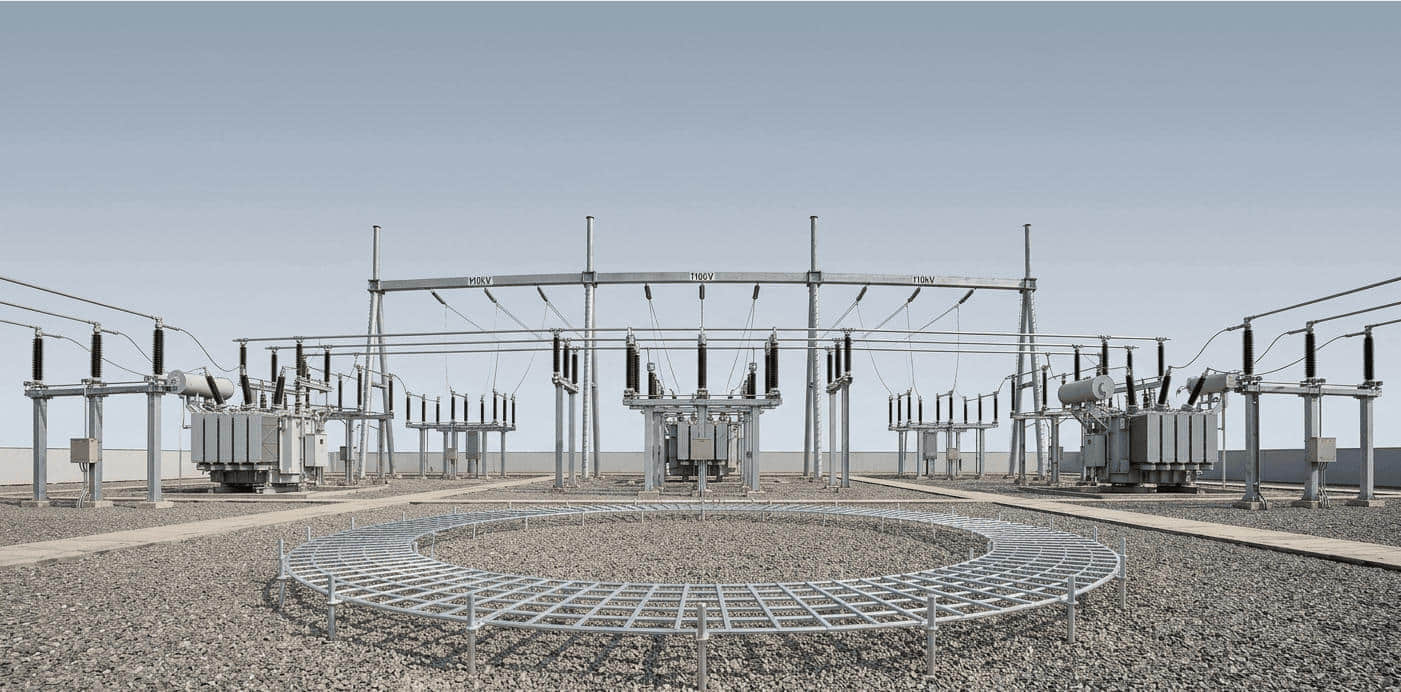
LEB means Local Equipotential Bonding: bonding within a limited area so that conductive parts people can touch at the same time, and stay at nearly the same potential. MEB means Main Equipotential Bonding: the primary bonding connection that ties major conductive parts and incoming services to the building or facility earthing system.
If you finish this article, you will know exactly how to distinguish LEB and MEB in electrical earthing, in which scenarios each one should be selected, and how to make practical choices for building wiring, industrial plants, switchgear factories, substations, and medium/high-voltage support facilities.
In real projects, the difference is not academic. An incorrect bonding concept can lead to unsafe touch voltage, failed inspections, duplicated copper, rework during commissioning, and awkward disputes among EPCs, panel builders, civil contractors, and owners.
Introduction: What LEB and MEB Mean in Earthing Systems
In electrical grounding and bonding explained in practical terms, MEB is the facility-level backbone, while LEB is the zone-level equalizer. One creates the main reference framework; the other tightens voltage equalization where risk is concentrated.
For B2B buyers in 10 kV to 220 kV equipment manufacturing, this distinction matters because the bonding decision affects layout, copper quantity, workmanship detail, FAT/SAT acceptance, and long-term safety around metal-clad systems, test bays, transformer areas, and containerized packages.
I will state the core rule early: MEB is usually the base layer and is often mandatory. LEB is added where local touch-voltage control needs to be stronger than what the main bonding network alone can guarantee.
Why Confusing LEB and MEB Causes Safety, Compliance, and Project Cost Problems
When teams confuse local equipotential bonding vs main equipotential bonding, they often do one of two damaging things. They either under-bond dangerous local metalwork, or they over-bond everything without a risk logic, and waste material and labor.
In industrial and medium-voltage sites, both mistakes are expensive. Under-bonding can leave isolated frames, cable tray sections, removable doors, skid bases, or process piping at different potentials during faults. Over-bonding can create unnecessary conductor runs, congested trenches, unclear drawings, and extra terminations that later corrode or are removed during modifications.
On one factory expansion project I reviewed, the MEB bar was correctly installed in the main low-voltage room, but the metal grating and nearby bench structures in a high-touch test area were not locally bonded. Earthing resistance was measured as acceptable at the system level, yet continuity between simultaneously accessible parts was inconsistent because painted interfaces and removable supports interrupted the path. This is a classic example of a project that looked compliant on paper but was weak in human-contact risk control.
Typical consequences of confusion include:
Unsafe touch voltages during fault or induced conditions.
Inspection failure because local metalwork is not demonstrably included.
Copper overdesign caused by indiscriminate bonding loops.
Scope disputes between electrical, mechanical, and package suppliers.
Retrofit difficulty occurs when inaccessible metal parts need bonding after commissioning.
False confidence because low overall earth resistance does not automatically mean good equipotential control.
LEB vs MEB: The Fastest Way to Understand the Difference
The fastest mental model is simple: MEB bonds the facility to a common reference; LEB bonds a local risk zone so people and nearby metal stay at nearly the same potential.
If you ask, “Where does the whole building or plant start its bonding logic?” that is usually MEB. If you ask, “What should be tied together around this room, skid, wet area, medical space, or high-touch maintenance zone?” that is usually LEB.
LEB vs MEB in Electrical Earthing
| Item | MEB | LEB |
|---|---|---|
| Definition | Main equipotential bonding connecting major conductive parts and incoming services to the facility's earthing system | Local equipotential bonding within a limited area to equalize touch voltage around people or equipment |
| Bonding range | Whole building, plant, substation support building, or main service area | Specific room, skid, zone, enclosure, wet area, medical area, or maintenance interface |
| Primary purpose | Create the main bonding framework and a common potential reference | Reduce the local potential difference between simultaneously accessible parts |
| Typical conductors connected | PE/PEN, structural steel, service pipes, main cable trays, lightning protection interfaces, major exposed conductive parts | Local frames, nearby exposed conductive parts, cable armor, grating, raised floors, skid bases, accessible metal piping |
| Common installation points | Service entrance, main switchboard room, transformer room, MCC room, utility intake, building earthing bar | Bathrooms, medical rooms, data rooms, test benches, containerized substations, skid packages, process modules |
| Applicable standards | IEC 60364, IEC 61936, IEEE grounding guidance, local wiring rules, utility requirements | IEC 60364 special-location rules, application-specific standards, project specifications, IEEE touch-voltage design logic |
| Risk controlled | Facility-wide bonding integrity and reference equalization | Local touch-voltage and simultaneous-contact risk |
What Is Main Equipotential Bonding (MEB)?
Main Equipotential Bonding is the primary bonding framework at the origin or main distribution point of a building, plant, or substation-related facility. It is where major conductive systems are intentionally tied into the earthing system, so fault current return paths and equalization are coordinated from the start.
Under IEC-style frameworks, this is closely linked to the main earthing terminal or main earthing bar concept. In practice, engineers, contractors, and inspectors may use slightly different terms, but the design intent is the same: major conductive parts should not remain floating relative to the installation earthing system.
For industrial facilities, MEB is not a decorative detail on a drawing. It is the point that determines whether structural steel, service entries, cable support systems, and electrical protective conductors are working as one coordinated system or as disconnected metal islands.
Where MEB Is Installed in Building Wiring and Industrial Facilities
In equipotential bonding in building wiring, MEB is commonly installed near the electrical origin of the installation. In industrial projects, it is often associated with the most authoritative point of earthing coordination.
Service entrance rooms
Main switchboard rooms
Transformer rooms
MCC rooms
Substation control buildings
Utility intake areas
Main earthing bar locations in process plants
In a 33 kV and 11 kV support building environment, the MEB is frequently positioned so that incoming LV services, PE networks, structure steel, and major metallic services can be bonded with short and inspectable routes. Good design minimizes unnecessary conductor length and avoids routing that becomes inaccessible after equipment installation.
What Must Be Connected to the MEB
The exact list depends on local codes and project specifications, but the following are typical MEB connections in industrial and commercial projects:
PE or PEN conductor, where applicable under the system arrangement
Main earthing conductor
Structural steel
Metallic water pipes
Gas pipes, where permitted by code and utility rules
Main cable trays and ladders
Lightning protection interfaces
Major exposed conductive parts
Transformer tank or associated metallic support structures, where applicable
Mechanical plant skids entering the building
The important point is not merely “connect more metal.” The correct principle is to bond all major conductive systems that can introduce potential or become dangerous under fault conditions.
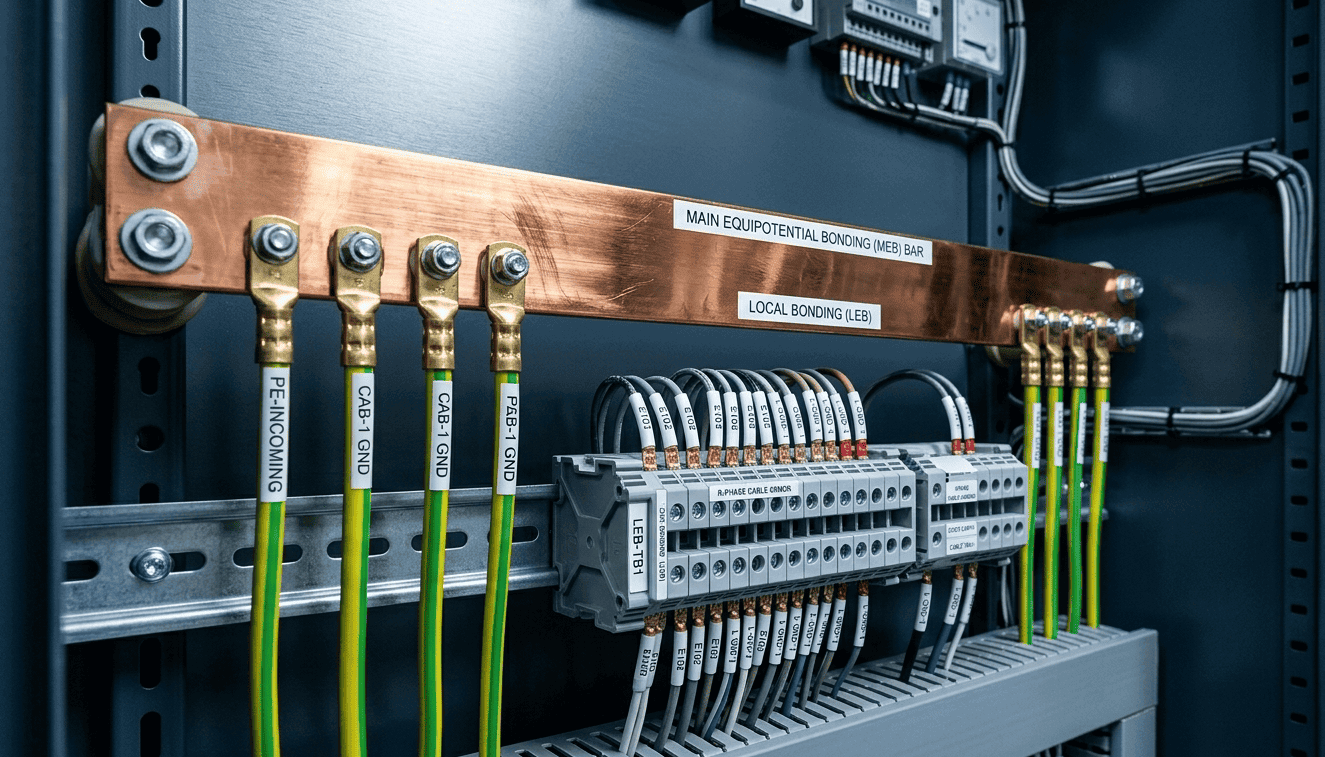
Typical MEB Connection Points in Industrial and Commercial Projects
| Component | Bonding Purpose | Design Notes |
|---|---|---|
| Main switchboard PE bar | Establish protective conductor reference | Keep the route short and clearly labeled |
| Structural steel | Prevent floating building steelwork | Do not rely on incidental contact through paint or bolted friction |
| Metallic water pipe entry | Equalize incoming service potential | Bond near the point of entry per code and owner standard |
| Cable tray backbone | Maintain continuity and reduce potential difference | Tray couplers often need explicit bonding continuity checks |
| Lightning protection interface | Coordinate earthing systems and avoid dangerous separation | Must follow the lightning protection design philosophy |
| HV/LV transformer room metalwork | Integrate the room metal systems with the main earthing framework | Watch for isolated removable barriers and doors |
| Utility intake metal pipework | Control transferred potential from incoming services | Check utility restrictions before bonding certain services |
What Is Local Equipotential Bonding (LEB)?
Local Equipotential Bonding is supplementary or local bonding used in specific zones where voltage equalization must be controlled around people, equipment, or process interfaces. It is narrower in scope than MEB but often more directly related to immediate human safety.
LEB exists because a large facility can have acceptable overall bonding and still contain local points where simultaneously accessible conductive parts are too far apart electrically, too isolated mechanically, or too exposed to touch risk. Local bonding closes that gap.
In practical engineering language, LEB is what you add when you look at a room, skid, platform, or enclosure and say: If someone touches two of these metal parts at once, I do not want a meaningful potential difference between them.
Where LEB Is Used in Real Projects
LEB appears in more places than many non-specialists expect. It is not limited to bathrooms or medical rooms.
Bathrooms and wet service rooms
Medical locations
Data rooms and telecom equipment zones
Skid-mounted process systems
Containerized substations
Process plants with metal platforms and piping congestion
Offshore or modular equipment rooms
High-touch maintenance zones
Test benches in electrical equipment factories
Cable termination areas with dense metallic interfaces
For medium- and high-voltage equipment factories, the most common reason for LEB is not textbook theory. It is the practical reality that technicians stand near metal frames, movable benches, cable armor, grating, enclosures, and temporary test interfaces all at once.
What Must Be Connected to the LEB
LEB typically connects conductive parts that are local, accessible, and likely to be touched simultaneously. Typical items include:
Local metalwork
Nearby exposed conductive parts
Cable armor and metallic sheath terminations
Equipment frames
Metal pipes in the local zone
Metal grating and platforms
Raised floors and pedestals
Accessible structural elements
Container or skid base frames
Removable access doors and bonded panel sections
The logic is local accessibility, not simply category. If a metal part is close enough for simultaneous contact or can introduce a different potential into the zone, it should enter the local bonding study.
Typical LEB Use Cases by Environment
| Location | Reason for Local Bonding | Recommended Design Focus |
|---|---|---|
| Bathroom or wet area | Reduced body resistance and likely simultaneous contact | Bond pipes, exposed conductive parts, and accessible metal fixtures |
| Medical location | Higher consequence of touch voltage | Strict zone definition and verification testing |
| Data room | Dense metallic systems and sensitive equipment interfaces | Raised floor continuity and tray bonding |
| Containerized substation | Compact metal enclosure with many touch points | Bond enclosure, floor, doors, cable armor, skid frame |
| Process skid | Pipes, frames, valves, and instruments close together | Short local bonds and maintainable bonding lugs |
| Switchgear test bay | Temporary connections and frequent human interaction | Benches, flooring, temporary metallic supports, and mobile equipment |
| Offshore or modular unit | High metal density and corrosive environment | Corrosion-resistant joints and reinspection plan |
Local Equipotential Bonding vs Main Equipotential Bonding: How to Choose the Right One
The most reliable decision framework is this: MEB is usually mandatory as the base layer; LEB is added where local risk, special installations, or touch-voltage exposure justifies it.
Do not treat them as competing options in most industrial projects. They are usually stacked layers of protection.
Use MEB when you are defining the facility bonding architecture. Use LEB when you are analyzing a room, machine zone, skid, wet area, or compact metal environment where localized equalization matters.
Selection Logic for Electrical Equipment Factories
For switchgear plants, transformer workshops, GIS buildings, cable termination areas, and test halls, the decision should follow workflow reality, not only drawing templates.
1. Start with MEB at the main service or main distribution reference.
2. Map all major conductive systems: structure, trays, incoming services, PE, and mechanical metalwork.
3. Identify high-touch or simultaneous-contact zones: test bays, maintenance benches, metal flooring, skid assembly points.
4. Check whether personnel can touch multiple conductive parts at once.
5. Assess whether the MEB path alone is too long, indirect, uncertain, or dependent on incidental continuity.
6. Add LEB where local equalization must be stronger and more direct.
In my experience reviewing industrial assembly and testing zones, LEB becomes especially valuable in three factory situations:
Temporary equipment interfaces that are frequently reconfigured.
Metal platforms and grating are located beside the test objects.
Containerized or skid-mounted products where the product itself forms a compact conductive environment.
Table: When to Use MEB Only, LEB Only, or Both
| Scenario | Risk Level | Voltage Environment | Human Exposure | Recommended Strategy |
|---|---|---|---|---|
| Standard office building service entrance | Low to moderate | Low voltage | General occupancy | MEB may only be sufficient unless special rooms exist |
| Main industrial plant distribution room | Moderate | LV/MV support systems | Limited trained access | MEB essential; LEB only if local touch-risk zones exist |
| Bathroom or wet utility room | Moderate to high | Low voltage | High simultaneous-contact probability | Both, with LEB focused on local conductive parts |
| Containerized substation | High | MV/HV support application | Compact metal enclosure | Both strongly recommended |
| Switchgear test bench area | High | MV/HV testing support zone | Frequent technician contact | Both, with deliberate LEB around test interfaces |
| Isolated skid package inside a larger bonded plant | Moderate to high | Depends on process/equipment | Localized contact risk | Both; skid-level LEB tied back to MEB |
| Small standalone metal cabinet with no local simultaneous-touch complexity | Low | LV | Limited access | MEB-derived PE path may suffice; separate LEB not always needed |
Earthing System Bonding Requirements: Codes, Standards, and Engineering Logic
Any serious discussion of earthing system bonding requirements must connect engineering judgment to standards. Terminology differs by region, but the design logic is consistent: dangerous potential differences between accessible conductive parts must be controlled, and protective conductors must have reliable continuity.
IEC 60364 is central for low-voltage electrical installations and equipotential bonding concepts in buildings and special locations. IEC 61936-1 is highly relevant for power installations exceeding 1 kV AC, including substations and associated facilities. IEEE guidance, especially the grounding philosophy reflected in documents such as IEEE Std 80 for AC substation grounding, reinforces the importance of touch and step voltage control.
In medium- and high-voltage industrial contexts, the practical crossover is important. A support building may be governed by building wiring rules, while the outdoor yard or substation platform follows power-installation grounding rules. Good projects coordinate both instead of treating them as separate universes.
Standards Commonly Referenced in Earthing and Bonding Design
IEC 60364 series for low-voltage installation requirements and equipotential bonding principles
IEC 61936-1 for power installations exceeding 1 kV AC
IEEE Std 80 for substation grounding and touch/step voltage analysis
IEEE grounding and bonding guidance documents used in industrial and utility design practice
National electrical codes or wiring regulations, depending on the market
Utility rules and owner specifications for incoming services, bonding philosophy, and inspection criteria
Project-specific specifications for industrial grounding and bonding
One important market reality: IEC-oriented projects often use the term equipotential bonding more explicitly, while some NEC-oriented and industrial documents frame the same logic through bonding, grounding electrode system, and conductive-part connection requirements. The naming may vary; the hazard does not.
Common Compliance Mistakes in Equipotential Bonding
Isolated metalwork was left out because it was “outside the mechanical scope.”
Duplicated neutral-earth links are creating parallel current paths
Long bonding paths that reduce local equalization effectiveness
Corrosion-prone joints with no surface preparation or protection
Undocumented retrofits that bypass the original bonding concept
Reliance on tray couplers or door hinges as if they were permanent low-impedance bonds
Painted interfaces are treated as conductive connections
I have repeatedly seen continuity problems at exactly these locations: painted gland plates, removable access covers, modular floor pedestals, and cable tray transitions between contractor packages. These are not rare anomalies. They are where otherwise decent projects quietly fail.
Electrical Grounding and Bonding Explained for B2B Buyers
B2B buyers do not purchase “bonding theory.” They purchase risk control, compliance, constructability, and predictable acceptance. That is why electrical grounding and bonding explained for industrial clients must include commercial consequences.
If you are an EPC, panel builder, factory owner, or switchgear/substation buyer, the difference between MEB and LEB influences:
BOQ accuracy
Copper and hardware quantity
Cabinet and skid design details
Inspection and test plans
Installation labor
Maintenance access
Site acceptance risk
How Bonding Design Affects Tendering, Copper Quantity, and Installation Labor
A vague bonding specification leads to one of two tender failures. Contractors either underprice by assuming the PE network alone is enough, or overprice by adding general copper bonding everywhere without zoning logic.
Correct scope definition reduces copper waste. It also reduces labor because bonding points can be concentrated where they are functionally necessary instead of scattered as afterthoughts.
In one manufacturing building review, a revised zoning approach cut dozens of unnecessary long bonding runs by shifting from “bond every visible metal item back to the main bar individually” to “establish a sound MEB backbone and targeted LEB within high-touch zones.” Material savings were meaningful, but the bigger gain was installation clarity and easier inspection.
How EPCs, Panel Builders, and Factory Owners Evaluate Bonding Schemes
Professional buyers evaluate bonding schemes through four filters:
Safety margin: Does the design reduce touch-voltage exposure in real operating conditions?
Standard compliance: can it be justified against IEC, IEEE, local wiring rules, and owner standards?
Constructability: Can contractors actually install and inspect it after all equipment arrives?
Lifecycle maintenance: Will future modifications break hidden bonding paths?
For panel builders and packaged substation suppliers, this is especially important. Factory acceptance may look excellent when all access panels are open, temporary links are in place, and surfaces are clean. Six months later, after repainting, door replacement, cable additions, and maintenance shortcuts, a weak bonding detail becomes a field problem.
Real-World Data and Engineering Examples: LEB and MEB in Practice
Real projects rarely use a pure textbook form of only one method. They combine them.
The table below summarizes practical patterns across industrial and power-support applications.
Example Bonding Designs for Factory, Substation, and Special-Risk Areas
| Site Type | Voltage Class | Bonding Arrangement | Project Rationale |
|---|---|---|---|
| Switchgear assembly workshop | LV support for MV products | MEB backbone plus LEB at test benches and metallic flooring zones | Frequent human interaction with cabinets, benches, temporary tools, and frames |
| Transformer workshop | LV/MV support environment | MEB for building systems; LEB near oil handling, metalwork, and test interfaces where needed | Large exposed metal surfaces and temporary maintenance connections |
| Containerized substation | 11 kV to 33 kV typical package applications | Main bond to earth bar plus dense local bonding inside the enclosure | Compact enclosure increases simultaneous-touch risk |
| Substation control building | Associated with 33 kV to 220 kV yard | MEB mandatory; LEB added in battery rooms, telecom rooms, wet rooms, and equipment clusters | Mixed building-wiring and power-installation risk environment |
| Medical or wet process room | LV | MEB plus strict LEB | Low body resistance and high simultaneous-contact probability |
| Skid-mounted process package | Application-dependent | Local skid bonding tied to facility MEB | Package integrity must survive transport, installation, and retrofit changes |
Example: Switchgear Workshop
In a switchgear workshop, MEB is the plant baseline. It connects the workshop distribution system, PE network, structural steel, major trays, and service metalwork.
But MEB alone is often not enough around test benches, metallic flooring strips, temporary grounding points, movable benches, and maintenance interfaces. In these zones, I prefer a clearly defined LEB strategy with visible, testable bonding points.
A detail many designers miss is the role of temporary equipment. Portable test sets, mobile ladders, roller tables, and removable cable support frames can create touch combinations that do not exist in the original drawing. If they are routinely present in the work zone, they belong in the risk assessment.
Example: Containerized Substation or Skid Package
Containerized substations and skid packages are where the value of LEB becomes obvious. The enclosure itself is a compact metal environment: doors, floor plates, frames, internal partitions, cable glands, support rails, and mounted equipment are all within arm’s reach.
Even when the enclosure is tied back to the main earthing bar, strong local bonding is still necessary. Otherwise, removable doors, painted hinges, segmented floor plates, and bolted frame joints can create discontinuities.
On containerized packages, I have found continuity failures most often at three points:
Door bonding was omitted because hinges were assumed sufficient
Floor plate sections installed over coated surfaces
Cable armor bonding is dependent on gland details that changed between the factory and the site
These are exactly the failures that do not show up in a simple visual check.
Example: Medical, Wet, or High-Touch Environments
In wet or medical locations, local equalization is critical because body resistance can be lower and simultaneous contact is more likely. A low earth resistance value elsewhere in the building does not guarantee safe local touch conditions here.
The same design principle applies in high-touch industrial zones. If operators stand on conductive flooring and reach metal-framed equipment near pipes, trays, or bonded process metal, local equalization deserves the same seriousness as it gets in formal “special location” guidance.
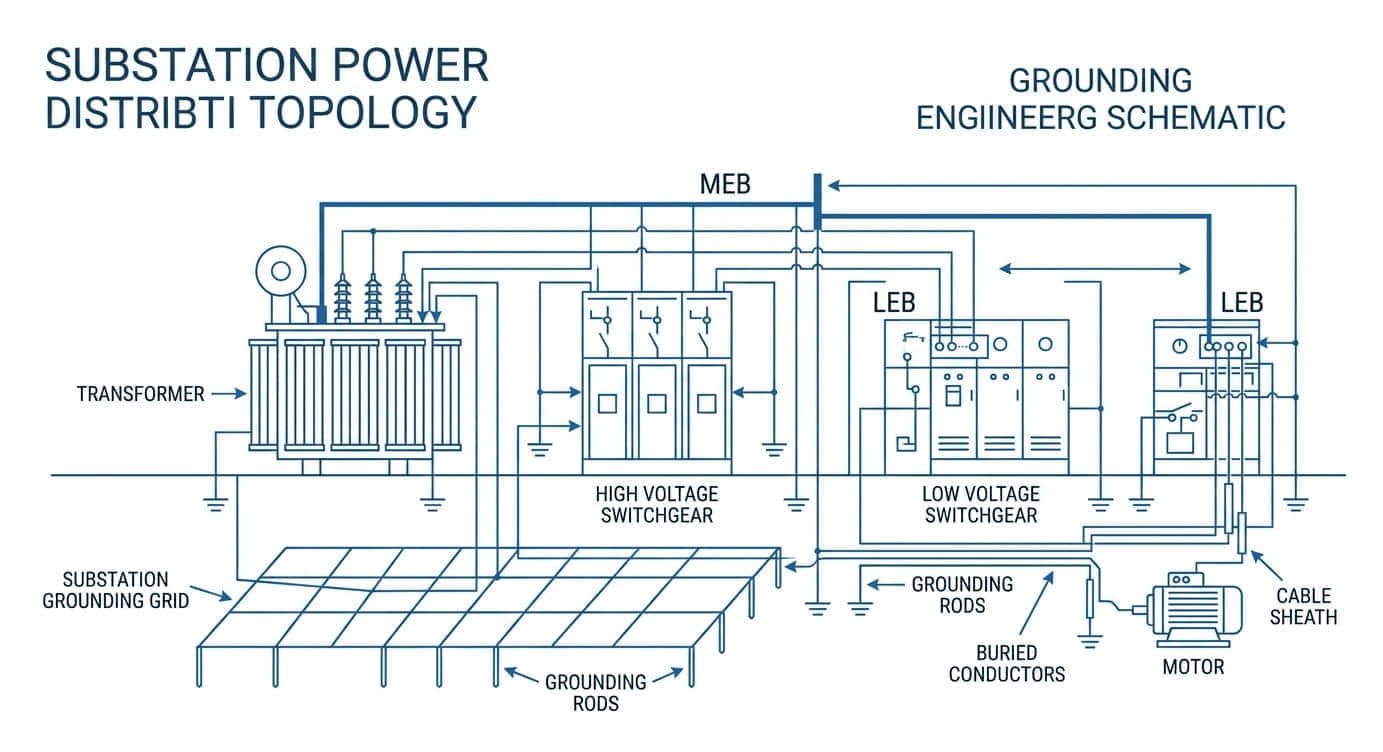
Field Details Most Non-Specialists Miss in LEB and MEB Design
This is where many generic articles fail. They explain the concept but ignore the field details that actually decide whether bonding works after handover.
The following details are repeatedly responsible for “bonded on drawing but not bonded on site” failures.
Hidden Installation Issues That Create Bonding Failure
Paint film resistance at lugs, bars, enclosure panels, and support frames
Removable door bonding was omitted because the hinges look metallic
Cable tray continuity gaps across expansion joints or poor couplers
Bolted-joint corrosion increases resistance over time
Flexible connectors are omitted at vibrating equipment or hinged sections
Raised-floor pedestals installed as isolated islands
Galvanized-to-copper contact is causing corrosion problems without proper bimetallic treatment
Temporary equipment interfaces with no defined bonding provision
Undocumented isolated sections created during retrofit or maintenance
One on-site pattern deserves emphasis: paint is the silent enemy of assumed continuity. Many teams trust bolted metal-to-metal contact, but after coating, powder finishing, and repainting, the continuity is no longer reliable. Good practice is to prepare dedicated bonding surfaces, use proper hardware, and then protect the joint against corrosion without insulating it.
Pain Points Discussed in Industry Projects
Across industry discussions and practitioner exchanges, the same pain points recur:
Inspection ambiguity: the drawing says “bond all nearby metalwork,” but nobody agrees what counts as nearby.
Multi-contractor scope gaps: electrical assumes mechanical bonded the skid; mechanical assumes electrical handled it.
Retrofit difficulty: after commissioning, the necessary bonding point is behind a live panel or sealed floor.
Documentation mismatch: the as-built drawing retains bonding links that were removed during modifications.
Maintenance shortcuts: links are removed temporarily and never reinstated.
These are not edge cases. They are the normal failure modes of an under-specified bonding design.
Community Insights: What Practitioner Discussions Reveal About LEB and MEB
When you examine practitioner-led discussions, several themes appear consistently. First, many users confuse terminology and think LEB and MEB are just two names for any earth connection. Second, there is a constant debate between overbonding and underbonding. Third, many installers discover that retrofit realities are far messier than textbook diagrams.
A striking pattern in user-generated technical discussions is that non-specialists often ask whether every piece of metal must be bonded. Experienced practitioners usually answer: no, not blindly. The correct question is whether the part is an exposed conductive part, an extraneous conductive part, locally accessible, capable of introducing potential, or likely to be touched simultaneously with other conductive parts.
Another recurring point is that many people believe low measured earth resistance proves bonding quality. Practitioners repeatedly note the opposite: a site can have good earth resistance and still poor local equipotential performance if continuity across accessible metalwork is weak or indirect.
Common Questions Raised by Real Users
Does every metal part need bonding?
When does local bonding become redundant if the whole building is already bonded?
How do you verify continuity in older facilities with undocumented changes?
Should cable tray systems be considered naturally continuous?
Do doors and removable covers need separate bonding?
Why do inspectors ask for local bonds in wet or compact metal spaces even though a main earth bar already exists?
The practical answer is that local redundancy is justified where human contact risk is high, where path continuity is uncertain, or where the geometry of the space makes simultaneous touch likely.
Unique First-Hand Perspectives from Installers and Engineers
One installer observation appears again and again: continuity fails where aesthetics win over bonding detail. Smooth powder-coated enclosures look excellent, but unless bonding studs, serrated washers, and prepared surfaces are used properly, the electrical continuity is not trustworthy.
Another field observation is that inaccessible bonding points become maintenance failures. A link hidden behind installed cable trunks or below sealed raised floors may be perfect on day one and practically uninspectable afterward.
Engineers also point out a recurring operational issue: maintenance teams remove bonding links during modifications, repainting, or equipment replacement, then assume hinges, support rails, or tray contact are sufficient when the original dedicated bond is gone.
These practitioner details rarely appear in generic articles, yet they are exactly what determine whether an earthing and bonding design survives real plant life.
Best Practices for Equipotential Bonding in Building Wiring and Industrial Plants
Good equipotential bonding in building wiring and industrial plants comes from combining design intent with installable detail and lifecycle verification. The best projects do not merely draw bars and lines. They define zones, interfaces, test points, and maintenance responsibilities.
Design Checklist for Reliable MEB
Place the main bonding point close to the installation origin
Bond source-side conductive systems with short, inspectable paths
Document the main earthing bar and all connected services clearly
Coordinate service-entry bonding across electrical and mechanical scopes
Control corrosion at joints and transitions
Avoid duplicate neutral-earth links unless specifically required by system design
Provide labeling and test access
Verify continuity rather than assuming structural contact
Design Checklist for Reliable LEB
Define the local zone physically, not vaguely
Analyze simultaneous-touch exposure
List local metal inventory explicitly
Provide maintainable bonding points on frames, pipes, trays, and floors
Use flexible bonds for doors, hinged panels, and moving interfaces
Check painted and plated surfaces before assuming continuity
Route local bonds short and direct
Perform verification testing and retain records
For electrical equipment factories, I strongly recommend including bonding verification in both factory and site acceptance plans. This should not be limited to the main earthing bar. Test continuity across local metalwork in the final assembled condition, with doors fitted, floors installed, trays coupled, and package interfaces complete.
FAQ
What is the difference between LEB and MEB in an earthing system?
MEB is the main equipotential bonding framework for the whole building or facility, typically located near the installation origin and tying major conductive parts and incoming services to the earthing system. LEB is local equipotential bonding within a limited zone, intended to reduce touch voltage between conductive parts that may be touched simultaneously in a specific area.
Is LEB mandatory if MEB is already installed?
Not always, but often in special-risk or high-touch zones. If local conditions, such as wet environments, medical spaces, compact metal enclosures, skid packages, or maintenance interfaces, create a higher simultaneous-contact risk, LEB may still be required or strongly justified even when MEB is already present.
Where is the main equipotential bonding bar usually located?
It is usually located near the service entrance, main switchboard room, transformer intake area, MCC room, or another main distribution point where the installation earthing system and major conductive services can be bonded with short and inspectable connections.
What does local equipotential bonding connect in practice?
In practice, LEB connects nearby conductive parts such as local metalwork, equipment frames, piping, cable trays, cable armor, grating, raised floors, accessible structural metal, skid bases, and other conductive parts that people can touch simultaneously within a defined zone.
Which is more important in industrial facilities: LEB or MEB?
MEB is foundational because it establishes the main bonding architecture of the facility. LEB is situational, but in special-risk zones, it becomes critical because it directly controls local touch-voltage exposure where people and metal interfaces are concentrated.
How do I choose between local equipotential bonding and main equipotential bonding for a project?
Start with MEB as the facility baseline. Then assess the facility type, human exposure, simultaneous-touch risk, equipment layout, compact metal environments, wet conditions, temporary interfaces, and applicable standards. If local risk remains high or path continuity is too indirect, add LEB for that specific zone.
Can poor bonding increase touch voltage even when the earthing resistance is low?
Yes. Low overall earthing resistance does not guarantee good local equipotential conditions. If accessible conductive parts are not well bonded to each other, local potential differences can still arise during faults, induced conditions, or transferred potentials.
What standards should engineers check for equipotential bonding design?
Engineers should check IEC 60364, IEC 61936-1, relevant IEEE grounding guidance such as substation grounding principles, national wiring rules, utility requirements, and project-specific owner specifications. The exact combination depends on voltage class, facility type, and local jurisdiction.
Conclusion: How to Distinguish LEB and MEB and Apply Them Correctly
The distinction is now clear. MEB is the main bonding framework that ties the facility’s major conductive systems to the earthing system. LEB is the local bonding layer that equalizes voltage within a specific zone where people, equipment, and conductive parts are close enough for simultaneous contact risk.
If you work in industrial buildings, substations, switchgear plants, transformer workshops, GIS support buildings, cable termination areas, or containerized packages, the right question is usually not LEB or MEB. It is where MEB must be established, and where LEB must be added.
Correct selection improves safety, supports IEC and IEEE-aligned compliance logic, reduces unnecessary copper, avoids FAT/SAT surprises, and prevents the very common field problem of “electrically bonded in the drawing, electrically isolated in reality.”
Request a Bonding Review or Send Your Inquiry
If you are an EPC contractor, industrial plant owner, panel builder, switchgear manufacturer, transformer project buyer, or substation package purchaser, send us your project drawings, RFQ, or technical questions for a project-specific earthing and equipotential bonding consultation.
We can help review LEB and MEB in electrical earthing, optimize bonding scope, check compliance logic, and support practical design choices for 10 kV to 220 kV factory applications, industrial buildings, containerized substations, and utility-related facilities.
If your requirement is urgent, contact us directly via WhatsApp for faster communication.