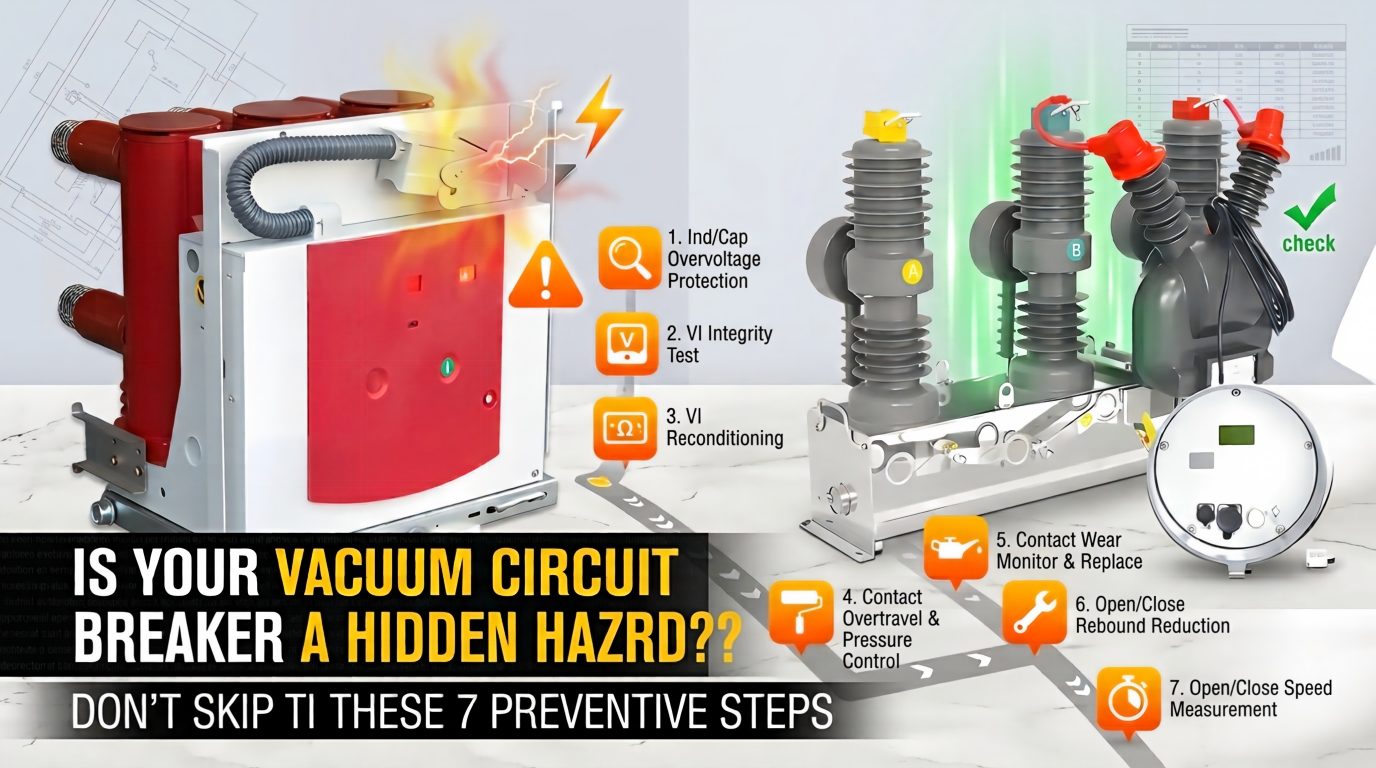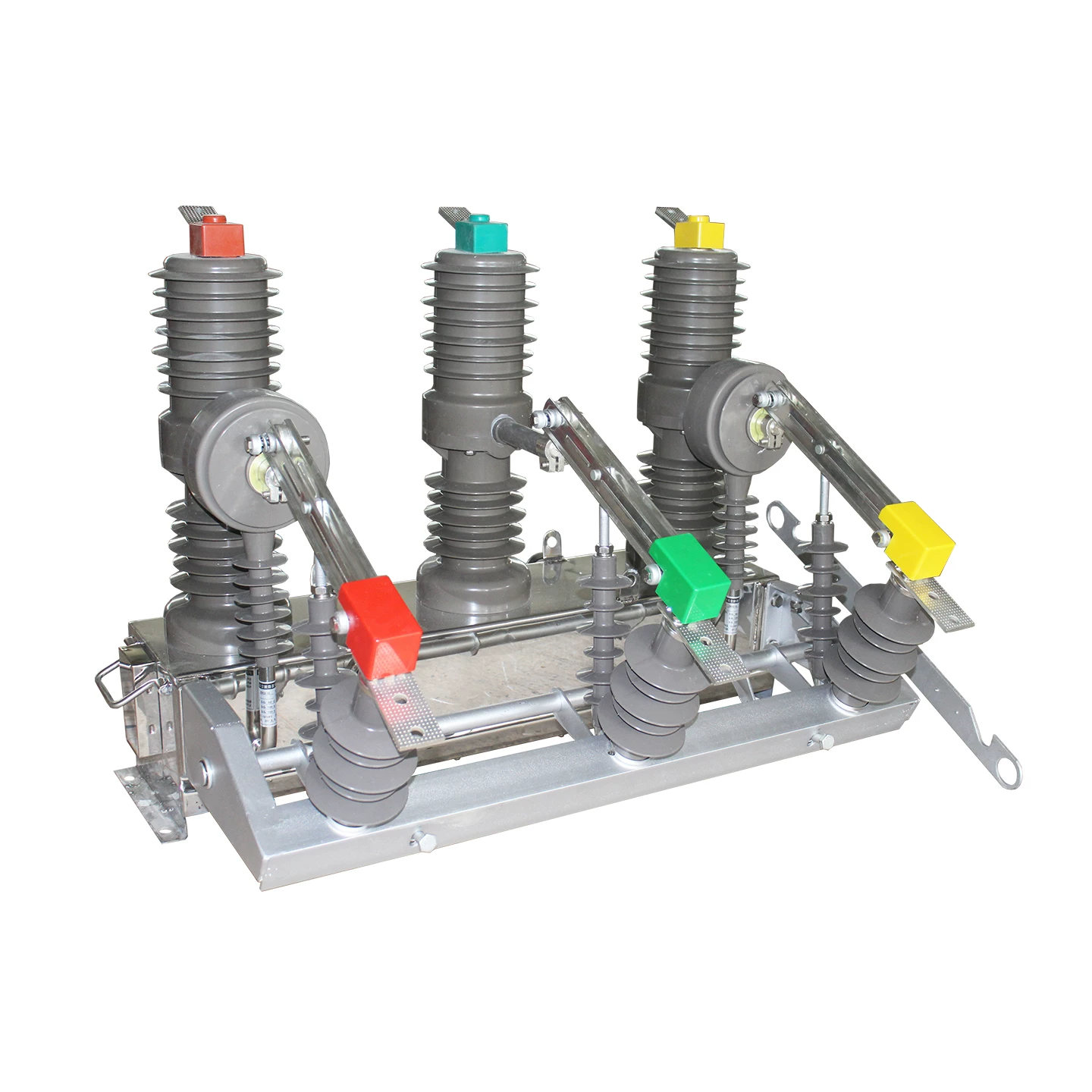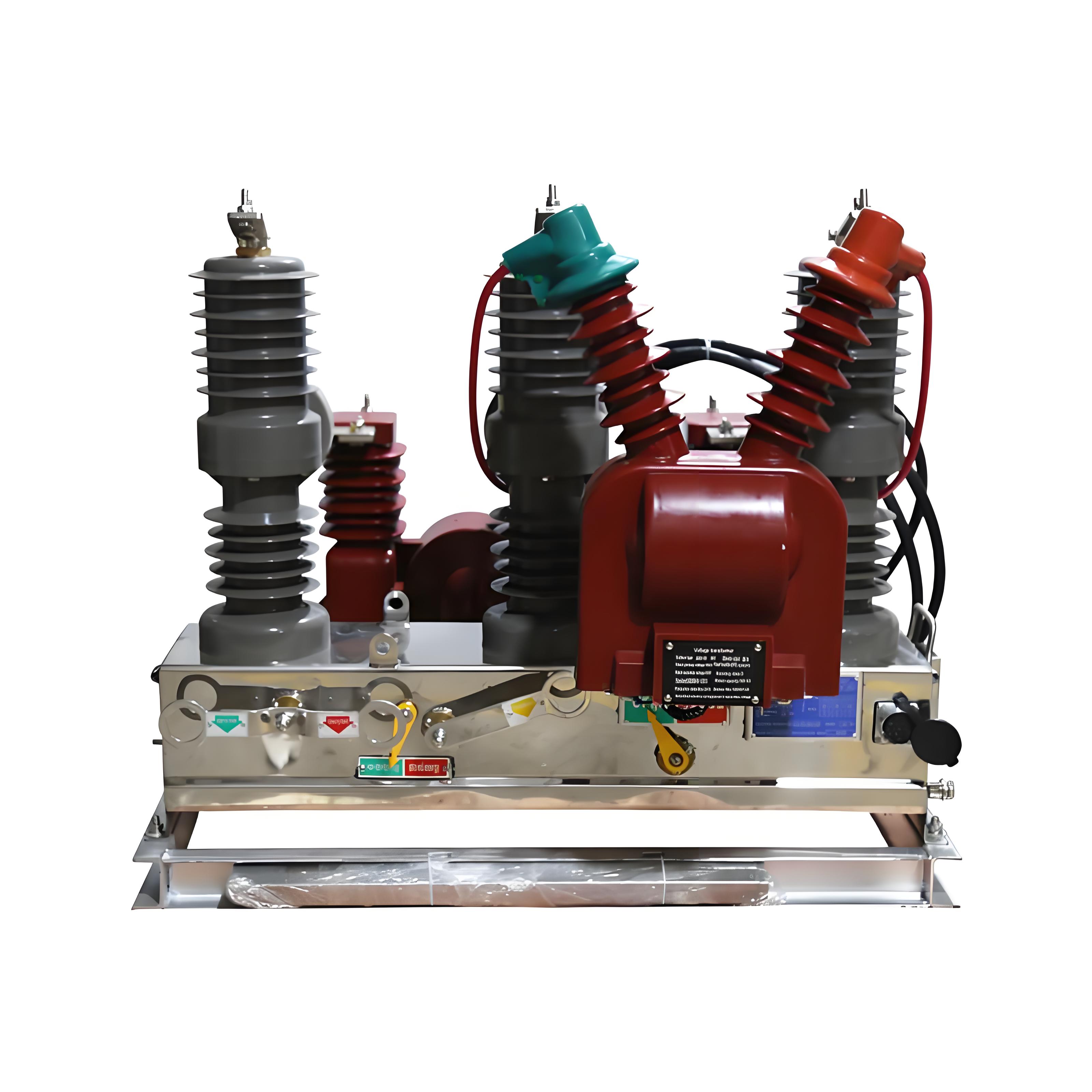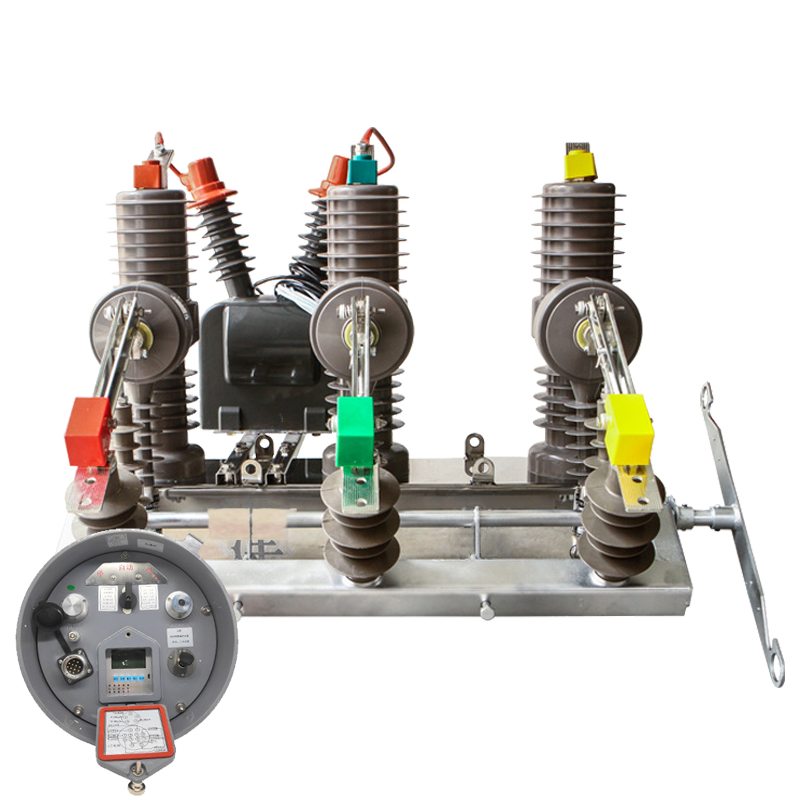
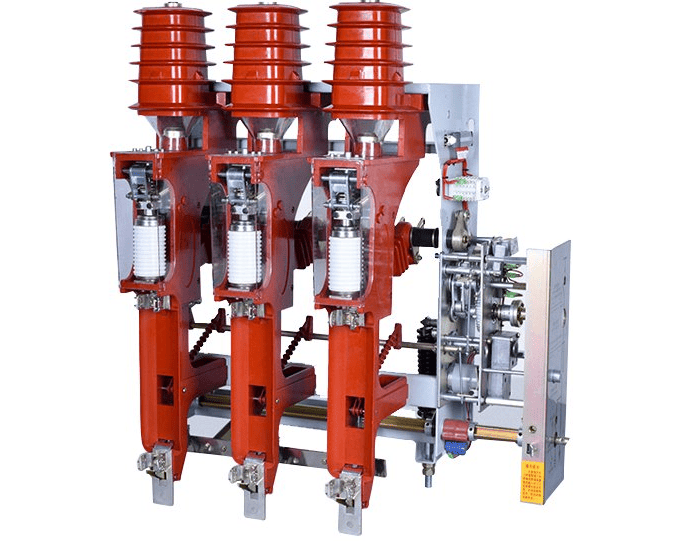
A puffer-type load break switch extinguishes the arc by mechanically compressing air to blow it out. In contrast, a vacuum load break switch interrupts the arc inside a vacuum interrupter and relies on the vacuum environment for arc quenching. If you read this article to the end, you will know how to distinguish them by principle, structure, model code, application, and even by a quick look at the equipment in the field.
What is the Difference Between a Vacuum Load Break Switch and a puffer-type load break switch?
The core difference is the arc quenching method.
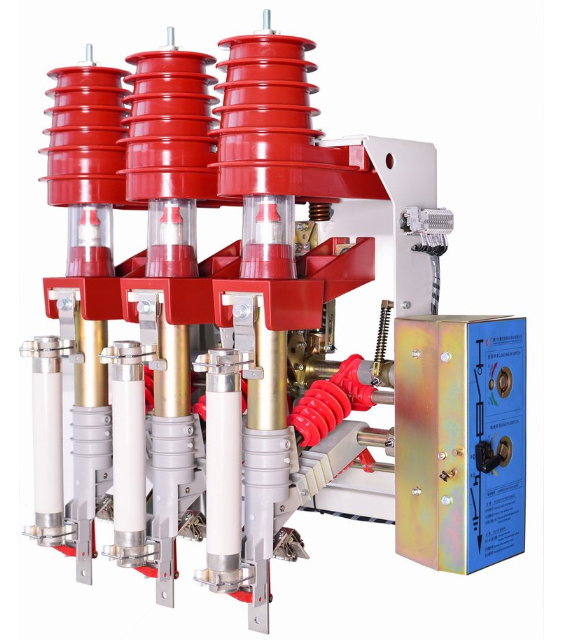
A puffer-type load break switch mechanism uses a piston-cylinder structure. When the contacts move, air is compressed and directed toward the arc to blow it out.
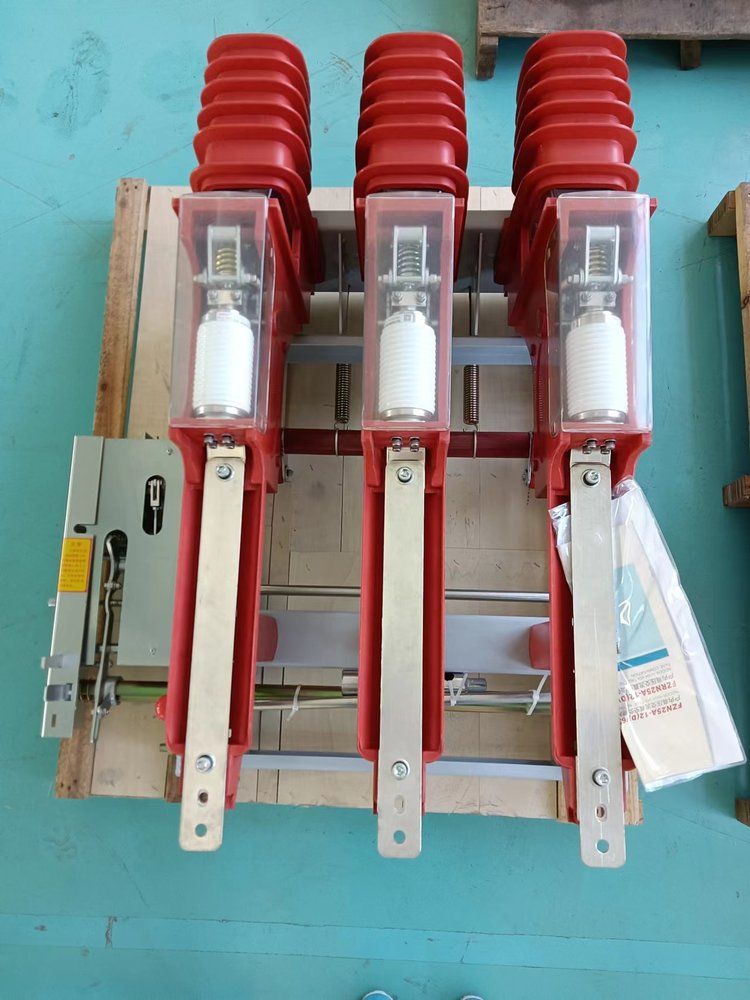
A vacuum load break switch's working principle is different. The contacts separate inside a sealed vacuum interrupter, and the vacuum itself makes arc extinction fast and stable, without relying on compressed air.
One-sentence buyer summary: puffer type is the lower-cost basic option that blows the arc out with compressed air; vacuum type is the durable high-performance option that extinguishes the arc in a vacuum.
Why This Comparison Matters in Real Projects
I have seen project teams treat these two as interchangeable. That usually becomes expensive later.
The wrong medium voltage load break switch application can create avoidable downtime, larger panel dimensions, more maintenance visits, and weaker long-term reliability in harsh sites.
In one retrofit review for a compact secondary distribution project, the switch itself was not the highest cost. The real cost came from rework, panel space conflict, and repeated service calls caused by choosing a mechanism unsuited to dust and frequent operation.
Vacuum Load Break Switch Working Principle
In a vacuum unit, each phase typically has its own vacuum interrupter. The moving and fixed contacts open inside a sealed chamber with very low pressure.
When the contacts part, a short arc appears. In a vacuum, metal vapor condenses quickly, dielectric strength recovers fast, and the arc is extinguished around current zero.
This is why vacuum designs are widely used when the project requires compact size, repeatable operation, and low maintenance. The interruption process does not depend on air-blast geometry, external gas supply, or ambient contamination in the same way exposed mechanisms do.
In practice, the field advantage is obvious: the arc control function is concentrated inside the interrupter, not spread across many exposed mechanical blowing parts.
Puffer Type Load Break Switch Mechanism
A puffer-type switch uses a more visible mechanical process. During opening, a piston moves in a cylinder and compresses air.
That compressed air is directed toward the contact area to stretch, cool, and extinguish the arc. This is the classic load break switch arc quenching method for puffer designs.
The principle is straightforward and cost-effective. But performance depends more on motion timing, mechanical condition, sealing, and the health of the air-compression structure.
That is why older installers often describe it very simply: vacuum kills the arc in a bottle; puffer kills the arc by blowing on it.
Vacuum vs Puffer Load Break Switch Comparison at a Glance
Comparison Table: Vacuum Load Break Switch vs Puffer Type Load Break Switch
| Item | Vacuum Load Break Switch | Puffer Type Load Break Switch |
|---|---|---|
| Principle | Arc interruption inside the vacuum interrupter | Arc extinguished by mechanically compressed air |
| Arc quenching method | Vacuum arc quenching | Air-blast / puffer blowing |
| Visible structure | Three bottle-like interrupters, enclosed and compact | Open frame, piston/cylinder feel, linkages, and blades visible |
| Size | Compact | Usually larger |
| Service life | Longer in frequent duty | Adequate for normal duty, more mechanically dependent |
| Maintenance | Low maintenance | More inspection of moving parts |
| Environmental sensitivity | Lower sensitivity to dust and humidity | Higher sensitivity to contamination and mechanical wear |
| Switching frequency suitability | Better for frequent operations | Better for lighter-duty cycles |
| Typical installation | RMU, compact substation, outdoor kiosk, higher-end panels | Conventional indoor distribution panels |
| Price positioning | Higher upfront cost | Lower upfront cost |
One-Sentence Summary for Buyers
Puffer type is the cheaper basic version that blows out the arc with compressed air; vacuum type is the more durable, compact, higher-performance version that interrupts in a vacuum.
How to Identify a Vacuum Load Break Switch by Appearance
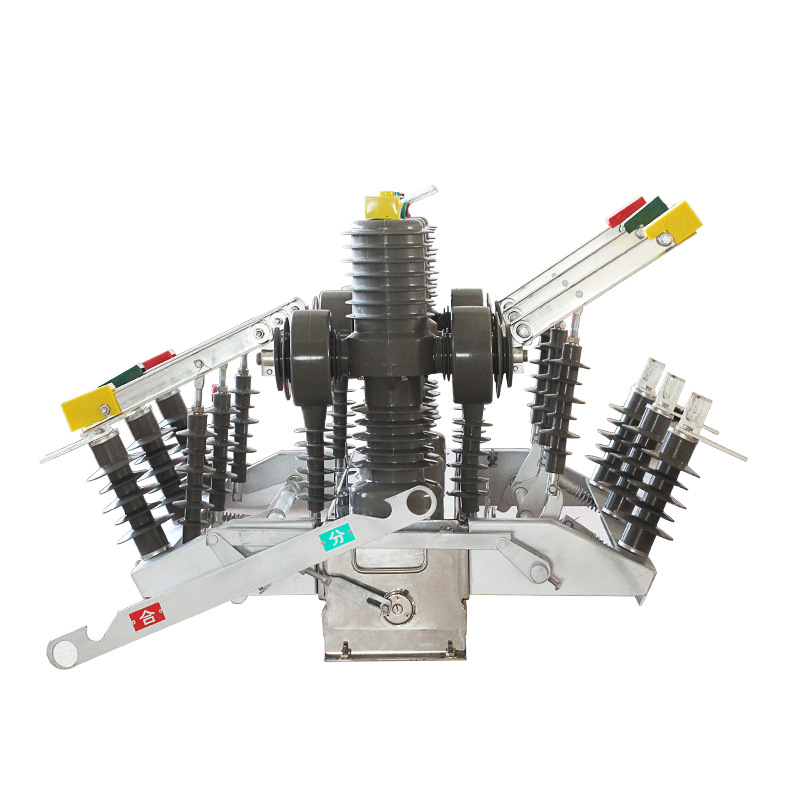
If you are standing in front of a panel or open cubicle, the fastest clue is this: look for three small rounded vacuum interrupters, one per phase.
They often look like short cylinders or sealed bottles. The overall structure is neat, compact, and enclosed.
You usually do not see obvious external air cylinders, pistons, or large exposed blow-out mechanisms. Many model designations also include Z.
Fast Visual Signs of a Vacuum Load Break Switch
Three rounded or cylindrical vacuum interrupters
Compact, tidy, sealed layout
Epoxy resin insulation or enclosed insulating tube design
No obvious exposed air-blast cylinder or piston structure
Model suffix or code often includes Z, such as FZN or FN-type variants with Z
How to Identify a Puffer-Type Load Break Switch by Appearance
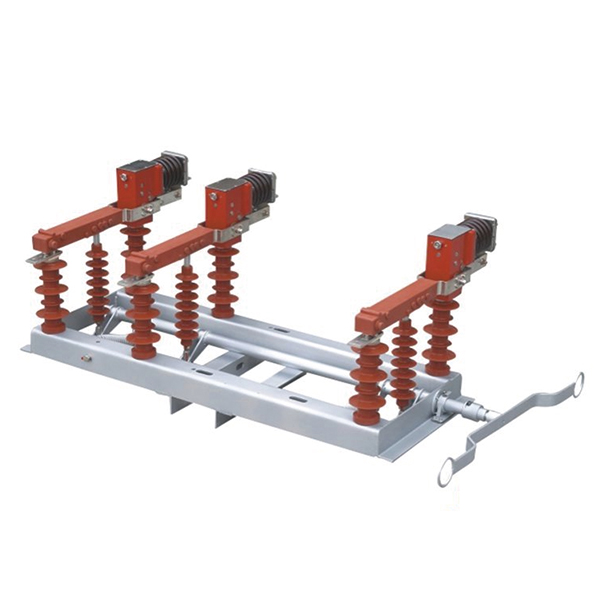
A puffer type often looks like a disconnect switch mixed with a hand-operated air pump.
You can usually see more mechanical parts: blades, rods, springs, linkages, rotating shaft parts, and larger insulating columns that house the compression mechanism.
Its frame is often more open, with a more obvious visible contact gap when open. Many model codes include K.
Fast Visual Signs of a Puffer Type Load Break Switch
Larger open-frame look
Visible operating rods, springs, blades, and linkages
An obvious air-compression or piston-cylinder style structure
Clear visible disconnect gap in the open position
Model suffix or code often includes K, such as FKN or FKRN
Structural Differences Between Vacuum and Puffer Load Break Switches
The structural logic is completely different.
Vacuum types concentrate the interruption inside sealed interrupters. The external mechanism mainly provides motion transfer and contact actuation.
Puffer types distribute the interruption function across contacts, airflow path, piston movement, and external mechanical timing. That means more exposed components and more dependence on precise mechanism conditions.
This is why vacuum units usually look simpler from the outside, even when their internal engineering is more advanced.
Arc Quenching Methods in Load Break Switches
If your search intent is specifically vacuum vs puffer load break switch comparison, this is the section that matters most.
The two technologies are fundamentally two different load break switch arc quenching methods: one uses vacuum dielectric recovery, the other uses compressed air flow generated by mechanism movement.
Why Vacuum Arc Quenching Is More Stable
Vacuum interrupters are enclosed. That reduces sensitivity to dust, humidity, salt fog deposits, and airborne contamination around the arc zone.
Under IEC and IEEE design philosophy for medium-voltage switching devices, stable dielectric recovery and repeatable interruption behavior are major reliability advantages. In real field use, vacuum designs are consistently preferred where operation quality must stay predictable over time.
Why Puffer Arc Quenching Depends More on Mechanics and Environment
Puffer performance depends heavily on mechanical motion accuracy. Wear, misalignment, seal aging, or contamination can reduce blow-out effectiveness.
In dusty rooms and humid substations, operators often notice that exposed moving parts need more cleaning and inspection. The switch may still work, but confidence drops if the mechanism no longer moves crisply.
Advantages and Disadvantages of Vacuum Load Break Switches
Advantages: compact size, stronger interruption stability, long service life, better for frequent switching, low maintenance, good outdoor suitability
Disadvantages: higher initial cost, replacement parts may be more specialized, some buyers overpay for vacuum where duty is very light and basic
For modern distribution projects, vacuum is usually the better lifecycle choice. The capital cost is higher, but the total cost often ends up lower once maintenance and downtime risk are included.
Advantages and Disadvantages of Puffer Type Load Break Switches
Advantages: simpler concept, lower purchase price, familiar to many maintenance teams, easier visual inspection of open mechanical parts
Disadvantages: larger footprint, more exposed mechanism, more sensitive to dust and humidity, usually less attractive for frequent operation or compact outdoor systems
Puffer is not obsolete. It still makes sense in budget-sensitive indoor installations where the switching duty is ordinary and maintenance access is easy.
Where Vacuum Load Break Switches Are Commonly Used
Vacuum units are commonly selected for outdoor ring main units, compact substations, kiosk transformers, and distribution projects with higher reliability targets.
They are also preferred where space is tight. In secondary distribution, a few centimeters saved in every functional compartment quickly becomes commercially important.
Frequent operation is another strong reason. If the switch will be operated often, a vacuum normally gives better long-term confidence.
Where Puffer Type Load Break Switches Are Commonly Used
Puffer-type units are common in standard indoor distribution panels and conventional circuits with lower performance demands.
They are often used where the buyer prioritizes lower initial cost and where technicians can easily inspect and maintain exposed mechanisms.
For straightforward utility rooms or legacy panel formats, puffer can still be a rational choice.
Medium Voltage Load Break Switch Applications by Project Type
Application Selection Table by Environment and Duty
| Project Type | Better Choice | Main Reason |
|---|---|---|
| Indoor substation, light-duty feeder | Puffer or Vacuum | If the budget is tight and the duty is light, a puffer can work; a vacuum gives longer-term value |
| Outdoor kiosk / compact substation | Vacuum | Better enclosure integration and lower environmental sensitivity |
| Ring main unit | Vacuum | Compactness, reliability, and low maintenance |
| Industrial feeder with frequent switching | Vacuum | Better for repeated operations |
| Budget-driven retrofit of basic indoor panel | Puffer | Lower CAPEX when the duty is not severe |
| Remote site with limited maintenance staff | Vacuum | Reduced maintenance dependence |
Real-World Field Feedback: What Installers and Operators Notice First
In practical discussions among installers, panel builders, and service engineers, the first comments are rarely theoretical. They are visual and operational.
People ask: Which one is easier to recognize? Which one gets dirtier faster? Which one feels more trustworthy after three monsoon seasons or two years in a cement plant yard?
Common Field Detail: Vacuum Units Look Cleaner and More Enclosed
Non-specialists often identify vacuum types by the bottle-like interrupters immediately. Even apprentices remember them after one site walk.
During factory acceptance checks, vacuum units also tend to look more orderly. That visual neatness matters more than many engineers admit, because buyers often equate a clean enclosed structure with modern reliability.
Common Field Detail: Puffer Units Show More Linkages, Gaps, and Wear Points
Puffer units make the mechanism visible. You can often trace the movement path by eye: blade, rod, spring, shaft, contact gap.
This is useful for inspection. But it also makes wear points more obvious, especially after years of operation in dusty switch rooms.
Common Pain Point: Dust, Humidity, and Outdoor Exposure
A recurring field complaint is not outright failure. There is an inconsistency after exposure.
Operators in humid or dusty sites often report that exposed puffer mechanisms need more attention to keep operation crisp. Vacuum designs are not immune to environmental issues, but their arc-quenching core is less exposed.
One maintenance contractor I interviewed during a replacement project put it bluntly: the puffer switch tells you when it is aging because you can see it; the vacuum switch earns trust because you mostly leave it alone.
Common Pain Point: Maintenance Access vs Maintenance Frequency
This is a real tradeoff. Puffer units are mechanically accessible, which technicians like.
But accessibility does not mean lower maintenance frequency. In many cases, the business decision is to choose vacuum precisely because the site wants fewer interventions, not easier interventions.
Market Discussion Trends from Real User Communities
Across technical discussion boards and user Q&A communities, the same themes repeat: reliability, visual identification, retrofit compatibility, and lifecycle cost.
Interestingly, non-manufacturers often focus less on interrupting ratings and more on what they actually see in service: loose linkages, dirty mechanisms, footprint constraints, and whether a premium switch avoids future trouble.
What Buyers Ask Before Switching from Puffer to Vacuum
Is the price premium justified?
Will the panel layout need redesign?
Can the operating mechanism and interlocks remain compatible?
Does the site really need frequent operation capability?
Will outdoor reliability improve enough to matter financially?
From the buyer's side, the most persuasive argument is usually not theory. It is a reduced service intervention over five to ten years.
What Non-Experts Usually Get Wrong
The biggest confusion is mixing up load break switches, disconnectors, and vacuum circuit breakers.
A load break switch can switch the normal load current. A disconnector is mainly for isolation and a visible break. A circuit breaker is designed for interrupting fault current at a much higher level.
I have seen procurement teams ask for a “vacuum isolator” when they actually meant a vacuum load break switch with fuse combination. That wording error can distort the whole quotation process.
Data Table: Vacuum vs Puffer Load Break Switch Decision Factors
Decision Matrix for Procurement Teams
| Factor | Vacuum Score (1-5) | Puffer Score (1-5) | Comment |
|---|---|---|---|
| Reliability | 5 | 3 | Vacuum generally offers more stable long-term performance |
| Maintenance burden | 5 | 3 | Puffer usually requires more attention to exposed mechanisms |
| Footprint | 5 | 2 | Vacuum is usually more compact |
| CAPEX | 3 | 5 | Puffer wins on initial cost |
| Outdoor suitability | 5 | 3 | Vacuum is usually preferred outdoors |
| Lifecycle value | 5 | 3 | Vacuum often wins on total ownership cost |
| Frequent operation | 5 | 2 | Vacuum is better for repeated switching duty |
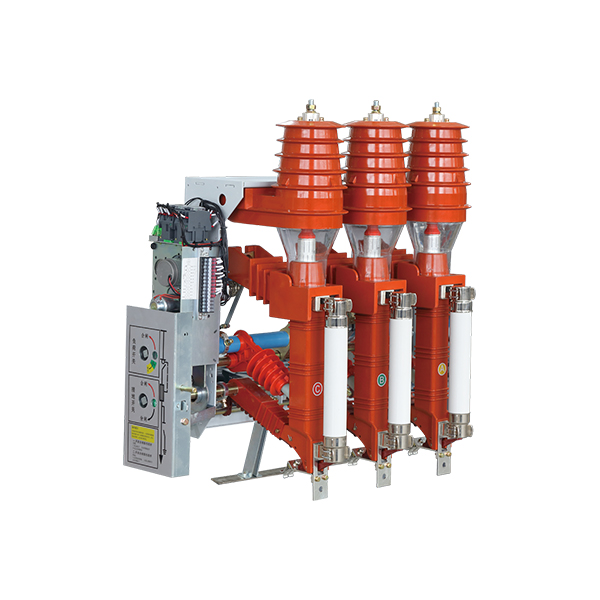
How to Choose Between a Vacuum and a Puffer Type Load Break Switch
The selection logic is practical. Start with five questions: budget, environment, switching frequency, maintenance capability, and project quality target.
If the project is compact, outdoor, reliability-driven, or hard to maintain, a vacuum usually wins. If it is indoor, basic, and budget-driven, a puffer may still be enough.
Choose Vacuum If
The switch will be installed outdoors
Space is limited
Operation frequency is moderate to high
The project demands high reliability
The owner wants low maintenance
The site has dust, humidity, or contamination concerns
Choose Puffer If
The installation is indoors
The duty is basic distribution switching
Budget is the main priority
Maintenance access is easy
Operating cycles are not demanding
The panel format already suits puffer-type construction
Vacuum vs Puffer Load Break Switch Comparison for Featured Snippet
Which is better, a vacuum or a puffer-type load break switch? For most modern medium-voltage distribution projects, vacuum is better for reliability, compact design, outdoor use, and frequent switching. Puffer type is better when the project is cost-sensitive, indoors, and operational demands are modest.
Quick Answer Table
| Need | Better Option |
|---|---|
| Better for reliability | Vacuum |
| Better for a low budget | Puffer |
| Better for outdoor use | Vacuum |
| Better for frequent switching | Vacuum |
Standards and Compliance Reference: Why IEEE and IEC Matter
For serious procurement, product comparison should never stop at appearance or price. It must be checked against applicable standards, test reports, and the type-test scope.
In international practice, buyers often reference the IEC 62271 series for high-voltage switchgear and controlgear, especially requirements related to load break switching devices, dielectric performance, temperature rise, mechanical endurance, and making/breaking capability.
On projects influenced by North American practice, IEEE / ANSI references are also used to evaluate medium-voltage switching equipment design, testing philosophy, and service suitability.
The practical point is simple: if a supplier cannot clearly explain tested ratings, mechanical endurance class, insulation level, and application limits, the comparison is incomplete.
Conclusion: Which Load Break Switch Should You Choose?
If you want the plain business answer, here it is.
Choose a puffer type for basic, lower-cost, indoor distribution duty where space is not critical, and maintenance access is easy.
Choose vacuum type for compact, durable, higher-reliability distribution projects, especially outdoor RMUs, compact substations, and applications with stricter maintenance and performance expectations.
And if you only need one quick memory line, use this: puffer relies on “air blowing”; vacuum relies on “vacuum interrupting.” Cheap basic option versus durable high-performance option.
FAQ
Is a vacuum load break switch always better than a puffer-type load break switch?
No. Vacuum is usually better for reliability, compactness, and low maintenance, but the puffer type can still be the smarter choice for basic indoor projects with a tight budget and light switching duty.
How can I identify a vacuum load break switch quickly on site?
Look for three small bottle-like vacuum interrupters, a compact enclosed layout, and very few exposed blowing components. Model codes often include the letter Z.
How can I identify a puffer-type load break switch quickly on site?
Look for a more open mechanical structure with visible blades, rods, springs, linkages, and larger insulating cylinders. Model codes often include the letter K.
What is the main difference in arc quenching methods?
The vacuum switch extinguishes the arc inside a sealed vacuum interrupter. The puffer-type switch compresses air mechanically and blows the arc out.
Which type is better for outdoor medium voltage load break switch applications?
Vacuum is usually the better choice for outdoor use because its arc-quenching core is enclosed and less affected by dust, humidity, and contamination.
Is a puffer-type load break switch cheaper?
Yes, in most cases, the upfront purchase cost is lower. However, lifecycle cost may become higher if maintenance frequency and downtime risk increase.
Can a load break switch replace a circuit breaker?
No. A load break switch is designed for normal load switching, not for interrupting high fault current in the same way a circuit breaker does. The two devices serve different protection and switching roles.
Need Help Selecting the Right Load Break Switch for Your Project?
If you are comparing a vacuum load break switch and a puffer-type load break switch, send us your single-line diagram, voltage level, rated current, installation environment, and expected switching frequency.
We can help you match the right solution for indoor panels, RMUs, compact substations, and outdoor distribution projects. Send us an inquiry today or contact us on WhatsApp for a fast technical recommendation and quotation.