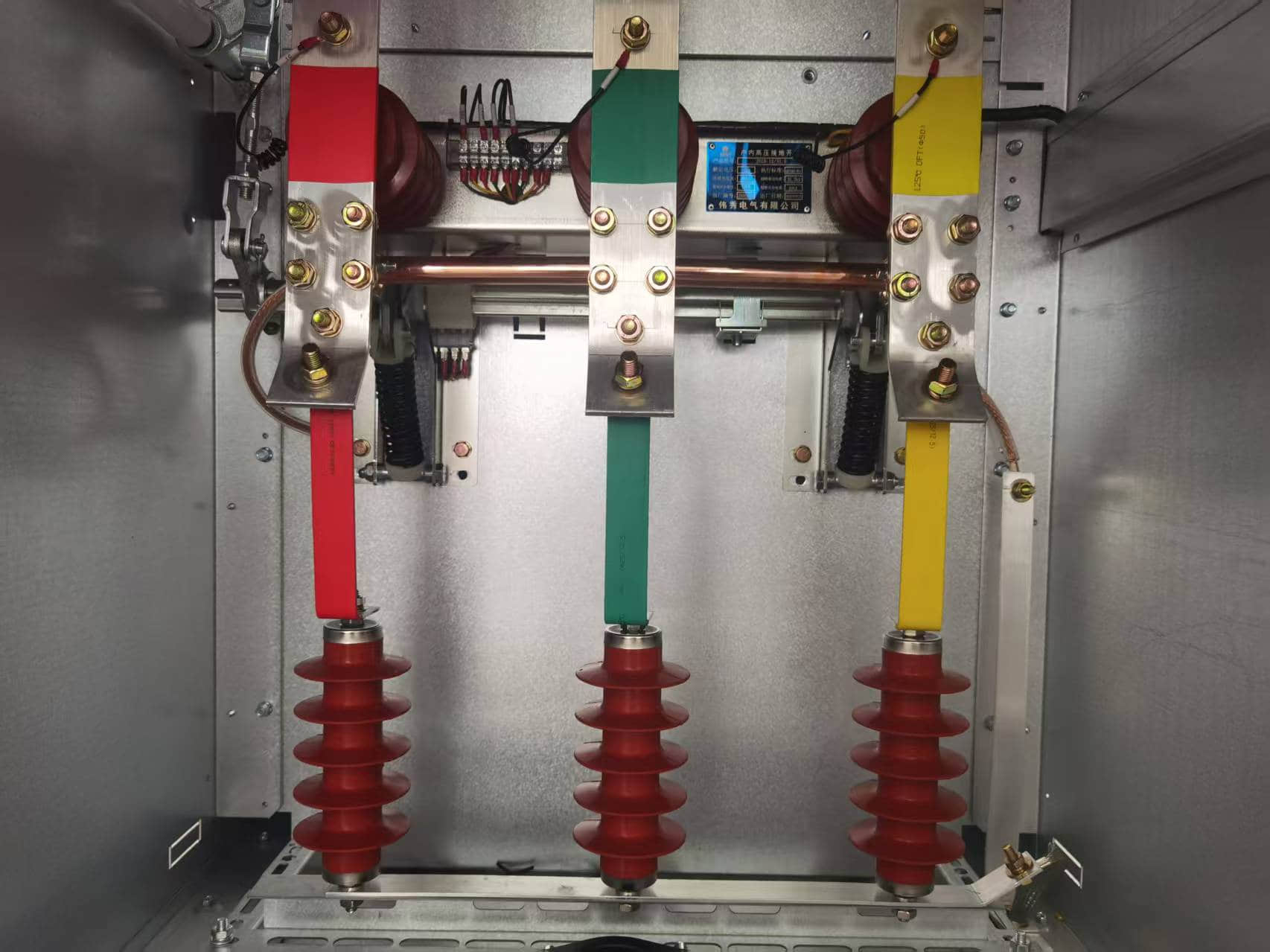
In one sentence: medium-voltage switchgear busbars usually use copper because copper delivers higher electrical conductivity, more stable joints, better thermal behavior, stronger short-circuit withstand, and a more compact cabinet design than aluminum in most real commercial and industrial projects. If you read to the end, you will clearly understand why copper is the default choice, when aluminum still makes sense, what the real trade-offs are, and how to choose the right busbar material for safety, cost, space, and long-term operation.
Why Medium-Voltage Switchgear Usually Uses Copper Busbars
The short answer is simple: copper works better under pressure.
In medium-voltage switchgear, busbars must carry high current in a confined space, survive fault forces, control temperature rise, and keep joints stable for years. Copper does all four better in most cases.
That is why engineers repeatedly choose copper for medium-voltage switchgear busbar design, especially in utilities, industrial plants, commercial substations, and data-heavy facilities where downtime is expensive.
What You Will Learn Before Choosing Copper or Aluminum Busbars
This article gives you a commercial decision framework, not just textbook theory.
You will see when copper bars are the best choice, when aluminum busbars are acceptable, and how each option affects cabinet size, maintenance, heat, installation quality, and lifecycle cost.
I have seen this decision go wrong in factory retrofits and packaged switchgear tenders. The mistake is almost always the same: people compare raw metal price first, and system performance later.
The Real Problem in Medium-Voltage Switchgear Busbar Design
The wrong busbar material does not fail on paper. It fails at the joint, inside the heat, and during fault stress.
In real switchgear, poor material selection can lead to overheating, larger enclosure size, unstable connections, more maintenance, and weaker fault withstand performance.
The pain is usually hidden until commissioning, thermal scanning, or the first heavy-load summer. By then, changing the busbar design is expensive.
Why Copper Busbars Perform Better in Medium-Voltage Switchgear
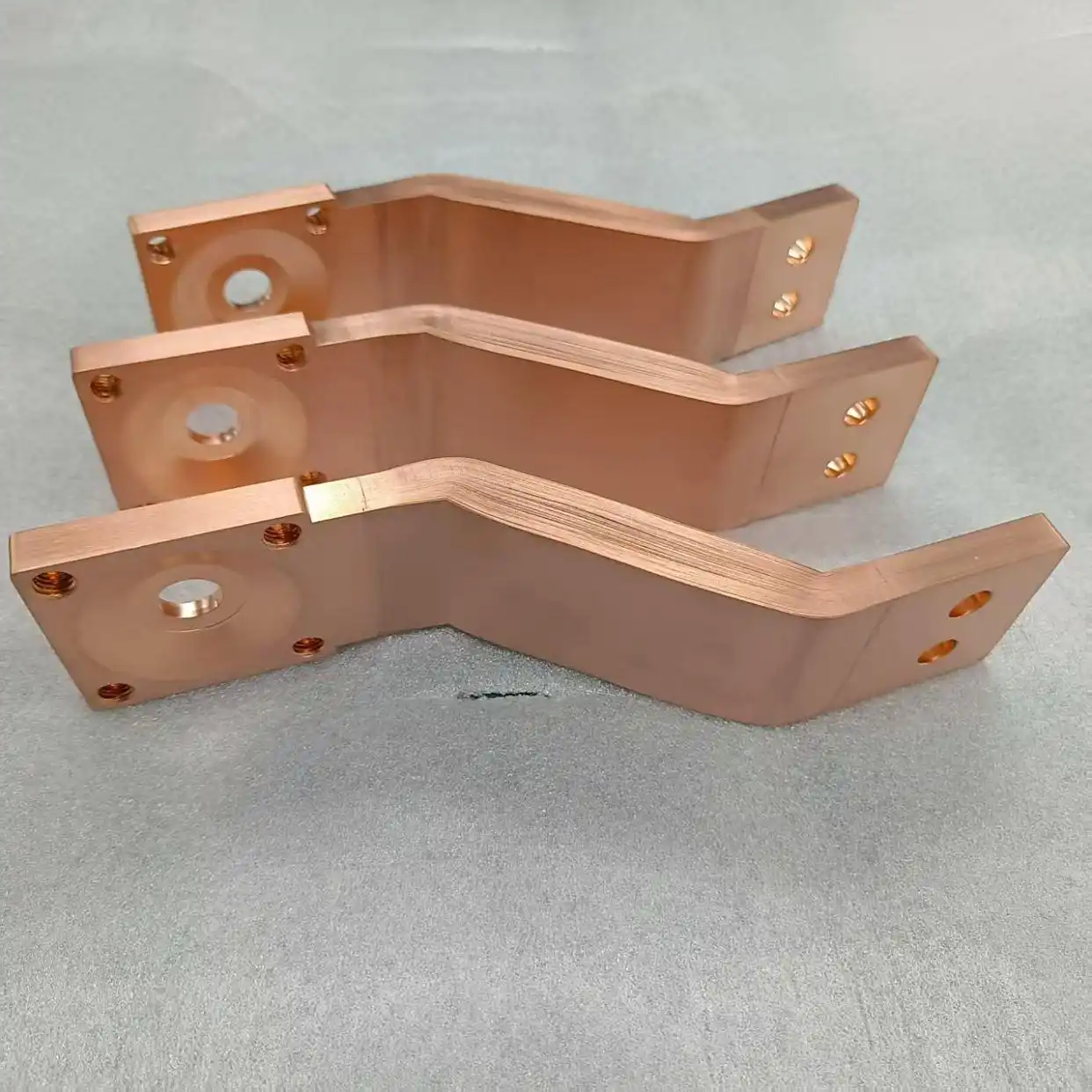
Copper combines high conductivity, good thermal stability, strong mechanical behavior, and proven connection reliability. That package is why it remains the dominant choice.
It is not just about conductivity. It is about the full operating window of the switchgear.
Higher Electrical Conductivity Means Lower Losses
Copper busbar electrical conductivity is significantly higher than that of aluminum. In practical terms, that means lower resistance for the same current path.
Lower resistance means lower voltage drop, lower I²R loss, and less heat generation. For high-current circuits, that difference is not academic. It directly affects temperature rise and efficiency.
In most engineering references, copper conductivity is taken near 100% IACS, while aluminum is around 61% IACS. So to carry the same current, aluminum usually needs a larger cross-section.
Better Thermal Performance Improves Reliability
Busbar thermal performance in switchgear matters because heat is what ages insulation, loosens joints, and accelerates failure.
Copper handles thermal cycling better in compact switchgear. When the current rises and the ambient temperature is high, copper gives designers more margin.
That extra margin matters in real rooms, not ideal labs. Many MV rooms run hotter than expected because of cable heat, electrical transformer proximity, weak ventilation, or dust-loaded filters.
Stronger Mechanical Performance Supports Fault Withstand
During a short circuit, electrodynamic forces on busbars are violent. Busbars do not just heat up. They physically move.
Copper has higher mechanical strength and stiffness advantages in many practical busbar arrangements. That helps support high current-carrying capacity copper busbars under fault conditions.
Standards such as IEC 62271 for high-voltage switchgear and controlgear assemblies and relevant IEEE guidance both reinforce the importance of thermal and short-circuit verification, not just nominal current rating.
More Reliable Joints Reduce Maintenance Risk
In the field, joints fail more often than straight bars.
Copper connections are generally easier to keep stable over time. Aluminum forms oxide rapidly, and that oxide increases contact resistance unless joint preparation, plating, compound, and torque control are handled carefully.
This is one reason maintenance teams often say, privately and bluntly: the bar is rarely the headache, the connection is.
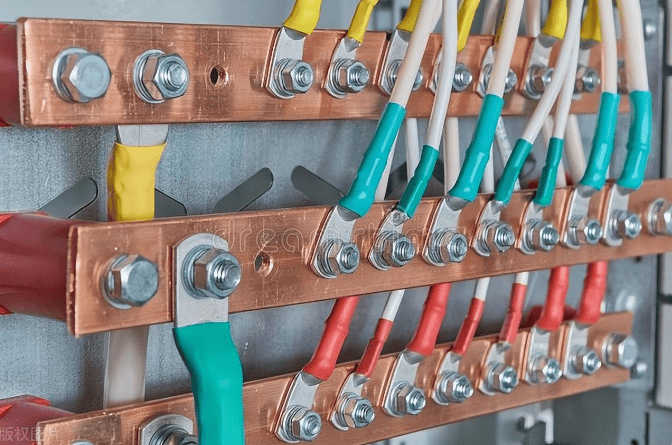
Copper vs Aluminum Busbars: When to Use Each
The correct comparison is not “which metal is cheaper.” The correct comparison is “which system performs better in this project?”
Use Copper Busbars When Space Is Tight
Because copper has higher conductivity, it can achieve the same current rating with a smaller section than aluminum.
That makes copper ideal for compact switchgear, withdrawable panels, retrofit cubicles, and projects where internal clearances are already tight.
Smaller busbars can also simplify phase spacing, insulation coordination, and cable termination layout.
Use Copper Busbars When Reliability Matters More Than Initial Cost
If an outage is expensive, copper usually wins.
Critical process plants, hospitals, utility substations, transport infrastructure, and data-intensive facilities often accept higher initial material cost because they want fewer hot joints, lower maintenance risk, and more predictable long-term performance.
Use Aluminum Busbars When Budget and Weight Dominate
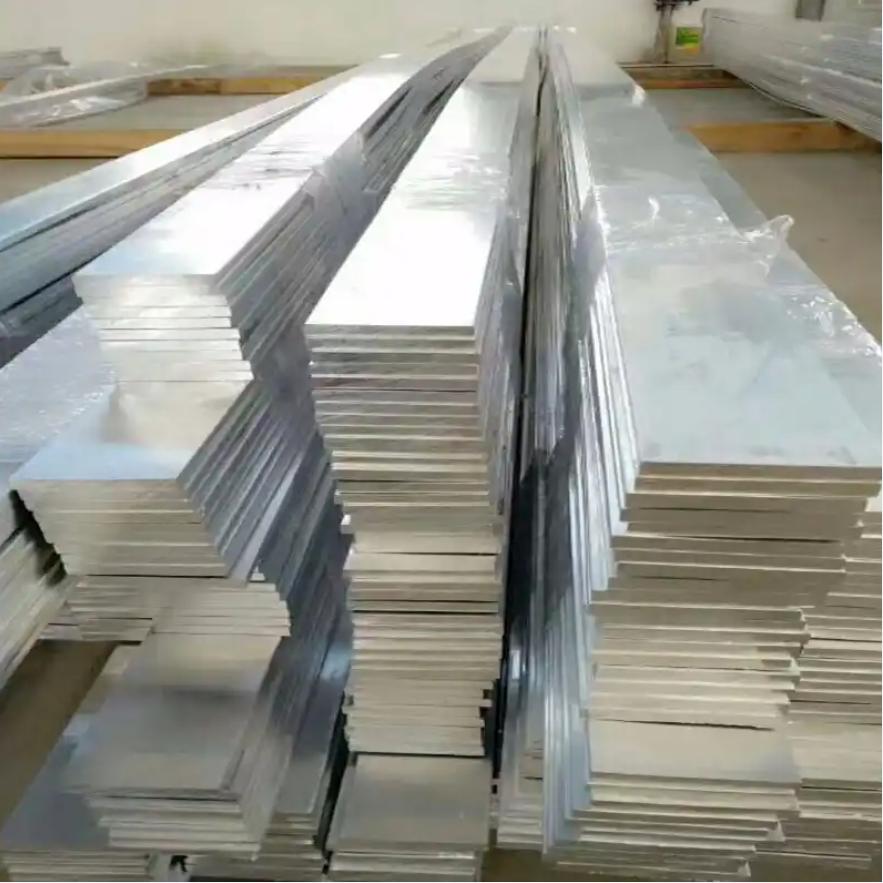
Aluminum busbars do have a place.
They can be a sensible option where budget pressure is high, available space is generous, current density targets are conservative, and the manufacturer has disciplined joint engineering and quality control.
Weight can also matter in some transportable or structurally sensitive designs.
Avoid Simplistic Material Decisions Based Only on Raw Metal Price
This is the most common commercial mistake.
Aluminum may look cheaper per kilogram, but total installed cost can rise once you include larger busbar size, extra support hardware, larger enclosure dimensions, surface treatment, bi-metal interfaces, and more demanding maintenance.
Copper vs aluminum busbars should always be compared at the assembly level, not the commodity level.
Copper vs Aluminum Busbars in Medium-Voltage Switchgear
| Factor | Copper Busbar | Aluminum Busbar | Commercial Impact |
|---|---|---|---|
| Electrical conductivity | About 100% IACS | About 61% IACS | Copper lowers resistance and losses |
| Required cross-section for the same current | Smaller | Larger | Copper supports compact switchgear design |
| Temperature rise behavior | Better thermal margin in tight spaces | Needs more sections and careful joint control | Affects reliability and insulation life |
| Joint stability | Generally more stable over time | More sensitive to oxide and torque quality | Affects maintenance frequency |
| Mechanical strength under fault stress | Higher practical robustness | Lower stiffness for the equal section concept | Affects short-circuit withstand design |
| Corrosion behavior at connections | More forgiving | Requires better surface management | Affects long-term connection resistance |
| Weight | Heavier | Lighter | Aluminum can help where weight is critical |
| Raw material price | Higher | Lower | Aluminum may reduce upfront metal cost |
| Lifecycle cost | Often lower in critical MV duty | Can rise with maintenance and design expansion | Total cost often favors copper |
Why Manufacturers and Utilities Still Prefer Copper
In one retrofit project I reviewed for a heavy manufacturing site, the original concept used aluminum to save material cost on a 12 kV lineup extension. On paper, it looked attractive.
But the enclosure width had to increase to maintain practical clearances and support layout. The larger busbar size also made cable landing more crowded, not less.
After thermal modeling and a fault-duty review, the team switched to copper. The result was a smaller lineup, lower calculated temperature rise at joints, and simpler assembly control.
The cost gap narrowed sharply once cabinet steel, supports, plating, hardware, and installation labor were included. That story is common.
Utilities also tend to stay with copper because service continuity matters more than metal savings. A hot joint in MV switchgear can turn a small procurement decision into a major outage event.
What Engineers and Operators Discuss on Reddit and Quora
Across engineer and operator discussions in major public communities, the same field themes come up repeatedly: hot joints, torque inconsistency, oxide problems, retrofit difficulty, cabinet crowding, and distrust of designs that save money only on the conductor line item.
What stands out is this: experienced people rarely argue about conductivity alone. They argue about what happens after three years in service.
The practical feedback is remarkably consistent. Copper is trusted because it usually gives more forgiveness when installation quality, maintenance discipline, or site environment is less than perfect.
Field Detail Most Non-Experts Miss: Joint Surfaces Cause More Trouble Than the Bar Itself
Non-experts focus on the bar size. Field people focus on the contact surface.
A busbar joint can fail because of poor surface prep, plating damage, low contact pressure, wrong washer stack, uneven torque, or contamination during assembly. This is where copper has a practical advantage: it is generally less troublesome to stabilize in long-term service.
IEC and IEEE practices both emphasize tested assemblies, verified temperature rise, and controlled joint design. Real reliability is built at the interface, not only in the metal specification.
Pain Point: Aluminum Savings Can Disappear in the Full Cabinet Design
This is a repeated complaint from project engineers.
Once aluminum requires larger cross-sections, more spacing attention, larger supports, connector adaptations, and stricter joint treatment, the cabinet grows, and the labor grows with it.
So the “cheap” option can become less cheap after the design matures.
Real Feedback: Maintenance Teams Prefer What Fails Less at Connections
Operators do not love theoretical savings if they must keep rechecking joints with thermal cameras.
The most honest field feedback is usually this: maintenance teams prefer the option with fewer connection surprises, fewer re-tightening debates, and lower outage risk during peak load.
That preference often pushes medium-voltage switchgear toward copper.
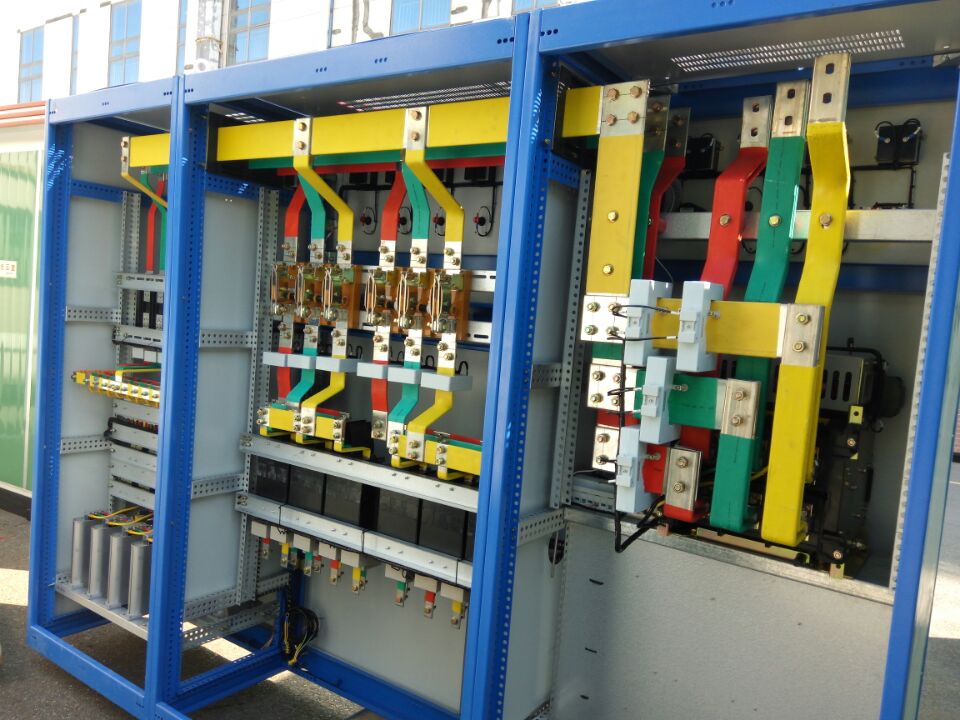
Practical Selection Guide for Copper and Aluminum Busbars
| Project Condition | Better Choice | Why |
|---|---|---|
| Compact MV switchgear lineup | Copper | Smaller cross-section supports tighter layout |
| High continuous current | Copper | Lower resistance and better thermal margin |
| High short-circuit duty | Copper | Better mechanical reliability in fault events |
| Critical uptime application | Copper | Lower connection-related maintenance risk |
| Very strict upfront budget | Aluminum | Lower initial material cost if space allows |
| Weight-sensitive design | Aluminum | Lighter conductor mass |
| Strong maintenance team and strict assembly control | Aluminum can work | Joint sensitivity can be managed better |
| Corrosive or connection-sensitive environment | Copper | Usually more forgiving at interfaces |
| Lowest lifecycle cost target | Usually copper | Less heat, less maintenance, less outage exposure |
How to Select the Right Busbar Material for Your Medium-Voltage Switchgear
A good commercial decision follows a sequence. Do not start with the metal price.
Check Current Rating and Short-Circuit Duty First
Start with continuous current, peak withstand current, and short-time withstand current.
If the duty is high, copper often simplifies compliance and design margin. Always align with IEC type-test logic and relevant IEEE design expectations for thermal and fault performance.
Evaluate Space Limits Inside the Switchgear
If the panel is compact, copper usually has the advantage.
A smaller bar size can ease phase segregation, support arrangement, shutter mechanisms, cable routing, and insulation clearance management.
Review Maintenance Resources and Connection Quality Control
Be honest about field workmanship.
If assembly quality varies by site or contractor, copper typically gives a larger reliability margin. Aluminum demands tighter control at joints.
Compare Total Lifecycle Cost, Not Just Metal Price
Include energy loss, outage cost, inspection labor, thermal scanning frequency, spare part complexity, and replacement risk.
This is where copper often proves its value, especially in commercial and industrial MV installations.
Common Mistakes When Comparing Copper vs Aluminum Busbars
Comparing only the price per kilogram. This ignores assembly cost.
Ignoring joint design. Joints decide long-term reliability.
Using conductivity per weight as the main argument. Switchgear is designed by space, heat, and fault duty, not just mass efficiency.
Overlooking the temperature rise. A busbar that runs hotter can age the whole compartment faster.
Underestimating enclosure growth. Larger bars can force a larger cabinet.
Assuming all maintenance teams are equal. Material choice should match real field capability.
Why Is Copper Preferred for Busbars in Medium-Voltage Switchgear?
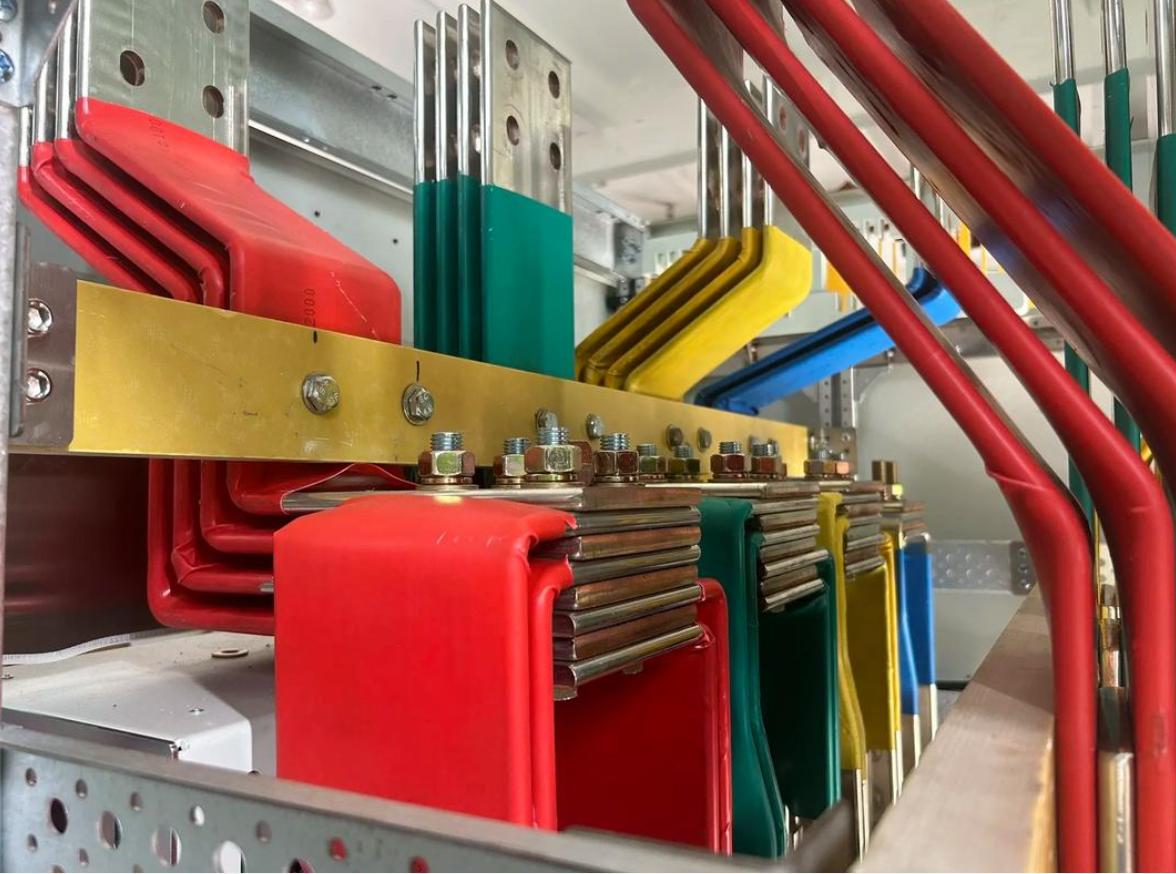
Copper is preferred for busbars in medium-voltage switchgear because it provides higher electrical conductivity, lower resistance, better thermal performance, stronger short-circuit withstand capability, more reliable long-term joints, and a more compact switchgear design than aluminum in demanding MV applications.
FAQ
Why are copper bars commonly used for busbars in medium-voltage switchgear?
Copper bars are commonly used because they offer high electrical conductivity, lower heat generation, better thermal stability, stronger fault withstand performance, and more dependable joints. These advantages make copper the safer and more reliable choice for most medium-voltage switchgear applications.
Is copper always better than aluminum for medium-voltage switchgear busbars?
No. Copper is not always better in every project. But it is usually preferred when compactness, long-term reliability, lower maintenance, and stable joint performance matter more than the lowest initial material cost.
When should aluminum busbars be used instead of copper?
Aluminum busbars make sense when the project has strong cost pressure, enough physical space, manageable fault duty, and disciplined connection engineering. They are more suitable where larger dimensions and stricter joint control are acceptable.
How does copper busbar electrical conductivity affect switchgear performance?
Higher conductivity reduces resistance, which lowers voltage drop and energy loss. It also reduces heat generation, helping the switchgear maintain safer operating temperatures and improving overall efficiency and reliability.
How important is busbar thermal performance in switchgear?
It is extremely important. Temperature rise affects insulation aging, joint stability, equipment life, and outage risk. Better busbar thermal performance in switchgear usually means more reliable service and lower long-term maintenance.
Do copper busbars reduce maintenance in medium-voltage switchgear?
In many cases, yes. Copper often reduces connection-related maintenance because its joints are generally more stable over time and less sensitive than aluminum to oxide-related contact issues and torque variation.
What matters more: busbar material price or total lifecycle cost?
In most commercial and industrial medium-voltage installations, total lifecycle cost matters more. Energy losses, downtime exposure, maintenance frequency, and replacement risk can outweigh the initial metal price very quickly.
The Smart Commercial Choice for Medium-Voltage Switchgear Busbars
For most medium-voltage switchgear, copper remains the default choice for a reason.
It gives engineers a better balance of copper busbar electrical conductivity, compact sizing, strong busbar thermal performance in switchgear, reliable joints, and better fault-duty confidence than aluminum.
Aluminum is not wrong. It is just less forgiving. If the project has space, strong quality control, and cost pressure, it can work well. But in most serious MV applications, copper is still the smarter commercial decision.
Need Help Choosing Copper or Aluminum Busbars for Your Project?
If you are comparing copper vs. aluminum busbars for a new switchgear lineup, retrofit, or utility project, our team can help you evaluate current rating, short-circuit duty, enclosure space, connection design, thermal optimization, and full-lifecycle cost.
Send us your inquiry with a single-line diagram, current rating, fault level, and project constraints. If you want faster communication, contact us directly on WhatsApp for a practical busbar material review and switchgear design recommendation.