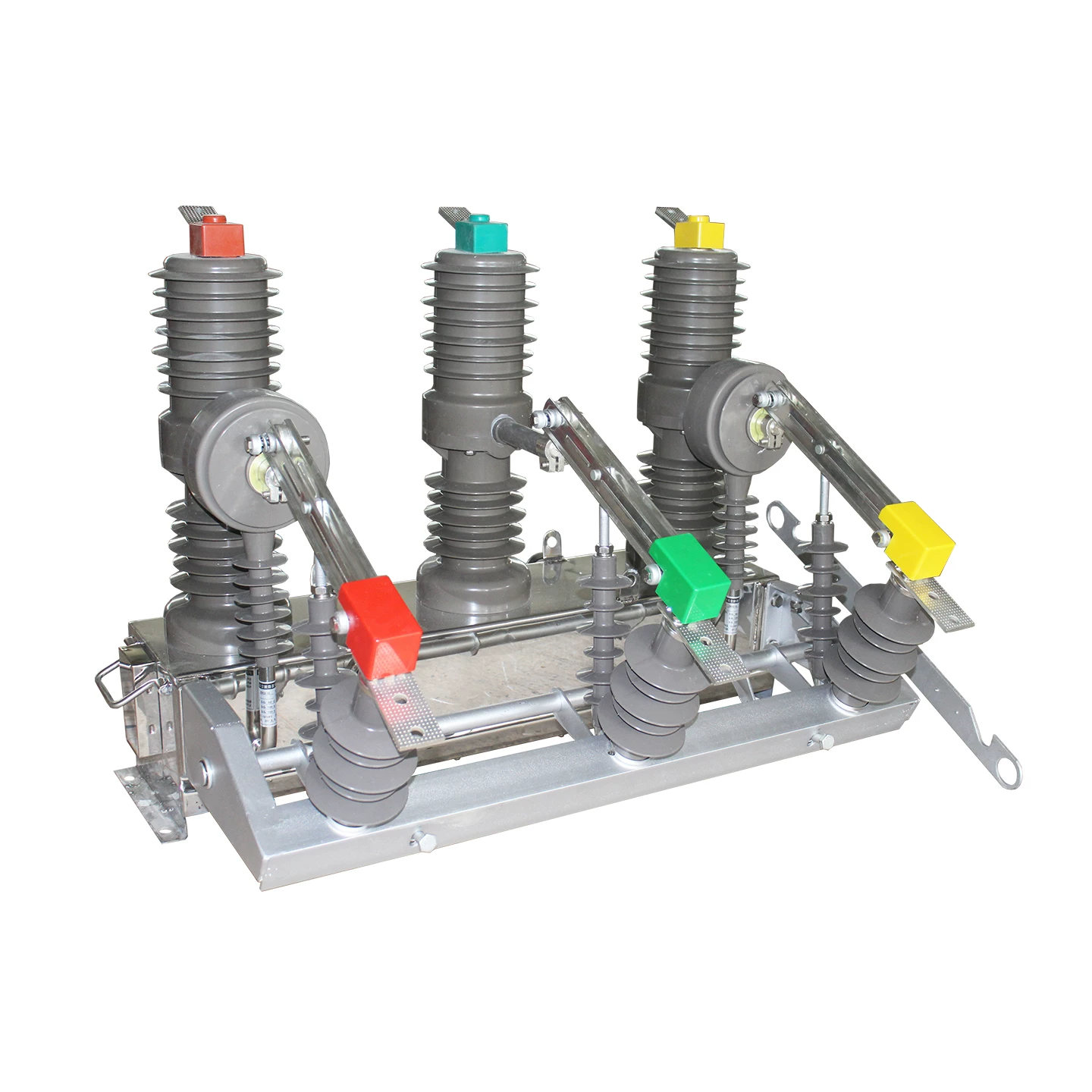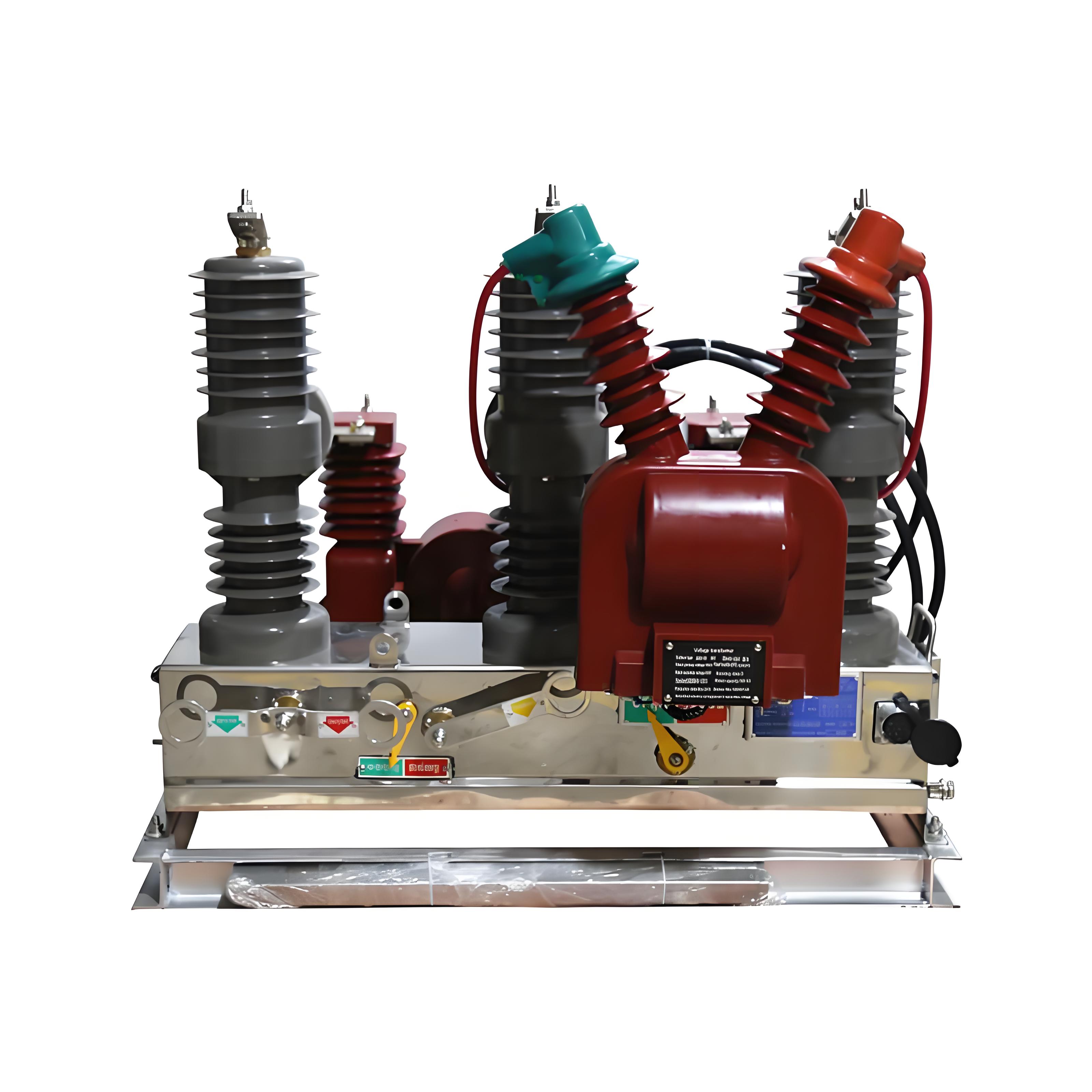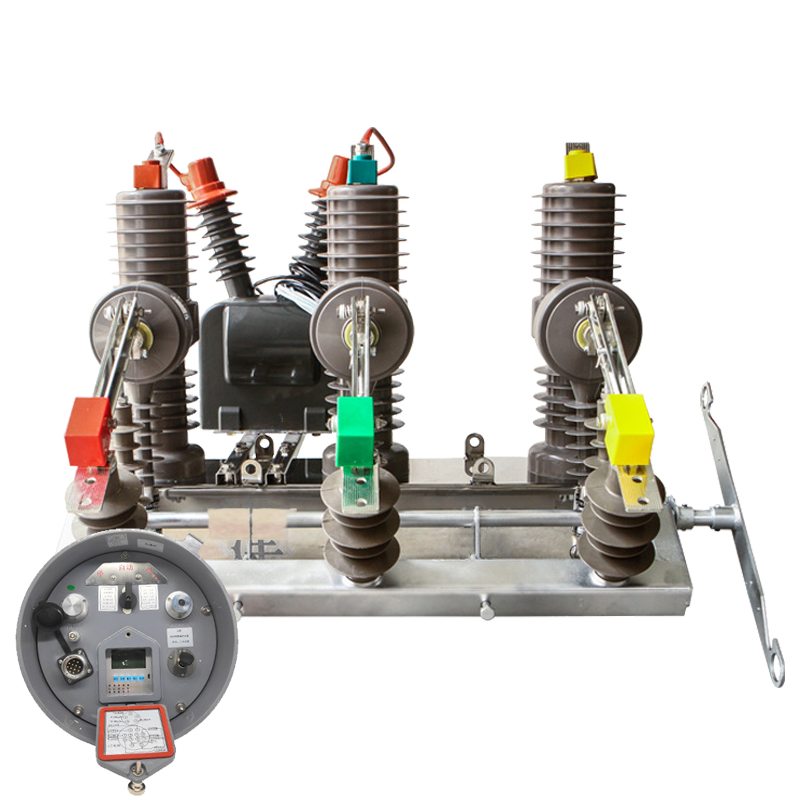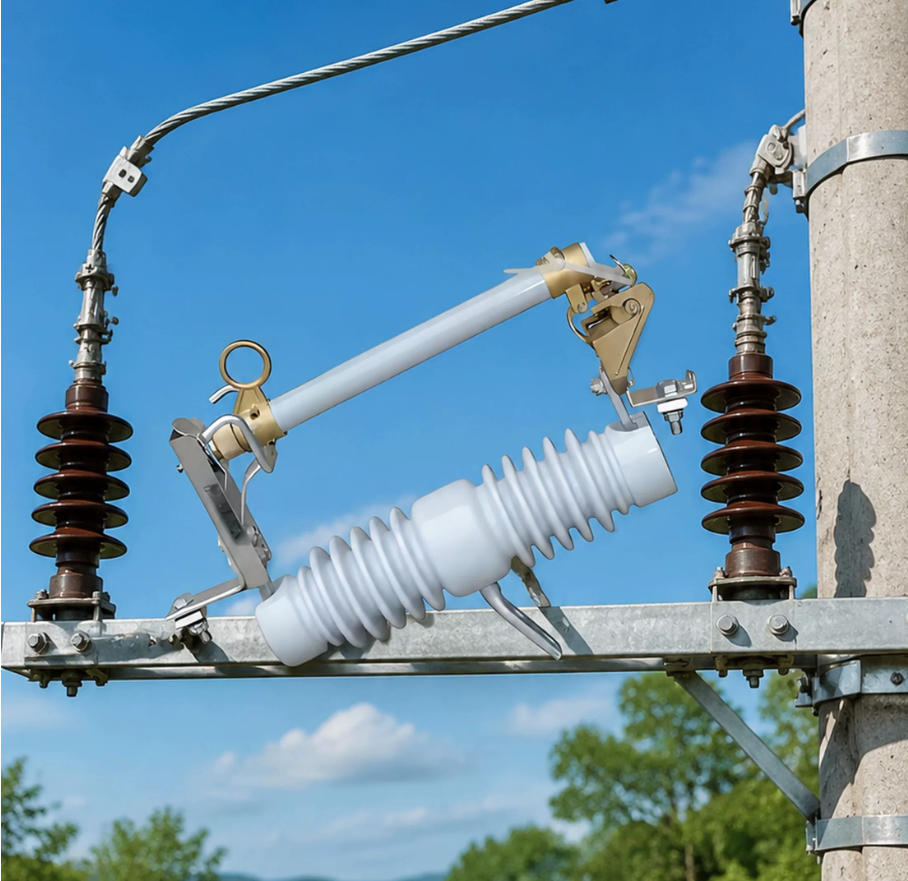
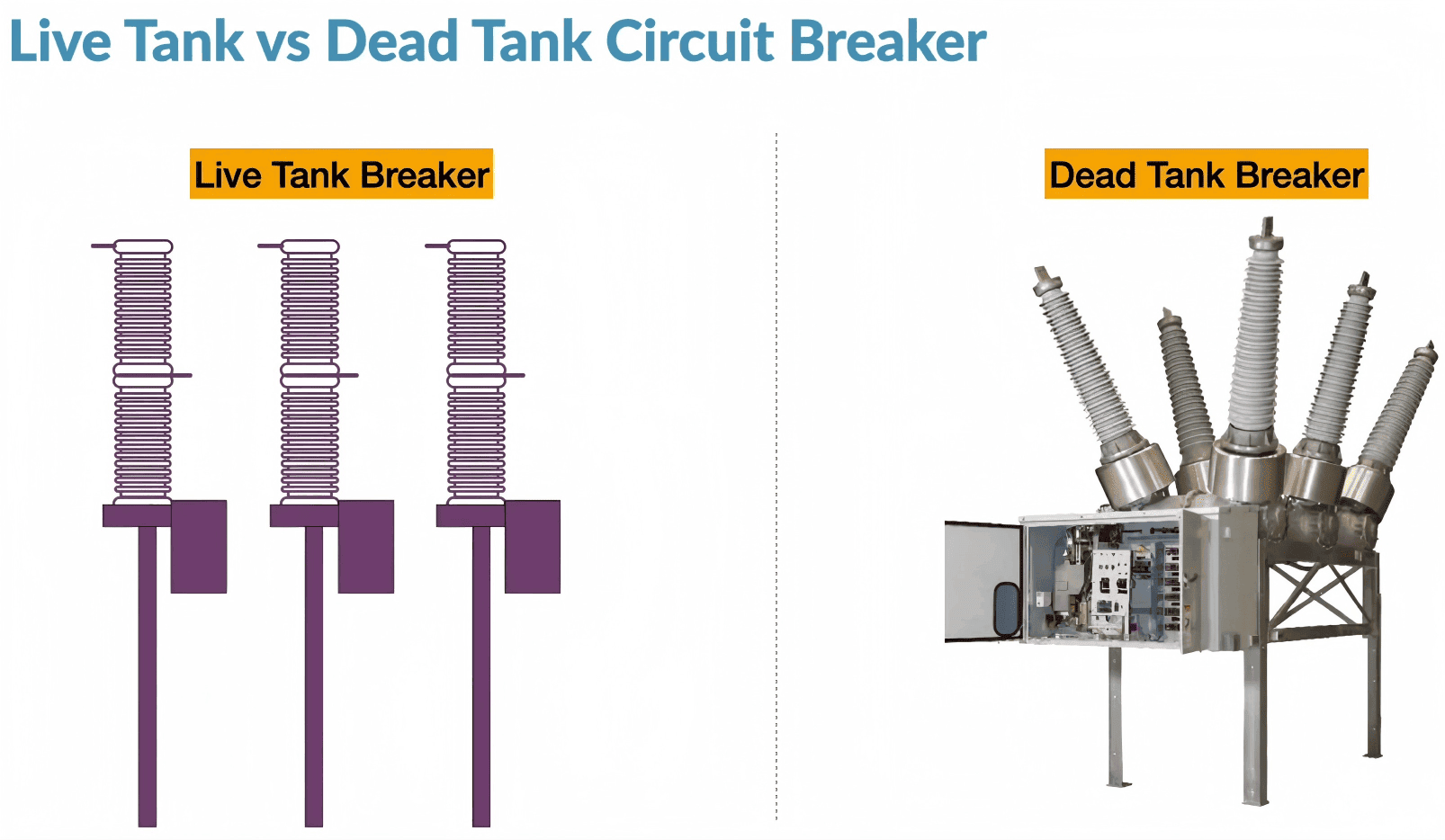
The difference between a live tank circuit breaker and a dead tank circuit breaker is simple but decisive: in a live tank breaker, the interrupter chamber and its outer enclosure sit at line potential; in a dead tank breaker, the enclosure is grounded, and the live parts are kept inside it through insulation. As both are types of SF6 circuit breakers, (110kV and above)they do the same job—interrupting load and fault current, protecting transformers, lines, and busbars, and handling high-voltage switching duties—but they differ in insulation arrangement, CT integration, footprint logic, maintenance style, transport burden, and how a substation is physically built around them.
If you are choosing between the two, the fastest rule is this: pick a live tank when lower equipment weight, simpler transport, and compact AIS economics matter most; pick a dead tank when integrated CTs, grounded enclosure preference, and utility standardization drive the project. I have seen projects lose weeks not because the breaker rating was wrong, but because nobody checked crane reach, pollution cleaning frequency, or whether an oil-to-SF6 retrofit could physically fit the old gantry clearances.
Across engineer discussions on public technical communities, the same field themes repeat: live tank is often praised for visual simplicity and purchase-price competitiveness, while dead tank wins confidence on CT packaging, lower working height, and grounded external metal. The pain points are also consistent: live tank raises concerns about porcelain exposure, contamination, and post-seismic replacement logistics; dead tank draws complaints about shipping mass, foundation density, gasketing discipline, and heavy-lift dependence in remote substations.
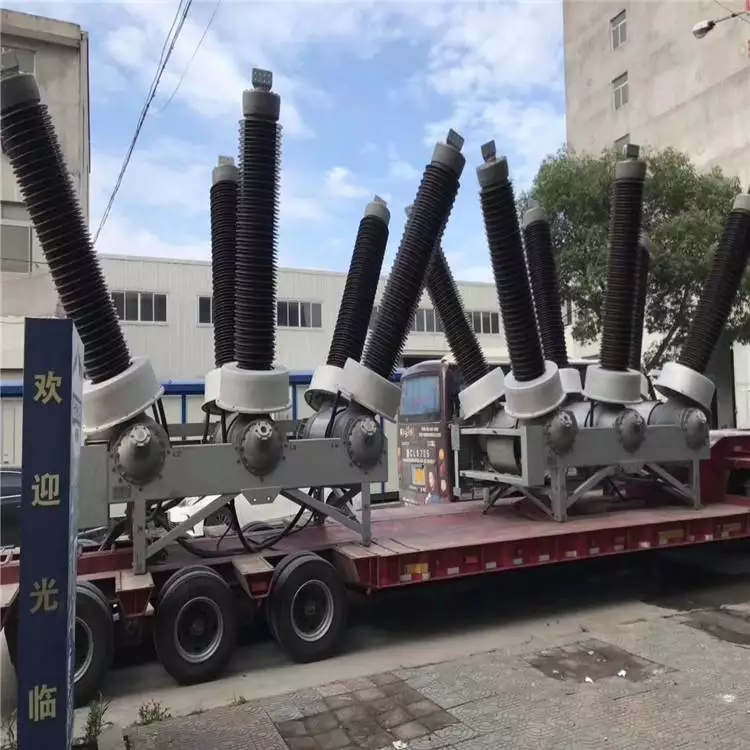
What Is the Difference Between a Live Tank and a Dead Tank Circuit Breaker?
The core difference is the electrical potential of the breaker tank.
Live tank circuit breaker: the interrupter enclosure is energized at system voltage, mounted on insulators, and isolated from ground by external insulation.
Dead tank circuit breaker: the outer enclosure is grounded, while the live interrupter components are insulated inside the metal tank.
The shared points are equally important. Both breaker types can be used in high-voltage and extra-high-voltage outdoor substations; both are designed to interrupt short-circuit current and switching duty, and both are manufactured to meet IEC and IEEE performance requirements for dielectric withstand, short-time current, making and breaking capacity, and mechanical endurance.
In modern practice, both may use SF6 insulation or reduced-gas / alternative gas approaches depending on vendor platform and regulatory pressure. So when people ask for the live tank circuit breaker vs dead tank breaker answer, they should not think “one protects, and one does not.” Both protect. The real question is how each design changes station layout, protection integration, total installed cost, and service behavior over 30 years.
Live Tank vs Dead Tank Circuit Breaker at a Glance
| Factor | Live Tank Circuit Breaker | Dead Tank Circuit Breaker |
|---|---|---|
| Tank potential | At the line potential | Grounded |
| CT integration | Usually external or separate | Often easier to integrate within/around the breaker assembly |
| Structure | Taller, supported by insulators | Lower-profile grounded tank with bushings |
| Footprint | Often efficient in AIS layouts | May need more civil and equipment planning |
| Seismic behavior | Depends heavily on support structure and bushing design | Often preferred where grounded low-center-mass philosophy is valued |
| Transport | Lighter sections, easier to ship in many cases | Heavier transport loads |
| Maintenance access | Some work at height | Often, easier access at a lower elevation |
| Cost tendency | Often, lower equipment cost | Often, higher equipment and civil costs are offset by integration benefits |
| Typical use | AIS transmission yards, cost-sensitive builds | Transmission systems with CT integration and a grounded enclosure preference |
Why This Choice Matters in Real Substations
The wrong breaker choice does not just affect the catalog price. It affects CAPEX, land use, outage planning, protection scheme complexity, and expansion flexibility.
On one 220 kV retrofit review I participated in, the “cheaper” option became the expensive one after we mapped clearances, steel modification, and CT relocation. The equipment price delta was smaller than the cost of changing the bus drop, widening the equipment bay, and adding new structures for instrument transformers.
Utility buyers often underestimate six practical impacts:
Land use: bay geometry changes with breaker form factor and CT arrangement.
Civil works: dead tank units often demand heavier foundations and crane access planning.
Outage risk: replacement philosophy differs; one failed component can ripple into longer planned outages.
Maintenance workflow: working at height versus working around a grounded tank affects crew productivity.
Arc-flash and access perception: grounded external metal changes how crews feel about the equipment, even when both designs are compliant.
Future expansion: adding CTs, line traps, surge arresters, or standardized spare bays is easier with some layouts than others.
That is why the difference between a live tank and a dead tank circuit breaker is not academic. It drives procurement strategy and substation constructability.
Live Tank Circuit Breaker vs Dead Tank Breaker: Core Design Differences
Tank potential and insulation arrangement
In a live tank breaker, the interrupter chamber sits above ground on porcelain or composite insulators, and the enclosure itself is energized. External air clearance and insulation coordination, therefore, become central to layout.
In a dead tank breaker, the metal enclosure is grounded. The live parts are insulated inside the tank, which changes how the dielectric design is distributed between internal insulation, bushings, and external clearances.
Under IEC 62271 series practice and IEEE C37 family expectations, both must satisfy impulse withstand, power-frequency withstand, and interrupting performance. But the path to passing those tests is different.
Current transformer integration
Dead tank designs often integrate CTs more naturally. That can remove standalone CT structures, simplify bay length, and reduce steelwork count in some station arrangements.
Live tank units frequently need separate current transformers. That is not automatically bad, but it changes relay wiring, structure count, and material planning.
For projects with differential protection complexity, metering segregation, or utility CT ratio standardization, this point alone can swing the decision.
Bushings, interrupters, and support structure
Live tank breakers are visually taller. The interrupter and conductive tank are supported on insulating columns, giving the classic AIS silhouette many engineers recognize immediately.
Dead tank breakers sit lower, with grounded metal tank and bushings bringing line potential into the enclosure. This often improves perceived robustness and maintenance ergonomics, but increases shipping mass and foundation expectations.
Fault containment and external protection
Because the dead tank enclosure is grounded, many engineers feel more comfortable around it during inspection and maintenance isolation. That is partly a human-factor advantage, not only a technical one.
Live tank equipment, by contrast, exposes more of the insulation system visually. Crews can often spot contamination, chipped porcelain, or unusual corona-related concerns faster, but the energized elevated arrangement also means stricter attention to approach distance and external clearance management.
Similarities Between Live Tank and Dead Tank Circuit Breakers
Despite the design contrast, these breakers have substantial common ground.
Both isolate faults and protect network assets.
Both can perform line switching, transformer switching, bus protection duty, and fault interruption.
Both are used in outdoor high-voltage and extra-high-voltage substations.
Both can rely on SF6-based interrupting technology or newer low-emission alternatives, depending on the supplier platform.
Both must meet relevant IEC and IEEE interrupting, insulation, mechanical endurance, and temperature-rise requirements.
In other words, the choice is rarely about whether the breaker can do the electrical job. It is about which architecture fits your site, standards, workforce, and lifecycle model better.
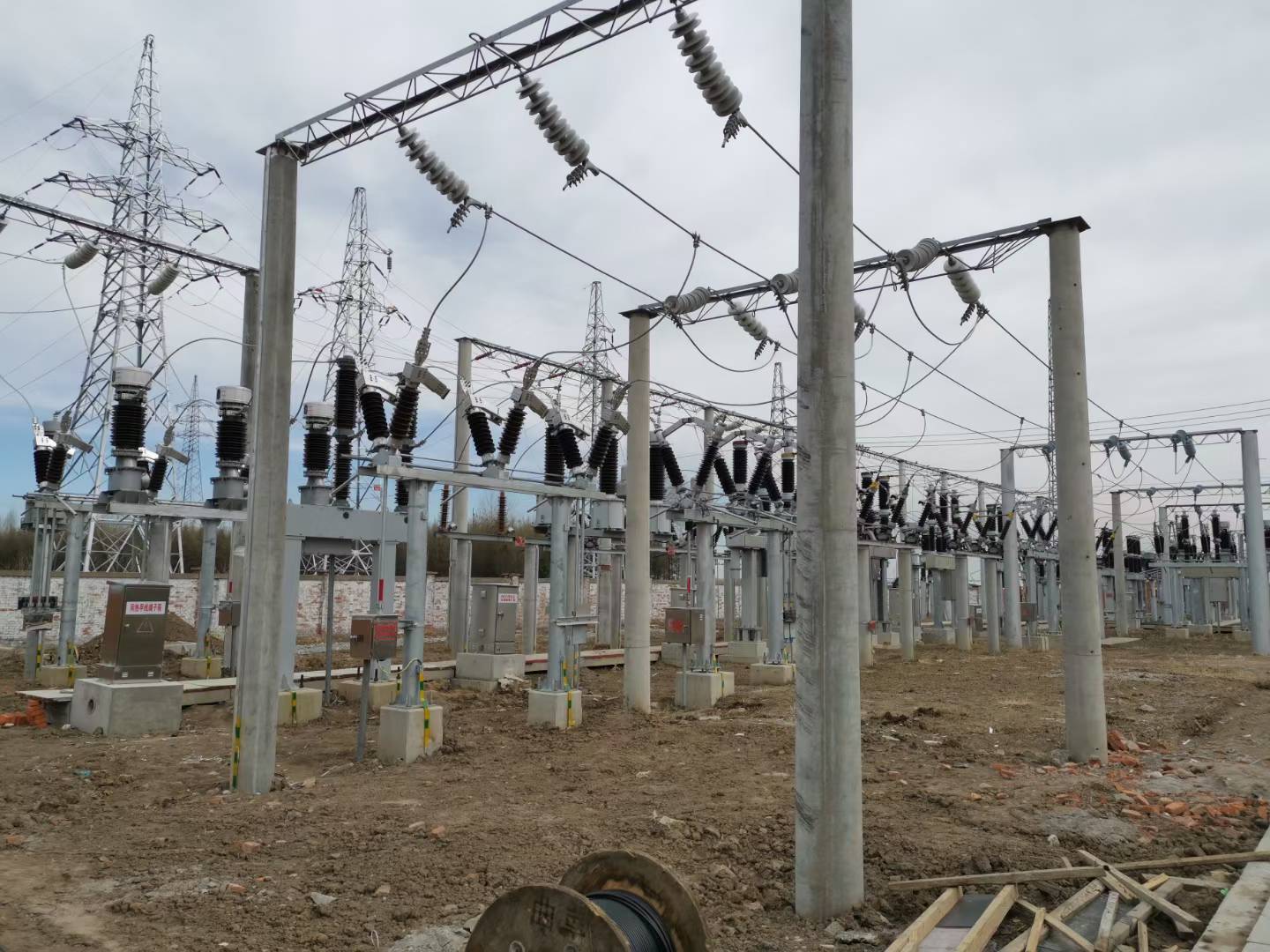
Advantages and Disadvantages of Live Tank Circuit Breakers
| Advantages | Trade-offs |
|---|---|
| Often, lower equipment cost | Tank at line potential requires careful external insulation coordination |
| Lighter shipping sections in many ratings | Maintenance may involve more work at height |
| Good fit for compact AIS economics | Separate CTs may be needed |
| Simpler apparent structure for many EPC layouts | Porcelain/composite support exposure can worry operators in harsh environments |
| Common choice in many international transmission projects | Post-seismic inspection and replacement logistics can be more sensitive |
Where live tank breakers perform best
Live tank and dead tank breaker applications overlap, but live tank often performs best in cost-sensitive AIS yards, projects where lighter transport matters, and regions where utilities are comfortable with separate CT arrangements.
They are also attractive where EPC teams want a straightforward outdoor high-voltage yard with simpler equipment modularity. In mountainous or constrained-road projects, lighter shipping packages can be a serious advantage, not a footnote.
Common live tank pain points from field discussions
Across practitioner discussions, the recurring concerns are surprisingly physical rather than theoretical.
Working-height discomfort: crews dislike repetitive inspection tasks above comfortable reach.
Porcelain damage anxiety: even when failure rates are low, visible brittle components create operator stress.
Contamination visibility: dust, salt, and industrial deposits are more obvious, which is good for inspection but bad for owner confidence.
Seismic replacement logistics: after a significant event, getting matching support columns and safely replacing upper assemblies can be slower than buyers expect.
Wildlife exposure: elevated external energized geometry can drive extra shielding measures in some yards.
One technician comment that stayed with me was blunt: “The live tank is fine until you are the one arranging the manlift in wind and light rain.” That kind of site reality rarely appears in brochures, but it matters.
Advantages and Disadvantages of Dead Tank Circuit Breakers
| Advantages | Trade-offs |
|---|---|
| Grounded enclosure improves maintenance confidence | Heavier transport and lifting requirements |
| Integrated CT options can reduce separate equipment count | Often higher purchase cost |
| Lower working height for many service tasks | More foundation and crane planning |
| Popular in utilities with standardized protection layouts | Gasketing and sealing discipline is critical over lifecycle |
| Strong fit for high short-circuit duty yards | Remote-site replacement can be slower |
Where dead tank breakers perform best
Dead tank breakers are especially strong in North American transmission substations, networks with high short-circuit duty, and projects needing integrated CTs for protection and metering.
They also perform well where operators strongly prefer grounded external metal, where bay standardization is strict, and where maintenance crews want lower-access service points.
Common dead tank pain points from field discussions
The complaints around dead tank are practical and repetitive.
Heavier transport loads: road permits, axle limits, and remote route surveys become real project risks.
Crane dependence: installation and replacement often need heavier lifting resources.
Gasketing and sealing concerns: owners worry about long-term leak paths and sealing workmanship.
Denser foundation work: civil design can be more demanding than initial equipment cost comparisons suggest.
Slower remote replacement: when a unit must be swapped in a hard-to-access site, dead tank logistics can be painful.
A field engineer once told me the dead tank was “great every day except delivery day.” That is an oversimplification, but it captures the transport burden honestly.
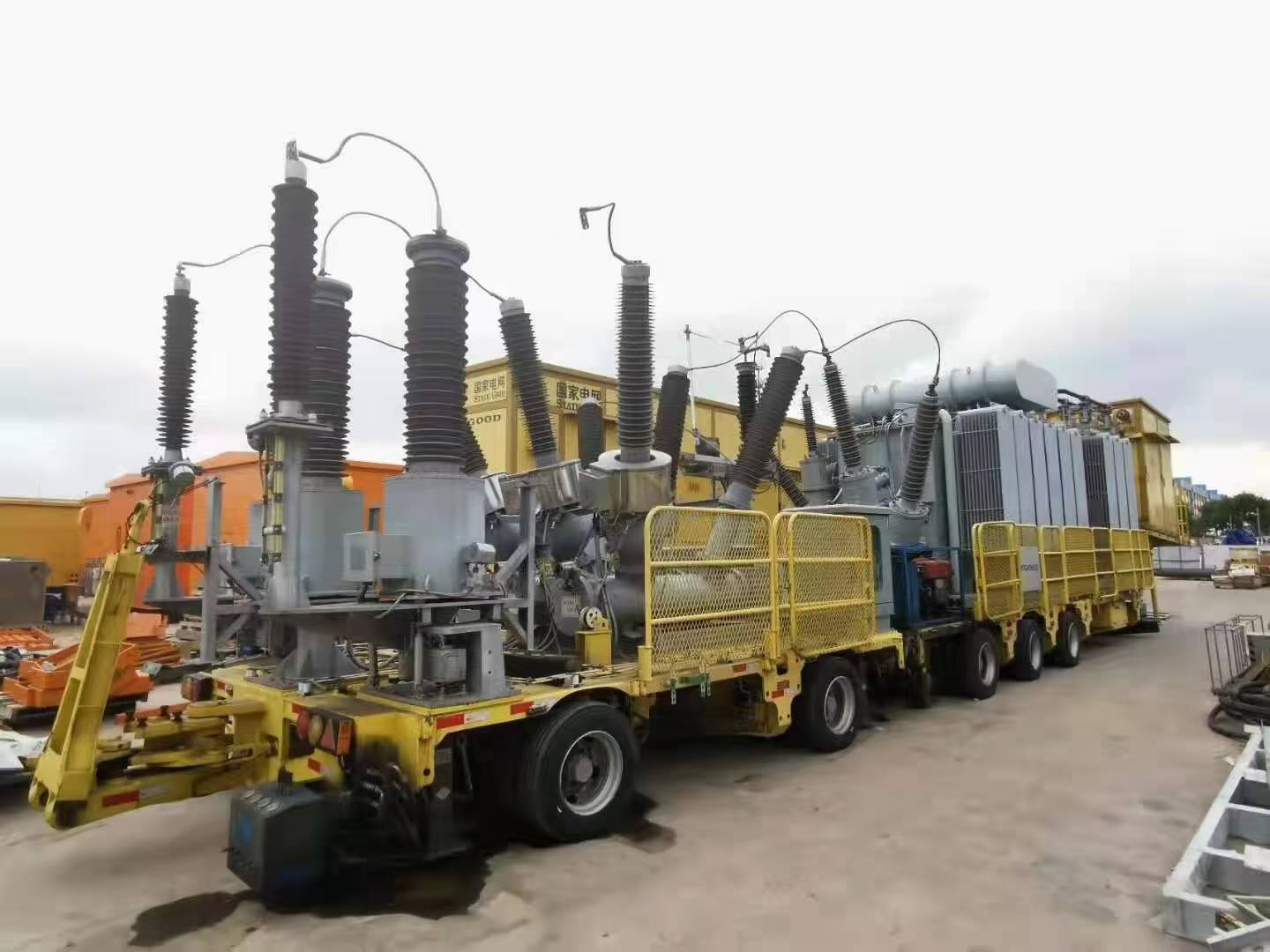
Live Tank and Dead Tank Breaker Applications by Voltage Level and Region
| Voltage / Context | Live Tank Common Use | Dead Tank Common Use | Regional / Standards Influence |
|---|---|---|---|
| 72.5–145 kV AIS | Common in cost-sensitive outdoor bays | Used where CT integration or utility standard requires it | IEC-oriented projects often favor live tank flexibility |
| 145–245 kV transmission | Very common for open-air AIS substations | Strong choice in utility-standardized protection schemes | Regional preference heavily affects selection |
| 245–420 kV EHV | Widely used where structure and transport are optimized | Selected for grounded tank philosophy and CT packaging | Utility history matters as much as rating |
| North American utility yards | Present but less dominant in some segments | Often preferred | IEEE practice and legacy fleet commonality matter |
| International EPC projects | Frequently chosen for export flexibility and cost | Chosen when end-user standard is fixed | IEC-based tender documents often shape choice |
SF6 Live Tank Breaker Design vs Dead Tank SF6 Architecture
The SF6 live tank breaker design usually places the interrupter chamber high on insulating supports, with the gas volume concentrated in the energized interrupter enclosure. The support insulators handle separation from ground, and service access often requires elevated work positions.
In a dead tank SF6 design, the interrupter is inside a grounded metal enclosure, with bushings carrying the live conductors into the tank. Gas containment philosophy shifts toward a grounded vessel with different sealing interfaces, access covers, and CT accommodation opportunities.
In practical terms, the differences show up in five areas:
Interrupter placement: elevated and energized in live tank; enclosed and grounded externally in dead tank.
Gas volume: vendor-specific, but architecture influences compartment arrangement and monitoring strategy.
Leak points: dead tank owners often focus on sealing interfaces and flange discipline; live tank owners often focus on upper assembly exposure.
Service access: live tank can mean elevated access; dead tank can mean easier ground-level access but heavier handling.
Integration: dead tank often packages CTs more naturally.
As environmental pressure on SF6 intensifies, buyers should also verify leak-rate guarantees, gas monitoring class, and future retrofit options to alternative media rather than treating gas choice as secondary.
Real-World Selection Criteria: Which Breaker Should You Choose?
The best selection method is not “which one is better?” but which one minimizes total project risk for this site?
Choose live tank when
Lower initial equipment cost is a major driver.
You want lighter equipment and easier shipping to constrained sites.
The AIS yard layout works well with separate CTs.
Your utility or EPC team is experienced with live tank maintenance.
You need a simpler transport and erection strategy.
Choose dead tank when
You need integrated CTs for protection or metering.
Your utility prefers grounded enclosures for operational confidence.
Standardization across an existing fleet favors dead tank.
Seismic, security, or bay-standard considerations support lower-profile grounded architecture.
You can absorb heavier transport and civil requirements.
Red flags before final specification
Check altitude correction and insulation derating.
Confirm pollution class and insulator creepage requirements.
Verify seismic zone qualification, not only a generic statement.
Match short-circuit level, TRV duty, and system earthing practice.
Assess maintenance crew skill and available lifting equipment.
Define spare strategy: whole pole, bushing, CT, gasket set, drive mechanism.
Specify gas monitoring, leak-rate guarantees, and service intervals.
Cost, Maintenance, and Lifecycle Comparison
| Lifecycle Factor | Live Tank | Dead Tank |
|---|---|---|
| Initial equipment cost | Often lower | Often higher |
| Civil works | Often lighter | Often heavier foundation demand |
| Accessory count | May require separate CTs and added structures | Can reduce external CT count |
| Inspection effort | More elevated visual checks | Often easier ground-level access |
| Outage time for service | Depends on access and spare philosophy | Depends on lifting logistics and integrated assembly scope |
| Spare parts strategy | Support insulators and upper components may matter more | Seals, bushings, CT-related components may matter more |
| Transport risk | Generally lower | Generally higher |
| Expected lifecycle cost drivers | Access, insulation cleaning, separate CT layout | Civil work, heavy handling, sealing integrity |
In live commercial bids, I usually advise clients to compare total installed cost, not unit price. A dead tank breaker can recover some of its higher purchase price through CT integration and bay simplification. A live tank breaker can still win overall when transport, structure simplicity, and fast installation dominate.
Field Insights from Reddit, Quora, and Industry Communities
Public engineer communities reveal patterns that vendor brochures rarely state directly. The most valuable comments are often not from theorists, but from commissioning engineers, utility maintenance supervisors, and EPC site managers.
What engineers say about live tank breakers
They often describe live tank as visually intuitive and commercially attractive. Many like the apparent simplicity of the arrangement and the lower quoted price in early tenders.
But the same people mention exposure concerns: contamination on exposed insulating surfaces, strict clearance awareness, and the annoyance of working higher off the ground. Several also note that live tank looks simpler on paper than it feels during storm-season maintenance.
What engineers say about dead tank breakers
Dead tank gets consistent praise for CT convenience and grounded-tank confidence. Protection engineers like the packaging logic, and maintenance crews often prefer the lower working height.
The downside comments are almost always logistical: heavier transport, more crane planning, and worry about sealing quality over long service life. In remote substations, replacement speed is a common concern.
Hidden site-level details buyers often overlook
Oil-to-SF6 retrofit conflicts: old steel and conductor drop points may not fit the new breaker envelope.
Crane pad planning: dead tank projects often fail to reserve adequate heavy-lift approach space.
Bushing cleaning frequency: coastal and industrial yards can turn maintenance assumptions upside down.
Wildlife shielding: birds, snakes, and rodents affect exposed geometry differently.
Spare bay standardization: Utilities save money long term when one spare philosophy covers multiple substations.
One non-obvious lesson from field work: the easiest breaker to buy is not always the easiest breaker to own. Crew familiarity and spare strategy can outweigh a small CAPEX advantage very quickly.
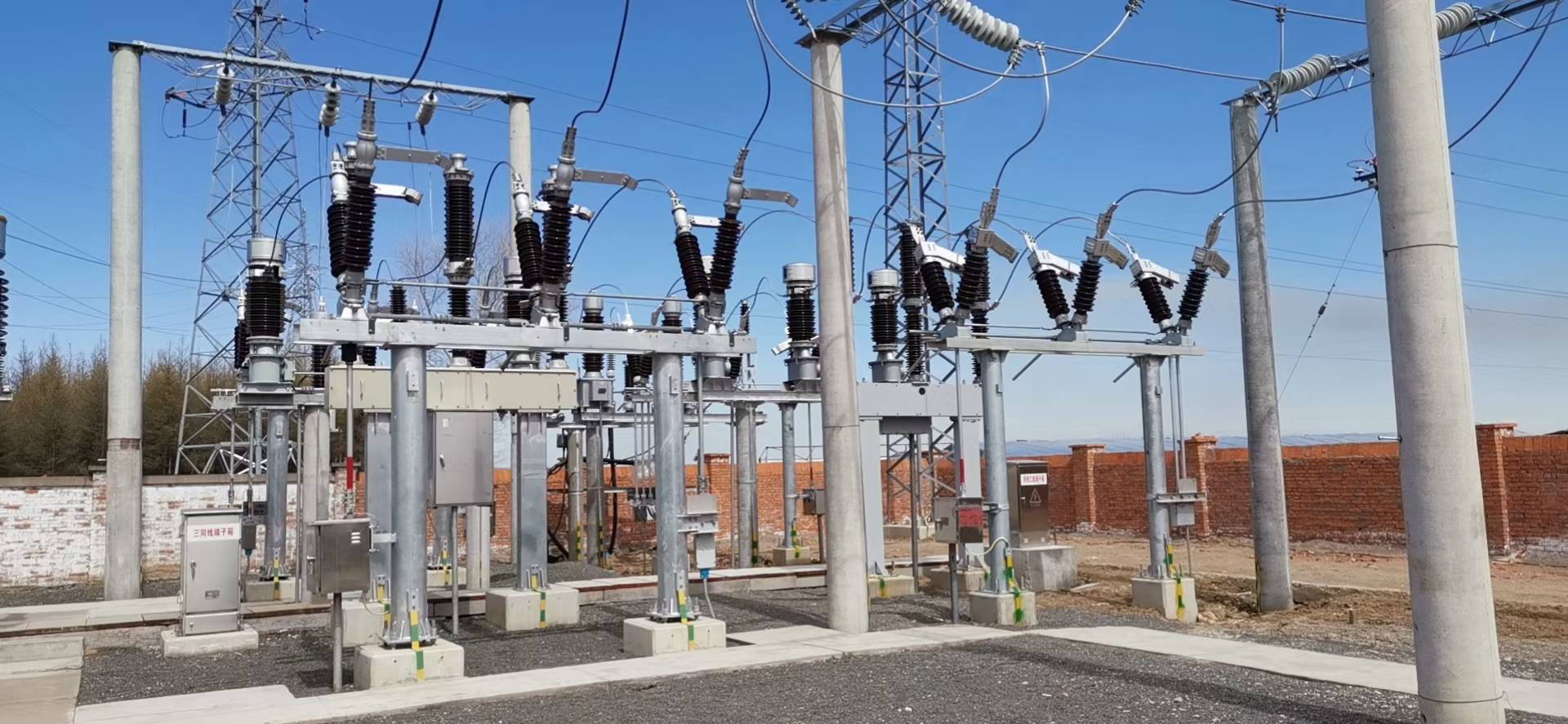
Comparison Table: Live Tank Circuit Breaker vs Dead Tank Breaker
| Decision Factor | Live Tank | Dead Tank |
|---|---|---|
| The difference between a live tank and a dead tank circuit breaker | Tank/enclosure is energized at line potential | Tank/enclosure is grounded |
| Insulation method | External support insulation is critical | Internal insulation within grounded tank is critical |
| CT integration | Usually separate | Often integrated more easily |
| Structure height | Taller | Lower |
| Transport weight | Lighter in many cases | Heavier in many cases |
| Maintenance ergonomics | More elevated access | Often easier at ground level |
| Civil/foundation demand | Often lower | Often higher |
| Protection packaging | May need extra CT structures | Good for integrated protection layout |
| Apparent safety perception | More exposed energized geometry | Grounded enclosure gives confidence |
| Typical cost trend | Lower equipment price | Higher equipment price |
| Best-fit applications | Cost-sensitive AIS, lighter transport routes | Utility-standardized yards, integrated CT need |
| Main buyer caution | Clearance, contamination, access at height | Weight, sealing, foundation, crane logistics |
Procurement Checklist for EPCs and Utilities
Confirm rated voltage, continuous current, short-circuit interrupting current, making current, and TRV duty.
Specify applicable IEC 62271 and/or IEEE C37 standards in the tender.
Decide whether breaker-integrated CTs are required.
Lock terminal arrangement and bay interface dimensions early.
Request seismic qualification evidence for the actual configuration offered.
Demand guaranteed gas leak rate and gas density monitoring details.
Review factory routine and type test evidence, not just a compliance statement.
Check delivery limits: shipping split, max package weight, site crane capacity, road access.
Define spare parts package and recommended commissioning tools.
Ask for maintenance interval assumptions in writing.

FAQ
What is the main difference between a live tank and a dead tank circuit breaker?
The main difference is the electrical potential of the enclosure. In a live tank breaker, the interrupter enclosure is at line voltage; in a dead tank breaker, the enclosure is grounded. This matters because it changes insulation coordination, physical clearances, CT integration, and maintenance approach.
Which is better, a live tank circuit breaker or a dead tank breaker?
Neither is universally better. The right choice depends on application, utility standards, CT needs, site transport limits, civil budget, maintenance practice, and whether lower upfront cost or better integration matters more.
Where are live tank circuit breakers commonly used?
They are commonly used in outdoor AIS transmission substations, especially in projects where lighter equipment, lower purchase cost, and flexible international supply are valued. They are also common in regions where separate CT arrangements are standard practice.
Where are dead tank circuit breakers commonly used?
They are commonly used in transmission substations that need integrated CTs, grounded enclosures, and standardized utility protection layouts. They are especially popular in many North American utility applications.
Are live tank breakers cheaper than dead tank breakers?
Often yes at equipment level, but not always in total installed cost. A fair comparison must include civil works, CT arrangement, steel, foundations, transport, lifting, maintenance access, and lifecycle spare strategy.
Is a dead tank circuit breaker safer than a live tank circuit breaker?
A grounded enclosure can improve operator confidence and maintenance ergonomics, but actual safety depends on full design compliance, protection coordination, installation quality, and work practice. Both can be safe when properly specified and operated under IEC or IEEE requirements.
How does SF6 live tank breaker design differ from dead tank design?
In an SF6 live tank breaker, the interrupter is typically mounted high and energized, supported by insulators. In a dead tank design, the interrupter sits inside a grounded metal enclosure, with bushings bringing the conductor into the tank. This changes gas containment, service access, and sealing philosophy.
Which breaker is easier to maintain in the field?
It depends on what kind of maintenance you prioritize. Dead tank often offers easier ground-level access, while live tank may have simpler visible inspection but more work at height. Outage planning, lifting resources, and crew familiarity often matter more than theory.
Can live tank and dead tank breakers be used at the same voltage levels?
Yes. Both can serve overlapping HV and EHV ranges depending on the manufacturer design and utility standard. The final choice is usually driven by project philosophy and station design, not voltage alone.
What factors should be checked before specifying either breaker type?
Check short-circuit duty, BIL and insulation withstand, CT requirement, pollution severity, altitude, seismic qualification, transport restrictions, footprint, maintenance capability, leak-rate guarantee, and long-term service support.
Conclusion and Recommended Next Step
Both live tank and dead tank circuit breakers perform the same essential protection function, but they do it through different physical and insulation architectures. Live tank usually wins on lighter structure, easier shipping, and lower initial equipment cost; dead tank often wins on CT integration, grounded enclosure preference, and utility-standardized protection layouts. If you shortlist based on site constraints, protection scheme, civil burden, and maintenance reality—not just purchase price—you will reach the right breaker much faster.
CTA
If you are comparing options for an upcoming substation, send us your voltage level, short-circuit rating, CT requirement, site altitude, and layout constraints. We can help you with a breaker selection matrix, a vendor-neutral specification checklist, or a quick review of your substation bay arrangement. For deeper product details, send us an inquiry or contact us directly on WhatsApp.