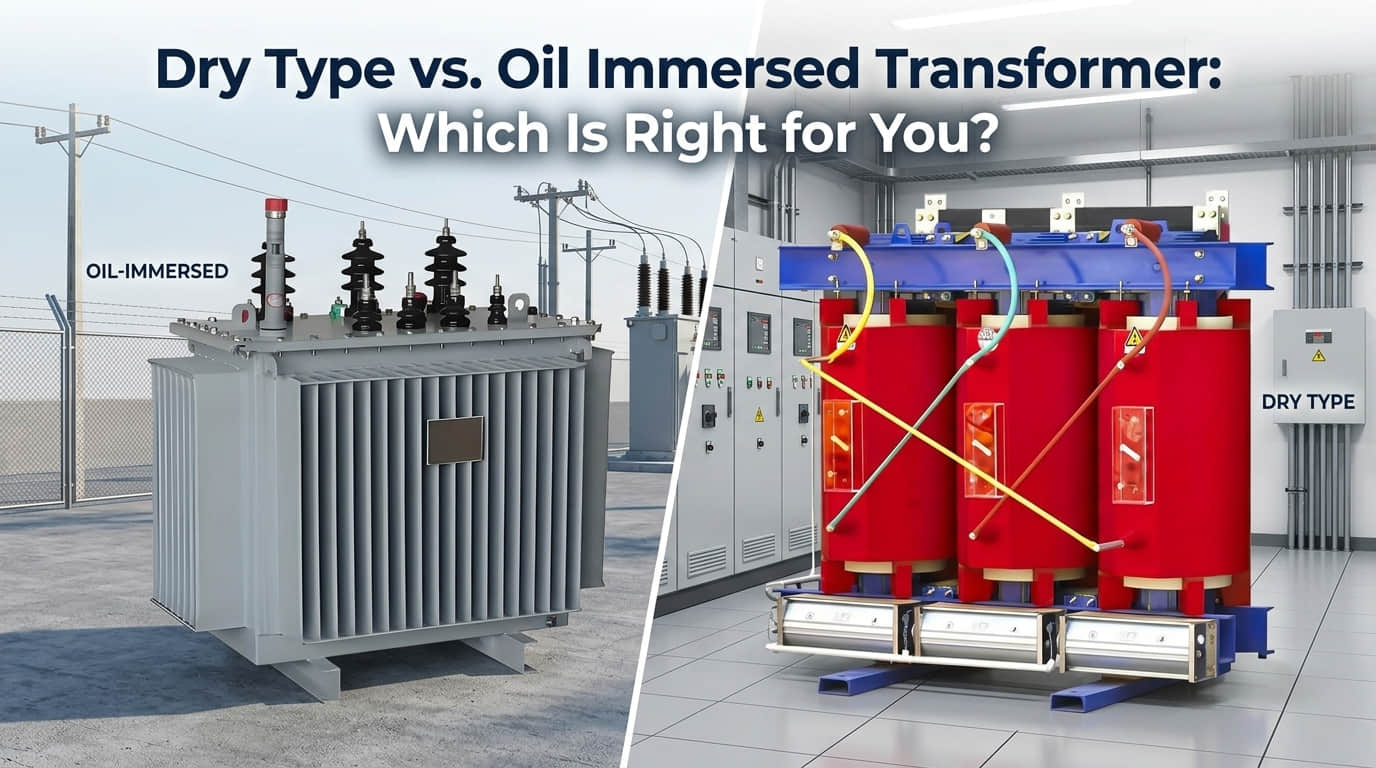
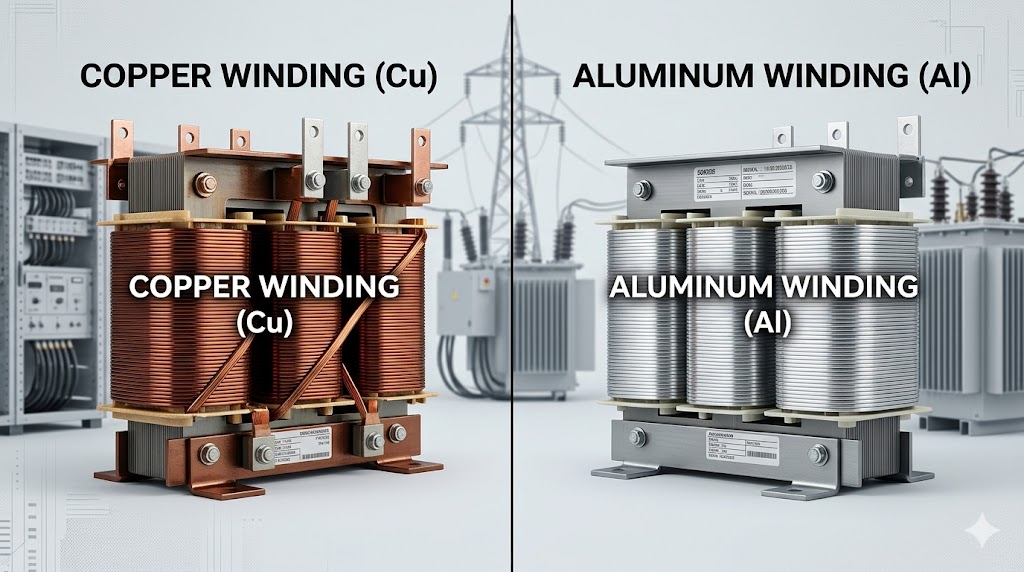
Bottom line first: choose copper transformer windings when you need maximum reliability, better overload tolerance, tighter voltage regulation, smaller size, and lower sensitivity to installation mistakes. Choose aluminum transformer windings when first cost, lower weight, and fleet-scale budget control matter more than absolute compactness and fault-tolerant robustness.
In practical buying terms, copper vs aluminum transformer windings is not a morality play. It is a risk-and-economics decision: copper usually wins for mission-critical loads and harsh duty, while aluminum can be the smarter choice for standard distribution service when the design is sound and the installation team is disciplined.
I cannot verify live Reddit or Quora threads in real time here, but the practitioner pattern across public engineering discussions, manufacturer application notes, and field service reports is remarkably consistent: most failures blamed on aluminum are really connection, torque, oxidation, or workmanship failures; most arguments for copper come from environments where downtime is brutally expensive.
Copper vs Aluminum Transformer Windings: Key Differences, Pros, Cons, and Best-Use Cases
Copper has higher electrical conductivity, higher mechanical strength, and typically enables a more compact transformer for the same kVA rating. That usually means lower resistive losses, better short-circuit withstand, and more forgiving terminations.
Aluminum is lighter and cheaper per unit of conductivity delivered in many market cycles, but it needs more conductor cross-section to achieve similar ampacity. That often leads to larger winding volume, more connection care, and a design that can perform very well only when the manufacturer and installer do the details right.
Choose copper: data centers, hospitals, process plants, tunnels, marine, rooftop units with tight footprint, high inrush duty, and sites where downtime cost dominates purchase price.
Choose aluminum: utility distribution, cost-sensitive commercial projects, large dry-type deployments with adequate space, and standardized fleets with controlled maintenance practices.
Why Transformer Winding Material Choice Becomes a Costly Mistake
The wrong winding material rarely fails on day one. It usually hurts you through hidden costs: extra losses, larger enclosure, connection heating, nuisance maintenance, and reduced tolerance for overloads or poor workmanship.
The common procurement mistake is comparing only the nameplate kVA and the purchase quote. A proper transformer winding material comparison must include energy loss cost, connection hardware quality, maintenance culture, expected service life, spare strategy, and outage consequence.

Copper vs Aluminum Transformer Windings at a Glance
Conductivity: copper is higher; aluminum needs a larger cross-section for similar resistance.
Efficiency: copper usually delivers better efficiency at the same physical size.
Size: Copper designs are typically more compact.
Weight: aluminum windings are lighter, though the overall unit may not scale down proportionally because core and enclosure still matter.
Connection stability: Copper is generally more forgiving; aluminum needs tighter control of lug selection, oxide management, and torque.
Theft risk: copper has a higher scrap value and higher theft attractiveness.
Repairability: Many service teams prefer copper because terminations and rewinds are often simpler to manage.
Lifecycle cost: copper often wins when energy price, downtime, and service life matter; aluminum often wins on CAPEX.
Table: Copper vs Aluminum Transformer Windings Comparison
| Factor | Copper Windings | Aluminum Windings |
|---|---|---|
| Electrical conductivity | Higher conductivity; lower resistance for the same size | Lower conductivity; needs a larger conductor area |
| Transformer size | Usually smaller and more compact | Usually larger for equivalent performance |
| Weight | Heavier material | Lighter conductor material |
| Efficiency at the same frame size | Usually better | Can approach the target with a larger winding design |
| Mechanical strength | Higher tensile strength and better short-circuit robustness | Lower tensile strength; design support matters more |
| Thermal cycling tolerance | Generally, a stronger connection stability | More sensitive to expansion, creep, and termination practice |
| Installation requirements | Still important, but more forgiving | Strict torque, compatible lugs, anti-oxidant, and inspection discipline |
| Purchase price | Higher in most markets | Lower in most markets |
| Lifecycle cost | Often lower in critical, high-load, long-life assets | Often attractive in standard-duty, cost-driven fleets |
How to Choose Transformer Winding Material by Application
Use a five-part filter: load profile, environment, downtime risk, installation constraints, and cost horizon. If three or more of those factors point to low tolerance for heat, outage, or space growth, copper is usually the safer specification.
If the project is a standardized rollout with moderate loading, predictable maintenance, and aggressive budget pressure, aluminum may deliver the best business case. The key is to buy a well-designed unit, not merely a cheap one.
Choose Copper Windings When Reliability and Space Matter Most
Mission-critical facilities with high outage cost
High inrush or cyclic loads, such as motors, UPS systems, welders, and compressors
Compact substations or electrical rooms where every millimeter matters
Hot, humid, corrosive, or vibration-prone environments
Sites with limited maintenance staff or inconsistent contractor quality
Choose Aluminum Windings When Budget and Weight Drive the Project
Utility distribution with standardized operating profiles
Large commercial dry-type installations where floor area is available
Fleet procurement programs focused on CAPEX reduction
Projects with lower load severity and disciplined commissioning
Applications where a slightly larger physical size is acceptable
Transformer Winding Material Comparison: Electrical Performance
For pure conductivity, copper is the stronger conductor. Aluminum has about 61% of copper’s conductivity by volume, so designers compensate by increasing the cross-section.
That design compensation works, but it changes geometry. A larger conductor area can increase winding bulk, affect leakage reactance choices, and reduce how compactly the transformer can be built for the same loss target.
In how to choose transformer winding material, remember that the real metric is not a chemistry contest. It is losses at your actual load factor, voltage regulation, temperature rise, and fault withstand under your site conditions.
Copper Wound Transformer Efficiency: What the Numbers Usually Show
Copper-wound transformer efficiency is usually better when comparing units of similar physical size and thermal class. The advantage often comes from lower I²R losses and an easier compact design.
In many dry-type commercial ratings, the full-load efficiency gap may look small on paper, sometimes only fractions of a percent. But over 10 to 20 years, that tiny gap can become a large operating-cost number if the transformer runs heavily loaded and electricity is expensive.
Aluminum Winding Design Compensation: Larger Cross-Section, Different Trade-Off
A good aluminum design increases conductor area, manages cooling paths, and uses the right termination system. When done properly, aluminum units can meet standard efficiency targets and perform well in normal duty.
The trade-off is that you usually pay with more volume, tighter installation requirements, and less tolerance for poor terminations. That is why some users love aluminum, and others swear never again; the design quality and field execution were not the same.
Aluminum Wound Transformer Cost Analysis: CAPEX vs OPEX
Aluminum-wound transformer cost analysis starts with a simple truth: aluminum usually lowers purchase price. That matters in multi-unit tenders, utility rollouts, and projects where cash discipline beats marginal efficiency gains.
But lower CAPEX is not the same as lower total cost. OPEX can rise through slightly higher losses, larger enclosure needs, extra connection care, and a higher chance of heat-related rework if installation discipline is weak.
CAPEX benefit: lower material cost, often lower quoted price
OPEX risk: higher losses under load, more connection sensitivity
Project risk: larger footprint, possible re-termination or inspection events
Best fit: standard-duty, price-sensitive, maintenance-aware projects
Thermal Performance, Hot Spots, and Overload Behavior
Both materials can operate safely in compliant designs, but they do not behave identically during thermal cycling. Copper generally offers better margin when the load is peaky, the ambient temperature is high, or short-term overloads happen often.
Aluminum expands more and is more sensitive to creep at terminations over time. In real facilities, that means connection integrity becomes more dependent on correct lug metallurgy, torque values, anti-oxidant compound, and inspection intervals.
IEEE and IEC standards matter here. Buyers should require performance and test compliance with relevant standards such as IEEE C57 series and IEC 60076, including temperature rise, losses, dielectric tests, and short-circuit considerations where applicable.
Mechanical Strength, Connections, and Maintenance Risk
Copper has better mechanical strength and usually handles short-circuit forces with more design margin. That is one reason many engineers prefer it in industrial environments with high fault levels and motor-heavy systems.
Aluminum is not inherently unreliable, but it is less forgiving. A mediocre termination that might survive on copper can become a hot spot on aluminum after repeated thermal cycles.
The unglamorous truth from field discussions is this: the winding material debate often gets decided by the quality of the person holding the torque wrench. That is the detail that generic sales brochures rarely emphasize.
Real-World Data: Efficiency, Losses, and Lifecycle Cost
Consider a simplified example for a 1000 kVA dry-type transformer running at a 60% average load factor, 8,000 hours per year, with power priced at $0.12 per kWh. Assume the copper design has 1.5 kW no-load loss and 8.5 kW full-load load loss, while the aluminum design has 1.7 kW no-load loss and 9.4 kW full-load load loss.
At 60% load, load losses scale roughly with current squared. That gives about 3.06 kW effective load loss for copper and about 3.38 kW for aluminum, making annual energy-loss cost roughly $4,378 for copper versus $4,877 for aluminum, a difference of about $499 per year.
That may look small. Over 10 years, it becomes about $4,990 before energy inflation, and over 20 years, about $9,980, which can erase much of the upfront saving if the price gap was modest.
Table: Sample 10-Year Total Cost of Ownership Model
| Input / Output | Copper Unit Example | Aluminum Unit Example |
|---|---|---|
| Transformer rating | 1000 kVA dry-type | 1000 kVA dry-type |
| Purchase price | $32,000 | $27,500 |
| Average load factor | 60% | 60% |
| Operating hours/year | 8,000 | 8,000 |
| Energy price | $0.12/kWh | $0.12/kWh |
| No-load loss | 1.5 kW | 1.7 kW |
| Full-load load loss | 8.5 kW | 9.4 kW |
| Annual energy-loss cost | $4,378 | $4,877 |
| 10-year energy-loss cost | $43,780 | $48,770 |
| Estimated extra connection maintenance | $500 | $1,500 |
| Indicative outage/rework reserve | $500 | $2,000 |
| 10-year total ownership estimate | $76,780 | $79,770 |
This is not a universal result. If energy is cheaper, loads are lighter, or the aluminum price discount is larger, aluminum can still win decisively.

Real User Feedback from Reddit, Quora, and Field Discussions
Across public discussions among plant engineers, electricians, consultants, and utility personnel, the tone is practical rather than ideological. People who defend aluminum usually have good vendor quality and good installation control; people who reject it usually live through overheated lugs, retightening headaches, or post-commissioning hot spots.
What Engineers Praise About Copper in Real Projects
Better confidence during overloads and motor starts
Smaller footprint in crowded electrical rooms
Fewer worries about lug compatibility and creep
Greater comfort in high-fault industrial systems
Better perceived repairability and resale confidence
What Buyers Like About Aluminum in Real Projects
Lower upfront price, especially in multi-unit tenders
Lighter conductor system and easier handling in some ratings
Perfectly acceptable performance in standard distribution duty
Good economics when maintenance and inspections are already structured
Strong value in utilities and large commercial rollouts
Field Details AI Often Misses, but Operators Notice
Torque discipline is everything: “tight enough” is not a spec.
Anti-oxidant compound: skipped more often than procurement teams think.
Lug compatibility: mixed-metal assumptions cause avoidable heating.
Retightening culture: some sites do it, some say they do it, many never do.
Humidity and rooftop heat: these accelerate real-world connection problems.
Theft exposure: copper draws more security concerns at remote sites.
Industry Pain Points: Where Copper vs Aluminum Decisions Go Wrong
The first failure point is bad comparison logic. Buyers compare nameplate kVA and initial quote, but do not model load profile, loss cost, room size, or outage value.
The second failure point is assuming all manufacturers design aluminum equally well. They do not. The third is assuming field crews will automatically follow aluminum-specific termination practices every time. They do not either.
Best Transformer Selection Checklist for Commercial and Industrial Buyers
What is the real average and peak load profile?
Will loads grow over the next 5 to 10 years?
Is the site hot, humid, dusty, corrosive, or vibration-prone?
How expensive is one hour of downtime?
Is the electrical room space constrained?
Are harmonics, non-linear loads, or frequent motor starts present?
Does the site have disciplined torque-and-inspection procedures?
What do utility, insurer, or client specifications require?
What are the efficiency targets under IEEE or IEC-aligned testing?
Is theft or salvage exposure part of the security plan?
Table: Quick Decision Matrix by Facility Type
| Facility Type | Recommended Material | Why |
|---|---|---|
| Data center | Copper | Downtime cost, compact design, thermal margin |
| Hospital | Copper | Critical continuity, high reliability expectation |
| Heavy factory | Copper | Motor starts, fault stress, overload tolerance |
| Warehouse | Aluminum or Copper | Depends on load intensity and space budget |
| Solar plant auxiliary distribution | Aluminum often viable | Cost scale and standard duty can favor aluminum |
| Utility distribution | Aluminum often preferred | Fleet economics and standardization |
| Commercial office building | Aluminum or Copper | Use the lifecycle model and room constraints |
Common Specification Language to Use in RFQs and Tenders
Ask for more than “copper or aluminum.” That is too vague.
Conductor material and minimum design standard
Guaranteed no-load and load losses at rated temperature
Temperature rise and insulation class
Termination hardware details and lug compatibility requirements
Anti-oxidation treatment requirements for aluminum terminations
Routine and type test documentation
Short-circuit withstand statement
Warranty terms covering hotspot or connection-related defects
Commissioning torque documentation and infrared inspection recommendation
FAQ
Is a copper-wound transformer more efficient than an aluminum-wound transformer?
Usually, yes, especially when comparing units of similar size. The efficiency gap is often modest, but copper typically has lower I²R losses; aluminum can narrow the gap if the manufacturer uses a larger cross-section and optimized cooling.
Is an aluminum-wound transformer less reliable?
Not automatically. Reliability depends heavily on design quality, termination system, torque control, oxide management, and operating conditions; poorly executed aluminum is less forgiving, but well-designed aluminum in standard duty can be very reliable.
Why are aluminum transformers usually cheaper?
Aluminum generally lowers conductor material cost and can reduce the quoted purchase price, especially in larger fleets. The trade-off is that some of the savings may be offset later by slightly higher losses, larger size, or more connection-sensitive maintenance practices.
Which transformer winding material is better for industrial facilities?
In many industrial facilities, copper is the safer default because loads are often heavier, motor-driven, space-constrained, and expensive to lose. If the downtime cost is high, copper usually justifies itself faster.
Which transformer winding material is better for utility distribution?
Aluminum is common and often economically preferred in utility distribution because the duty is standardized, procurement volumes are large, and fleet-level CAPEX matters greatly. Utilities also tend to have established maintenance and installation practices that support aluminum successfully.
Do aluminum windings increase maintenance requirements?
They can, mainly at connections rather than in the winding body itself. Proper lugs, correct torque, anti-oxidant compound, and periodic inspection discipline are more critical with aluminum.
How much larger is an aluminum winding transformer compared with copper?
There is no single universal percentage because design choices differ by rating and cooling method. Practically, aluminum needs a larger conductor cross-section for the same resistance target, so the transformer is often somewhat bulkier, though the exact size increase depends on how the manufacturer balances winding geometry and core design.
Does copper have a better resale or theft risk profile?
Copper generally has a stronger scrap and salvage appeal, which can help perceived resale value but also increases theft risk at exposed sites. If site security is weak or the location is remote, that risk should be priced into the decision.
How do I choose transformer winding material for my project?
Use this rule: if downtime cost, space pressure, overload risk, or harsh conditions are high, choose copper; if budget pressure is high, duty is standard, and installation quality control is strong, aluminum is often a good business choice.
Final Recommendation: Pick the Winding Material That Matches Your Risk and Cost Model
If you want the shortest honest answer, here it is: copper is the reliability-first choice; aluminum is the budget-first choice. Neither is universally “better” unless you define the operating context, the maintenance reality, and the cost of being wrong.
For commercial and industrial buyers, the decisive question is rarely the material price alone. It is whether your facility can tolerate slightly higher losses, larger size, and more connection sensitivity in exchange for a lower purchase cost.
If the answer is no, specify copper. If the answer is yes, and you trust the manufacturer, installer, and maintenance process, aluminum can be a smart and fully defensible selection.
Request a Transformer Winding Material Assessment
Want a project-specific answer instead of a generic debate? Send your transformer rating, load profile, ambient conditions, space limits, energy price, budget target, and expected runtime assumptions. A proper copper vs aluminum transformer winding assessment can show which option gives you the lower real cost and lower operating risk over the life of the asset.