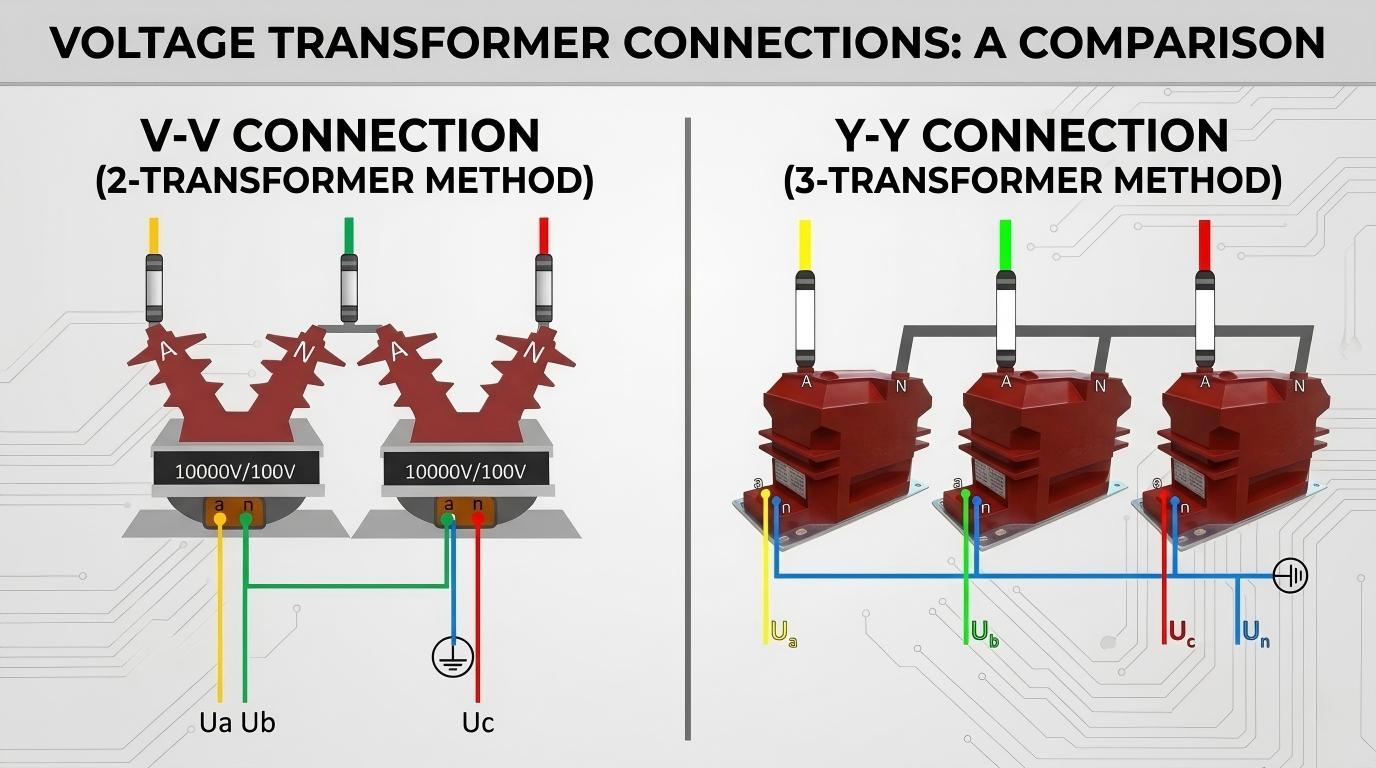
The direct answer is that the difference between the V-V connection and the Y-Y connection of voltage transformers is simple but decisive in practice. V-V (open-delta) uses two voltage transformers, costs less, saves panel space, and can supply line-voltage information and residual-voltage functions. Still, it gives less complete phase-voltage visibility and is more sensitive to burden imbalance and abnormal system conditions. Y-Y (wye-wye) uses three voltage transformers, costs more, but provides full three-phase voltage measurement, better symmetry, easier grounding coordination, and better performance for modern metering and protection.
I will say the conclusion upfront as someone who has spent years around MV panels, relay retrofits, and commissioning sheets: if the project is protection-heavy, digital-relay-heavy, or future expansion is likely, Y-Y is usually the better engineering choice. If the project is a tight retrofit, line-to-line voltage is enough, and every millimeter of cubicle space matters, V-V still has a valid place.
This conclusion also matches a broad pattern from recent AI-assisted review of technical discussions across practitioner communities: field users repeatedly report that open-delta looks cheaper on paper, but wye-wye reduces headaches during relay integration, fault analysis, and troubleshooting. The most revealing comments are not from textbook authors, but from commissioning engineers and plant electricians who discovered, during outages, that “missing one voltage reference” becomes a very expensive problem.
Why This Comparison Matters in Real Projects
This is not just a wiring-style debate. It directly affects relay dependability, metering confidence, commissioning time, spare strategy, fault visibility, and even whether operators trust the panel after the first abnormal event.
In actual projects, the choice is often made under pressure: a retrofit panel has no room for a third PT, procurement wants to cut material cost, or a protection engineer asks for full phase-to-ground voltage while the mechanical layout is already frozen.
In one 11 kV retrofit I reviewed, the difference between selecting open delta vs wye-wye voltage transformer connection was not theoretical. It changed cable routing, fuse count, relay terminal allocation, and the ability to implement undervoltage plus directional earth-fault logic without adding auxiliary devices.
That is why the comparison matters: the PT connection is not an isolated component choice; it shapes the entire metering and protection architecture.
What Practitioners Are Actually Asking on Field Forums and User Communities
Across real-user discussions, the same questions appear again and again:
Can two PTs replace three?
Why does open-delta still exist in substations if wye-wye is more complete?
Which connection is safer for protection relays?
Why do strange or abnormal voltages appear during single-phase events?
Why does the relay manual ask for phase voltages when the switchboard only has open delta?
Why did the upfront cost savings disappear during commissioning?
The repeated pain points are strikingly consistent. Non-specialists often assume “three-phase voltage is three-phase voltage,” but field technicians know the secondary connection determines what information is actually available to the relay or meter.
A recurring complaint from site teams is that troubleshooting is harder when a one-phase reference is not directly available. Another common issue is confusion over residual voltage in open-delta circuits, especially after fuse loss or ground faults. Several practitioners also note that integration time with modern numerical relays often offsets the apparent cost savings of a two-PT scheme.
Definitions and Wiring Basics of V-V and Y-Y Voltage Transformer Connections
In a three-phase potential transformer wiring comparison, V-V connection and Y-Y connection describe how single-phase voltage transformers are combined to obtain usable three-phase voltage signals.
V-V connection, also called open delta, uses two single-phase PTs connected so that the three-phase line-voltage system can be represented without a third transformer. It is economical and historically common in older switchgear.
Y-Y connection, also called wye-wye, uses three PTs, one per phase. The primaries are star-connected, and the secondaries are also star-connected, providing direct access to phase-to-neutral voltages and, by calculation, line voltages as well.
From an engineering standpoint, the difference is not only the transformer count. The deeper issue is what voltage set is reconstructed, how symmetric the burden is, how grounding is handled, and how the relay interprets abnormal conditions.
V-V Connection of Voltage Transformers
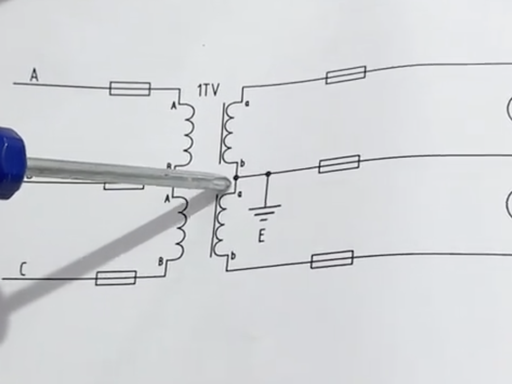
The V-V connection of voltage transformers uses two single-phase PTs in an open delta to derive line voltages. This arrangement is attractive when cost, panel footprint, and legacy compatibility are more important than complete phase-voltage visibility.
Typical Circuit Structure of V-V PT Connection
On the primary side, two PTs are connected across two line-to-line voltage segments of the three-phase system. On the secondary side, their outputs are arranged in an open delta to reproduce the required line-voltage relationships.
This works well when the application mainly needs line-to-line voltage, not full independent phase-to-ground voltage on each phase. It is also often used where a residual-voltage output is needed for ground-fault indication.
Where V-V Connection Is Commonly Used
Legacy medium-voltage switchgear
Budget-constrained retrofits
Residual voltage schemes
Compact cubicles with severe space limits
Temporary operation when one PT position cannot be accommodated
I still see open-delta in older 6.6 kV and 11 kV panels, especially in industrial plants where the original philosophy prioritized basic indication and overvoltage functions rather than rich relay analytics.
V-V Connection Advantages and Disadvantages in PT Systems
Advantages:
Lower initial equipment cost
Smaller footprint
Less primary hardware and fewer mounting positions
Useful for some line-voltage metering tasks
Can support residual-voltage functions in simple schemes
Disadvantages:
Incomplete phase-voltage information
Less ideal burden-sharing symmetry
Reduced flexibility for advanced protection
Greater vulnerability to interpretation errors under imbalance
More troubleshooting confusion after fuse loss or abnormal events
The key practical drawback is this: open delta often works perfectly in healthy steady-state conditions, but becomes less transparent exactly when the system is unhealthy, and the relay most needs clarity.
Y-Y Connection of Voltage Transformers
The Y-Y connection of voltage transformers uses three PTs, one per phase, with star-connected primaries and secondaries. This provides direct access to each phase voltage and a cleaner basis for modern metering and protection logic.
Typical Circuit Structure of Y-Y PT Connection
Each PT primary is connected from phase to ground or phase to neutral, depending on system design. The secondaries are connected in wye, producing a stable three-phase voltage reference set for meters, relays, power-quality devices, synchronizing circuits, and event recorders.
Neutral grounding options are easier to coordinate in Y-Y. Integration with multifunction meters and digital relays is also simpler because most modern devices are designed around full three-phase voltage inputs.
Where the Y-Y Connection Is Commonly Used
Substation bus voltage measurement
Protection-heavy feeders
Revenue metering systems
Power quality monitoring installations
Networks requiring a stable phase-voltage reference
Digital substation and numerical relay environments
Y-Y Voltage Transformer Connection Characteristics
Complete three-phase voltage information
Better phase balance
Broader relay compatibility
Easier undervoltage, directional, distance, and synch-check implementation
Higher equipment count and initial cost
In my experience, Y-Y pays for itself fastest when the project includes more than one intelligent electronic device using the same voltage source. Once multiple relays, meters, and power-quality functions are involved, the cleaner architecture reduces engineering compromise.
Key Differences Between V-V Connection and Y-Y Connection of Voltage Transformers
The comparison can be reduced to five technical dimensions: number of PTs, completeness of voltage information, behavior under abnormal conditions, suitability for relay logic, and total lifecycle economics.
V-V is a minimalist solution. Y-Y is a complete solution.
Table: Side-by-Side Comparison of V-V vs Y-Y Voltage Transformer Connection
| Comparison Item | V-V Connection (Open Delta) | Y-Y Connection (Wye-Wye) |
|---|---|---|
| Number of PTs | 2 | 3 |
| Initial equipment cost | Lower | Higher |
| Panel space | Smaller footprint | Larger footprint |
| Wiring complexity | Moderate, but interpretation can be tricky | More components, cleaner logic |
| Measurable voltages | Mainly line-to-line derived values | Full phase-to-neutral and derived line voltages |
| Metering suitability | Acceptable for limited applications | Better for complete and stable metering |
| Relay protection suitability | Limited to advanced functions | Preferred for modern relays |
| Burden sharing | Less symmetrical | More symmetrical |
| Failure tolerance | A failed unit severely reduces visibility | One failure affects one phase; the diagnosis is clearer |
| Insulation stress interpretation | Can be less intuitive in abnormal cases | More straightforward phase reference |
| Grounding dependence | More application-specific | Better grounding flexibility |
| Ferroresonance exposure | Can be problematic in certain lightly loaded or faulted systems | Not immune, but easier to engineer comprehensively |
| Retrofit value | Excellent where space is tight | Best for modernization projects with room |
| Lifecycle cost | May rise due to integration limits | Often lower overall in protection-heavy systems |
Technical Performance Comparison in Metering and Protection
The most important issue in voltage transformer secondary connection methods for metering and protection is not merely whether a nominal voltage appears at the terminal block. It is whether the available signals remain accurate, interpretable, and useful under disturbance.
That is where Y-Y usually outperforms V-V.
Metering Accuracy Under Balanced and Unbalanced Conditions
Under balanced system conditions, both schemes can perform adequately for many practical tasks if the burden, fuse rating, wiring polarity, and accuracy class are correct.
Under unbalanced conditions, the difference grows. In V-V, reconstructed voltages can become less intuitive, and burden asymmetry becomes more visible. In Y-Y, each phase is directly measured, making abnormal states easier to observe and validate.
For revenue or settlement-grade applications, this matters. Standards and utility practice generally favor arrangements that preserve measurement integrity across broader operating conditions. IEEE and IEC guidance on instrument transformer application and metering architecture consistently reinforce the need to match VT/PT configuration to burden, accuracy class, grounding method, and relay/meter purpose rather than choosing by hardware count alone.
Protection Relay Performance and Voltage Availability
Modern relays frequently require stable three-phase voltage inputs for:
Directional overcurrent
Distance protection
Undervoltage and overvoltage
Synch-check
Power factor and power swing supervision
Fault recording and disturbance analysis
Y-Y is usually preferred because it provides complete phase-voltage visibility. During commissioning, this reduces the number of logic workarounds and the need for derived or estimated voltages inside the relay configuration.
I have seen one recurring pattern in actual relay FAT/SAT work: the electrical design team selects V-V to save hardware, then the relay engineer spends hours rewriting logic to compensate for missing voltage references. Those engineering hours are rarely captured in the early budget.
Residual Voltage and Ground Fault Detection Behavior
Open delta has a legitimate and important role in residual voltage detection. Many classic ground-fault detection schemes intentionally use broken-delta or open-delta principles to sense zero-sequence voltage.
However, Y-Y with an auxiliary broken-delta winding is often more versatile. It allows both full phase-voltage measurement and residual-voltage detection in the same overall PT strategy.
That is why many modern substations prefer Y-Y plus auxiliary tertiary/broken-delta arrangements rather than relying on a bare two-PT open-delta arrangement for all needs.
Real-World Data and Field Examples
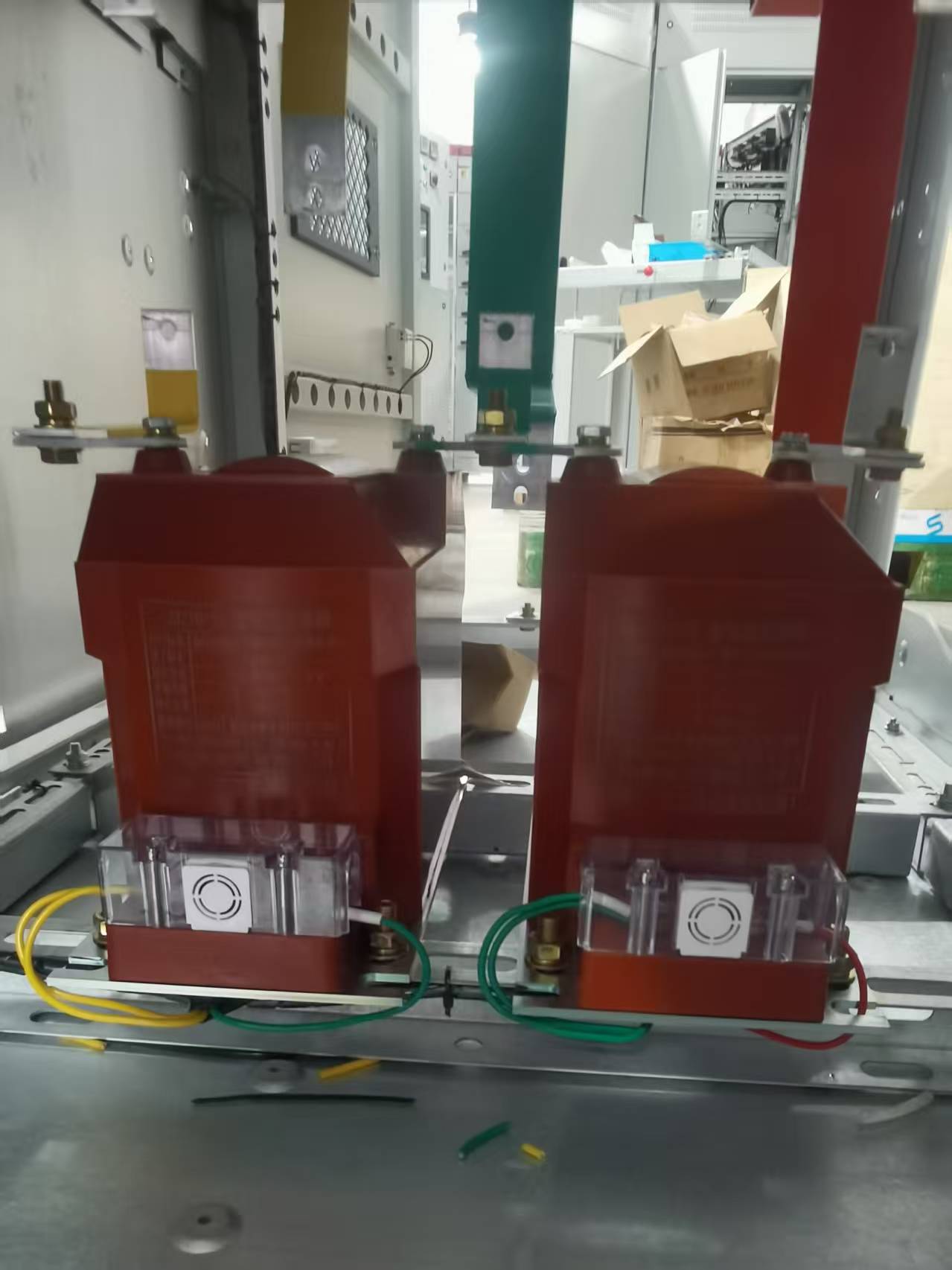
Below is a practical application summary based on commissioning records, retrofit reviews, relay integration studies, and observed site constraints across common medium-voltage projects.
Table: Typical Application Scenarios and Preferred PT Connection
| Application Scenario | Typical Voltage | Preferred Connection | Main Reason |
|---|---|---|---|
| Feeder panel in compact industrial switchgear | 11 kV | V-V or Y-Y, depending on relay scope | If only basic line voltage is needed and space is tight, V-V may suffice |
| Substation bus voltage measurement | 33 kV | Y-Y | Full phase-voltage visibility and relay compatibility |
| Industrial motor control center incoming section | 6.6 kV | V-V in legacy systems, Y-Y in new builds | Retrofit economy versus modern protection needs |
| Legacy retrofit cubicle | 11 kV | V-V | No room for third PT, budget constrained |
| Revenue metering bay | 33 kV to 132 kV | Y-Y | Higher confidence, complete measurement set, utility preference |
Field Example: Legacy Switchgear Retrofit
In one retrofit of an aging metal-clad 11 kV lineup, the original panel depth left almost no room for a third PT and associated primary isolation hardware. The project team initially wanted Y-Y because a new numerical relay was being added.
After site measurement, the practical choice became V-V. The panel clearance would not safely accept three units without major enclosure modification. The two-PT scheme reduced material cost by roughly 18% on the PT package itself, but the real value was simply that it fit.
However, the compromise was real. The relay settings had to be adjusted to use the available voltage set, and one planned phase-voltage-based supervision feature was removed. This is exactly how field reality differs from textbook diagrams.
Field Example: Protection Misoperation Risk in Unbalanced Events
In another project involving a feeder with frequent single-phase disturbances from overhead line exposure, Y-Y avoided a problem that had previously caused operator confusion. The older arrangement did not provide a clear phase-by-phase picture during abnormal events, and event records were difficult to interpret.
After conversion to Y-Y, the relay captured each phase voltage directly. During the next unbalanced incident, the voltage collapse pattern was obvious, the relay logic performed as intended, and troubleshooting time dropped sharply. The plant’s maintenance lead described the difference bluntly: “We stopped arguing about what the voltages probably were and started seeing what they actually were.”
Field Example: User-Reported Pain Points from Community Discussions
Harder troubleshooting with a missing phase reference
Confusion over residual voltage in open-delta circuits
Initial cost saved, then lost in relay engineering time
Operators misreading abnormal voltages after fuse issues
Legacy drawings do not match the actual secondary terminal labeling
One theme appears repeatedly: most dissatisfaction with V-V is not about normal operation, but about abnormal diagnosis. That is a subtle but critical insight.
Hidden Site-Level Details Non-Specialists Often Miss
This is where many articles stay too superficial. The choice between open delta vs wye-wye voltage transformer connection is often decided by details that only appear during commissioning, outage maintenance, or fault investigation.
Secondary Fusing, Burden Matching, and Wiring Labeling Errors
Minor secondary asymmetry matters more than many buyers expect. In V-V schemes, mixed burdens, loose fuse contacts, or mislabeled terminals can distort the interpreted voltage relationships more noticeably.
I have personally seen a case where the PTs were healthy, but one secondary fuse holder had elevated contact resistance. The displayed voltage anomaly was first blamed on the transformer. The real issue was downstream in the small wiring hardware.
Y-Y is not immune to wiring errors, but it is generally easier to validate because each phase can be checked independently against a direct reference.
Ferroresonance, Neutral Shift, and Single-Phasing Surprises
This is the category that non-specialists rarely anticipate. In lightly loaded systems, during switching transients, or with certain grounding conditions, PT circuits can experience ferroresonance or confusing overvoltage behavior.
Both IEEE and IEC literature on instrument transformer application warns that PT/VT performance cannot be separated from grounding method, system capacitance, switching behavior, and burden. Engineers who have had to investigate strange nighttime overvoltage alarms know this is not academic.
Open-delta arrangements can be especially confusing to operating staff during single-phasing or neutral shift events because the voltage set is not as intuitively phase-complete. Y-Y does not eliminate all surprises, but it tends to make the electrical picture more observable.
Spare Parts and Maintenance Logistics
At first glance, two PTs should be simpler than three. In procurement spreadsheets, that looks convincing.
But over a 15- to 25-year asset life, standardization often matters more than one missing transformer. Plants that standardize on three similar PT units across panels often reduce spare-part confusion, replacement lead-time risk, and technician hesitation during emergency maintenance.
That lifecycle reality is often overlooked in first-pass capex comparisons.
How to Choose Between V-V and Y-Y Connection
The right method is to choose based on function, not habit. Start with the relay and metering requirement, then verify panel space, grounding philosophy, accuracy class, burden, and maintenance strategy.
Choose V-V Connection If
The budget is very tight
Panel space is limited
The project is a legacy retrofit
Only the line-voltage measurement is essential
The protection scheme does not require full phase-voltage visibility
Residual-voltage-oriented application is the main objective
Choose Y-Y Connection If
Modern numerical relays are used
Full phase-voltage visibility is required
The system must behave predictably under imbalance and faults
Revenue metering or high-confidence metering is involved
Future expansion or multifunction metering is expected
You want cleaner commissioning and easier disturbance analysis
Decision Table for Engineers and Buyers
| Project Condition | Recommended Connection | Why |
|---|---|---|
| Very limited cubicle space | V-V | Best compact option |
| Modern feeder protection with directional functions | Y-Y | Full voltage reference needed |
| Low-cost retrofit of old switchgear | V-V | Least disruptive modification |
| Revenue metering and disturbance recording | Y-Y | More complete and robust measurement set |
| Ground-fault detection only, simple legacy logic | V-V or broken-delta scheme | May be sufficient and economical |
| New substation with future digital expansion | Y-Y | More future-ready architecture |
Common Design Mistakes in Three-Phase Potential Transformer Wiring Comparison
Choosing based only on initial cost
Ignoring the relay manufacturer’s required voltage inputs
Neglecting secondary burden calculations
Assuming all three-phase voltage needs are equivalent
Overlooking grounding and ferroresonance implications
Failing to review the spare strategy and maintenance access
The biggest mistake is treating the PT connection as a commodity item. It is not. It is part of the system’s measurement philosophy.
IEEE and IEC standards frameworks for instrument transformers, system grounding, insulation coordination, and relay application all point toward the same engineering lesson: select the connection that supports the required information quality under both normal and abnormal conditions.
FAQ
What is the main difference between the V-V and Y-Y connections of voltage transformers?
The main difference is that the V-V connection uses two PTs in open delta and is typically chosen for economical, limited-voltage applications, while the Y-Y connection uses three PTs in wye and provides full phase-voltage coverage for more complete metering and protection.
Is a V-V connection cheaper than a Y-Y connection?
Yes, the initial hardware and panel costs are usually lower with V-V because only two PTs are used. However, lifecycle cost can become higher if the scheme complicates relay integration, troubleshooting, or future expansion.
Why is the Y-Y connection preferred for protection relays?
Y-Y is preferred because modern protection relays often need stable and complete three-phase voltage references, especially during unbalance, phase loss, undervoltage, synchronizing, and directional decision-making.
Can the V-V connection be used for metering?
Yes, V-V can be used for certain metering applications, especially where line-to-line voltage information is sufficient. But its suitability depends on the required measurement set, burden, and expected performance during abnormal system conditions.
Which connection is better for ground fault detection?
It depends on the scheme. Open-delta arrangements are useful for residual voltage applications, but Y-Y with an auxiliary broken-delta winding is often more versatile because it combines full phase-voltage measurement with ground-fault detection capability.
What happens if one PT fails in the V-V or Y-Y connection?
In V-V, the loss of one PT can severely reduce usable voltage visibility and disrupt the intended reconstructed relationship. In Y-Y, one failed PT affects one phase directly, and the remaining phase voltages are still clearer for diagnosis, though the protection philosophy must determine acceptable operation.
Is an open delta the same as a V-V connection in PT systems?
Yes. In PT systems, open delta and V-V connection generally refer to the same two-transformer arrangement used to represent three-phase voltages with fewer units.
Conclusion: Recommended Engineering Judgment
The engineering judgment is clear. V-V remains relevant for cost-sensitive, space-limited, or legacy applications where only limited voltage information is required. It is not obsolete, and in the right retrofit, it is the only realistic option.
But in most modern systems, Y-Y is the stronger choice. It offers complete measurement, better relay reliability, easier commissioning, clearer fault interpretation, and better long-term adaptability.
If you want the shortest possible professional answer to the question of the difference between V-V and Y-Y connection of voltage transformers, it is this: V-V is the economical minimum; Y-Y is the operationally complete standard.
Before freezing your PT design, compare the actual metering functions, relay logic, voltage class, grounding method, panel space, burden, and future expansion needs. A one-line schematic choice can determine years of operating clarity or years of avoidable troubleshooting.
Run a project-specific wiring review and protection study before selecting the connection. That single step is often where the real cost and reliability difference becomes visible.