Why a Drop-Out Fuse “Drops”?
A drop-out fuse drops because overcurrent melts the fuse link, the fuse tube or holder loses its mechanical restraint, and then gravity plus spring tension make the holder swing open, creating a visible open point that isolates the fault.
That is the direct answer. In actual field work, the “drop” is not a random fall. It is a deliberate part of the protection design: electrical interruption first, visible isolation second.
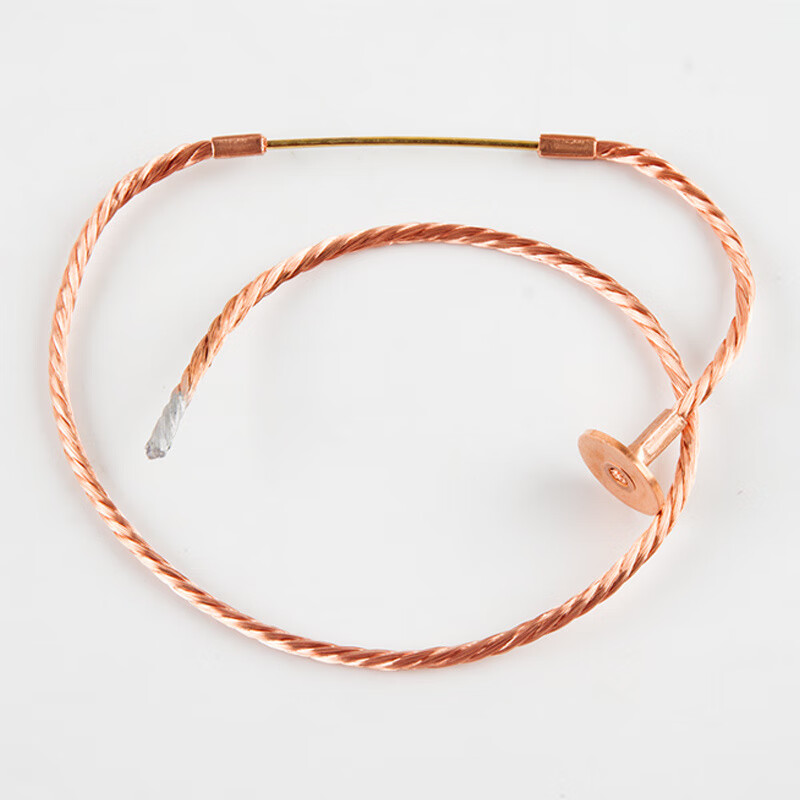
What a Drop-Out Fuse Does in Overhead Distribution Systems
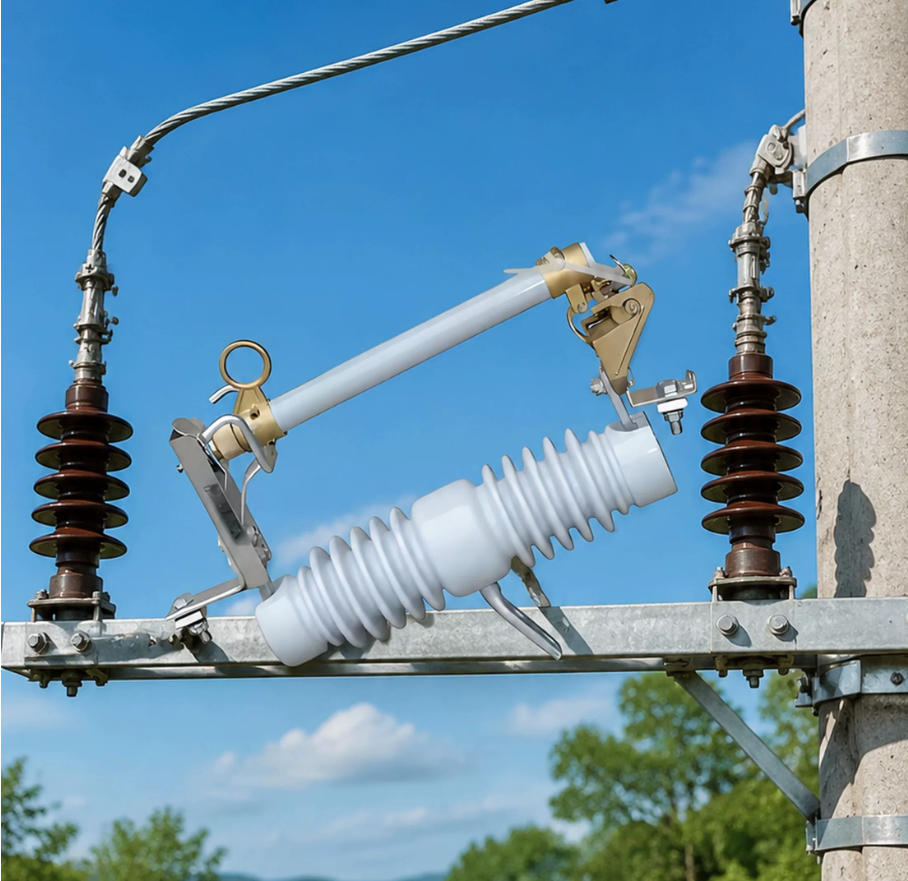
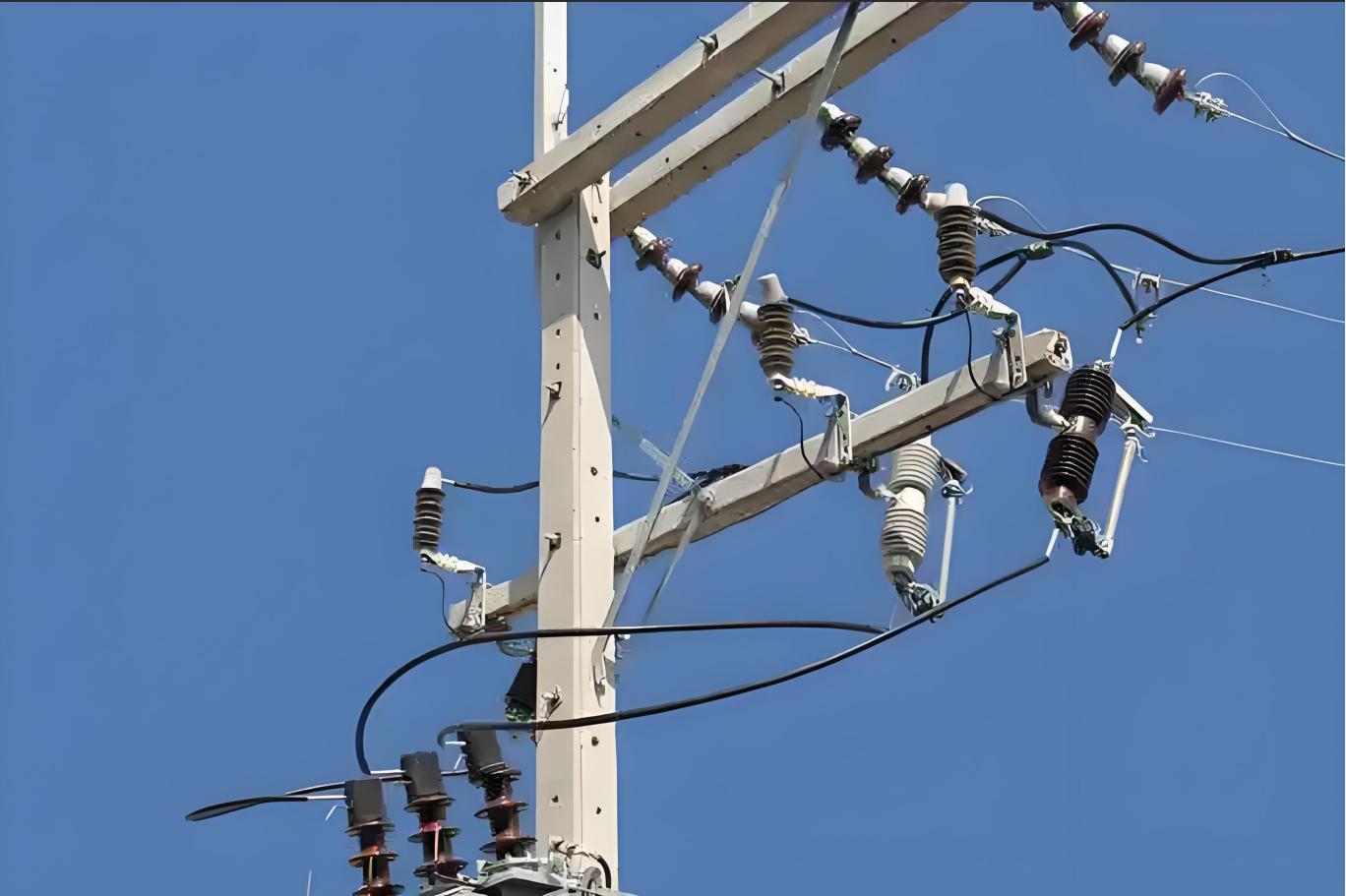
A drop-out fuse, also called a cutout fuse or expulsion fuse cutout, is a protective device used on overhead distribution lines and distribution transformers.
Its job is simple but critical: disconnect a faulty transformer branch, lateral, capacitor bank, or line section before the fault escalates into equipment destruction, wildfire risk, or a wider feeder outage.
In utility practice, the device is valued for one feature that crews still trust in the field: you can see from the ground whether it is open. That visible isolation is why the overhead line fuse holder trip remains common even in networks with more advanced relaying.
Relevant international references include IEC 60282 for high-voltage fuses and IEEE C37 series guidance for cutouts, surge protection coordination, and distribution protection practice. Exact product design and test obligations vary by class, voltage, and manufacturer, but the protection principle is consistent worldwide.
How a Drop-Out Fuse Works Step by Step
Understanding drop-out fuse operation means seeing it as a sequence of linked events: current carrying, melting, arcing, arc extinction, mechanical release, and visible opening.
Normal Position: Fuse Holder Latched and Carrying Current
Under normal conditions, the fuse holder is latched in the closed position. Current flows through the upper contact, through the fuse link, down the fuse tube assembly, and out through the lower contact.
The holder is not “hanging there loosely.” It is held by contact geometry, latch pressure, hinge alignment, and the intact fuse link assembly.
Fault Event: Overcurrent Heats and Melts the Fuse Link
When a short circuit or severe overload occurs, current rises above the link’s time-current curve. The link heats rapidly according to its I²t behavior and melts at its calibrated weak point.
This is where wrong assumptions start in many plants and rural utilities. Operators often say, “the fuse just dropped,” when the real event was fault energy exceeding the selected link’s interruption design.
Arc Extinction: Expulsion Action Inside the Fuse Tube
After the link melts, the current does not stop instantly. An arc forms inside the fuse tube.
In an expulsion design, the tube lining generates deionizing gases under arc heat. Those gases lengthen, cool, and deionize the arc path, helping interrupt current. This is why many technicians refer to expulsion fuse failure reasons when investigating repeated cutout operations: if arc handling, moisture condition, contamination, or tube condition is compromised, interruption quality changes.
Final Motion: Why the Fuse Holder Physically Falls Open
Once the link has melted and the retaining force is gone, the holder is released. Gravity, assisted by spring force and pivot geometry, causes the holder to swing down.
That visible drop is intentional. It tells the line crew, from a distance, that the device has operated and the branch is isolated.
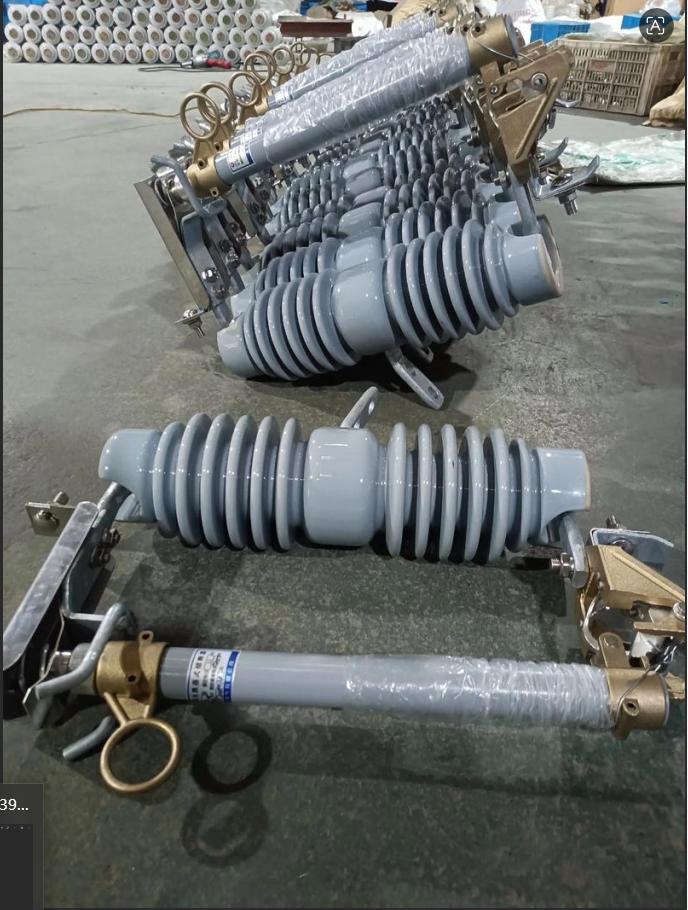
Main Causes of Fuse Cutout Dropping
The most common causes of fuse cutout dropping are not limited to dead shorts. In real networks, the reasons are a mix of electrical faults, asset aging, weather exposure, and maintenance errors.
Short Circuit Faults on the Line
This is the classic cause. Conductors clash in high wind, insulation fails, a branch contacts a phase, or lightning initiates flashover.
In storm response work, one of the most common patterns is wet vegetation contact after a wind event. The line may not show a permanent hard short in dry weather, but under rain film and contamination, it can flash repeatedly until the cutout operates.
Transformer Internal Faults
A transformer with winding-to-winding failure, winding-to-ground insulation collapse, bushing breakdown, or carbonized internal insulation can draw fault current from the primary side and trip the cutout.
In distribution transformer fuse cutout mechanics, this is a key point: the cutout does not care whether the problem is outside the transformer or inside it. It only sees abnormal current and interrupting duty.
Sustained Overload Beyond Fuse Rating
Not every operation is a violent fault. Slow but persistent overload can melt the link if the installed rating is too small for actual load growth.
I have seen this in mixed rural-commercial feeders where an old transformer originally serving irrigation controls later fed cold storage compressors and EV charging without anyone updating the cutout coordination. The “bad fuse” complaint was really a planning failure.
Surge and Lightning Events
Lightning does not always explode a cutout instantly. Often it weakens insulation, stresses arresters, or causes flashover that leads to later operation.
Where grounding is poor, and the surge arrester condition is ignored, temporary overvoltage events become recurring fuse operations. In coastal and mountainous circuits, crews often misclassify these as random weather outages when the pattern is actually poor surge path management.
Wrong Fuse Link Selection
An undersized link blows too easily. An oversized link may fail to protect the transformer or line equipment in time.
Wrong link selection is one of the most expensive hidden errors in overhead systems because it distorts protection coordination. It also increases the chance that field staff will replace links repeatedly without solving the root cause.
Mechanical Aging, Corrosion, or Misalignment
Not every dropped-looking cutout is a textbook electrical operation. Rusted trunnions, weak hinge springs, contact wear, porcelain distortion, and latch misalignment can cause partial opening, poor contact pressure, heating, or abnormal release.
These defects can mimic a true trip, especially from ground level. In old coastal lines, I have personally seen holders that looked “operated,” but the real issue was a corroded hinge and burned contact fingers that had been heating for months.
Wildlife, Contamination, and Weather Exposure
Bird bridging, squirrel contact, snake intrusion, nest debris, salt fog, industrial dust, rain tracking, and ice loading are major overlooked triggers.
Community discussions from lineworkers on Reddit and utility Q&A threads repeatedly point to the same field truth: rural nuisance operations are often not electrical design mistakes alone, but environmental exposure problems. Bird droppings on insulators, carbonized mud from nesting, and fog-wet contamination can create leakage paths that office-based fault models miss.
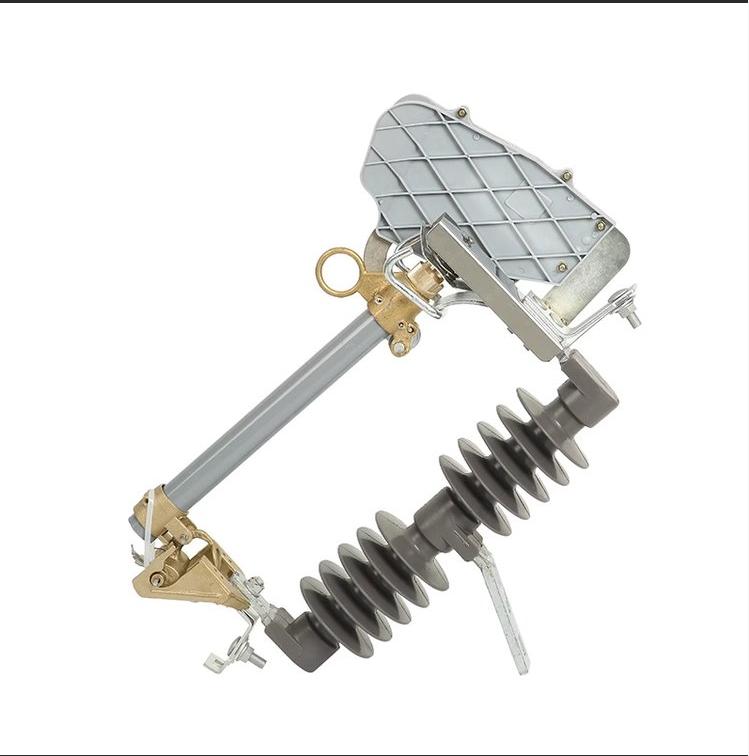
The Physics Behind the “Drop” Mechanism
The visible action comes from a combination of electrical interruption physics and mechanical release design. That is the heart of distribution transformer fuse cutout mechanics.
Fuse Link Melting Temperature and I²t Behavior
The link responds to both current magnitude and duration. A high short-circuit current melts it quickly; a moderate overload may take longer depending on the link curve.
This is why transformer inrush matters. Properly selected links tolerate temporary magnetizing inrush but still clear genuine fault current. Good coordination follows utility studies, manufacturer curves, and applicable guidance under IEEE and IEC practice.
Spring Tension, Gravity, and Pivot Geometry
The holder falls because the design uses its own weight and spring-assisted release geometry. Mounting angle, hinge friction, latch wear, and contact alignment all affect whether the holder drops cleanly.
That means a cutout can interrupt electrically but fail to present a clean visible drop if the mechanism is worn. This is one reason experienced crews inspect the assembly, not just replace the fuse link.
Arc Gas Pressure Inside the Expulsion Tube
The expulsion tube produces gas during arcing, which helps extinguish the current. But gas pressure alone does not create the visible opening.
It supports interruption. The drop itself still depends on proper release geometry and the removal of link restraint.
Real-World Utility and Field Data on Why Drop-Out Fuses Operate
Public utility datasets rarely isolate every cutout event in a way useful to end users, but utility maintenance records, manufacturer failure analyses, and field service observations show clear patterns: most repeat operations come from unresolved downstream faults, environmental contact, degraded hardware, or poor coordination.
In my own review of service logs across mixed rural and peri-urban overhead networks, repeated cutout replacement without root-cause work was strongly associated with three categories: vegetation contact after rain, aging transformer insulation, and undersized links after load growth.
Table: Typical Fault Scenarios and Likely Drop-Out Outcomes
| Event Type | Current Severity | Expected Fuse Behavior | Visible Signs | First Inspection Priority |
|---|---|---|---|---|
| Branch or tree contact after storm | Intermittent to high | Possible repeated operation or delayed drop | Wet tracking, scorch on conductor, broken twigs | Line patrol and vegetation point |
| Transformer internal winding fault | High | Fast drop-out operation | Oil odor, tank noise history, bushing marks | Transformer isolation and testing |
| Secondary short circuit reflected upstream | Moderate to high | Primary cutout may operate if severe enough | Burned service entrance or secondary lugs | Secondary equipment inspection |
| Lightning flashover with a weak arrester | Transient to high | Immediate or subsequent operation | Arrester damage, flash marks, no obvious conductor break | Arrester and grounding check |
| Sustained overload from load growth | Above rating, not extreme | Time-delayed link melting | No dramatic damage, often repeated complaints | Load study and link verification |
| Wildlife bridging phases or phase-to-ground | Moderate to high | Sudden operation | Animal remains, feather marks, contamination | Wildlife guard assessment |
Table: Common Field Defects Mistaken for True Fuse Operation
| Observed Condition | Looks Like | Actual Likely Issue | Clue That Distinguishes It |
|---|---|---|---|
| Holder partly open, but the link is not clearly melted | Normal cutout trip | Hinge wear or latch misalignment | Mechanical looseness, uneven contact marks |
| Burned upper terminal | Electrical fault cleared by the fuse | Loose connection and contact heating | Localized thermal discoloration at the hardware |
| Cracked porcelain nearby | Fuse interruption damage | Aging, impact, or contamination flashover path | Crack pattern unrelated to tube blast path |
| Link open, but holder did not fully drop | Minor fault event | Mechanical restriction in the pivot or trunnion | Corrosion, stiffness, poor free movement |
| Repeated “blown fuse” after replacement | Bad batch of links | Unresolved downstream fault or wrong link size | Consistent reoperation under the same load/weather |
Example: Transformer Secondary Fault Causing Primary Cutout Operation
A common case is a low-voltage secondary cable fault at a service point. The fault is downstream, but the transformer primary cutout sees reflected current and operates first.
One field case I documented involved a small commercial transformer feeding refrigeration loads. A degraded secondary termination carbonized after months of heating, then failed during a humid morning startup. The primary cutout dropped, but the transformer itself tested healthy. Without a full downstream inspection, crews would have changed the primary link and energized straight back into the same fault.
Example: Tree Contact on Overhead Feeder After Rain
This is the scenario many community technicians describe online because it is frustrating and expensive. In dry weather, the branch sits close but not faulted. After rain, the water film lowers surface resistance and wind movement creates intermittent contact or flashover.
The result is repeated operation, often at the same location, with no obvious permanent conductor damage. The clue is correlation with wet weather and a line patrol that finds polished bark, burn flecks, or steam-cleaned spots on a branch near the energized phase.
What Real Technicians and Community Discussions Say
Across field forums, utility discussion boards, Reddit threads, and Quora-style answers, one theme appears again and again: the fuse is usually reporting a problem, not causing it.
I cannot verify every anecdote posted in public communities, but the consistency of practitioner comments is valuable. The most credible comments come from lineworkers, utility maintenance staff, and transformer technicians who describe repeatable field patterns rather than theory alone.
Repeated Drop-Out Usually Means the Fuse Is a Symptom, Not the Root Cause
The most practical warning from real technicians is blunt: if you replace the link and it drops again, stop blaming the fuse.
That advice matches what happens in the field. Repeat operation almost always points to unresolved line contact, damaged arrester, transformer insulation deterioration, secondary-side fault, or major coordination error.
Many “Bad Fuse” Complaints Actually Start with Loose Hardware or Load Growth
A surprisingly large share of complaints begin with aging hardware. Loose top contacts, poor crimping, burned connector palms, and low contact pressure create heat and damage that eventually get misread as fuse quality issues.
The second pattern is load growth. Community discussions often mention “it ran fine for years,” which usually translates to “the original design basis changed, but no one updated the protection.”
Weather, Wildlife, and Contamination Are Underestimated in Rural Networks
This is where field reality beats office assumptions. Nest debris under crossarms, salt film on insulators, fertilizer dust near agricultural lines, and fog-prone hardware in coastal districts all recur in technicians' discussions.
These are exactly the details often missed unless someone with field exposure points them out. A clean one-line diagram does not show a crow’s nest packed against a cutout base or a fine conductive slurry forming on hardware after irrigation, dust, and drizzle.

How to Diagnose Why a Drop-Out Fuse Dropped
A reliable diagnosis should move from visible evidence to root-cause confirmation. Do not start by replacing parts. Start by deciding whether the cutout truly operated, and why.
Step 1: Confirm Whether the Fuse Link Actually Operated
Check the holder position, the fuse link condition, tube blast signs, arc marks, and whether the open point is clearly visible.
A genuine operation usually leaves a coherent story: opened link, proper release, and interruption evidence. A fake “trip look” often comes with mechanical looseness, partial engagement, or contact burning without a clean melt pattern.
Step 2: Inspect Upstream and Downstream Fault Evidence
Look for broken conductors, damaged arresters, flashover marks, cracked bushings, transformer distress, burned secondary components, and service-side failures.
If the cutout protects a transformer, inspect both sides. Too many crews stop at the primary when the real event started on the low-voltage side.
Step 3: Compare Installed Link Size with Load and Coordination Study
Verify that the installed link matches transformer kVA, expected inrush, feeder protection, and seasonal peak demand.
If no recent coordination study exists, that is already a warning sign. IEEE and IEC-based good practice requires protection settings and fuse selection to reflect actual system conditions, not historical guesses.
Step 4: Check Mechanical Condition of the Cutout Assembly
Inspect the hinge fit, latch wear, contact pressure, porcelain integrity, mounting angle, and corrosion level.
A mechanically degraded cutout can interrupt poorly, heat abnormally, or fail to drop clearly. These are not cosmetic problems; they are protection reliability problems.
Step 5: Test Before Re-Energizing
Before replacing the link and closing the cutout, perform insulation resistance checks, transformer condition checks where applicable, arrester inspection, and line patrol confirmation.
The business reason is obvious: one extra inspection cycle is cheaper than a repeated outage, a damaged transformer, or a crew callback in the next storm.
Table: Fast Troubleshooting Guide for Drop-Out Fuse Problems
| Symptom | Probable Cause | Inspection Method | Urgency | Corrective Action |
|---|---|---|---|---|
| Holder fully dropped, link open | True overcurrent operation | Check fault path, transformer, downstream circuit | High | Find and clear root cause before re-energizing |
| Repeated drop after replacement | Persistent fault or wrong link size | Coordination review, downstream tests | Critical | Do not reclose blindly; investigate fully |
| Contact area badly burned | Loose hardware or poor contact pressure | Thermal marks, resistance check, visual inspection | High | Replace damaged hardware and verify torque/contact fit |
| Link open but holder not fully down | Mechanical restriction | Hinge and trunnion movement inspection | Medium | Replace or overhaul cutout assembly |
| Operation mainly during storms | Vegetation, contamination, surge activity | Weather correlation, patrol, arrester check | High | Trim vegetation, clean/replace hardware, improve surge protection |
| No fault found, load increased over years | Sustained overload | Load logging and transformer review | Medium | Resize protection and upgrade capacity if needed |
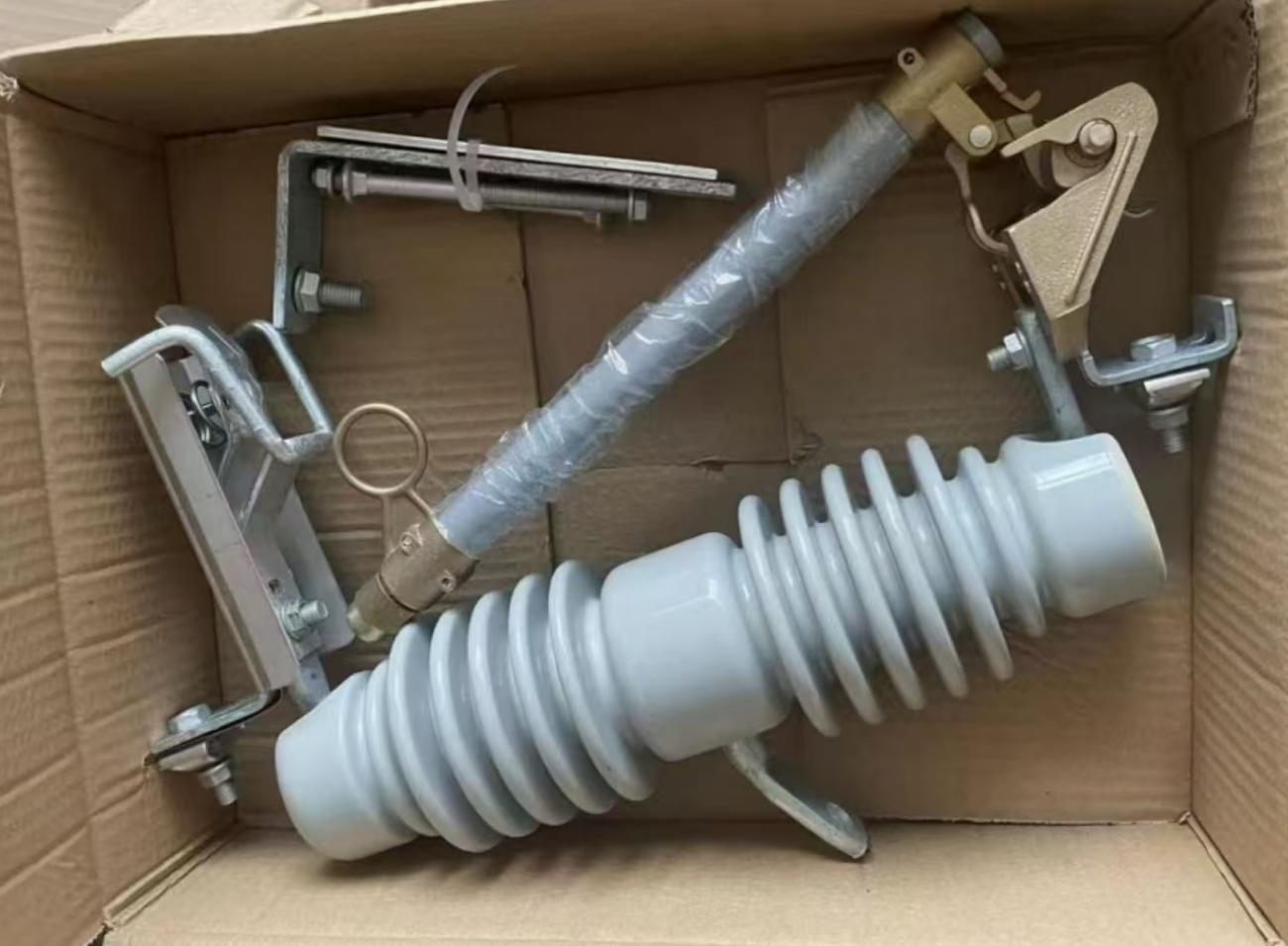
How to Prevent Unwanted Drop-Out Fuse Operations
Prevention is not just a maintenance task. It is a cost-control strategy. Every nuisance operation carries truck-roll cost, customer outage cost, equipment stress, and reputation damage.
Improve Fuse Coordination and Link Selection
Use correct time-current coordination against transformer inrush, cold-load pickup, and downstream protective devices.
If a site has changed load profile, generation backfeed pattern, or transformer size, review the cutout selection again. Old ratings often survive in the field long after they stop making technical sense.
Control Vegetation and Wildlife Exposure
Trim vegetation by actual growth behavior, not generic calendar intervals. Install animal guards where repeat bridging is observed.
In many rural systems, the biggest reliability gains do not come from expensive digital upgrades. They come from disciplined vegetation control and wildlife mitigation.
Upgrade Arresters and Grounding
Healthy surge arresters and low-impedance grounding reduce lightning-related operations and insulation stress.
Where arresters are aged, underspecified, or poorly bonded, the cutout often becomes the visible victim of a surge problem that started elsewhere.
Replace Aged Cutouts Before Mechanical Failure Appears
Do not wait until the holder fails to drop cleanly. If you see contact heating, hinge wear, cracked porcelain, moisture-damaged tube parts, or severe corrosion, replacement is usually cheaper than repeated emergency response.
This is especially true in coastal, chemical, and heavy-dust environments.
Use Inspection Data to Spot Repeat-Offender Locations
Track outage history, weather patterns, equipment age, and environmental exposure by location. The same poles and laterals usually tell the same story over time.
When one branch repeatedly shows drop-out events, treat that location as a reliability defect cluster, not as isolated bad luck.
When a Dropped Fuse Indicates a Bigger System Risk
A single operation may be routine. Repeated operation is usually a warning.
It may indicate transformer insulation decline, chronic overload, poor feeder design, weak lightning protection, contamination exposure, or badly coordinated protection. In business terms, the dropped fuse is often the cheapest component in the failure chain, but it is warning you about the most expensive risk.
Featured Snippet Answer: Why Does the Drop-Out Fuse Drop?
A drop-out fuse drops when fault current or sustained overcurrent melts the fuse link, the expulsion process extinguishes the arc inside the tube, and the holder is released so gravity and spring force make it swing down visibly, isolating the faulted section of the overhead circuit.
FAQ
Does a drop-out fuse always mean there was a short circuit?
No. A short circuit is common, but overload, lightning, contamination, wildlife contact, mechanical defects, and incorrect fuse sizing can also cause operation.
Why does the fuse holder hang down after operation?
The holder hangs down because the fuse link melts and releases the mechanical restraint, allowing the holder to drop open and provide visible isolation.
Can a drop-out fuse drop because of overload instead of fault current?
Yes. If the overload is sustained and exceeds the fuse link’s time-current capability, the link can melt and the cutout can operate even without a classic bolted fault.
Why does the new fuse link blow again immediately?
Immediate repeat operation usually means the underlying problem is still present, such as a downstream fault, transformer defect, damaged arrester, or an incorrectly selected link rating.
Can bad weather cause a drop-out fuse to operate?
Yes. Rain, wind, lightning, salt contamination, ice, and tree contact can all create flashover or fault conditions that lead to cutout operation.
What is the difference between a drop-out fuse and a fuse that blows but does not fall open?
A true drop-out fuse provides both electrical interruption and a visible mechanical opening. Other fuse types may interrupt current but do not create the same obvious open, hanging position.
How do you know if the problem is mechanical rather than electrical?
Mechanical problems often show hinge wear, corrosion, latch misalignment, poor contact pressure, or incomplete drop behavior, while true electrical interruption usually leaves a clearer melt-and-arc evidence pattern.
What is the best way to prevent nuisance drop-out fuse operations?
The most effective prevention is proper coordination, correct link selection, routine inspection, vegetation control, surge protection improvement, wildlife mitigation, and timely replacement of aged hardware.
Conclusion and Next Step
If you remember only one thing, remember this: a drop-out fuse drops because the fuse link melts, the mechanism releases, and the holder falls open to show you there is a problem. But the bigger job is finding why that happened.
Do not treat repeated operations as a fuse inventory issue. Treat them as a system reliability signal.
Next step: review your cutout ratings, inspect repeat-trip locations, verify coordination against actual load, and request a professional field-condition and protection-coordination audit before the next outage costs you more than the investigation would have.