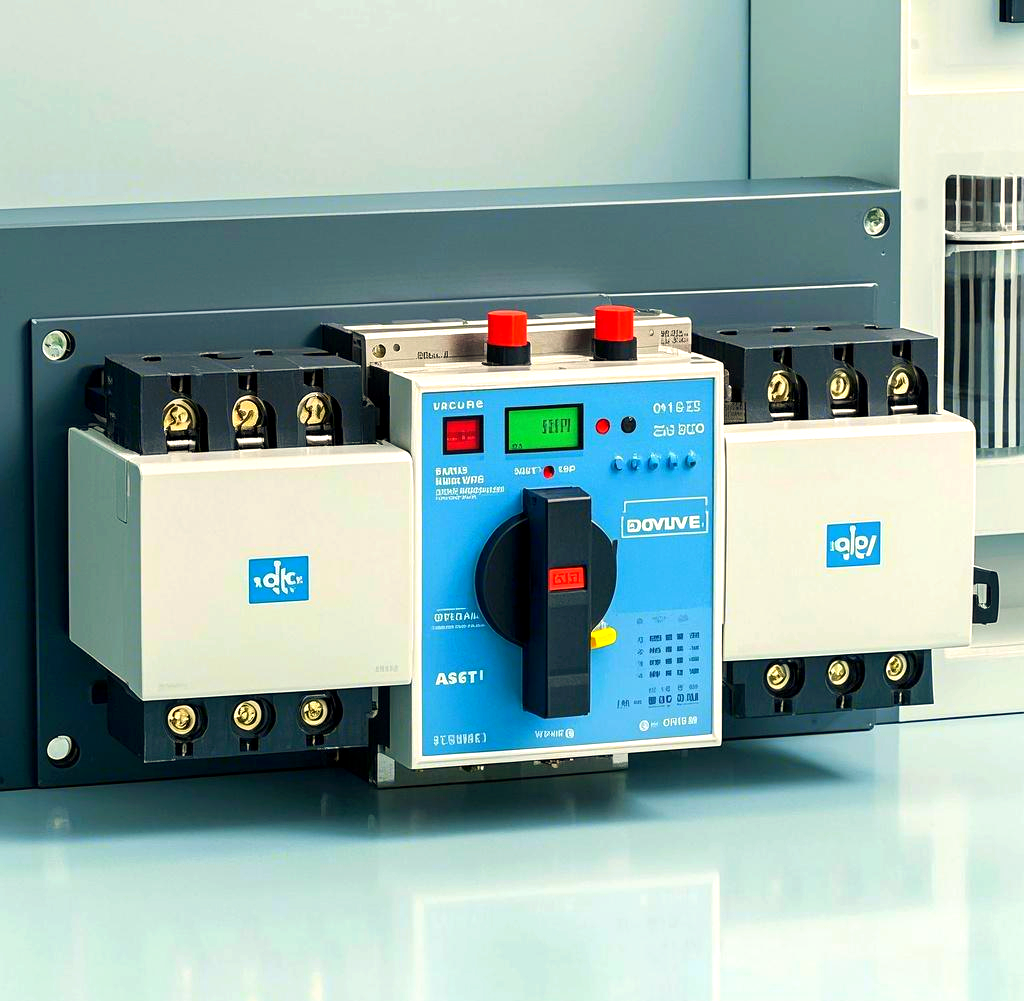
What Is an Automatic Transfer Switch?
When the power goes out, the last thing you want to be doing is fumbling in the dark with cords and breakers. That’s exactly the problem an automatic transfer switch (ATS) solves.
An automatic transfer switch is a smart, electrically operated switch that automatically moves your loads from utility power to generator power (and back again) whenever it senses a power problem. Think of it as the traffic controller between:
Utility (grid) power
Standby generator or other backup source
Your electrical loads (home, business, or critical equipment)
Instead of you running outside, starting a generator, and manually changing over circuits, the ATS monitors voltage and frequency 24/7 and does the switching for you.
Automatic vs. Manual Transfer Switch
A lot of people ask if they really need an ATS or if a manual transfer switch is “good enough.” Here’s the key difference:
Manual transfer switch
You must start the generator yourself
You must flip the switch from utility to generator
Slower, more chance of mistakes, and dangerous backfeeding if done wrong
Automatic transfer switch
Starts the generator automatically
Switches power automatically whenthe utility fails and when it returns
No need to be on‑site; hands‑off operation with built‑in safety logic
If you run a business, manage a facility, or just don’t want to babysit a generator at 2 a.m., the ATS working principle is what makes backup power truly reliable.
Why an ATS Matters
An ATS is not a luxury add‑on; it’s the brain of any serious standby generator system:
Homes: Keeps fridges, sump pumps, HVAC, medical devices, and Wi‑Fi powered without you lifting a finger.
Small businesses: Protects POS systems, security, refrigeration, and computers from outages and brownouts.
Critical facilities: In hospitals, data centers, telecom, and emergency systems, the ATS is part of the emergency power transfer system that keeps life‑safety and mission‑critical loads online.
If you want automatic, safe, code‑compliant backup power, the automatic transfer switch is the piece of hardware that makes it all work.
Key Components of an Automatic Transfer Switch (ATS)
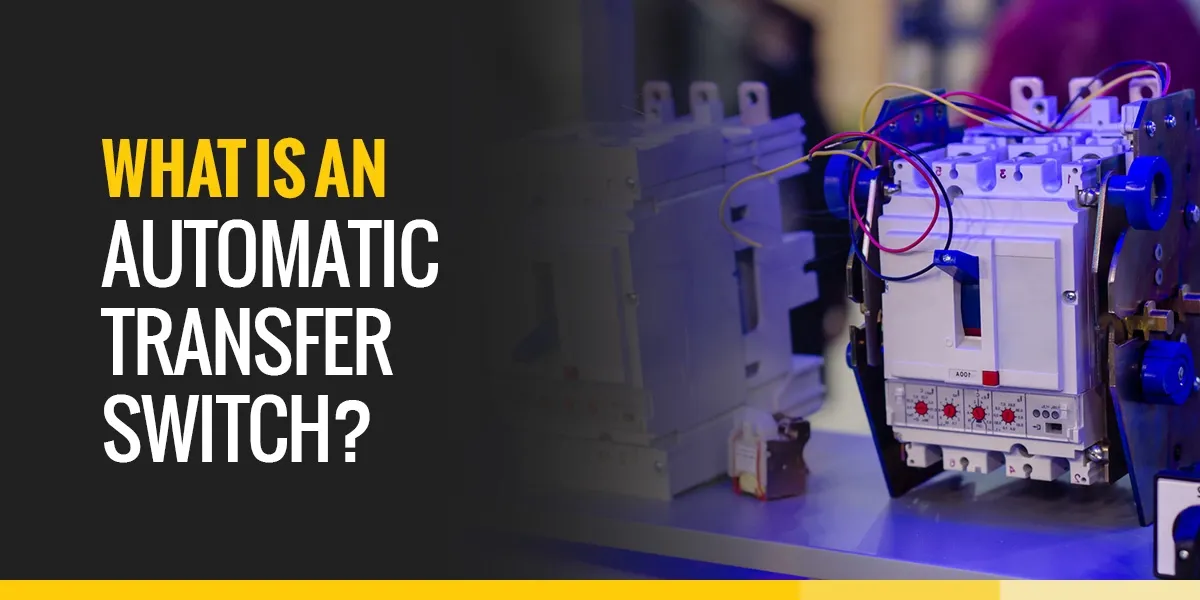
ATS controller and logic
The ATS controller is the brain of the system. Its microprocessor constantly checks power status, decides when to switch between utility and generator, and manages all delays and safety logic. In most modern standby generator automatic transfer switches, the controller also talks directly to the generator for auto‑start and alarms.
Voltage, frequency, and phase monitoring
An automatic transfer switch uses built‑in sensors to monitor:
Voltage (over/under‑voltage, brownouts)
Frequency (Hz stability from both utility and generator)
Phase (for three‑phase ATS: phase loss, phase reversal, imbalance)
This voltage and frequency sensing is what allows the ATS to transfer only when power is within safe limits, similar to how a utility might use protective gear alongside a high‑voltage circuit breaker on the grid.
Power switching devices
Inside the ATS, the actual power switching is done by:
Contactors (common for residential and light commercial)
Molded‑case or power breakers (for larger commercial/industrial ATS)
Solid‑state devices (for no‑break or “seamless” transfer in sensitive systems)
These devices handle the full load current and are rated for the system voltage and available short‑circuit current.
Mechanical interlocks and safety
A proper generator transfer switch has mechanical interlocks so utility and generator sources can’t be connected at the same time. This is what prevents dangerous backfeeding into the grid and protects linemen, equipment, and your generator. Safety features usually include:
Positive source interlocking
Manual operating handle with lockout options
Clear source position indication (Utility / Off / Generator)
Enclosure, ratings, and protection
For the U.S. market, ATS gear is usually built in NEMA‑rated enclosures (NEMA 1 for indoor, NEMA 3R/4 for outdoor). Key ratings you should look at:
Voltage rating (120/240V single‑phase, 208/480V three‑phase, etc.)
Amperage (must match or exceed service/load)
Short‑circuit rating (must coordinate with upstream breakers and available fault current)
Outdoor and harsh‑environment installs may also use IP‑rated housings and extra surge or lightning protection, often paired with devices like a dedicated lightning arrester.
Control wiring and communication
Behind the front cover, you’ll find the control wiring and signal circuits that:
Send start/stop signals to the generator
Bring in utility and generator status (ready, running, fault)
Connect to building automation, remote monitoring, or smart home systems via Modbus, Ethernet, or dry contacts
This low‑voltage side is what turns a transfer switch from a simple “changeover box” into a smart emergency power transfer system you can monitor and manage in real time.
How does an automatic transfer switch work step by step?
When people ask “how does an automatic transfer switch work,” they usually want to know what actually happens the second the lights go out. Here’s the real-world, step‑by‑step ATS working principle in plain English.
1. Normal operation with utility power
Under normal conditions, your automatic transfer switch (ATS) keeps your building connected to the utility:
Utility (grid) powers your home or business.
The ATS connects the utility → load and keeps the generator disconnected.
The ATS controller is powered and watching, but not switching anything yet.
2. Continuous monitoring of voltage and frequency
Inside the ATS, a controller constantly monitors:
Voltage on each phase (for single‑phase and three‑phase ATS)
Frequency (usually 60 Hz in the U.S.)
Phase status on three‑phase systems
This is called voltage and frequency sensing, similar to how protection relays in high‑voltage circuit breaker systems keep an eye on grid health.
3. Detecting power problems
If the ATS sees a problem outside set limits, it starts its logic sequence. Common issues:
Complete outage (voltage drops to zero)
Undervoltage (brownout)
Overvoltage
Phase loss or a major imbalance in the three‑phase
To avoid nuisance transfers from quick blips, the ATS waits through a short delay (often a few seconds) to confirm the problem is real.
4. Sending the start signal to the generator
Once the delay expires and the utility still looks bad:
The ATS sends a start signal to the standby generator.
The generator’s own controller handles fuel, cranking, and start‑up.
This is fully automatic—no one has to be on‑site to push a button, which is critical for U.S. homes, small businesses, and remote telecom or security sites.
5. Generator warm‑up and stability check
After the generator starts, the ATS doesn’t switch over instantly:
It waits for the generator to warm up.
It checks that the generator’s voltage and frequency are within safe limits.
A short stabilization delay (typically 5–30 seconds) avoids transferring loads to an unstable source.
6. Transferring the load to generator power
Once the generator looks solid, the ATS performs the transfer:
Opens the utility contacts (disconnects from the grid).
Waits for a tiny intentional gap (for open‑transition ATS).
Closes the generator contacts (connects generator → load).
This “break‑before‑make” sequence prevents dangerous backfeeding into the grid and protects lineworkers and your own equipment. In specialized closed transition ATS systems, this timing is tuned for near no‑break power transfer.
7. Running the load on the generator supply
Now your building is powered by the generator:
The ATS keeps the utility isolated.
The controller continues monitoring generator voltage/frequency.
On larger systems, the ATS may shed non‑critical loads to keep the generator from overloading (HVAC, EV chargers, etc.).
From the user side, it’s mostly seamless—lights may blink once during transfer, then everything runs normally on backup power.
8. Re‑transfer when utility returns
When utility power comes back:
The ATS senses normal utility voltage and frequency again.
It starts a return‑to‑utility delay (often 30 seconds to several minutes) to ride through flicker or quick grid failures.
After the delay, if the utility is still stable, the ATS:
Opens the generator contacts (disconnects the generator from the load).
Closes the utility contacts (reconnects grid → load).
Now your building is back on utility power.
9. Generator cool‑down and standby
After re‑transfer:
The generator keeps running unloaded for a short cool‑down period (usually a few minutes).
Then the ATS tells the generator to stop.
The whole system returns to standby mode, ready for the next outage.
10. Time delays, priorities, and failure handling
A good ATS isn’t just a dumb switch—it has logic to protect your equipment:
Time delays:
Delay before starting the generator (avoid quick grid blips).
Warm‑up delay before transfer.
Return‑to‑utility delay to avoid rapid back‑and‑forth switching.
Cool‑down delay after re‑transfer.
Priority loads:
Critical loads (fridges, servers, medical devices) come first.
Non‑essential loads may be dropped if the generator is near capacity.
Failure handling:
Keeps trying according to programmed attempts.
Can alarm or send remote alerts on “generator fails to start.”
Leaves the load on the utility if it returns, or off if no source is available—whichever is safest.
If the generator fails to start, the ATS:
This whole automatic transfer sequence is what makes an automatic transfer switch the heart of a reliable emergency power system—handling outages, switching between sources, and protecting your equipment without you having to be there to manage it.
Working modes and logic in an automatic transfer switch (ATS)
Sensing thresholds and trip settings
An ATS constantly watches utility and generator power using built‑in voltage and frequency sensing:
Voltage thresholds – If line voltage drops below a set percentage (for example, 85–90% of nominal) or rises above a safe limit, the ATS decides the source is “bad.”
Frequency limits – The controller checks that frequency (60 Hz in the U.S.) stays within a tight band, often ±2–3 Hz.
Phase monitoring (for 3‑phase ATS) – It watches for phase loss, phase reversal, or major imbalance.
These sensing thresholds and trip settings are programmable in most commercial and industrial ATS controllers, so you can tune them for your equipment sensitivity and local grid quality.
Transfer timing, delays, and nuisance‑trip prevention
To avoid needless transfers every time the power blinks, the ATS uses time delays and smart logic:
Utility fail delay – The ATS waits a few seconds after detecting a bad utility before it starts the generator, in case the power comes right back.
Generator warm‑up delay – After the generator reaches proper voltage and frequency, the ATS waits a set time before transferring the load.
Re‑transfer delay – When the utility returns, the ATS again waits to make sure the grid is stable before switching back.
Return‑to‑utility stability logic – If utility flickers during this window, the ATS will hold on to the generator to avoid “ping‑pong” transfers.
In higher‑end units, the controller’s microprocessor logic is similar to what you’d see in modern contactor and breaker systems, which we also use in our own designs and explain in our guide on the two main types of contactors.
Fail‑safe if the generator won’t start
A solid ATS is designed to fail safely, not fail dangerously:
Multiple start attempts – The controller will try several automatic start cycles if the generator doesn’t fire up the first time.
Alarm and lockout – If the generator still won’t start, the ATS stays on utility if any power is left, or trips to an “emergency off” state and sends an alarm.
No cross‑connection – Mechanical and electrical interlocks ensure the utility and generator can’t be tied together accidentally.
The goal is simple: never backfeed the grid, never expose your wiring to two sources at once, and never leave the system in an unknown state.
Manual override, test, and exercise modes
Most home, commercial, and industrial automatic transfer switches include built‑in test and manual modes:
Manual transfer – A mechanical handle or keyed switch lets a qualified person move the load between sources if the controller fails.
Test with load / without load – You can start and test the generator while staying on utility, or intentionally move the load to generator to prove real‑world operation.
Automatic exercise cycles – The ATS can start and run the generator on a schedule (weekly or monthly) to keep it healthy and verify that the controller logic, sensing, and power devices are working.
Load shedding and priority loads
On larger systems, the ATS logic often handles load shedding so the generator isn’t overloaded:
Priority loads – Critical loads (servers, medical gear, pumps, security) are tagged as “must stay on,” while non‑critical (HVAC, EV chargers, some lighting) can be dropped.
Staged transfer – The ATS or a companion load controller brings loads online in steps, giving the generator time to stabilize with each added chunk of demand.
Shedding under stress – If generator voltage or frequency sags, the controller can automatically drop lower‑priority loads to keep critical circuits powered.
This smart logic is what turns an ATS from a simple “backup power switch” into a full emergency power transfer system that actually protects your equipment and keeps your operation running when the grid doesn’t.
Types of automatic transfer switches
Open transition automatic transfer switch (break‑before‑make)
An open transition ATS is the most common type for homes and small businesses. It briefly disconnects the load from utility before connecting to the generator (break‑before‑make).
Fast, but there’s a momentary power interruption (usually 1–10 seconds).
Ideal when a quick “blip” is acceptable and you don’t have extremely sensitive equipment.
Lower cost and simpler design, which is why most residential standby generator ATS setups use this type.
Closed transition ATS (make‑before‑break, near seamless)
A closed transition automatic transfer switch overlaps utility and generator power for a split second (make‑before‑break) to give you near no‑break power transfer.
Designed for hospitals, data centers, and high‑end commercial sites.
Minimizes flicker, reboots, and disruptions to sensitive loads.
Requires tight control and utility approval because both sources are paralleled for an instant.
Delayed transition ATS (for motors and UPS loads)
A delayed transition ATS adds a short, intentional open gap between sources.
Protects large motors, HVAC, and some UPS systems from inrush currents and torque shocks.
Typical delay: a few seconds, letting motors come to a stop before reconnecting.
Good for industrial plants or commercial buildings with lots of motor loads.
Bypass‑isolation automatic transfer switch
A bypass‑isolation ATS lets
How an automatic transfer switch handles different power scenarios

Complete outage: full generator transfer
When utility power drops out completely, the ATS sees voltage go to zero on the line side. After a short built‑in delay (to avoid reacting to blips), it:
Sends a start signal to the standby generator
Waits for the generator to reach stable voltage and frequency
Opens the utility source and closes the generator source (never both at once)
Keeps monitoring both sources until utility power comes back solid and clean
This is the classic emergency power transfer that keeps critical loads alive during blackouts.
Brownouts, low voltage, unstable grid
In the U.S., brownouts and sagging voltage are just as dangerous as full-outages for electronics and motors. The ATS continuously monitors:
Voltage (over/under limits)
Frequency stability
Phase loss (for three‑phase ATS units)
If the grid drifts outside safe limits for longer than the programmed delay, the ATS treats it like an outage and transfers to the generator. This protects gear like HVAC, pumps, and sensitive electronics from low‑voltage damage—similar to how a properly selected AC circuit breaker protects against overcurrent.
Utility “flicker” and momentary returns
Power can bounce on and off during storms or grid switching. A good ATS won’t chase every flicker. Instead, it uses:
Return‑to-utility delay: waits several seconds to minutes after the utility looks good
Stability checks: confirms voltage and frequency stay in range before re‑transfer
That way, your loads don’t see rapid back‑and‑forth switching, and your generator isn’t constantly starting and stopping.
Short outages the ATS ignores
If the utility blips for a second or two, the ATS usually stays put on the utility. Time delays are set so:
Very short outages: no transfer, generator never starts
Medium outages: generator starts, but ATS may wait a bit before moving the load
Long outages: full transfer to generator
This logic is key for U.S. homes and small businesses that want reliability without burning extra fuel or adding wear to the generator.
Working with UPS and surge protection
For IT racks, POS systems, and security gear, the best setup is usually:
Surge protection at the service entrance
ATS for whole‑building or key circuits
UPS units at the most sensitive loads
In a brief outage, the UPS handles the gap while the ATS decides whether to transfer. In a longer outage, the generator picks up the heavy lifting and the UPS simply smooths out any transfer bump.
Solar, battery, and hybrid systems
Modern ATS units can tie into:
Grid + generator
Grid + solar + battery storage
Full hybrid systems with inverters
In these setups, the ATS often works with an energy management or inverter controller to decide:
When to draw from the grid
When to run on battery or solar
When to bring in the generator as a last resort
For U.S. users with growing solar and storage setups, a smart dual power transfer switch plus a capable hybrid inverter gives you flexible backup options without breaking code or risking unsafe backfeed.
Benefits of Using an Automatic Transfer Switch (ATS)
When customers ask me why we always spec an automatic transfer switch with a standby generator, this is why:
Reduced Downtime & Continuous Power
An ATS keeps power flowing to critical loads without you lifting a finger.
| Benefit | What It Means in Real Life |
|---|---|
| Fast transfer | Lights, HVAC, sump pumps, and servers stay on (or come back in seconds). |
| Less disruption | Protects food, medical devices, security systems, and business operations. |
| 24/7 readiness | ATS sits in standby, constantly watching the utility feed. |
Safety & No Backfeeding the Grid
Backfeeding the utility during an outage is dangerous and illegal. A properly designed dual power transfer switch mechanically and electrically prevents that.
Mechanical interlocks ensure utility, and the generator can’t connect at the same time.
Linemen, firefighters, and your neighbors stay protected.
It coordinates with upstream devices like the circuit breaker switch so fault currents are cut off safely.
Protection for Sensitive Electronics
Modern homes and businesses run on electronics that hate dirty power.
ATS avoids switching on unstable generator voltage or frequency.
Built‑in voltage monitoring and frequency sensing reduce surges, sags, and flicker.
Helps extend the life of servers, routers, POS systems, HVAC controls, and home electronics.
Hands‑Off, Automatic Operation
You don’t want to go outside in a storm to move cables and flip breakers.
Automatic start signal to the generator when the grid fails.
Automatic re‑transfer to the utility when it stabilizes.
No cords, no manual changeover switch, no guesswork.
Code Compliance & Safety Standards
In the U.S., an ATS is often the cleanest way to stay on the right side of code.
Supports NEC, UL, and local AHJ expectations for backup power.
Service‑entrance rated ATS can combine the main disconnect and transfer in one device.
Clear labeling and tested switching make inspections smoother.
Cost, Reliability & Convenience vs Manual Solutions
Manual solutions look cheaper on paper, but not when downtime is expensive.
| Option | Upfront Cost | Reliability | Convenience | Best For |
|---|---|---|---|---|
| Manual transfer | Low | Depends on the user | Low | Occasional, low‑risk backup |
| Automatic transfer switch | Medium | High, fully automatic | Very high | Homes, small businesses, critical loads |
| ATS + advanced monitoring | Higher | Highest | Remote control & alerts | Commercial, industrial, data‑heavy sites |
For most U.S. homeowners and businesses, the standby generator automatic transfer switch is the sweet spot: safe, code‑friendly, and always ready when the power grid isn’t.
Common applications of automatic transfer switches
Residential standby generator systems
For homes in the U.S. that lose power often (storms, wildfires, aging grid), a home generator ATS keeps essentials online automatically—HVAC, refrigerators, medical devices, well pumps, and home offices. You don’t have to go outside in bad weather or mess with cords; the backup generator changeover switch handles everything safely and keeps you from backfeeding the utility lines.
Small business and commercial buildings
Retail stores, restaurants, offices, gas stations, and small warehouses use commercial transfer switches to keep lights, POS systems, coolers, and security running. An automatic transfer switch cuts downtime, protects revenue, and helps meet insurance and code requirements for emergency power.
Industrial plants and manufacturing lines
In industrial setups, an industrial automatic transfer switch protects production lines, motors, PLCs, and control cabinets. Paired with gear like a well-designed PLC control cabinet, an ATS makes sure critical machinery restarts cleanly after a grid failure and reduces the risk of damage from sudden outages.
Hospitals, data centers, and mission‑critical facilities
Hospitals, labs, 911 centers, and data centers rely on emergency power transfer systems with high-reliability ATS designs (often bypass‑isolation ATS). These systems are built for seamless power transfer to protect patients, servers, and life-safety systems where even a short outage is unacceptable.
Telecom, security, and emergency systems
Cell towers, network hubs, traffic control, fire stations, and security rooms use dual power transfer switches to keep radios, routers, alarms, and cameras online. An ATS here is about reliability first—keeping communication and safety systems up when the grid is down.
Off‑grid, solar, and renewable backup setups
In hybrid solar, battery, and generator systems, a smart ATS manages power sources—grid, inverter, and generator—to feed your loads the best available source automatically. For U.S. homes and small businesses using solar plus storage, a backup power switch helps prioritize critical loads and keeps the transition clean when the grid fails.
Installation Basics for an Automatic Transfer Switch (ATS)
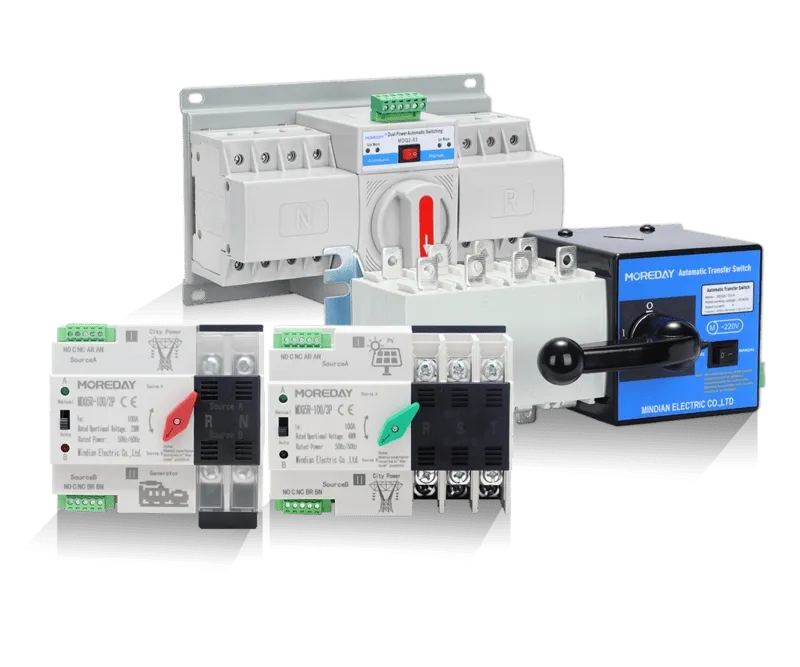
Where an ATS goes in your electrical system
In a typical U.S. setup, I’ll place the automatic transfer switch between:
The utility service (from the meter/main) and
Your main load panel or a critical‑loads subpanel
Common layouts:
Whole‑house ATS: Service‑entrance rated ATS installed right after the meter, feeding your entire panel.
Critical loads ATS: ATS feeds a smaller “essential loads” panel (fridge, well pump, Wi‑Fi, furnace, etc.).
Sizing an automatic transfer switch
Your ATS has to match both your generator and your panel:
Amps: Usually sized to your main breaker (100A, 200A, 400A, etc.).
Voltage: 120/240V single‑phase for homes; 208/120V or 480/277V three‑phase for commercial.
Phase: Single‑phase ATS for homes; three‑phase ATS for most commercial/industrial setups.
Never undersize an ATS. If you’re borderline on load or expansion, step up one size.
Key ATS wiring basics: line, load, generator
At a high level, every generator transfer switch has three main connections:
LINE: From the utility/service entrance.
LOAD: Out to your main panel or critical‑loads panel.
GENERATOR: From the standby generator output breaker.
Control wiring:
Low‑voltage start/stop signal wires to the generator
Optional communication wires for remote monitoring or building automation
All of this must be coordinated with your existing protection gear—breakers, fuses, surge devices, and any load-break switches upstream.
Coordination with breakers and protection devices
To keep the emergency power transfer system safe and code‑compliant, I always check:
Main breaker rating vs ATS rating
Available short‑circuit current vs ATS short‑circuit rating
Upstream/downstream breaker trip settings to avoid nuisance trips
Surge protection and lightning arresters (especially for exposed or rural services—similar concepts to what you see with a 35kV lightning arrester, just scaled to your system voltage)
Local electrical codes, permits, and inspections
In the U.S., you’re dealing with:
NEC (National Electrical Code) as the baseline
Local amendments (state/city) that can be stricter
Permits are almost always required for service work and generator tie‑ins
Final inspection before the utility reconnects or signs off
Skipping permits or doing “backyard” ATS installs is how people end up with unsafe backfeeding and denied insurance claims.
When you absolutely need a licensed electrician
I always recommend a licensed electrician in these cases:
Service‑entrance rated ATS (anything involving the meter or main service conductors)
Three‑phase ATS in commercial or industrial buildings
Any system above 200A, or with complex protection/controls
Hospitals, data centers, life‑safety loads, or legally required standby systems
When your utility requires a one‑line diagram and sign‑off before interconnection
If you’re not fully comfortable reading electrical plans, calculating load, and working inside a live panel, hire a pro. An automatic transfer switch is not a DIY-friendly “just plug it in” device—it’s part of your building’s safety backbone.
Automatic transfer switch testing and maintenance
Keeping your automatic transfer switch (ATS) in shape is non‑negotiable if you rely on it for backup power. It’s the heart of your emergency power transfer system, and treating it like a “set it and forget it” box is how outages turn into disasters.
Routine visual inspections and cleaning
Do a quick visual check at least quarterly:
Look for: discoloration, corrosion, loose wiring, moisture, dust buildup, and damaged insulation.
Keep it clean: Light dusting/vacuuming only; no high‑pressure air and no liquids.
Check environment: Make sure vents are clear, the door closes and seals properly, and there’s no water intrusion. If your ATS sits near switchgear or other protection gear, like the equipment described in this switchgear and protection overview, you want that whole area dry and well‑ventilated.
If you see burn marks, melted plastic, or a strong electrical smell, call a licensed electrician immediately.
Periodic manual and automatic transfer tests
You need to know your ATS will actually switch when the power drops:
Monthly/quarterly:
Run an automatic transfer test using the controller’s built‑in test function (if available).
Do a manual transfer (per manufacturer instructions) to be sure the mechanism isn’t binding, and the mechanical interlock is solid.
Confirm:
The generator receives the auto-start signal
Loads transfer to the generator and then back to the utility
Transfer times match your ATS time delay settings
Always follow lockout/tagout and local code when doing any hands‑on testing.
Simulated outage testing
Once or twice a year, do a full simulated outage:
Kill the normal source (using approved breakers, never by pulling random cables).
Watch how the ATS reacts: start command, warm‑up delay, transfer, and re‑transfer.
Verify critical loads stay powered and there are no unexpected shutdowns or nuisance trips.
This is the closest thing to a real storm or grid failure without the stress.
Checking indicators, alarms, and event logs
Your ATS controller is your early warning system:
Check status LEDs and display messages: source available, source failed, on generator, on utility.
Review alarm history and event logs for:
Failed generator starts
Over/undervoltage events
Phase loss or frequency issues
Fix recurring alarms before they become outages.
If your ATS supports remote monitoring, set up email/SMS alerts so you know when something’s off, even when you’re off‑site.
Common ATS issues and basic troubleshooting
Typical ATS problems you’ll see in the field:
Generator won’t start: fuel issue, battery, or bad start signal wiring.
ATS doesn’t transfer: failed coil/contactor, seized mechanism, or controller fault.
Frequent switching: overly tight voltage/frequency settings or a volatile grid.
Burned contacts: overloaded ATS, loose connections, or repeated high‑fault events (you may also want to review upstream protection like the breakers explained in this guide on circuit breakers vs HRC fuses).
Basic checks you or your electrician can do:
Tighten terminations to spec
Verify control voltages and signals
Compare controller settings to design documents
If you’re not sure, don’t guess—call a pro.
How often should an ATS be serviced?
For most U.S. homes and small businesses, a good baseline is:
Inspection & functional test: at least once a year
High‑use / critical sites (hospitals, data centers, plants): semiannual or quarterly testing and full preventative maintenance
After any major fault or repair: immediate inspection and test
Bottom line: if your ATS protects money‑making operations or life‑safety systems, treat annual service as mandatory, not optional.
Choosing the right automatic transfer switch for your setup
Match the ATS size to your generator and load
When I size an automatic transfer switch, I always start with amps, not watts.
Match or exceed the main breaker size (e.g., 200A service → 200A ATS minimum).
Make sure the ATS rating is never lower than the generator breaker or the expected load.
For larger commercial or industrial projects, I’ll size to future expansion, not just today’s demand.
Pick the right transition type
Your equipment dictates how the ATS should switch power:
Open transition (break‑before‑make) – Standard choice for most homes and small businesses; a brief power dip is acceptable.
Closed transition (make‑before‑break) – For data centers, hospitals, and process lines where you want close to no-break power transfer.
Delayed transition – Helpful for motor loads, HVAC, and UPS systems that don’t like instant reconnection.
Environment, enclosure, and location
Where you install the ATS matters:
Indoor, clean, climate‑controlled → NEMA 1 or equivalent enclosure is usually fine.
Garage, warehouse, or outdoor pad → Go with NEMA 3R or better to handle dust, moisture, and weather.
For high‑fault systems or critical sites, I’ll pair ATS gear with properly rated metal‑clad switchgear to handle short‑circuit levels safely.
Smart monitoring and remote control
On U.S. sites, most owners now want visibility, not just basic switching. Look for:
Wi‑Fi/Ethernet monitoring to check status and events from your phone or laptop.
Alarm outputs and logs for outages, failed generator starts, and transfer faults.
Integration with building management systems or SCADA on commercial and industrial jobs.
Budget, brand, and warranty
I treat an ATS as a long‑term asset, not a throwaway box:
Stick with established brands that publish clear ratings, drawings, and support docs.
Compare warranty length (3–5 years is solid) and availability of parts in the U.S.
Don’t chase the cheapest option—prioritize reliability, local support, and code compliance, then fit the choice to your budget.
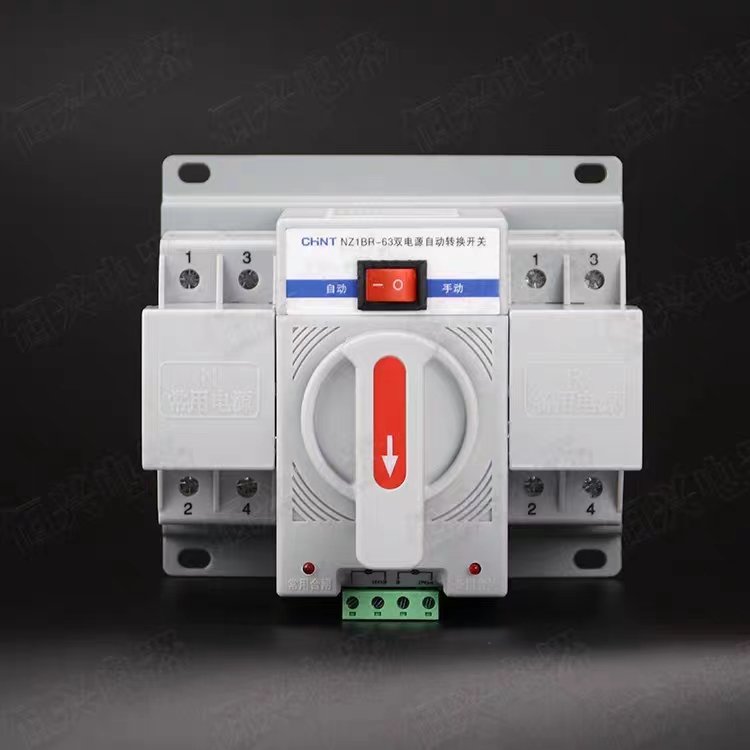
FAQs: How Does an Automatic Transfer Switch Work?
Typical transfer time (utility → generator)
Most automatic transfer switches move your load to generator power in 10–30 seconds after a power outage.
Here’s what usually takes time:
| Step | What Happens | Typical Time |
|---|---|---|
| Detect outage | ATS senses loss of utility | 1–3 seconds (delay to avoid flicker) |
| Start generator | ATS sends an auto-start signal | 1–5 seconds |
| Warm-up & stabilize | Generator reaches voltage/frequency | 5–20 seconds |
| Transfer load | ATS switches to the generator | < 1 second |
If you need near-seamless power transfer, you’ll usually combine an ATS with a UPS.
Using an ATS with portable generators safely
You can use a portable generator with an ATS, but you must do it right:
Use a compatible inlet + ATS designed for portable generators.
Never backfeed through a dryer outlet or DIY “suicide cable.”
Match the voltage (120/240 V) and amp rating of the ATS to your generator.
Make sure neutral/ground bonding is handled correctly (separately derived vs not).
In most U.S. locations, a licensed electrician is required by code.
If you’re on a larger site or using gear like metal‑clad switchgear, your portable or standby generator integration needs even tighter protection coordination.
Home vs commercial automatic transfer switches
Key differences you’ll see in the U.S. market:
| Feature | Home ATS | Commercial / Industrial ATS |
|---|---|---|
| Amps | 100–400 A typical | 400 A to several thousand A |
| Phases | Mostly single‑phase 120/240 V | Mostly three‑phase 208/480 V |
| Transition type | Mostly open transition | Open, closed, delayed, bypass‑isolation |
| Features | Basic auto start, load transfer | Advanced logic, load shedding, comms, metering |
| Code level | Residential NEC | NEC + NFPA 110, hospital/data center standards |
For homes, focus on service‑entrance rated ATS and whole‑home vs essential‑circuits coverage.
For businesses, focus on reliability, selective coordination, and maintainability.
Single‑phase vs three‑phase ATS working differences
The core ATS working principle is the same, but wiring and protection differ:
| Type | Where Used | What Changes |
|---|---|---|
| Single‑phase ATS | Homes, small offices, small shops | 2 hot legs + neutral; simpler controls |
| Three‑phase ATS | Commercial, industrial, and larger buildings | 3 phases + neutral; phase‑loss, phase‑sequence monitoring, higher fault ratings |
Three‑phase ATS units add phase monitoring and tighter voltage/frequency sensing to protect motors and big loads.
Signs your ATS may be failing or undersized
Watch for these red flags:
Slow or no transfer when power fails
Buzzing, chattering, or burning smell from the ATS enclosure
Frequent nuisance transfers (switching back and forth with minor sags)
Overheating or discoloration on terminals, lugs, or bus bars
The generator starts, but the load never transfers or drops out under load
Tripped breakers or ATS alarms during heavy usage (A/C, EV charger, machines)
If you see any of this, get a qualified electrician or service tech to inspect. For larger systems tied into medium‑voltage gear or 11 kV substations, upgrades and protection settings should follow proper engineering guidance, similar to what’s used in an 11 kV substation design and cost plan.