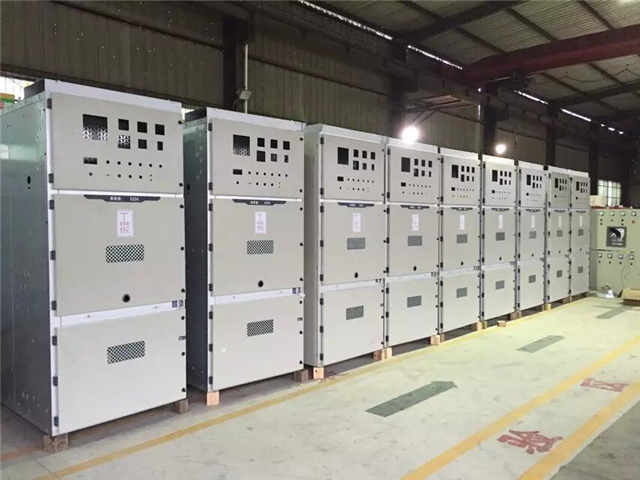
Voltage Rating & Dielectric Strength
When I specify high-voltage electrical enclosures for US projects, I start with one question: Can this cabinet safely withstand the voltage under all real-world conditions? That comes down to rated voltage, creepage/clearance, partial discharge, and dielectric strength testing.
Rated Voltage vs. Creepage and Clearance
Don’t stop at the rated voltage printed on the nameplate.
You need to check:
Creepage distance (across the insulation surface)
Clearance distance (through air)
For enclosures for high voltage (5 kV, 15 kV, 25 kV and up):
Make sure creepage/clearance meets or exceeds IEC 61439 and relevant ANSI/IEEE tables for your system voltage and pollution degree.
If you’re in coastal, industrial, or high-humidity areas, insist on increased creepage and clean, well-separated internal layouts.
For compact modular high voltage panels, verify that busbar supports, barriers, and terminations maintain distance even after installation modifications.
I design my stainless steel HV enclosures and GRP high voltage enclosures with extra creepage/clearance margin so contractors aren’t forced into risky “field fixes” later.
Partial Discharge Limits and Test Reports
For medium- and high-voltage enclosures, partial discharge (PD) performance is a non‑negotiable safety line.
Look for:
PD inception voltage above your system’s peak operating voltage
PD levels below standard limits at rated voltage (commonly <10 pC, depending on standard)
Factory PD test reports tied to your exact high voltage electrical enclosure model, not generic marketing claims
For EV charging, renewables, and data center high voltage junction boxes, low PD is critical to avoid premature insulation aging and unexpected failures.
Reading Dielectric Strength Certifications
Dielectric strength is where many buyers get lost in paperwork. I treat it as a go/no‑go checkpoint:
Confirm test voltage levels (e.g., 5 kV, 10 kV, 20 kV AC or DC) and test duration (usually 1 minute).
Ensure tests follow recognized standards such as IEC 61439, UL 508A, or utility specs for arc-resistant switchgear enclosures.
Look for “no breakdown, no flashover” language in the test report. Any “conditional pass” is a red flag.
For outdoor high voltage junction boxes and NEMA 4X high voltage enclosures, verify that dielectric tests are done after environmental conditioning (humidity, salt fog, temperature cycling).
When I choose or build high voltage enclosure cabinets for the US market, I only trust units with transparent, traceable dielectric strength certifications and clear PD data. That’s what separates a safe IP68 high voltage cabinet from a long-term liability.
Material Selection for High Voltage Enclosures
Picking the right material for high voltage electrical enclosures is a big deal. It dictates how long your gear lasts, how safe it is, and how much you’ll spend over the life of the system.
Stainless Steel vs. Aluminum vs. GRP vs. Polycarbonate
Here’s how I look at the main options for high voltage electrical enclosures:
Stainless Steel HV Enclosure
Best for: Coastal, industrial, chemical plants, roadside utility, and harsh outdoor sites.
Pros: Top-tier corrosion resistance, strong EMI/RFI shielding, high mechanical strength, premium look, ideal for arc-resistant switchgear enclosure designs.
Cons: Heavier and more expensive, but often worth it for 2a 0+ year outdoor life.
Aluminum High Voltage Cabinet
Best for: Outdoor high voltage junction box installations where weight matters (rooftops, wall-mounted, seismic areas).
Pros: Lightweight, good corrosion resistance when coated, decent shielding, easier to handle on-site.
Cons: Softer metal, can dent more easily, may need extra coating in salty or polluted environments.
GRP (Glass-Reinforced Plastic) High Voltage Enclosure
Best for: Offshore platforms, wastewater plants, chemical sites, high-moisture and high-corrosion areas.
Pros: Excellent corrosion resistance, non-conductive housing, lighter than steel, great for ATEX/IECEx zones when paired with certified internals like an outdoor vacuum circuit breaker.
Cons: Limited EMI shielding without special layers, can chalk under UV if not UV-stabilized, and not as rigid as steel for large cabinets.
Polycarbonate Electrical Enclosure Box (Plastic)
Best for: Smaller indoor/outdoor control boxes, EV high voltage junction box panels, and low-impact areas.
Pros: Lightweight, corrosion-proof, easy to machine, transparent lids available for quick inspection.
Cons: Weaker mechanical protection, limited temperature range, can yellow or become brittle if UV protection is poor.
Environmental Durability: Corrosion, UV, EMI Shielding
When I size material for enclosures for high voltage in the U.S. market, I’m mainly checking:
Corrosion
Coastal / road-salt / chemical: 304/316 stainless or GRP.
Light industrial or inland: Aluminum or coated steel is usually enough.
UV Resistance
Strong sun (South, Southwest, offshore): UV-stabilized GRP or powder-coated stainless/aluminum. Polycarbonate must be UV-rated or used with covers.
EMI / RFI Shielding
Data centers, renewables, EV charging, and sensitive controls: Stainless or aluminum is usually my go-to for reliable shielding.
If using GRP or plastic, I plan to include extra shielding (shielded doors, gaskets, or inner metal compartments) and confirm attenuation performance.
Best-Fit Materials by Application
To keep it simple for real-world high voltage electrical enclosures:
Indoor (MCC rooms, factories, data halls)
Material: Coated steel, stainless, or aluminum.
Why: Better EMI control, solid mechanical protection, and easier grounding and bonding.
Offshore & Coastal (platforms, ports, marine, refineries)
Material: 316 stainless or high-grade GRP for high-voltage enclosure cabinets.
Why: Maximum corrosion resistance, long life, less repainting, and maintenance.
High-Moisture Sites (wastewater, food & beverage, irrigation, tunnels)
Material: Stainless or GRP; sometimes polycarbonate for small junction boxes.
Why: Moisture + chemicals demand non-rusting materials and sealed IP66–IP68 high voltage cabinet designs.
Choosing the right material up front keeps your total cost of ownership in check and avoids early failures, especially once you start pairing the enclosure with critical components like a high voltage fuse or indoor gear similar to an indoor current-limiting fuse setup.
Environmental Protection Ratings (IP & IK)
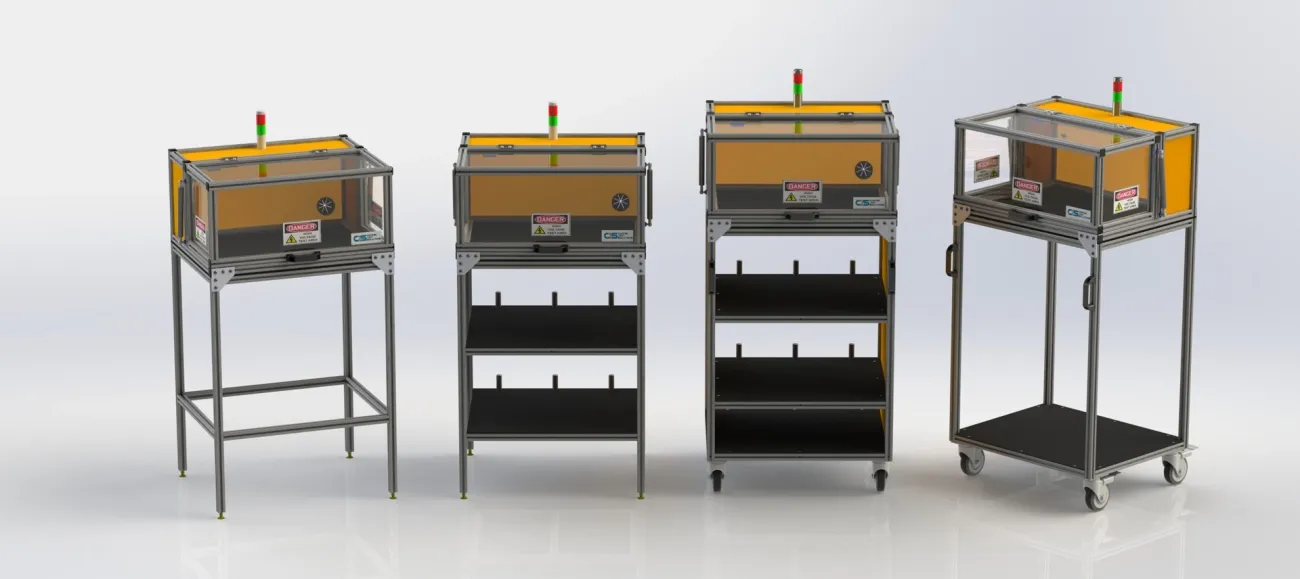
When selecting a high voltage enclosure, understanding its environmental protection ratings is essential for ensuring it withstands various conditions.
IP Ratings: IP66/IP67/IP69 Differences
The Ingress Protection (IP) rating indicates how well the enclosure resists dust, moisture, and other environmental factors. For high voltage enclosures:
IP66: Fully dust-tight and protected against heavy water jets.
IP67: Protected from dust and can withstand immersion in water up to 1 meter for 30 minutes.
IP69: The highest rating, resistant to high-pressure, high-temperature water jets from all directions.
Each of these ratings provides a different level of protection depending on your installation environment.
IK Impact Resistance Requirements
The IK rating measures the impact resistance of an enclosure. This is crucial for environments where physical damage could occur, such as outdoor or industrial settings. Ratings range from IK00 (no protection) to IK10 (resistant to 20 joules of impact), ensuring the enclosure can withstand various external forces.
NEMA-to-IEC Equivalence Basics
When working with enclosures, it’s also important to understand the NEMA and IEC standards:
NEMA (National Electrical Manufacturers Association) specifies protection against elements like dust, water, and corrosive environments.
IEC (International Electrotechnical Commission) provides equivalent standards, such as IP ratings, which can help bridge understanding between both systems.
For instance, a NEMA 4X enclosure is equivalent to IP66 for dust and water protection.
These ratings guide you in choosing the right enclosure based on the environmental challenges your equipment will face.
Thermal Management & Cooling Needs in High Voltage Enclosures
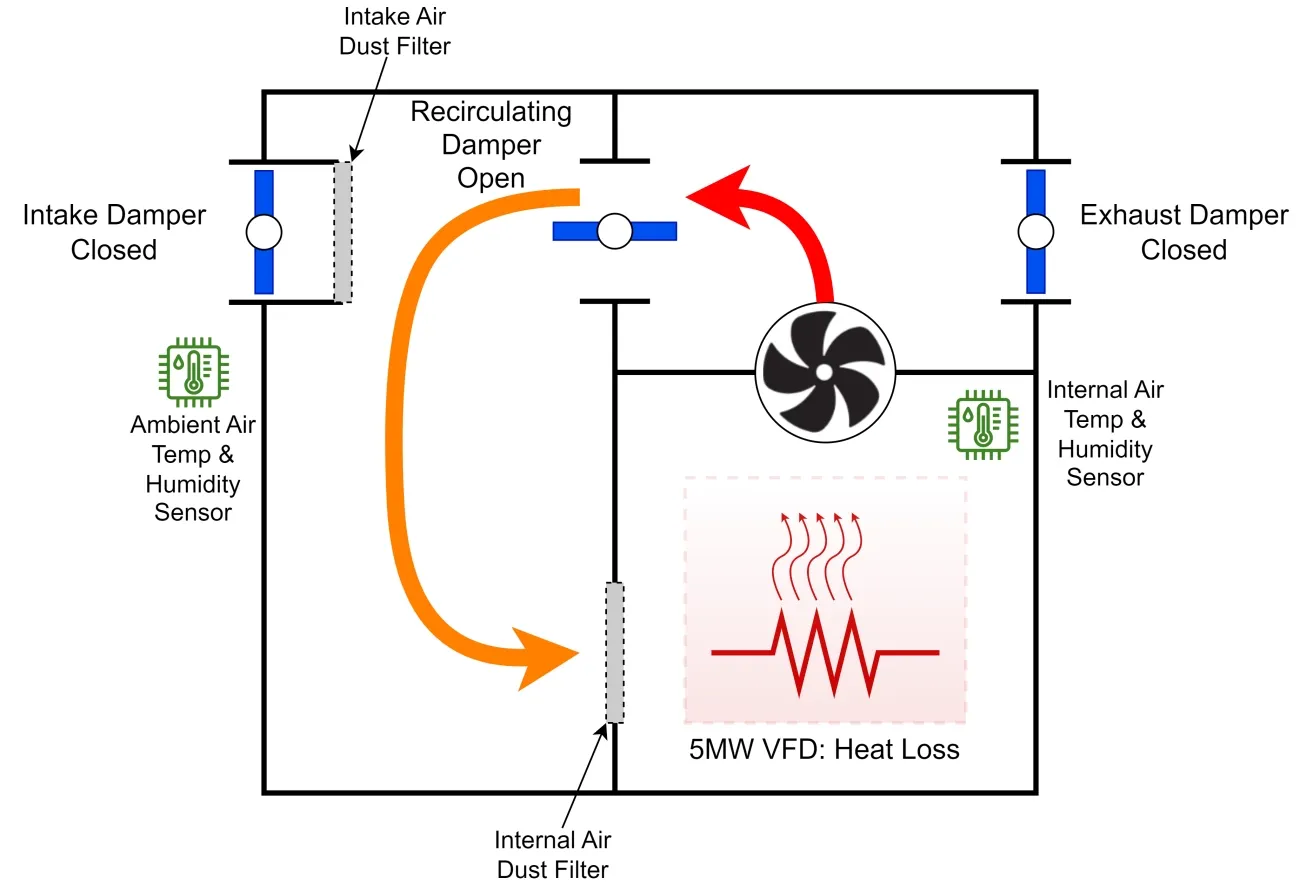
Efficient cooling is crucial in high-voltage enclosures to ensure optimal performance and safety. There are two main approaches:
Passive vs. Forced Cooling Solutions
Passive Cooling: Utilizes natural airflow or convection to dissipate heat. This is cost-effective and requires minimal maintenance, but may not be sufficient for high-power systems.
Forced Cooling: Involves fans or blowers to actively move air and reduce heat. It provides better temperature control but requires regular maintenance and energy consumption.
Heat-Load Calculations & Derating Curves
Accurate heat-load calculations are essential to determine the cooling capacity needed for your high-voltage enclosure. You’ll also need to consider derating curves, which show how electrical components perform under different temperature conditions. Operating above rated temperatures can lead to component failure, so ensuring proper cooling is essential.
Managing Hotspots
High-voltage cabinets can experience localized overheating, or hotspots, which can compromise performance. Proper airflow design and the strategic placement of cooling elements can help manage these hotspots, preventing long-term damage to critical components.
Safety Features & Arc-Flash Protection in High Voltage Enclosures
When you’re buying high voltage electrical enclosures for U.S. sites, arc-flash and basic safety features are non‑negotiable. This is where the “cheap box” vs. a real engineered enclosure really shows.
Internal Arc Classification (IAC)
If you’re specifying arc-resistant switchgear enclosures, ask for proven internal arc performance, not just marketing claims.
Key points to verify:
| Item | What to Look For | Why It Matters |
|---|---|---|
| IAC rating | Test class (e.g., AFL, AFLR), test duration, kA level | Shows how well the enclosure handles an internal arc fault |
| Targets & doors | Doors latched during test, accessibility class | Proves doors won’t blow open toward operators |
| Test standard | IEC 62271-200 / utility specs | Ensures the rating is comparable and recognized |
If you’re combining arc-resistant enclosures with protection and detection, pairing them with proven arc detector and breaker solutions (see this arc detector breaker guide) makes the system much safer and faster to clear faults.
Arc Containment, Pressure Relief, Interlocks
A good high voltage enclosure is designed to control the failure, not just survive it.
Must‑have design features:
Arc containment path
Reinforced doors and hinges
Strong door latching hardware
No weak “blow-out” panels toward walkways
Pressure relief
Top or rear pressure relief flaps/ducts
Controlled gas exhaust direction (away from operators)
Clearly defined safe zones in front of the cabinet
Mechanical & electrical interlocks
Prevent opening doors on live or closed breakers
Prevent closing disconnects when the door is open
Key interlock systems for multi‑cabinet lineups
Grounding, Visible Break & Core Safety Mechanisms
For high voltage junction boxes, outdoor cabinets, and modular high voltage panels, the basics still save lives.
Checklist for U.S. installations:
Grounding system
Dedicated ground bus with labeled studs
Bonding of doors, panels, and removable plates
Clear connection point for site grounding grid
Visible break
Load-break switches or isolators with a real, visible open gap
Viewing windows or inspection ports were allowed
Clear open/closed indication on the front of the enclosure
For more details on how visible isolation differs from protection, see this guide on isolator vs. circuit breaker design choices: isolator vs. circuit breaker.Operator safety mechanisms
Door-closed operation for switching, where possible
Padlockable handles and key systems for lockout/tagout
Warning labels sized and placed to meet U.S. practice (NFPA 70E style, approach boundaries, PPE info)
If an enclosure can’t show clear test data for internal arc behavior, solid grounding points, and real interlocks, I don’t treat it as a serious option for high voltage.
Certifications & Compliance Requirements
When selecting high-voltage enclosures, it’s crucial to ensure they meet necessary standards and certifications for safety, durability, and environmental impact.
Key Certifications:
UL 508A: Specifies the requirements for industrial control panels, ensuring safety in electrical installations.
IEC 61439: Governs low-voltage switchgear and control gear assemblies, defining performance and reliability criteria.
CE Marking: Indicates compliance with European Union safety, health, and environmental requirements, essential for international sales.
ATEX/IECEx: For equipment used in explosive atmospheres, confirming the enclosures are safe for hazardous locations.
Additional Compliance:
Seismic-rated Enclosures (IBC Zone 4): Ensures enclosures can withstand seismic activity, especially important in areas prone to earthquakes.
RoHS/REACH: Guarantees that enclosures are free from hazardous materials, making them safer for the environment and human health.
For further insights on how these certifications impact your enclosure choice, you can check out how to choose an electrical switchgear supplier.
Size, Modularity & Future-Proofing for High Voltage Electrical Enclosures
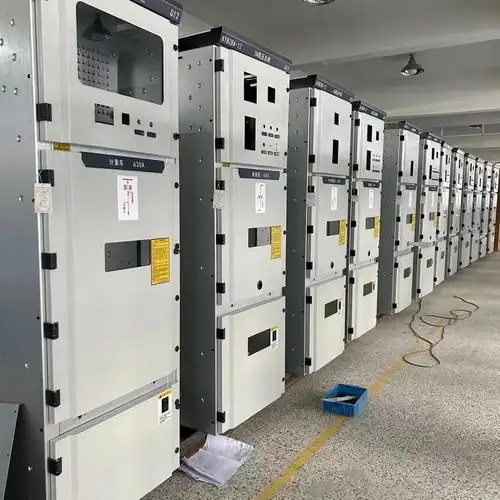
When you’re buying high voltage electrical enclosures in the U.S., size and layout decisions will either make your life easy for 20 years—or painful from day one. I always treat space, modularity, and cable entry as non‑negotiable.
Usable Internal Volume & Layouts
Don’t size an electrical enclosure cabinet just to “fit today’s gear.” Size it to handle:
Clear working space around high voltage components
Creepage and clearance distances for your rated voltage
Room for future breakers, sensors, and communication modules
Proper routing of HV cables, control wiring, and grounding
For outdoor high voltage junction box or modular high voltage panel builds, I usually target at least 25–30% spare internal volume so upgrades don’t force a complete cabinet replacement.
Modular Expansion Options
If you expect growth—more loads, EV chargers, renewable tie‑ins—go modular from the start:
Bolt-on sections or add-on bays for future feeders or metering
Standard bus bar spacing and drilling so new devices drop in easily
Rail-mounted designs that accept different switchgear, relays, or instrument transformers (like pairing an enclosure with an outdoor-ready combined instrument transformer)
Space for communication upgrades (SCADA, Ethernet, fiber) without a redesign
This is where a modular high voltage panel beats a fixed box every time—especially for utilities, data centers, and commercial campuses.
Cable Entry Planning & Base Designs
High-voltage enclosures fail in the field more from bad cable planning than bad metalwork. Lock in these points up front:
Top vs. bottom entry: match how your feeders and transformer leads actually approach
Enough gland plate area for all HV and LV cables, plus future circuits
Proper bending radius for stiff HV cables and terminations
Base designs that support underground conduits, pad-mounts, or skid frames
For an outdoor high-voltage junction box electric vehicle setup, plan for large DC cables, extra grounding, and easy field terminations
If I can’t route cables cleanly, keep creepage/clearance, and still close the door without a fight, the enclosure isn’t sized or designed right—no matter what the nameplate says.
Installation & Maintenance Accessibility for High Voltage Enclosures
When I design or select high voltage electrical enclosures, I’m ruthless about installation and maintenance access. Bad access drives up labor costs, outage time, and safety risk.
Smart Hardware: Hinges, Locks, Removable Plates
For any outdoor high voltage junction box, modular high voltage panel, or stainless steel HV enclosure, I look for:
Lift-off or 120°–180° hinges so doors swing fully clear for breaker racking, IR scanning, or meter changes.
Robust, keyed or padlockable handles with multi-point latching to keep IP/NEMA ratings while still opening fast.
Removable gland plates and bottom plates so electricians can punch or drill cable entries on the ground instead of fighting inside a live cabinet.
Tool-operated access on HV compartments to avoid casual contact while still keeping service simple.
These details save hours on install and retrofit work, especially on larger electrical enclosure cabinets or arc-resistant switchgear enclosures.
Clearances for Live Testing & Service
In the U.S., I plan high voltage enclosure layouts around real-world test work:
Enough front and side clearance for insulated tools, test probes, and portable test sets.
Door stops and hold-open devices so doors don’t swing into techs during live testing.
Clearly separated low-voltage and control sections so you can test relays and instrument transformers without exposing high-energy bus.
Labeling and viewing windows to confirm device position and status before opening.
Paired with proper internal isolation and creepage/clearance design, these choices support safer live testing and troubleshooting while meeting IEC 61439 requirements and similar standards.
Designs That Cut Install Time and Downtime
Good enclosures for high voltage don’t just protect equipment; they speed up every job around them:
Pre-punched or easily configurable mounting rails for breakers, CTs, PTs, and accessories.
Clear cable routing paths so terminations are quick and clean, especially in EV high voltage junction box applications and renewables.
Standardized footprints and modular sections so you can swap a cabinet or add a bay with minimal rework.
Front-only service designs when you’re tight on space, like against a wall or in a utility easement high voltage box in front of a house.
On medium- and high-voltage switchgear, pairing accessible enclosures with well-designed protection (like the kind used in gas-insulated switchgear and SF6 circuit breaker systems) cuts total outage time and makes field crews a lot more efficient.
If you’re specifying IP66 or NEMA 4X high voltage enclosures for U.S. projects, I always suggest you weigh access hardware, test clearances, and service-friendly design the same way you do voltage rating or arc-flash protection—because over a 20+ year life, that’s where most of your real costs and risks sit.
EMI/RFI Shielding Performance
When it comes to high-voltage enclosures, simply relying on steel shielding may not be sufficient to protect sensitive equipment from electromagnetic interference (EMI) or radio-frequency interference (RFI). In many cases, additional measures are necessary to ensure optimal performance and protection.
Gasket Continuity and Attenuation Testing: It’s crucial to ensure the gasket integrity to maintain continuous shielding. This prevents gaps where EMI/RFI can penetrate. Proper attenuation testing ensures that the enclosure effectively blocks unwanted signals, safeguarding the internal components.
Interference Risks: In environments like EV charging stations, data centers, and renewable energy systems, interference can have severe consequences on operational efficiency. Shielding becomes even more critical in these settings to prevent performance degradation or equipment malfunction.
For more on managing EMI and RFI in high-voltage systems, check out our guide on surge arresters.
Total Cost of Ownership
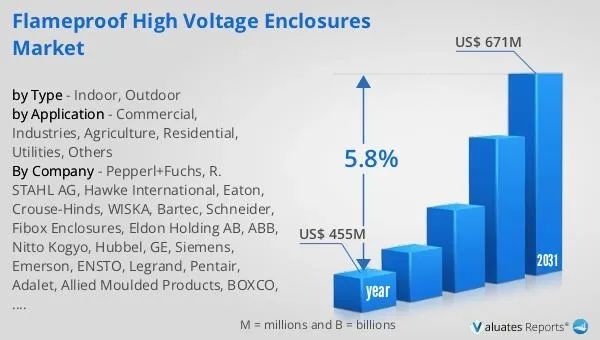
When selecting high voltage enclosures, it’s crucial to evaluate the total cost of ownership (TCO) beyond the initial purchase price. Key factors include:
Cooling inefficiency costs: Enclosures that lack efficient cooling systems may result in higher energy consumption over time, raising operational costs. Poor heat dissipation can also affect the longevity of electrical components inside the enclosure.
Maintenance cycles and replacement timelines: Enclosures with frequent maintenance needs or shorter service lifespans can drive up costs. Look for models designed for minimal upkeep and longer operational cycles to reduce total expenditures over the years.
Expected 20+ year service life outdoors: Many high voltage enclosures are built to last for decades, even in harsh outdoor conditions. Investing in durable enclosures ensures a long-term return, minimizing the need for frequent replacements or repairs.
For more details on maximizing enclosure longevity, check out our guide on high-voltage enclosure durability.
Manufacturer Reliability & Support for High Voltage Electrical Enclosures
When I’m choosing high voltage electrical enclosures, I treat the manufacturer like a long-term partner, not just a box supplier.
1. Lead time consistency
For U.S. projects, schedule risk is often bigger than material cost. I look for manufacturers that can prove:
Stable lead times for standard stainless steel HV enclosures and NEMA 4X high voltage enclosures
Realistic delivery dates in writing, not “best effort.”
Local or regional stock for common sizes of electrical enclosure cabinets and outdoor high voltage junction boxes
If they can’t hit dates consistently, it will cost you in delays, change orders, and crew downtime.
2. Warranty length & real support
A strong warranty on enclosures for high voltage is pointless if support is slow or unresponsive. I focus on:
At least 5–10 years of coverage on the enclosure body for corrosion and structural failures
Clear terms for seals, coatings, and hardware
Direct access to tech support that understands IEC 61439 requirements, UL, and utility specs—not just a sales rep
You want a team that will actually help troubleshoot field issues like door alignment, water ingress, or internal arc upgrades, not just send you a PDF.
3. Customization & engineering backup
Most U.S. jobs need more than a catalog box. I value manufacturers that can engineer:
Custom cutouts, busbar supports, and layouts for modular high voltage panels and switchgear
Integration with arc-resistant switchgear enclosures and metal-clad MV switchgear
Design support for thermal management in HV cabinets, seismic bracing, and utility-specific grounding
A solid engineering team behind the product means faster approvals, smoother inspections, and less rework on site.
Sustainability & End-of-Life Considerations
When selecting high voltage enclosures, it’s important to consider their environmental impact both during use and at the end of their life cycle. Opting for enclosures made from recyclable materials, like low-carbon steel or halogen-free plastics, not only supports sustainability but can also meet regulatory expectations. Additionally, ensuring that enclosures carry environmental impact certifications, such as RoHS or REACH, helps to demonstrate compliance with global environmental standards. These considerations not only reduce the ecological footprint but also ensure long-term compliance and lower disposal costs at the end of the product’s life.
For more on high-voltage products built with sustainability in mind, check out Weishuo’s high-voltage switchgear solutions.