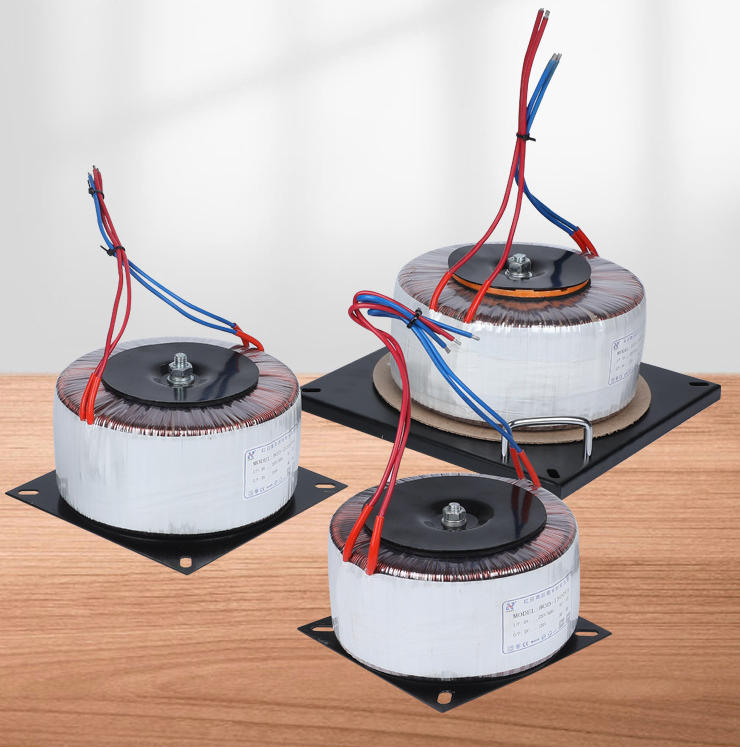
You can find a toroidal transformer in many new electrical systems. It has a core shaped like a doughnut. The core is made from strong ferromagnetic materials. These materials include laminated iron, iron powder, or ferrite. This special shape helps the transformer work very well. It also keeps electromagnetic interference low. You get better results than with regular laminated core transformers.
Toroidal transformers are 90% to 95% efficient. Some custom designs can reach 97% efficiency.
Regular laminated core transformers are usually less than 90% efficient.
Knowing how a toroidal transformer works helps you pick the best one. It gives you reliable and efficient power.
Key Takeaways
A toroidal transformer has a core shaped like a doughnut. This shape helps it work better and stops extra electromagnetic noise. These transformers are very efficient, working at 90% to 95%. Some special ones can even reach 97% efficiency. The closed-loop design helps save energy. This makes toroidal transformers great for sensitive things like audio gear and medical tools. Good winding and strong materials make them work better. This also makes them quieter and cooler. Pick the right power rating for your needs. Make sure it is enough for your system so nothing gets damaged. Toroidal transformers are small and light. They fit well in portable electronics and small spaces. Always install and care for them the right way. Check for damage before you use them to stay safe. These transformers can be used in many ways. They work in medical devices and big machines. They give steady and clean power.
Toroidal Transformer Basics
Core Shape and Materials
A toroidal transformer has a core shaped like a doughnut. This shape is called a toroid. The core makes a closed loop. This design helps the transformer work better. The core uses special materials. These materials carry magnetic fields very well.
Ferromagnetic Materials
Toroidal transformers use ferromagnetic materials for their cores. These materials move magnetic energy with little loss. The most common types are iron powder, manganese-zinc, and nickel-zinc. Each material carries magnetic fields differently. You can see their properties in the table below:
Material Type | Relative Magnetic Permeability (μr) |
|---|---|
Iron powder cores | 50 … 150 |
Manganese-zinc cores | 300 … 20000 |
Nickel-zinc cores | 40 … 1500 |
Tip: Higher magnetic permeability means the core carries more magnetic energy. This helps the transformer work better.
Laminated Iron, Iron Powder, Ferrite
Some toroidal transformers use laminated iron, iron powder, or ferrite for their cores. Laminated iron lowers energy loss from swirling currents. Iron powder works well with higher frequencies. Ferrite is good for electronic devices. It carries magnetic fields at high frequencies with little loss.
Primary and Secondary Windings
A toroidal transformer has two main wire coils. These are the primary winding and the secondary winding. The primary winding connects to the input power. The secondary winding gives the output power. How you wrap the coils around the core is important.
Sector winding helps control leakage inductance. This keeps the voltage steady.
The winding design lowers noise. This makes the transformer more efficient.
A good winding arrangement helps the transformer work well in sensitive devices. You get better system stability.
You can change the number of turns in each winding. This lets you raise or lower the voltage. The core couples the windings magnetically. Energy moves from the primary to the secondary side.
Magnetic Field Efficiency
The toroidal shape gives a big advantage. The closed-loop core keeps the magnetic field inside. Less energy leaks out. You get less electromagnetic interference (EMI) and better efficiency. The table below shows how toroidal transformers compare to EI-core transformers:
Feature | Toroidal Transformers | EI-Core Transformers |
|---|---|---|
Core Design | Closed-loop core design | Open magnetic path |
Magnetic Losses | Minimises magnetic losses | Higher magnetic leakage |
Electromagnetic Interference | Reduced EMI due to closed-loop design | More EMI due to open design |
Size and Weight | Smaller and lighter for the same power rating | Larger and heavier for the same power rating |
Application Suitability | Ideal for low noise and high precision | Better for high-power applications |
Note: The closed-loop design of a toroidal transformer keeps stray magnetic fields low. This is important for audio equipment, medical devices, and precision instruments. You get less noise and more accurate results.
A toroidal transformer uses energy more efficiently. High efficiency means less heat and lower energy loss. You can trust these transformers to give steady power with little interference.
How a Toroidal Transformer Works
Operating Principle
A toroidal transformer works using electromagnetic induction. When you connect the primary winding to power, it makes a magnetic field inside the donut-shaped core. This magnetic field travels through the core and reaches the secondary winding. The energy moves from the primary winding to the secondary winding without touching.
The special core shape lets you use shorter coils. This design cuts down on resistive losses and makes the transformer more efficient.
The winding goes all around the core, so there is less leakage inductance and fewer stray magnetic fields.
You hear less humming when the transformer runs because of how the core and windings are made.
You can use higher magnetic densities without much core loss.
Tip: The closed-loop core design keeps energy loss low. You get more power where you need it.
Winding Arrangement
The way the winding is arranged is very important for how well a toroidal transformer works. Makers use careful winding methods to wrap the wire around the core. They often use vacuum impregnation. This process keeps the windings in place and helps stop heat from building up.
Good materials and careful winding help the transformer give more power with less loss. You see less wasted energy and better performance. The winding arrangement also helps the transformer stay cool and quiet.
Feature | Benefit to You |
|---|---|
Precision winding | Higher efficiency |
Vacuum impregnation | Lower heat and more stability |
Full core coverage | Less energy loss |
Low Electromagnetic Interference
A toroidal transformer gives you low electromagnetic interference (EMI). The closed-loop core keeps the magnetic field inside. This stops stray fields from getting out and making noise in your devices.
The core shape helps save energy and keeps EMI low.
The right core material makes the transformer work even better.
You see less interference in things like audio systems and medical devices.
Note: Low EMI means your devices work well and you hear less noise.
You can count on a toroidal transformer to give steady power with almost no interference. The special design and careful build make it a great choice for many uses.
Key Features
Compact Design
A toroidal transformer has a small size. The doughnut-shaped core lets it fit in tight spots. This shape helps save space inside devices. You can make smaller products without losing power. Many portable electronics use this design. Compact audio systems also use it. The toroidal transformer fits well because it does not need much room.
The round core fits in small boxes.
You can make thinner devices for today’s needs.
The transformer helps make electronics smaller.
Tip: The compact design helps you build products that are light and easy to carry.
Here is a table that shows common sizes and weights for toroidal transformers in electronics:
Part Number | Nominal Power VA | Dimensions (OD x Height) Inches | Weight (lbs) |
|---|---|---|---|
XF-A0700B | 700 | 5.4 x 2.6 | 7.5 |
XF-A0800A | 800 | 5.6 x 2.5 | 7.5 |
XF-A0900A | 900 | 5.8 x 2.6 | 8.7 |
XF-A1000A | 1000 | 5.9 x 2.9 | 9 |
MED-0100 | 100 | 4.0 x 2.0 | 2.8 |
MED-2000 | 2000 | 9.0 x 4.0 | 31.8 |
You can see the transformer stays small even when the power goes up.
Lightweight Construction
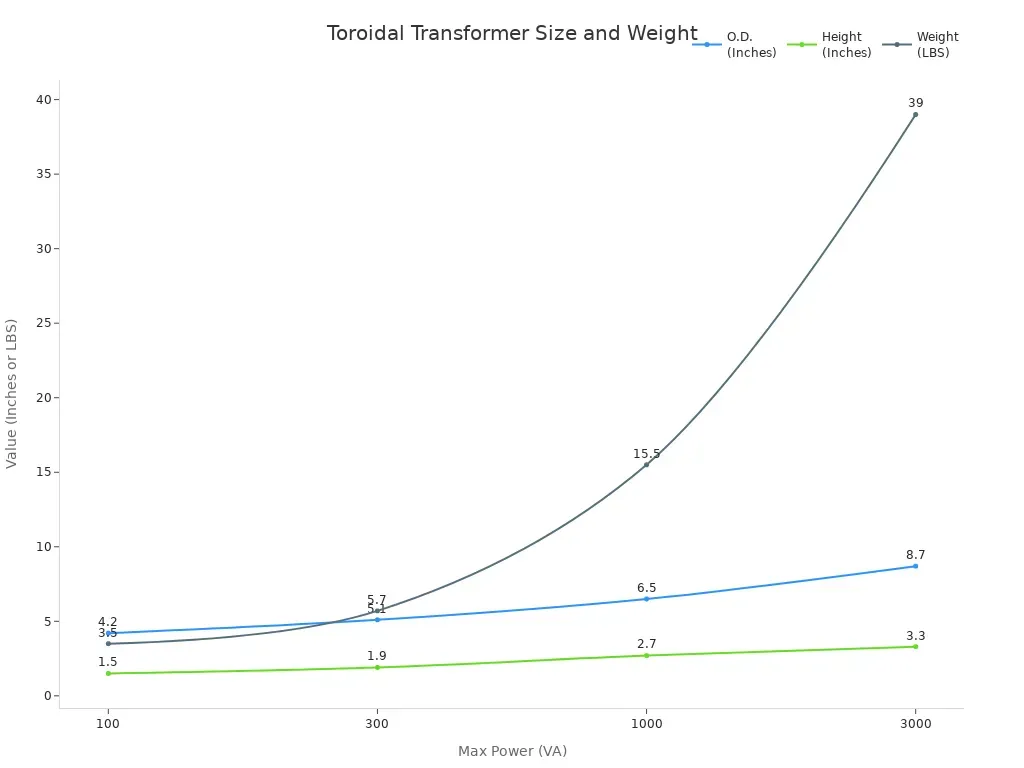
A toroidal transformer is light. The special core and winding make it weigh less. You can save up to 55% weight compared to old transformers. This makes devices easier to carry and move.
Lighter transformers put less stress on mounts.
You can move and set up devices with less work.
The transformer helps lower shipping costs.
Here is a chart that shows how weight goes up as power rating increases:
Note: Lighter transformers are great for portable and handheld devices.
Quiet Operation
A toroidal transformer makes less noise. The closed-loop core keeps the magnetic field inside. This lowers humming and shaking. You get quiet operation. This is important for audio gear and medical tools.
The transformer does not make much sound.
You can use it where quiet is needed.
The design helps stop problems with sensitive electronics.
😊 Quiet operation means your devices work well and do not bother your space.
You can count on a toroidal transformer to give power, save space, and keep things quiet.
Advantages
High Efficiency
A toroidal transformer works very well. Its doughnut-shaped core keeps the magnetic field inside. This helps it work better than older transformers. You lose less energy and get more power for your devices.
Most toroidal transformers are 90% to 98% efficient.
Many models reach 90% to 97% efficiency.
These numbers are higher than regular E-I core transformers. E-I core transformers are often less than 90% efficient.
Tip: Higher efficiency saves energy and lowers your electric bill. Your devices also stay cooler because less energy turns into heat.
Reduced Power Loss
A toroidal transformer loses less power. The closed-loop core and careful winding keep energy from leaking. More power goes to your equipment.
Toroidal transformers lose less power under the same load than E-I core transformers.
The design also lowers electromagnetic interference (EMI). Your sensitive devices work better.
You get steady voltage and less noise in your system.
Using a toroidal transformer helps your devices last longer. Less heat and wasted energy keep your electronics in good shape.
Safety and Reliability
You can trust a toroidal transformer to keep your devices safe. Many models meet strict safety rules, especially for medical equipment. These rules make sure the transformer works safely around people and tools.
Certification Standard | Description |
|---|---|
UL60601-1 | Safety standard for medical electrical equipment |
ANSI/AAMI ES60601-1 | U.S. standard for medical devices |
CSA C22.2 No. 60601-1 | Canadian standard for medical equipment |
IEC 60601-1 | International safety standard |
EN 60601-1 | European safety standard |
Medical-grade transformers keep leakage currents very low. Sometimes, they are as low as 10 microamps.
These transformers use strong insulation and careful design. They protect against heat, moisture, and electrical surges.
You get reliable performance even in tough conditions.
Stressor | Impact on Reliability | Mitigation Measures |
|---|---|---|
Heat | Can damage insulation | Good thermal management keeps heat low |
Moisture | May corrode metal parts | Special insulation and sealing protect the core |
Electrical Surges | Can harm windings | Strong construction resists voltage spikes |
Physical Damage | May affect function | Design resists vibration and impacts |
Note: Choosing a toroidal transformer means you get high safety and steady power.
Toroidal Transformer Applications
Medical Devices
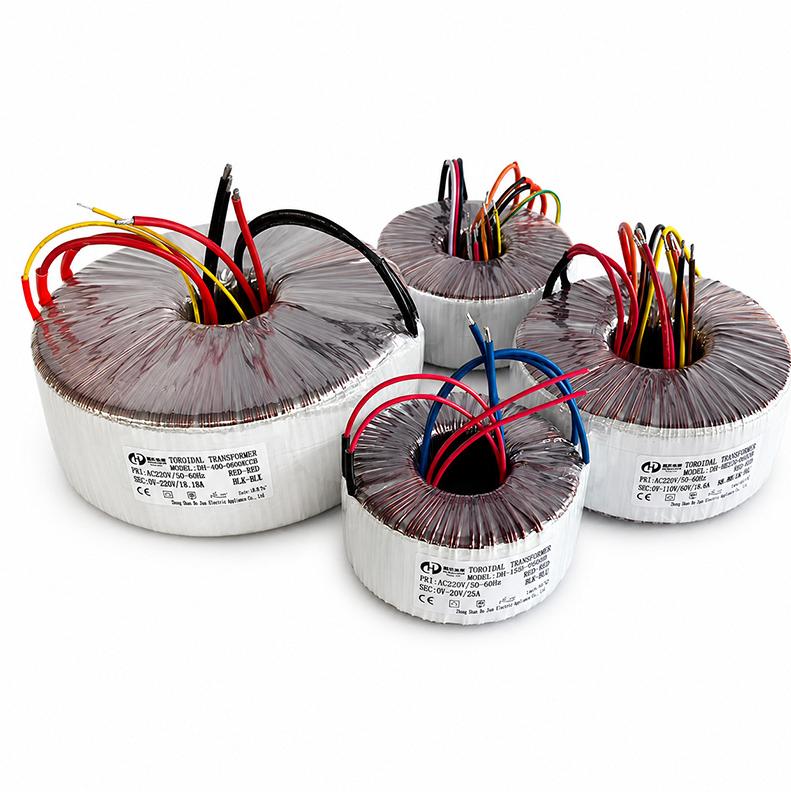
Toroidal transformers are used in many medical devices. They help keep equipment safe and working well. Hospitals use them in monitors, imaging machines, and surgical tools. The closed-loop core keeps electromagnetic interference low. Sensitive medical electronics work without extra noise. You get steady power and correct readings. Medical-grade toroidal transformers follow strict safety rules. They keep leakage currents very low. This protects patients and staff. You can trust these transformers to give clean power in important situations.
Tip: Medical devices need transformers that are quiet and safe. Toroidal transformers help with these needs.
Audio Equipment
Toroidal transformers are found in high-quality audio equipment. They help you hear clear and natural sound. The special core shape keeps the magnetic field inside. This design lowers hum and noise. You hear music and voices without distortion. The transformer gives great electrical isolation. This stops ground loop noise and interference. You get accurate signals and a wide dynamic range. Low harmonic distortion lets you hear deep bass and sharp highs. Audio engineers pick toroidal transformers to keep signals pure.
Accurate signal transmission
Minimal harmonic distortion
Superior low-frequency response
Wide dynamic range
😊 You get pure sound with less background noise when you use audio gear with toroidal transformers.
Power Supplies
Toroidal transformers are used in many power supplies. They help change voltage for computers, chargers, and control panels. The compact design fits in small spaces. You get high efficiency and low heat. The transformer keeps the voltage steady and protects your devices. You see less energy loss and lower electric bills. Many power supplies use toroidal transformers because they run quietly and last long. You can count on them for steady power in homes, offices, and factories.
Application Area | Benefits of Toroidal Transformer |
|---|---|
Medical Devices | Low EMI, high safety, quiet operation |
Audio Equipment | Clear sound, low noise, wide range |
Power Supplies | High efficiency, steady voltage |
Note: Toroidal transformers help you get reliable power in many devices. You see better performance and longer life.
Industrial Uses
You see toroidal transformers in lots of factories. They help machines work well. Their small size lets them fit in tight spots. You can put them inside control panels where space is limited.
Toroidal transformers are great for automation. They give steady power to machines. You get less electromagnetic interference (EMI). This keeps your equipment safe from bad signals. Sensitive circuits and sensors need this protection.
Here are some main reasons to use toroidal transformers in factories:
Small size fits in crowded control panels.
Low EMI keeps systems working well.
High efficiency saves power and money.
Good heat control means less heat and longer life.
You can see these benefits in real examples:
In a packaging line, toroidal transformers power PLCs and sensors. Their small size fits in tight control panels.
In a robot system, toroidal transformers give clean power to control circuits and motors. This helps robots move smoothly.
In a material handling system, toroidal transformers help save energy. You pay less for electricity and have less downtime.
Tip: High efficiency means toroidal transformers make less heat. Cooling systems do not work as hard. Your equipment lasts longer.
Most toroidal transformers are over 90% efficient. They help control the heat inside boxes. Less heat means you need less cooling. This saves energy and helps your machines last longer.
Toroidal transformers work well in tough places. They handle shaking and electrical noise. You can trust them in factories and warehouses.
Here is a quick summary of why toroidal transformers are good for factories:
Feature | Benefit for You |
|---|---|
Compact size | Saves space in control panels |
Low EMI | Protects sensitive equipment |
High efficiency | Reduces energy costs |
Good thermal management | Extends equipment life |
When you pick toroidal transformers for your machines, you get steady power. You hear less noise and save energy. Your equipment works better and needs fewer repairs.
Choosing a Toroidal Transformer
Picking the right toroidal transformer helps your project work well. You need to think about a few important things before you choose.
Power Rating
Always check the power rating first. This rating shows how much load the transformer can handle. You will see this number in VA for AC or watts for DC. If you pick a rating that is too low, your system might not work right. It could even get damaged. If you pick a higher rating, you can upgrade later if needed.
Here are the main steps for picking the power rating:
Make sure the rating matches your system’s needs.
Think about any changes you might make later.
Do not pick a rating that is too low, or you may have problems.
Tip: Pick a transformer that meets or goes above your total load. This keeps your system safe and working well.
You should also look at other things like efficiency, voltage and current ratio, core material, size, weight, and noise. These details help you find the best transformer for your project.
Size and Mounting
The size and how you mount the transformer matter for installation. You need to check if it fits inside your device or box. The way you mount it also helps keep it safe and steady.
Mounting Method | Recommendations |
|---|---|
Horizontal | Use for transformers over 15 lbs (7 kg) with epoxy-potted centres. |
Vertical | L-Bracket or Omega bracket works well for transformers with a diameter up to 10 inches (250 mm). |
Mounting the transformer vertically saves space in thin cases. You can move the leads away from sensitive parts to lower flux leakage. This helps your device work better and stay safe.
Vertical mounting saves space in slim designs.
Good placement lowers electromagnetic interference.
Slim devices work better with vertical mounting.
😊 Good mounting keeps your transformer steady and your device working well.
Custom vs. Standard Options
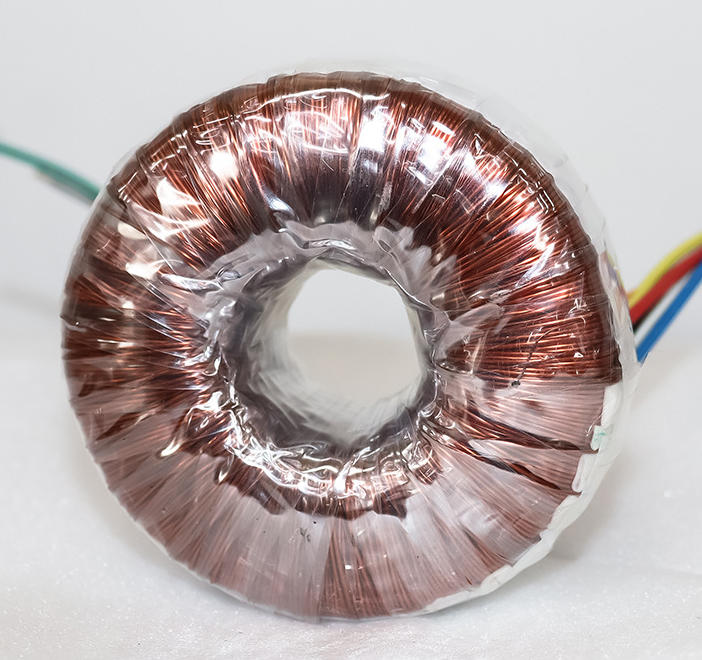
You can pick custom or standard toroidal transformers. Each type has its own good points.
Aspect | Custom Transformers | Standard Transformers |
|---|---|---|
Cost | Higher upfront cost due to customisation efforts | Generally less expensive, budget-friendly |
Timeline | Longer lead times due to design and production | Immediate availability, ideal for tight deadlines |
Performance | Highly efficient, tailored to specific requirements | Adequate performance may not meet all specific needs |
Suitability | Well-suited for unique specifications | Suitable for common applications |
Custom transformers are best if you need special voltages or have tough conditions. They work very well and can save money over time. You might pay more at first and wait longer, but you get what you need.
Standard transformers cost less and are easy to get fast. They work for most normal uses. If you need something soon and your needs are simple, pick a standard model.
Custom transformers fit special needs and work very well.
Standard transformers are cheaper and ready right away.
Note: Think about your project’s time, money, and needs before you pick.
You make the best choice when you match the transformer’s features to your project. This helps your system stay safe and work well.
Installation and Maintenance
Handling and Mounting Tips
You need to handle toroidal transformers with care. The core and windings can get damaged if you drop or bump them. Always lift the transformer by its center or use both hands to support the weight. Avoid pulling on the wires. This keeps the windings safe.
When you mount the transformer, choose a spot with good airflow. Heat can build up if you place it in a tight space. Use mounting brackets or pads to keep the transformer steady. You can use vertical or horizontal mounting, depending on your device’s design. Make sure the mounting hardware fits the transformer’s size and weight.
Tip: Use rubber pads or washers to reduce vibration. This helps keep your transformer quiet and stable.
Here is a quick table to help you pick the right mounting method:
Mounting Type | Best For | Extra Advice |
|---|---|---|
Vertical | Slim cases, tight spaces | Use L-brackets for support |
Horizontal | Heavy transformers | Use epoxy-potted centres |
Safety Precautions
You must follow safety steps when you install or maintain a toroidal transformer. Always turn off the power before you touch the transformer. This keeps you safe from electric shock. Wear insulated gloves and use tools with rubber handles.
Check the wires for damage before you connect them. Make sure the insulation is not cracked or worn. Use the right wire gauge for your transformer’s power rating. Secure all connections tightly. Loose wires can cause sparks or heat.
⚡ Note: Never touch the transformer when it is powered. Wait for it to cool down before you start any work.
Keep the transformer away from water and moisture. If you install it in a humid area, use a sealed enclosure. This protects the core and windings from rust and corrosion.
Troubleshooting
If your toroidal transformer does not work as expected, you can follow these steps to find the problem:
1. Overheating: Check if the load is too high. Make sure you do not exceed the rated capacity. Look for good ventilation around the transformer. Inspect the thermal fuse to see if it works.
2. Noise: Listen for humming or buzzing. Check for loose windings or damaged insulation. Secure any loose parts. You can use padding to reduce vibrations.
3. Electrical Faults: Look for visible damage to the windings or insulation. Use a multimeter to check input and output voltages. Make sure the readings match the specifications.
😊 Regular checks help you catch problems early. You keep your transformer working well and your devices safe.
If you find a problem, fix it right away. Replace damaged wires or insulation. Adjust the load if needed. You can ask a qualified technician for help if you need it.
A toroidal transformer works better than many others. Its doughnut-shaped core helps it use energy well. It also makes less noise. You can find these transformers in audio gear, medical tools, and power supplies. If you pick a toroidal transformer, your devices get steady and quiet power.
If you want to know more, look at guides from trusted electronics websites or talk to an expert.
Try a toroidal transformer to make your next project work better.
FAQ
What makes a toroidal transformer different from a regular transformer?
A toroidal transformer has a doughnut-shaped core. This shape keeps the magnetic field inside the core. You get less noise and better efficiency than regular transformers.
Can you use a toroidal transformer in audio equipment?
Yes, you can use it in audio gear. You get clear sound and less noise. The closed-loop core helps stop hum and interference. Many audio devices use toroidal transformers for better sound.
How do you mount a toroidal transformer safely?
Use the right brackets or pads to hold it. Make sure the transformer is tight and secure. Put it where air can flow around it. Do not pull on the wires. This keeps your transformer safe and steady.
Why does a toroidal transformer run cooler?
The closed-loop core design keeps energy loss low. Less energy is wasted as heat. The transformer works efficiently and stays cool. Your devices last longer and stay safe.
What size toroidal transformer do you need?
Check your device’s power needs first. Pick a transformer with a power rating that matches or is higher than your total load. This keeps your system safe and working well.
Are toroidal transformers safe for medical devices?
Yes, they are safe for medical devices. Medical-grade toroidal transformers meet strict safety rules. You get low leakage currents and strong insulation. Hospitals use them to keep patients safe.
How do you reduce noise from a toroidal transformer?
You can use rubber pads or washers under the transformer. Mount it away from sensitive parts. Make sure all parts are tight. This helps lower vibration and humming.
Can you use a toroidal transformer for high-frequency applications?
Yes, you can use it for high frequencies. Ferrite and iron powder cores work well at high frequencies. You get efficient power transfer and low energy loss in electronic devices.