
An eco-friendly circuit breaker choice rests on three questions: what voltage level, zero fluorine or just lower GWP, and which in-service references exist.
The right route depends on voltage class. Vacuum interrupters with clean-air insulation are the only fully fluorine-free option and are proven up to 145 kV. C4 gas mixtures currently carry the highest voltages, but they stay fluorinated, with a global warming potential (GWP) of roughly 500–900. Match the route to your rating, not to the slogan.
Which Eco-Friendly Circuit Breaker Fits Your Voltage Level?
No single route wins everywhere. Vacuum with clean air leads at 145 kV and below, C4 mixtures carry the highest voltages, and the right pick depends on where the breaker sits in your network.
Think of it as a relay race rather than a contest. Each technology has a stretch of the track where it is the strongest runner and a stretch where it hands over. At medium voltage, 12–40.5 kV, you have the most freedom: C4-filled ring main units are already deployed in volume, and vacuum designs are mature. At 110 kV (the 145 kV class), vacuum plus clean air is in service and fluorine-free. From 220–252 kV the picture gets crowded, because C4 gas-insulated switchgear (GIS) and vacuum interrupters are both being pushed forward in parallel. At 500 kV and above, C4 is the practical answer today.
That is why a purchase specification that says only "SF6-free" is too loose to be useful. It lets a low-GWP gas mixture and a zero-fluorine design compete on the same line, even though they deliver different environmental results and sit at different maturity levels for your rating.
One caution from the market side. A buying guide published in July 2026 still describes SF6 as operationally dominant for most new 110 kV projects, while conceding that vacuum is no longer a niche option. Both statements can be true at once: the technology is proven, but installed base and habit lag behind it. Your decision should rest on type-test evidence at your rating, not on what the market defaults to.
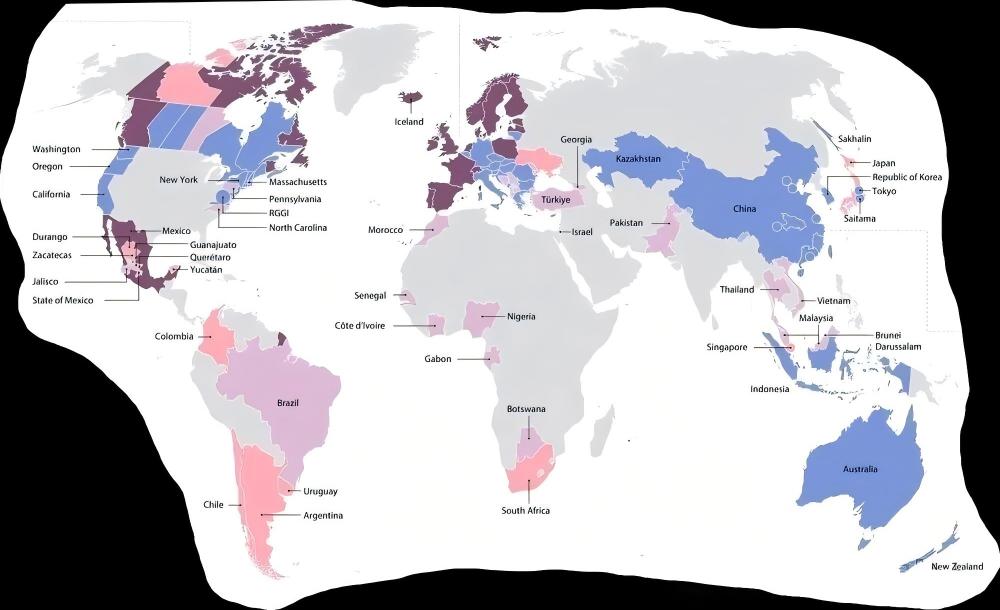
Figure: Overview of Countries and Regions with Carbon Emission Restrictions Worldwide
Why Does "Greener" Mean Three Different Things for SF6 Replacement?
The common assumption is that "SF6-free" and "eco-friendly" describe one thing, and that a successful pilot proves the answer for the whole network. Neither holds up.
Start with why SF6 is being replaced at all. Its GWP is about 24,300 times that of CO2 over the standard horizon, its atmospheric lifetime is around 3,200 years, and it is among the gases restricted under the Kyoto Protocol. A kilogram released today is effectively permanent on any planning timescale. That is the problem every alternative is trying to solve, and they solve it to very different degrees.
Three routes are being sold under one banner. One keeps SF6 and dilutes it with nitrogen. One replaces it with a C4 fluoronitrile-based mixture. One removes fluorinated gas entirely and uses clean air with a vacuum interrupter. Reading them as equivalent is how projects end up with the wrong equipment.
Four mistakes show up repeatedly in specifications and tender comparisons.
Treating a pilot as a rollout. A handful of units on one site prove feasibility, not fleet readiness. Ask how many units run at the same rating, and for how long.
Treating one route as the standard answer. What works at 12 kV says little about 252 kV. Choose per voltage class.
Counting "low GWP" as "zero fluorine". A mixture at 500–900 GWP is a large reduction, but it still contains fluorinated gas and still falls under F-gas thinking. Write the target you actually need into the tender.
Counting SF6 reduction as elimination. A diluted SF6 mixture still carries a very high GWP. It cuts the quantity, not the nature of the problem.
Correct each of these and most of the confusion in this market disappears.
Vacuum Circuit Breaker vs SF6 Alternatives: Which Route Is Truly Fluorine-Free?
Only vacuum with clean air has zero fluorine and a GWP of 0. SF6+N2 only reduces the SF6 quantity, and C4 mixtures land at roughly 500–900 GWP.
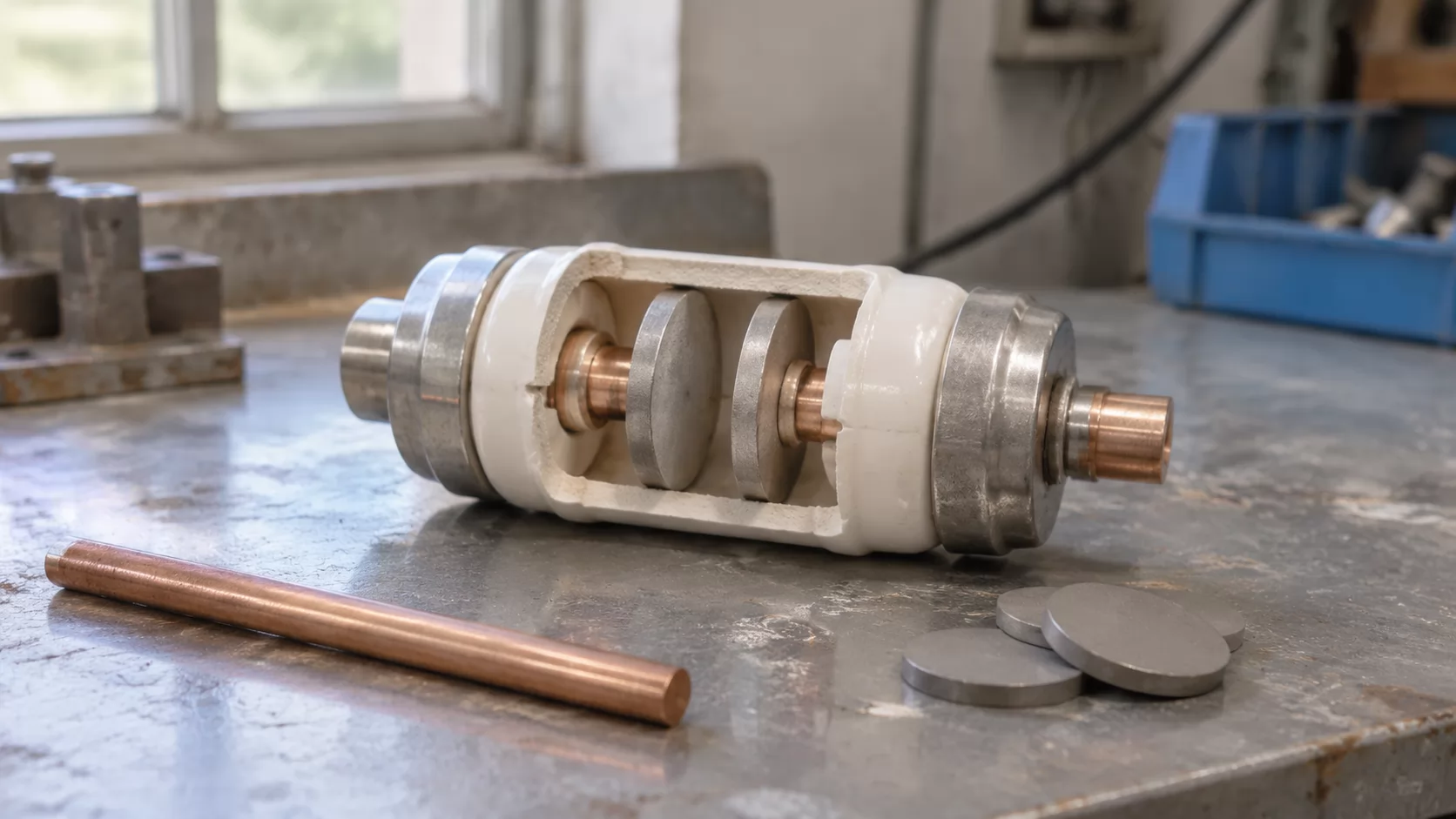
Put the three routes side by side and it becomes obvious they do not start from the same line. A vacuum interrupter breaks current in a sealed vacuum bottle, and the surrounding insulation is dry air, which is 80% nitrogen and 20% oxygen. There is nothing fluorinated to leak, decompose or recover at end of life. It is the only route that is zero fluorine, zero carbon and non-toxic at once.
| ROUTE | FLUORINE CONTENT | GWP | WHAT IT ACTUALLY DELIVERS |
|---|---|---|---|
| SF6 (baseline) | Yes | About 24,300 times CO2 | Proven performance, highest climate impact |
| SF6 + N2 mixture | Yes | Still very high | Less SF6 per unit, same gas family and same problem |
| C4 mixture | Yes | Roughly 500–900 | Large GWP cut, usable at the highest voltages |
| Vacuum + clean air | None | 0 | Fully fluorine-free, proven to 145 kV |
The takeaway: C4 reduces climate impact sharply, while vacuum with clean air removes it, and which one you can buy depends on your voltage.
When you compare a vacuum circuit breaker against SF6 Circuit Breaker, keep two questions apart. How much lower is the GWP, and does the design contain fluorine at all? A buyer under a net-zero commitment or a strict F-gas regime may find the second question decisive, even if the first looks acceptable on paper.
What Is the Voltage Range of a VCB, and Where Does Vacuum Run Out of Headroom?
A vacuum circuit breaker (VCB) is a breaker whose contacts open inside a sealed vacuum interrupter. It is established across medium voltage, 12–40.5 kV, and the clean-air version now operates in service at 145 kV.
Medium voltage is the home ground. Vacuum interrupters have been the default choice for many years in distribution switchgear, where short contact gaps are enough and the interrupting duty is well understood. Nothing about that segment is experimental.
The 110 kV class is the newer territory. Combined with clean-air insulation, vacuum now reaches 145 kV in operating equipment, with references in both China and Europe. That counts as mature, and it is the point where many network operators can start treating fluorine-free as an ordinary option rather than a trial.
Above 145 kV, headroom runs out, and the word that matters changes from "rated" to "developed". A 245 kV single-break prototype has only just passed testing. Anything at 420 kV or 550 kV is still in development. A manufacturer quoting a vacuum breaker at those levels is describing a roadmap, and you should read the sentence that way.
So the practical answer to the voltage question is simple. Up to 145 kV, vacuum is a real, in-service answer. Beyond it, ask for the type-test status in writing before you let the technology into a tender.
How Does Vacuum Plus Clean Air Work, and What Does the 145 kV Evidence Show?
Consider the Siemens 3AV1 Blue series, a vacuum-and-clean-air breaker family that shows what the technology can do at 145 kV. The principle is separation of duties. Clean air (80% N2, 20% O2) provides the insulation, and a vacuum interrupter does the breaking.
Separating the two jobs is what makes zero fluorine possible. Air alone is a weaker insulator than SF6, so it cannot also quench arcs, and the vacuum bottle takes that job away from the gas. Each medium then does only what it is good at.
The published ratings are 145 kV, 3150 A and 40 kA, with a lightning impulse withstand of 650 kV. Those are values you would expect on a 110 kV-class breaker built around SF6, which is the point: the environmental gain does not come with a visible rating penalty.

The reliability figures matter more to an operator than the nameplate. Each pole can complete 30 full-load short-circuit breaks without maintenance. Mechanical endurance is 10,000 operations. The annual leakage rate is below 0.1%. A lower leakage figure is a real benefit for operators who need to manage gas inventory or reporting.
Field history is the third leg. Units have been in service in Jiyuan and Zhengzhou, Henan, since 2021. In Europe the technology has been on the grid since 2010 and has accumulated thousands of field operations.
That combination of type-tested ratings, endurance data and a decade-plus of service is what "mature" should mean in a tender. Ask any supplier of any route for the same three things at your rating.
Why Does Vacuum Get Much Harder Above 145 kV?
The pitfall is assuming a technology scales linearly with voltage. Vacuum does not. Four problems stack up at once, and solving one often worsens another.
Arc control over large contact gaps. Higher voltage needs a longer gap between open contacts, and a long gap in vacuum is harder to control during arcing. Insulation stability across long gaps. Dielectric behaviour over a long vacuum gap is less predictable than over the short gaps used in medium voltage. Restrike during capacitive current switching. Switching capacitor banks and unloaded lines can cause the gap to break down again after interruption, which is a serious fault on a high-voltage system. Heat dissipation in the current path. A sealed, higher-rated unit has to carry its current and shed its losses without the convective help of a gas-filled enclosure.
Engineers have approaches for each, such as multiple breaks in series, but series arrangements bring their own voltage-sharing and synchronisation demands.
The status today follows from that. At 145 kV the route is mature. A 245 kV single-break prototype has only just passed its tests, which is progress but not a product with a service record. At 420 kV and 550 kV the work is still at the development stage, and multi-break series designs are the likely path.
When a proposal promises a fluorine-free breaker at those ratings, the useful questions are narrow ones. Has it passed type tests? Has it been energised on a live network? If the answer to either is no, you are being offered a development project.
Why Does C4 Carry High Voltage but Still Fall Short of Fluorine-Free?
C4 is the opposite case from vacuum: strong at the top of the voltage range, weak on the "zero" claim. The reason is chemical. C4 is a fluorinated compound used in a buffer-gas mixture, and its performance comes from the same fluorine chemistry that makes the gas family a regulatory concern.
On dielectric strength C4 is about 2.2 times that of SF6. That gives designers room to match SF6 insulation performance with a mixture, and it explains why C4 was recognised by the EU as an alternative gas in 2020.
The engineering record is what separates it from a laboratory curiosity. Nearly 1,000 units of 12 kV ring main units are in service in Anhui, which is real volume at medium voltage. A 126 kV GIS has passed type tests. A 550 kV gas-insulated line (GIL) has completed type tests. A 1,100 kV GIL is under live-voltage trials.
No other route can show that spread of voltage levels today. That is C4's real strength, and it is why it is the practical answer at 500 kV and above.
The limit is the claim. After mixing, the GWP sits at roughly 500–900. That is a large reduction against SF6, and an honest improvement, but it is not zero, and it is not fluorine-free. Describing a C4 breaker as "SF6-free" is accurate. Describing it as "fluorine-free" is not.
If your policy target is a cut in climate impact at the highest ratings, C4 fits. If your target is elimination of fluorinated gas, C4 does not meet it, however good the type-test record.
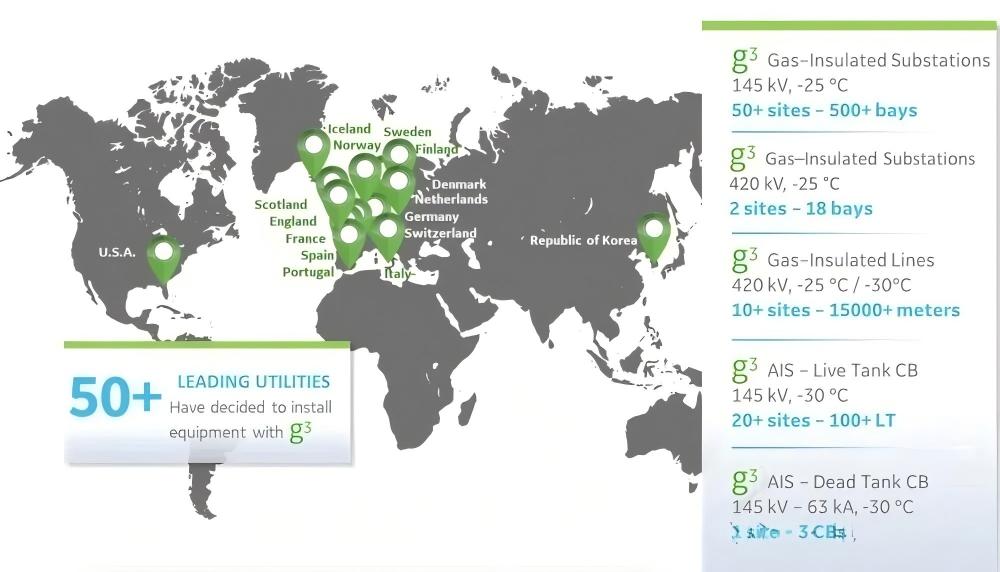
What Does C4 Cost You in Materials, Sealing and Handling?
Picture a maintenance team that has serviced SF6 switchgear for decades and now receives a C4-filled unit. Most routines carry over, which is the good news. A few do not, and the differences are where trouble begins.
On safety, the mixture is non-toxic at a 5%–15% mix ratio, and the protection requirements match those for SF6 equipment. Existing gas-handling training and procedures remain broadly valid.
The first difference is thermal. High-temperature decomposition of C4 is irreversible, and it produces carbon-containing by-products. SF6 largely recombines after an arc, while C4 does not, so internal arcing leaves residues you have to deal with during inspection and gas recovery. Plan for that in your maintenance procedure rather than discovering it after a fault.
The second difference is materials. C4 is incompatible with ethylene propylene diene monomer (EPDM) rubber seals, which are common in older gas equipment. The seals must be fluororubber, and the enclosure needs a molecular sieve to manage moisture and by-products. If a retrofit or spare-parts plan assumes the old EPDM gaskets, it will fail on the first service visit.
The cost therefore shows up in three places: seal specification, spare-parts control and decomposition-product handling. None is a deal-breaker, and all are cheaper to design for than to fix later.
Contrast this with vacuum plus clean air, where none of these concerns exist, because there is no fluorinated gas to decompose. That simplicity is part of the lifecycle argument wherever vacuum is available at your rating.
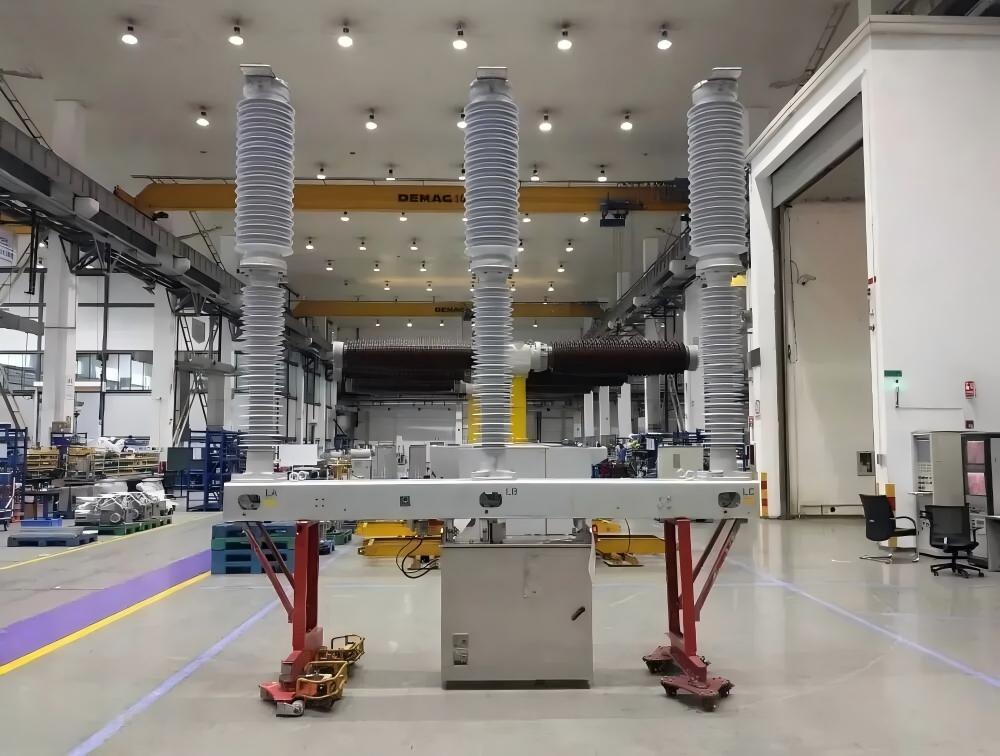
SF6-Free Circuit Breaker Voltage Levels: A Practical Route Map
Rule of thumb: pick the route by voltage class, and accept that the best route changes as the rating climbs. There is no best technology, only the best match for a given level.
That also answers the question of what voltage level needs eco-friendly breaker. The honest answer is all of them, since SF6 is used at every level, but the route differs at each.
| VOLTAGE LEVEL | ROUTE | STATUS | MAIN CONSIDERATION |
|---|---|---|---|
| 12–40.5 kV | C4 ring main units or vacuum | Both at scale or mature | Low risk; decide on fluorine target |
| 110 kV (145 kV) | Vacuum + clean air | In service in China and Europe | Fluorine-free and ready to specify |
| 220–252 kV | C4 GIS and vacuum, in parallel | Prototypes advancing on both | Check type-test status of each |
| 500 kV and above | C4 | Current practical option | Vacuum awaits multi-break designs |
The takeaway is that the transition is a phased marathon, not a single switch. Medium voltage and 110 kV can move now, 220–252 kV is a decision to watch closely, and extra-high voltage works within what C4 allows today.
For a fleet owner, this suggests sequencing. Start the fluorine-free programme where vacuum is proven, learn from it, and keep C4 in the plan for the levels where nothing else is yet certified. A blanket decision for the whole network would be wrong at either end.
How to Choose a Green Circuit Breaker: Which Criteria Come First?
To understand how to choose green circuit breaker options, start from voltage level, then decide how much fluorine reduction you actually need. Everything else is a filter applied after those two choices.
Voltage class and ratings. Fix the rated voltage, current and short-circuit breaking capacity first. These decide which routes are even available, as the route map shows.
Fluorine-free or low-GWP target. Decide whether your policy, regulator or customer requires zero fluorinated gas, or whether a large GWP reduction is enough. This single decision splits the market into vacuum with clean air and C4.
Type-test and field references at that rating. A reference at a lower voltage does not count. Ask for the number of units in service at the same rating and how long they have been running.
Seal and gas-handling requirements. If the design uses C4, confirm the seal material, the molecular sieve and how decomposition by-products are handled. For clean air, confirm the leakage rate and any pressure monitoring.
Lifecycle cost and maintenance. Compare purchase price together with gas inventory, inspection intervals, end-of-life recovery and spare parts. A cheaper unit that needs fluororubber spares and gas recovery may not stay cheaper.
Rule of thumb: if a route lacks type-tested, in-service evidence at your rating, treat it as a development project and price the risk accordingly.
Which Standards and Certificates Should an Eco-Friendly Breaker Carry?
IEC 62271-100 is the main standard for alternating-current circuit breakers, and a type-test report against it is the baseline document. Work through the evidence in this order.
Request the IEC 62271-100 type-test report for the exact breaker rating you intend to buy.
Check IEC 62271-1, which sets the common requirements for high-voltage switchgear and controlgear.
Confirm IEC 62271-203 for gas-insulated metal-enclosed switchgear if the design is GIS.
Verify the gas status in your market, including the F-gas regulation and whether the alternative gas is formally recognised there.
Two points deserve emphasis. First, a standard is not a certificate: "designed to IEC 62271-100" is a claim, while a report from an accredited test laboratory showing the tests passed is evidence. Ask for the report itself and read the tested rating, not the cover page.
Second, regulatory status varies by region. The EU recognised C4 as an alternative gas in 2020, but a gas accepted in one jurisdiction may be treated differently elsewhere, and F-gas rules keep tightening. Check what applies at your site and what is expected over the equipment's life of several decades.
Apply this to every bidder in the same way. Ask Weisho Electric, or any other manufacturer on your shortlist, for the report, the tested rating and the date, then compare them side by side.
A Pre-Order Checklist for Eco-Friendly Switchgear
A procurement team has two quotations on the desk. Both say "eco-friendly", both look similar on price, and neither makes the difference obvious. The following checks usually separate them.
Confirm the rated voltage, current, and short-circuit breaking duty against your network study.
Record the gas type and its GWP in the quotation itself.
Verify the seal material, especially whether fluororubber is specified for C4 designs.
Check the annual leakage rate and how it is monitored.
Count the in-service units at the same rating and note how long they have operated.
Review maintenance and gas-handling requirements, including decomposition by-products.
Obtain the end-of-life gas recovery plan and who carries the cost.
Answers to these questions turn a green label into something you can audit. Put the same list in front of Weisho Electric or any other bidder, and compare the replies line by line. Vague answers tell you as much as detailed ones.
FAQ
Is green on a breaker on or off?
It depends on the convention. In many IEC-style panels, a green indicator marks open (off) and red marks closed, but utilities and manufacturers differ. Check the panel legend and the site's own rules before acting on a colour.
What is the voltage range of a VCB?
Vacuum breakers are established in medium voltage, 12–40.5 kV, and clean-air vacuum designs are in service at 145 kV. Above that, status is prototype or development, as the range section above explains.
Is C4 SF6-free?
Yes, but not fluorine-free. C4 mixtures contain no SF6, though they remain fluorinated with a GWP of roughly 500–900. Only vacuum with clean air reaches zero fluorine.
Can vacuum replace SF6 at 220 kV today?
Not yet as a proven product. A 245 kV single-break prototype has only just passed testing, so check type-test status and service references before specifying it.
How do you know which circuit breaker to use?
Start with the voltage level, then decide whether you need zero fluorine or only lower GWP, then ask for type-tested, in-service references at that rating.