1,083 °C versus 1,907 °C: those are the melting points of copper and chromium. They explain the rule switchgear designers follow, which is that copper carries the current and chromium protects the faces that break it. In copper-chromium contacts, a vacuum circuit breaker gets arcing faces that open cleanly after a fault. Pure copper faces tend to weld shut instead.
Copper-chromium (CuCr) is the standard contact material for medium-voltage vacuum interrupters. It resists welding, arc erosion and loss of vacuum far better than pure copper, at the cost of some conductivity. It suits any breaker expected to clear short circuits. The practical takeaway is to match the chromium ratio, usually CuCr25 to CuCr50, to the duty.
Pure Copper Carries Current; CuCr Interrupts It
Pure copper is the better conductor and the worse breaking material. In a vacuum interrupter it welds under fault current, erodes fast in the arc, and the gap recovers its voltage strength too slowly after current zero. CuCr gives up part of copper's conductivity to resist all three. That is why medium-voltage breakers use CuCr on the arcing faces.
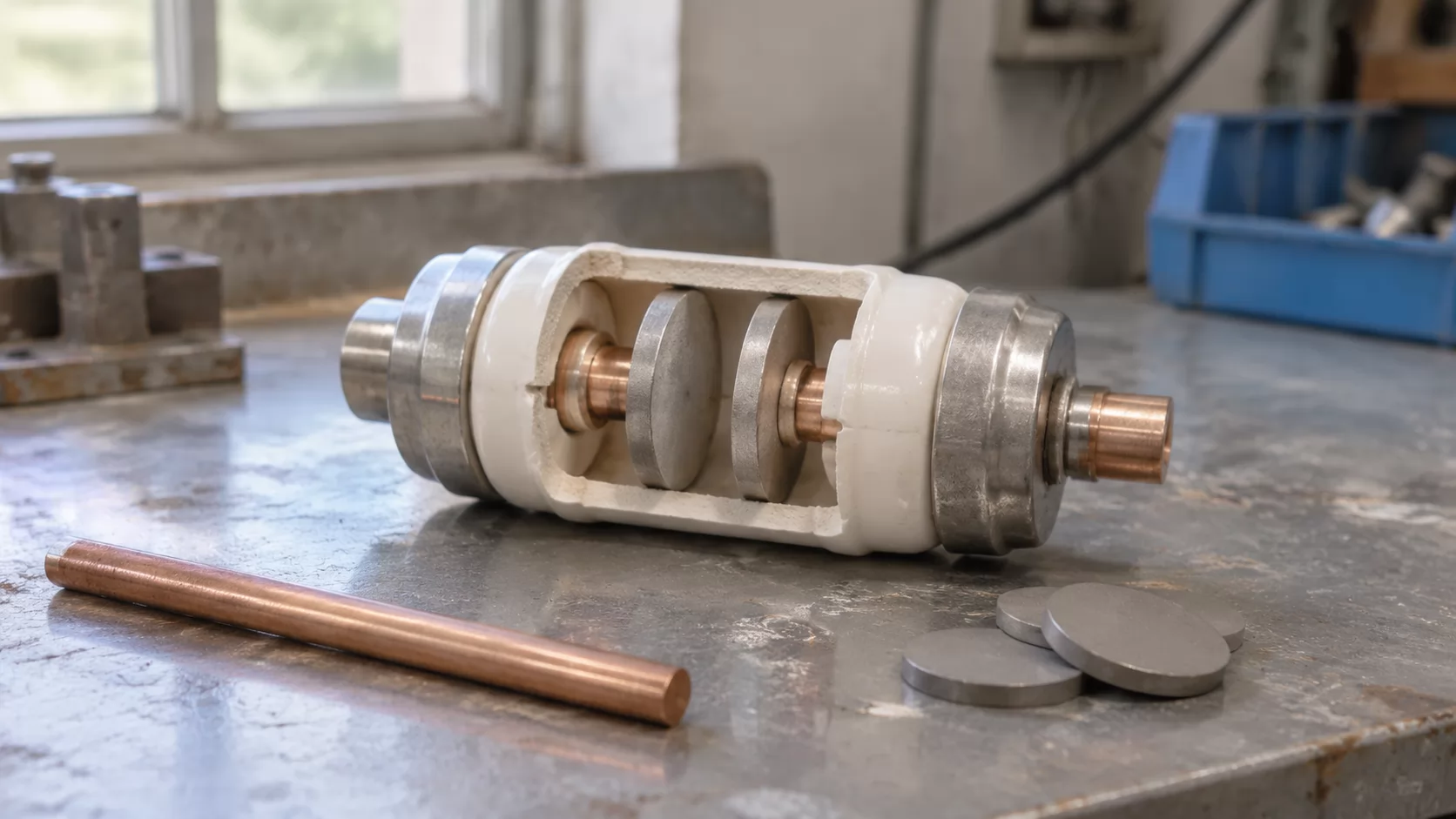
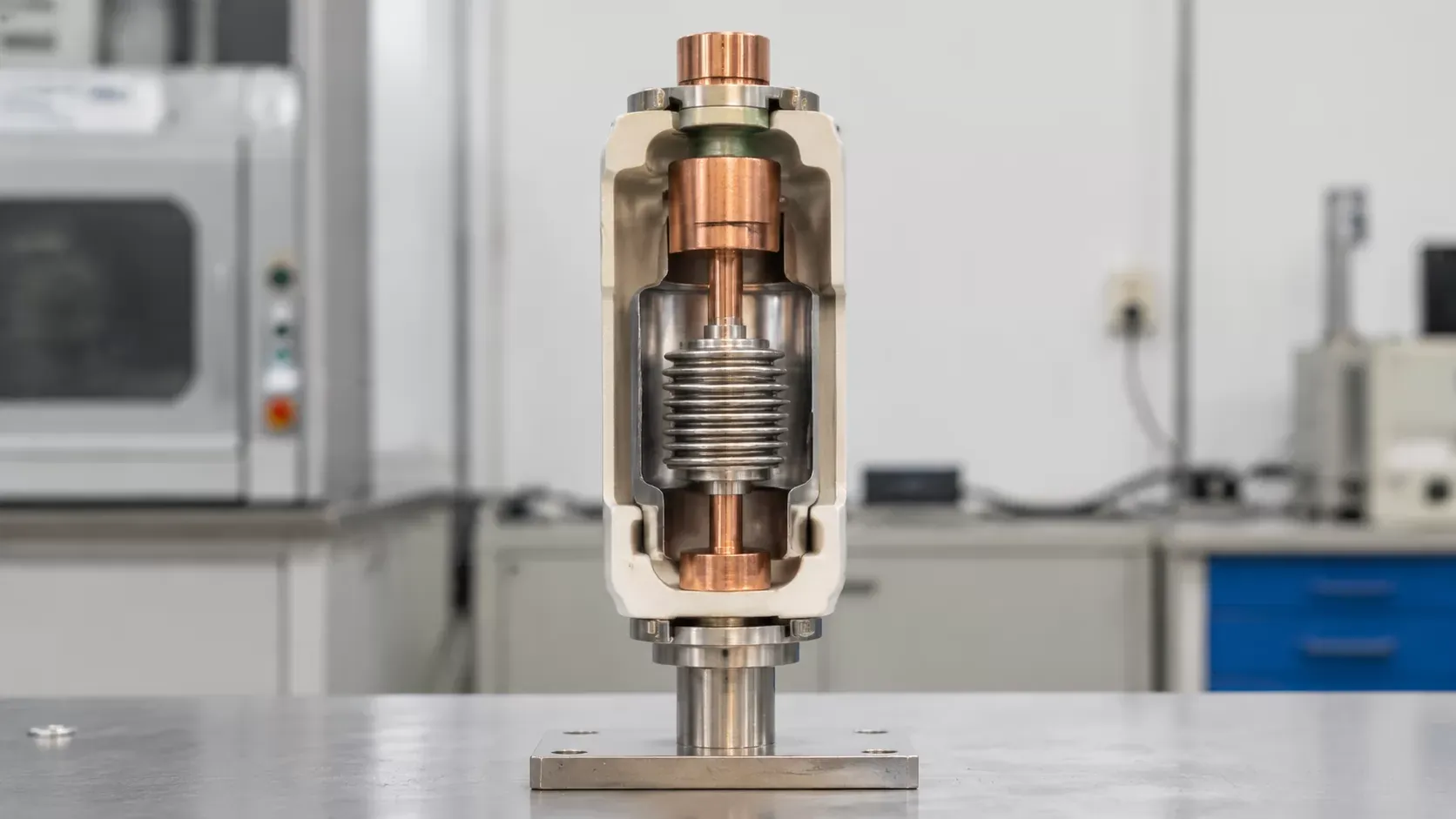
A vacuum interrupter is a sealed, evacuated ceramic envelope that holds one fixed and one moving contact. There is no gas inside to carry the arc. The arc burns in metal vapour boiled off the contacts themselves. So the contact material is also the arc medium, and its chemistry decides how the arc behaves, how much metal leaves the faces and what condenses on the internal shield.
Comparing CuCr vs. pure copper contact material on the four properties that decide breaking performance gives a lopsided result:
| Property | Pure copper | CuCr |
|---|---|---|
| Electrical conductivity | ★★★★★ | ★★ to ★★★ |
| Resistance to contact welding | ★ | ★★★★ |
| Arc erosion resistance | ★ | ★★★★ |
| Vacuum self-maintenance | ★ | ★★★★ |
| Best for | Conductive rods, non-arcing paths | Arcing faces in MV interrupters |
Copper wins one row and loses three, and those three decide whether a breaker clears a fault.
Pure copper still has a place in the breaker. It is used for conductive rods, terminals and current paths that never see an arc. It cannot form the arcing face of an interrupter rated to break short-circuit current.
What Does a Contact Need to Survive a Short-Circuit Break?
A contact survives a short-circuit break when four things happen. It separates on command after fault current has heated it. It loses only a thin layer of material. The interrupter keeps its vacuum. And the gap withstands system voltage in the first microseconds after current zero. If any one of these fails, the breaker has failed.
Each condition has a name. Contact welding is the fusing of the two faces into one piece of metal, which leaves the operating mechanism unable to pull them apart. Arc erosion is the loss of contact material through melting, evaporation and ejected droplets, and it sets the electrical life of the interrupter. AC current crosses zero twice per cycle, and a vacuum arc normally goes out at one of those crossings.
The interval after that crossing is the critical one. Dielectric recovery is the gap regaining its insulating strength as metal vapour disperses and condenses. Recovery voltage rises across the opening contacts at the same time. If that voltage outruns the gap's strength, the arc re-ignites. That is a restrike. A restrike sends a steep voltage transient into the network and puts the interruption back where it started.
A contact material therefore has to do more than conduct. It has to resist sticking, shed little mass, avoid fouling the vacuum, and stop producing vapour quickly at current zero.
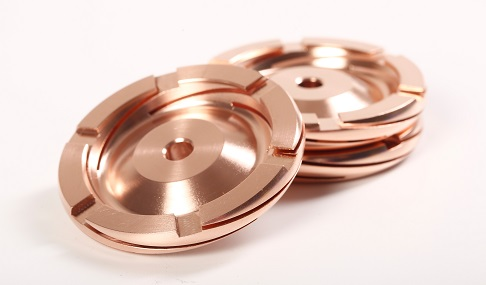
Copper Chromium Contacts Vacuum Circuit Breaker Design: Four Jobs the Chromium Does
Each requirement for a clean break corresponds to a specific weakness of copper. Chromium addresses each one through the same feature: hard, high-melting particles dispersed through a copper body. Copper still provides the conduction path. The chromium changes what happens when that path is driven to melting.
Contact welding resistance: why a welded contact is a major failure
In air, copper surfaces carry a thin oxide film that helps keep touching faces apart. Vacuum removes that protection. After a short-circuit current has heated the contact spot, bare copper meets bare copper, and the molten interface can fuse. The trip signal arrives, the mechanism pulls, and the contacts stay closed. The fault is then left for the upstream protection to clear, which is a major failure.
Chromium melts at roughly 800 °C above copper, so it stays solid where the copper liquefies. The particles act as a skeleton through the contact surface. They break up the continuous molten pool that welding needs. When local copper melts, it forms isolated pockets between solid chromium grains, and these pockets bond weakly enough for the mechanism to tear them apart. Of the four properties, welding resistance matters most, because a welded contact cannot open at all.
Arc erosion and metal spatter
During arcing, only the copper phase melts locally. The chromium particles stay solid, which restricts how far the melt pool can flow. This also limits how much liquid copper is thrown off as large droplets. The erosion rate drops noticeably, and each fault operation removes less material, so the contact lasts more operations.
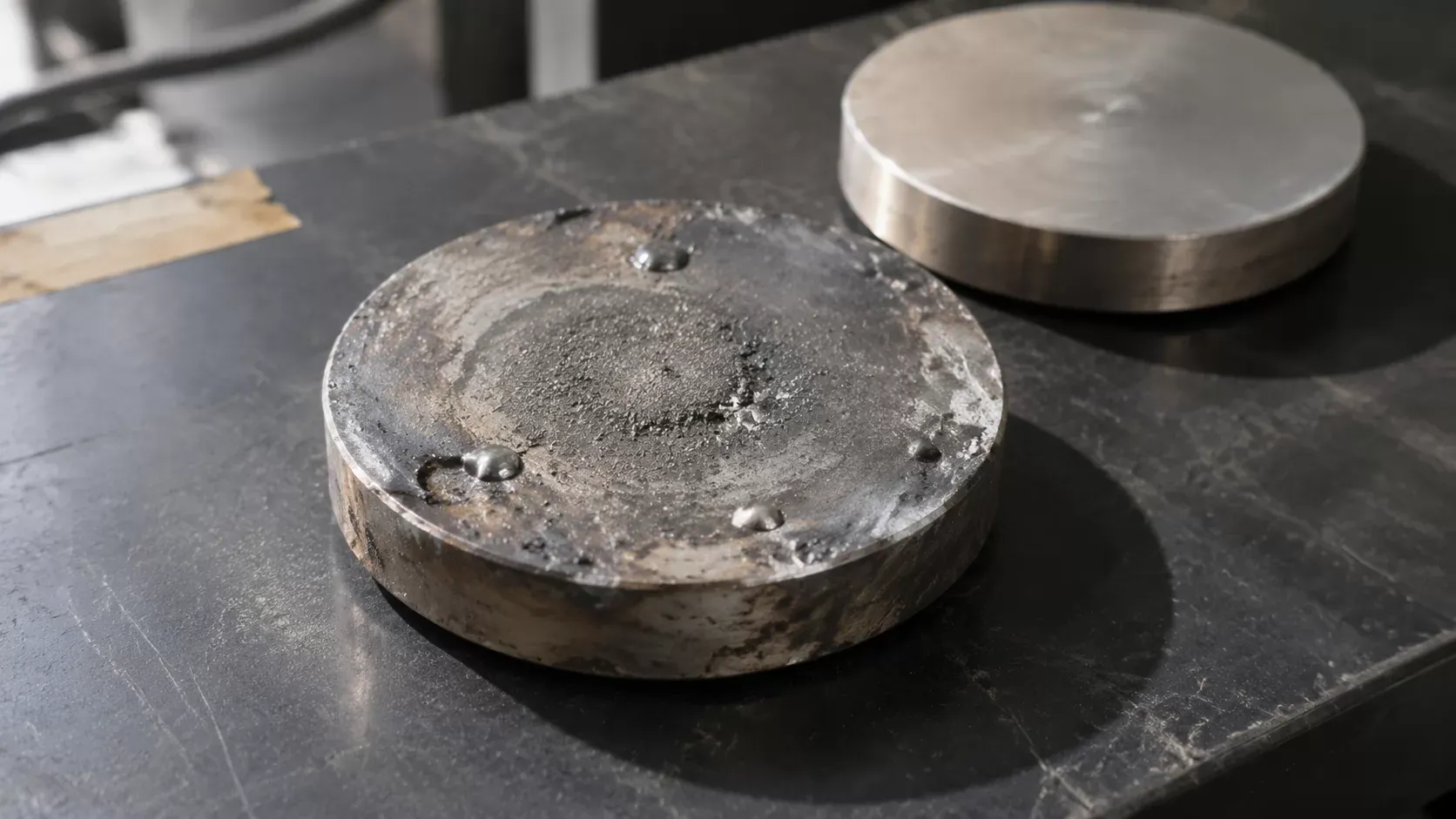
Less erosion also helps the insulation. Copper vapour and spatter condense on the metal shield inside the envelope. Heavy deposits can roughen the shield and reduce the insulation level of the interrupter. Lower spatter keeps the shield cleaner across the service life.
Gettering and post-zero dielectric recovery
A getter is a material that chemically binds stray gas molecules and removes them from a vacuum. Chromium has a strong affinity for oxygen and other gases. Each break releases a small amount of gas from the contact metal, and the chromium takes it up. This helps the interrupter hold its vacuum over years and slows the gradual pressure rise that ends an interrupter's life. Other copper alloys have difficulty matching this effect.
The fourth job happens at current zero. CuCr arc vapour decays faster than pure copper vapour, so the gap regains its insulating strength sooner. Dielectric recovery is far quicker than with pure copper, the risk of restrike falls, and short-circuit breaking capability rises substantially.
CuCr Is a Powder-Metallurgy Composite, Not a Melted Alloy
Copper and chromium are almost mutually insoluble. Melted together and cooled, they would not form a uniform alloy in the way copper and zinc form brass. CuCr is therefore made by powder metallurgy with copper infiltration. Chromium powder is pressed into a porous skeleton, and molten copper is drawn into the pores to fill it. The result is a composite: chromium particles embedded in a continuous copper matrix.
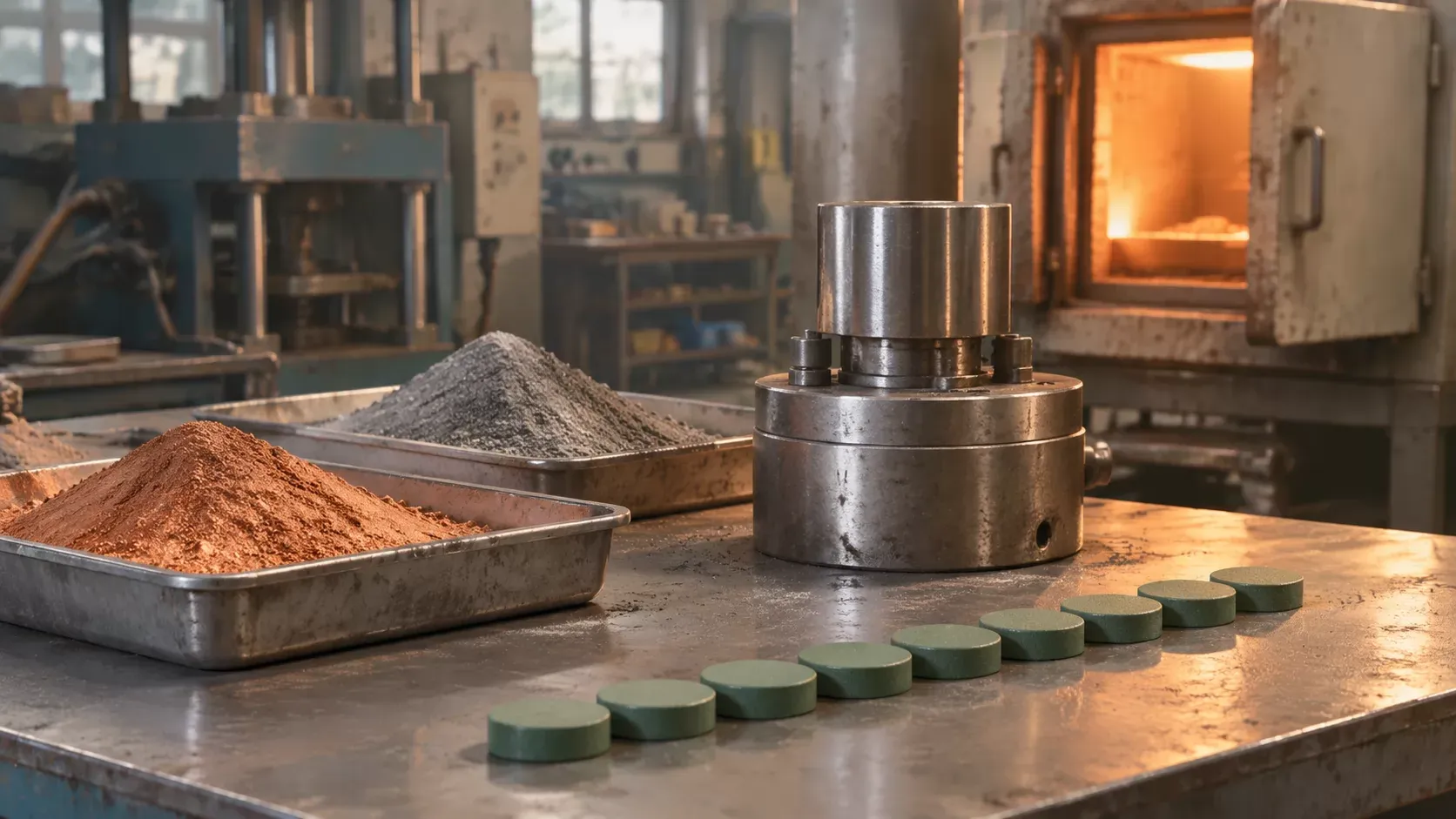
That microstructure is the source of the performance. The copper network carries current and heat. The dispersed chromium particles do the anti-welding, anti-erosion and gettering work described above. If the chromium is clumped, coarse or unevenly spread, the contact behaves partly like pure copper in some regions and like a brittle chromium-rich ceramic in others.
The process route also matters for buying. Infiltration that leaves voids lowers density. Powder that carries oxides or absorbed gas into the part creates a gas source inside a sealed vacuum. For that reason, contact material data should include density and gas content alongside conductivity. These figures show whether the composite was made properly.
CuCr25 or CuCr50: Which Ratio Fits the Rating?
CuCr25 suits breakers that carry high continuous current and see few faults, typically 1250 A and 2000 A ratings. CuCr40 and CuCr50 suit frequent short circuits, high breaking capacity and 40.5 kV equipment. Adding chromium strengthens anti-welding and erosion resistance. The cost is lower conductivity and a slightly higher chopping current.
A few points of chromium content change behaviour in both directions, so CuCr25 and CuCr50 contact properties are best read as a trade-off rather than a ranking:
| Parameter | CuCr25 | CuCr40 / CuCr50 |
|---|---|---|
| Chromium content | 25% | 40% to 50% |
| Electrical conductivity | Higher | Lower |
| Chopping current | Lower | Slightly higher |
| Erosion and welding resistance | Good | Stronger |
| Typical duty | 1250 A / 2000 A continuous, few faults | Frequent faults, high breaking capacity, 40.5 kV |
For a 12 kV feeder breaker carrying steady load with occasional faults, CuCr25 is usually the sensible choice. Higher chromium is justified when fault frequency or breaking current is what wears out the contacts.
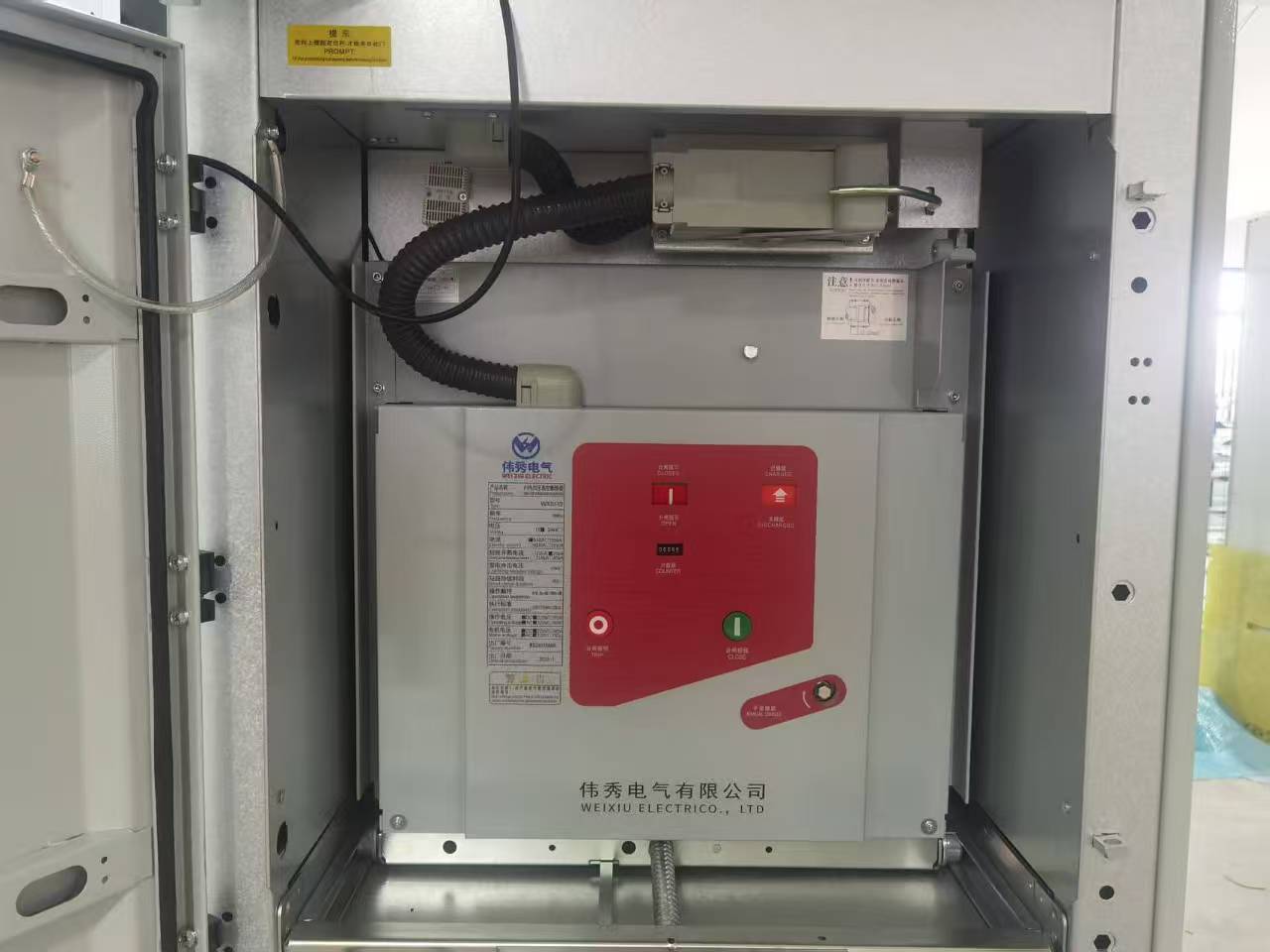
Chopping current is the factor buyers most often miss. Current chopping is the vacuum arc going out abruptly before the current reaches its natural zero. The arc becomes unstable at low current and collapses. In an inductive circuit, a sudden drop in current produces an overvoltage, and the larger the chopped current, the larger the surge. This is most relevant when switching unloaded or lightly loaded transformers and motors, especially motors stalled or starting. If a high-chromium grade is specified for a motor or transformer feeder, check whether surge protection such as surge arresters or RC snubbers is part of the design.
Mistakes That Lead to the Wrong Interrupter
The first mistake is treating CuCr as a melted alloy and judging it by alloy logic. It is a composite. Two contacts both labelled CuCr25 can perform differently depending on particle size, dispersion and density. A grade name without process and density data is only half a specification.
The second is assuming more chromium is always better. CuCr50 resists welding and erosion more strongly. It also conducts worse and chops at slightly higher current. On a high-current feeder that rarely faults, it adds heating and surge risk without a matching benefit.
The third is choosing pure copper, or a low-chromium contact, because conductivity is the priority. Conductivity matters for continuous current. The arcing face, though, exists to break faults, and pure copper is unsuitable for short-circuit interruption in a medium-voltage vacuum breaker. Conduction is handled by the rods and terminals.
The fourth is assuming the rating settles the question once the voltage and breaking current match. A rating is the result of a type test on one specific interrupter design: contact material, contact geometry such as axial or transverse magnetic field, gap and shield together. Change any of these and the test result no longer applies. Matching the label alone is not enough.
Vacuum Interrupter Contact Material Is the First Line on Your Checklist
When comparing quotes, start with the stated CuCr grade and check it against the duty: continuous current, breaking current, voltage class and the loads being switched. Then check the type-test evidence behind the rating. The same two questions apply to a quote from Weisho Electric as to any other switchgear supplier.
For the rating, the documents to request are type-test reports to IEC 62271-100 (high-voltage AC circuit breakers) and IEC 62271-1 (common specifications for high-voltage switchgear and controlgear). Where a North American specification applies, ask for IEEE C37.04 and IEEE C37.09. For units made for or in China, GB/T 1984 is the national circuit-breaker standard. Reports should name the interrupter model, not only the breaker frame. For the contact material itself, request data sheets covering conductivity, density and gas content.
Several signs suggest a quote needs a second look:
No contact grade stated anywhere in the offer or datasheet.
A grade that does not fit the duty, such as CuCr25 offered for 40.5 kV high-fault service.
Type-test reports issued for a different interrupter model or a superseded design.
Material data missing density or gas content.
A single gap may simply be a paperwork omission. Two or more together usually mean the claimed rating cannot be traced to evidence.
FAQ
Can pure copper be used anywhere in a vacuum circuit breaker?
Yes, but only in parts that never arc. Conductive rods, terminals and flexible connections are commonly copper because conductivity is their only job. The arcing faces inside the interrupter need CuCr or a similar composite.
Does a higher chromium content always mean longer electrical life?
No. It means longer life under frequent fault breaking, because erosion and welding resistance improve. Under mostly continuous load, the lower conductivity of CuCr40 or CuCr50 adds heat, and the slightly higher chopping current can raise switching surges.
Why use CuCr contacts in vacuum interrupters if they conduct worse than copper?
Because a contact that cannot open after a fault has failed, however well it conducts. CuCr resists welding, sheds less metal, helps hold the vacuum and recovers voltage strength faster after current zero. The conductivity loss is handled in the design of the current path.
How can I confirm which CuCr grade a quoted interrupter uses?
Ask for the material data sheet and a type-test report that names the interrupter model. The grade should appear in writing, with conductivity, density and gas content figures. If the supplier will only state it verbally, treat it as unconfirmed.
The Trade-Off Holds Until the Duty Changes
CuCr gives up conductivity in exchange for a contact that can still open after a fault. This guide covers grade selection and documentation for standard medium-voltage AC vacuum breakers. Generator circuit breakers, capacitor bank switching, DC interruption and special contact compositions involve different limits, and the interrupter maker's application data should take precedence over these general rules.