A tree limb brushing an 11 kV conductor in high wind usually leaves no lasting damage. A protective device that cannot reclose still turns that brief contact into a long outage. An RTU-integrated auto recloser trips, waits, tries again, and reports each step to the control room from the pole top. The sections below follow the order in which sourcing decisions usually get made.
What Is an RTU Integrated Auto Recloser?
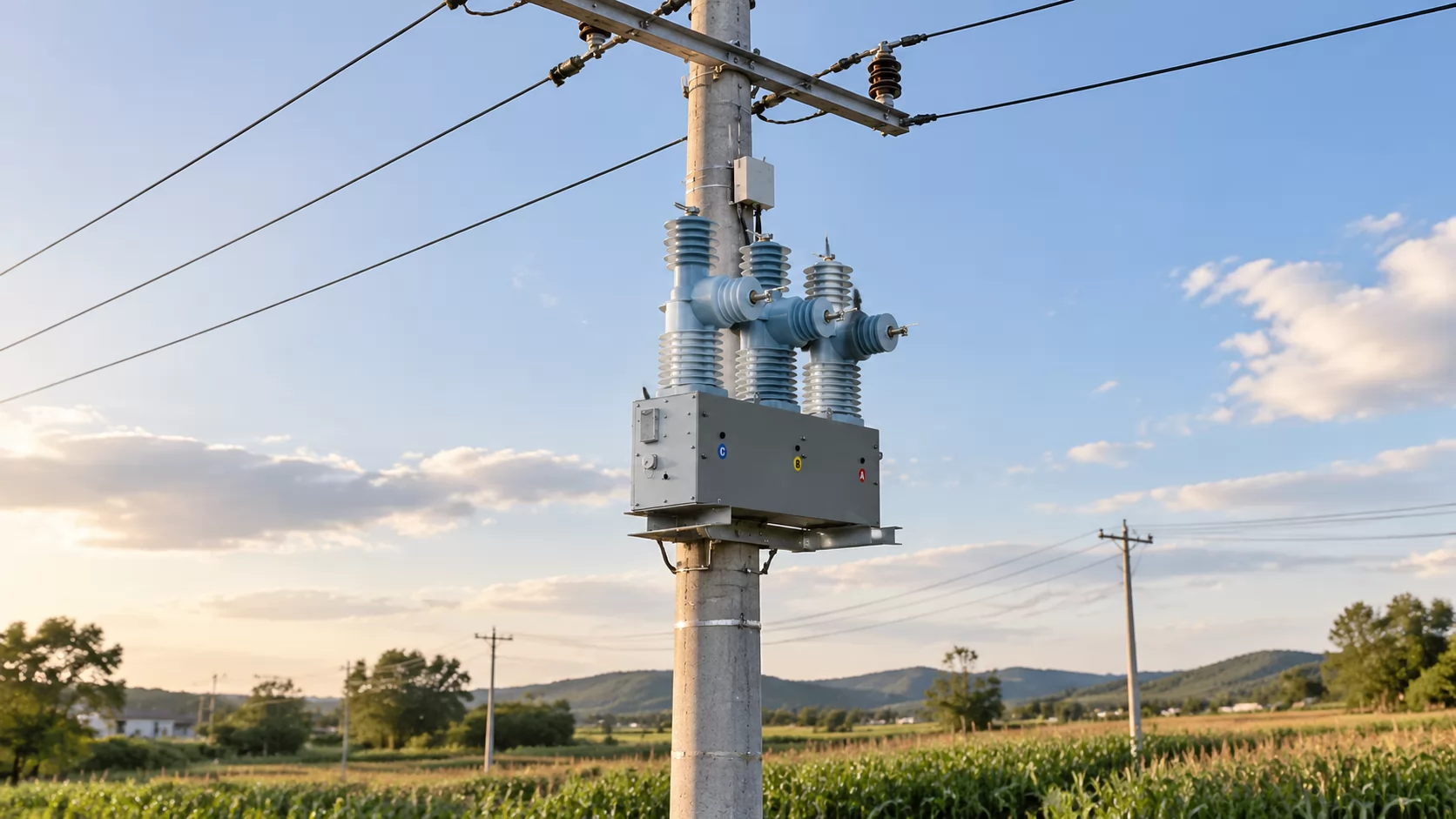
An RTU-integrated auto recloser is a pole-mounted vacuum circuit breaker whose control box holds both the protection controller and a remote terminal unit. One outdoor assembly clears temporary faults by reclosing and also exchanges data and commands with the utility's control system. The trade-off is that one supplier now covers switchgear, protection, and communications.
Remote Terminal Unit Defined
RTU stands for remote terminal unit. A remote terminal unit is a field device that gathers measurements and status at a remote site and carries out commands sent from a supervisory control and data acquisition (SCADA) master station. On a recloser it reads phase currents, voltages and switch position, then passes them upstream. It also executes remote open and close orders.
Utility specifications often group these duties as the "four remotes." Telemetry is measured values such as current and voltage. Tele-indication is status: breaker open or closed, lockout, battery alarm, door open. Telecontrol is remote switching. Tele-adjustment is remote changes to settings, such as switching to an alternate protection group during storm season. Some tenders score each of the four separately, so check which ones the utility expects before you quote.
One Package at the Pole
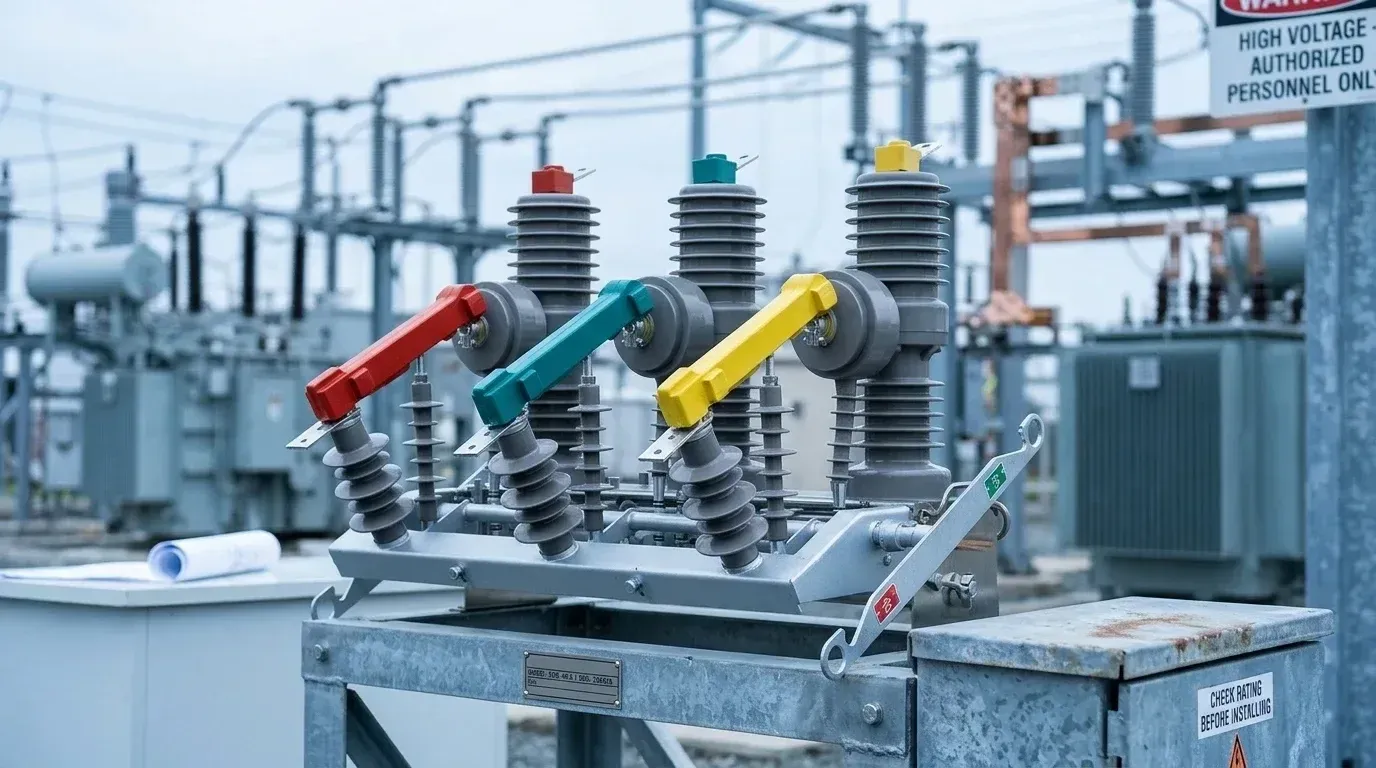
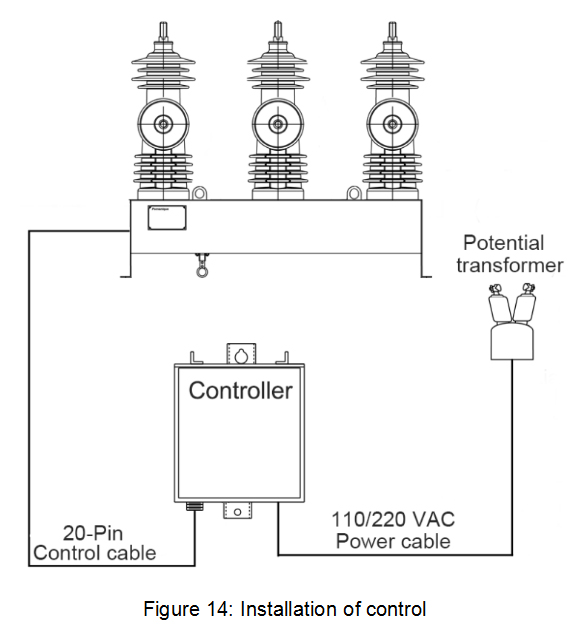
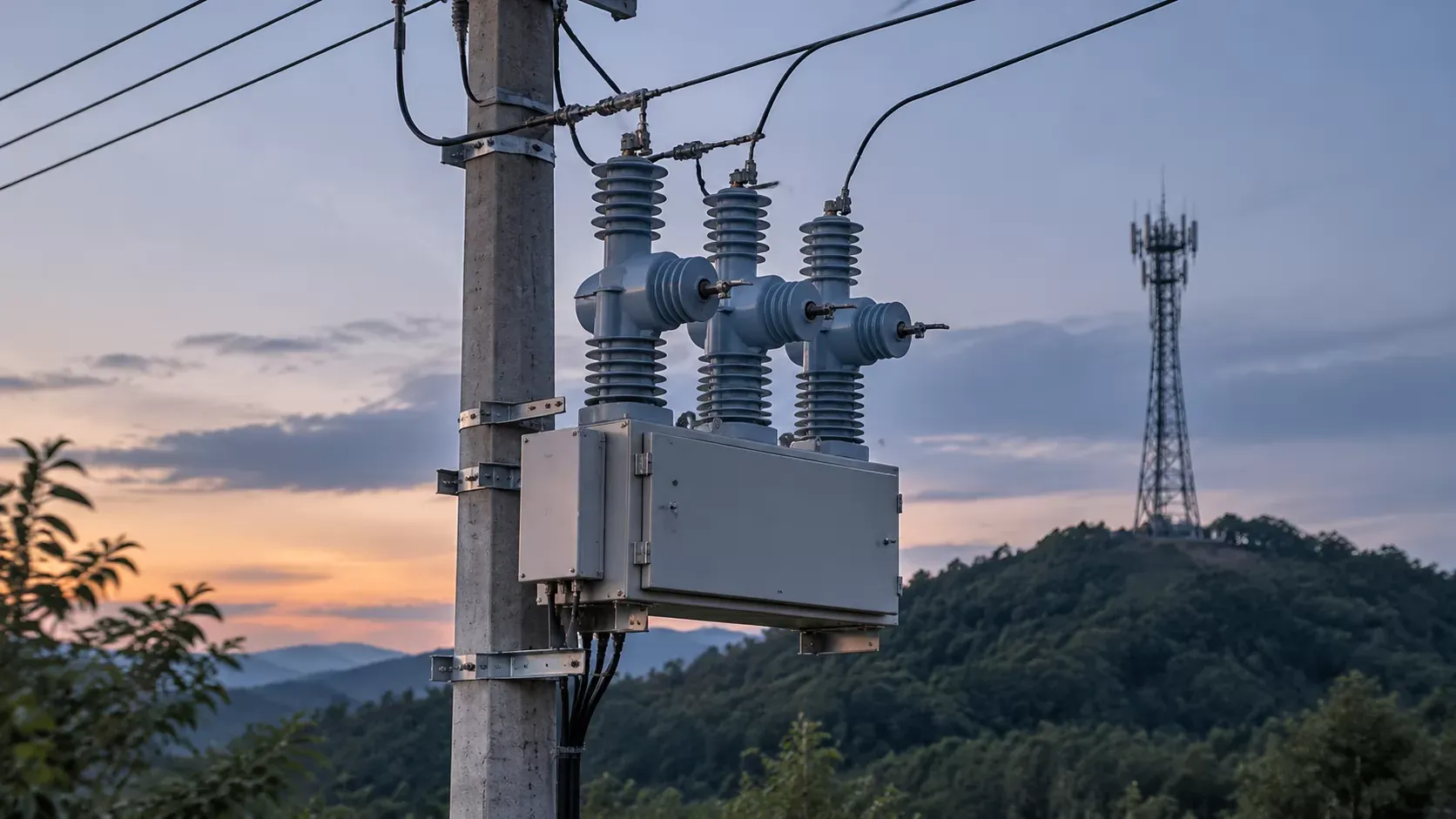
Three parts work together. The tank holds the vacuum interrupters, the current sensors and often voltage sensors, and is mounted near the crossarm. A multi-core control cable runs down to a control box lower on the pole. Inside that box sit the protection controller, which decides when to trip and reclose, and the RTU, which talks to SCADA.
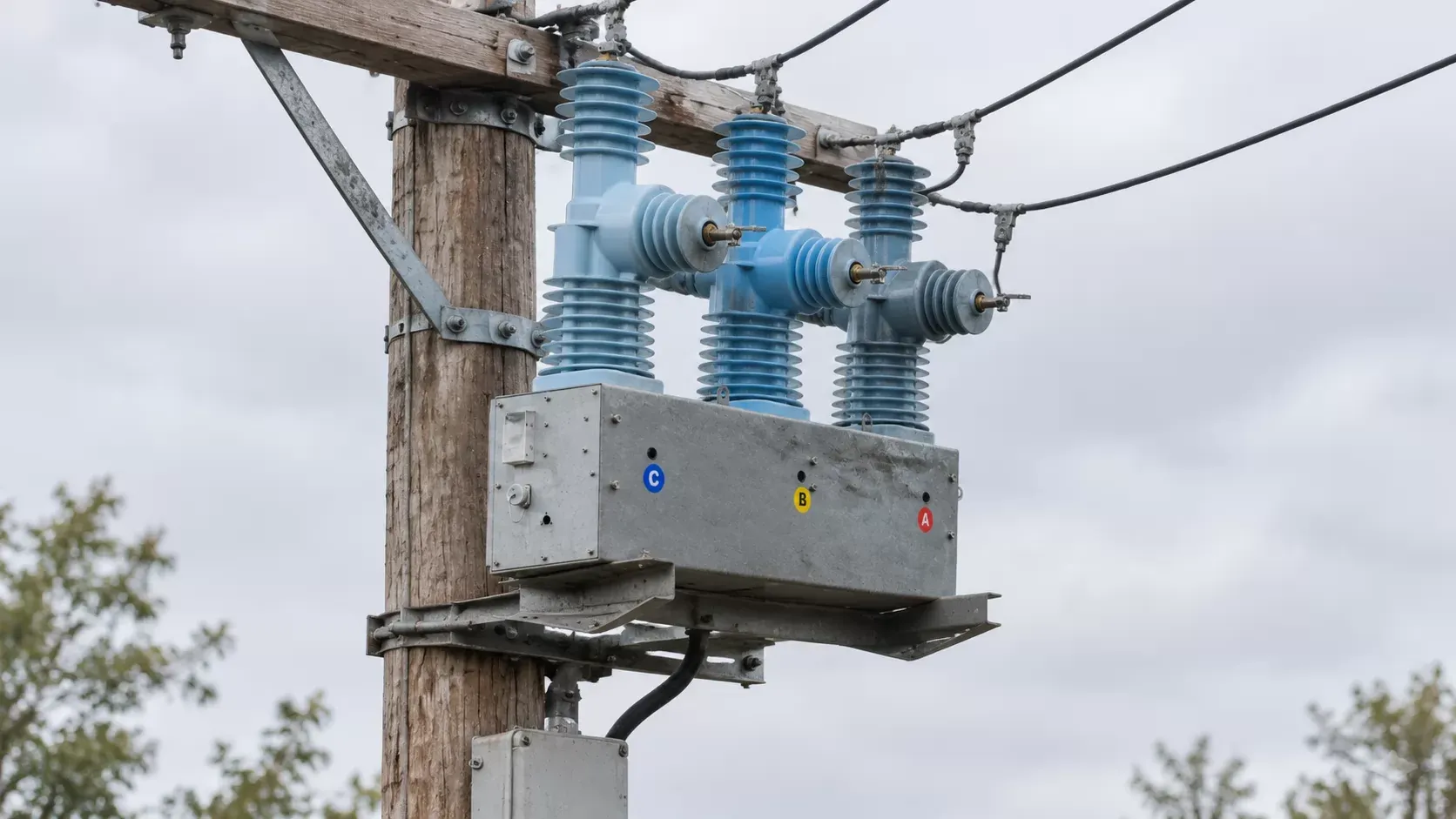
In older designs, the RTU was a separate cabinet wired to the relay through hardwired I/O or a serial link. Every extra interface added terminals that could corrode, a second power supply, and a point map that had to match on both sides. An integrated unit removes the second enclosure and most of the field wiring. It also removes the arguments between two vendors over whose device dropped a status bit. But you lose the option to swap the RTU independently, so firmware support from that one supplier matters more.
Pole-Top, Not Cabinet-Mounted
An outdoor recloser control box sits unsheltered on an overhead line for years. It typically carries an IP65 rating under IEC 60529, meaning dust-tight and protected against water jets, or NEMA Type 3R under NEMA 250, which covers rain, sleet and external ice. It also needs UV-stable materials, a wide operating temperature range and surge protection on power and communication ports, because lightning-induced surges on overhead lines are routine. A built-in lithium battery keeps the controller and RTU alive when line power is lost.
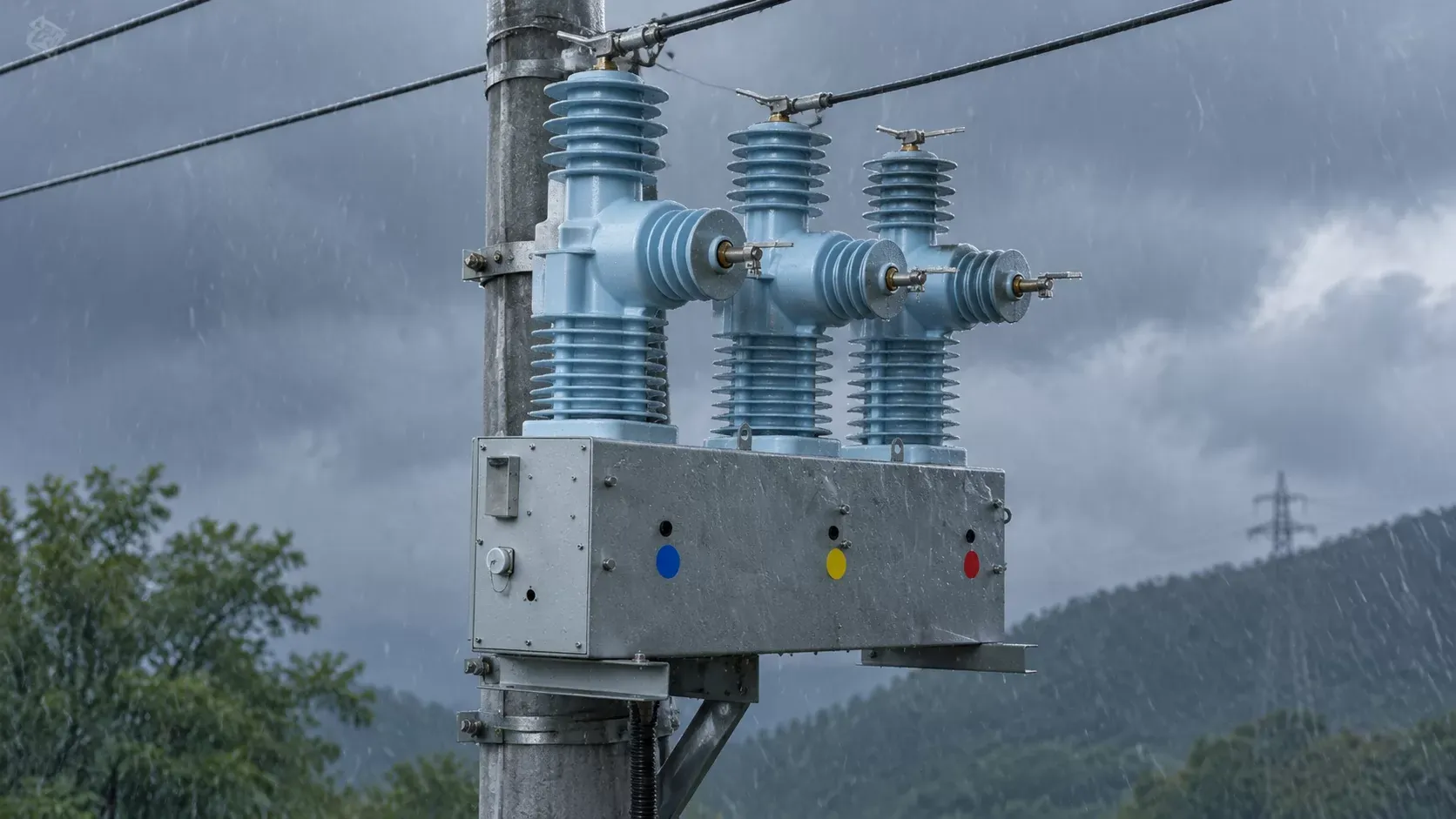
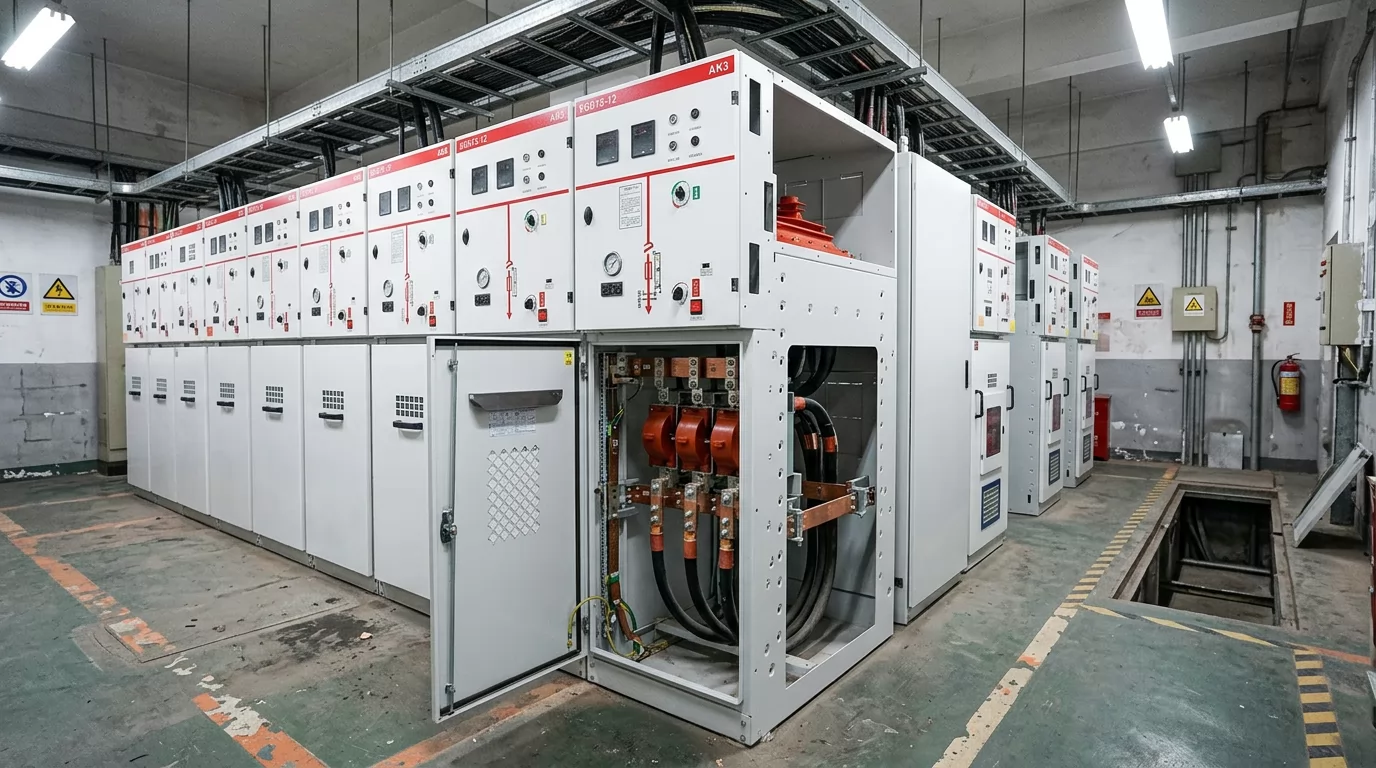
Indoor RTUs for switchgear panels, distribution substations and ring main units (RMUs) are a different product class. If your project is an indoor switchgear or RMU tender, you need a cabinet-mounted RTU, not a pole-top recloser control.
Short Glossary
Dead time — the pause between a trip and the next reclose attempt, giving a temporary fault time to clear.
Lockout — the final open state after all reclose attempts fail, which needs manual or remote reset.
Sectionalizer — a device that counts upstream interruptions and opens while the line is dead, without breaking fault current.
SCADA — the control-room system that monitors and operates field devices across the network.
DNP3 — Distributed Network Protocol 3, a utility telemetry protocol widely used in North America and parts of Asia-Pacific.
IEC 60870-5-104 — the TCP/IP version of the IEC 60870-5 telecontrol protocol, common in Europe, China and many other markets.
FPI (fault passage indicator) — a function or device that flags whether fault current passed a given point on the feeder.
Loop automation — logic that isolates a faulted section and restores supply from an alternate source through tie points.
How Does an Auto Recloser with RTU Work?
An auto recloser with an RTU detects fault current, opens and then recloses after a set dead time, repeating until the fault clears or the sequence ends in lockout. The RTU timestamps each step and reports it to SCADA. The control room therefore sees the event as it happens instead of waiting for a customer call.
The sequence below shows a typical fault cycle. The split between controller duties and RTU duties is what makes an auto recloser with remote monitoring worth the extra cost over a stand-alone unit.
| STEP | CONTROLLER ACTION | RTU REPORT | TYPICALLY ADJUSTABLE |
|---|---|---|---|
| Fault detected | Compares current to pickup setting | Pickup alarm, fault current magnitude | Yes, pickup level |
| Trip | Opens on fast or delayed curve | Trip event with timestamp | Yes, curve selection |
| Dead time | Waits before reclose | Open status, recloser cycle in progress | Yes, per shot |
| Reclose attempt | Closes interrupters | Close event, shot number | Yes, number of shots |
| Repeat | Trips again if fault persists | Each trip and close logged | Yes, fast and slow mix |
| Lockout or restore | Stays open or resets counter | Lockout alarm or successful reclose | Yes, reset time |
| Event report | Stores fault record | Sent over DNP3 or IEC 60870-5-104 | Yes, point mapping |
Nearly every step is configurable. That is why settings files and configuration software deserve as much attention in your evaluation as the tank itself.
Feeder Type Decides First
The catalogue tempts you to start with voltage and current. Start with the feeder instead. Its layout decides the voltage class, the protection functions and how much communication the unit needs. This product belongs on overhead lines. Underground cable feeders served by RMUs fall outside its role, and cable faults are rarely temporary anyway, so reclosing onto them is usually blocked.
Three Overhead Feeder Cases
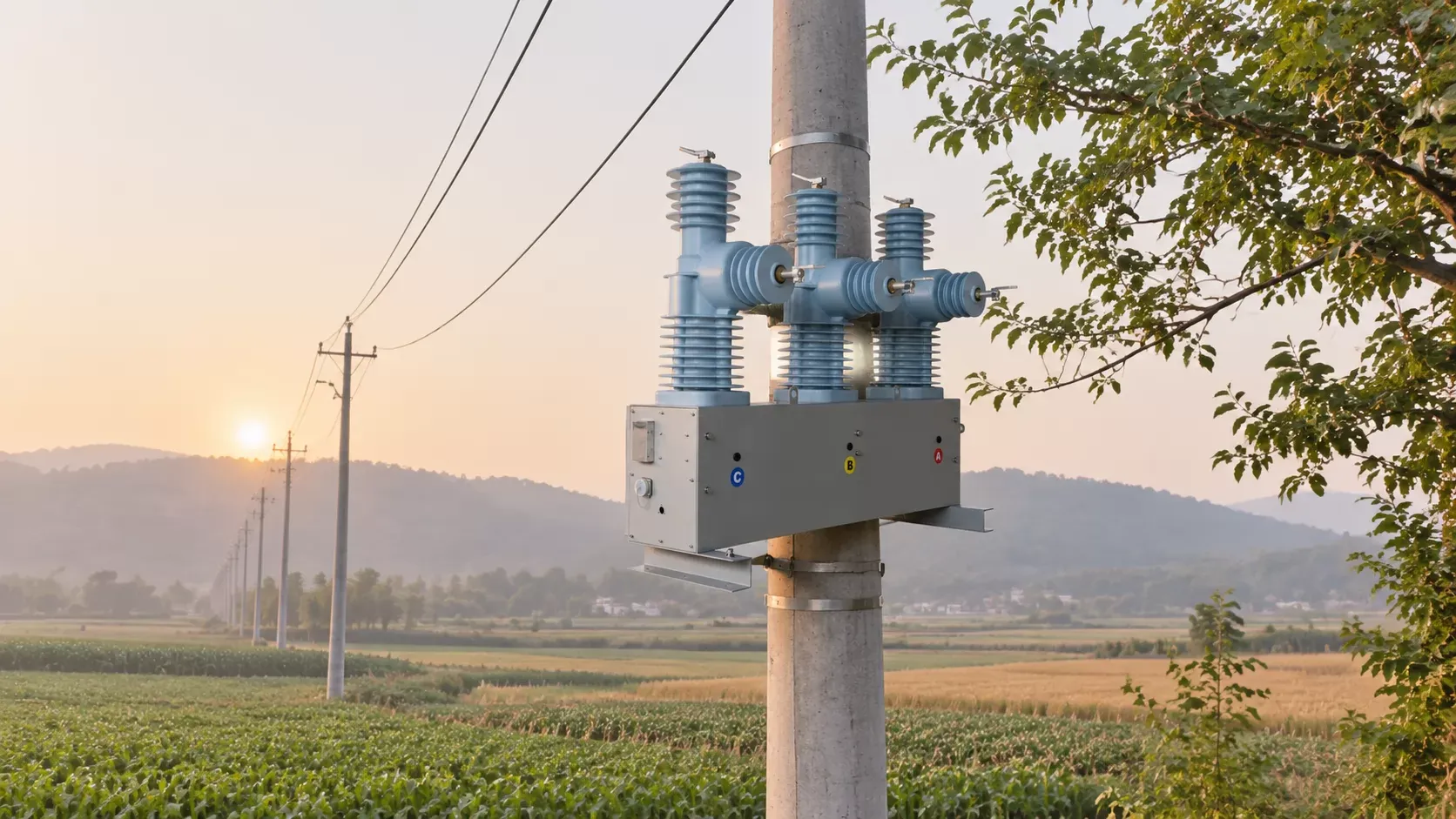
A distributor serving a rural utility with long radial lines needs reclosing above all, because exposed spans through farmland and forest see frequent transient faults. The second priority is FPI data sent over SCADA. When a line locks out, knowing which side of the recloser the fault sat on cuts patrol time across kilometres of remote line. Look for reliable cellular communication and a battery that rides through long outages.
An importer supplying a utility with overhead rings or ties between feeders faces a different job. Reclosers sit at sectioning points and at a normally open tie point, and loop automation handles feeder fault isolation. The faulted section is isolated and healthy sections are restored from the adjacent feeder. Here the deciding questions are peer-to-peer or SCADA-driven logic, communication latency, and whether the supplier has delivered loop schemes before.
On overhead feeders with solar farms or other distributed generation, fault current can flow from both directions. The unit needs directional overcurrent protection and voltage-check or synchronism-check closing, so it never recloses onto a line still energised by an inverter or generator. Ask whether these functions are standard or licensed options.
Pole Mounted Recloser Ratings
When you compare a pole mounted recloser for MV distribution feeders across suppliers, most quotes fall within similar bands. The table gives common ranges seen in public product literature and standards. Treat them as orientation, not as a specification.
| PARAMETER | TYPICAL VALUE |
|---|---|
| Rated voltage class (kV) | Roughly 12, 15.5, 27 or 38 |
| Class used on 11 kV networks | Usually 12 or 15.5 kV |
| Class used on 33 kV networks | Usually 38 kV (36 kV in some IEC tenders) |
| Continuous current (A) | Typically 400 to 800 |
| Short-circuit breaking (kA) | Typically 12.5 to 16 |
| Interrupting medium | Vacuum |
| Insulation medium | Solid dielectric (epoxy) or SF6-free gas; older SF6 designs |
| Mechanical operations | Typically about 10,000 |
| Control box enclosure | IP65 / NEMA Type 3R |
| Operating temperature (°C) | Commonly about −40 to +55; confirm per model |
| Surge protection | On power, I/O and communication ports |
| Control power | Line-side supply plus built-in lithium battery |
Solid dielectric, SF6-free designs are where most new tenders are heading, so make them your default unless a utility explicitly accepts SF6.
Matching Examples
A typical 11 kV overhead spur line feeding villages pairs with a 12 kV-class pole-mounted unit with a 630 A rating, cellular communication and basic overcurrent and earth-fault protection.
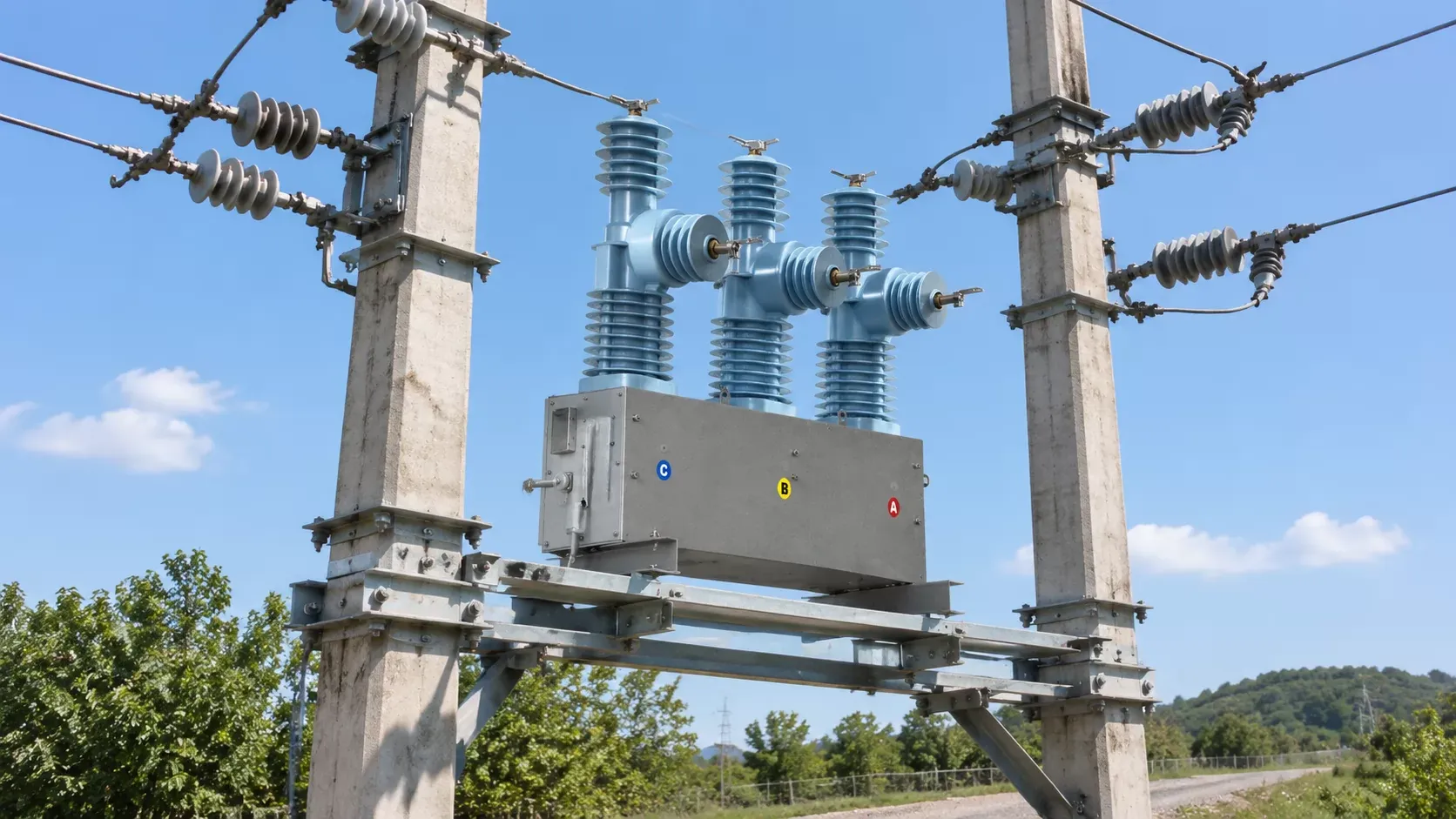
A typical 33 kV overhead tie point between two feeders is a different purchase. It needs a 38 kV-class unit with higher insulation levels. Because both sides can be live, it needs directional protection and voltage-check closing. And since loop automation depends on fast, dependable messaging, it usually needs a more resilient link such as fibre or licensed radio.
11kV and 33kV SCADA Integration
Switchgear rarely holds up a recloser project. Communications do. A protocol profile that does not match the master station, a point list delivered after the order, or a missing time-sync method can stall commissioning for weeks. For any 11kV or 33kV auto recloser, SCADA integration details belong in the RFQ, not in the after-sales queue.
Utility Protocol Profiles
Most integrated recloser RTUs speak DNP3 and IEC 60870-5-104 natively for upstream links. Support for the others varies by supplier, so confirm it in writing or budget for a gateway.
| CRITERION | DNP3 | IEC 60870-5-101/104 | IEC 61850 | MODBUS |
|---|---|---|---|---|
| Typical use | Utility SCADA telemetry and control | Utility SCADA, telecontrol | Substation automation, some feeder schemes | Local devices, small systems |
| Transport medium | Serial or TCP/IP | 101 serial; 104 TCP/IP | Ethernet (MMS, GOOSE) | Serial RTU or TCP |
| Status on recloser RTUs | Usually native | 104 usually native; confirm 101 | Confirm or plan gateway | Confirm or plan gateway |
| Points to confirm | Point list, Secure Authentication, time sync | ASDU addresses, time sync, TLS | Conformance certificate, data model | Register map, polling rate |
If the utility runs DNP3 or IEC 104, the integrated unit should connect directly. For anything else, get the gateway into the quote.
Communication Links and Backup Power
Cellular (4G/LTE, with GPRS fallback in some regions) is the default for pole-top sites. It is cheap to deploy, but you depend on coverage and on the carrier's long-term network plans, and some 2G and 3G networks are already being switched off. Fibre suits sites where it already runs along the line; it is fast and immune to interference, though building a new fibre route only for a recloser rarely pays off. Licensed or mesh radio fits utilities that already own a radio network, and it keeps working when cellular sites lose power in a storm.
The battery decides whether the RTU can still report after the line goes dead, which is exactly when the control room needs it. Ask for three figures in writing: holdover time for the controller plus modem through an outage, capacity derating at the low end of the temperature range, and the recommended replacement interval. Lithium chemistries handle charging poorly below freezing. So a supplier should explain how the charger behaves in a cold climate.
Standards and Type Tests
For the recloser itself, request type test reports to IEC 62271-111 / IEEE C37.60 (the joint standard for overhead and pole-mounted reclosers). These reports cover breaking capacity, insulation levels and the mechanical operation count. For the protection functions, ask which parts of IEC 60255 the controller has been tested against.
If the utility requires IEC 61850, a vendor's statement of support is not enough. Ask for a conformance test certificate. The outdoor control box should come with an IEC 60529 IP65 report or a NEMA 250 Type 3R evaluation. The electronics need surge immunity evidence, typically to IEC 61000-4-5, and environmental temperature tests, typically to the IEC 60068-2 series.
Read the lab name on every report. A recognised third-party laboratory carries more weight than an in-house test sheet, and reports should match the exact model and rating you are quoting.
Sourcing Checklist and Pitfalls
Score suppliers in order of risk. Type test evidence comes first, because a missing report can disqualify you from a tender outright. Outdoor enclosure rating, temperature range and lightning protection evidence come next. Then comes the protocol point list, which should be in your hands before the order rather than after delivery. After that, review configuration software and licensing: is the tool free, per-seat, or tied to a dongle? Battery supply, spare parts and firmware update policy follow. Packing suited to sea freight and the option to witness a factory acceptance test (FAT) close the list. A FAT is a supplier-site test where you confirm function and communications before shipment.
If the tender lists only the network voltage, then confirm the insulation level and voltage class the utility actually specifies.
If the utility's master station uses neither DNP3 nor IEC 60870-5-104, then price a protocol gateway into the quote.
If the feeder has solar or other generation, then require directional protection and voltage-check closing as standard functions.
If sites see hard winters, then demand battery holdover figures at the minimum rated temperature.
If you resell under your own line, then secure configuration software rights and a firmware support commitment in the contract.
The common mistakes repeat. Buying on voltage alone ignores breaking capacity, protection functions and communications. Quoting a pole-mounted outdoor unit into an indoor switchgear or RMU tender, or the reverse, gets a bid rejected on page one. Ignoring the utility's protocol profile leads to months of gateway work. Undersized batteries, or chemistries that fail in the cold, leave the control room blind during exactly the outages that matter. Locked or proprietary configuration tools tie every future settings change to one vendor. And without local commissioning support, the first site visit can become a long-distance troubleshooting call.
FAQ
Can an existing recloser be upgraded with a separate RTU?
Yes, often. A separate RTU can connect through hardwired I/O or the controller's serial port. The limits are the data the old controller exposes, which is often only status and basic commands, and the extra enclosure, power supply and wiring you add at the pole.
Can this RTU be used in switchgear or a ring main unit?
No. The RTU is built into the recloser control box for pole mounting. Indoor switchgear, distribution rooms and RMUs need a cabinet-mounted RTU designed for panel installation.
How many reclose attempts are typical before lockout?
Usually three reclosures, giving four trips to lockout. A common pattern uses fast trips first to clear transient faults, then delayed trips to let downstream fuses operate. The count is configurable because utilities set it by feeder type and coordination needs.
Does the RTU need its own SCADA licence or gateway?
Only when the master station does not speak DNP3 or IEC 60870-5-104, or needs IEC 61850 or Modbus. In that case a front-end gateway or protocol converter is required. First, ask the utility for its protocol profile and point list template.