"Just spec vacuum; SF6 circuit breaker is getting phased out anyway." That line misses one fact: no vacuum breaker is broadly available for American 230kV or 345kV service today. On the SF6 vs vacuum circuit breaker for transmission substations question, the verdict is short. SF6 dead tank still covers most orders at these voltages. Type-tested SF6-free gas designs belong on the shortlist wherever state rules or utility policy require them.
Are Vacuum Circuit Breakers Available for 230kV and 345kV?
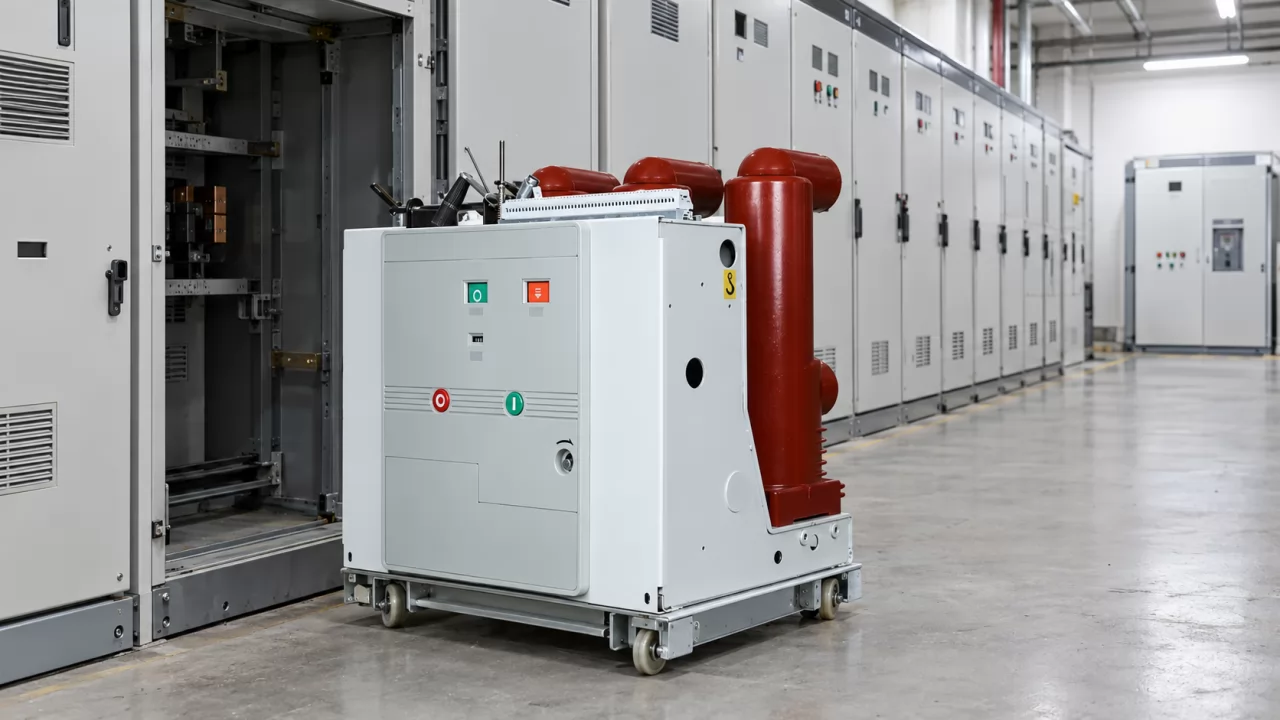
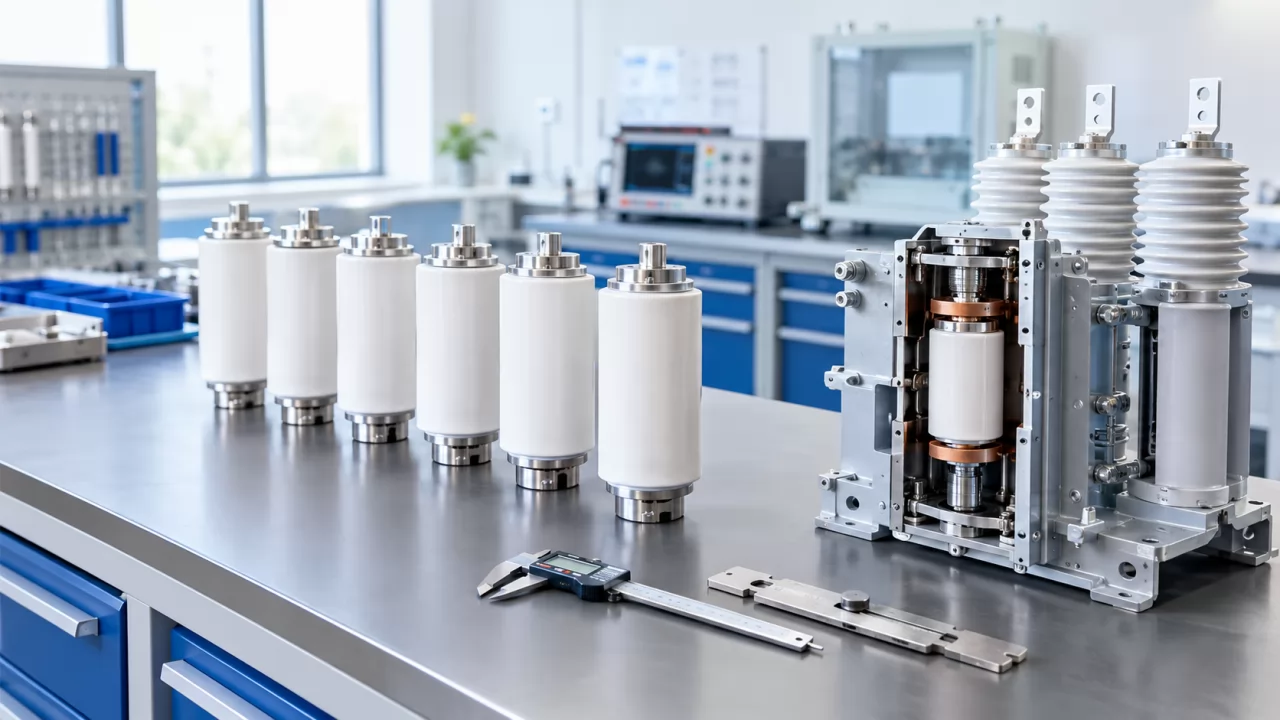
Not in any practical sense for US projects. A vacuum circuit breaker interrupts current inside a sealed, evacuated ceramic bottle. These breakers are proven at distribution voltages and at the lower end of transmission, but commercial products generally stop around the 145kV class. No broadly available 245kV or 362kV vacuum breaker is offered for the American market.
This is the first elimination check, and it removes a whole technology family before anyone opens a price sheet. The confusion is understandable. Medium-voltage switchgear went from oil and SF6 to vacuum decades ago, and many engineers assume transmission will follow the same path on the same timeline. It is moving that way, but slowly.
Where vacuum interruption stops today
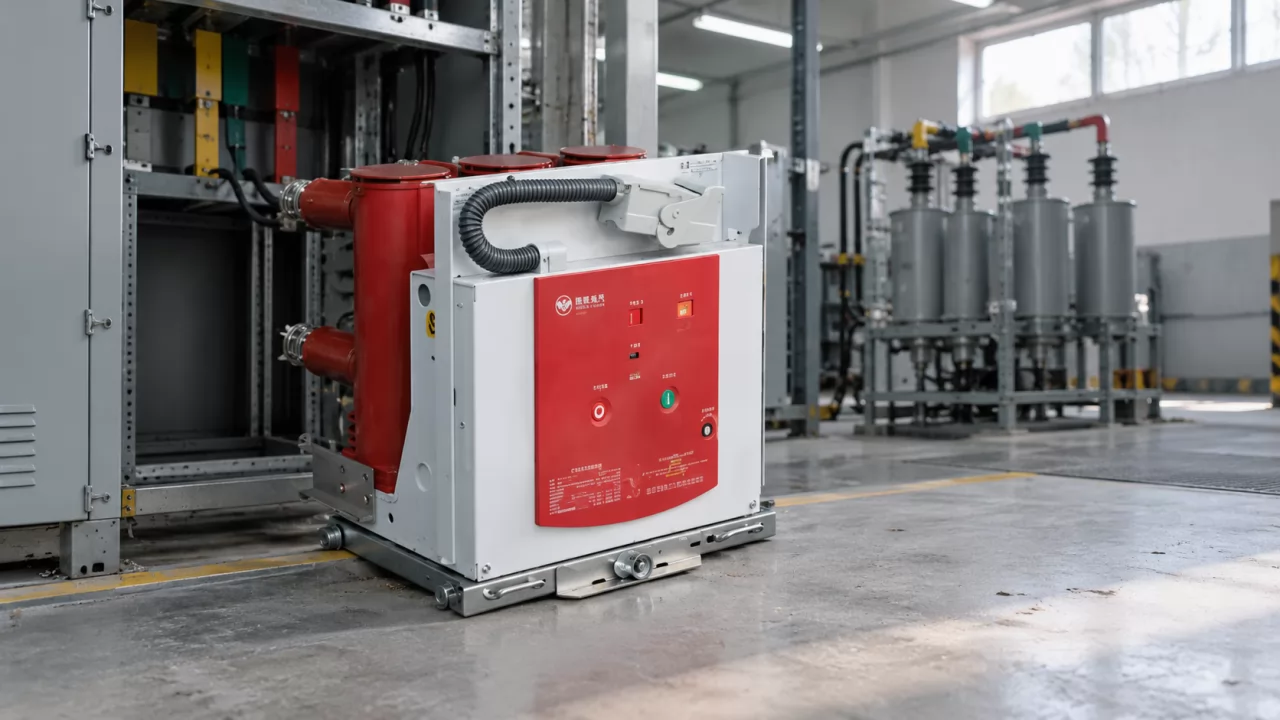
Vacuum dominates the medium-voltage market, roughly up to 38kV in US practice, and is common at 72.5kV. Above that, the offering narrows. Several major manufacturers sell vacuum-interrupter breakers insulated with clean air (dry synthetic air) at the 72.5kV and 145kV classes, and a handful of products and prototypes sit slightly above 145kV, mainly in Asian and European markets. None of them is a standard catalog item at 245kV or 362kV with an established US service record.
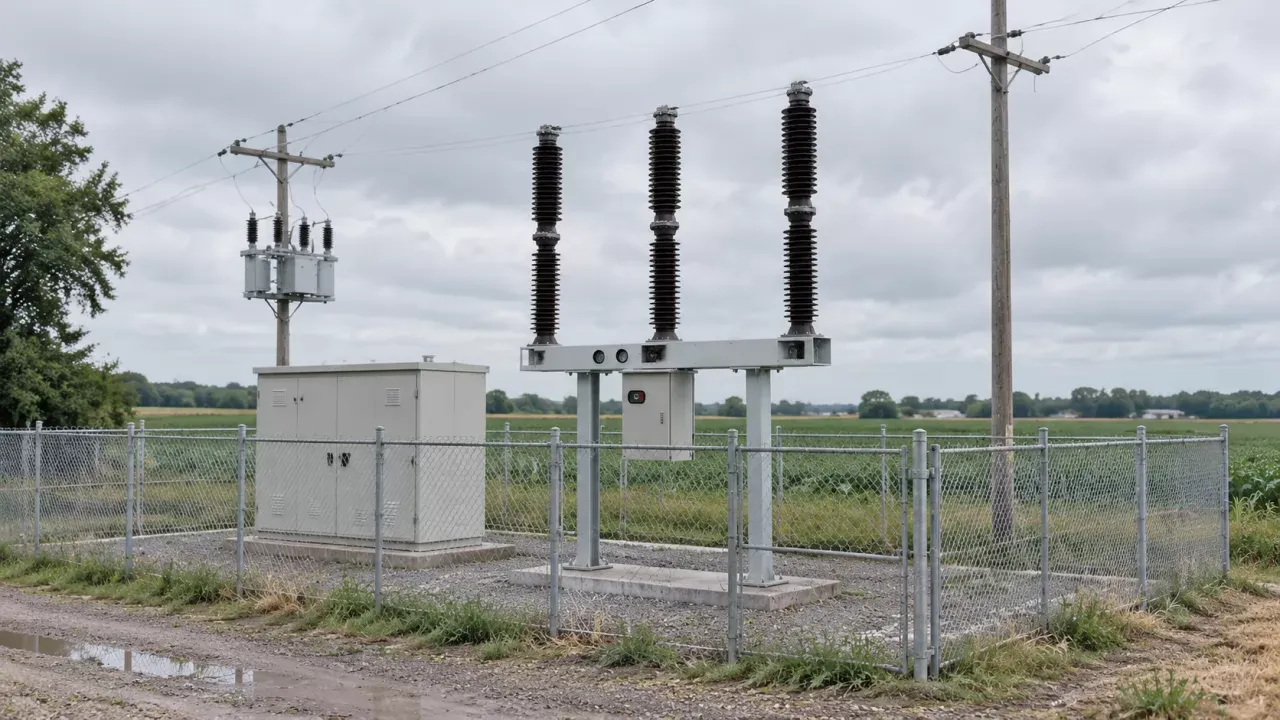
So a 230kV bay today means a gas-interrupting breaker. The open question is which gas.
Why higher voltages are hard for vacuum
A single vacuum interrupter withstands voltage very well across a short contact gap, but that withstand does not rise in proportion to gap length. Past a certain point, a longer gap gains little. To reach 245kV or 362kV, a design has to put several interrupters in series per pole.
Series breaks bring their own engineering load. Voltage has to be shared evenly across each break, which usually means grading capacitors. The mechanism has to open all breaks in close synchronism. Each break needs enough dielectric withstand to survive the recovery voltage on its own share, with margin for uneven distribution. Each of these is solvable. Together they push cost, size and mechanical complexity up sharply above roughly 145kV, which is why the market has stalled there while manufacturers develop higher-rated interrupters.
Vacuum still has a second hurdle: the external insulation. Clean air insulates less well than SF6 at the same pressure, so tanks or porcelain columns get larger or run at higher fill pressure.
Reading "vacuum" claims on 230kV quotations
If a 230kV quotation mentions vacuum, read it carefully. Sometimes "vacuum" refers to an adjacent product: a 69kV or 115kV bay in the same substation, a circuit switcher, or a load-break device rather than a fault-interrupting breaker. Sometimes it describes a pilot unit placed with a utility under a research agreement.
Ask two direct questions. Is this unit commercially released at the exact voltage, current and interrupting rating quoted? And do complete type-test reports exist for that exact rating, issued by an independent high-power laboratory? If either answer is vague, treat the offer as a development project, with the schedule and warranty risk that implies.
Interrupting Rating and TRV: The Checks That Rule Designs Out
Ratings eliminate more candidates than gas choice does. A breaker that cannot clear your available fault current, or that has not been tested against the recovery voltage your system imposes, is off the list regardless of its global warming potential. Confirm these values before comparing insulation media.
The baseline comes from IEEE C37.06, the IEEE standard that lists preferred ratings for AC high-voltage circuit breakers rated on a symmetrical current basis. The table shows the values most often specified for the two classes; confirm each against the current edition and your system studies.
| PARAMETER | 230KV CLASS | 345KV CLASS |
|---|---|---|
| Rated maximum voltage (kV) | 245 | 362 |
| Lightning impulse withstand, BIL (kV) | Typically 900 or 1050 | Typically 1300 |
| Continuous current (A) | Commonly 2000–4000 | Commonly 2000–4000 |
| Symmetrical interrupting current (kA) | Commonly 40, 50 or 63 | Commonly 40, 50 or 63 |
| Rated interrupting time (cycles) | Typically 2–3 | Typically 2–3 |
| Power frequency (Hz) | 60 | 60 |
| Usual US configuration | Dead tank | Dead tank |
The interrupting current row usually narrows the field fastest: at 63kA, especially at 362kV, the number of fully type-tested designs drops sharply compared with 40kA.
345kV SF6 circuit breaker duties that SF6-free designs must match
A 345kV SF6 circuit breaker from an established line has decades of test coverage across every switching duty in the IEEE C37.04 rating structure. An SF6-free alternative has to show the same coverage, duty by duty, at your exact rating.
Start with transient recovery voltage. Transient recovery voltage (TRV) is the voltage that appears across the breaker contacts immediately after current zero, as the two sides of the circuit settle to their new states. Its peak and rate of rise decide whether the gap re-ignites. Short-line fault duty is the harshest variant: a fault a short distance down the line produces a fast, sawtooth-shaped TRV that tests the interrupter's thermal recovery. Gases with lower dielectric and thermal performance than SF6 tend to struggle most here.
Then check out-of-phase switching, which imposes roughly double the normal recovery voltage, and the capacitive switching class. Line-charging and capacitor-bank switching are rated by restrike probability (class C1 or C2 in IEEE and IEC terms). A breaker for a bay that switches shunt capacitor banks several times a day needs C2 evidence, not a C1 rating with an assurance letter.
At 362kV and 63kA, type-tested SF6-free options thin out quickly. Some manufacturers cover 362kV at 50kA or 40kA first and extend to 63kA later, so ask where each product sits on that path.
Ambient temperature and altitude limits
SF6 liquefies at low temperature, and the threshold depends on fill pressure. At typical breaker pressures, liquefaction begins somewhere around minus 30°C, give or take a few degrees. Below that point, density drops, lockout alarms trip, and interrupting capability falls. Cold-climate sites in the northern US typically handle this with tank heaters, or with SF6 mixed with nitrogen or CF4, which lowers the liquefaction point but adds its own handling and, for CF4, its own emissions concern.
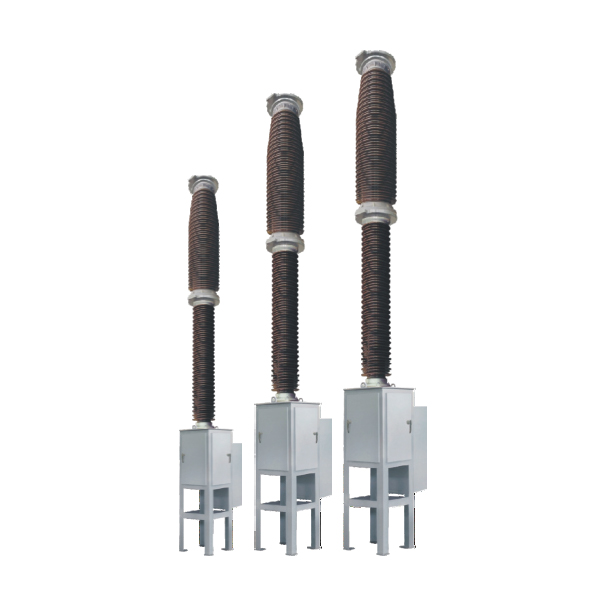
CO2-based gases usually tolerate cold better, which can make them attractive on northern projects. Fluoronitrile mixtures depend heavily on the ratio of fluorinated component to carrier gas. Check the minimum ambient rating on the nameplate, not the brochure.
Altitude is a separate issue and affects external insulation. Above roughly 1000 m, thinner air reduces flashover strength across bushings and porcelain, so the design needs correction factors applied to external withstand. Mountain-west sites should state elevation in the RFQ rather than leave it to the bid engineer.
SF6 Greenhouse Gas Regulations as a Purchasing Filter
Jurisdiction can remove SF6 from the shortlist before price comes up. Sulfur hexafluoride (SF6) is a synthetic gas with a global warming potential more than 20,000 times that of CO2 over a 100-year horizon, per the IPCC assessment reports. It also stays in the atmosphere for thousands of years. That combination has put electrical equipment, the main remaining SF6 use, under regulatory pressure.
At the federal level, the binding requirement is reporting, not prohibition. The EPA Greenhouse Gas Reporting Program, Subpart DD, requires owners of SF6-insulated electrical equipment above a total nameplate-capacity threshold to report emissions annually. That means inventory tracking, gas purchase and recovery records, and a calculated leak figure. Every new SF6 breaker adds to the inventory a utility already reports against.
California goes further. The California Air Resources Board (CARB) amended its SF6 regulation to phase out new SF6 gas-insulated equipment in stages by voltage class. Distribution classes come first and higher transmission classes later in the schedule, reaching into the early 2030s. The rule includes a process for exemptions where no suitable SF6-free equipment is available at a given rating. Confirm the current dates and exemption terms for the year the breaker will be energized, not the year it is ordered. A long lead time can move an order into a later regulatory bracket.
Massachusetts regulates SF6 through declining emission limits for gas-insulated equipment, and other Northeast states have rules in place or under consideration. In practice, utility policy often moves faster than law. A utility with a net-zero commitment may write an internal standard that bars new SF6 equipment wherever an alternative exists, which works as a ban regardless of state rules.
Europe matters even for US orders. EU F-gas Regulation (EU) 2024/573 bans SF6 in new switchgear in stages by voltage, with the highest classes following in the early 2030s. The large multinational breaker manufacturers serve both markets, and their development budgets follow the European deadlines. Expect SF6-free ratings to widen first in IEC-tested ranges, then reach IEEE-rated products.
Dead Tank Circuit Breaker vs Live Tank at 230kV and 345kV
Configuration drives footprint, current transformer arrangement and seismic qualification as much as gas choice does. The decision also limits which SF6-free products you can buy, because manufacturers have not released alternative gases in every configuration at once.
Dead tank
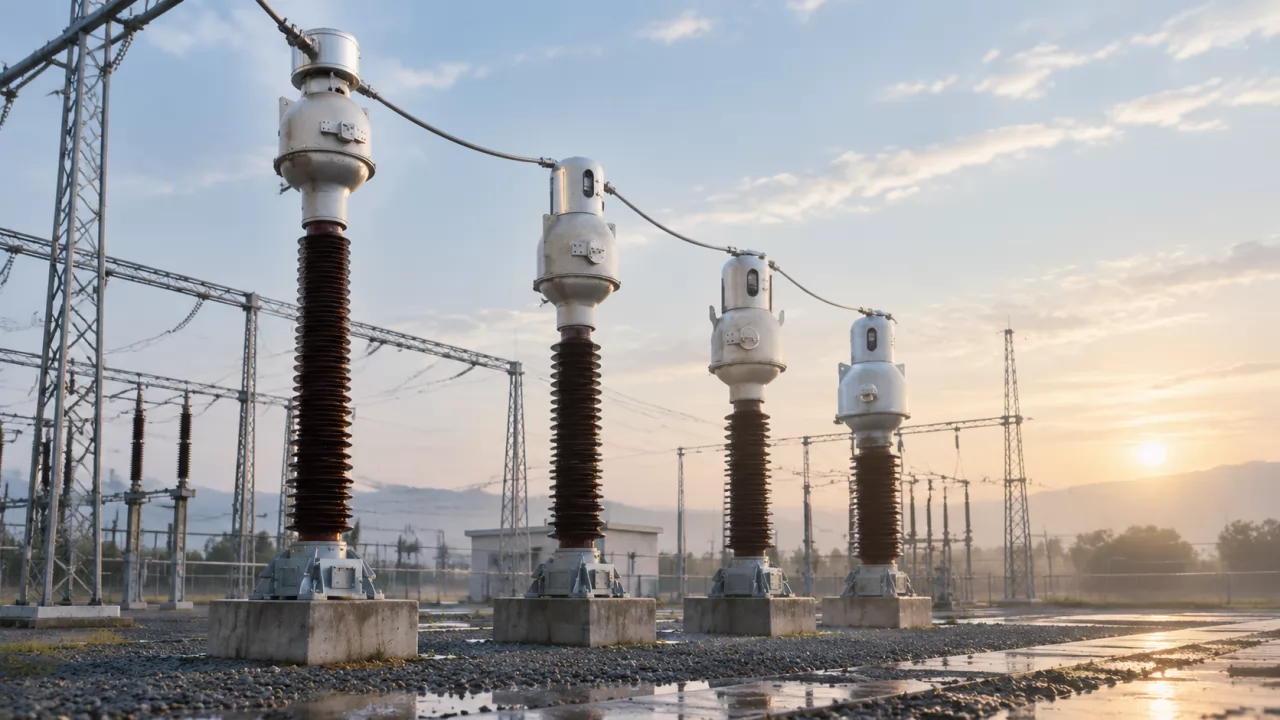
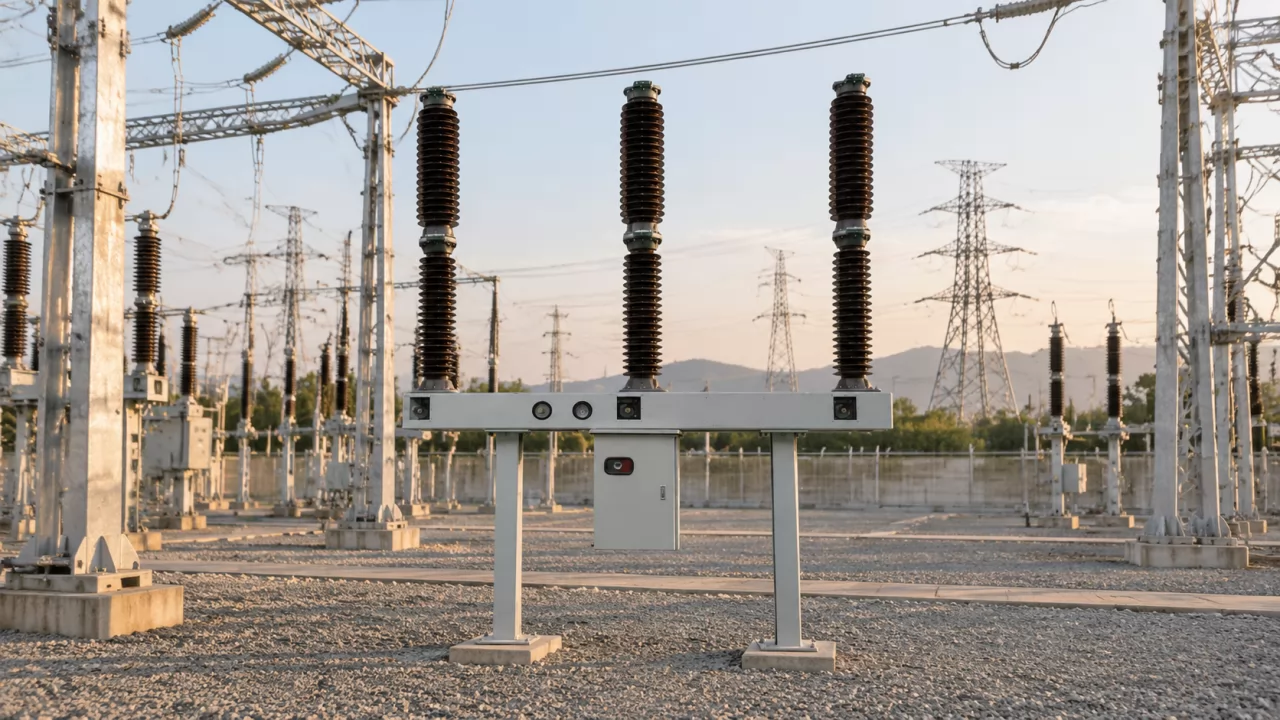
A dead tank circuit breaker houses its interrupters in a grounded metal tank, with bushings carrying the conductors in and out. It is the American norm at 230kV and 345kV. Bushing current transformers slip over the bushings at the tank, so protection and metering CTs arrive integrated, wired and tested, and the bay needs no separate CT structures. The low center of gravity helps the breaker meet IEEE 693, the IEEE recommended practice for seismic design of substations, at its Moderate and High qualification levels. The cost of that convenience is a higher purchase price and a larger gas volume per pole, which counts directly against SF6 inventory and reporting.
Live tank
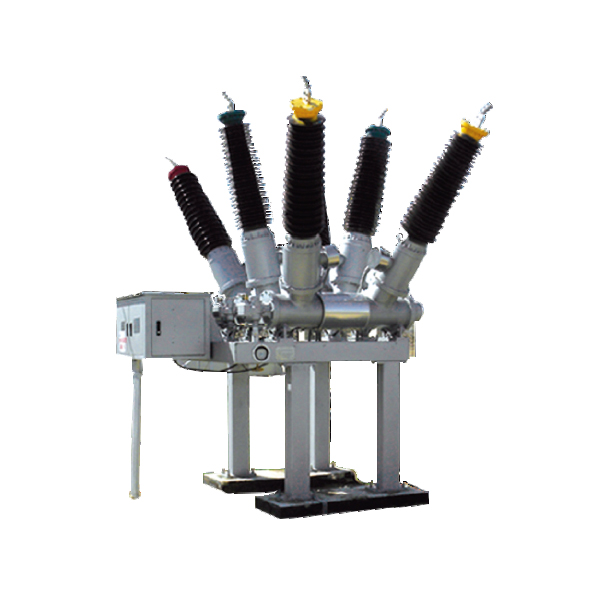
A live tank circuit breaker places its interrupters in insulators at line potential, raised on support columns. Gas volume is much smaller and unit cost is usually lower, which is why live tank dominates much of the world outside North America. In a US bay, though, it needs separate free-standing CTs, more foundations and steel, and careful structural design to reach high IEEE 693 levels on a tall, top-heavy assembly. Many US maintenance crews also know it less well. Some of the first high-voltage SF6-free breakers reached the market as live tank designs, so the configuration may come up even on projects with no tradition of using it.
Gas-insulated switchgear
Gas-insulated switchgear (GIS) encloses breakers, disconnectors, busbars and instrument transformers in gas-filled metal enclosures. It is the space-saving option at urban sites and constrained expansions. It also changes the SF6 question entirely: a GIS bay holds far more gas than a standalone breaker, so regulators and utility policies tend to hit it first, and the gas decision is made for the whole switchgear rather than for one device.
SF6 vs Vacuum Circuit Breaker for Transmission Substations: What's Left to Compare
Once vacuum is ruled out at these voltages, the real comparison is among the remaining interrupting and insulating media. Two definitions help. Fluoronitrile mixtures use a small fraction of C4-FN, a fluorinated nitrile with strong dielectric properties, diluted in CO2 and often O2. CO2/O2 technical gas is carbon dioxide with a small oxygen share, with no fluorinated component at all.
| CRITERION | SF6 | FLUORONITRILE MIXTURE | CO2/O2 GAS | VACUUM + CLEAN AIR |
|---|---|---|---|---|
| Voltage classes typically offered | All transmission classes | Up to high transmission, mainly GIS | Up to high transmission, select lines | Up to about 145kV |
| Global warming potential | Very high | Low | Near-zero | Zero |
| Low-temperature behavior | Liquefies in severe cold | Depends on mix ratio | Generally good | Generally good |
| Field track record | Decades, very large fleet | Growing since late 2010s | Limited, mostly outside US | Established up to 145kV |
| Gas handling complexity | Familiar tools and procedures | New carts, mixture control | New carts, simpler gas | Minimal |
| Availability at 245kV and 362kV | Broad, all ratings | Some products and ratings | Some products and ratings | Not commercially available |
For a 230kV or 345kV breaker, the practical choice is SF6 against one of the two alternative gases. Vacuum with clean air matters only for neighboring lower-voltage bays.
Two caveats apply. Availability moves fast, so a "some products" cell can change within one budget cycle; ask each manufacturer for a dated rating roadmap. And performance parity on paper does not mean equal size. Alternatives to SF6 often need larger tanks, higher pressure, or both, to match ratings.
SF6-Free High Voltage Circuit Breaker Alternatives: Pros and Cons
Each SF6-free high voltage circuit breaker alternative solves the emissions problem and adds a trade-off of its own. The table weighs the group as a whole for 230kV and 345kV service.
| ADVANTAGES | LIMITATIONS |
|---|---|
| Far lower greenhouse impact per kg leaked | Fewer type-tested ratings at 362kV and 63kA |
| Removes long-term SF6 regulatory exposure | Smaller US installed base and service history |
| Lighter reporting and leak-repair burden | New gas carts, analyzers and crew training |
| CO2-based gases tolerate cold climates well | Often larger or higher-pressure designs |
Read across the rows and the pattern is clear: the advantages are regulatory and environmental, and the limitations are about evidence and logistics, which narrow with each year of fleet experience.
Fluoronitrile mixtures
These come closest to SF6 dielectric performance and are available in some GIS and live tank lines at high voltage. The fluorinated component is the catch. Mixtures need their own handling equipment and ratio monitoring, and C4-FN may draw attention as PFAS rules develop in the US and Europe. Treat that as a watch item, not a settled restriction.
CO2/O2-based gases
Global warming potential is very low, cold-weather behavior is good, and some manufacturers offer these gases at transmission voltages. Designs are often physically larger or run at higher fill pressure, and the US fleet is small.
Vacuum with clean air
No fluorinated gas at all. Realistic only up to around the 145kV class today, so it fits the 115kV or 138kV bays in a 230kV or 345kV substation, not the main breaker.
Standards and Type-Test Evidence to Request
These documents separate a qualified offer from a brochure. For a US transmission breaker, the core set is the IEEE C37 series. Specify ratings under IEEE C37.04, the rating structure for AC high-voltage circuit breakers, and draw values from the IEEE C37.06 preferred ratings. Require type testing to the procedures in IEEE C37.09, and use IEEE C37.010, the application guide, when checking how the breaker suits your fault levels and X/R ratios.
Many SF6-free designs were type-tested first under IEC 62271-100, the international standard for high-voltage AC circuit breakers, because they were developed for European customers. IEC and IEEE testing are close but not identical, especially in TRV parameters, test sequences and 60Hz versus 50Hz performance. Ask the manufacturer for a clause-by-clause comparison and for any supplementary IEEE tests. For GIS, the matching pair is IEC 62271-203 and IEEE C37.122.
Three more items apply to the assembly. Request the IEEE 693 qualification level achieved, with the test or analysis report, since a Moderate rating will not satisfy a High-seismic site. Bushing CTs should conform to IEEE C57.13, the standard for instrument transformers, with accuracy classes stated per core. For gas handling procedures and gas quality criteria, IEC 62271-4 covers SF6 and its mixtures and is increasingly cited for alternative gases.
Then insist on complete type-test reports from independent high-power laboratories, ideally members of the Short-Circuit Testing Liaison (STL), covering the exact ratings quoted. A report for a 40kA sister design does not qualify a 63kA offer. Nor does a 50Hz test at 245kV prove 60Hz performance at the same rating without supporting justification.
Lead Time, Cost Drivers and Lifecycle Exposure
Schedule risk now often outweighs price risk. Lead times for transmission breakers have stretched as grid expansion, renewable interconnection and data-center load compete for the same factory capacity, and transformers are not the only equipment on the critical path. Secure delivery windows early. Ask whether quoted lead time is firm or an estimate, whether it runs from order or from drawing approval, and whether SF6-free variants come from the same production line or a smaller one with less capacity.
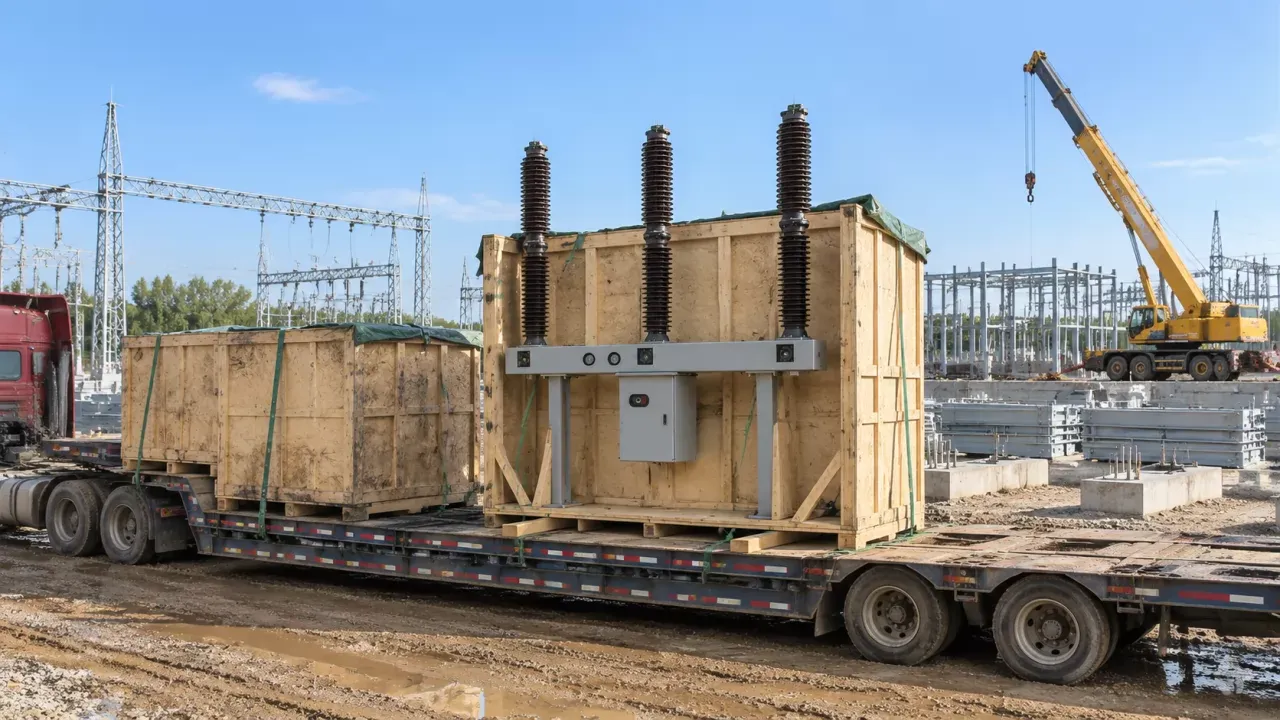
Price at 230kV and 345kV is shaped mostly by the specification. Interrupting rating comes first: 63kA costs more than 40kA, and may reduce you to one or two qualified bidders. The number and accuracy class of bushing CTs follows, since six cores per bushing with relaying and revenue-metering accuracy add real cost. Spring mechanisms are now standard at these voltages, with hydraulic mechanisms usually reserved for higher ratings or special duties. High IEEE 693 levels, cold-weather heater packages and the gas type itself add their own premiums. SF6-free units currently cost more in most quotes, though the gap varies widely by manufacturer and rating.
Lifecycle exposure is where the comparison shifts. An SF6 breaker brings decades of Subpart DD reporting, leak detection and repair labor, and end-of-life gas recovery. It also carries the regulatory risk of placing a high-GWP asset expected to stay in service around 40 years into a policy environment that is tightening. Price that risk explicitly, even as a scenario, rather than leaving it out of the evaluation.
230kV Circuit Breaker Selection by Substation Scenario
Project conditions usually point to one answer once the eliminations are done. The same logic holds at 345kV with tighter limits on available alternatives.
If it is a standard 230kV line or transformer bay in a state without SF6 limits, then specify SF6 dead tank and request an SF6-free price as a reference point.
If the site is in California or a similarly regulated jurisdiction, then shortlist type-tested SF6-free designs and check the exact voltage-class deadline against energization date.
If the bay is 345kV at 63kA or carries frequent capacitor-bank switching, then SF6 remains the dependable choice wherever alternatives lack C2 and short-line fault test coverage.
If the site sees severe winter cold, then compare the cost and reliability of SF6 heater packages against CO2-based alternatives.
If space is the binding constraint, then evaluate GIS and make the gas decision at the switchgear level.
Where two scenarios overlap, such as a cold-climate site under a utility net-zero policy, the regulatory constraint usually decides and the climate constraint narrows the gas choice within it.
Gas Handling, Leak Monitoring and Service Support
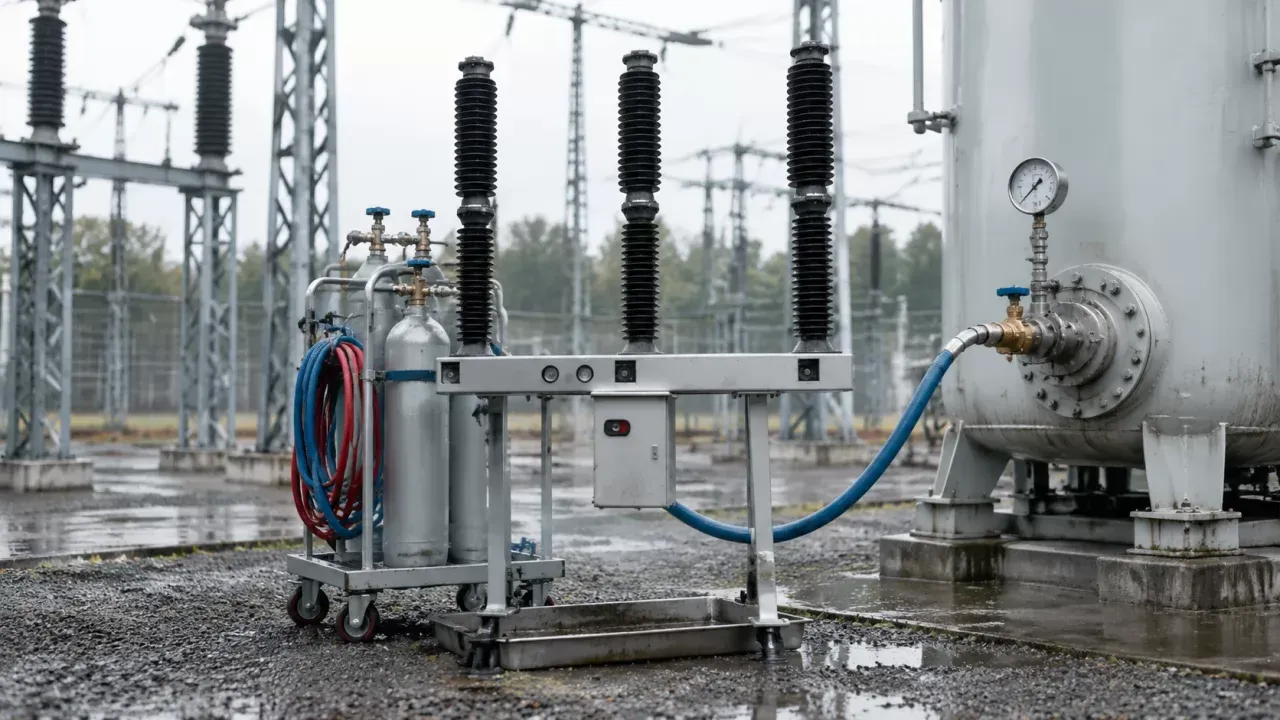
Settle the ongoing obligations before issuing the purchase order. Specify density monitoring with at least two alarm stages (low-gas warning and lockout), plus remote signaling if your SCADA supports it. Get the annual leak-rate guarantee in writing. For alternative gases, confirm that your gas carts, recovery units and analyzers are compatible, or budget for new ones, since equipment built for SF6 should not be assumed safe for mixtures. Ask who trains your crews and when. And for newer gas technologies, check where the nearest field-service engineers and spare interrupters sit. A two-week wait for a specialist is a different risk at 345kV than at 15kV.
FAQ
Can a vacuum breaker replace an existing 230kV SF6 breaker?
No, not with commercially available products today. Vacuum breakers generally top at about the 145kV class, so a 230kV replacement still means SF6 or an SF6-free gas design.
Is SF6 banned for new 345kV circuit breakers in the United States?
No federal ban exists. Federal rules require emissions reporting, while California phases out new SF6 equipment by voltage class, and some states and utilities impose their own limits.
Do SF6-free breakers need different maintenance tools and training?
Yes, usually. Fluoronitrile and CO2-based gases need compatible gas carts, analyzers and recovery equipment, and crews need training on the new gas properties and procedures.
How does transient recovery voltage affect breaker choice at 345kV?
It decides which designs qualify. A breaker must be type-tested to the TRV, short-line fault and out-of-phase duties your system imposes, and several SF6-free designs lack that coverage at higher ratings.
Are clean air insulation designs heavier or larger than SF6 equivalents?
Generally yes. Clean air insulates less well than SF6, so designs typically use larger enclosures, higher fill pressure, or both to reach the same rating.
Which IEEE standard defines preferred ratings for these breakers?
IEEE C37.06. It lists preferred rating values, while IEEE C37.04 sets the rating structure and IEEE C37.09 the test procedures.
Next Step on the Specification
The cleanest RFQ for a 230kV or 345kV bay asks for the SF6 dead tank offer and the SF6-free offer side by side, each backed by type-test reports at the exact rating. That makes the decision a matter of evidence and regulatory horizon rather than habit. The next question is usually how to weight lifecycle SF6 risk against a higher purchase price in the bid evaluation, and that deserves its own scoring method.