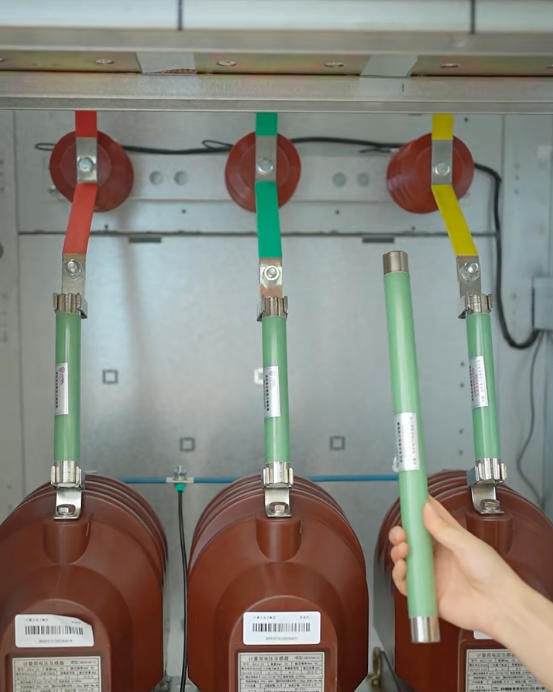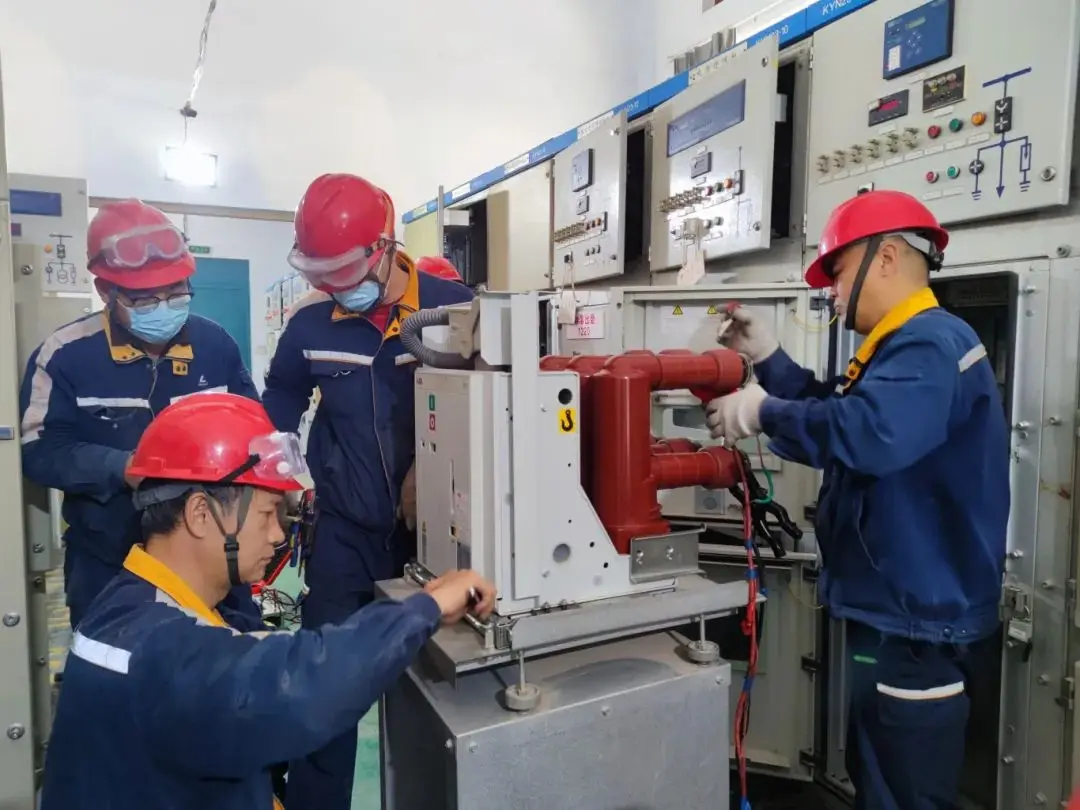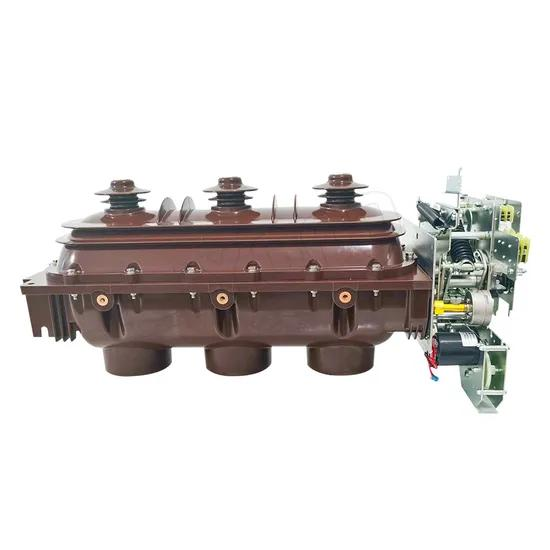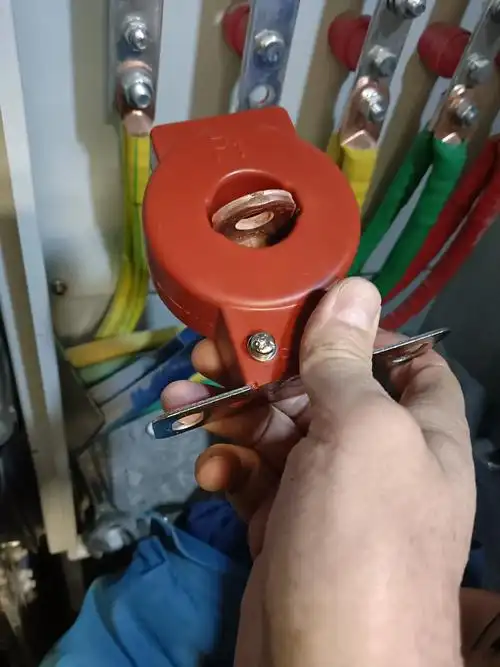
When a Drop Out Fused Cutout (DOFC) catches fire during a fault and still doesn't drop open, most people first suspect the fault current, the transformer, or even the installation crew. In real-world practice, those can contribute, but they are usually not the root cause.
The fundamental reason is often much simpler and much more serious: the fuse tube is substandard. In particular, the fuse tube may be missing the internal arc-extinguishing medium that a compliant drop-out fuse depends on to interrupt current safely.
This point matters because a drop-out fuse is not just a piece of insulated tubing holding a fuse wire. It is a coordinated interruption device. If the tube liner, dimensions, thermal behavior, and mechanical fit are wrong, then the device may burn, arc, swell, seize, and fail to create the visible open point that utilities rely on for overhead line isolation.
In 10kV, 24kV, and 35kV distribution networks, this is not a small defect. It is a direct safety risk. It can lead to feeder fires, transformer damage, longer outages, pole-top hazards, and danger to line crews and the public.
This article explains, in practical engineering terms, why a drop-out fuse catches fire but does not drop under fault conditions, why the root cause is usually poor fuse tube quality, and how utilities, EPC contractors, and distributors can prevent repeat failures by choosing qualified products.
Why a Drop-out Fuse Catches Fire but Does Not Drop Under Fault Conditions
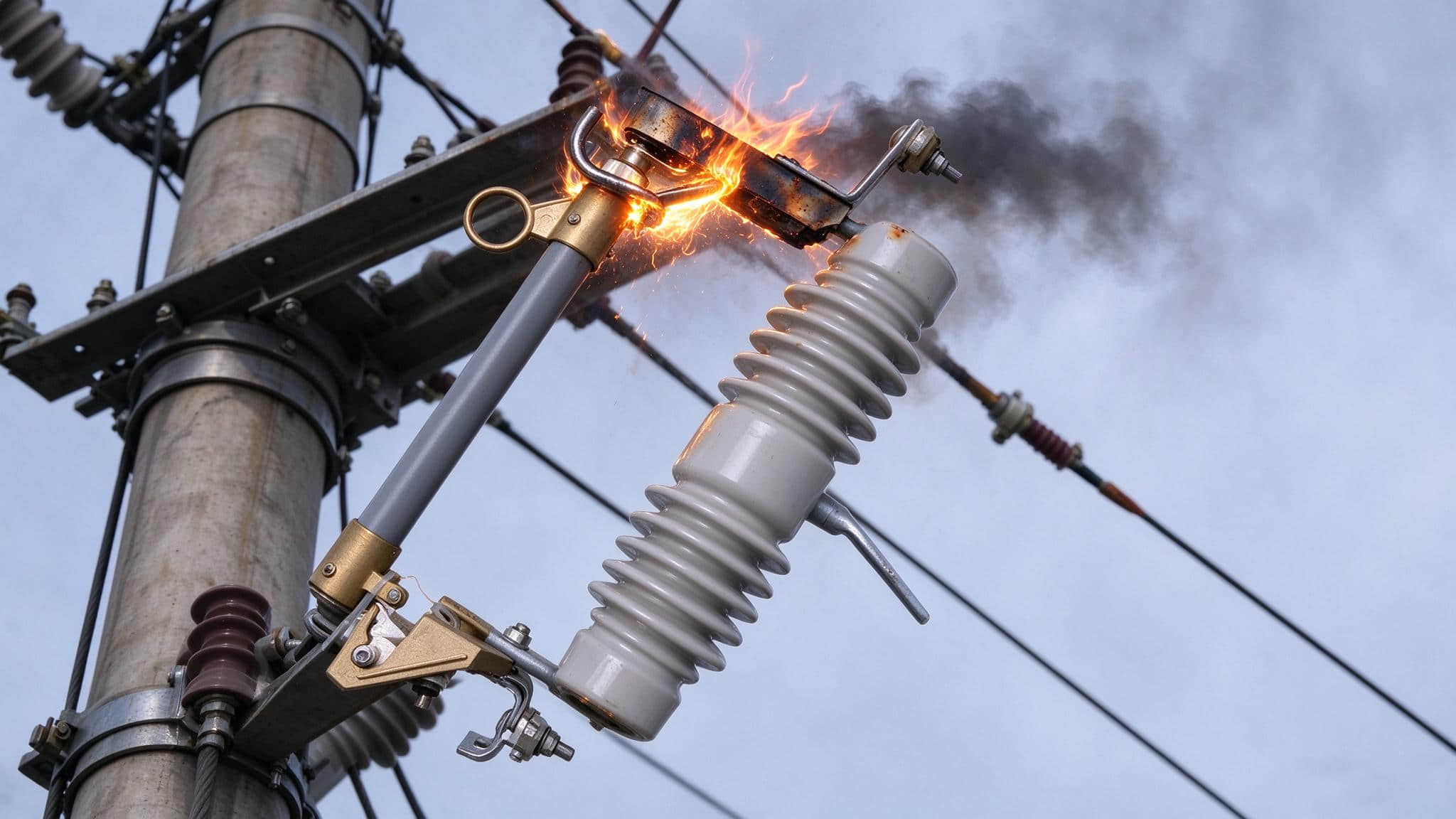
The abnormal event looks like this: a line or transformer fault occurs, current rises sharply, the drop-out fuse starts burning or throws flame, but the fuse tube does not interrupt cleanly and does not fall open.
From the ground, people often describe it as “the fuse is on fire but still hanging there.” That description is crude, but accurate.
This is one of the most dangerous forms of drop-out fuse failure under fault conditions because the protective device partially reacts but fails to complete its job. Instead of rapidly isolating the fault, it sustains arcing and heat.
In a properly functioning DOFC, the event should be brief. The fuse element melts, the arc is extinguished inside the tube, and the tube drops under gravity. When fire persists and no drop occurs, something in the interruption chain has failed.
That failure chain usually includes one or more of the following:
No arc-extinguishing liner inside the fuse tube
Inferior tube material with poor thermal resistance
Tube swelling or deformation causing mechanical sticking
Incorrect fuse link material, such as copper wire or iron wire substitution
Dimensional mismatch between tube and holder
Loose contact points creating pre-fault overheating
Incorrect installation angle reducing drop-out reliability
Insufficient interrupting capacity for actual fault level
Among all of these, the most decisive and most overlooked problem is still the substandard fuse tube itself.
How a DOFC Should Work Normally in 10kV, 24kV, and 35kV Distribution Networks
To understand the failure, we first need to be precise about normal operation.
A drop-out fused cutout is widely used on outdoor overhead distribution systems, typically at 10kV, 24kV, and 35kV. It protects transformers, lateral branches, capacitor banks, and portions of feeders.
Under normal load, current flows through the fuse link and conductive hardware with minimal heating. The fuse tube remains mechanically latched in position.
When a fault occurs, the process should happen in a defined sequence:
1. The fault current exceeds the fuse link’s time-current characteristic.
2. The fuse link melts.
3. An arc forms inside the fuse tube.
4. The internal arc-extinguishing liner or gas-generating material is heated intensely.
5. This material releases a large volume of deionizing gas.
6. The gas blows through the arc path and helps quench the arc.
7. After interruption, the fuse tube is no longer held in the closed operating position.
8. The tube drops by gravity, creating a visible open point.
This visible open point is not just convenient. It is operationally critical. Line workers, utility operators, and maintenance contractors use it as immediate confirmation that the faulted section has been isolated.
The interruption principle is similar to an expulsion fuse. The tube is an active part of the interruption system. It is not passive housing.
That is why missing or inferior internal material causes such severe consequences. If the tube cannot produce the gas needed to extinguish the arc, the entire protective function collapses.
Root Cause: Substandard Fuse Tube Quality Is the Main Reason
Let us state the core conclusion clearly: the main root cause of fire and failure to drop is an unqualified fuse tube.
In low-grade products, manufacturers trying to cut costs may omit the arc-extinguishing medium entirely or use the wrong material. Externally, the product may still look acceptable. From a distance, it may even look identical to a compliant tube.
But inside, it lacks the material needed for real interruption.
In compliant fuse tubes, the inner liner is typically made from materials such as fiber, steel-paper, or polymer-based arc-quenching media designed to decompose under arc heat and release gas. That gas cools, deionizes, and expels the arc.
If this liner is absent, too thin, poorly bonded, contaminated, or replaced with cheap non-functional material, the fuse tube may:
Fail to extinguish the arc
Sustain internal burning
Carbonize rapidly
Emit flames from the tube ends
Overheat hardware and contacts
Lose dimensional stability
Jam instead of dropping
This is why field videos of a burning cutout that remains closed should immediately raise suspicion about fuse tube authenticity and internal construction, not just network conditions.
In many cases, people say “the fuse failed.” Technically, that phrase is incomplete. More accurately, the expulsion fuse malfunction in overhead lines is often a tube design and manufacturing failure.
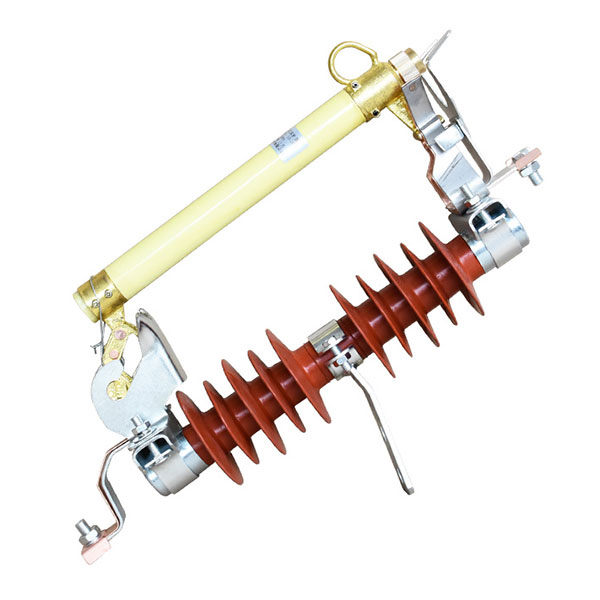
What Happens When the Fuse Tube Has No Arc-Extinguishing Medium
Without a proper arc-extinguishing liner, the interruption process changes dramatically.
When the fuse link melts, an arc still forms. That part is normal. The problem is what happens next.
In a qualified tube, the heat of the arc drives decomposition of the liner material and releases high-pressure gas. This gas stretches, cools, and deionizes the arc path. Interruption becomes possible.
In a substandard tube with no gas-generating arc-quenching medium, the arc remains energized. It keeps burning inside the tube or at its openings. The tube becomes a heat chamber instead of an interruption chamber.
The result is exactly the field symptom seen in many failures:
Continuous burning
Visible flame
Prolonged arcing
Tube charring or cracking
Hardware overheating
No clean interruption
In severe cases, molten particles and hot gases can damage nearby insulators, jumper leads, transformer bushings, or crossarm components. If dry vegetation, bird nests, cable jackets, or oily contamination are present, secondary fire risk increases.
This is the most common explanation behind the keyword scenario causes of fire in distribution cutout fuse. The visible fire is not random. It is a symptom of failed arc extinction.
Once the arc persists, the tube is no longer operating as a protection device. It is behaving like a sustained fault source mounted on a pole.
Why the Drop-out Fuse Does Not Drop After Fault Interruption Failure
Many people assume that if the fuse burns enough, it should eventually fall anyway. Field reality is not so simple.
The drop-out action depends on both electrical interruption and mechanical freedom of movement. If either fails, the tube may remain in place.
When the arc is not extinguished quickly, prolonged heat can deform the fuse tube body. A poor-quality tube may swell, soften, blister, or warp. That deformation can cause mechanical interference with the holder, trunnions, hinge parts, or upper contact assembly.
In short, the tube gets hot enough to jam itself.
Common non-drop mechanisms include:
Thermal expansion increasing outer diameter and causing sticking
Tube ovality from uneven heating
Charred surface deposits increasing friction
Warped fittings at the cap or ferrule
Hinge seizure caused by heat or molten residue
Contact welding after severe overheating
At that point, even if part of the fuse link has operated, the intended gravity drop may not occur. This is a classic case of dropout fuse not operating during a short circuit.
Another overlooked issue is installation angle. A drop-out fuse must be mounted within the manufacturer’s specified range so gravity can do its job. If the angle is too flat or misaligned, the mechanism has less tolerance for friction and may fail to release during a severe event.
Another Critical Cause: The Fuse Link May Not Actually Melt
There is another very important field cause that experienced utility technicians mention immediately: the fuse element may not be the correct fuse element at all.
In some maintenance environments, especially where emergency repairs are done without proper stock control, people substitute the fuse link with copper wire, iron wire, or other improvised conductors. This is extremely dangerous.
A proper fuse link is engineered to melt within a defined current-time envelope. Copper and iron substitutes do not reproduce that behavior.
If copper wire is used, it may carry high fault current for too long before opening, or may not open correctly inside the designed interruption process. If iron wire is used, the behavior can also be unpredictable, with intense heating and poor coordination.
This creates two serious outcomes:
The circuit may not interrupt when required
The tube may remain mechanically locked because the intended release mechanism is never properly triggered
That is one reason the reasons for fuse cutout not dropping under load fault cannot be diagnosed by appearance alone. A burned cutout must be disassembled and inspected carefully, including verification of the actual fuse link material.
Seasoned field engineers know this from painful experience. A “simple replacement” done with the wrong wire can turn a standard protective device into a fire source.
Other Common Causes of Drop-out Fuse Failure Under Fault Conditions
Although tube quality is the primary cause, it is not the only cause. In real distribution networks, failures are often multi-factor events.
The most common contributing factors are listed below.
Dimensional mismatch: Tube length, diameter, cap fit, or trunnion geometry does not match the holder correctly.
Poor installation angle: The fuse tube cannot swing freely after operation.
Loose terminals: High contact resistance creates heating before any major fault occurs.
Bad contact pressure: Poor electrical contact leads to localized hot spots and metal oxidation.
Corrosion: Hinge and terminal parts become rough or seized.
Contamination: Dust, salt, pollution, insects, and carbon deposits increase tracking and friction.
Insufficient interrupting capacity: The cutout is applied on a system with higher fault current than it is rated to break.
Wrong fuse link rating: Coordination is poor and operation becomes abnormal.
Voltage class mismatch: A product intended for one class is misapplied on another.
These factors can accelerate heating and mechanical sticking, but they still do not change the central engineering truth: a qualified tube with proper arc-extinguishing media is the core defense.
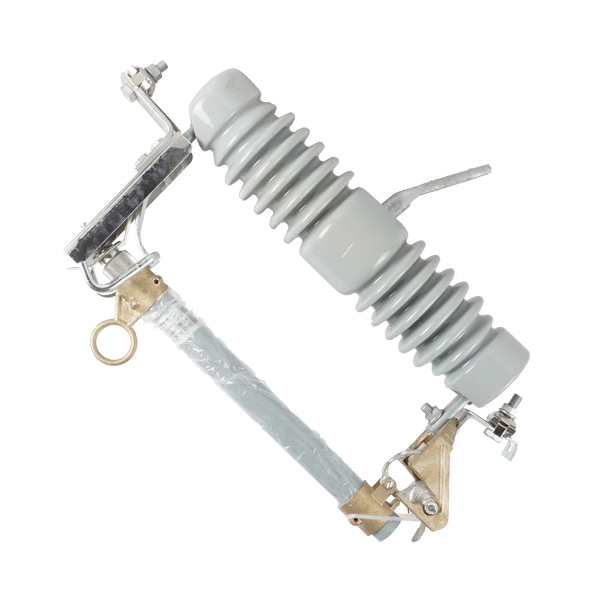
Causes of Fire in Distribution Cutout Fuse: Failure Modes by Category
For practical troubleshooting, it helps to divide failures into three categories. This makes root-cause analysis faster on site and more useful for maintenance reporting.
Product Quality Defects
These are defects inherent to the supplied product. They include missing arc-extinguishing liner, poor tube material, inaccurate dimensions, weak hardware, and low-grade fuse links. Among these, the missing or ineffective liner is the most dangerous because it directly destroys interruption performance.
Installation and Maintenance Errors
These include improper mounting angle, loose terminals, poor contact pressure, corrosion, contamination, and lack of periodic inspection. A good product can still fail in service if maintenance discipline is weak, especially in polluted or coastal environments.
Selection and Application Mistakes
These include wrong voltage class, low breaking capacity, incorrect fuse link rating, and mismatch with transformer size or feeder fault level. Even a good cutout becomes unreliable if the application exceeds its tested limits.
Real-World Fault Examples of Expulsion Fuse Malfunction in Overhead Lines
In overhead distribution work, the pattern repeats often enough to be recognizable.
Example 1: Pole-mounted transformer lateral, 10kV class. After a transformer internal fault, the fuse tube emitted flame for approximately 20 to 40 seconds and remained in the closed position. Post-event inspection showed severe charring of the tube interior and no effective liner structure. The replacement tube from a compliant supplier interrupted correctly during later system verification.
Example 2: Rural feeder branch, 24kV class. Operators reported repeated nuisance heating at one phase cutout before the final event. After a line fault, the cutout burned at the upper contact and did not drop. Inspection found both a rough inner bore and dimensional mismatch between the tube fittings and the cutout frame. The tube showed swelling marks where it had jammed.
Example 3: Small utility maintenance stock issue. A field audit in a mixed inventory yard found cutout tubes from different origins stored together with no traceability. Two failed units later revealed improper fuse wire substitution and inconsistent tube lengths. One unit had almost no functional arc-generating liner material inside.
Example 4: Coastal overhead distribution area, 35kV class. A combination of corrosion, poor contact pressure, and low-grade tube material led to severe heating and failure to drop under a line fault. The event analysis concluded that pre-existing thermal stress reduced the tube’s mechanical tolerance, making it far more likely to stick during the actual interruption attempt.
These examples show a practical truth: failure is rarely “mysterious.” Once the tube is opened and examined, the mechanism usually becomes obvious.
Normal Operation vs Abnormal Fire-and-No-Drop Failure
| Item | Normal DOFC Operation | Abnormal Fire-and-No-Drop Failure |
|---|---|---|
| Fuse link status | Melts according to design curve | May melt partially, late, or not correctly if the wrong wire is used |
| Arc behavior | Brief arc, rapidly quenched inside tube | Sustained arc, flame, continued burning |
| Arc-extinguishing liner | Present and functional | Missing, inadequate, or degraded |
| Gas generation | Sufficient gas released to cool and deionize arc | Little or no gas released, arc persists |
| Tube thermal condition | Short-duration heating within design | Overheating, charring, swelling, deformation |
| Mechanical movement | Tube releases and drops by gravity | Tube may stick, jam, or remain latched |
| Visible isolation | Clear open point after operation | No clear isolation, dangerous ambiguous condition |
| Network result | Faulted section isolated quickly | Prolonged fault energy, fire risk, equipment damage |
Main Reasons for Fuse Cutout Not Dropping Under Load Fault
| Symptom | Probable Cause | Mechanism | Inspection Method | Corrective Action |
|---|---|---|---|---|
| Tube burns but stays closed | Missing arc-extinguishing medium | Arc cannot be quenched; heat causes sticking | Open tube and inspect liner presence | Replace with qualified fuse tube |
| No drop after severe flame | Tube deformation | Swelling or warping jams moving parts | Check outer diameter, straightness, hinge marks | Replace tube and verify holder fit |
| Current persists abnormally | Wrong fuse wire used | Fuse element does not melt as designed | Verify link material and rating | Use certified fuse link only |
| Intermittent heating before failure | Loose contact or poor pressure | Resistance heating damages tube and hardware | Inspect contact surfaces and torque condition | Clean, tighten, replace damaged parts |
| Tube sticks in holder | Dimensional mismatch | Incorrect fit prevents free movement | Measure tube length, diameter, cap dimensions | Use matching components from compliant source |
| Drop action unreliable | Wrong mounting angle | Gravity release is reduced | Measure installed angle against manual | Reinstall to specified angle |
| Violent event with incomplete interruption | Interrupting capacity too low | Fault exceeds device capability | Compare system fault level to rating | Re-select correct class and breaking capacity |
Typical Defects Found in Low-Quality Drop-out Fuse Tubes
| Defect | Description | Likely Fault Outcome |
|---|---|---|
| Missing liner | No functional arc-extinguishing medium inside tube | Sustained arcing, fire, no interruption |
| Undersized dimensions | Tube diameter or fitting tolerance below spec | Poor contact, loose fit, unstable operation |
| Oversized dimensions | Tube or cap too large for frame | Mechanical sticking, failure to drop |
| Poor thermal resistance | Body material softens or chars too easily | Swelling, deformation, cracking |
| Rough inner wall | Uncontrolled bore finish or defects | Erratic arc path, residue buildup, poor expulsion |
| Weak hardware bonding | Caps or ferrules not securely assembled | Loose connection, heating, misalignment |
| Low-grade fuse link accessories | Improper hardware or non-standard wire set | Delayed melting, failed interruption |
| Incompatible accessories | Tube does not match cutout holder design | Latch failure, poor contact, no drop-out |
Data and Field Evidence: Why Tube Quality Matters Most
In field practice, the strongest pattern is not subtle: non-compliant tubes fail more often and fail more dangerously.
Because utilities and manufacturers do not always publish incident databases in a unified format, failure evidence often comes from internal inspections, warranty analysis, type-test comparison, and maintenance records. Even so, the trend is consistent.
Below is an illustrative summary based on common field audit patterns reported across distribution maintenance work, factory return analysis, and cutout inspections. The purpose is not to claim a universal global statistic, but to show the repeated relationship between tube quality and fire/no-drop events.
| Inspection or Test Context | Sample Observation | Finding Relevant to Fire/No-Drop Failure |
|---|---|---|
| Returned failed tubes from overhead systems | High proportion show internal charring and absent or ineffective liner | Arc extinction failure strongly linked to tube construction |
| Mixed-source inventory audits | Dimensional inconsistency found between visually similar tubes | Mismatched dimensions increase sticking and poor contact risk |
| Post-fault forensic inspection | Improvised copper or iron wire sometimes found in failed units | Wrong fuse element contributes to non-operation and severe burning |
| Lab comparison of compliant vs low-grade tube material | Low-grade tubes show faster carbonization and poorer thermal stability | Deformation risk is higher during sustained arc exposure |
| Routine maintenance records | Loose contacts often appear together with thermal discoloration before failure | Installation condition can worsen the impact of poor tube design |
From an engineering perspective, this makes sense. The tube is the interruption chamber. If the chamber is poorly designed, every other protective assumption becomes weaker.
In many utility investigations, once the failed tube is cut open, the explanation becomes embarrassingly clear. There is no real liner, no consistent wall structure, or the material is visibly inferior. In other words, what looked like a system fault problem was actually a product integrity problem.
This is why experienced buyers no longer judge cutout tubes by outer appearance alone. They ask for type-test records, dimensional controls, material verification, and supplier traceability.
How to Inspect a Drop-out Fuse After a Fire or Non-Operation Event
After any burn event or non-drop incident, inspection should be systematic. Guesswork wastes time and can miss the true root cause.
A practical field-to-workshop inspection sequence is as follows:
1. Secure and isolate the circuit. Confirm de-energization according to utility safety procedure.
2. Document the as-found condition. Photograph tube position, flame marks, contacts, nearby insulators, and hardware.
3. Check whether the fuse link actually melted. Do not assume it did.
4. Verify the fuse link type and rating. Confirm that no copper wire, iron wire, or improvised conductor was used.
5. Inspect the tube exterior. Look for swelling, blistering, charring, cracks, or cap displacement.
6. Open the tube for internal examination. Verify whether an arc-extinguishing liner is present.
7. Inspect the inner bore. Note roughness, carbon deposits, erosion pattern, and any signs of missing liner material.
8. Measure dimensions. Compare tube diameter, length, and fitting geometry to specification.
9. Check hinge and trunnion freedom. Look for binding, weld marks, or distortion.
10. Inspect upper and lower contacts. Look for pitting, oxidation, heat discoloration, loss of spring force, or contact welding.
11. Verify installation angle. Compare field mounting to manufacturer requirements.
12. Review application data. Check system voltage, transformer rating, and available fault current against device ratings.
Shortcuts during inspection are a common reason bad product gets blamed on installation, or bad installation gets blamed on the product. A disciplined sequence reveals the truth.
How to Prevent Dropout Fuse Not Operating During Short Circuit
Prevention starts long before the fault occurs. Once a poor tube is on the pole, the risk is already built into the network.
The most effective prevention measures are:
Use qualified fuse tubes with verified arc-extinguishing media.
Purchase from traceable manufacturers with type-test documentation.
Never allow wire substitution for certified fuse links.
Match voltage class and breaking capacity to actual system conditions.
Confirm dimensional compatibility between tube and cutout body.
Install at the correct angle for reliable gravity drop.
Maintain good contact pressure and proper tightening torque.
Inspect periodically for corrosion, contamination, and heat damage.
Audit inventory control so mixed or counterfeit tubes do not enter service.
Train field crews to recognize signs of substandard tubes and improper fuse links.
These measures directly reduce the chance of drop-out fuse failure under fault conditions and improve isolation reliability during real network events.
Why Qualified Arc-Extinguishing Fuse Tubes Are the Core Solution
If this article can leave one practical conclusion, it should be this: the arc-extinguishing fuse tube is the heart of the protection function.
When it is qualified, the arc is forced into a controlled interruption process. When it is not, the same fault can turn into flame, prolonged arcing, and mechanical non-drop.
A good tube does three things at once:
Supports reliable arc extinction
Maintains dimensional stability under heat
Allows smooth mechanical drop-out action
That is why selecting a compliant tube is not a procurement detail. It is the core solution to preventing fire events and ensuring visible fault isolation.
Why Utilities and Contractors Should Avoid Low-Cost Inferior Fuse Tubes
Cheap fuse tubes often look attractive in bidding, especially when line items are compared only by unit price. But low upfront price can create very high total cost.
The hidden costs include:
Longer outages
Pole-top fire incidents
Transformer or feeder damage
Emergency labor and truck rolls
Public safety exposure
Reputational damage for contractors and utilities
Repeat replacement cost
In practice, one failed inferior cutout can erase the “savings” from hundreds of low-cost purchases. Buyers who have experienced a burn-and-no-drop incident rarely make the same sourcing mistake twice.
This is especially true in rural networks, coastal areas, high lightning regions, and places with limited maintenance access. In those environments, reliability margin matters even more.
Choosing a Reliable DOFC Manufacturer for Distribution Protection
When selecting a supplier, buyers should verify much more than brochure appearance.
Key checkpoints include:
Standards compliance for the applicable voltage class and cutout design
Documented arc-extinguishing liner design
Dimensional accuracy control and interchangeability consistency
Interrupting tests relevant to real service conditions
Thermal resistance and material verification
Mechanical drop-out performance validation
Quality control traceability by batch or production lot
Stable accessory compatibility with holders and fuse links
Technical support for application matching
Buyers should also ask difficult questions. What is the liner material? How is dimensional tolerance controlled? Are routine production checks performed? Can the supplier provide test records? Is there consistency from batch to batch?
Serious manufacturers welcome those questions. Weak suppliers avoid them.

Why Weisho Electric Drop-out Fuse Tubes Are Built to Reduce Fire and Non-Drop Failures
As a manufacturer focused on distribution protection components, Weisho Electric understands that a drop-out fuse tube is not a cosmetic accessory. It is a functional interruption part that must perform correctly under fault stress.
That is why compliant tube design matters: the presence of proper arc-extinguishing media, controlled material selection, and dimensional consistency all directly affect whether the arc is extinguished and whether the tube can drop freely after operation.
For customers sourcing DOFC products for 10kV, 24kV, and 35kV overhead systems, the goal should never be “the cheapest tube that fits.” The goal should be stable interruption performance, reduced fire risk, and dependable visible isolation.
Weisho Electric emphasizes those fundamentals in product design and manufacturing control, helping utilities, distributors, and contractors reduce the risks associated with missing liner material, poor fit, and unstable mechanical action.
When the market is full of visually similar products, internal quality is what separates a safe cutout from a dangerous one.
FAQ
Why does a drop-out fuse catch fire instead of clearing the fault?
The most common reason is that the fuse tube lacks proper arc-extinguishing material. When the fuse link melts, an arc forms, but without the gas-generating liner, the arc cannot be quenched effectively, so it continues burning and may produce visible flame.
Why does the fuse tube fail to drop after the fuse link operates?
The tube may fail to drop because severe heat causes thermal expansion, swelling, or deformation, which creates mechanical sticking. Incorrect installation angle, hinge friction, warped fittings, or contact welding can also prevent free drop-out action.
Can a wrong fuse wire cause a dropout fuse not to operate during short circuit?
Yes. If someone replaces the proper fuse link with copper wire, iron wire, or another non-standard conductor, the element may not melt according to design. That can prevent correct fault interruption and may keep the tube from releasing as intended.
What are the signs of a substandard drop-out fuse tube?
Common signs include missing internal liner, abnormal burning marks, rough inner wall, poor dimensional fit, swelling after heating, weak end fittings, and unstable extinguishing performance. Tubes that look acceptable outside may still be defective inside, so inspection and supplier verification are important.
Are installation errors also responsible for fire in distribution cutout fuse?
Yes. Loose contacts, poor alignment, insufficient contact pressure, corrosion, contamination, and incorrect mounting angle can all worsen heating and impair operation. However, installation issues often become much more dangerous when combined with low-quality fuse tubes.
How can I check whether a fuse tube contains arc-extinguishing media?
You can check through controlled visual inspection of the tube interior, supplier certification review, material verification, and type-test documentation. For procurement, it is best to require technical data and product traceability rather than relying on external appearance.
What voltage levels commonly use DOFC equipment?
Drop-out fused cutouts are widely used in outdoor overhead distribution systems at 10kV, 24kV, and 35kV. They are commonly installed for transformer protection, feeder branch protection, and sectionalizing applications.
What is the best way to avoid reasons for fuse cutout not dropping under load fault?
The best practice is to use qualified fuse tubes containing proper arc-extinguishing media, pair them with certified fuse links, and apply them within the correct voltage and interrupting ratings. Correct installation angle, good contact maintenance, and periodic inspection are also essential.
Request a Quote for Qualified Drop-out Fuse Tubes from Weisho Electric
If you are dealing with causes of fire in distribution cutout fuses, investigating a dropout fuse not operating during short circuit, or trying to eliminate repeat expulsion fuse malfunction in overhead lines, the first thing to verify is tube quality.
The safest long-term answer is clear: choose qualified fuse tubes with real arc-extinguishing media. That is the core step to preventing sustained arcing, fire, and failure to drop open under fault conditions.
If you need compliant DOFC fuse tubes for 10kV, 24kV, or 35kV distribution applications, send an inquiry now for technical specifications, application guidance, and pricing support.
Contact Weisho Electric today to request a quote, discuss your network conditions, and source reliable drop-out fuse tubes built to reduce fire and non-drop failures.