An SF6 breaker on a 12 kV collector feeder needs gas monitoring and certified gas recovery at end of life, while a vacuum breaker in the same panel needs neither. The revised EU F-gas Regulation (EU) 2024/573 now restricts SF6 in new medium-voltage switchgear, so vacuum is replacing it in specs well beyond Europe. A medium-voltage vacuum circuit breaker for solar plant and storage duty still faces stresses a utility feeder breaker never sees.
What a Medium Voltage Vacuum Circuit Breaker for a Solar Plant Should Deliver Over Its Life
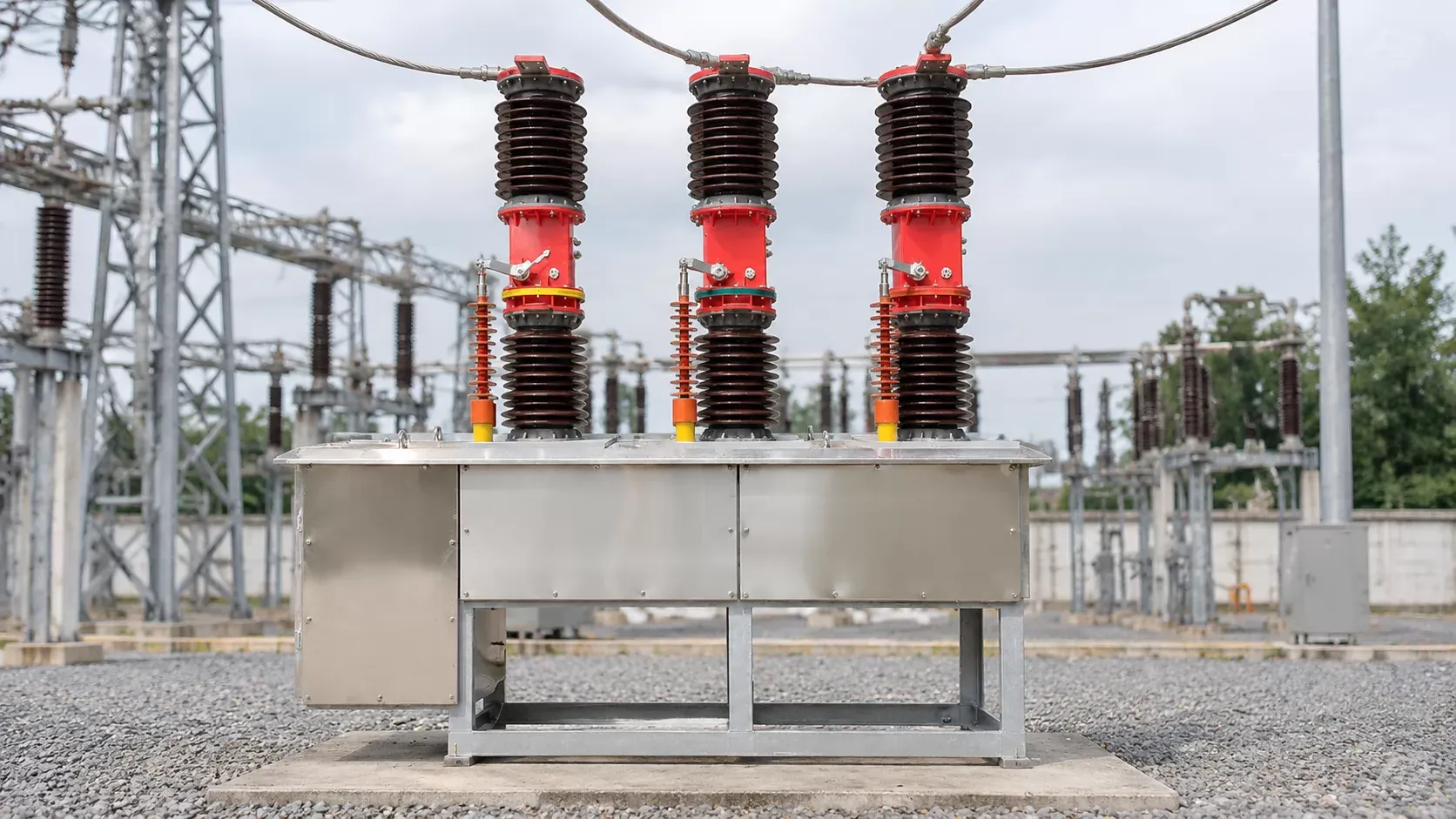
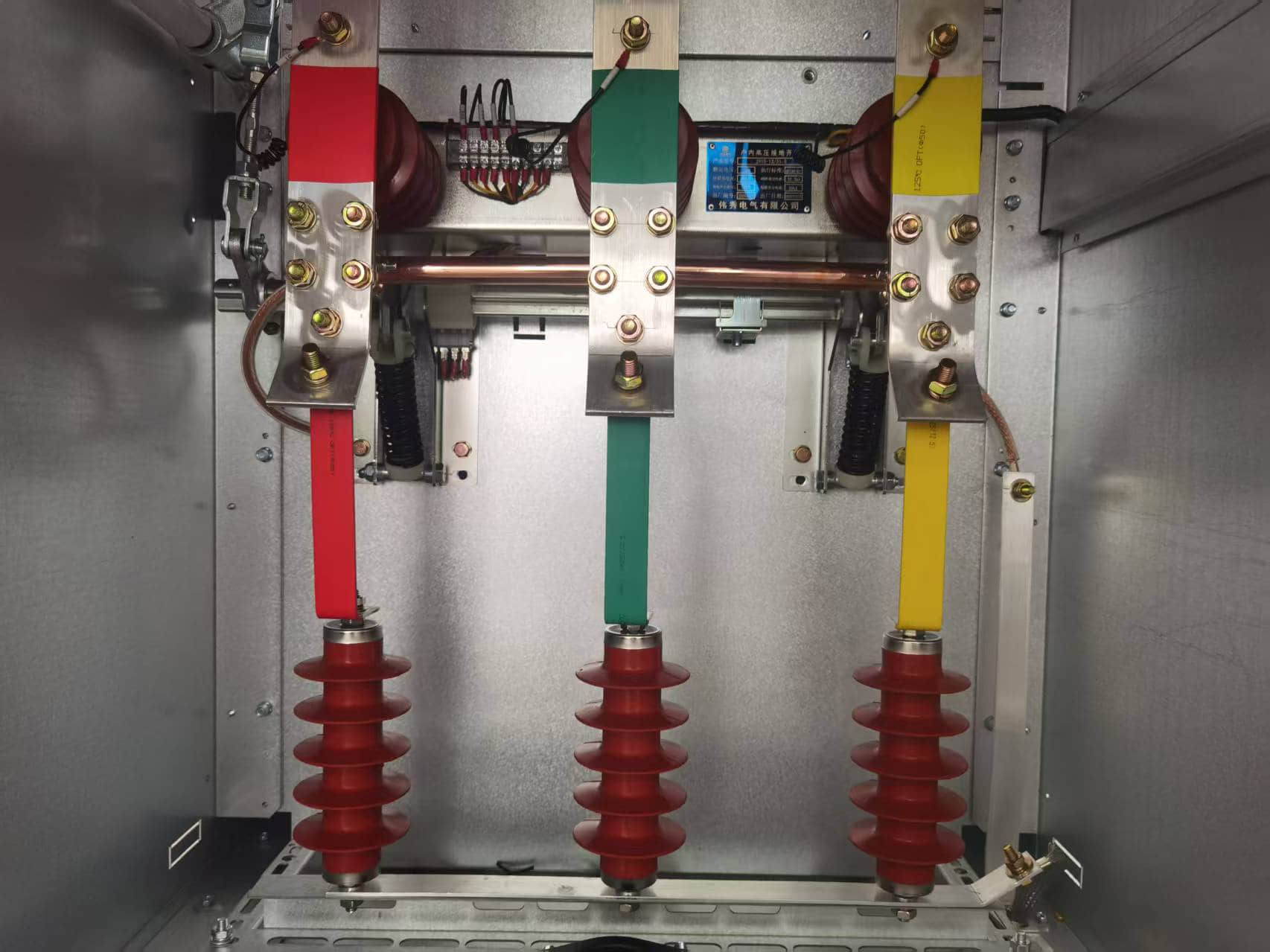
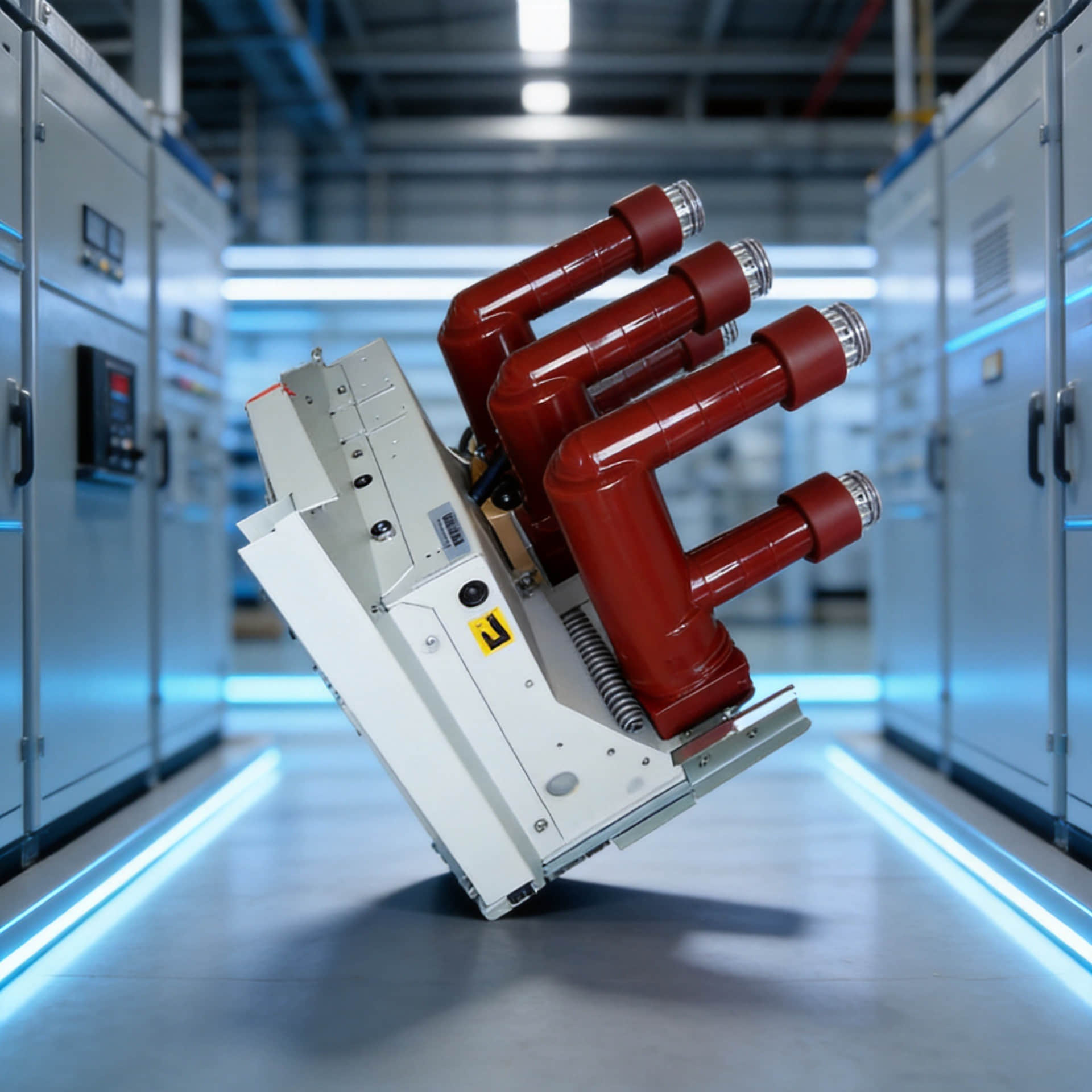
A vacuum circuit breaker (VCB) is a switching device that interrupts current inside a sealed, evacuated chamber. In a solar or storage plant it should do four things for its whole service life. It should switch capacitive loads without restrike, trip correctly on faults fed from either side, resist flashover from dust and salt, and report its condition to SCADA.
Use those four outcomes as the yardstick for everything else. A datasheet can list impressive breaking current and still fail the plant if the breaker restrikes on a filter bank in its third year. The same applies if the relay never sees an island fault, or if salt tracking across a pole flashes it over during a humid night. Each of these failures comes from a selection decision made before the order, which is why the rest of this guide treats them as checks.
Field performance also means that the data comes back. A breaker that counts operations and logs contact wear lets you plan maintenance from evidence instead of a calendar.
Collector-System Stresses Behind Every Vacuum Circuit Breaker for a Battery Energy Storage System
A conventional distribution feeder carries power one way, sees faults fed by rotating machines and operates a few times a year. PV and BESS collector systems break all three assumptions, and they usually sit in deserts, on coasts or on exposed farmland.
Bidirectional flow, reverse feed and islanding
A storage feeder imports power to charge and exports it to discharge. A PV feeder exports by day and imports station load at night. So current reaches a fault from the grid side and from the plant side. Inverter-based sources also behave differently from generators during faults. Inverters typically limit fault current to a modest multiple of rated current, and their control systems shape it, so overcurrent elements that were set for grid-fed faults may never pick up. Islanding is the other risk. An island is a section of the network that stays energised by the plant after the grid connection opens. It has to be detected and cleared fast, both for personnel safety and to avoid out-of-phase reclosing. The breaker opens on command either way. What has to change is the relay scheme and its settings.
Capacitor bank inrush and frequent operations
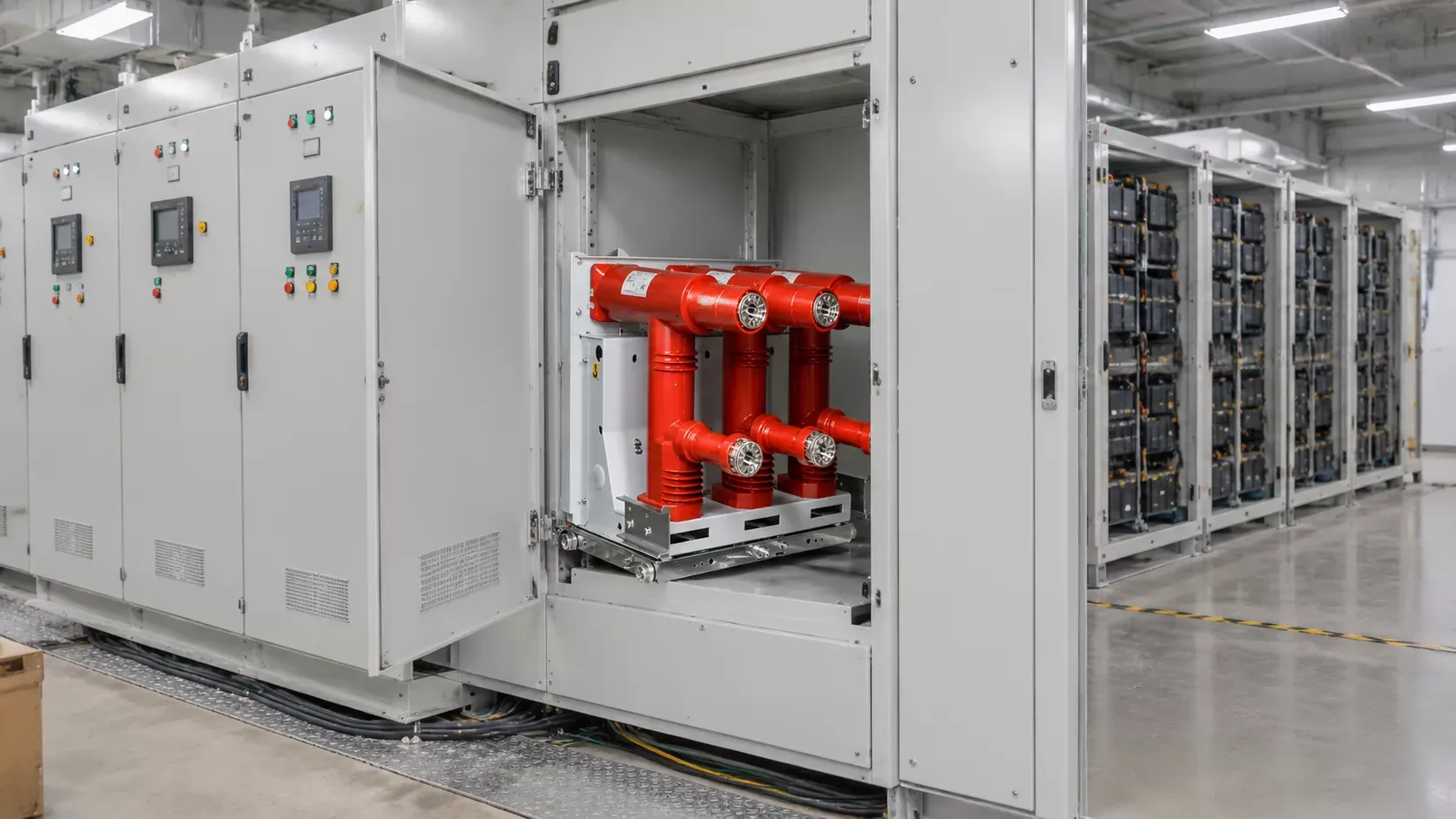
Reactive power compensation, harmonic filters and long collector cables all present capacitive load. Energising a capacitor bank, especially one placed next to another bank that is already live, draws a high-frequency inrush current. That current pits the contact surfaces each time. Storage plants add a second burden: dispatch schedules can switch feeders daily or more often. Thousands of operations over a plant's life push the mechanical endurance requirement well above what an ordinary feeder breaker sees, and every capacitive opening carries some risk of restrike.
Vacuum vs SF6 in Renewable Collector Switchgear
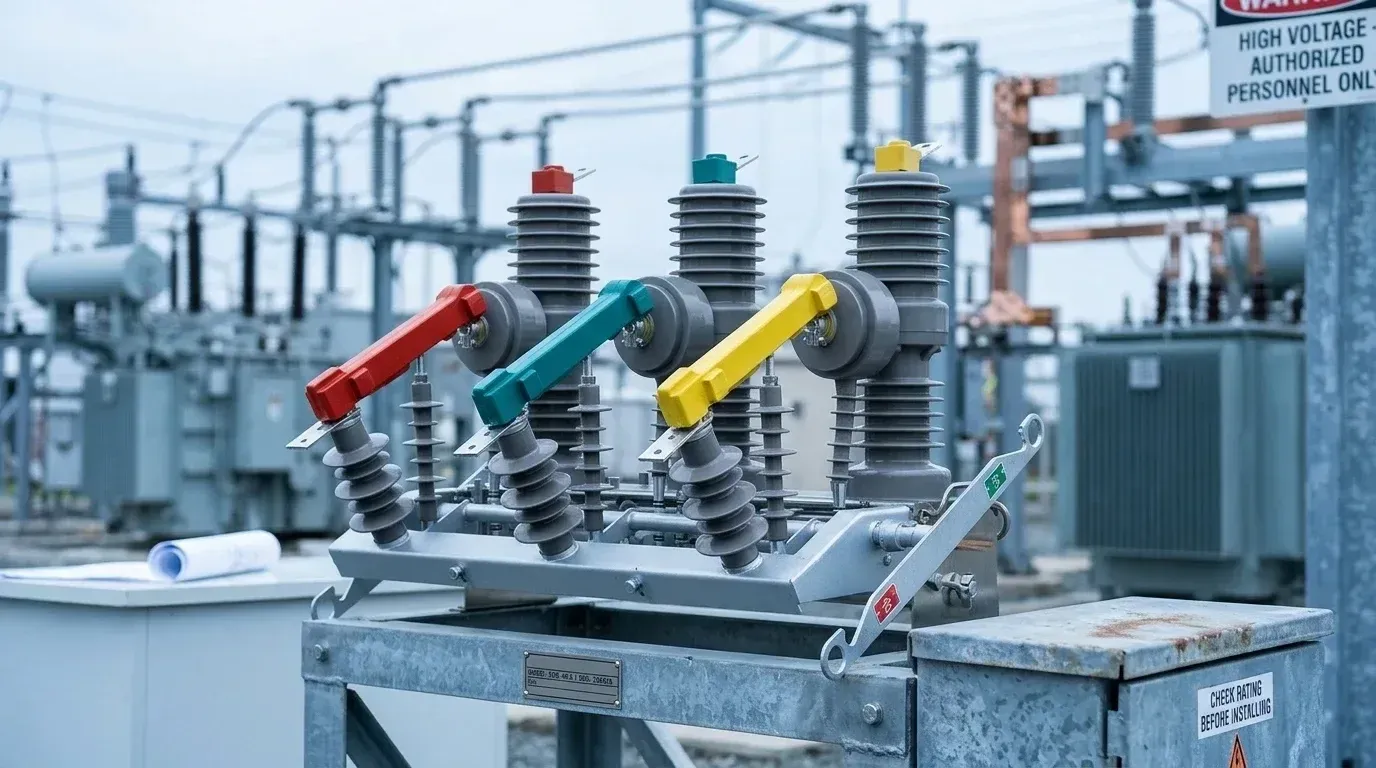
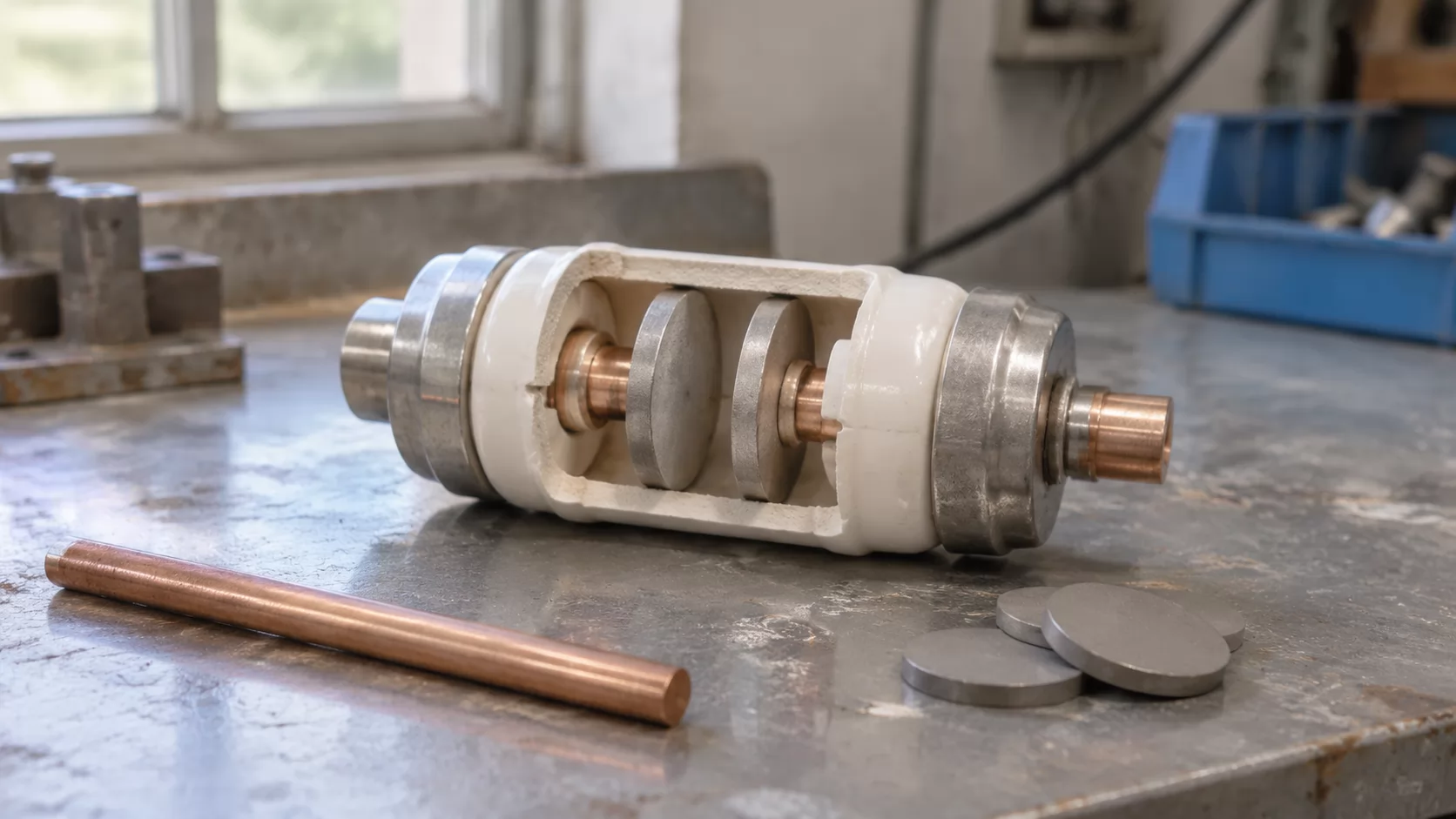
For 12–40.5 kV collector duty, vacuum is the default. The interrupter is sealed for life, contains no greenhouse gas and needs no gas handling during service or at decommissioning. Vacuum interrupters also tolerate high operation counts, which suits storage dispatch. SF6 is still found in compact gas-insulated ring main units, in some older plant designs and at transmission voltages where vacuum alternatives are less mature. Its share at medium voltage is shrinking because of tighter regulation and the cost of leak reporting and gas recovery.
Taken criterion by criterion, vacuum wins on every point that matters for collector duty. SF6 keeps its edge only in very compact gas-insulated designs and at higher system voltages.
| CRITERION | VACUUM CIRCUIT BREAKER | SF6 CIRCUIT BREAKER |
|---|---|---|
| Interruption medium | Sealed vacuum interrupter | Pressurised SF6 gas |
| Routine maintenance | Mechanism lubrication, contact wear check | Gas pressure monitoring, leak checks |
| Environmental rules | No F-gas obligations | Restricted under EU F-gas rules |
| Switching endurance | High; suits frequent operation | Typically lower for frequent duty |
| Outdoor suitability | Good with embedded or sealed poles | Good; gas density varies with temperature |
| Best for | 12–40.5 kV collector and BESS feeders | Compact GIS, higher transmission voltages |
How to Choose a MV Circuit Breaker for a Solar Farm
The criteria below are ranked by how directly each one leads to field failures in PV and storage plants. Capacitor switching comes first because its damage builds up silently. Ratings come second because grid studies usually catch rating errors before energisation. Insulation and monitoring come last, but on harsh sites they decide whether the breaker survives the first decade.
A quick decision path covers most cases:
If the feeder switches capacitor banks, harmonic filters or long cable runs, then specify capacitor switching class C2.
If back-to-back capacitor banks are switched often, then weigh controlled closing against fitting inrush reactors.
If the site is a desert, a coast or an industrial area with heavy pollution, then choose embedded poles and ask for written environmental ratings.
If the plant connects at 33 or 35 kV, then start from 40.5 kV rated equipment.
If the operator runs remote dispatch, then require condition monitoring and a SCADA protocol the relay vendor supports.
That path gets the shortlist right. The checks below confirm each item on the shortlist.
Capacitor switching class C2 and controlled closing
IEC 62271-100 is the international standard for high-voltage alternating-current circuit breakers. It defines two classes for capacitive current switching. Class C1 means a low probability of restrike. Class C2 means a very low probability of restrike, proven by a tougher type test with preconditioning and more test operations. A restrike happens when the gap re-ignites after current zero and drives voltage escalation that can damage the bank, the cable or the interrupter itself. For any feeder with regular capacitive duty, C2 is the sensible baseline.
Controlled closing, also called synchronous or point-on-wave switching, times each pole to close near voltage zero. This cuts inrush sharply. It adds cost, needs a stable and well-characterised mechanism, and the controller has to be commissioned properly. It tends to pay off where back-to-back banks are switched many times a day. On a PV feeder that energises a single bank once each morning, the extra cost is harder to justify.
Rated voltage, BIL, short-time withstand and short circuit breaking capacity
Match every rating to the grid study, not to the nominal system voltage alone. BIL (basic insulation level) is the lightning impulse withstand voltage that the insulation must survive. The rated short-circuit breaking current must exceed the prospective fault level, including future grid reinforcement. The short-time withstand current and its duration must cover relay clearing times with a margin. Vacuum interrupter rated current should also be derated for high ambient temperature, a point that is easy to miss on desert sites.
The ranges below are typical of IEC-based catalogues. Exact values vary by manufacturer and national standard, so read the rated values on the type test report rather than the brochure.
| PARAMETER | 12 KV CLASS (TYPICAL) | 40.5 KV CLASS (TYPICAL) |
|---|---|---|
| Rated voltage (kV) | 12 | 40.5 |
| Power-frequency withstand, 1 min (kV) | about 42 | about 95 |
| Lightning impulse withstand, BIL (kV) | about 75 | about 170–185 |
| Rated normal current (A) | roughly 630–4000 | roughly 1250–2500 |
| Short-circuit breaking current (kA) | roughly 20–40 | roughly 25–31.5 |
| Short-time withstand duration (s) | typically 3–4 | typically 3–4 |
| Mechanical endurance class | M2, 10,000 operations | M2, 10,000 operations |
The rows that most often separate a suitable breaker from an unsuitable one are BIL and breaking current, because these are the two values that are hardest to change once the switchgear is built.
Embedded-pole vs air-insulated, monitoring and arc protection
An embedded pole, also called a solid-insulated pole, encapsulates the vacuum interrupter in epoxy resin, so dust, moisture and salt never reach the live surfaces around it. Air-insulated designs keep exposed insulation, which collects contamination and condensation, and both of these cause surface tracking. Embedded poles cost more and are harder to inspect visually, but on polluted sites that trade is usually worth making. Monitoring is the other half of the choice. Contact-wear tracking, temperature sensors on busbar joints and operation counters turn maintenance from guesswork into planning. Arc-flash protection is a light-sensing scheme that trips the upstream breaker within milliseconds of an internal arc. It limits damage in compact outdoor cabins where personnel stand close to the panels. Check which communication protocol the breaker controller and relay support, usually IEC 61850 or Modbus, and confirm that the plant SCADA integrator accepts it before you sign.
Matching Breaker Types to Each Application Point
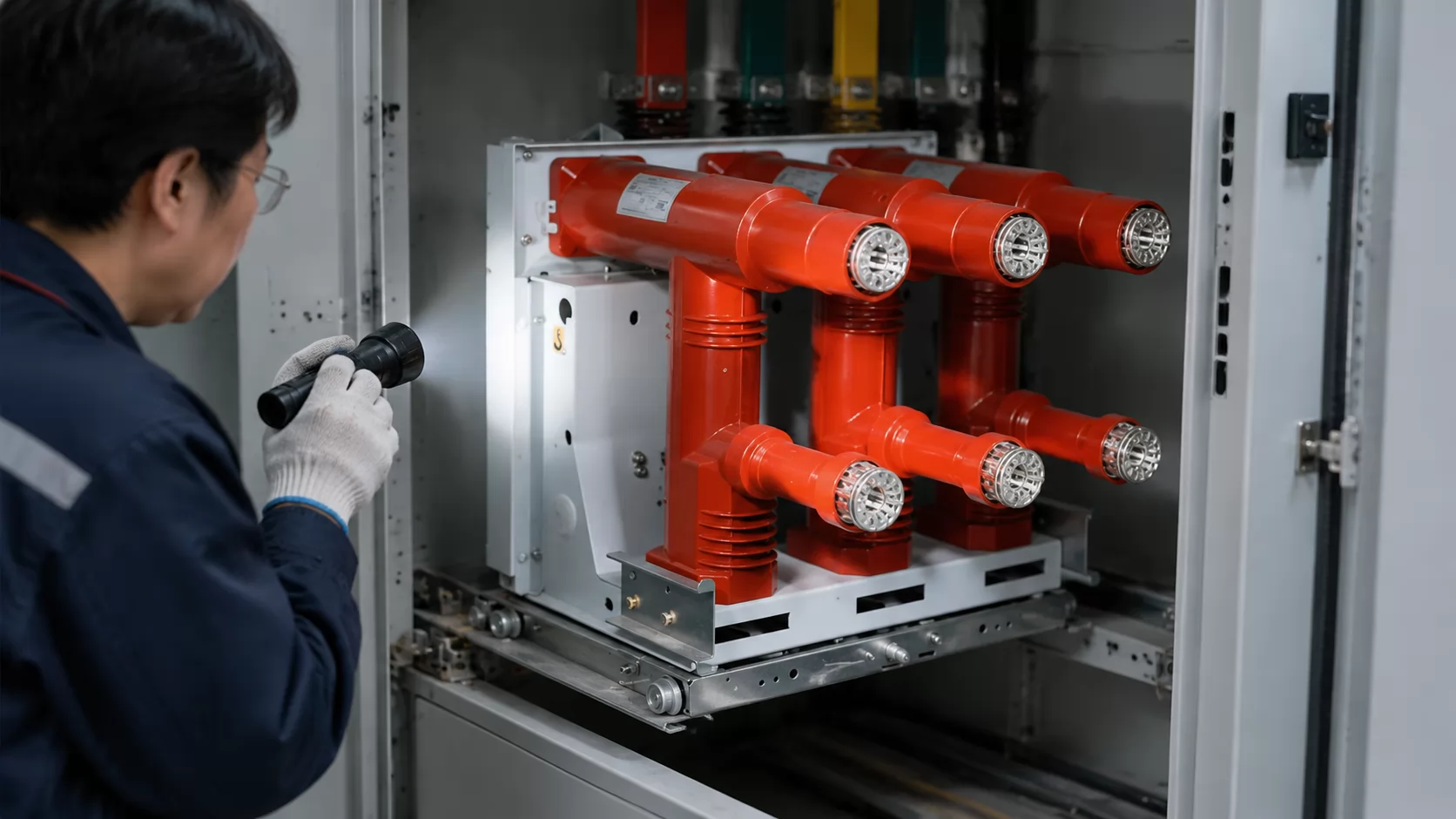
A plant has five typical switching locations: the HV side of each box transformer, the collector or combiner switchgear, the feeder upstream of the power conversion system (PCS, the bidirectional inverter that charges and discharges the batteries), the station service transformer and any overhead collector lines. Each location suits a different breaker family. In the table, the three domestic 12 kV families cover most locations, and the imported benchmarks are mainly worth considering where capacitor duty is heavy.
| MODEL | CONSTRUCTION | TYPICAL LOCATION | CAPACITOR DUTY NOTE |
|---|---|---|---|
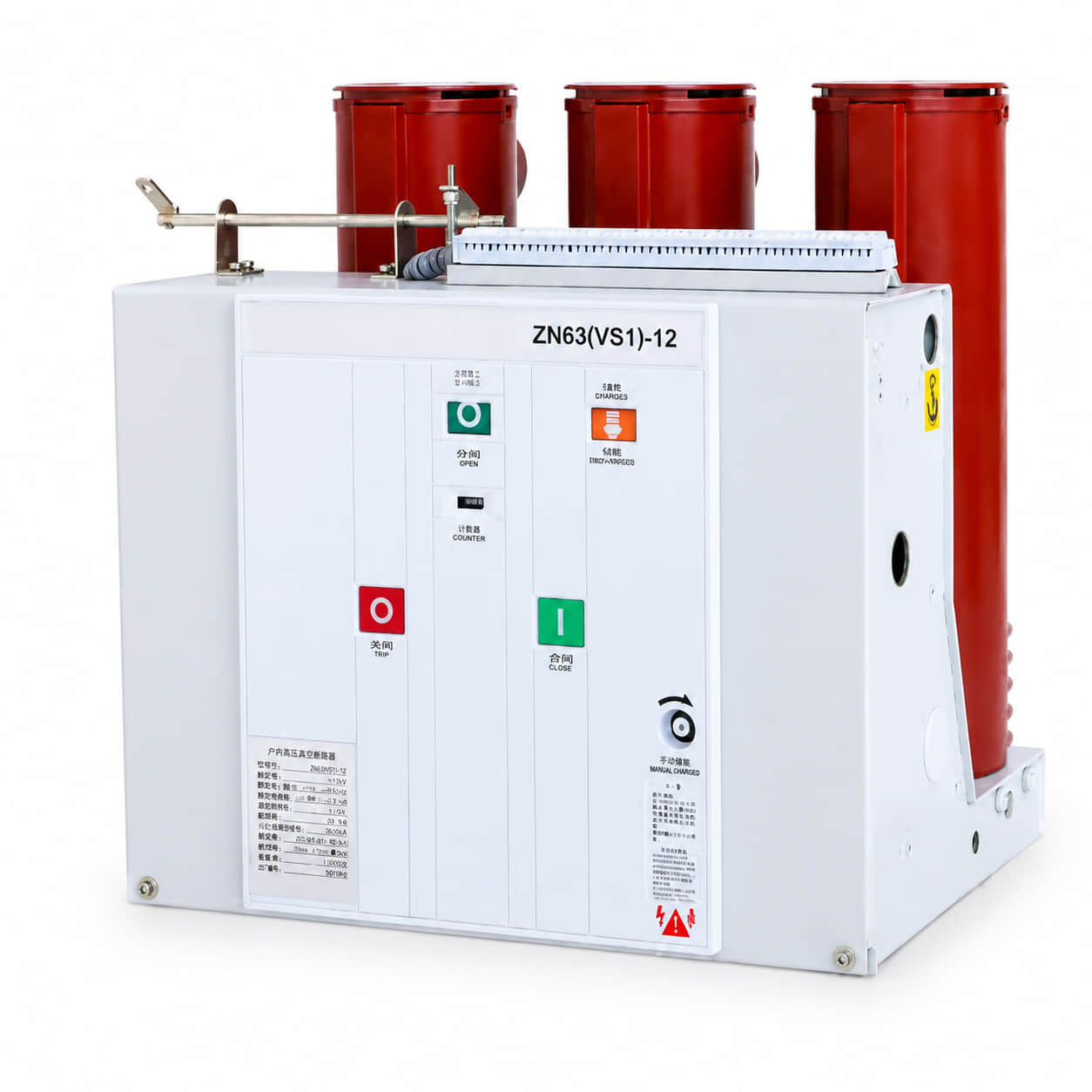
| VS1-12 | Indoor, air-insulated, withdrawable | Box transformer rooms, collector switchgear | Confirm C2 on type test |
| ZN73-12 | Embedded pole | Outdoor prefabricated cabins, heavy pollution | Confirm C2 on type test |
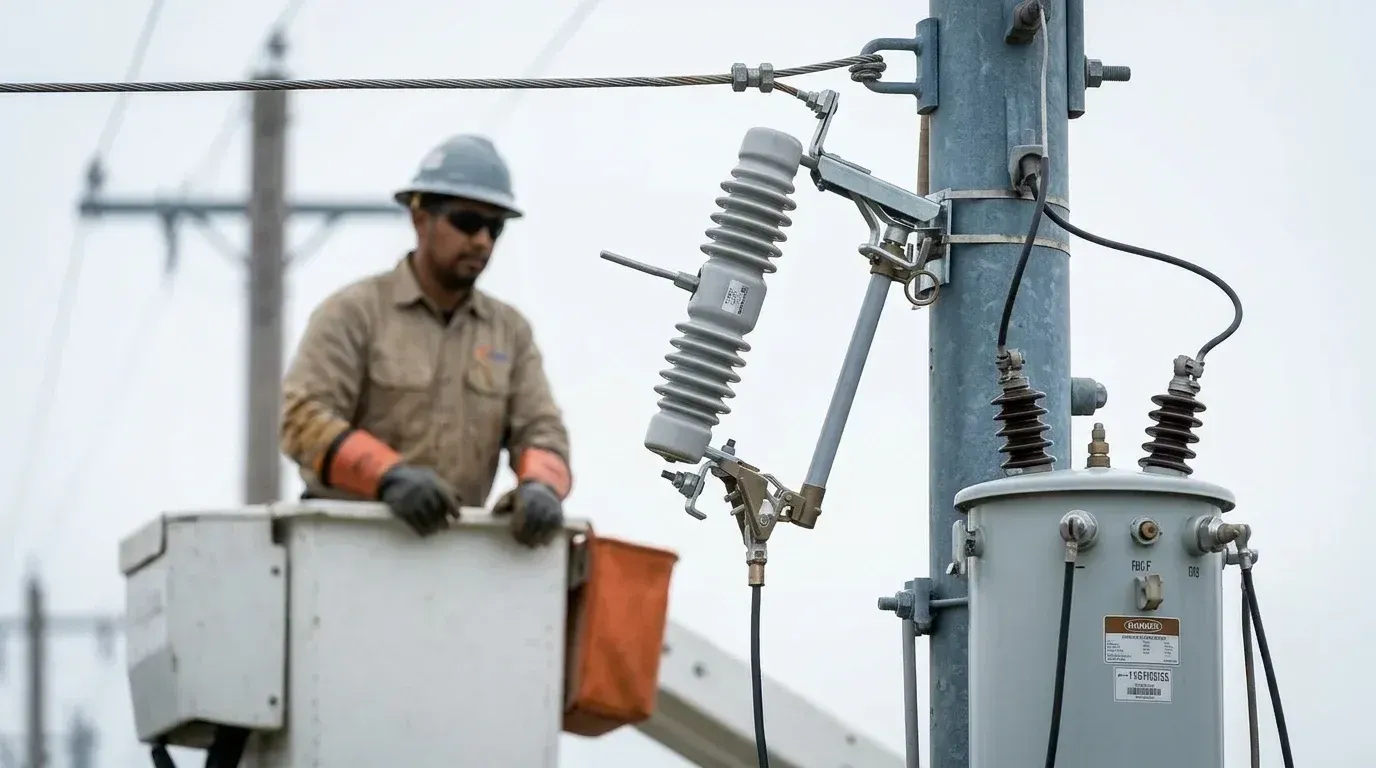
| ZW32-12 | Outdoor pole-mounted | Overhead collector lines | Rarely used for capacitor banks |
| ABB VD4 | Indoor vacuum, imported benchmark | PCS feeders, main incomers | C2 variants available |
| Schneider HVX | Indoor vacuum, imported benchmark | Capacitor and filter feeders | Controlled closing option |
On the HV side of a box transformer, the breaker mainly handles transformer magnetising inrush and fault clearing, so standard ratings with good insulation are enough. Feeders upstream of the PCS operate most often and see inverter-limited fault currents, so mechanical endurance and relay coordination matter more there. Station service transformers are low-duty, but they stay energised during islanding events and need protection that still works when the grid connection is open.
33kV vacuum circuit breaker for BESS substation layouts
Every model listed above, apart from the imported benchmarks, is a 12 kV class design. Plants that collect at 33 kV or 35 kV need equipment rated at 40.5 kV, the standard class covering those system voltages. The checks do not change at the higher voltage: C2 capacitor switching, a BIL suited to the site's lightning exposure, and environmental ratings for heat, dust or salt. Fewer domestic families carry embedded poles at 40.5 kV, so confirm that early if the cabin is going to a polluted site.
Selection Mistakes That Surface After Commissioning
The most expensive mistake is fitting a standard C1-class VCB to a feeder that switches capacitors every day. It passes commissioning without trouble. Over months, the inrush erodes the contacts faster than the maintenance plan assumes, and the restrike probability rises as the contact surfaces roughen. The first visible sign may be a failed capacitor unit or a damaged cable termination, not the breaker itself, so the root cause gets missed. Correcting it means buying a new breaker, because no setting change can turn a C1 device into a C2 device.
Relay settings cause the second family of failures. Protection copied from a conventional load feeder assumes that fault current flows one way and is large. In a PV or storage plant, a fault on the collector can be fed from the grid and from the inverters at the same time, and the inverter contribution can be too small to trip a plain overcurrent element. Directional elements, anti-islanding detection and coordinated reclosing logic belong in the protection study from the start.
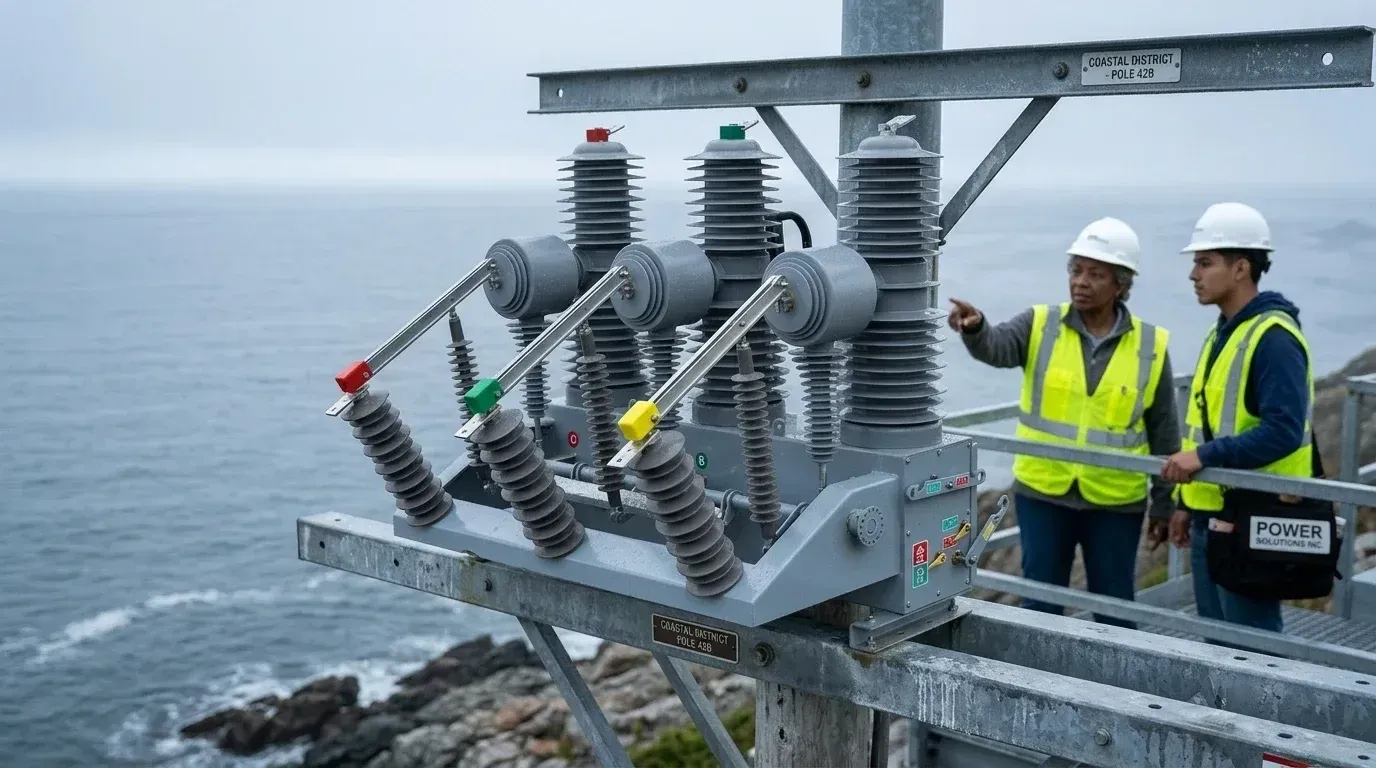
Environment causes the third. Plain air insulation on a desert site faces a daily cycle of heat and cold that drives condensation inside the cabin at dawn. Fine dust then settles on the damp insulation and forms tracking paths. On coastal sites, salt fog does the same job faster. IEC 62271-1 sets normal service conditions at a maximum ambient of 40°C, so a desert cabin that runs hotter is outside that envelope unless the breaker is rated for it. (Ask for that rating in writing: an ambient rating up to 55°C for desert projects and documented salt-fog resistance for coastal ones. A verbal "suitable for outdoor use" is not evidence.) Cabin heaters, sealing and ventilation filters help, but they treat the symptom. Embedded poles remove the exposed surface.
Pre-Order Checklist: Standards, Test Reports and the First Spec to Verify
Ask for type test reports with the quote, not after award. A type test report is the record of an independent laboratory test that proves the design meets its ratings. For the breaker, the reference is IEC 62271-100. For the switchgear assembly, the reference is IEC 62271-200, which covers metal-enclosed switchgear, including internal arc classification. North American projects use IEEE C37.04 for ratings and IEEE C37.09 for test procedures instead. Within the IEC 62271-100 report, look for the capacitive current switching test and the class it achieved. Check the mechanical endurance class too (M2 corresponds to 10,000 operations) and the electrical endurance class. For environmental claims, salt mist evidence normally references IEC 60068-2-11 or the cyclic IEC 60068-2-52 test. High-temperature and damp-heat performance should also trace back to the IEC 60068 series rather than to an internal test.
Confirm that the report covers the exact model and rating being quoted. A report for a 31.5 kA variant does not prove a 40 kA rating, and a test on an air-insulated version says nothing about the embedded-pole version.
Before ordering
The capacitor switching class on the type test report reads C2.
The BIL, breaking current and short-time rating match the grid study.
The ambient temperature and salt-fog ratings are stated in writing.
When the goods arrive
The nameplate ratings and serial numbers match the type-tested model.
The routine test reports cover each breaker, including mechanical operation.
The poles and insulation show no cracks or contamination from transit.
A mismatch on the first check in either list is reason enough to stop the order or the delivery until the supplier resolves it.
FAQ
Is a C2-class breaker needed if the plant has no capacitor bank?
Sometimes not. C1 may be enough if the feeder has no filter banks and only short cables. Long collector cables still draw capacitive charging current, and harmonic filters added later change the duty, so C2 is often a low-cost insurance.
Can one VCB model cover both PV and BESS feeders?
Often, if it meets the harder duty. BESS feeders switch more often and see bidirectional faults, so specify to the storage requirement and use the same model on the PV feeders for spares commonality.
How does the vacuum circuit breaker for a battery energy storage system handle reverse current?
The interrupter does not care which way current flows. Reverse-current and island-fault handling depends entirely on the protection relays and their directional settings.
Can we skip maintenance on a sealed vacuum breaker in a desert or coastal site?
No. The interrupter is sealed, but the mechanism, the insulation surfaces and the auxiliary contacts are not. Base the maintenance interval on operation counts and on the manufacturer's manual. Then shorten it after inspections, if they find dust, salt deposits or condensation marks.
This VCB selection guide for renewable energy plants assumes IEC-based 12 kV and 40.5 kV collector systems. If your grid code mandates IEEE ratings, specific relay functions or a particular capacitor switching test, follow that code first.