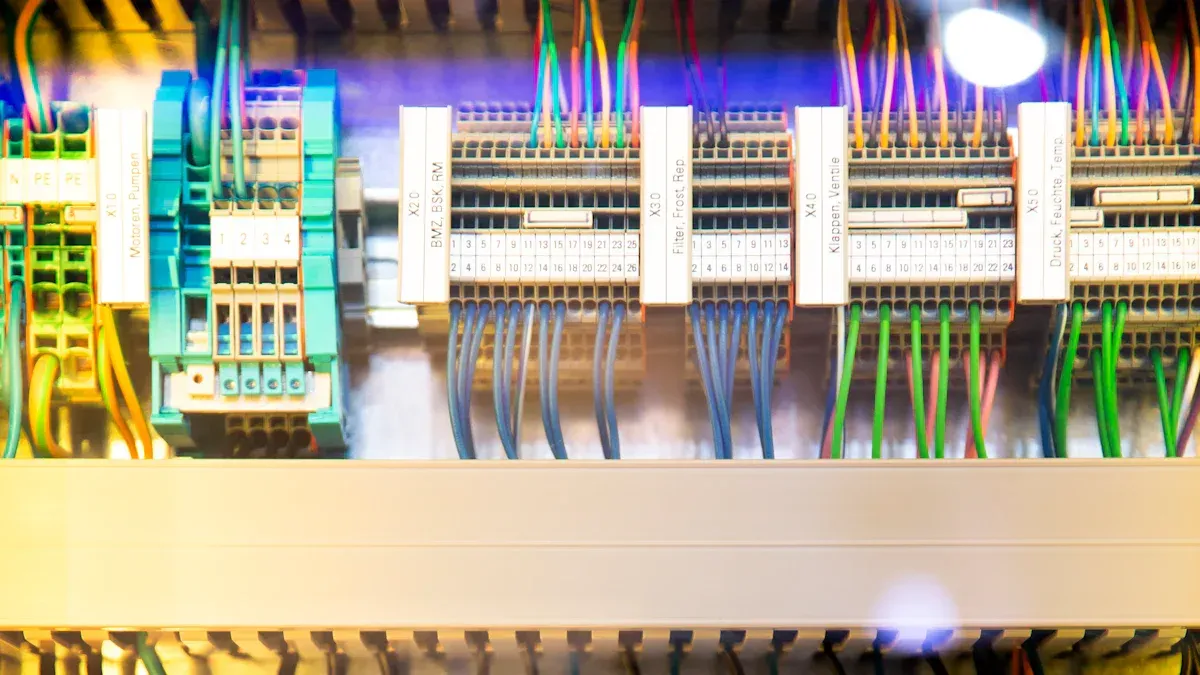
You should learn the five big differences between Molded Case Circuit Breaker (MCCB) and Miniature Circuit Breaker (MCB) before picking one.
Current rating
Application
Trip mechanism
Size
Price
Picking the correct one helps protect your equipment. It also keeps your electrical system safe in homes, offices, or factories.
Key Takeaways
Pick an MCB for small gadgets and houses. Use an MCCB for big machines and factories.
MCBs are small and fit in small places. MCCBs are bigger and need more space to install.
Always look at the current rating before you pick a breaker. The right one keeps you safe and protects your things.
MCB vs MCCB
What is MCB?
A Miniature Circuit Breaker (MCB) keeps homes and offices safe. It stops electricity if there is too much current or a short circuit. You use an MCB for things like lights or small appliances. It works best where the electrical load is not very high. The small size helps it fit easily in home panels.
Tip: MCBs act fast when there is too much current. This helps protect your devices from damage.
Here is what an MCB does:
Term | Definition |
|---|---|
MCB | A Miniature Circuit Breaker interrupts electricity during overloads, short circuits, or ground faults. It is used in homes and small businesses. |
You see MCBs used for:
Protecting lights and sockets at home
Used in small offices or shops
What is MCCB?
A Molded Case Circuit Breaker (MCCB) protects bigger electrical systems. You find MCCBs in factories and large buildings. They are used with heavy machines. MCCBs can handle much more current than an MCB. They protect against overloads, short circuits, and other electrical problems.
Term | Definition |
|---|---|
MCCB | A Molded Case Circuit Breaker protects electrical systems from overloads and short circuits. It works for higher currents in factories and big buildings. |
You use MCCBs for:
Protecting main feeders in production lines, like a 400A MCCB
Safety in tough places
Reliable work in large panels
MCCBs are made for hard jobs. They keep big electrical systems safe from serious problems.
Key Differences
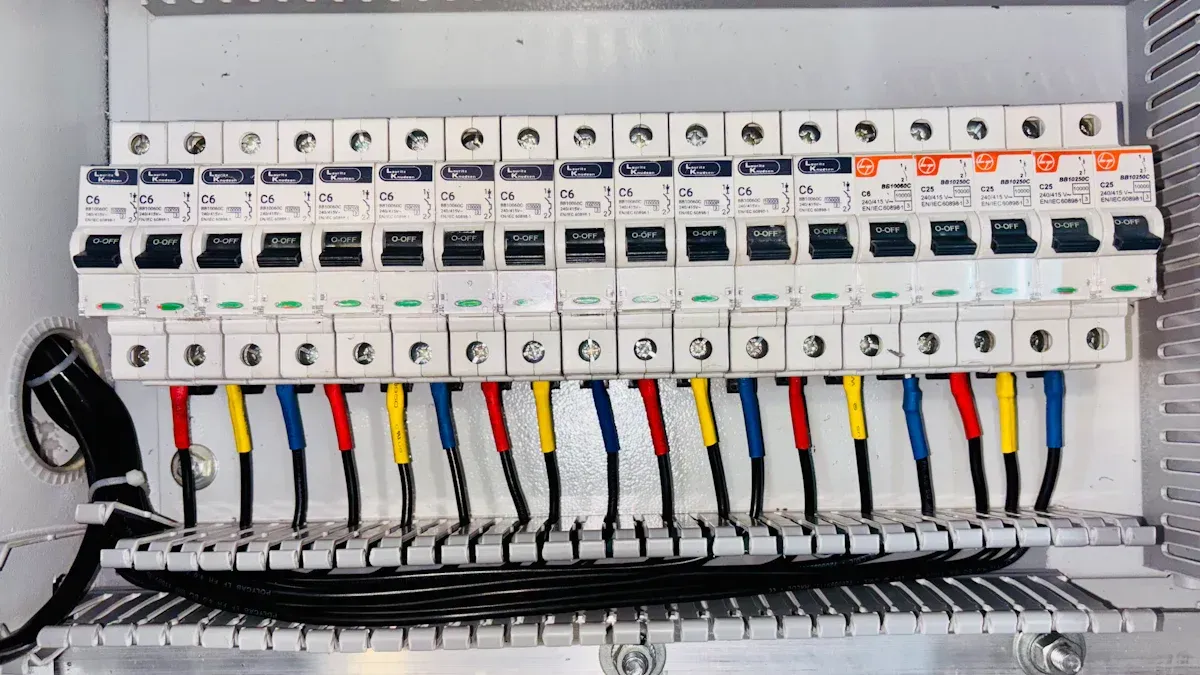
Current Rating
You must pick a circuit breaker with the right current rating. Miniature Circuit Breakers (MCBs) work for small currents. Molded Case Circuit Breakers (MCCBs) handle much bigger currents. This is why you use them in different places.
Type | Interrupting Capacity | Voltage Rating | |
|---|---|---|---|
MCB | Up to 100 amps | 10,000 to 18,000 amps | 240V to 415V |
MCCB | 100 to 2500 amps | 10,000 to 200,000 amps | Exceeds 1000V |
If you need to protect a lamp or a small device, use an MCB. For big machines or main power lines, use an MCCB. The higher current rating of the MCCB makes it good for tough jobs.
Note: Always check the current rating before you choose a breaker. Picking the wrong one can be unsafe.
Application
Where you put your breaker is important. MCBs and MCCBs are made for different places.
MCBs | MCCBs | |
|---|---|---|
Residential | Suitable for lower load circuits typically found in homes | Not typically used |
Commercial | Suitable for smaller businesses with low-current needs | Designed for higher loads |
Industrial | Not suitable | Designed for heavy-duty applications with customizable protection |
MCBs protect wires in homes and small offices. They act fast if there is too much current.
MCCBs are used in factories and big buildings. They can break bigger currents and have settings you can change.
Pick an MCB for lights at home or small office tools. For a factory or big machines, an MCCB is better.
Trip Mechanism
How a breaker trips is important for safety. Both MCBs and MCCBs use thermal and magnetic trips, but they are not the same.
MCBs | MCCBs | |
|---|---|---|
Trip Mechanism | Thermal and magnetic | Thermal and magnetic |
Current Handling | Lower current applications | Higher current handling |
Adjustability | Fixed settings | Adjustable settings |
Response to Overload | Slower response due to simpler design | Faster response with advanced mechanisms |
Application Suitability | Residential and light commercial | Industrial environments |
MCBs have fixed trip points. They use a metal strip for heat and a coil for magnetic trips. This works well for simple loads.
MCCBs let you change the trip current and time. This helps protect many types of machines in factories.
Tip: You can adjust MCCBs to protect each circuit just right.
Size
The size of your breaker matters for where you put it. MCBs are small and fit in tight spaces. MCCBs are bigger because they handle more current.
Type | Application in Space-Constrained Panels | |
|---|---|---|
MCB | More compact, e.g., 17.5mm wide per pole | Advantageous in limited spaces |
MCCB | Larger and more robust due to higher current and breaking capacity | Less suitable for space-limited panels |
You can put MCBs on DIN rails, which saves space. They are easy to install.
MCCBs need screws to mount and more room for air and wires.
If your panel is small, an MCB is easier to fit. For bigger systems, you need space for the larger MCCB.
Price
Price is another big difference. MCBs cost less than MCCBs. MCCBs cost more because they do more and last longer.
A 100A MCCB in the US costs about $50 to $150. Special MCCBs for factories can cost $500 or more.
MCBs are cheaper and need less care. MCCBs may need more care, but they last longer if you look after them.
Feature | MCBs | MCCBs |
|---|---|---|
Initial Cost | Higher than simple fuses | Higher initial cost |
Long-term Costs | Lower due to no consumables | Can be lower in certain cases |
Maintenance | Resettable, no replacement | May require more maintenance |
Note: Taking care of your breaker helps it last longer and saves money.
You can find the main differences between Miniature Circuit Breakers and Molded Case Circuit Breakers in this table:
Feature | MCBs | MCCBs |
|---|---|---|
Current Rating | Up to 63 Amps | Up to 2,500 Amps or more |
Size and Weight | Smaller and lighter | Bulkier for higher power needs |
Trip Mechanism | Simple thermal-magnetic | Various mechanisms available |
Application | Residential and light industrial | Heavy-duty industrial/commercial |
Price | Generally less expensive | Costlier with advanced features |
Use an MCB for home circuits or small offices. Pick an MCCB for factories or big machines. MCCBs work well where there is lots of power. The right breaker stops fires and keeps your equipment safe. It also helps your electrical system work well.
FAQ
What is the main job of a Miniature Circuit Breaker (MCB)?
A Miniature Circuit Breaker (MCB) helps keep homes and offices safe. It stops too much current or short circuits from hurting your wires or devices.
When should you choose a Molded Case Circuit Breaker (MCCB)?
You should use a Molded Case Circuit Breaker (MCCB) in big buildings or factories. It can handle more current and keeps large machines safe from electrical problems.
Can you reset both MCB and MCCB after a trip?
Both Miniature Circuit Breakers (MCBs) and Molded Case Circuit Breakers (MCCBs) can be reset after they trip. This lets you turn the power back on fast.