Abstract
The selection of a vacuum circuit breaker represents a foundational decision in the design and operation of medium-voltage electrical systems. This process extends beyond simple catalog selection, demanding a nuanced understanding of the interplay between system parameters and equipment capabilities. An improperly specified breaker can compromise system reliability, jeopardize personnel safety, and lead to significant financial losses from downtime and equipment failure. This article presents a systematic, seven-point checklist to guide engineers, technicians, and procurement specialists through the specification process. It examines the critical parameters of rated voltage, insulation levels, short-circuit breaking capacity, continuous current handling, and application-specific environmental and operational demands. By exploring the theoretical underpinnings and practical implications of each point, from the physics of arc quenching in a vacuum to the long-term considerations of maintenance and manufacturer support, this guide aims to foster a deeper comprehension of the technology. The objective is to empower professionals to make informed, precise decisions that ensure the long-term integrity and performance of their power distribution networks.
Key Takeaways
Verify system voltage and Basic Insulation Level (BIL) to prevent insulation failure.
Calculate the maximum fault current to select a breaker with adequate breaking capacity.
Assess continuous load current, including future growth, to avoid thermal overload.
Choose the right vacuum circuit breaker by matching it to its operational environment.
Evaluate the required mechanical and electrical endurance for the specific application.
Specify control and protection features compatible with your switchgear and network.
Consider the total cost of ownership, including maintenance needs and parts availability.
Table of Contents
A Practical 7-Point Checklist for Selecting the Right Vacuum Circuit Breaker
6. Specifying Control, Protection, and Communication Features
A Practical 7-Point Checklist for Selecting the Right Vacuum Circuit Breaker
Choosing the correct vacuum circuit breaker is not merely an act of procurement; it is an exercise in engineering foresight. The breaker stands as a silent guardian of a much larger, more expensive system. Its primary function is to conduct normal load current, but its most profound purpose is to protect the system from the immense destructive energy of a short-circuit fault. A mistake in its selection can have consequences that ripple through an entire facility, causing catastrophic failures, extended outages, and posing a grave risk to human life. To navigate this complex decision, I have structured this guide as a methodical checklist, a series of seven examinations that, if followed diligently, will lead you to a choice that is safe, reliable, and economically sound. We will journey together through each point, moving from fundamental electrical principles to the practical realities of long-term ownership.
1. Verifying System Voltage and Insulation Levels (BIL)
Our first step is perhaps the most fundamental. Before we can consider any other parameter, we must establish the electrical environment in which the breaker will live. Voltage is the "pressure" of the electrical system, and ensuring the breaker is rated to handle that pressure—both during normal operation and under transient stress—is the bedrock of a safe installation.
Understanding Rated Voltage vs. System Voltage
It is a common point of confusion for those new to power systems to see a variety of voltage numbers and assume they are interchangeable. Let's clarify this. Imagine your power system is designed to operate at a nominal voltage, for instance, 11kV. This is the "system voltage." However, power systems are not perfectly stable; their voltage fluctuates. A breaker, therefore, is given a "rated maximum voltage," such as 12kV. This signifies the highest voltage at which the breaker is designed to operate continuously and safely interrupt faults.
Think of it like the maximum pressure rating on a pipe. While the water normally flows at a certain pressure, the pipe must be strong enough to handle potential surges. A 12kV-rated vacuum circuit breaker is perfectly suited for an 11kV nominal system because it provides that margin of safety. You would not, however, use that same 12kV breaker on a 13.8kV system. The selection rule is straightforward: the breaker's rated maximum voltage must be equal to or greater than the maximum operating voltage of the system it is intended to protect.
The Concept of Basic Insulation Level (BIL)
While rated voltage deals with the continuous pressure of the system, the Basic Insulation Level, or BIL, addresses a different threat: transient overvoltages. These are extremely high, short-duration voltage spikes caused by events like lightning strikes or switching operations elsewhere in the network. A lightning strike hitting a power line miles away can send a traveling wave of voltage rushing toward your equipment at nearly the speed of light.
The BIL rating of a vacuum circuit breaker, expressed in kilovolts (kV), represents the crest value of a standard voltage impulse wave that the breaker's insulation can withstand without failing. It is a measure of its "dielectric strength" against these sudden, violent surges. A breaker with a 95kV BIL rating has been tested to survive a voltage spike of that magnitude.
Consider the analogy of a coastal wall. The rated voltage is like the wall's height needed to hold back the daily high tide. The BIL is its ability to withstand a massive tsunami wave that crashes and recedes in moments. Without adequate BIL, a lightning-induced surge could flash over the breaker's insulators, causing a catastrophic short circuit and destroying the equipment it was meant to protect. Matching the BIL of the breaker to the system's insulation coordination scheme is a non-negotiable aspect of safe design (Kuffel et al., 2000).
Matching VCB Ratings to Your Power System
So, how do we bring this together in a practical sense? The process involves a careful review of your power system's design specifications.
First, identify the nominal system voltage. Is it 4.16kV, 11kV, 24kV, or 33kV?
Second, determine the maximum continuous operating voltage. Utility regulations and system characteristics will dictate this. For example, an 11kV nominal system might operate as high as 11.5kV under certain conditions. Your choice of breaker must exceed this value, making a 12kV-rated breaker the appropriate selection.
Third, consult the system's insulation coordination study or standard practice for your industry and region to determine the required BIL. For a 12kV system, a BIL of 75kV or 95kV is common, depending on the exposure to lightning and other transient sources. A substation located in a high-lightning area like Florida will require a higher BIL than one in a less exposed region. The choice of a breaker must meet or exceed this required BIL. A breaker with a higher BIL is always acceptable from a performance standpoint, though it may come at a higher cost. The reverse is never true.
2. Calculating Required Breaking and Making Capacity
If voltage is the pressure, then current is the flow. During a short circuit, that flow becomes a raging, destructive torrent. The second point on our checklist is to ensure our vacuum circuit breaker can act as a dam, capable of stopping that torrent without failing. This capability is known as its "breaking capacity."
Demystifying Short-Circuit Breaking Current
When a fault occurs—perhaps a tree falls on a power line or an animal gets into a switchgear cabinet—it creates a low-impedance path for electricity to flow. According to Ohm's Law (I = V/Z), when the impedance (Z) drops to near zero, the current (I) skyrockets to thousands of times its normal value. This is a short-circuit current.
The "rated short-circuit breaking current," measured in kiloamperes (kA), is the maximum fault current a vacuum circuit breaker is certified to interrupt successfully. For instance, a breaker rated for 31.5kA can extinguish an arc carrying 31,500 amperes of current at its rated voltage. During this interruption, the breaker must contain the immense thermal and magnetic forces generated by the arc within its vacuum interrupter. The vacuum's high dielectric strength allows it to extinguish the arc when the current passes through a natural zero-crossing in the AC waveform, all within a few milliseconds (Glinkowski, 2018).
Selecting a breaker with a breaking capacity lower than the potential fault level of the system is the most dangerous mistake one can make. It is akin to building a dam designed for a gentle stream on a river prone to flash floods. When a major fault occurs, the under-rated breaker will fail, potentially exploding and causing a much wider and more destructive outage.
Why Asymmetrical Breaking Current Matters
The physics of fault currents adds a layer of complexity. An AC fault current is not a perfect sine wave. It has two components: a symmetrical AC component and a decaying DC component, or "DC offset." The sum of these two creates an "asymmetrical" current, where the peaks of the waveform are shifted away from the zero axis.
This matters immensely because the magnetic forces acting on the breaker's components are proportional to the square of the current. The first peak of an asymmetrical fault current can be significantly higher than the peaks of a purely symmetrical fault. Therefore, the breaker must not only interrupt the current but also withstand the immense mechanical shock during that first, most violent cycle.
Standards like IEC and IEEE specify how to account for this asymmetry. The rated short-circuit breaking current (often called the symmetrical breaking current) is the primary value you will see, but the breaker is also tested for a corresponding asymmetrical capability, which is determined by the system's X/R ratio (the ratio of its reactance to its resistance). A higher X/R ratio leads to a slower-decaying DC offset and thus a more severe asymmetrical current. When you perform a short-circuit study, the results will give you both the symmetrical and asymmetrical fault currents your system can produce. You must ensure your chosen vacuum circuit breaker can handle both.
Peak Current and Making Capacity Explained
There is another critical rating: the "rated short-circuit making current." Imagine the worst-case scenario: you are closing a breaker directly into an existing, "bolted" short circuit. The current will rush in instantaneously, reaching its absolute maximum value in the first half-cycle. This is the "peak current," and the breaker's ability to mechanically close and latch against the violent electromagnetic repulsion forces it generates is its making capacity.
This value is typically 2.5 to 2.7 times the symmetrical breaking current rating. For example, a breaker with a breaking capacity of 40kA will have a making capacity in the range of 100-108kA. It is a measure of the mechanism's strength and the contacts' ability to close without welding themselves shut before the trip signal has a chance to operate. While breaking capacity is about stopping the flow, making capacity is about surviving the initial onslaught when starting the flow into a fault.
A Practical Example of Fault Current Calculation
To determine the required breaking capacity, a professional engineer must perform a short-circuit analysis of your power system. This involves creating a detailed model of the entire network, from the utility source down to the location of the breaker. The model includes the impedance of transformers, cables, and motors.
The simplified concept is Ifault = Vsource / Ztotal, where Ztotal is the sum of all impedances in the fault path. For example, the utility source might have a fault level of 500 MVA. This, combined with the impedance of your main transformer (e.g., a 2000 kVA transformer with 6% impedance) and the cables feeding the switchgear, will determine the "prospective short-circuit current" at the breaker's terminals.
If this calculation reveals a maximum symmetrical fault current of 28 kA, you cannot simply choose a 28 kA breaker. You must apply a safety margin and consider future system changes. Perhaps the utility strengthens its grid, or you add a large motor, either of which could increase the available fault current. Therefore, selecting the next standard rating up, such as a vacuum circuit breaker with a 31.5 kA breaking capacity, would be the prudent engineering choice. Products like a 12kV, 31.5kA indoor breaker are designed precisely for these common industrial substation scenarios.
3. Assessing Continuous Current and Load Requirements
After ensuring the breaker can survive the system's voltage and potential fault currents, we turn our attention to its everyday job: carrying the normal load current. This is a less dramatic but equally vital parameter that dictates the breaker's thermal performance and long-term health.
The Difference Between Load Current and Rated Current
Every piece of equipment in your facility—motors, lights, heaters, computers—draws electrical current to operate. The sum of all this current that flows through the breaker during normal operation is the "load current." Like the flow of traffic on a highway, this current can vary throughout the day.
The "rated continuous current" of a vacuum circuit breaker, measured in amperes (A), is the maximum current it can carry continuously without its internal components, particularly the connection points and main conductors, exceeding their specified temperature limits. Common ratings you will encounter are 630A, 1250A, 2000A, and 3150A.
The fundamental rule is that the breaker's rated continuous current must be greater than the maximum load current it is expected to serve. If you have a feeder that supplies a maximum of 900A to a section of a manufacturing plant, you would need to select a breaker with the next standard rating up, which would be 1250A. Using a 630A breaker in this scenario would cause it to persistently overheat. Overheating leads to the degradation of insulation, increased contact resistance, and eventual premature failure. It is a slow, insidious failure mode, unlike the explosive failure of an under-rated breaking capacity.
Factoring in Future Load Growth
A common oversight is to select a breaker based only on the current load. A facility is not a static entity. You might add a new production line in five years, or a commercial building might lease space to a tenant with high power demands like a data center. If the breaker was sized with no margin, this new load could push it into an overloaded state.
A wise design practice is to account for future load growth. A typical approach is to calculate the current maximum demand and add a margin of 25-50%, depending on the projected growth of the facility. So, if your current maximum load is 800A, adding a 50% margin gives you a design current of 1200A. This would lead you to select a 1250A vacuum circuit breaker, providing ample capacity for years to come. This foresight prevents a costly "rip and replace" project down the line, where the entire switchgear unit might need to be changed just to accommodate a higher-rated breaker.
Temperature Rise and Derating Factors
The rated continuous current is not an absolute number; it is based on a specific set of standard conditions defined by bodies like IEEE and IEC. These standards typically assume a certain maximum ambient air temperature (e.g., 40°C or 104°F) and altitude (e.g., below 1000 meters or 3300 feet).
If your vacuum circuit breaker will be installed in an environment that exceeds these conditions, its ability to dissipate heat is reduced, and its effective current-carrying capacity must be "derated."
High Ambient Temperature: A breaker installed in a poorly ventilated switchgear room in Arizona or a hot industrial setting like a foundry will not be able to cool itself as effectively. The manufacturer's technical data will provide derating curves or factors. For example, a 1250A breaker might only be able to carry 1150A continuously at an ambient temperature of 50°C (122°F).
High Altitude: At higher altitudes, the air is less dense. Since most medium-voltage breakers are air-insulated and air-cooled, the thinner air is less effective at transferring heat away from the conductors. It also has a lower dielectric strength, which can affect the external insulation performance. A breaker installed in Denver or Mexico City will need to be derated or a higher-rated unit selected to compensate.
Ignoring derating factors is equivalent to overloading the breaker. You must always evaluate the specific installation environment and apply the manufacturer's guidelines to ensure the breaker operates within its thermal limits.
4. Analyzing the Application and Environmental Conditions
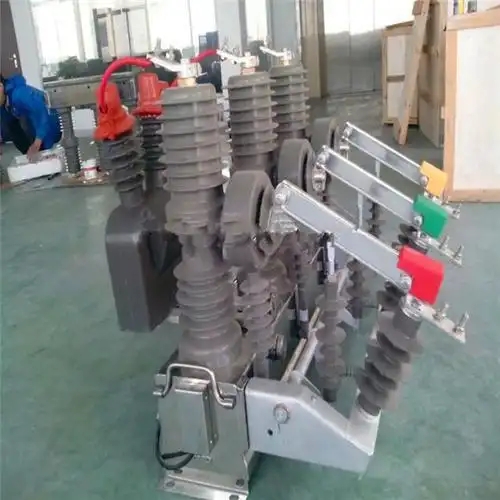
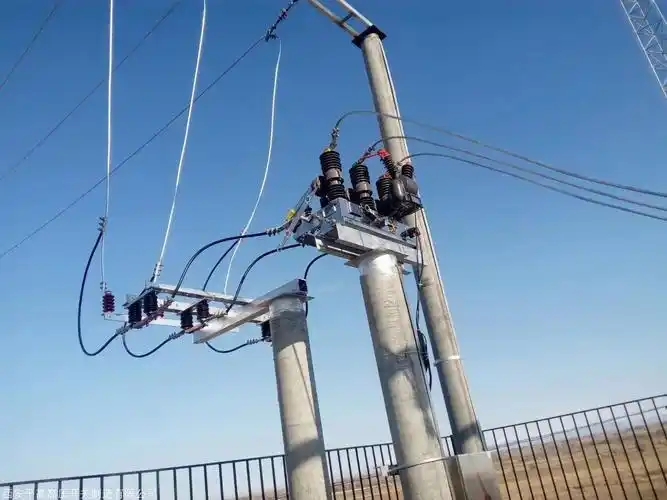
A vacuum circuit breaker is not a one-size-fits-all device. The specific job it will do and the physical environment it will inhabit are major factors in its selection. A breaker destined for a clean, climate-controlled indoor substation has very different design requirements from one that will be mounted on a pole and exposed to rain, ice, and sun for 30 years.
Indoor vs. Outdoor: A Tale of Two Breakers
The most fundamental split in VCB applications is between indoor and outdoor use.
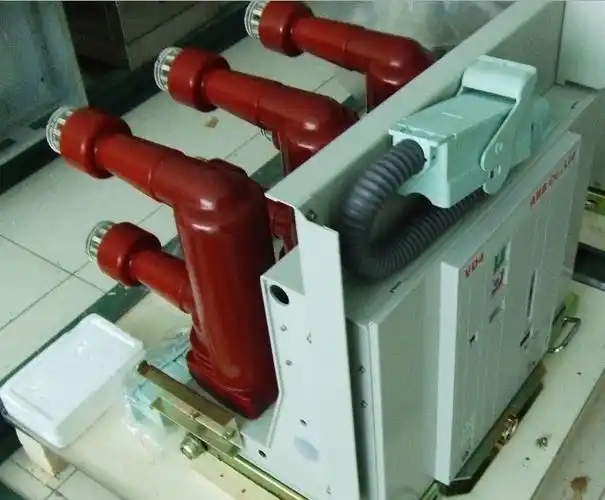
Indoor Vacuum Circuit Breakers, such as a typical 12kV, 1250A model, are designed for a protected environment. They are usually part of a larger metal-clad switchgear assembly or a VCB panel. Their enclosure is primarily for personnel safety and to keep out dust and vermin (e.g., NEMA 1 or IP4X). The focus is on compact, modular design for easy integration into switchgear lineups. The operating mechanism, control wiring, and bushings are all designed for the stable conditions found inside a building.
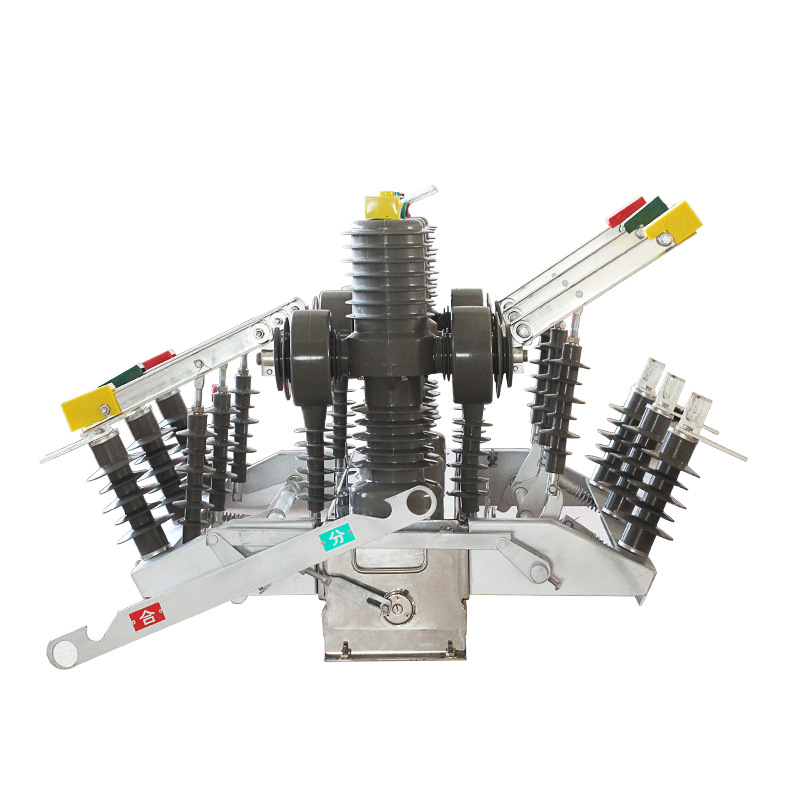
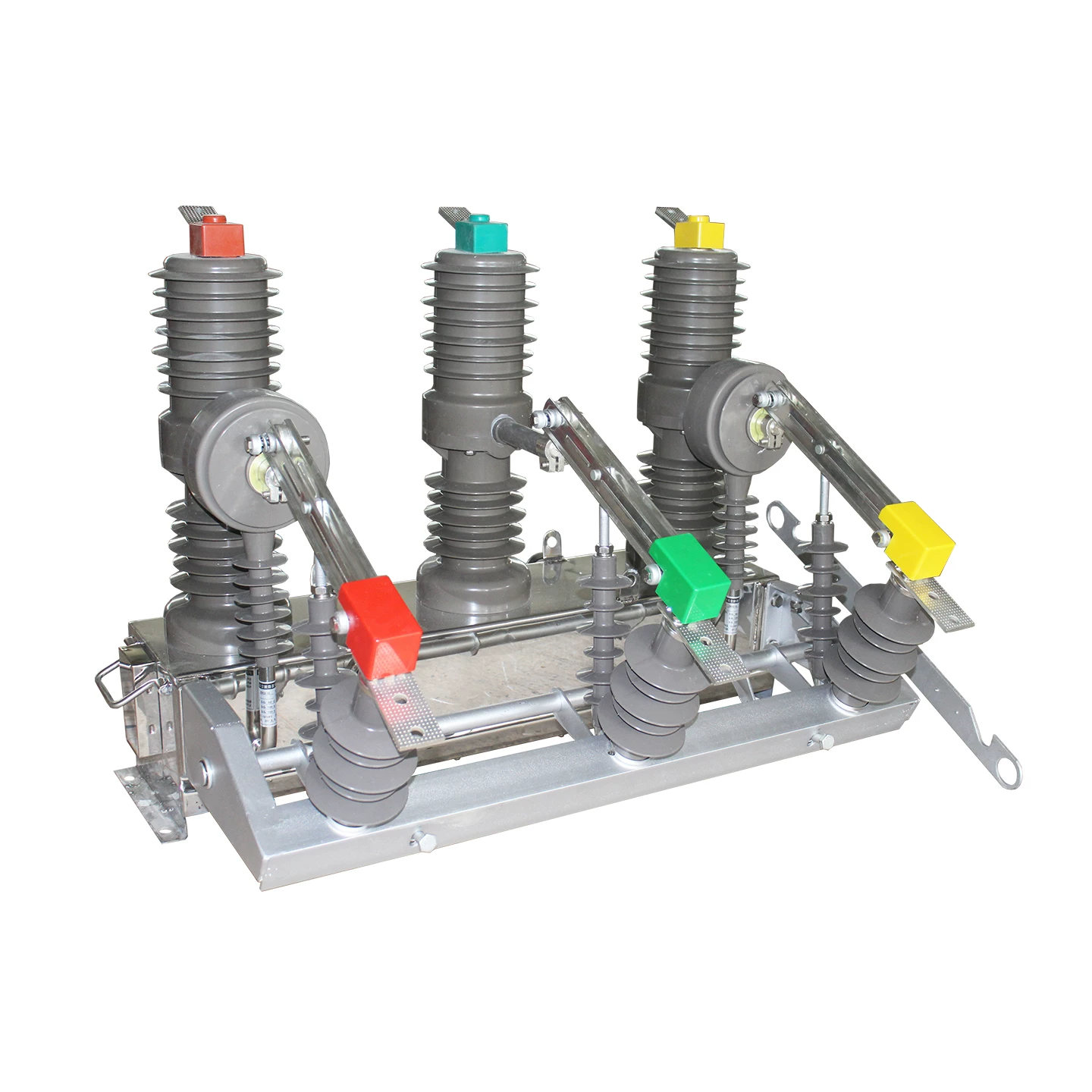
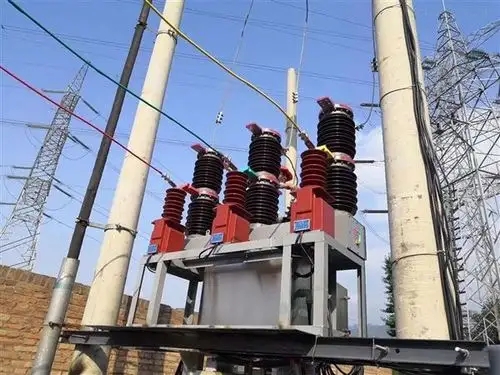
Outdoor Vacuum Circuit Breakers, such as a 36kV, 2000A unit for a substation, are designed to withstand the elements. Their construction is far more robust.
Enclosure: The tank or housing is weatherproof (e.g., NEMA 3R or IP65), designed to prevent the ingress of rain, snow, and dust.
Insulators: They use porcelain or polymer bushings with long creepage distances. The creepage distance is the path over the surface of the insulator; a longer path is needed to prevent flashovers when the insulator is contaminated with moisture, salt, or industrial pollution.
Materials: All external components are made from corrosion-resistant materials like stainless steel, aluminum, or hot-dip galvanized steel.
Mechanism Housing: The operating mechanism is housed in a cabinet with heaters to prevent condensation and ensure reliable operation in freezing temperatures.
The choice between an indoor and outdoor unit is usually obvious, but it dictates a completely different class of product. An outdoor VCB can always be used indoors, but the reverse is never permissible without placing the indoor breaker inside a separate, purpose-built outdoor enclosure.
Below is a table comparing the key features of typical indoor and outdoor vacuum circuit breakers.
| Feature | Indoor Vacuum Circuit Breaker | Outdoor Vacuum Circuit Breaker |
|---|---|---|
| Typical Voltage Range | 3.3kV – 24kV | 15kV – 36kV (and higher) |
| Enclosure Type | Part of switchgear; NEMA 1/IP4X | Standalone; Weatherproof NEMA 3R/IP65 |
| Insulator Material | Epoxy Resin | Porcelain or Silicone Rubber |
| Creepage Distance | Standard | Extended/Long |
| Corrosion Protection | Standard indoor paint finish | Galvanized steel, stainless hardware, marine-grade paint |
| Mechanism Protection | Protected by a switchgear room | Heated and weatherproof cabinet |
| Primary Application | Industrial plants, commercial buildings | Substations, pole-mounted reclosers, wind farms |
| Example Product | 12kV, 1250A, 31.5kA VCB for indoor switchgear | 36kV, 2000A, 40kA VCB for outdoor substations |
Special Considerations for Harsh Environments
Beyond the basic indoor/outdoor distinction lie more specific environmental challenges. If your breaker is destined for a coastal area with salt spray, a chemical plant with corrosive vapors, or a mine with high levels of dust, standard equipment may not suffice.
Corrosive Environments: For coastal or industrial applications, you must specify enhanced corrosion protection. This could mean stainless steel tanks and mechanism housings, special multi-layer paint systems, and tin- or silver-plated copper connections. The long-term integrity of the breaker depends on its ability to resist being eaten away by its environment.
Seismic Zones: In areas prone to earthquakes, such as California or Japan, equipment must be seismically qualified. The vacuum circuit breaker and its supporting structure must be tested or analyzed to withstand the ground accelerations expected during a seismic event without suffering damage that would impair its function.
High Altitudes: As mentioned earlier, high altitudes require derating for both current-carrying capacity and dielectric strength. You may need to select a breaker from the next highest voltage class to achieve the necessary external insulation performance.
Application-Specific Duties: Capacitor Switching and Motor Starting
Not all switching operations are the same. While interrupting a fault is the most severe duty, some normal operations place unique stresses on a breaker.
Capacitor Bank Switching: Switching capacitor banks is a notoriously tricky task. When energizing a bank, the current can be very high with a high frequency, a phenomenon known as "inrush." When de-energizing a bank, it is possible for the voltage to get "trapped" on the capacitor, and if the breaker re-ignites, it can create a severe overvoltage transient. A vacuum circuit breaker intended for this duty must be specifically tested and certified as "C2" (for frequent switching) or "C1" (for infrequent switching) according to IEEE standards. This ensures the vacuum interrupter is designed to handle the high inrush and avoid restrikes (Reininger et al., 2011).
Motor Starting: Starting large, medium-voltage motors involves high inrush currents that last for several seconds. While not a fault, this is a heavy load. Frequent starting and stopping of large motors places significant thermal and mechanical stress on a breaker.
Arc Furnace Switching: This is perhaps the most demanding application. An arc furnace for steelmaking requires the breaker to operate many times per day, switching highly inductive and unstable loads. A standard breaker might have a mechanical life of 20,000 operations, but a furnace-duty breaker may need to be rated for 100,000 operations or more.
For any of these special applications, you cannot simply select a standard-duty vacuum circuit breaker. You must consult with the manufacturer and specify a breaker designed and tested for that particular duty.
5. Evaluating Mechanical and Electrical Endurance Needs
A circuit breaker is a mechanical device. It has moving parts: linkages, springs, latches, and contacts. Every time it opens or closes, these parts experience wear. The fifth point on our checklist is to match the endurance of the breaker to the expected frequency of operation in its intended role.
What Do Mechanical and Electrical Life Ratings Mean?
The endurance of a vacuum circuit breaker is defined by two key ratings:
Mechanical Endurance (or Life): This is the total number of close-open (C-O) operations the breaker's mechanism can perform without any current flowing through the main contacts. It is a measure of the longevity of the operating mechanism—the springs, bearings, and latches. A typical rating for a distribution-class vacuum circuit breaker is 10,000 to 20,000 operations. This test is done "dry," without electrical load, to isolate the mechanical components' durability.
Electrical Endurance (or Life): This rating specifies the number of times the breaker can interrupt a certain level of current before the contacts inside the vacuum interrupter are eroded to a point where they need replacement. Contact erosion is a natural consequence of arcing. Even though the arc duration in a vacuum is very short, a tiny amount of contact material is vaporized with each interruption. The electrical life is not a single number; it is a curve. A breaker might be able to interrupt its full rated short-circuit current (e.g., 31.5kA) a few dozen times, but it can interrupt its normal load current (e.g., 1250A) many thousands of times. The vacuum interrupter's life is consumed with each operation, with high-current interruptions consuming much more life than low-current ones.
Think of it this way: Mechanical life is like the lifespan of a car's chassis and engine, while electrical life is like the tread on its tires. You can drive on a smooth highway for thousands of miles with little tire wear (load switching), but a few high-speed emergency braking maneuvers (fault interruptions) will wear down the tread much faster.
High-Frequency Operations: Steel Mills and Arc Furnaces
For most applications in utility distribution or industrial power systems, a breaker might only operate a few times a year for maintenance, and perhaps once or twice in its lifetime to clear a fault. For these applications, a standard mechanical life of 20,000 operations is more than sufficient; the breaker will likely be replaced for other reasons long before its mechanism wears out.
However, certain industrial processes demand extremely high switching frequency. The prime example is an electric arc furnace (EAF) in a steel mill. The breaker controlling the furnace transformer may need to operate 50-100 times per day. A standard breaker with a 20,000-operation life would be worn out in less than a year.
For these duties, specialized high-endurance vacuum circuit breakers are required. These breakers feature incredibly robust, long-life mechanisms rated for 100,000, 150,000, or even more operations. They also use specially designed vacuum interrupters with advanced contact materials (like Copper-Chromium) that are highly resistant to arc erosion, providing a correspondingly high electrical life. Selecting a standard breaker for an EAF application is a guarantee of frequent failures and costly production downtime.
Aligning Endurance with Maintenance Cycles
Understanding the endurance ratings allows you to plan a logical maintenance strategy. The vacuum interrupter itself is a sealed, maintenance-free component. Its life is monitored by measuring contact wear, often through a simple visual indicator on the outside of the breaker. When the wear limit is reached, the vacuum interrupter must be replaced.
The operating mechanism, however, does require periodic maintenance, such as lubrication and inspection, as recommended by the manufacturer. The maintenance interval is often tied to the number of operations. For example, a manufacturer might recommend a basic inspection every 2,000 operations and a more thorough overhaul every 10,000 operations.
By choosing a breaker whose endurance aligns with your application's operational frequency and your facility's maintenance capabilities, you can create a predictable and cost-effective lifecycle plan. For a critical feeder that is rarely switched, a standard 20,000-operation breaker is a perfect fit. For a heavily used motor starter, a higher endurance model might reduce the frequency of maintenance interventions and improve overall plant availability.
6. Specifying Control, Protection, and Communication Features
We have established the "muscle" of the breaker—its ability to handle voltage, carry current, and interrupt faults. Now we must consider its "nervous system"—the components that tell it when to act. The correct specification of control and protection features is what transforms a simple switch into an intelligent protective device.
The Role of the Trip Coil and Closing Mechanism
At its core, a vacuum circuit breaker is operated by an energy storage mechanism, most commonly a set of powerful springs. The springs are charged either manually with a handle or automatically by a small electric motor. Once charged, the breaker is ready to close.
Closing Coil (or Motor): To close the breaker, an electrical signal is sent to a closing coil (a solenoid) or directly to the charging motor, which releases the closing springs. The energy stored in these springs forces the contacts together in a fraction of a second.
Trip Coil: The breaker is held in the closed position by a latch. To open it, a signal is sent to the trip coil. This solenoid retracts the latch, releasing the opening springs, which rapidly pull the contacts apart, drawing and extinguishing the arc inside the vacuum interrupter.
When specifying a breaker, you must choose the correct control voltages for these components. Will the trip and close signals come from a 24V DC battery system, a 48V DC system, or a 125V DC system? Or will they be AC-powered? The coils in the breaker must match the control voltage available in your switchgear. This seems like a small detail, but ordering a breaker with 48V DC coils for a station with a 125V DC supply will lead to an expensive and time-consuming problem.
Integrating with Modern Protective Relays
The trip coil is only half of the equation. Something must provide the "intelligence" to tell the trip coil when to operate. That "something" is a protective relay. Modern relays are sophisticated microprocessor-based devices that monitor the current and voltage at the breaker.
A relay can be programmed to detect a wide range of abnormal conditions:
Overcurrent: The hallmark of a short circuit.
Earth Fault: Current leaking from the intended circuit to the ground.
Under/Over Voltage: The system voltage is moving outside its acceptable band.
Directional Fault: Detecting whether a fault is upstream or downstream from the breaker.
The integration between the relay and the vacuum circuit breaker is paramount. The relay's output contacts are wired to the breaker's trip coil. When the relay detects a fault, its contact closes, energizing the trip coil and opening the breaker in milliseconds. A VCB panel with an integrated switchgear assembly is a pre-engineered solution where the relay, breaker, instrument transformers, and all associated wiring are designed and tested together as a system. This greatly simplifies installation and commissioning, as seen in common 11kV, 630A modular cubicle designs for utility networks.
Smart Grid Integration and IEC 61850 Communication
The world of power distribution is moving rapidly toward "smart grids." In a smart grid, devices on the network communicate with each other and with a central control system to optimize performance, improve reliability, and enable faster restoration after an outage.
The modern vacuum circuit breaker is a key player in this evolution. Instead of relying on a web of discrete copper wires for control and status indication, advanced breakers can communicate digitally over a fiber optic network using the IEC 61850 protocol. This is the international standard for communication in substations.
A breaker equipped with an IEC 61850 interface can provide a wealth of data to the SCADA (Supervisory Control and Data Acquisition) system:
Breaker status (open/closed/tripped)
Real-time current and voltage measurements
Fault records with detailed oscillography
Mechanism health and contact wear information
Number of operations
It also allows for remote control (opening and closing the breaker) over the same network. Specifying a vacuum circuit breaker with IEC 61850 capability is a forward-looking decision that positions your power system for future automation and advanced diagnostic capabilities. It transforms the breaker from a simple protective device into an intelligent node on your electrical network.
7. Considering Long-Term Maintenance and Support
Our final consideration moves beyond the technical specifications of the breaker itself to the practicalities of its entire lifecycle. A vacuum circuit breaker is a long-term asset, expected to provide reliable service for 20 to 30 years or more. The total cost of ownership is not just the initial purchase price; it is a combination of that price, the cost of maintenance, and the potential cost of downtime.
The "Maintenance-Free" Myth of the Vacuum Interrupter
One of the most significant advantages of a vacuum circuit breaker is the vacuum interrupter (VI) itself. The contacts are sealed in a high vacuum, protected from oxidation and contamination. As a result, the VI is considered a "maintenance-free" component in the sense that you cannot and should not ever open it. Its internal condition is what it is.
However, this has led to a common misconception that the entire breaker is maintenance-free. This is not true. The VCB is a system, and the VI is just one part of it. The operating mechanism, with its springs, linkages, dampers, and auxiliary switches, is a complex mechanical assembly that requires periodic inspection, cleaning, and lubrication to ensure it can deliver the force and speed needed to operate the VI correctly. Neglecting mechanism maintenance can lead to a "slow trip" or a failure to latch, which could be disastrous during a fault. A proper maintenance program, as defined by the manufacturer, is essential for ensuring long-term reliability (Slade, 2011).
The Importance of Spare Parts Availability
Even with the best maintenance, parts can eventually wear out or fail. An auxiliary switch may fail, a charging motor may burn out, or a trip coil may need replacement. What happens when you need a spare part ten or fifteen years after the breaker was installed?
This is where the reputation and stability of the manufacturer become so important. A reputable manufacturer will have a clear policy on long-term support and maintain a stock of critical spare parts, such as trip coils, mechanisms, and contact assemblies, for many years after a product line is discontinued. When you choose a supplier, you are not just buying a piece of hardware; you are entering into a long-term relationship. Inquiring about the availability and lead time for key spares, like a vacuum interrupter for a 24kV VCB, is a prudent step in the procurement process. A low initial price from an obscure supplier may look attractive, but it can become incredibly expensive if a simple part failure leads to weeks of downtime because spares are unavailable.
Evaluating Manufacturer Support and After-Sales Service
What happens when your team encounters a problem they cannot solve? Do you have access to qualified technical support? Can the manufacturer provide on-site field service if needed?
The quality of after-sales service is a crucial, though often overlooked, selection criterion. A good manufacturer provides comprehensive support, including:
Detailed Documentation: Clear and accurate installation, operation, and maintenance manuals.
Technical Support: Access to experienced engineers who can help diagnose problems over the phone or by email.
Field Service: A network of trained technicians who can perform commissioning, complex repairs, and life-extension upgrades.
Training: Offering training courses for your own maintenance personnel on the proper care of the equipment.
Before making a final decision, evaluate the manufacturer's support infrastructure. Ask for references from other customers. A strong support system is like an insurance policy; you hope you never need it, but it provides immense value and peace of mind when you do. Choosing a partner who provides robust technical support and installation guidance ensures that your investment is protected for its entire operational life.
Frequently Asked Questions (FAQ)
What is the main advantage of a vacuum circuit breaker over an SF6 breaker? The primary advantage is environmental. Vacuum is a benign insulating medium, whereas SF6 (sulfur hexafluoride) is a potent greenhouse gas with a global warming potential over 23,000 times that of CO2. Leaks from SF6 breakers contribute to climate change, and the gas requires careful handling and end-of-life management. VCBs eliminate this environmental risk.
How often does a vacuum circuit breaker need to be serviced? This depends on the manufacturer's recommendations and the application's intensity. A typical maintenance interval for the mechanism might be every 3-5 years or after a certain number of operations (e.g., 2,000). The vacuum interrupter itself requires no internal maintenance, only periodic contact wear inspection and high-voltage integrity tests.
Can I use an indoor VCB outdoors if it's inside a weatherproof kiosk? Yes, this is a common practice. Placing an indoor-rated switchgear assembly or breaker inside a purpose-built, weatherproof "walk-in" enclosure (often called a Power Distribution Center or PDC) is a viable and often cost-effective solution for creating an outdoor substation. The kiosk must be designed to manage temperature and condensation.
What happens if the vacuum inside the interrupter is lost? If the vacuum is compromised, the interrupter loses its dielectric strength and its ability to extinguish an arc. A modern vacuum circuit breaker will fail to interrupt a fault current and may not even be able to withstand the normal system voltage, leading to an internal flashover. This is a critical failure, which is why vacuum integrity is a key factory and commissioning test.
Is a higher breaking capacity always better? From a safety and performance perspective, a higher breaking capacity is never a problem. A 40kA breaker will safely clear a 25kA fault. However, breakers with higher breaking capacities are physically larger, heavier, and more expensive. The correct approach is to select a breaker with a rating that safely exceeds the calculated maximum fault duty of the system, with a reasonable margin for future growth. Grossly over-specifying is not economically efficient.
Conclusion
The journey through the seven points of our checklist reveals that the selection of a vacuum circuit breaker is a process of disciplined engineering analysis rather than a simple commercial transaction. It requires a holistic view, beginning with the fundamental electrical parameters of the system—voltage and potential fault current—and extending to the nuances of the operating environment, the mechanical demands of the application, and the long-term practicalities of maintenance and support. Each step, from verifying the BIL to confirming the availability of spare parts, is a link in a chain that determines the safety, reliability, and economic viability of your power system. By embracing this methodical approach, you move beyond simply buying a product and instead make a strategic investment in the resilience of your electrical infrastructure, ensuring it is protected by a guardian that is not only strong but also intelligently chosen.
References
Glinkowski, M. (2018). Vacuum circuit breaker technology—A biased review of the state of the art and future trends. 28th International Symposium on Discharges and Electrical Insulation in Vacuum (ISDEIV), 1-8. https://doi.org/10.1109/DEIV.2018.8537466
Kuffel, E., Zaengl, W. S., & Kuffel, J. (2000). High voltage engineering: Fundamentals (2nd ed.). Newnes.
Reininger, U., Steinhauser, D., & Wachtel, A. (2011). IEC 61850 basics. Siemens AG.
Slade, P. G. (2011). The vacuum interrupter contact. IEEE Transactions on Components, Packaging, and Manufacturing Technology, 1(2), 193-201. https://doi.org/10.1109/TCEPT.2010.2102008