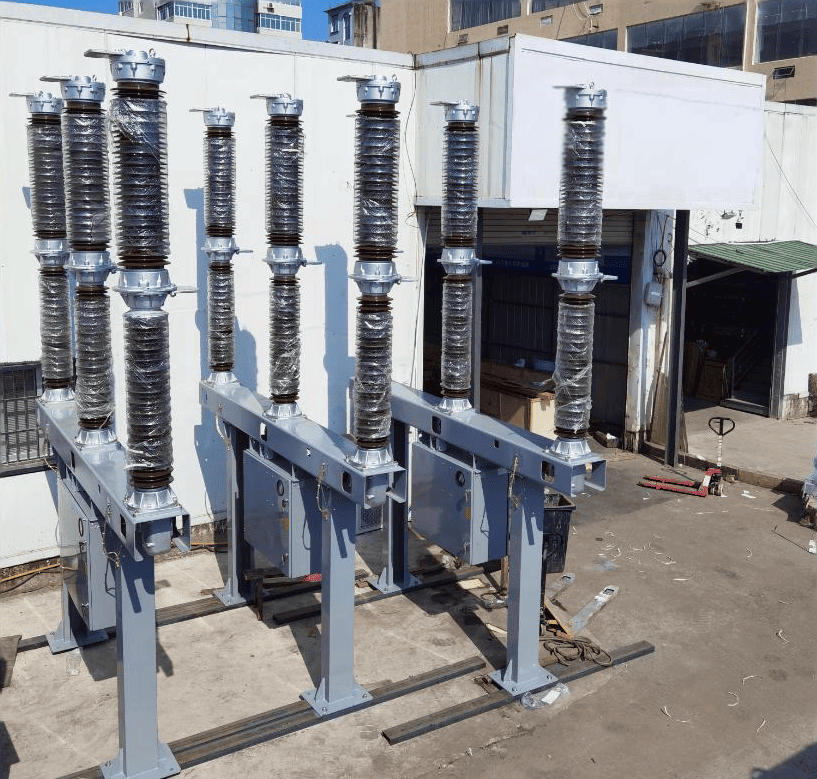
When engineers ask where SF6 circuit breakers are used, what they really want to know is: why are we still installing SF6 in 2025, given the importance of regulations and sustainability? From what I have seen in real-world projects, SF6 breakers still prevail in a few very specific, high-demand applications.
Dielectric Strength and Arc‑Quenching Power
SF6 gas gives you excellent insulation and arc‑quenching, especially at high voltage and high fault levels:
The dielectric strength of SF6 is significantly higher than air and even many eco‑gases at the same pressure. That means:
Shorter clearances
Smaller interrupter size
More compact GIS bays at 72.5–800 kV
Arc‑quenching is very strong:
SF6 rapidly cools and de‑ionizes the arc
Handles very high short‑circuit currents (40–80 kA) reliably
Proven interrupting performance for EHV transmission and generator circuit breaker (GCB) duty
If you’re dealing with 245 kV and above, or very high fault MVA, SF6 is often still the safest and most technically robust option today.
Compact Footprint in High‑Voltage and Tight Sites
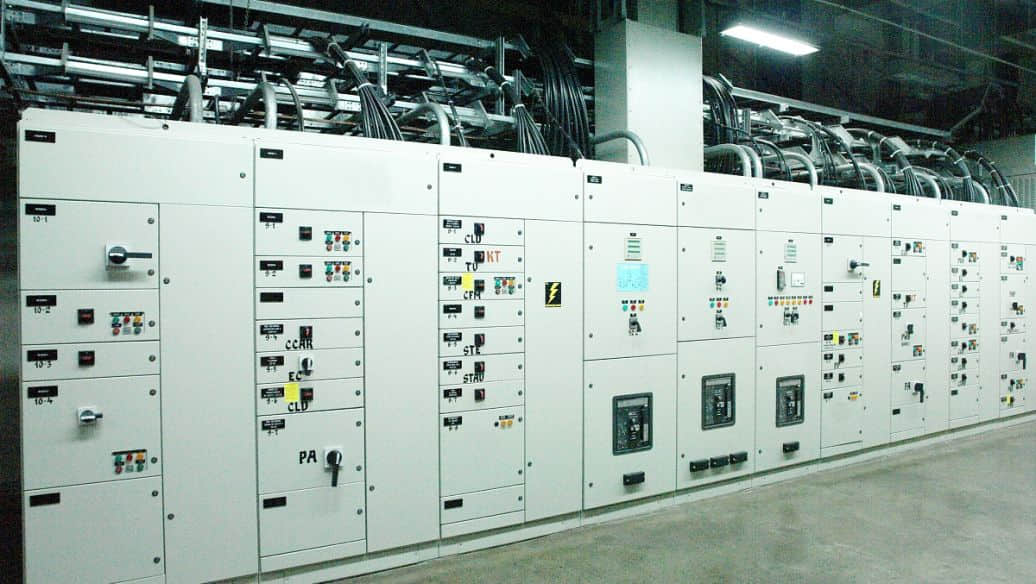
You will see SF6 gas-insulated switchgear (GIS) used wherever space is at a premium:
Urban transmission substations are squeezed into small lots or buildings
Underground, tunnel, offshore, or plant‑room installations
Brownfield upgrades where the existing substation fence line cannot grow
Because SF6 allows shorter phase spacing and smaller clearances, a 145–245 kV SF6 GIS lineup can fit in a building where AIS would be impossible. In practice, we routinely cut space by 50–70% versus air‑insulated layouts.
Reliability Under Tough Duty and Harsh Environments
SF6 breakers are still preferred when the duty cycle and environment are brutal:
Frequent switching:
Industrial loads, arc furnaces, large motors
GCBs at power plants with many start/stop cycles
High fault duty:
Steel mills, refineries, big data centers, and heavy mining feeds
Harsh conditions:
Coastal and polluted areas with salt fog and dust
Seismic regions where compact GIS and rigid gas tanks perform better than tall AIS structures
The sealed SF6 tank keeps the live parts isolated from moisture, dust, and contaminants, which is a big reason these breakers maintain stable performance for decades.
Lifecycle, Maintenance, and Service Experience
From a lifecycle point of view, SF6 breakers are mature, predictable, and well understood:
Long service life: 30–40 years is common with proper maintenance
Low mechanical wear: modern SF6 interrupters handle thousands of operations
Planned maintenance:
Condition‑based monitoring of gas pressure, density, and partial discharge
Standardized SF6 gas handling procedures are widely known in US utilities and industrial plants
Lifecycle cost:
Higher initial capex than some AIS or MV vacuum, but
Lower site cost in dense locations (less land, less steel, less civil work)
Proven reliability reduces unplanned outages and associated business losses
The key trade‑off is clear: SF6 has an environmental burden, but technically it still delivers unmatched performance for high‑voltage, high‑fault, space‑constrained, and harsh‑environment applications. That’s exactly where SF6 circuit breakers are still justified and routinely specified in real US projects today.
Voltage Classes Where SF6 Circuit Breakers Are Used
No Role for SF6 Below 1 kV (Low Voltage)
In low-voltage systems (typically under 1 kV in the U.S.), SF6 circuit breakers are basically not used.
You’ll see:
Molded case breakers (MCCB)
Air circuit breakers (ACB)
Miniature breakers (MCB)
These are cheaper, simpler, and fully capable of building, data hall and panelboard protection. SF6 doesn’t make sense here from a cost, size, or environmental standpoint.
Medium Voltage 1–72.5 kV: Vacuum Replacing SF6
In the 1–38 kV class (common medium-voltage distribution in U.S. utilities, campuses, and industry), vacuum circuit breakers dominate. By the time you’re up to 72.5 kV, most new switchgear projects in North America already specify vacuum, not SF6, whenever possible.
Typical use of vacuum instead of SF6 at MV:
Indoor metal-clad switchgear for industrial plants, hospitals, and data centers
Utility distribution substations at 13.8 kV, 24.9 kV, 34.5 kV
Ring main units and feeder breakers
In this range, SF6 is usually only seen in older gear or compact GIS designs where the footprint is extremely tight. For users trying to understand breaker options by voltage class, it also helps to know the broader family of four main types of circuit breakers and where each fits.
High Voltage 72.5–245 kV: Core SF6 Applications
Between 72.5 kV and 245 kV, SF6 circuit breakers are still very common in U.S. transmission and large industrial substations. This is where SF6 starts to really stand out:
115 kV / 138 kV / 145 kV transmission substations
161 kV / 220 kV / 230 kV grid and large plant step-up transformers
Compact 145 kV and 245 kV GIS substations in cities and industrial sites
Where vacuum becomes an option in this band:
Some emerging 145 kV vacuum breakers and “SF6-free” GIS solutions are now being piloted.
Utilities focused on sustainability may specify vacuum breakers in open-air AIS configurations at the lower end of this range (e.g., 72.5–145 kV), depending on supplier and available technology.
Still, for most 115–245 kV projects today, SF6 breakers remain a standard, especially when:
Fault levels are high
Switching duty is heavy
Space is limited, and GIS is needed
Extra & Ultra-High Voltage 245–800 kV+: Why SF6 Still Dominates
Above 245 kV, SF6 is still the go-to technology:
345 kV / 400 kV backbone transmission lines
500 kV / 550 kV EHV networks
765 kV / 800 kV and above UHV systems
At these voltages, SF6 offers:
Very high dielectric strength in compact dimensions
Proven arc-quenching performance under extreme fault currents
A long track record with utilities and OEMs
Current “SF6-free” alternatives at these levels (clean air, fluoronitrile mixes) are still in pilot or early deployment. For U.S. utilities planning 345–500 kV or higher, SF6 breakers are still the practical and widely available option.
Indoor GIS vs Outdoor AIS by Voltage Level
How SF6 is used also depends on the installation type:
Indoor GIS (Gas-Insulated Switchgear)
Common from 72.5 kV up to 245 kV, and used up to 420–550 kV in very space-constrained or harsh environments
Ideal for urban substations, industrial plants, data centers, and campuses where the footprint is tight
Fully enclosed, sealed design protects against pollution, salt, humidity, and dust
Outdoor AIS (Air-Insulated Switchgear)
Widely used from 72.5 kV to 800 kV+ in traditional transmission yards
SF6 is used inside the breaker interrupting chamber, but the bus and support structure are in open air
Lower equipment cost per bay, but needs more land area
At MV levels, you’ll also see indoor disconnect switches and accessories integrated with GIS or vacuum breaker panels; for example, a compact through-wall indoor disconnect switch like the GN19-12CST isolator switch is often part of a space-optimized medium-voltage lineup.
In short:
Below 1 kV – no SF6.
1–72.5 kV – vacuum is standard; SF6 only in niche compact GIS or legacy gear.
72.5–245 kV – SF6 widely used, some vacuum/SF6-free options emerging.
245–800 kV+ – SF6 still dominates, especially for U.S. transmission grids.
Transmission Substations Using SF6 Circuit Breakers
Where SF6 Circuit Breakers Are Used in Transmission Grids
In real transmission networks, SF6 circuit breakers show up anywhere reliability, compact footprint, and high interrupting ratings matter. In the US, that usually means 110–800 kV substations—particularly where land is expensive, fault levels are high, or the environment is harsh.
Role of SF6 GIS in 110–800 kV Transmission Networks
At transmission voltages (110, 138, 230, 345
Power generation plants and SF6 circuit breakers
In power plants, SF6 circuit breakers are still the go‑to choice anywhere you’ve got high voltage, high fault current, and zero tolerance for downtime. In the U.S., I see them most on the generator side, step‑up transformers, and main grid connections from 110 kV up to 400 kV and above.
SF6 generator circuit breaker (GCB) applications and duty cycles
A generator circuit breaker has a much tougher life than a normal transmission breaker, and SF6 handles that stress well:
Installed between the generator and the step‑up transformer (typically 13.8–24 kV side on large units, interfaced to 110–400 kV transformers).
Frequent switching duty: start/stop cycles, synchronizing, load rejection, and protection trips.
High asymmetrical fault currents and DC components right at the generator terminals.
Fast clearing times to protect generator rotors, stators, and step‑up transformers.
SF6 GCBs give you:
High interrupting capability in a compact tank
Stable performance over thousands of operations
Proven coordination with turbine controls, excitation systems, and plant protection
Step‑up transformer protection at 110–400 kV with SF6 breakers
On the high‑voltage side, SF6 breakers are widely used for step‑up transformer protection:
Common voltages: 110 kV, 138 kV, 230 kV, 345 kV, and 400 kV
Installed as line breakers, transformer feeders, and bus‑tie breakers
Often part of GIS bays, especially where space is tight or environmental conditions are harsh
Because SF6 technology is the backbone of gas‑insulated switchgear, it fits perfectly with compact transformer substations right at the plant fence. If you’re new to GIS, this quick breakdown of how gas‑insulated switchgear works is a good starting point.
SF6 breaker use in hydro, thermal, nuclear, and CCGT plants
Across different generation types in the U.S., the pattern is similar:
Hydro plants
Long-life units, often in remote locations
SF6 GCBs and GIS bays are used to limit the footprint in powerhouses and galleries
Coal and gas‑fired thermal plants
High fault levels and large generator ratings
SF6 breakers on both generator and 230–345 kV grid interface
Nuclear stations
Strong focus on reliability, containment, and proven technology
SF6 GIS and breakers are widely used on main and backup feeds
Combined‑cycle gas turbine (CCGT)
Frequent cycling, fast starts, high ramp rates
SF6 GCBs handle repeated switching and fault duties without excessive wear
Black‑start and islanded operation with SF6 GCBs
When you’re designing for black‑start capability or islanded operation, the generator breaker becomes even more critical:
Controlled energization of step‑up transformers and station service transformers
Safe sectionalizing of the plant during staged restoration of the grid
Reliable reclosing and synchronizing after disturbances
Stable interruption of fault currents when the plant is running islanded, and the system impedance is low
SF6 GCBs are preferred here because they combine high interrupting performance, tight insulation margins, and proven reliability, which is exactly what you need when your plant might be the one bringing the grid back online.
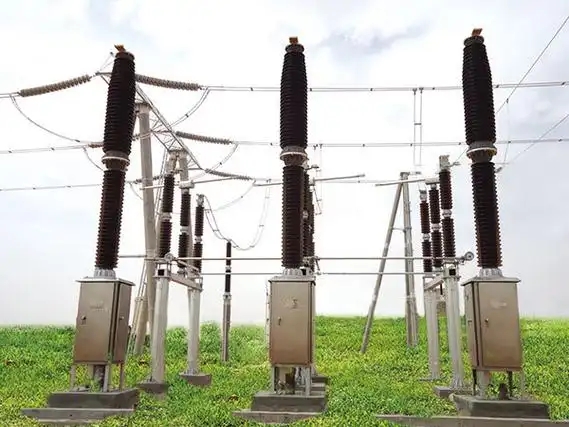
Heavy Industry SF6 Circuit Breaker Applications
Where SF6 Circuit Breakers Are Used in Heavy Industry
In heavy industry and metallurgy, SF6 circuit breakers show up wherever the power system is brutal on equipment: huge loads, massive fault levels, and nonstop switching.
Typical SF6 circuit breaker applications in heavy industry:
Steel mill substations
110–245 kV SF6 breakers on utility intake and main feeders
Handle extremely high fault currents from short, stiff networks
Withstand frequent switching of furnace transformers, large motors, and filters
Aluminum smelter power distribution
Compact SF6 gas-insulated switchgear (GIS) at 110–220 kV to feed potlines
Long, high‑current busbars and harmonic‑rich loads
Sealed SF6 GIS keeps performance stable in dusty, corrosive environments
Arc furnaces, rolling mills, and large motors
Electric arc furnaces with very high inrush and repetitive duty
Reversing rolling mills with frequent starts and stops
Synchronous and induction motors in the 10–100+ MW range
SF6 breakers used for:
High interrupting capacity and strong dielectric strength cut down nuisance trips and failures
Why SF6 Circuit Breakers Are Preferred Over Older Technologies
In the U.S. heavy industry space, most new high‑voltage projects will favor SF6 over air‑blast or minimum‑oil breakers for a few clear reasons:
Much higher interrupting performance
SF6 has excellent arc‑quenching and dielectric strength, so the breaker can interrupt higher fault currents faster and more reliably.
Compact and rugged
A 145–245 kV SF6 GIS lineup is far smaller than air‑blast or oil gear—ideal for tight steel mill or smelter sites.
Lower maintenance vs. air‑blast and oil
No compressors, no stored air systems, no oil handling; less downtime and fewer leak points.
Cleaner and safer operation
No arc by‑products in oil, no risk of oil fires, and sealed‑for‑life gas compartments keep the equipment stable even in dusty, hot, or corrosive plants.
When I design or select high‑voltage solutions for heavy industry, SF6 GIS and breakers are usually my first choice for main substations and furnace/drive feeders, while vacuum breakers handle the medium‑voltage distribution downstream.
Railway Traction and Metro Systems Using SF6 Circuit Breakers
25 kV AC Traction Substations and SF6 GIS
For modern 25 kV AC railway traction in the U.S., SF6 gas‑insulated switchgear (GIS) is still one of the most practical options at the high‑voltage side. At 69–145 kV incoming lines and 25 kV feeder bays, SF6 circuit breakers give you:
High interrupting capacity for long feeders and high fault levels
Compact footprint that fits in constrained right‑of‑way and urban rail corridors
Sealed‑for‑life design that keeps dust, salt, and pollution out of the insulation
When you’re trying to squeeze a full traction substation into a tight site next to tracks or in a dense city, SF6 GIS lets you shrink the layout while maintaining clearance and safety margins that would be impossible with air‑insulated switchgear.
DC Traction (1.5–3 kV) Fed From 25 kV SF6 GIS
Even where the traction system itself is 1.5–3 kV DC, the high‑voltage side that feeds rectifier transformers is usually 25 kV AC or higher. That’s exactly where SF6 circuit breakers sit:
On the **25–69 kV AC
Oil, Gas, and Offshore Platforms with SF6 Switchgear
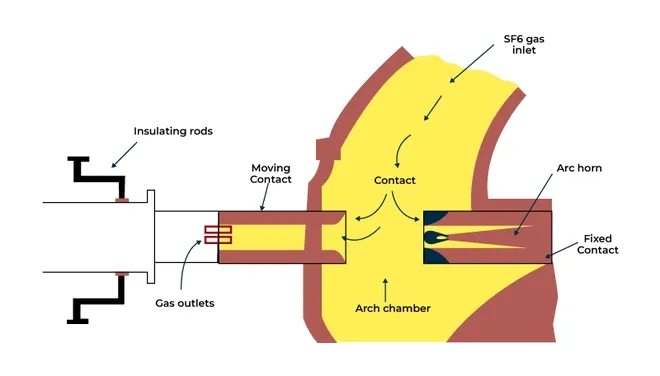
Space and Weight: Why Offshore Uses SF6 GIS
On offshore platforms, every pound and every cubic foot matters. That’s exactly where SF6 gas‑insulated switchgear (GIS) earns its place. Compared with traditional air‑insulated switchgear, SF6 GIS can cut the footprint by 50–70% and significantly reduce structural steel and deck loading. That’s a big deal when you’re working on a tight topside layout and high installation costs.
In practical terms, SF6 GIS lets you:
Fit full 110–245 kV substations in compact E‑rooms
Optimize platform layout without building large electrical modules
Reduce structural and transport costs while keeping high fault ratings
If you’re pairing SF6 GIS with outdoor equipment like high‑voltage disconnect switches, you’ll typically combine them with robust devices similar to a GW4 outdoor disconnect switch for line isolation and visible break.
Onshore Refineries and Petrochemical Plants
Onshore refineries, LNG terminals, and big petrochemical complexes in the U.S. rely heavily on high‑voltage SF6 circuit breakers in the 72.5–245 kV range. You’ll usually see SF6 breakers at:
Utility intake substations (69–230 kV)
Main step‑down substations feed large motors, compressors, and drives
Export/import interconnects to nearby grids or industrial partners
The reasons are simple: SF6 circuit breakers handle high fault currents, deliver reliable arc‑quenching, and support frequent switching better than legacy air‑blast or oil breakers. For plants running 24/7 with high critical loads, that reliability is non‑negotiable.
Hazardous Areas and Sealed‑for‑Life GIS
In classified zones (Class I, Division 1/2 or Zone 1/2), sealed‑for‑life SF6 GIS is a strong fit because:
Live parts are fully enclosed in grounded metal tanks
There’s no external arcing or hot surfaces during normal operation
Maintenance intervals are long, which reduces personnel exposure in hazardous areas
With SF6 GIS, you get high‑voltage functionality inside a compact, sealed system that’s easier to integrate into blast‑resistant buildings and hazardous area layouts.
Corrosion, Environment, and SF6 Technology
Oil and gas sites see some of the harshest environments: salt spray, humidity, SO₂/NOx, dust, and process chemicals. SF6 GIS helps you stay ahead of those issues because:
All live parts are sealed inside stainless steel or aluminum enclosures
No outdoor insulators are exposed to flashover from salt or pollution
Internal SF6 gas keeps insulation performance stable over decades
The key is proper SF6 gas handling and leak monitoring. Done right, SF6 GIS delivers long life, low failure rates, and lower unplanned outages in both coastal and offshore installations—exactly what oil and gas operators in the U.S. are looking for when reliability and safety come first.
Renewable Energy Integration Using SF6 Circuit Breakers
When you scale wind and solar to utility level in the U.S., SF6 circuit breakers are still one of the most practical tools to keep those renewables stable and grid‑compliant.
Wind farm collector substations (110–245 kV SF6 GIS)
For large onshore and offshore wind farms, 110–245 kV SF6 gas‑insulated switchgear (GIS) is widely used at the collector substation because it:
Handles high fault levels and fluctuating generation without nuisance trips
Delivers a compact footprint, which matters when you’re building on constrained land or platforms
Offers sealed‑for‑life enclosures, protecting against salt, dust, and extreme weather in coastal wind sites
Paired with high‑quality bushings and insulators—like the kind used in modern composite dry‑type wall bushings—SF6 GIS builds a robust link between wind farms and 138–230 kV transmission systems.
Large solar farm grid‑connection with SF6 breakers
At big solar farms feeding 69–245 kV interconnects, SF6 circuit breakers are used on:
Grid‑tie transformers (34.5 kV to 115/138/230 kV)
Interconnection bays at the POI (Point of Interconnection)
They give developers and utilities:
High interrupting capacity for stiff transmission grids
Reliable remote operation and automation for fast reconfiguration
A proven, low‑maintenance option that stays stable in hot, dusty, desert‑style solar locations
Hybrid AC/DC renewable hubs and interconnections
As more projects move to hybrid AC/DC setups—AC collection with DC links or battery energy storage—SF6 breakers sit on the AC side to:
Protect converter transformers and AC busbars
Provide high‑speed fault clearing needed for sensitive power electronics
Support flexible reconfiguration when adding BESS, STATCOMs, or future DC links
Their high dielectric strength and fast arc‑quenching make them a safe choice around converters where fault energy can be intense.
Grid‑code compliance and fault‑ride‑through
To hit U.S. grid‑code requirements (PJM, ERCOT, CAISO, etc.), you need renewables that stay online and behave like traditional plants during faults. SF6 breakers help by:
Enabling selective, high‑speed clearing so only the faulted section trips
Supporting fault‑ride‑through (FRT) strategies with precise protection coordination
Offering high reliability over thousands of operations, critical in grids with frequent switching and dynamic line ratings
If you’re specifying gear for a wind or solar interconnect today, SF6 circuit breakers at 110–245 kV remain a strong option when you care about footprint, reliability, and clean fault clearing in demanding renewable applications.
Data Centers and Critical Infrastructure with SF6 GIS
When someone asks where SF6 circuit breaker is used in the U.S. today, data centers and critical infrastructure are at the top of the list. For high‑stakes loads, SF6 gas‑insulated switchgear (GIS) still checks the boxes that facility owners care about most: uptime, space, and predictable performance.
High‑reliability substations for hyperscale data centers
Hyperscale and colocation data centers typically bring in power at 69–245 kV. Here, SF6 circuit breaker applications include:
Utility‑side high‑voltage bays with SF6 GIS feeding 13.8–34.5 kV distribution.
On‑site “energy campus” designs where SF6 breakers back up large battery systems, generators, and UPS blocks.
Fast fault clearing for arc flash and equipment protection, keeping IT loads online and meeting tight SLAs.
With SF6 GIS, owners get high interrupting capability in a compact footprint, which is key when every extra acre is worth real money.
Space‑saving GIS for urban and campus‑style facilities
In tight urban locations, rooftop substations, or campus‑style tech parks, SF6 GIS lets us:
Cut the substation footprint by up to 60–70% vs. air‑insulated switchgear (AIS).
Install compact lineups inside buildings, basements, or purpose‑built electrical rooms.
Simplify insulation coordination by using SF6 instead of large clearances and tall structures.
For projects that blend AIS and GIS, we often pair SF6 bays with polymer composite insulators to handle outdoor connections reliably in polluted or coastal areas, similar to the designs used for high‑voltage composite insulators.
Hospitals, airports, telecom hubs using SF6 breaker solutions
Critical infrastructure in the U.S.—major hospitals, international airports, telecom hubs, cloud gateways, broadcast centers—relies on SF6 breaker technology at 69–245 kV where:
Power quality and continuity are non‑negotiable.
Loads are dense and highly sensitive to voltage dips and interruptions.
Expansion must fit into existing campuses without major civil work.
SF6 GIS gives these sites sealed‑for‑life, low‑maintenance high‑voltage gear that’s easier to protect, secure, and monitor.
Redundancy, N+1 designs, and fast switching
For these customers, the design conversation is always about redundancy and speed:
N+1 / N+2 high‑voltage feeds built with ring bus, breaker‑and‑a‑half, or double‑bus schemes using SF6 breakers.
Fast switching times to transfer loads between transformers or utility feeds with minimal disturbance.
Segmented, sectionalized GIS so a single fault doesn’t take out an entire lineup.
Integration with modern protection relays for selective, high‑speed clearing.
Where needed, we combine SF6 high‑voltage breakers with outdoor vacuum circuit breakers on the medium‑voltage side—such as designs similar to a 40.5 kV outdoor vacuum circuit breaker—to build layered protection from transmission level down to the server room.
If you’re planning a new data center, hospital, or airport expansion, SF6 GIS is still the practical choice at high voltage when you need maximum reliability, compact design, and proven technology that U.S. utilities and operators already trust.
Mining Industry Applications for SF6 Circuit Breakers
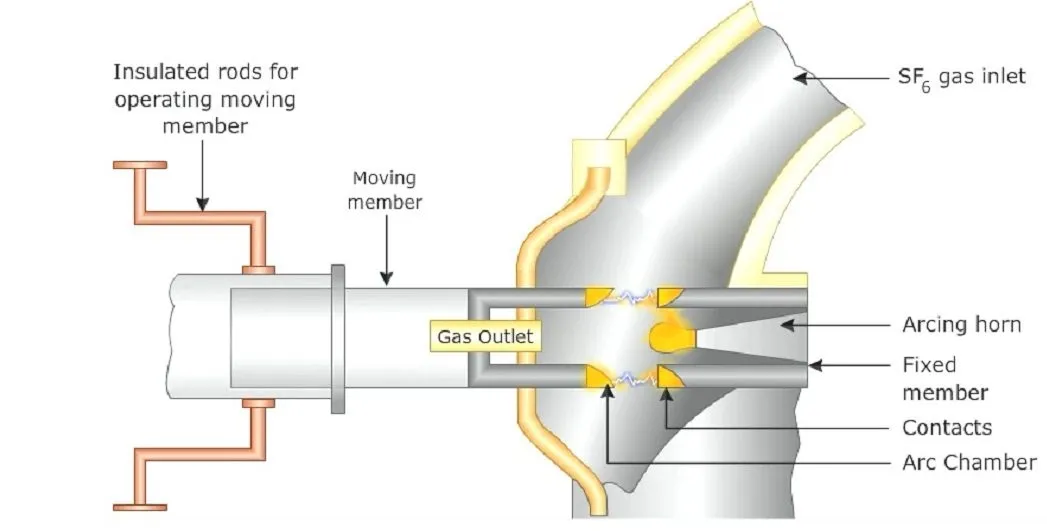
In mining, SF6 circuit breakers earn their keep by staying reliable in places where gear normally gets destroyed fast. I use them where uptime and safety are non‑negotiable.
Underground mining: compact, sealed GIS
Underground substations have tight rooms, poor ventilation, and harsh conditions. SF6 gas‑insulated switchgear (GIS) solves that by being:
Compact – high voltage in a very small footprint, perfect for drifts and galleries
Sealed‑for‑life – no exposed live parts, no dust buildup on insulators
Low‑maintenance – fewer shutdowns for cleaning and inspection
This makes SF6 GIS a strong fit for 25–145 kV underground distribution feeding crushers, hoists, and ventilation systems.
Surface mines: long feeders and high‑power drives
Open‑pit mines run long feeders to shovels, draglines, conveyors, and huge mills. SF6 circuit breakers handle:
High fault levels from large motors and drives
Frequent switching of feeders and large loads
Long‑distance lines with tough transient duties
At 72.5–245 kV, SF6 breakers in surface mine substations provide stable protection for big electric haul trucks, crushers, and process plants.
Built for dust, moisture, and shock
Mining sites mean dust, vibration, moisture, and temperature swings. SF6 switchgear is fully enclosed, so it offers:
Dust‑proof and moisture‑resistant gas compartments
High mechanical strength for blast, vibration, and shock
Stable dielectric performance even in dirty, corrosive air
Compared with open air systems or older oil designs, SF6 keeps its ratings even when the environment is punishing.
Safety and maintenance in remote locations
Remote mines can’t afford frequent outages or risky on‑site work. SF6 GIS helps by:
Reducing on‑site intervention – longer intervals between major service
Enhancing operator safety – enclosed live parts and clear interlocks
Supporting remote operations – SCADA/automation, fast fault clearing, and reliable reclosing
For medium‑voltage distribution inside the mine, many operators now pair SF6 GIS at higher voltages with modern indoor vacuum circuit breakers at 12 kV and 24 kV to balance reliability, safety, and lifecycle cost.
Regional Differences in SF6 Circuit Breaker Usage

SF6 circuit breaker usage is shifting fast worldwide, and where SF6 circuit breaker is used now depends heavily on local rules and utility strategy. If you’re planning a 2025+ project in the U.S., you need to know how each region is moving.
Europe – SF6 Phase‑Down (EU F‑gas Regulation 2024/573)
Europe is aggressively cutt" ing SF6 especially in distribution and some transmission levels.
Key points:
| Item | Status in Europe |
|---|---|
| Main driver | EU F‑gas Regulation 2024/573 |
| Focus | SF6 phase‑down strict leakage limits |
| Impact | MV almost fully SF6‑free; HV moving to eco‑gas/clean air up to ~170 kV |
| Trend | New GIS specs often demand SF6‑free where technically proven |
What this means in practice:
SF6 is still used at 245 kV+ where alternatives are not fully proven or bankable.
Strong push to clean air and fluoronitrile mixes (g³ C4‑FN) for 72.5–170 kV.
Buyers demand documented gas handling leak data and end‑of‑life plans.
North America – Voluntary SF6 Reduction Not a Full Ban
In the U.S. and Canada SF6 is still widely used in high voltage but utilities are moving toward reduction rather than instant bans.
Typical U.S. approach:
| Aspect | North America Position |
|---|---|
| Regulation | EPA reporting + some state rules (e.g., California) |
| Strategy | Voluntary reduction of tighter leak targets |
| Technology | SF6 for 145–500 kV still standard; vacuum/eco‑gas growing at MV & some HV |
| Utility focus | Reliability lifecycle cost safety then environment |
For many U.S. transmission and data center projects, SF6 GIS is still the go‑to above 145 kV, while MV levels are going almost fully vacuum-based. We usually pair SF6 HV equipment with robust insulation systems like our composite pin insulators for outdoor lines and substations.
Asia‑Pacific & Middle East – Growth in 220–800 kV SF6 GIS
These regions are still in a strong grid expansion phase, and SF6 GIS is often the only realistic option at scale.
| Region | Typical SF6 Use |
|---|---|
| Asia‑Pacific | 145–800 kV GIS and AIS breakers standard in new lines |
| Middle East | 220–400 kV SF6 GIS in urban desert and coastal substations |
Drivers:
Massive 220–500 kV build‑out plus 765–800 kV corridors in some countries.
Need for compact GIS in dense cities and harsh climates (heat sand pollution).
Regulations are looser on SF6 , but reliability and uptime expectations are very high.
China & India – Major Markets for New HV and EHV SF6
China and India are still among the largest buyers of SF6 HV and EHV equipment globally.
Snapshot:
| Voltage Level | Common Technology |
|---|---|
| 110–220 kV | SF6 GIS or AIS is widely used |
| 245–420 kV | SF6 breakers standard for backbone transmission |
| 765–800 kV | SF6 GIS/AIS at the core of national corridors |
Both countries are piloting SF6‑free solutions but for 2025 projects SF6 still dominates at 245 kV and above due to proven performance and cost.
How Regulations Shape Technology Choices
Global rules are not aligned so where SF6 circuit breaker is used depends on local policy plus your risk tolerance:
Strict regulation (EU some U.S. states):
MV: vacuum and eco‑gas only.
HV: SF6‑free where technically proven; SF6 accepted mainly at EHV and special cases.
Moderate regulation (most of North America):
SF6 still acceptable but utilities ask for lower leakage and long‑term gas management.
Strong shift to vacuum at MV.
Developing or expanding grids (Asia Middle East parts of Latin America & Africa):
SF6 HV and EHV breakers are the main choice for reliability and grid build‑out speed.
From my side as a supplier I design around this reality:
Offer SF6 GIS/AIS for 110–550 kV where it’s still the practical standard.
Prepare SF6‑free or low‑GWP variants for regions moving under strict F‑gas‑type rules.
Support engineering teams with documentation drawings and files through our technical download center so they can meet local compliance and utility specs without guesswork.
SF6 vs Modern Alternatives in Real Projects
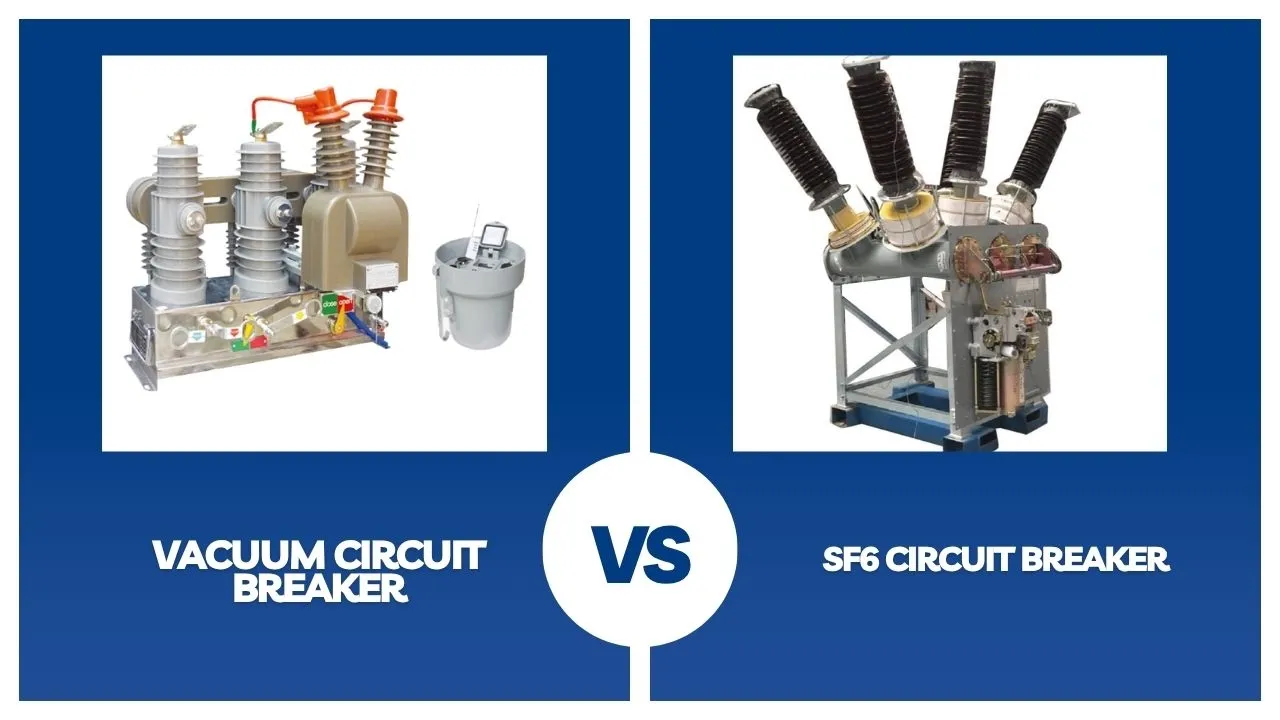
When I look at real North American projects today SF6 is no longer the automatic default—especially below 72.5 kV. Here’s how I break it down with clients.
Vacuum Circuit Breakers Up to 72.5 kV
For medium voltage (1–72.5 kV) vacuum is usually the first choice now:
Best fit: Industrial plants data centers hospitals commercial campuses MV utility networks
Why vacuum wins:
No greenhouse gas
Simple maintenance no gas handling
Very high mechanical endurance for frequent switching
Drop‑in replacement for many legacy SF6 MV panels
At these voltages I only recommend SF6 where:
You need very compact GIS in a tight urban room or
You’re matching an existing SF6 GIS lineup.
Clean-Air and Fluoronitrile (g3 C4‑FN) in HV Pilots
For high voltage (72.5–245 kV) utilities in the US and EU are testing SF6‑free gases:
Clean air (N₂/O₂)
Used in some 72.5–145 kV GIS and dead‑tank breakers
Zero GWP easy gas handling
Needs more space than SF6 (larger enclosures)
Fluoronitrile mixes (g3 C4‑FN)
Deployed in pilot 145–245 kV GIS and breakers
Much lower GWP than SF6
Gas handling and standards still maturing
These options are gaining traction in utilities that are under pressure from SF6 reporting rules and ESG targets. If you’re screening vendors I’d start with known GIS suppliers; resources like shortlists of leading gas insulated switchgear companies are helpful when you’re comparing technology roadmaps.
Technical Limits Above 245 kV
Above 245 kV (EHV/UHV: 300–800 kV) SF6 still dominates:
SF6‑free at this level is not yet mainstream for:
345 kV 420 kV 500 kV and 765/800 kV
Long‑term field data is limited
Equipment is physically larger and more complex
Most utilities stay with SF6 because:
Proven dielectric strength and arc‑quenching at very high voltage
Decades of performance data and standardized maintenance practices
High fault current and switching duty handling
If your project is 500 kV+ you should assume SF6 today with a roadmap to SF6‑free as designs mature.
Quick Decision Matrix: What to Use Where
I usually simplify selection using this kind of view:
| Voltage Level | Typical Tech | When SF6 Makes Sense | When SF6‑Free Makes Sense |
|---|---|---|---|
| ≤1 kV | MCCBs ACBs | Rarely | Always (no SF6 here) |
| 1–24 kV | Vacuum | Very dense GIS rooms | Standard choice |
| 24–72.5 kV | Vacuum / GIS | Compact GIS harsh sites | Utility/industrial MV new builds |
| 72.5–145 kV | SF6 / eco‑GIS | Space‑critical legacy SF6 | New GIS ESG‑driven utilities |
| 145–245 kV | SF6 GIS/AIS | EHV high fault levels | Pilot eco‑gas projects |
| ≥300 kV | SF6 GIS/AIS | Almost all cases | Limited pilots only |
When I advise US customers, I look at four things first:
Voltage and fault level
Available footprint (indoor, urban offshore or desert)
Environmental policy (utility ESG state rules EU-style expectations for multinationals)
Lifecycle cost (gas management crew skills spare parts)
When SF6 to Vacuum or Eco‑Gas Retrofits Work
Full replacement isn’t always necessary. Retrofit options can be smart if you plan it right:
Good candidates for retrofit:
12–38 kV SF6 switchgear with enough panel space to swap in vacuum breakers
72.5–145 kV SF6 GIS where OEM supports:
Panel‑by‑panel replacement with eco‑gas technology
Or hybrid bays mixing SF6 and SF6‑free sections
Retrofit usually makes sense when:
The metal-enclosed gear is mechanically sound
SF6 leak rate is rising and gas costs/regulatory risk are going up
You need to upgrade relays/controls anyway so you’re already shutting down bays
Retrofit is harder when:
You’re at 245 kV+ and the substation is heavily loaded
You lack outage windows for major rebuilds
OEM support or parts are no longer available
In those cases I typically recommend planning a phased replacement: keep SF6 breakers in service with good gas management while designing a new SF6‑free yard or GIS building beside the old one.
If you’re shortlisting suppliers or planning a new GIS yard it helps to work with manufacturers that already support both SF6 and eco‑gas designs; broader switchgear supplier networks like those covered in guides to electrical switchgear suppliers can give you a good comparison baseline.
Choosing SF6 Circuit Breakers for Your Application
When I look at where SF6 circuit breakers are used in real U.S. projects I always start with three things: voltage class installation type and lifecycle priorities (reliability vs. footprint vs. environmental impact). Here’s how I break it down.
Key Questions by Voltage Class and Installation Type
Before you decide on SF6 GIS or AIS you should be able to answer:
What voltage class?
Below 1 kV – no SF6; use standard low‑voltage breakers.
1–38 kV – typically vacuum breakers; SF6 is rarely justified today.
38–72.5 kV – mostly vacuum SF6 only in very compact GIS or special duty.
72.5–245 kV – SF6 breakers are still standard in many U.S. utilities and industrial sites.
245–800 kV+ – SF6 is still the proven workhorse for EHV/UHV transmission.
Where will it be installed?
Indoor urban substation data center campus tunnel or metro?
→ Compact SF6 GIS is usually the practical choice.Outdoor greenfield transmission yard with plenty of land?
→ SF6 AIS or hybrid layout is normally more cost‑effective.Harsh sites (coastal chemical dusty seismic)?
→ Sealed SF6 GIS has a clear edge on reliability and corrosion resistance.What’s the duty and fault level?
High fault currents frequent switching or generator protection?
Need fast reclosing or complex protection schemes (e.g. with modern TCC relay coordination as in high‑voltage circuit breaker and relay applications)? → SF6 breakers are still one of the most robust options.
Balancing Reliability Environmental Impact and Cost
For U.S. owners I see three main trade‑offs when choosing where SF6 circuit breakers are used:
Reliability
SF6 breakers are mature predictable and well understood by utilities and large industrial operators.
Excellent dielectric performance means fewer nuisance trips and better behavior under severe faults.
Environmental impact
Minimize gas volume (favor compact GIS with low‑loss designs).
Require leak rate guarantees and proper gas handling procedures.
Consider future regulations and potential carbon accounting.
SF6 has a high GWP so you must:
Cost (CapEx + OpEx)
Saves space and site work.
Reduces maintenance in harsh environments.
Can deliver lower total cost in dense urban or premium real estate locations.
AIS is cheaper per kV but needs more land and civil work.
GIS is higher initial cost but:
In practice for many U.S. 115–230 kV projects, SF6 remains the most economical way to hit reliability and footprint targets especially in industrial plants data centers and urban substations.
When to Specify SF6 GIS vs AIS vs Hybrid
Use this as a quick rule of thumb:
Choose SF6 GIS when:
Land is constrained (urban ports refineries campuses underground).
You need sealed low‑maintenance equipment (coastal polluted snowy or desert sites).
You want a compact fully enclosed substation with better safety and reduced exposure.
Choose SF6 AIS when:
You have plenty of space and want lower initial cost.
The site is easy to access for inspection and maintenance.
Visual inspection of primary equipment is a priority for operations.
Choose hybrid systems when:
You need a compact bay or breaker‑and‑a‑half scheme but don’t want full GIS.
You’re retrofitting into an existing AIS yard and only certain bays must be compact.
You want to stage investments—start AIS add GIS/hybrid sections later.
Typical SF6 Application Scenarios for 2025 Specs
For 2025‑era U.S. specs this is how I typically see SF6 circuit breakers being used:
115–230 kV utility and industrial substations
SF6 AIS or hybrid in rural/standard sites.
SF6 GIS in urban substations refineries steel mills and data center campuses.
345–500 kV transmission
SF6 AIS and GIS for backbone lines and EHV interconnections.
GIS favored where right‑of‑way is tight or environmental conditions are harsh.
Large industrial and infrastructure projects
SF6 GIS feeding heavy industry airports hospitals and hyperscale data centers needing high reliability and small footprint.
SF6 breakers at generator terminals or step‑up transformers in major power plants.
If you’re planning a 2025 project and your design involves 72.5 kV and above and you’re dealing with space limits high reliability requirements or harsh conditions , SF6 circuit breakers—especially in GIS form—are still a very strong practical choice in the U.S. market.
WEISHO SF6 and SF6‑Free High‑Voltage Solutions
When you’re deciding where SF6 circuit breakers are used in your system you basically have two needs: proven reliability today and a path to lower emissions tomorrow. I built WEISHO’s portfolio around exactly that.
Wide Product Range: 12 kV to 550 kV
We cover the full high‑voltage chain so you don’t have to mix vendors:
12–40.5 kV: Medium‑voltage vacuum switchgear and outdoor breakers for feeders and industrial loads (for example our ZW32 pole‑mounted vacuum circuit breaker is a solid fit for rural lines and recloser duties).
72.5–245 kV: Utility‑grade SF6 GIS and AIS breakers for transmission substations IPPs and data centers.
245–550 kV: Extra‑high‑voltage SF6 breakers and GIS for backbone transmission and interconnection projects.
This range lets you standardize specs spares and maintenance from your medium‑voltage yard all the way up to your 550 kV intertie.
SF6 GIS AIS and Hybrid Options
Different projects call for different layouts and footprints so I keep all three architectures on the table:
SF6 GIS (Gas‑Insulated Switchgear) – For tight urban sites tunnels offshore platforms and data centers where space safety and low maintenance matter most.
SF6 AIS (Air‑Insulated Switchgear) – For greenfield yards in the U.S. where land is available and you want the lowest initial cost and simple access.
Hybrid switchgear – Combines GIS breakers and disconnects with AIS bus to cut footprint and steelwork without going full GIS.
In each case the same core SF6 breaker technology handles high fault levels frequent switching and harsh environments.
Eco‑Friendly and SF6‑Free Lines
If you’re operating in states pushing decarbonization or preparing for EU‑style F‑gas rules, I don’t force you into one technology:
Vacuum breakers up to 72.5 kV replace SF6 outright in medium‑voltage applications. Our ZW10‑12 outdoor 12 kV vacuum circuit breaker is built for this tier.
SF6‑free high‑voltage lines using clean‑air or fluoronitrile (g3 / C4‑FN‑type) gas mixes where regulations or corporate ESG targets demand it.
Low‑leakage sealed‑for‑life SF6 GIS for users who still rely on SF6 but want minimal emissions and easy gas handling.
The idea is simple: you can phase down SF6 where it’s practical while still using it at EHV levels where alternatives are not yet mature.
Application Engineering and Breaker Selection
I don’t just ship hardware; I help you specify the right breaker technology for each node in your grid:
Check voltage class short‑circuit level , switching duty and ambient conditions.
Decide where vacuum SF6 or eco‑gas makes the most sense by lifecycle cost and regulatory risk.
Optimize between GIS AIS or hybrid based on footprint outage cost and maintenance access.
My team supports U.S. utilities EPCs and industrial users from concept design through commissioning—so your choice of SF6 or SF6‑free breaker is a business decision not just a catalog guess.