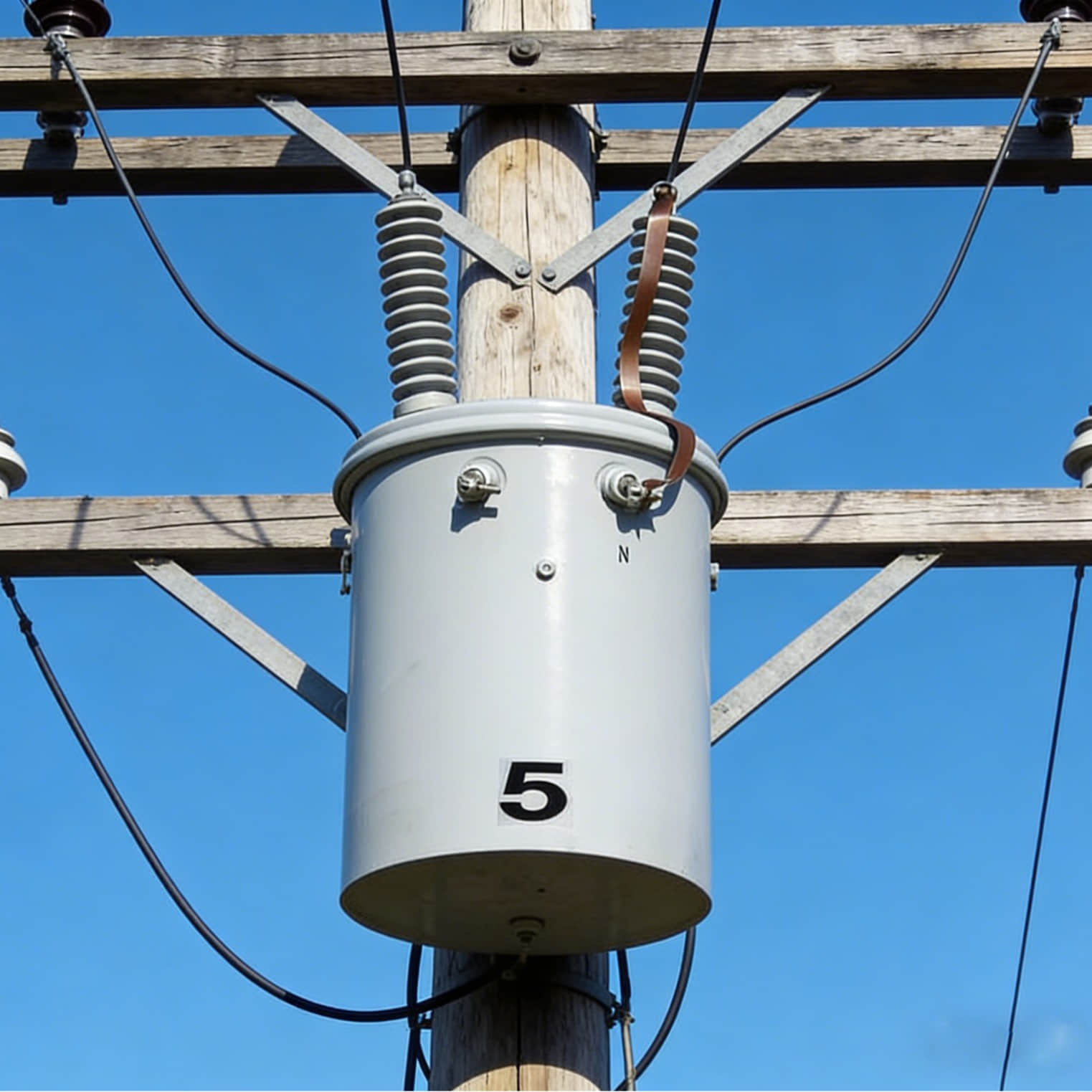
A small pole transformer can hold a surprisingly meaningful amount of copper. In many cases, a single neighborhood distribution unit contains enough winding metal to materially affect transformer design, total unit weight, and repair economics.
That does not mean every utility transformer is packed with copper. The actual amount depends heavily on kVA size, winding material, voltage class, manufacturer, and design era.
Why a Small Pole Transformer Can Hold Surprisingly Valuable Copper
Most people see a gray can on a power pole and assume it is mostly steel. In reality, a typical distribution transformer also contains a substantial amount of conductor material in its windings.
For copper-wound units, the conductor weight can range from tens of pounds to well over 100 pounds in larger distribution sizes. That is why terms like distribution transformer copper weight, how many pounds of copper are in a transformer, and copper content in utility pole transformer are common in utility maintenance, engineering, and asset management discussions.
What People Mean by a Power Line Transformer
In everyday use, a power line transformer usually means a distribution transformer connected to utility lines. The most familiar example is the pole-mounted transformer serving homes and small buildings.
However, not all distribution transformers are the same. Some are pole-mounted, some are pad-mounted, and some are larger units used near commercial loads or substations.
The copper content varies because some transformers use copper windings while others use aluminum windings. That single design choice can dramatically change the actual copper weight inside the unit.
How Much Copper Is in a Power Line Transformer?
Direct answer: A common copper-wound distribution transformer may contain roughly 20 to 200+ pounds of copper, depending on its size and construction. Smaller pole-mounted units often contain tens of pounds, while larger distribution units can contain well over 100 pounds.
Quick Answer by Transformer Size
For many residential and light commercial distribution transformers, the transformer winding copper amount scales with kVA rating. A small 10 to 25 kVA pole unit may contain around 20 to 50 pounds of copper, while 50 to 100 kVA units may contain roughly 45 to 120 pounds or more if copper-wound.
These figures should always be treated as practical ranges rather than exact rules. Utilities do not all buy the same designs, and transformer construction has changed over time due to efficiency standards, material pricing, thermal performance goals, and manufacturer-specific engineering choices.
It is also important to understand that copper weight does not increase in a perfectly linear way. As kVA rises, the transformer may need longer conductors, larger cross-sections, different insulation systems, or different cooling arrangements. That means two units that appear similar externally may still contain meaningfully different amounts of copper internally.
Distribution Transformer Copper Weight by Common kVA Ratings
The estimates below reflect practical field ranges for copper-wound distribution transformers. Actual weights vary by manufacturer, insulation system, voltage class, efficiency tier, and whether the transformer is single-phase or three-phase.
Table: Estimated Copper Weight in Utility Pole Transformers
| Transformer Size (kVA) | Typical Total Weight | Estimated Copper Weight | Estimated Copper Percentage |
|---|---|---|---|
| 10 kVA | 120-180 lb | 15-25 lb | 10%-16% |
| 15 kVA | 160-230 lb | 18-32 lb | 11%-14% |
| 25 kVA | 220-350 lb | 25-45 lb | 10%-13% |
| 37.5 kVA | 300-450 lb | 35-60 lb | 11%-13% |
| 50 kVA | 380-550 lb | 45-75 lb | 12%-14% |
| 75 kVA | 500-750 lb | 65-100 lb | 13%-15% |
| 100 kVA | 650-950 lb | 85-130 lb | 13%-16% |
| 167 kVA | 950-1,400 lb | 120-190 lb | 13%-16% |
These are estimating ranges, not universal specifications. Anyone evaluating a unit should always verify the actual winding material before concluding on the copper content.
Another useful way to read this table is by percentage rather than absolute pounds. In many common pole-mounted units, copper often accounts for about 10% to 16% of the total transformer weight. That is enough to be significant, but it also means the majority of the transformer is still made up of the steel core, tank, insulating fluid, insulation, bushings, and structural hardware.
This percentage perspective helps prevent a common misunderstanding. A transformer that weighs several hundred pounds does not contain several hundred pounds of copper. Even in copper-wound designs, copper is only one part of a much larger engineered assembly.
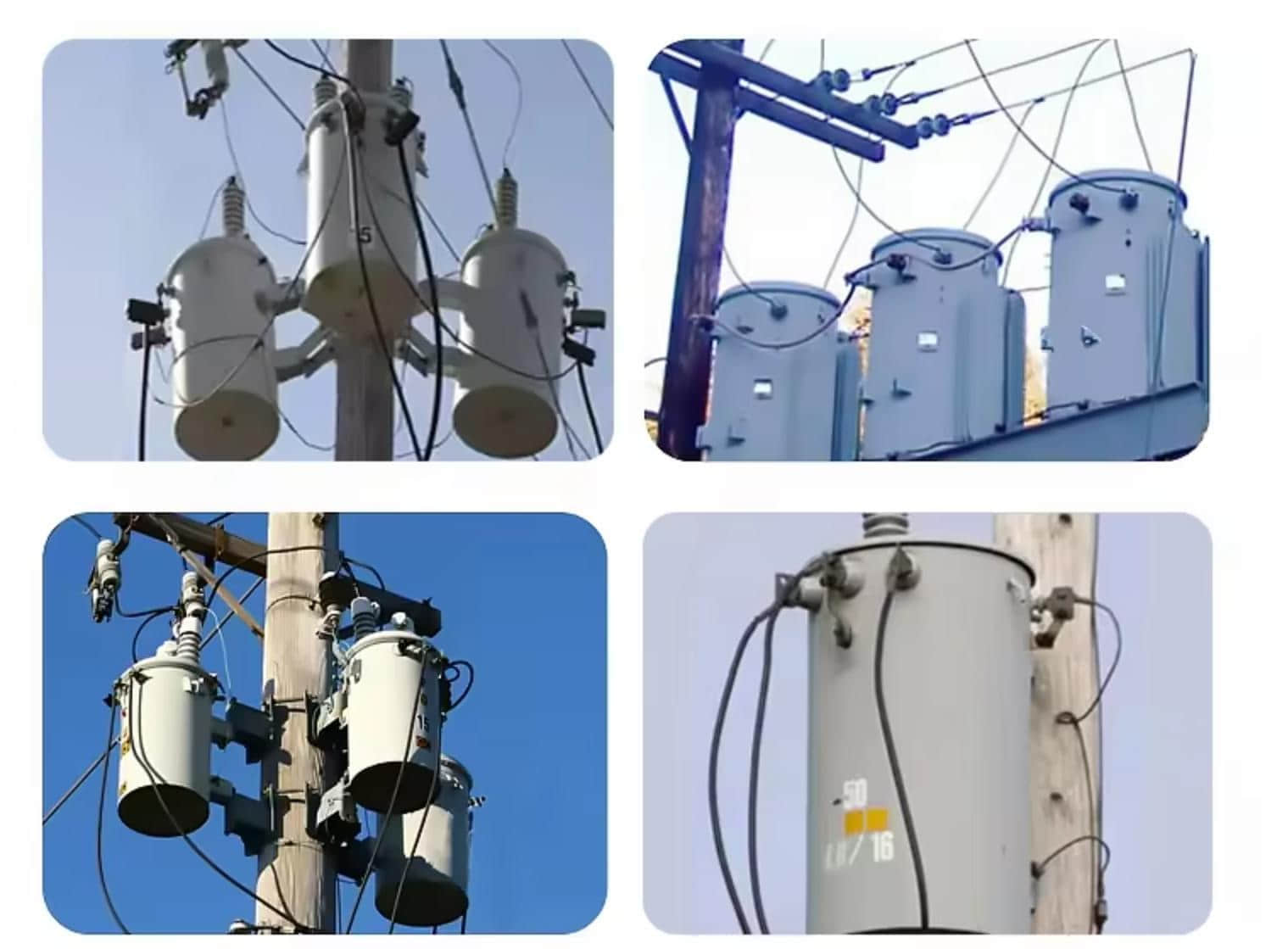
How Many Pounds of Copper Are in a Transformer by Type?
The answer changes significantly depending on transformer type. Pole units, pad-mounted units, and larger distribution equipment differ in enclosure, cooling arrangement, conductor length, and overall capacity.
Pole-Mounted Transformer Copper Content
A residential utility pole transformer often falls in the 10 to 50 kVA range. If copper-wound, it may contain roughly 15 to 75 pounds of copper, with many common 25 and 50 kVA units landing in the middle of that band.
This is the range most people mean when they ask about copper content in utility pole transformer equipment. In practice, many neighborhood pole units contain enough copper to matter, but not enough to estimate weight accurately without checking winding material.
Pole-mounted transformers are common because they are compact, durable, and well-suited to overhead distribution systems. Their copper content is shaped not just by kVA, but by primary voltage, secondary voltage, impedance requirements, and thermal design limits. A 25 kVA single-phase transformer designed for one utility system may not match the internal conductor weight of another 25 kVA unit built for a different region or standard.
Pad-Mounted Transformer Copper Weight
Pad-mounted distribution transformers are often larger and serve underground residential developments, multifamily buildings, or light commercial loads. Because of their higher capacity, they frequently contain more winding metal than a small pole-mounted unit.
A copper-wound pad-mounted transformer in the 75 to 500 kVA class can contain well over 100 pounds of copper, and much more in larger three-phase designs. But again, aluminum-wound versions are common in many utility systems.
Pad-mounted equipment also tends to involve different enclosure geometry and service arrangements. Those design differences can affect total weight and internal layout, which is why total exterior size alone is not a reliable guide to copper content.
Single-Phase vs. Three-Phase Units
Another important distinction is whether the transformer is single-phase or three-phase. Many pole-mounted residential transformers are single-phase, while larger pad-mounted and commercial units are often three-phase.
Three-phase transformers typically require more complex winding arrangements and can contain substantially more conductor material. Even when two transformers have similar apparent capacities, a three-phase design may distribute that capacity differently across coils and core structure, which can change the total copper weight.
For that reason, any estimate based only on kVA should also account for phase configuration. Ignoring the phase can lead to inaccurate assumptions about how much copper is actually inside.
What Affects the Copper Content in a Utility Pole Transformer?
Two transformers with the same kVA rating can still have different winding weights. That is why exact copper estimation requires more than a visual guess.
Winding Material: Copper vs. Aluminum
This is the biggest variable. Many older and premium designs use copper windings, but many utilities also deploy aluminum-wound transformers because aluminum is lighter and often less expensive.
If a unit is aluminum-wound, the actual copper may be limited to leads, connectors, or minor internal components. In that case, the assumed distribution transformer copper weight can drop dramatically.
From a technical perspective, both copper and aluminum can perform well when the transformer is properly designed. Copper offers higher conductivity per cross-sectional area, while aluminum can reduce weight and sometimes lower manufacturing costs. Because the two materials behave differently, the winding geometry and conductor size also differ. That means the internal appearance and mass distribution of the transformer can change even when the nameplate rating stays the same.
kVA Rating and Voltage Class
Higher kVA transformers need more conductor material to carry more current. Higher voltage designs may also require different winding arrangements, insulation clearances, and conductor lengths.
As a rule, larger capacity and more complex voltage requirements usually mean more winding material. That usually raises the total copper weight in copper-wound units.
Voltage class matters because insulation spacing and coil construction are not arbitrary. A transformer designed for a higher primary voltage may need additional physical separation, insulation layers, and different winding proportions. Those changes can increase total internal material even if the transformer serves a similar type of load.
Core Design and Manufacturer Differences
Transformer engineering is not identical across brands. Manufacturers make different choices in conductor cross-section, cooling, efficiency targets, and core geometry.
As a result, two 50 kVA transformers can have noticeably different winding weights. This is one reason nameplate review and manufacturer data matter so much.
Efficiency regulations and utility purchasing standards also influence design. Some transformers are optimized for lower no-load losses, others for lower load losses, and others for specific operating environments. Those priorities can change how much copper is used in the windings and how the core is sized relative to the conductor system.
Design Era and Fleet Age
The age of the transformer can also influence copper content. Older units were often built under different material cost conditions, efficiency standards, and utility preferences than modern units.
In some fleets, older transformers are more likely to use copper windings. In others, procurement practices may have shifted over time based on supplier contracts or regional standards. That is why fleet age should be treated as a clue, not proof.
When reviewing legacy equipment, historical records are often as useful as physical inspection. Knowing the approximate manufacturing period can narrow the likely construction type and improve the estimate quality.
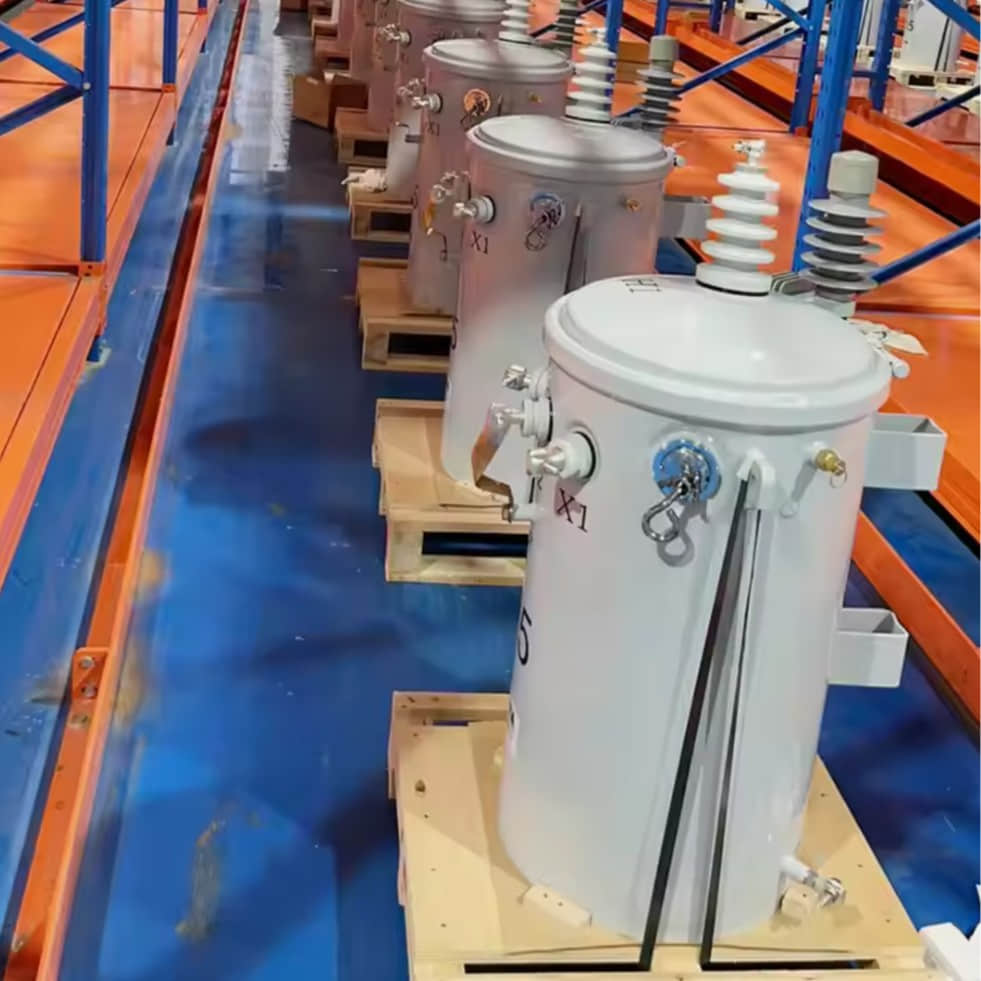
Real-World Examples of Copper in Power Line Transformers
Field estimates are most useful when tied to common transformer sizes. The examples below reflect realistic ranges seen in distribution equipment, not a single universal standard.
Example: 25 kVA Residential Pole Transformer
A typical 25 kVA single-phase residential pole transformer may weigh around 220 to 350 pounds. If copper-wound, a realistic copper estimate is often about 25 to 45 pounds.
That puts copper at roughly 10% to 13% of total unit weight. The rest is mostly steel core, tank, oil, insulation, and hardware.
This size is common in low-density residential service, especially where a transformer feeds a small number of homes. It is large enough to contain a meaningful amount of copper, but still compact enough that people often overestimate how much conductor is actually inside.
Example: 50 kVA Utility Pole Transformer
A 50 kVA pole transformer often weighs in the range of 380 to 550 pounds. In a copper-wound design, the transformer winding copper amount may be around 45 to 75 pounds.
This is one of the most practical sizes for discussing how many pounds of copper are in a transformer, because it is common in both residential clusters and light commercial service.
In operational terms, the 50 kVA class often sits in the middle of the range where broad rules of thumb start to become less reliable. Depending on the manufacturer and service application, the difference between one 50 kVA unit and another can be noticeable enough to matter when estimating internal conductor weight.
Example: 100 kVA Distribution Transformer
A 100 kVA distribution transformer may weigh about 650 to 950 pounds. Copper-wound versions can hold roughly 85 to 130 pounds of copper, sometimes more depending on voltage and build style.
This example shows how copper content scales upward with capacity. As the transformer grows, conductor weight generally grows faster than many people expect.
At this size, phase configuration and application become even more important. A unit intended for a commercial or mixed-load environment may be designed differently from one intended for standard residential distribution, even when the nameplate rating seems similar at first glance.
Example: 167 kVA Distribution Transformer
A 167 kVA transformer is often large enough that total unit weight becomes substantial, yet it remains within the range seen in many distribution systems. A copper-wound version may contain approximately 120 to 190 pounds of copper, depending on design details.
Transformers in this class show why estimates should be based on documented ranges rather than assumptions. Once equipment reaches higher capacities, conductor arrangement, cooling method, and utility specification differences can significantly affect the total internal copper.
This is also the point where broad public assumptions often break down. A larger transformer absolutely can contain a great deal of copper, but the proportion still depends on engineering choices and not merely on the outside dimensions of the tank.
Can You Tell Copper Content from Transformer Weight Alone?
Only roughly. Total transformer weight can help create a broad estimate, but it cannot confirm the exact copper content.
That is because total weight includes the steel core, mineral oil or other insulating fluid, tank, bushings, insulation, and structural parts. A heavier transformer may have more copper, but it may also simply have a heavier tank or a different core design.
In short, weight is useful for screening. It is not enough for a precise copper valuation.
A practical way to think about it is this: total weight gives context, not certainty. If two transformers differ greatly in weight but share similar ratings, the heavier one may contain more copper, but it may also contain more steel, more fluid, or a more robust enclosure. Without supporting data, weight alone remains an incomplete indicator.
That is especially true when comparing units from different decades or manufacturers. Changes in standards, materials, and enclosure construction can shift the ratio between conductor mass and total unit weight.
How Utilities Estimate Transformer Winding Copper Amount
Utilities, rebuilders, and asset management professionals use several practical methods. The best estimates combine documentation with physical verification.
Nameplate review: Confirms kVA, voltage, phase, and manufacturer.
Manufacturer specifications: Some product sheets list total weights and design classes that help estimate conductor content.
Teardown data: Rebuilders often maintain internal records from previously dismantled units.
Material verification: Direct inspection confirms whether the windings are copper or aluminum.
Fleet comparison: Utilities often estimate from known units with similar ratings and vintages.
In well-managed utility fleets, historical teardown records can be especially valuable. They provide real-world benchmarks rather than theoretical assumptions.
These methods are strongest when used together. A nameplate may identify the rating, but it does not always state the winding metal. A manufacturer sheet may provide useful weight information, but not every legacy unit has accessible documentation. Physical verification may answer the material question, but not always the full conductor mass. Combining sources creates the best estimate.
Utilities with strong asset records often build internal reference libraries over time. Once several known units from the same manufacturer series have been documented, estimating the copper content of similar units becomes more reliable.
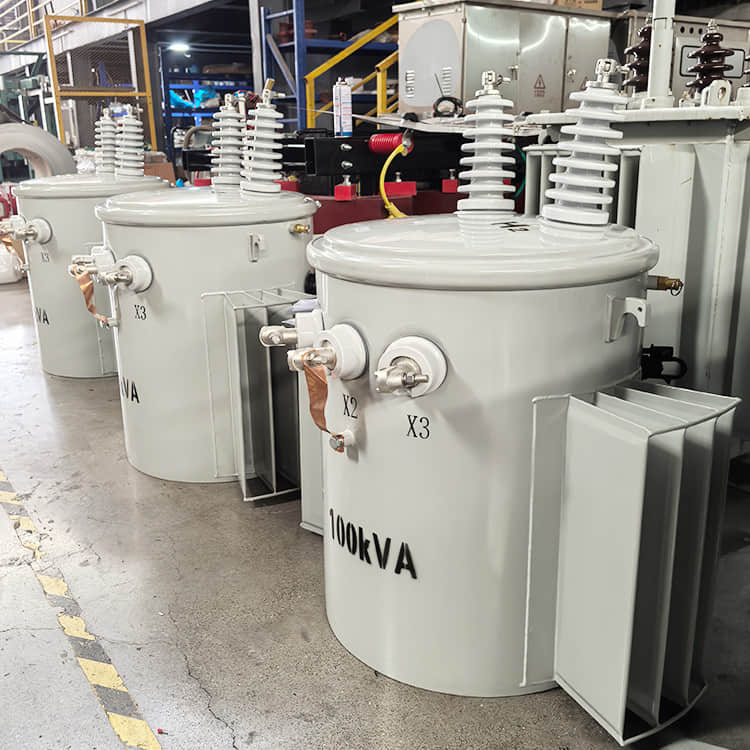
Copper vs. Aluminum Windings: Why the Difference Matters
This distinction is critical for engineering interpretation, cost analysis, and maintenance planning. Many people overestimate the copper content of power line transformer equipment because they assume all windings are copper.
That assumption is wrong often enough to be expensive. Aluminum-wound units can look similar from the outside while containing far less actual copper.
Table: Copper-Wound vs. Aluminum-Wound Distribution Transformers
| Winding Material | Conductivity | Weight Impact | Material Use Impact | Common Use Case |
|---|---|---|---|---|
| Copper | Higher conductivity per cross-section | Heavier | Higher actual copper content | Older fleets, premium designs, some specialty applications |
| Aluminum | Lower than copper, requiring a larger conductor cross-section | Lighter overall material cost profile | Far lower actual copper content | Common in many modern utility distribution transformers |
From an engineering standpoint, both materials can be used successfully. The important point is that they are not interchangeable for estimating copper weight.
Copper windings generally allow more conductivity in a smaller cross-section, which can support compact coil designs. Aluminum windings require different dimensional choices to achieve comparable electrical performance. As a result, the transformer may be optimized around the material from the beginning, rather than simply swapping one metal for another.
This difference matters because outward appearance can be misleading. Two units may have similar tanks, similar nameplate ratings, and similar service roles, yet differ sharply in actual copper content because the winding material is different.
Safety and Inspection Considerations
Any discussion of internal transformer materials should include an important caution: distribution transformers are hazardous electrical devices. They can contain high voltage components, insulating fluid, pressurized conditions, and internal parts that should only be handled by qualified personnel.
For that reason, copper estimation should begin with records, specifications, and non-invasive identification methods whenever possible. Physical inspection beyond normal external review should be performed only by trained professionals working under proper utility or industrial safety procedures.
Older transformers may also require special handling because insulating materials, gaskets, fluids, and legacy components can vary by manufacturing era. Even when the goal is simply to estimate copper content, safety and regulatory compliance should always come first.
In professional practice, the most trustworthy estimate is one developed from documentation and known fleet history, then confirmed through controlled technical inspection when necessary.
Practical Estimating Framework
If you need to estimate how much copper is in a power line transformer, a structured approach works better than relying on visual impressions.
1. Identify the unit type: Determine whether it is pole-mounted, pad-mounted, single-phase, or three-phase.
2. Read the nameplate: Record kVA, voltage class, phase, manufacturer, and serial or model details.
3. Check known weight ranges: Compare the transformer to typical total weight ranges for its class.
4. Confirm winding material if possible: Copper and aluminum designs can differ dramatically in actual copper content.
5. Use comparable units: Review similar documented transformers from the same manufacturer or fleet.
6. Apply a range, not a single number: Most field estimates are more honest and more accurate when expressed as a realistic band.
This framework is especially useful for engineers, asset managers, utility planners, and facility owners who need a grounded estimate without overstating precision. It balances practical judgment with technical caution.
For example, if a transformer is identified as a 25 kVA single-phase pole unit from a manufacturer known to have produced both copper- and aluminum-wound versions, the most credible estimate is not a single exact pound figure. It is a conditional range based on documented construction type.
Key Takeaways: How Much Copper Is in a Transformer?
A typical copper-wound power line transformer may contain anywhere from about 15 pounds to more than 190 pounds of copper, with common residential pole units often falling in the 25 to 75 pound range.
The biggest factors are transformer size, winding material, voltage class, phase configuration, and manufacturer design. The most important caution is simple: never assume a distribution transformer contains copper windings without verification.
If you are estimating the copper content in utility pole transformer equipment, use total weight only as a starting point. More accurate results come from specs, teardown records, fleet history, and direct material confirmation.
The central takeaway is not just that transformers can contain a meaningful amount of copper. It is that accurate estimation depends on context. Capacity matters, but so do material choice, design standards, manufacturer practices, and operating requirements. Good estimates come from technical evidence, not guesswork.
FAQ
How much copper is in a 25 kVA pole transformer?
A realistic estimate for a copper-wound 25 kVA pole transformer is about 25 to 45 pounds of copper. The exact amount depends on manufacturer design, voltage class, and whether the unit uses copper or aluminum windings.
How many pounds of copper are in a transformer on a power pole?
For common residential pole-mounted distribution transformers, a broad practical range is about 15 to 75 pounds of copper in smaller and mid-sized copper-wound units. Larger pole transformers can exceed that range, while aluminum-wound units may contain far less copper.
What is the copper content in a utility pole transformer?
Copper content usually refers to the winding copper weight inside the transformer. In many copper-wound pole transformers, that amount is often around 10% to 16% of the total unit weight, depending on size and design.
Do all distribution transformers use copper windings?
No. Many distribution transformers use aluminum windings instead of copper. That is why winding material must be verified before estimating copper weight.
Can a transformer's weight tell you how much copper is inside?
It can help you make a rough estimate, but it cannot confirm the exact copper weight. Total transformer weight includes the steel core, tank, insulating fluid, and other components, so accurate copper estimates require specifications or teardown data.
Why do two transformers with the same kVA have different copper weights?
Because kVA alone does not define the entire design. Voltage class, phase configuration, cooling design, efficiency targets, manufacturer engineering choices, and winding material can all change the amount of conductor used inside the transformer.
Are older transformers more likely to contain copper windings?
Sometimes, but not always. Older fleets may include more copper-wound units in certain regions or utility systems, yet this varies by manufacturer and procurement history. Age is a useful clue, not definitive proof.
What is the best way to estimate copper content accurately?
The best method is to combine nameplate data, manufacturer information, comparable fleet records, and confirmed winding material. A multi-source estimate is far more reliable than relying on total weight alone.
Get a More Accurate Transformer Copper Estimate
Do not rely on guesswork. Compare the transformer nameplate, manufacturer specifications, and known teardown records before estimating winding metal.
If you need a more reliable number for planning or technical evaluation, start by confirming kVA rating, voltage class, total weight, phase, and winding material. That simple step will give you a far more accurate transformer copper estimate than weight alone ever can.
For the most dependable result, document the transformer systematically. Record the unit type, manufacturer, serial information, nameplate values, and any known fleet history. Then compare those details against verified examples from similar equipment. That approach produces a practical estimate that is useful for engineering review, asset planning, and maintenance decisions.
When the exact number truly matters, rely on verified documentation or controlled professional inspection rather than assumptions. In transformer evaluation, accuracy comes from evidence.