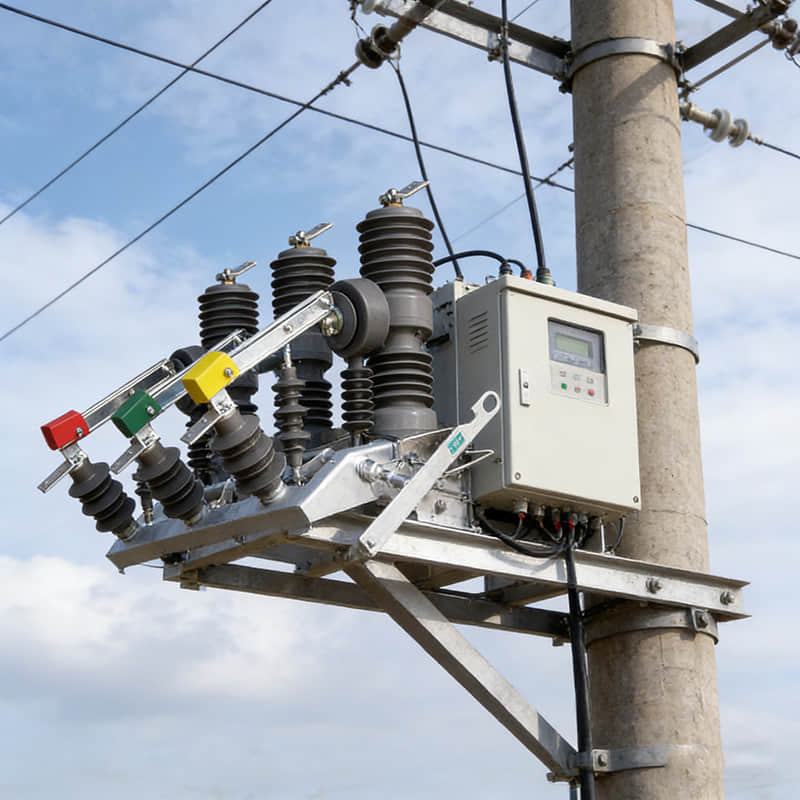
A recloser on a utility pole is one of the most important devices in modern electric distribution. It helps utilities detect faults, interrupt dangerous current, and restore service automatically when the problem is only temporary.
In simple terms, a recloser is an automatic circuit recloser installed on overhead power lines. It acts as a smart fault-interrupting device that protects equipment, limits outage areas, and improves reliability for homes, farms, businesses, and critical infrastructure.
What Is a Recloser on a Utility Pole?
A recloser is a protective switching device mounted on or near a utility pole along a distribution line. Its job is to sense abnormal current, open the circuit when a fault occurs, and then automatically close again after a short delay.
If the fault clears, power returns quickly. If the fault remains, the device locks out and keeps the damaged section isolated until crews can inspect and repair it.
Why Utility Poles Need Reclosers
Overhead distribution line protection is challenging because power lines are exposed to the environment every day. Unlike underground cable systems, overhead lines face constant risk from weather, wildlife, vegetation, and debris.
Utilities install reclosers because many line faults are temporary. A tree branch may brush a conductor for one second, or lightning may cause a momentary flashover that disappears almost instantly.
Without a recloser, a temporary event could cause a longer outage than necessary. With a recloser, the device can clear the fault and restore service automatically, often before a crew is dispatched.
Storms can throw branches into conductors.
Lightning can create transient overvoltage events.
Birds and squirrels can trigger short-duration faults.
Equipment failure can cause sustained overcurrent.
Downed conductors can create permanent fault conditions.
How a Recloser Works on a Power Line
A recloser follows a clear sequence. It performs power line fault detection, interrupts current, waits for a programmed time, and then tries to restore service.
This process is what makes an Auto Recloser so valuable in distribution systems. It can distinguish between temporary disturbances and faults that need field repair.
Detects abnormal current
The recloser continuously measures line current through built-in sensing components. When current rises above programmed thresholds, the device identifies an overcurrent, short circuit, or ground fault condition.
Modern units use digital relays and microprocessor-based logic. Older units may use mechanical or hydraulic timing elements, but the protective purpose is the same.
Opens the circuit
Once the fault level exceeds the trip setting, the recloser opens its interrupter contacts. This cuts off current flow to the affected section and helps prevent further damage to conductors, transformers, and downstream equipment.
The interruption happens very quickly. In many systems, clearing time is measured in cycles of the AC waveform, not in minutes.
Re-closes automatically
After opening, the recloser waits for a short preset interval. It then closes again to test whether the fault has disappeared.
If the problem was temporary, normal current flow resumes and customers may only notice a brief light blink. This is a common benefit of automatic reclosing on overhead feeders.
Locks out for permanent faults
If the fault is still present, the recloser trips again. After a programmed number of failed attempts, it enters lockout and remains open.
That lockout protects the system from repeated energization into a damaged line. Utility crews must then patrol the circuit, find the fault, and safely restore service.
What Does a Recloser Look Like on a Utility Pole?
Many people see pole-mounted electrical devices and are not sure what they are. A utility pole recloser is a distinct piece of utility pole electrical equipment usually mounted near the top or mid-section of the pole on distribution feeders.
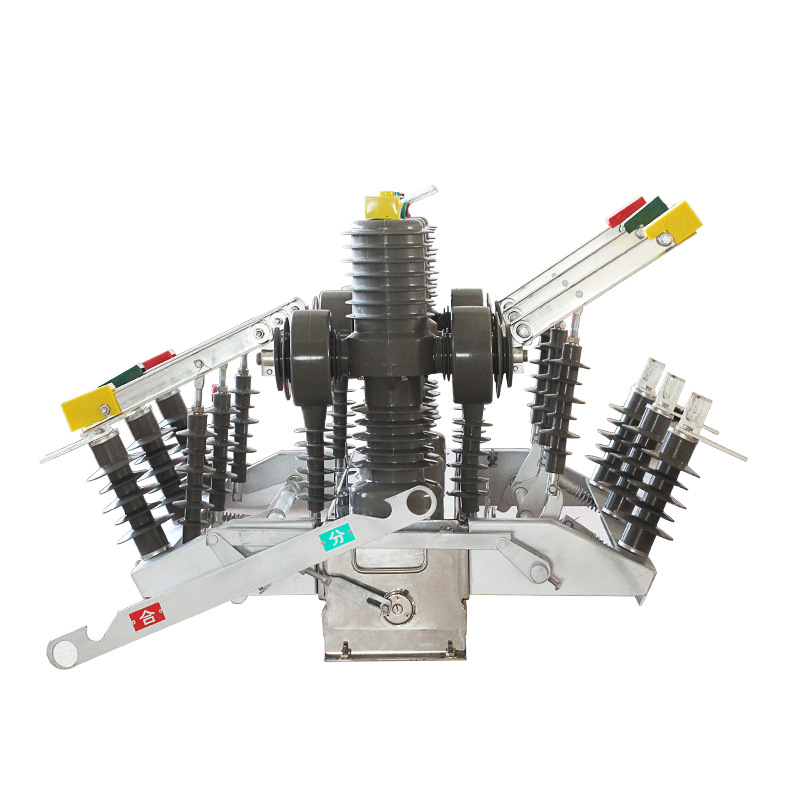
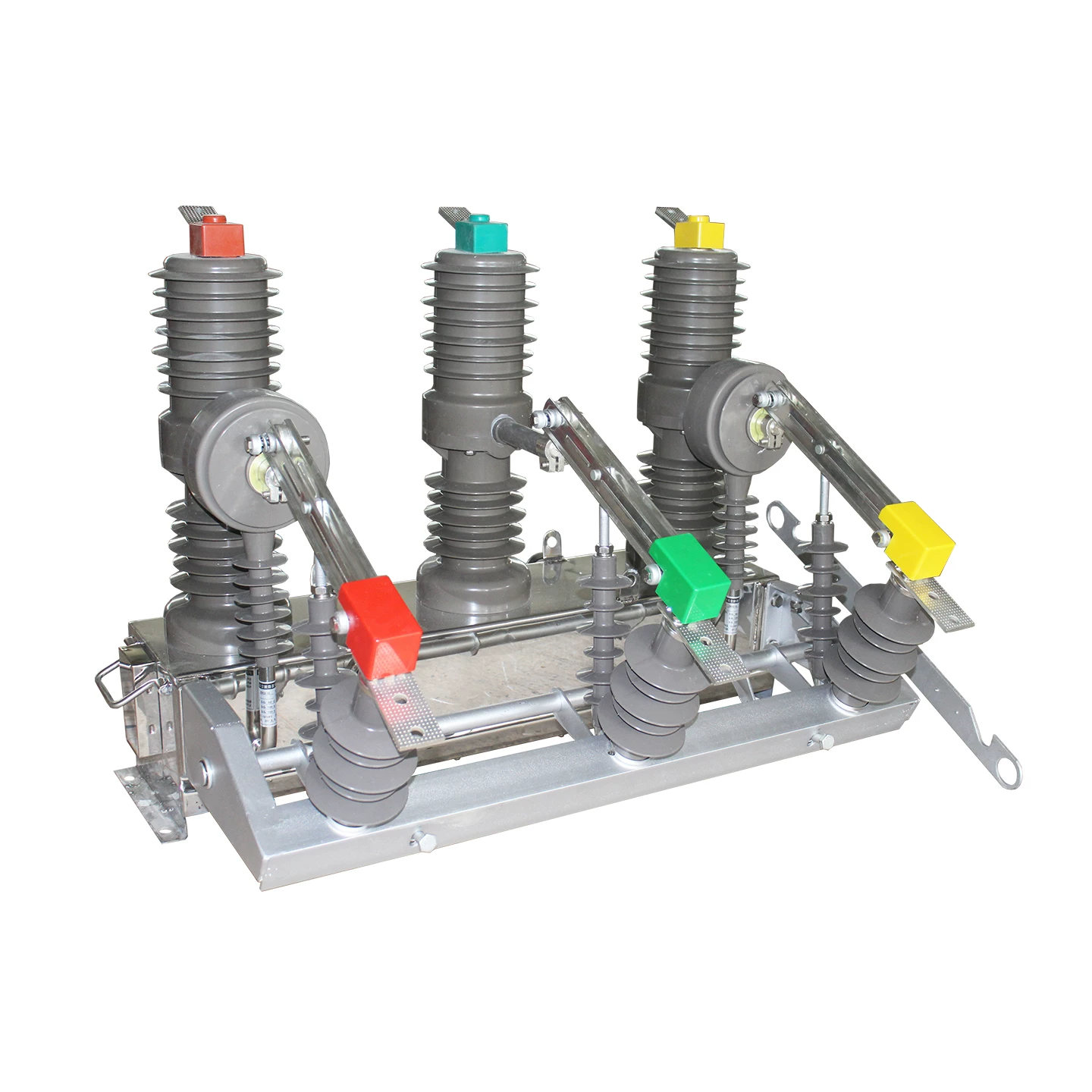
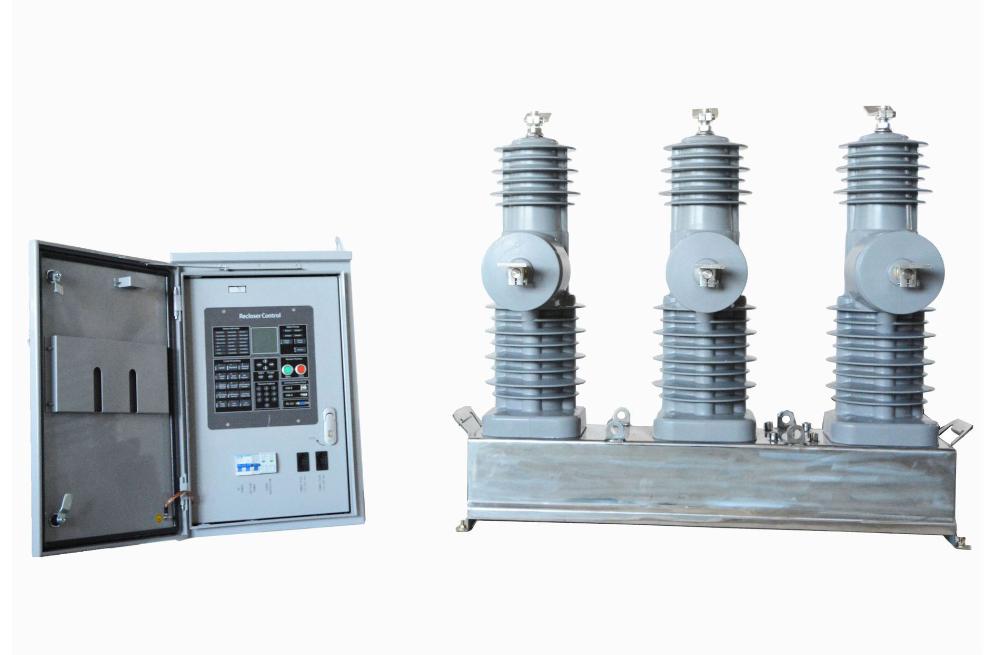
Most modern reclosers include a sealed tank or interrupter body, insulated bushings where conductors connect, and a nearby control cabinet. The controller is often mounted lower on the pole for easier technician access.
Tank or interrupter housing that contains the switching mechanism
Bushings for line connections
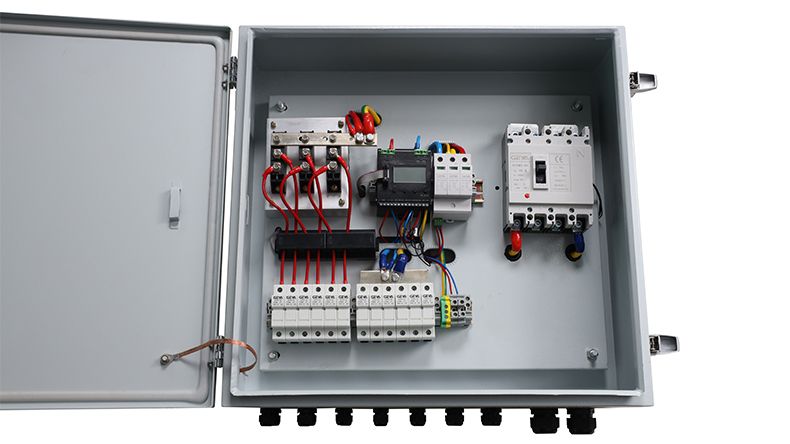
Control cabinet with protection and automation settings
Current and voltage sensing elements
Communication hardware for SCADA or remote monitoring in advanced models
On three-phase lines, the device may span all three conductors. On single-phase laterals, it may appear smaller and protect only one phase.
Recloser vs Circuit Breaker vs Fuse: What Is the Difference?
A recloser, circuit breaker, and fuse all protect electric systems from faults. The difference is how they are applied and whether they can automatically restore service.
A standard distribution fuse melts once and must be replaced. A circuit breaker can trip and be reset, but it is often associated with substations, panels, or enclosed switchgear rather than pole-top distribution automation.
A recloser is designed specifically for overhead distribution feeders and line sections where automatic reclosing is valuable. That automatic reset capability is the key distinction.
Fuse: simple, inexpensive, one-time operation until replaced
Circuit breaker: protective interrupting device, may be reset manually or electrically
Recloser: breaker-like device optimized for overhead distribution with programmed reclosing sequences
Types of Reclosers Used on Utility Poles
Utilities use different recloser designs depending on feeder layout, voltage, load, and reliability goals. Product selection also depends on whether the circuit is single-phase, three-phase, rural, urban, or automation-ready.
Single phase recloser
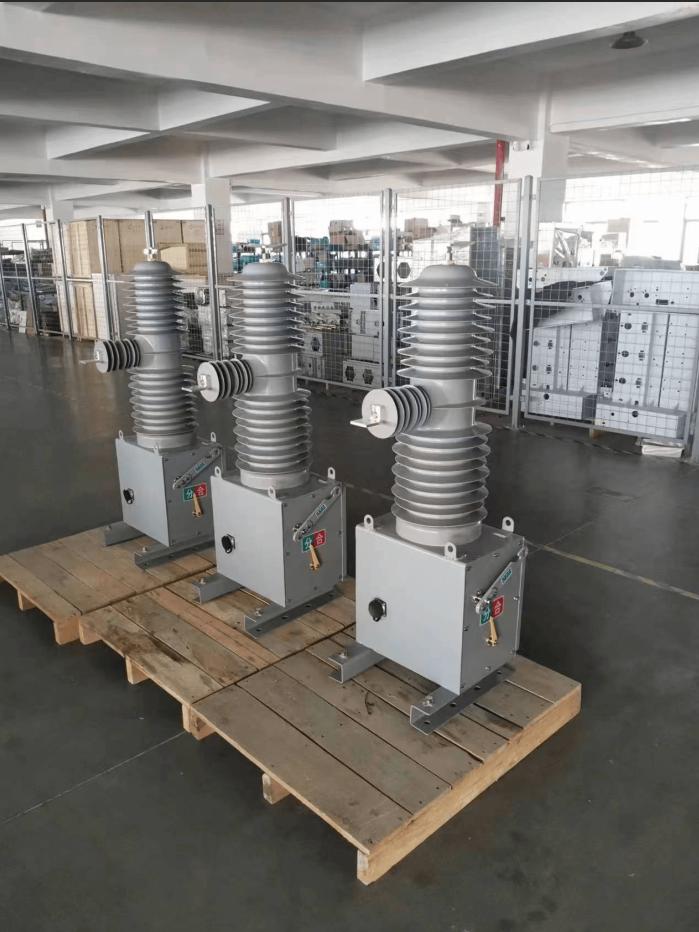
A single phase recloser protects one phase at a time. It is commonly used on laterals, taps, and rural distribution lines where single-phase loads are widespread.
This design helps isolate faults without unnecessarily interrupting other unaffected phases. It is often used in agricultural and lightly loaded networks.
Three phase recloser
A three phase recloser serves the same broad role as a 3 phase recloser, but this search term is often used by buyers comparing feeder protection options. Utilities choose these units when simultaneous phase interruption and restoration are operationally necessary.
In automated feeder schemes, a three phase recloser may also communicate with upstream breakers and downstream sectionalizers. That improves fault isolation and restoration strategy.
Hydraulic recloser
A hydraulic recloser is an older style that uses hydraulic control principles rather than advanced digital electronics. Its operating sequence is governed by mechanical and hydraulic timing elements built into the device.
These units were widely used for decades and are still found in some legacy systems. However, many utilities are replacing them with electronic models for better protection coordination, visibility, and remote control.
Electronic and smart Auto Recloser models
Modern Auto Recloser systems use microprocessor-based controls, event recording, and communications. Settings can be programmed for time-current curves, reclosing intervals, cold load pickup, and coordination with fuses and upstream devices.
Smart models support SCADA, fault indicators, outage analytics, and remote switching. They are a core building block of self-healing grid strategies and distribution automation programs.
Where Reclosers Are Installed on Distribution Lines
Utilities place reclosers at strategic points to reduce outage size and improve restoration speed. Placement is based on circuit length, customer density, branch structure, and historical fault exposure.
Feeder exits from substations to protect major circuit segments
Mid-line points to sectionalize long overhead feeders
Branch circuits and laterals to isolate local fault-prone areas
Remote rural sections where crew response may take longer
High-vegetation corridors with repeated temporary contacts
On long rural feeders, reclosers are especially valuable because a single device can prevent a distant branch fault from blacking out the entire line. That makes them cost-effective reliability tools.
Main Benefits of a Utility Pole Recloser
The biggest benefit of a recloser is faster restoration after temporary faults. Instead of waiting for a crew, the line can recover automatically in seconds.
Just as important, reclosers reduce the number of customers affected by a fault. They isolate only the damaged or disturbed section instead of shutting down the entire feeder.
Shorter outages for temporary events
Smaller outage zones through sectionalizing
Lower equipment stress from controlled interruption
Improved crew efficiency with better fault location and event data
Higher grid reliability on exposed overhead systems
Support for smart grid automation and remote operations
Real-World Examples of Reclosers in Action
Reclosers matter because many utility outages start with everyday events. Their value becomes clear when a temporary fault disappears and power returns before most customers even finish checking the lights.
Tree branch contact during wind
During high winds, a branch may slap against an overhead conductor and create a brief fault. The recloser trips, waits a short interval, recloses, and finds the branch has already fallen clear.
In this situation, customers may only see a momentary blink. Service is restored in seconds instead of lasting until a patrol crew arrives.
Squirrel or bird contact on a line
Wildlife contact is a common source of transient faults on distribution circuits. A squirrel bridging energized parts may trigger a fault current spike that disappears immediately after contact ends.
The recloser clears the event and restores service on the next shot. That is one reason customers often experience a quick power blink rather than a prolonged outage.
Permanent conductor damage after a storm
After severe weather, a conductor may break or fall to the ground. In that case, each reclose attempt sees the fault again, and the recloser ultimately locks out.
This prevents repeated energization into a dangerous permanent fault. Crews must inspect, repair, test, and then restore service safely.
Recloser Performance Data and Utility Reliability Impact
Utilities do not deploy reclosers only for theory. They use them because fault statistics on overhead lines show that a large share of interruptions are temporary and can be cleared by automatic reclosing.
Industry practice has long recognized that transient faults are common on overhead distribution systems. Utility engineering references and operational experience consistently show that reclosing is one of the most effective reliability tools for exposed feeders.
For example, utilities around the world use feeder automation programs built around reclosers to improve service continuity indices such as SAIFI and SAIDI. In practical operation, even preventing a fraction of sustained outages can produce significant savings in customer interruption time and truck dispatches.
Table: Common temporary vs permanent fault events
| FAULT EVENT | TYPICAL FAULT TYPE | LIKELY RECLOSER RESPONSE | LIKELY OUTAGE OUTCOME |
|---|---|---|---|
| Wind-blown branch touches conductor | Temporary | Trips once and recloses successfully | Brief blink, rapid restoration |
| Lightning flashover | Temporary | Fast trip followed by successful reclose | Momentary interruption only |
| Squirrel or bird contact | Temporary or intermittent | One or more reclose attempts | Short outage or light blink |
| Broken conductor after storm | Permanent | Trips repeatedly, then locks out | Sustained outage until repair |
| Failed insulator or hardware | Permanent | Trips and locks out after programmed attempts | Localized sustained outage |
| Vehicle pole impact | Permanent | Immediate interruption and lockout sequence | Extended outage in affected section |
Table: Recloser vs fuse vs breaker comparison
| DEVICE | CORE FUNCTION | RESET ABILITY | TYPICAL INSTALLATION LOCATION | BEST-USE CASE |
|---|---|---|---|---|
| Recloser | Detects faults, interrupts current, recloses automatically | Yes, automatic and programmable | Overhead distribution feeders and pole lines | Temporary fault clearing and sectionalizing |
| Fuse | Melts to open the circuit during overcurrent | No, must be replaced | Laterals, transformer cutouts, branch protection | Low-cost localized protection |
| Circuit breaker | Interrupts faults in enclosed switchgear or station applications | Yes, manual or electrical reset | Substations, panels, switchboards, feeder exits | Primary system protection and switching |
Table: Typical utility benefits from recloser deployment
| BENEFIT | HOW THE RECLOSER HELPS | OPERATIONAL IMPACT |
|---|---|---|
| Fewer sustained outages | Temporary faults clear without waiting for crews | Improved customer continuity |
| Smaller outage zones | Only the faulted line section is isolated | Fewer customers interrupted |
| Faster restoration | Automatic reclosing restores service in seconds | Lower outage duration |
| Reduced truck rolls | Transient events may not require field dispatch | Lower operating cost |
| Better system visibility | Smart controllers log events and alarms | Faster diagnosis and planning |
| Improved safety and coordination | Controlled fault isolation with programmable protection | Stronger feeder protection strategy |
Key Components Inside an Automatic Circuit Recloser
An automatic circuit recloser combines switching hardware with protection intelligence. Its internal design varies by manufacturer, but the main functional components are similar across the industry.
Current sensing system to detect overcurrent and fault magnitude
Interrupter mechanism to open and close the circuit under fault duty
Insulation medium such as vacuum interruption with solid dielectric or other insulated designs
Electronic controller for trip logic, timing, and sequence programming
Power supply and battery support for control continuity
Communication module for SCADA, telemetry, and remote commands
Modern designs increasingly use vacuum interrupters because they offer high reliability and reduced maintenance. Digital controllers then provide the intelligence needed for selective coordination and automation.
How Utilities Choose the Right Recloser
Choosing the right recloser is an engineering decision, not a one-size-fits-all purchase. Utilities evaluate both electrical performance and operational strategy.
Voltage class of the distribution system
Continuous load current and expected fault current
Single-phase or three-phase topology
Coordination with upstream breakers and downstream fuses
Line exposure to trees, lightning, and wildlife
Remote monitoring needs and communication availability
Automation goals such as FLISR and self-healing feeder schemes
For example, a rural lateral serving farms may be best protected by a single phase recloser. A dense feeder serving mixed loads may require a three phase recloser with advanced communication and event logging.
Safety Considerations Around Pole-Mounted Reclosers
Reclosers are high-voltage devices and must never be approached, touched, or tampered with by the public. Even when a line appears inactive, automatic reclosing means it may re-energize without warning.
Only trained utility professionals should operate or service this equipment. Public safety around pole-mounted devices depends on keeping distance and reporting damaged lines or sparking equipment immediately.
Stay far away from downed wires.
Do not climb or approach utility poles.
Never assume a circuit is de-energized.
Call the utility or emergency services if equipment appears damaged.
Signs a Recloser May Have Operated Near You
Most people do not see the device operate directly, but they often notice the symptoms. A successful reclose usually appears as a brief interruption rather than a long outage.
Lights blink once or twice
Power goes off briefly and returns quickly
A small neighborhood loses power while nearby areas stay energized
Utility crews respond later to inspect a localized line section
These signs do not guarantee a recloser event, but they are common indicators on overhead systems. Utilities often confirm the event through controller records and outage management systems.
FAQ
What is a recloser on a utility pole?
A recloser on a utility pole is an automatic protective device that detects faults on overhead distribution lines, opens the circuit to stop dangerous current, and then automatically attempts to restore power if the fault was temporary.
Is a recloser the same as a circuit breaker?
A recloser is similar to a circuit breaker because both interrupt fault current, but a recloser is specifically designed for distribution lines and includes programmed automatic reclosing sequences to restore service after temporary faults.
Why did my power blink and come back on?
A brief blink usually means a temporary line fault occurred, such as a branch touch or lightning flashover, and the recloser successfully opened and reclosed the circuit to restore service quickly.
What causes a utility pole recloser to trip?
Common causes include tree branches, lightning, squirrels or birds, damaged insulators, equipment failure, downed conductors, and other overcurrent or short-circuit conditions on the line.
How many times does a recloser try to reset?
Settings vary by utility and circuit design, but many reclosers are programmed to make multiple reclosing attempts before locking out if the fault remains on the line.
What is the difference between a single phase recloser and a three phase recloser?
A single phase recloser protects one phase and is often used on laterals or rural lines, while a three phase recloser trips all three phases together and is typically used on main feeders where coordinated three-phase protection is required.
What is a hydraulic recloser?
A hydraulic recloser is an older style of recloser that uses mechanical and hydraulic operating principles for timing and reclosing rather than advanced digital electronic controls.
Are Auto Recloser systems safe?
Yes, Auto Recloser systems are safe when designed, installed, and operated by utilities, but they are dangerous for the public to approach because they control high-voltage circuits that may automatically re-energize.
Can a recloser prevent all power outages?
No, a recloser cannot prevent every outage, but it can significantly reduce outage duration and outage spread by clearing temporary faults and isolating permanent faults more effectively.
Conclusion: Why Reclosers Matter for Grid Reliability
Reclosers are essential to modern overhead distribution line protection. They detect faults, interrupt current, isolate damaged sections, and restore service automatically when the event is temporary.
That combination of speed, selectivity, and automation makes the recloser one of the most effective devices on any overhead feeder. Whether the system uses a single phase recloser, 3 phase recloser, three phase recloser, or legacy hydraulic recloser, the goal is the same: safer operation and faster service restoration.
For utilities, municipalities, contractors, and industrial energy teams, investing in the right automatic circuit recloser improves reliability, reduces unnecessary outages, and strengthens smart grid performance.
CTA
Need the right recloser solution for your distribution network? Contact a qualified utility equipment expert today to compare specifications, evaluate feeder protection requirements, and select the best Auto Recloser for your overhead system.
Request technical data, protection coordination guidance, or smart grid integration support now to improve reliability, reduce outage time, and modernize your power line protection strategy.