
Why a Custom Power Transformer Can Prevent Costly Downtime
A single transformer mismatch can shut down an entire production line in minutes. In high-throughput manufacturing, even one hour of unplanned downtime can cost anywhere from hundreds of dollars to hundreds of thousands, depending on the process, labor, and scrap exposure.
That is why many engineers now choose custom power transformer design instead of forcing a standard catalog model into a demanding application. A properly engineered solution reduces overheating, voltage instability, nuisance trips, and premature insulation failure.
Consider a plant retrofit in which imported equipment designed for 50 Hz is installed in a 60 Hz facility with non-linear motor drives. An off-the-shelf unit may technically “fit” the voltage, yet still run hotter, louder, and less efficiently than expected. A transformer custom approach aligns the transformer with the real load, the true environment, and the compliance target.
The Core Problem: Why Standard Transformers Often Fail in Real Applications
Standard transformers are built for broad market demand, not for your exact duty cycle. They often assume predictable loads, moderate ambient conditions, and standard installation clearances.
Real applications are rarely that simple. Facilities face harmonics from VFDs, space limits inside OEM cabinets, corrosive atmospheres, outdoor weather exposure, and sector-specific safety rules.
When those variables are ignored, the result can be excessive heat rise, poor voltage regulation, insulation stress, audible noise, or shortened service life. In these cases, bespoke electrical transformer solutions deliver better technical and economic performance.
What Is a Custom Power Transformer?
A custom power transformer is a transformer engineered around a specific application rather than selected from a fixed standard catalog. Its electrical, thermal, mechanical, and compliance features are tailored to the equipment, site conditions, and performance goals.
This includes custom power transformer design for unique voltages, specialized cooling, compact footprints, low-noise performance, and industry-specific approvals. It also includes fully documented transformer custom solutions for OEMs, industrial plants, utilities, renewable energy systems, and critical infrastructure.

When You Need a Custom Power Transformer
You need a custom unit when standard products cannot meet electrical, thermal, mechanical, or regulatory requirements with acceptable risk. This is common in engineered systems, retrofits, exports, and harsh industrial installations.
Non-standard voltage or frequency requirements
High inrush or harmonic-heavy loads
Space-constrained machine integration
Outdoor or corrosive operating conditions
Special compliance for medical, marine, rail, or utility projects
Efficiency or noise targets beyond standard offerings
Non-Standard Voltage, Frequency, or Phase Requirements
Many applications require uncommon primary or secondary voltages, mixed-frequency operation, or special single-phase and three-phase arrangements. This is especially common in export equipment, renewable energy, marine systems, and industrial retrofits.
Harsh Industrial or Outdoor Environments
Heat, dust, moisture, chemicals, salt air, and vibration can quickly degrade a poorly matched transformer. Custom insulation systems, coatings, enclosures, and thermal protection help maintain reliability in these conditions.
Tight Installation Space or Weight Limits
OEM skids, medical carts, rail cabinets, and retrofit panels often leave little room for a standard unit. A custom design can optimize core geometry, terminal location, enclosure shape, and mounting style to fit the available space.
Special Compliance, Safety, or Efficiency Targets
Some projects must satisfy UL, IEC, IEEE, CE, RoHS, or application-specific requirements. Others must meet lower loss limits, reduced noise, or stricter thermal margins to support long-term operating cost goals.
How to Specify a Custom Power Transformer Correctly
The best project outcomes start with a clear, complete specification. A practical power transformer specifications guide helps buyers, engineers, and OEM teams avoid rework, delays, and underperforming designs.
Required Input and Output Voltage
Define the primary voltage, the secondary voltage, and all acceptable tolerance bands. Include no-load and loaded voltage expectations if voltage regulation is critical.
Power Rating, Load Type, and Duty Cycle
Specify the required kVA, the actual load profile, and whether operation is continuous or intermittent. Non-linear loads such as rectifiers, welders, and drives may require derating or harmonic-aware design.
Frequency, Phase, and Taps
State the operating frequency, such as 50 Hz, 60 Hz, or dual-frequency conditions. Also define single-phase or three-phase operation and whether tap changers are needed for voltage adjustment.
Insulation Class and Temperature Rise
Insulation class directly affects allowable winding temperature and life expectancy. Lower temperature rise at the same load usually improves longevity, but it may increase size and cost.
Cooling Method and Ventilation Needs
Choose between dry-type, oil-filled, natural air, forced air, or other cooling methods based on site conditions and service demands. Cooling choice impacts footprint, maintenance, efficiency, and installation safety.
Enclosure, IP/NEMA Rating, and Mounting Style
Indoor electrical rooms need different protection than outdoor yards or washdown areas. The correct enclosure rating, access direction, and mounting configuration are essential for serviceability and safety.
Efficiency, Loss Limits, and Noise Requirements
Core losses and load losses directly affect operating cost over the equipment life. Noise limits also matter in commercial buildings, medical facilities, and noise-sensitive industrial zones.
Certifications and Regulatory Compliance
Always define which approvals are required for shipment and installation. Typical requirements include UL, CE, RoHS, IEC, IEEE, and customer-specific documentation packages.

Custom Power Transformer Design Process
A disciplined design workflow reduces risk before production begins. This is the heart of effective custom power transformer design and the point where long-term reliability is won or lost.
Application Review and Load Analysis
Engineers begin by reviewing the electrical one-line, load characteristics, duty cycle, ambient temperature, altitude, and installation layout. Harmonics, starting current, fault conditions, and expected growth margin are also assessed.
Core Material and Winding Configuration Selection
Core steel grade, flux density, and winding arrangement determine efficiency, regulation, and size. The correct combination balances electrical performance with cost, weight, and thermal behavior.
Industrial Transformer Winding and Insulation Design
Industrial transformer winding and insulation design is critical for dielectric strength, thermal durability, and short-circuit withstand capability. Engineers select conductor type, insulation system, spacing, and impregnation method to match real operating stress.
Mechanical Layout, Terminals, and Enclosure Design
The mechanical package must fit the installation while withstanding vibration, handling loads, and service access needs. Terminal placement, lifting points, clearances, and enclosure strength all matter in field performance.
Thermal, Safety, and Performance Validation
Before release, the design is checked for temperature rise, dielectric margins, impedance, efficiency, and short-circuit behavior. This step helps ensure the final unit will operate safely under expected conditions.
Custom Transformer Manufacturing Process
Understanding the custom transformer manufacturing process helps buyers evaluate quality, lead time, and project risk. A serious manufacturer follows controlled steps from engineering release to final test.
Engineering Approval and Prototype Development
Manufacturing should start only after drawings, specifications, and compliance requirements are approved. For critical applications, a prototype or first article may be built and validated before full production.
Core Cutting, Coil Winding, and Assembly
Core accuracy affects losses and noise, while winding consistency affects regulation and thermal performance. Controlled assembly procedures reduce dimensional variation and insulation damage.
Vacuum Impregnation, Insulation, and Finishing
Vacuum pressure impregnation or equivalent processes improve moisture resistance, mechanical stability, and dielectric reliability in many dry-type units. Final finishing may include coatings, encapsulation, labeling, and enclosure integration.
Quality Control and Factory Testing
Robust quality systems include incoming inspection, in-process checks, and final electrical testing. Common tests include turns ratio, winding resistance, hipot, insulation resistance, no-load loss, load loss, and temperature verification.
Packaging, Delivery, and Installation Support
Shipping protection is especially important for heavy magnetic equipment and moisture-sensitive insulation systems. Good suppliers also provide manuals, drawings, nameplate data, and startup guidance for commissioning teams.
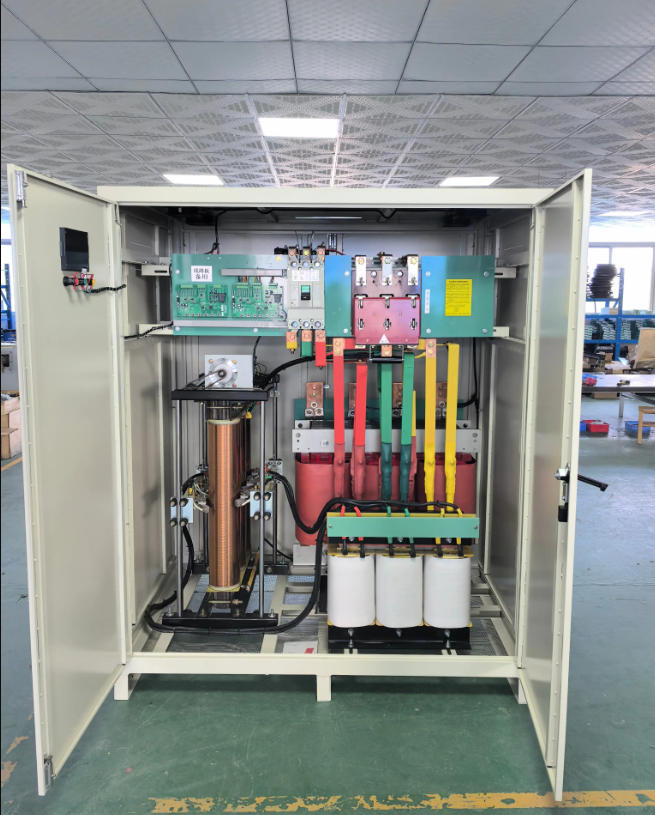
Key Data Table: Standard vs Custom Power Transformer Comparison
The right choice depends on the application, not just the purchase price. The table below shows why a custom unit often delivers lower lifecycle cost even when the upfront price is higher.
Table: Standard vs Custom Transformer Selection Factors
| Selection Factor | Standard Transformer | Custom Power Transformer | Impact on Buyer |
|---|---|---|---|
| Voltage Flexibility | Limited catalog options | Engineered to exact primary/secondary needs | Better compatibility, fewer workarounds |
| Footprint | Fixed dimensions | Optimized for cabinet, skid, or retrofit space | Improved fit and simpler installation |
| Efficiency | General-purpose design | Optimized for actual load and duty cycle | Lower energy loss over time |
| Environmental Protection | Basic indoor assumptions | Can include coatings, sealed enclosures, thermal upgrades | Longer service life in harsh conditions |
| Compliance | Generic certifications | Application-specific approval strategy | Reduced project approval risk |
| Lead Time | Often faster if stocked | Longer due to engineering and testing | Requires planning, but lowers mismatch risk |
| Upfront Cost | Usually lower | Usually higher | Must be weighed against total operating value |
| Total Cost of Ownership | Can rise due to downtime and losses | Often lower in demanding applications | Better long-term financial outcome |
Real-World Examples of Custom Power Transformer Applications
Custom transformers are widely used in sectors where standardization is impossible or too risky. The strongest proof is measurable field performance in demanding applications.
According to the U.S. Department of Energy, transformer losses across power systems are a meaningful source of wasted energy, which is why optimized efficiency design matters. At the facility level, improved transformer matching can reduce heat, improve voltage stability, and cut unplanned maintenance.
Table: Example Applications by Industry
| Industry | Typical Challenge | Custom Transformer Benefit |
|---|---|---|
| Manufacturing | Mixed loads, motor starting, harmonics | Stable voltage, better thermal margin, lower downtime risk |
| Renewable Energy | Variable frequency and grid integration needs | Improved compatibility and conversion efficiency |
| Medical Equipment | Low noise, compact size, high safety | Safer operation and easier equipment integration |
| Data Centers | Continuous duty and efficiency demands | Reduced losses and improved reliability |
| Marine Systems | Salt air, vibration, non-standard voltages | Corrosion resistance and compliance support |
| Rail Applications | Shock, limited space, strict standards | Compact build and mechanical durability |
Example: Manufacturing Plant Voltage Conversion Upgrade
A production facility upgrading imported equipment needed reliable conversion from a non-standard incoming supply while supporting VFD-driven loads. A standard unit met the nominal voltage but overheated during peak shifts.
A custom design added harmonic tolerance, revised kVA sizing, and a lower temperature rise target. The result was more stable operation and reduced downtime exposure during full-load operation.
Example: Renewable Energy Integration with Special Frequency Requirements
A renewable energy project required compatibility between generation equipment and downstream distribution hardware with special frequency constraints. Off-the-shelf options could not satisfy both the electrical and enclosure requirements.
A custom transformer was designed with the correct winding ratio, thermal capacity, and outdoor enclosure. This improved system integration and reduced conversion losses compared with a generic substitute.
Example: OEM Equipment with Tight Space Constraints
An OEM needed a compact transformer inside a machine frame where every millimeter mattered. A standard part would have required costly enclosure redesign and delayed product launch.
A compact bespoke electrical transformer solution used a revised core-and-coil arrangement and side-access terminals. The machine kept its original footprint while achieving required electrical performance.
Data Table: Typical Custom Transformer Specification Ranges
The table below gives a practical view of common custom specification ranges. Final values always depend on application physics, thermal limits, compliance targets, and cost priorities.
Table: Common Design Parameters and Their Impact
| Parameter | Typical Range or Option | Impact on Safety, Efficiency, Cost, and Service Life |
|---|---|---|
| Primary Voltage | 120 V to 35 kV+ | Defines insulation, clearances, test levels, and compliance scope |
| Secondary Voltage | 12 V to 15 kV+ | Affects turns ratio, conductor size, and application compatibility |
| Power Rating | 0.05 kVA to several MVA | Drives size, cooling method, mechanical strength, and cost |
| Frequency | 50 Hz, 60 Hz, or special | Changes core design, losses, and magnetic performance |
| Phase | Single-phase or three-phase | Influences footprint, system integration, and load balance |
| Insulation Class | Class A, B, F, H, or higher as needed | Higher thermal capability can extend life in severe service |
| Temperature Rise | Commonly 80 K to 150 K | Lower rise improves longevity but may increase cost and size |
| Cooling | AN, AF, oil-filled, encapsulated, sealed | Impacts reliability, maintenance, safety, and installation design |
| Enclosure | Open, ventilated, NEMA, IP-rated | Determines environmental protection and field durability |
| Efficiency Target | Standard to premium low-loss design | Higher efficiency lowers operating cost but may raise upfront price |
How to Choose the Right Custom Transformer Manufacturer
The manufacturer matters as much as the design itself. Buyers should evaluate technical depth, quality control, documentation discipline, and long-term support before requesting a quote.
Engineering Capability and Design Support
Choose a supplier that asks detailed application questions, not just voltage and kVA. Strong engineering support is essential for accurate sizing, risk reduction, and project-specific recommendations.
Testing Standards and Documentation
Look for complete test reports, drawings, material traceability, and compliance files. Good documentation supports installation approval, maintenance, and future replacement planning.
Production Capacity and Lead Times
A capable supplier should handle both prototype builds and scaled production without losing quality consistency. Ask about actual queue times, not just advertised lead times.
After-Sales Support and Warranty
Installation guidance, troubleshooting support, and clear warranty terms are signs of a dependable partner. This becomes especially important for critical loads and remote project sites.
Common Mistakes to Avoid When Ordering a Custom Power Transformer
The most common error is underspecifying the load. If inrush current, harmonics, overload events, or future expansion are not disclosed, the final design may be technically compliant but operationally weak.
Another frequent mistake is ignoring ambient temperature, altitude, enclosure ventilation, or contamination exposure. Thermal assumptions that are wrong on paper become failures in the field.
Buyers also often overlook compliance detail. Missing one required approval can delay shipment, site acceptance, or project energization.
Finally, do not focus only on purchase price. A lower-cost unit that wastes energy or causes downtime is often the most expensive option over its full service life.
FAQ
What information do I need to order a custom power transformer?
You should provide primary and secondary voltage, kVA rating, frequency, phase, load type, duty cycle, ambient conditions, dimensions, mounting preferences, enclosure needs, and required certifications. The more complete the application data, the more accurate the design and quotation.
How long does the custom transformer manufacturing process usually take?
The timeline depends on complexity, materials, approvals, and testing. Many projects require a few days to a few weeks for design review, several weeks for prototype or first-article work, and additional time for production, testing, and shipping.
Is a custom power transformer more efficient than a standard transformer?
Often, yes. When a transformer is optimized for the actual voltage, load profile, harmonic environment, and duty cycle, it can achieve better efficiency than a generic standard unit used outside its ideal operating range.
What certifications should a custom power transformer have?
The correct certifications depend on the installation market and industry. Common requirements include UL, IEC, CE, RoHS, IEEE, and sector-specific approvals for marine, rail, medical, or utility applications.
How do I choose between dry-type and oil-filled custom transformers?
Dry-type designs are often preferred for indoor safety, simpler maintenance, and cleaner environments. Oil-filled designs can offer strong cooling performance and high power density, but they may require more attention to containment, fire safety, and maintenance practices.
Can a custom transformer be designed for harsh industrial environments?
Yes. Custom transformers can be built with sealed or reinforced enclosures, upgraded insulation systems, protective coatings, corrosion-resistant materials, and thermal protection suited for dust, moisture, chemicals, vibration, and outdoor exposure.
What affects the cost of a custom power transformer?
Cost is driven by core and conductor materials, kVA rating, efficiency target, cooling method, enclosure type, compliance requirements, testing scope, insulation system, and order quantity. Custom mechanical packaging and accelerated lead times can also increase price.
CTA: Request a Custom Power Transformer Quote or Design Review
If your application involves non-standard voltage, difficult environmental conditions, limited space, or strict compliance requirements, now is the time to get expert input. A well-specified transformer can prevent costly downtime, reduce losses, and extend equipment life.
Submit your specifications, drawings, nameplate data, or application details for a professional design review and tailored recommendation. The right custom transformer solution starts with accurate engineering, and the fastest way to avoid expensive mistakes is to discuss your project with a qualified manufacturer today.