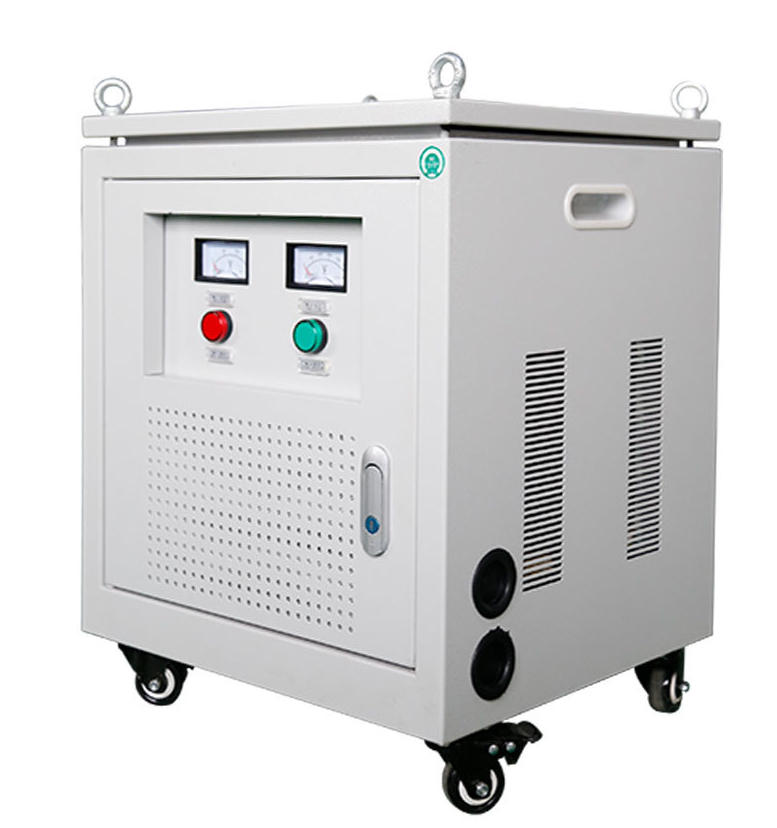
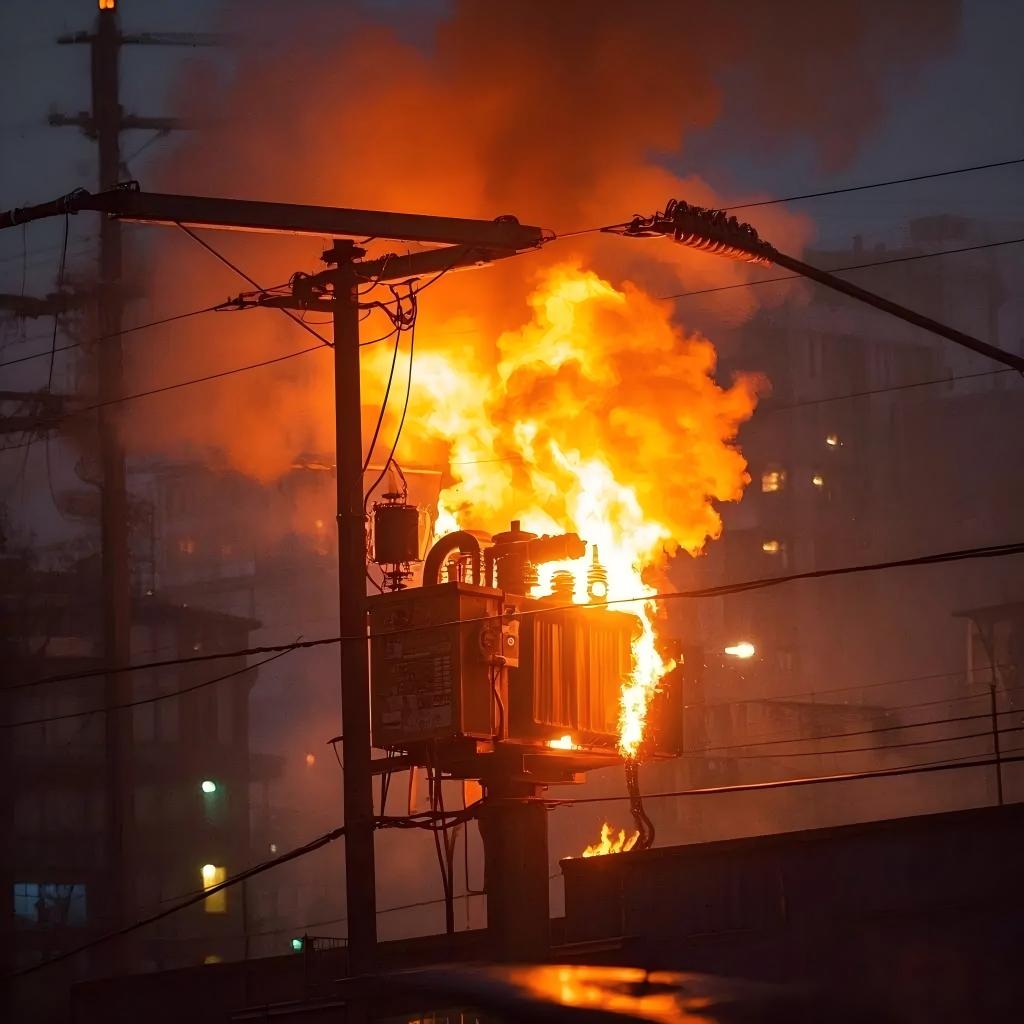
Yes, in many indoor and occupied settings, dry-type transformers are generally safer from a fire perspective. The main reason is simple: they do not contain large volumes of combustible insulating oil.
However, the best answer is not absolute. Dry-type vs oil-filled transformer safety depends on installation location, protection systems, ventilation, maintenance quality, and compliance with electrical and fire codes.
In practical engineering terms, dry-type units usually reduce fire load and spill risk indoors, while oil-immersed transformers can still be very safe when installed outdoors or inside engineered rooms with containment, detection, and suppression systems.
Why Transformer Fire Safety Matters in Real-World Installations
Transformer fires are not just equipment failures. They can become life-safety events, major business interruptions, environmental incidents, and insurance claims.
Facility managers care because a transformer fire can shut down an entire building. Engineers care because poor transformer selection can create avoidable transformer insulation fire hazards near people, exits, or critical systems.
In hospitals, data centers, transit tunnels, airports, and high-rise buildings, the consequences are especially serious. Smoke migration, toxic byproducts, evacuation difficulty, and continuity-of-service obligations all raise the stakes.
Insurers also pay close attention. Installations with combustible-liquid equipment indoors often face stricter protection requirements, higher scrutiny, or more expensive risk controls than comparable dry-type installations.
What Creates Fire Risk in Oil-Immersed Transformers?
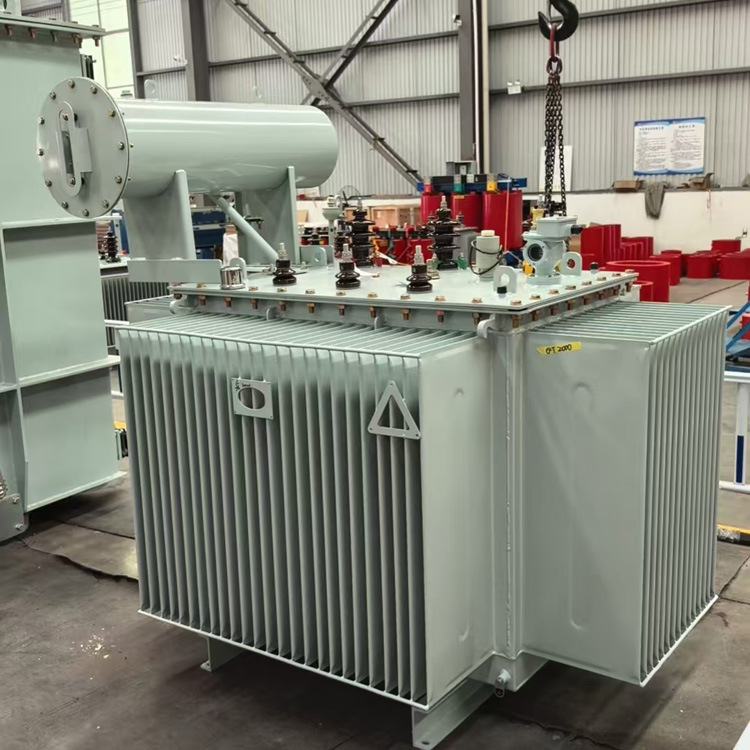
The core issue in an oil-immersed transformer fire risk scenario is the presence of combustible liquid plus an ignition source. If a fault generates enough energy, insulating oil can decompose, vaporize, ignite, or intensify the event.
Typical contributors include internal arcing faults, winding insulation breakdown, hot spots, poor connections, inadequate cooling, oil leaks, and neglected maintenance. Contamination and moisture can further weaken dielectric strength and increase failure probability.
Oil-filled transformers are not inherently unsafe. But when fault energy, combustible fluid, oxygen, and poor protection align, the fire consequences can be much greater than in non-liquid-insulated designs.
How Insulating Oil Can Ignite
Insulating oil can ignite when a severe internal fault creates intense heat or arcing. This can happen during short circuits, winding failures, bushing failures, tap changer faults, or degraded insulation events.
Under high-energy conditions, oil may break down into flammable gases. If those gases ignite, pressure can rise rapidly and lead to fire, rupture, or even explosion-like failure behavior in extreme cases.
According to widely used industry guidance from NFPA, IEEE, and IEC practice, faults combined with combustible liquid are a known escalation pathway. That is why liquid-filled transformer rooms often require spacing, barriers, drainage, or suppression measures.
Where Oil-Filled Units Face Higher Fire Exposure
Oil-filled units face greater concern in indoor substations, basements, tunnels, hospitals, data centers, transit facilities, and densely occupied buildings. In these environments, smoke, heat, and evacuation complexity can magnify the hazard.
Below-grade installations are particularly sensitive because heat and smoke removal are harder. Critical facilities also cannot tolerate long outages, so even a localized fire may create costly operational losses.
Where occupants are close to electrical rooms, designers often avoid large combustible-liquid fire loads unless strong mitigation measures are in place.
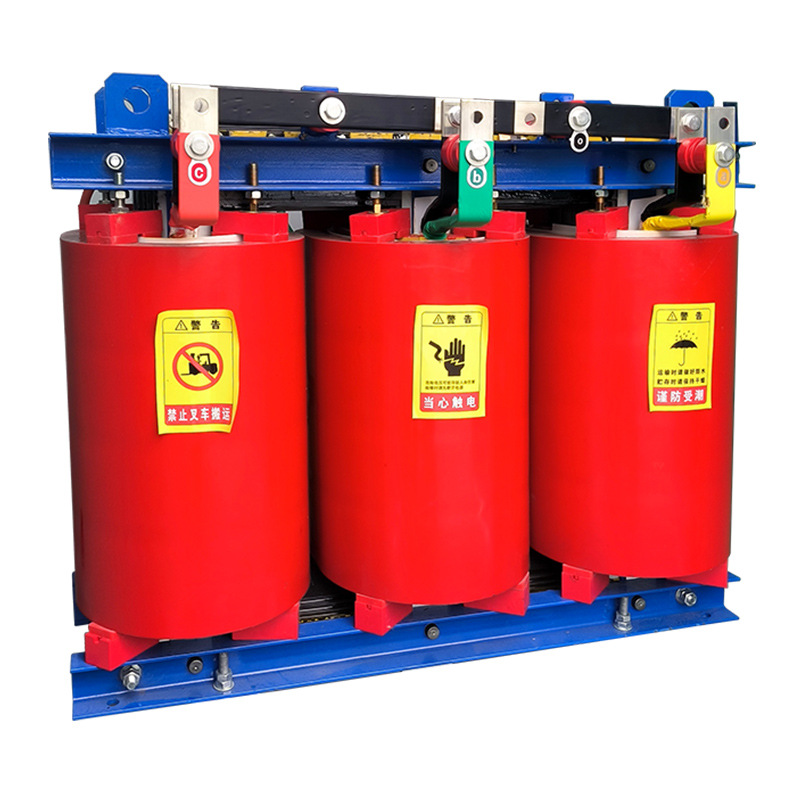
Are Dry-Type Transformers Fireproof or Just More Fire-Resistant?
Dry-type transformers are not fireproof. They are generally more fire-resistant electrical transformer design options for indoor use, but they can still fail, overheat, char insulation, and generate smoke under severe electrical faults.
The key distinction is that dry-type designs remove the large reservoir of flammable insulating liquid. That usually lowers ignition severity and limits secondary fire spread compared with liquid-filled equipment in the same location.
Still, dry-type transformer fire safety should never be oversimplified. Resin systems, coil insulation, dust accumulation, contamination, and inadequate ventilation can all contribute to dangerous failures.
What Makes Dry-Type Transformers Safer in Fire Scenarios
The biggest safety advantage is the absence of flammable liquid. No oil means no oil leak, no oil pool fire, and far less chance of a spill-fed fire spreading across a room or into drains.
Dry-type units also simplify indoor siting. They are widely used in office buildings, hospitals, schools, commercial towers, and data facilities because they typically align better with occupied-space fire protection objectives.
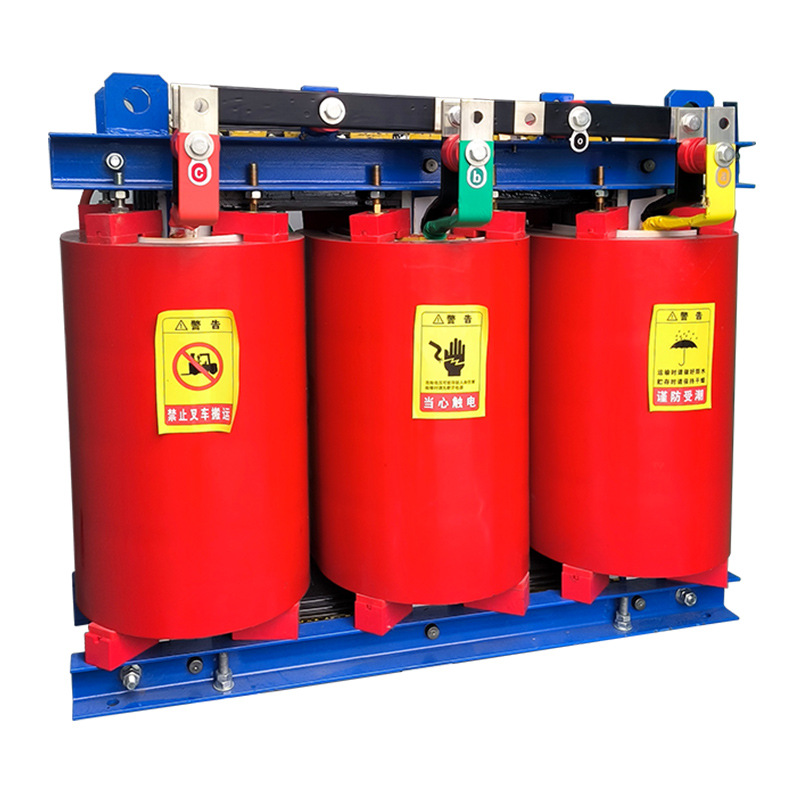
Many cast-resin and VPI designs are engineered with flame-retardant materials and enclosure options. That improves performance in confined indoor environments where limiting fire load is a priority.
What Fire Hazards Still Exist in Dry-Type Designs
Dry-type units can still burn or smolder under fault conditions. Coil insulation, support materials, and deposited dust may ignite or decompose if temperatures become extreme.
Cast-resin transformers can release smoke and decomposition products during severe overheating. VPI units may also be affected by contamination, moisture exposure, or inadequate cleaning in dirty industrial settings.
Poor airflow is another common issue. If ventilation openings are blocked or the room temperature is too high, the transformer can overheat and insulation life can drop sharply.
Dry-Type vs Oil-Filled Transformer Safety: Key Differences
The most important difference is not whether one type can ever fail. Both can fail. The critical difference is how the failure behaves and how easily that behavior can be contained in the installed environment.
Dry-type transformers usually have lower fire load and lower spill-related consequences. Oil-immersed transformers usually offer excellent cooling and performance, but require more attention to combustible-liquid management.
Table: Dry-Type vs Oil-Immersed Transformer Safety Comparison
| FACTOR | DRY-TYPE TRANSFORMER | OIL-IMMERSED TRANSFORMER |
|---|---|---|
| Fire load | Lower, because there is no bulk combustible oil | Higher, due to insulating oil volume |
| Ignition potential | Usually lower in normal indoor use | Higher consequence if internal arcing ignites oil or gases |
| Smoke and byproducts | Possible under severe fault; generally more limited fuel source | Can produce heavy smoke and intense fire if oil becomes involved |
| Indoor suitability | Commonly preferred in occupied buildings | Often restricted or requires added fire protection measures |
| Cooling efficiency | Generally lower than liquid cooling at comparable size | Generally excellent cooling and overload performance |
| Containment needs | No oil bund or drainage pit required for fluid spills | May require bunds, pits, barriers, and separation distances |
| Maintenance focus | Ventilation, dust control, thermal checks, insulation condition | Oil testing, leak checks, dissolved gas analysis, bushings, seals |
| Failure consequences | Often more localized, though smoke and heat can still be serious | Potential for larger fire escalation and environmental release |
| Environmental concerns | No oil spill contamination risk | Possible soil or drainage contamination from leaks or fire runoff |
Real-World Fire Incidents and Safety Lessons
Real-world investigations show a consistent pattern: transformer type alone does not determine outcome. Location, fault energy, relays, room design, fire barriers, ventilation, and response systems often decide whether an event remains contained or becomes a major loss.
NFPA fire reporting and utility incident reviews repeatedly show electrical distribution equipment as a recurring ignition category in commercial and industrial settings. Transformer-related losses are most damaging when combustible materials, poor separation, or delayed fault clearing are present.
Insurance engineering guidance from organizations such as FM Global has long emphasized liquid-filled transformer separation, drainage, and fire protection because when liquid-filled units burn, losses can propagate rapidly to adjacent assets.
Example: Indoor Commercial Building Prefers Dry-Type for Occupied Spaces
In high-rise offices, hospitals, universities, and mixed-use towers, dry-type transformers are commonly selected for electrical rooms near occupied areas. The reason is not fashion; it is risk reduction.
Designers want to minimize fire load, eliminate oil spill pathways, and simplify code acceptance. In a hospital or office tower, a dry-type unit often supports safer egress strategy and lower disruption if an electrical fault occurs.
Data center white space and support spaces also often prefer dry-type transformers where close human access, strict cleanliness, and reduced combustible inventory matter.
Example: Utility and Industrial Sites Still Use Oil-Immersed Units Safely
Utilities, heavy industry, renewable plants, and outdoor substations still rely heavily on oil-immersed transformers because of strong cooling performance, durability, and cost-effectiveness at higher ratings.
These units are often installed outdoors with firewalls, gravel beds, oil containment bunds, drainage pits, differential protection, Buchholz relays, pressure relief devices, and automatic suppression. When these controls are properly engineered, oil-filled transformers can operate safely for decades.
Large power stations and grid substations use oil-immersed units not because fire risk is ignored, but because the installation is designed around that risk.
Table: Real-World Application Examples by Transformer Type
| SECTOR | COMMON TRANSFORMER TYPE | MAIN FIRE RISK | REASON FOR SELECTION |
|---|---|---|---|
| Hospital | Dry-type | Smoke near occupants and critical care areas | Lower fire load and better indoor suitability |
| High-rise office | Dry-type | Electrical room fire affecting evacuation routes | Reduced combustible liquid hazard indoors |
| Data center | Dry-type or fire-resistant liquid design depending on layout | Downtime and smoke contamination | High continuity demands and indoor fire control priorities |
| Outdoor utility substation | Oil-immersed | Pool fire after severe internal fault | High efficiency, high rating, proven utility use |
| Steel plant or refinery | Oil-immersed or dry-type by zone | Harsh environment plus high fault energy | Application-specific balance of cooling and fire zoning |
| Metro tunnel or underground transport | Dry-type | Smoke in enclosed evacuation paths | Lower liquid-fuel fire risk in confined space |
| Wind or solar plant collector station | Oil-immersed | Outdoor fault fire exposure | Outdoor siting and efficient thermal performance |
| Marine or offshore platform | Often dry-type cast-resin | Confined-space fire and corrosion exposure | Indoor resilience and reduced spill hazard |
What the Data Says About Transformer Fire Risk
Authoritative standards do not claim that one transformer type is universally safest in every application. Instead, they identify risk factors such as combustible liquid volume, enclosure location, fault clearing speed, ventilation, and fire separation.
NFPA 70, NFPA 70B, NFPA 850, IEEE guidance, and IEC transformer standards all support a risk-based approach. In simple terms, indoor occupied spaces usually benefit from low-combustible designs, while outdoor utility applications can safely use liquid-filled equipment when protection systems are strong.
Industry loss-prevention guidance also consistently treats mineral-oil-filled transformers as requiring special fire precautions. That does not mean they are unacceptable. It means their potential fire severity is well recognized and must be engineered.
Table: Fire Risk Factors by Transformer Type
| RISK FACTOR | DRY-TYPE TRANSFORMER | OIL-IMMERSED TRANSFORMER | MITIGATION OPTIONS |
|---|---|---|---|
| Internal arcing fault | Can char insulation and generate smoke | Can ignite oil or gas and escalate rapidly | Fast protective relays, current limitation, arc detection |
| Combustible material | Solid insulation, resin, dust deposits | Combustible insulating oil plus solid insulation | Material selection, housekeeping, compartmentation |
| Likely fire spread | Usually more localized | Potential for spill-fed or pool fire spread | Clearances, fire walls, bunds, drainage design |
| Smoke impact | Possible smoke in enclosed spaces | Potentially heavier smoke in oil-involved fire | Ventilation, detection, smoke control systems |
| Maintenance-related failure | Blocked airflow, contamination, loose connections | Degraded oil, leaks, moisture, gas generation | Inspection, testing, thermal imaging, condition monitoring |
| Environmental release | Low spill concern | Possible oil contamination to soil or drains | Containment pits, leak alarms, spill response planning |
Table: Typical Installation Environments and Safer Choice
| INSTALLATION ENVIRONMENT | USUALLY SAFER CHOICE | WHY |
|---|---|---|
| Occupied indoor commercial building | Dry-type | Lower fire load and no oil spill hazard |
| Hospital or healthcare facility | Dry-type | Supports life-safety priorities and indoor risk reduction |
| Data center indoor electrical room | Dry-type in many layouts | Reduced combustible inventory near critical equipment |
| Outdoor utility substation | Oil-immersed | Efficient cooling and easier fire separation outdoors |
| Renewable energy collector station | Oil-immersed often suitable | Outdoor siting and higher rating needs |
| Marine or offshore enclosure | Dry-type cast-resin often preferred | Confined space and spill sensitivity |
| Underground tunnel or transit station | Dry-type | Smoke and evacuation risks make low-fire-load design desirable |
| Heavy industrial outdoor yard | Oil-immersed | High power demand and room for containment measures |
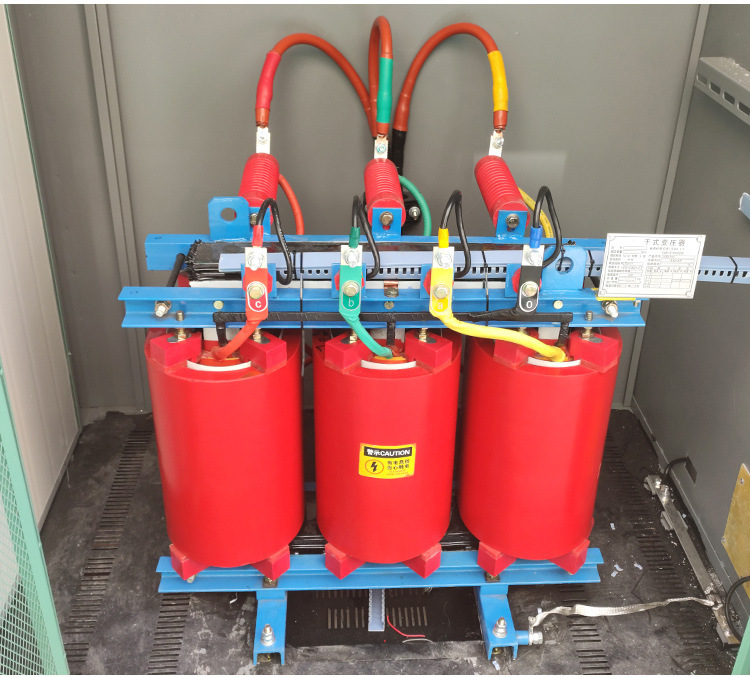
When Dry-Type Transformers Are the Better Safety Choice
Dry-type transformers are often the best choice when the unit is indoors, near people, below grade, close to mission-critical operations, or in environmentally sensitive spaces. This is where dry-type transformer fire safety provides its strongest advantage.
They are especially compelling in schools, hospitals, airports, commercial towers, residential high-rises, transit stations, and institutional facilities. In these settings, lowering combustible fuel inside the building is a meaningful safety gain.
They are also attractive where oil containment is impractical or where an owner wants simpler compliance and lower spill-management burden.
When Oil-Immersed Transformers Can Still Be a Safe and Smart Option
Oil-filled transformers remain a very sound choice for many applications. They are commonly selected for higher capacities, outdoor substations, industrial yards, utilities, renewable sites, and applications where thermal performance and lifecycle economics are strong priorities.
With proper engineering, these transformers can be deployed safely. That usually means outdoor siting, adequate separation distances, protective relaying, oil containment, fire barriers, and sometimes water spray or specialized suppression systems.
In other words, oil-filled does not mean unsafe. It means the design must actively address the known combustible-liquid hazard.
How to Choose the Safest Transformer for Your Application
The safest transformer is the one that fits the actual risk profile of the site. That requires looking beyond product labels and evaluating occupancy, fault energy, room design, maintenance capability, and code obligations.
A disciplined selection process should compare fire consequences, not just purchase price or efficiency. In many projects, the lowest-cost transformer can create the highest total risk.
Check Fire Codes and Insurance Requirements First
Start with applicable requirements from NEC, NFPA, IEC, IEEE, local building code, local fire authority, and insurer guidance. Indoor use of liquid-filled transformers may trigger special requirements for vaults, separation, fluid type, suppression, or containment.
Authorities having jurisdiction can interpret the same installation differently depending on occupancy and room configuration. Always confirm the code path before final equipment selection.
Evaluate Installation Location and Human Occupancy
Ask whether the transformer is indoors or outdoors, above grade or below grade, near exits, beside public corridors, or adjacent to critical operations. The closer the transformer is to people and continuity-sensitive systems, the more valuable lower fire load becomes.
Also assess room size, ventilation path, smoke management, emergency access, and whether the area can be isolated during an incident.
Compare Total Risk, Not Just Transformer Type
Look at the full system: protective relays, cable routing, ventilation, maintenance quality, containment, suppression, asset criticality, and expected fault duty. A well-protected oil-immersed transformer outdoors may be safer than a neglected dry-type unit in a dusty, overheated indoor room.
The right decision balances lifecycle safety, reliability, maintainability, and code compliance.
Best Practices to Reduce Transformer Fire Hazards
Both transformer types benefit from disciplined inspection, monitoring, and housekeeping. Most serious incidents do not come from normal operation; they come from undetected deterioration, poor environment control, or inadequate fault clearing.
Good fire safety is therefore a combination of product selection and operational discipline.
For Dry-Type Transformers
Control dust and contamination to prevent tracking, overheating, and combustible buildup.
Maintain airflow by keeping ventilation openings clear and room temperatures within design limits.
Inspect connections and coils for discoloration, hot spots, cracking, or insulation damage.
Use thermal imaging and periodic electrical testing to detect developing faults early.
Perform partial discharge checks where appropriate, especially on medium-voltage equipment.
Inspect enclosures for corrosion, blocked louvers, pest ingress, or damaged barriers.
For Oil-Immersed Transformers
Test insulating oil regularly for moisture, dielectric strength, acidity, and dissolved gases.
Monitor for leaks at gaskets, radiators, valves, and bushings.
Provide firewalls or spatial separation where adjacent assets could be exposed.
Install drainage pits, bunds, or containment systems to manage spill and runoff hazards.
Verify protective devices such as pressure relief, sudden pressure relays, differential protection, and temperature alarms.
Consider suppression systems for high-value or indoor liquid-filled installations.
FAQ
Are dry-type transformers completely fireproof?
No. Dry-type transformers are more fire-resistant, not fireproof. They do not contain bulk insulating oil, which reduces fire severity in many indoor installations, but severe faults can still damage insulation, produce smoke, and ignite nearby combustibles.
Why do oil-immersed transformers still get used if they have fire risks?
They remain widely used because they offer strong cooling performance, high efficiency, long service life, and practical economics at larger ratings. In outdoor and utility-scale applications, engineered controls such as containment, barriers, and fast protection make them a safe and proven option.
Which transformer is safer for indoor buildings?
In most occupied indoor buildings, dry-type transformers are commonly the safer choice. They reduce combustible liquid hazard, simplify indoor fire protection strategy, and are widely favored in hospitals, offices, schools, and high-rise buildings.
Which transformer has lower maintenance-related fire risk?
Neither type is automatically low-risk if neglected. Oil-filled units can become dangerous if oil testing, leak detection, and protective maintenance are ignored, while dry-type units can overheat if ventilation is blocked or dust contamination is allowed to build up.
Are cast-resin transformers safer than VPI dry-type transformers?
Often, cast-resin transformers are preferred in harsher or more humid indoor environments because the encapsulated coils offer strong moisture resistance and contamination tolerance. VPI dry-type transformers can also be safe and effective, but they may be more sensitive to the environment and maintenance quality depending on the application.
Do fire codes ban oil-filled transformers indoors?
No, not universally. Code treatment depends on jurisdiction, voltage class, fluid type, room construction, containment, occupancy, suppression, and other protective features. Some indoor uses are permitted with strict safeguards, while others are discouraged or heavily conditioned.
What standards help evaluate transformer fire safety?
Common references include NFPA 70, NFPA 70B, NFPA 850, relevant IEEE transformer and protection guidance, applicable IEC transformer standards, local building and fire codes, and insurer engineering requirements. Final decisions should always be checked against the authority having jurisdiction.
Conclusion: The Safest Transformer Depends on Where and How It Is Used
The most accurate conclusion is this: dry-type transformers often provide better fire safety for indoor, occupied, and enclosed spaces. Their lack of combustible oil usually makes them the safer default when human occupancy and smoke control are central concerns.
At the same time, oil-immersed transformers remain safe and highly effective in many outdoor, utility, and industrial applications when proper design controls are in place. The real decision is not about labels alone, but about matching technology to environment, protection strategy, and operational risk.
CTA: Need Help Choosing Between Dry-Type and Oil-Immersed Transformers?
Do not choose based on assumptions. Choose based on fire risk, code requirements, operating conditions, and lifecycle performance.
If you are planning a new installation, upgrading a substation, or evaluating an indoor electrical room, request a transformer safety assessment today. Compare specifications, review code implications, and get application-specific guidance before you commit to a design.
Contact our team now to identify the safest, most reliable transformer solution for your facility.