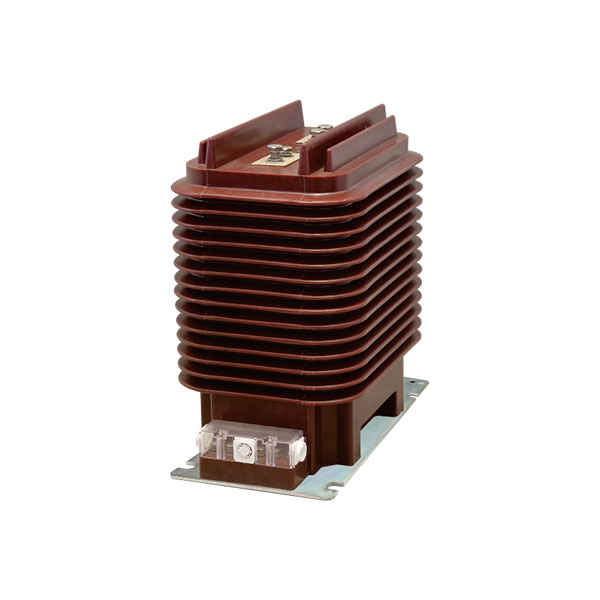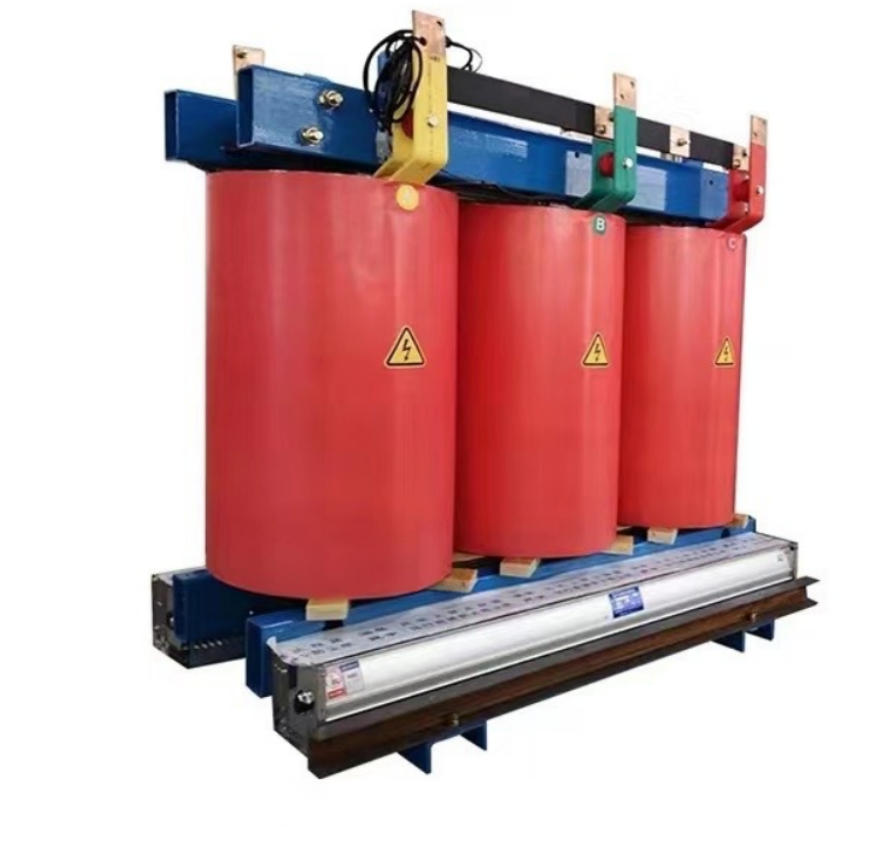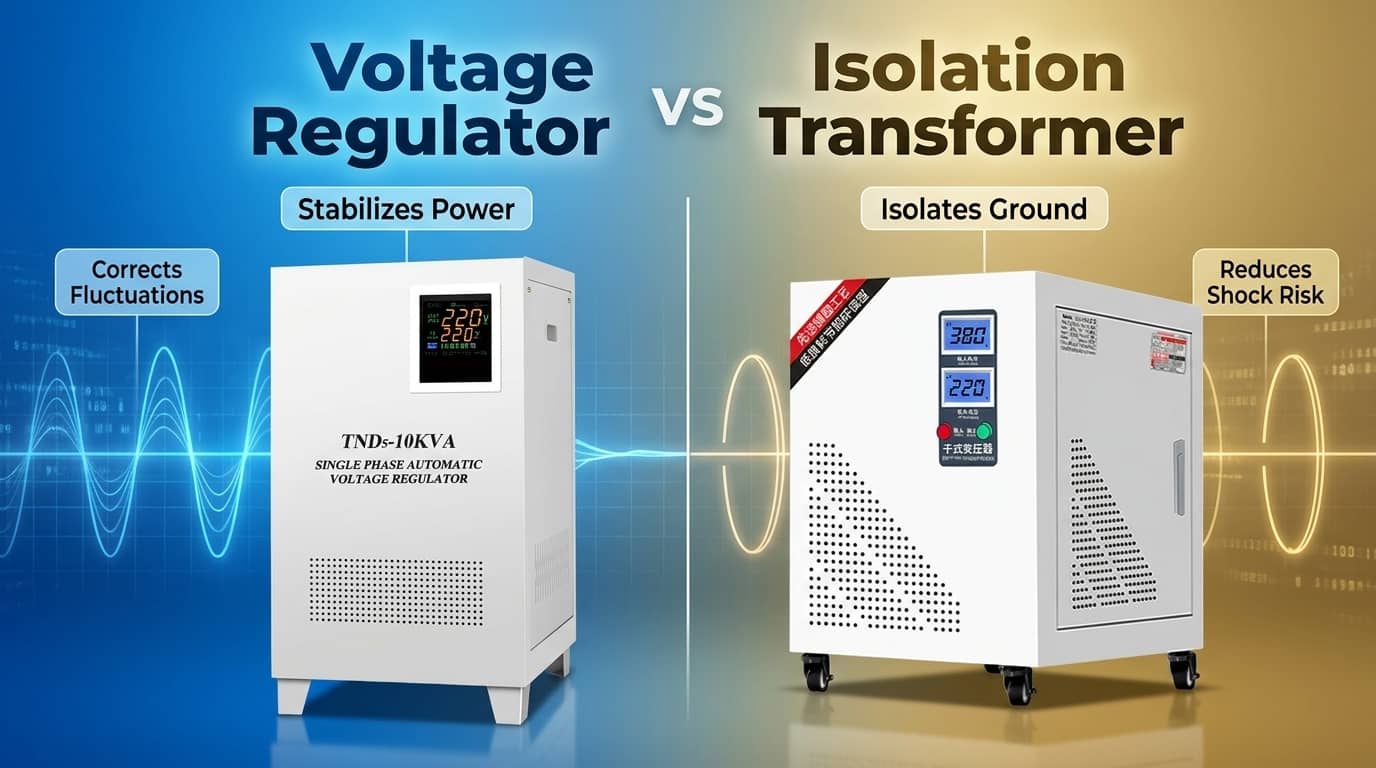
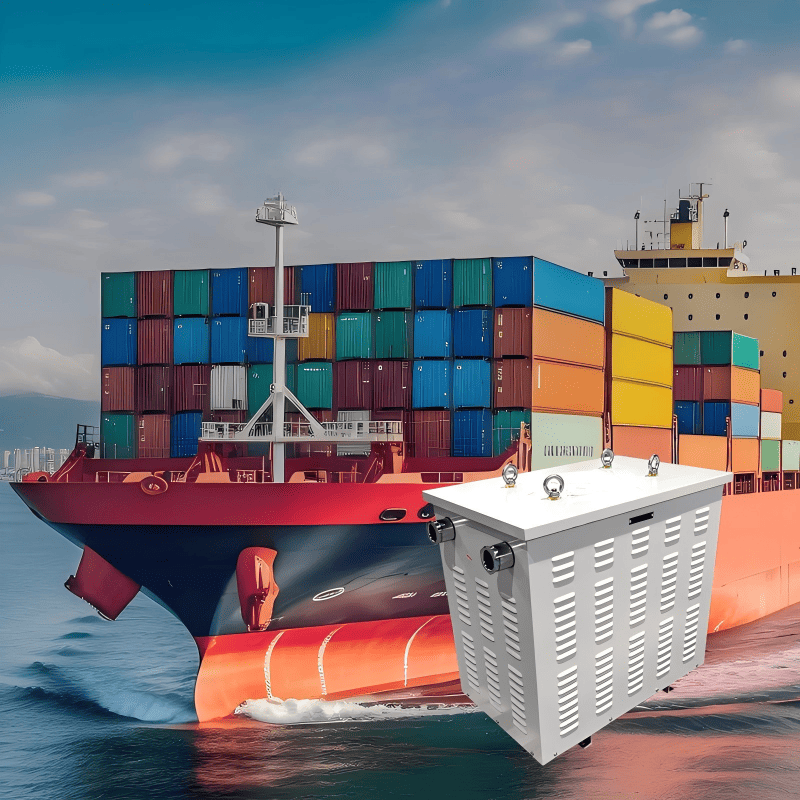
Your boat keeps eating zincs, metal parts corrode for no obvious reason, or someone feels a faint tingling touch when shore power is connected? In real projects, that is often the signature of one missing device: a marine isolation transformer. Its job is simple but critical: it electrically separates dock power from your boat, cuts a major path for galvanic current, reduces shock exposure, helps handle voltage mismatch, and, in the right installation, can reduce electrochemical corrosion by 90% or more.
This is not a luxury upgrade. It is a practical risk-control device recognized in serious marine electrical design, especially under ABYC shore power guidance, along with internationally recognized engineering frameworks such as IEC and IEEE safety and insulation principles. If you finish this article, you will know the purpose of the marine isolation transformer, how a marine isolation transformer works, and how to choose the right model and supplier for your operating conditions.
And if you need a model that actually meets those demands, WeishoElectric provides full copper winding, IP-protected, UL-certified, customizable marine isolation transformers for different vessel electrical systems.
What a Marine Isolation Transformer Does in One Sentence
A marine isolation transformer transfers shore power to the boat magnetically rather than through a direct conductive path, creating galvanic isolation on boats, reducing electric shock risk, blocking many corrosion-causing currents, and supporting safer shore power adaptation.
That is the shortest, most accurate answer to the question: What does a marine isolation transformer do?
Why Boats Without an Isolation Transformer Develop Hidden Problems Fast
I have seen the pattern repeatedly: the owner first notices wasted zincs, then unexplained pitting on underwater metals, then strange breaker trips, and finally a long expensive troubleshooting cycle.
Boats without proper shore isolation often face these hidden problems:
Unexplained metal corrosion on shafts, props, trim tabs, through-hulls, or saildrives
Tingling sensation on metal rails, ladders, or wet deck surfaces
Nuisance breaker trips after plugging into the marina power
Reversed polarity and dock wiring uncertainty
Voltage and frequency mismatch on imported yachts
Noise and instability affecting chargers, navigation electronics, and sensitive loads
In marinas with mixed fleets, the risk rises. One poorly wired neighboring vessel or one leaking dock circuit can create current paths your boat did not have yesterday.
How a Marine Isolation Transformer Works
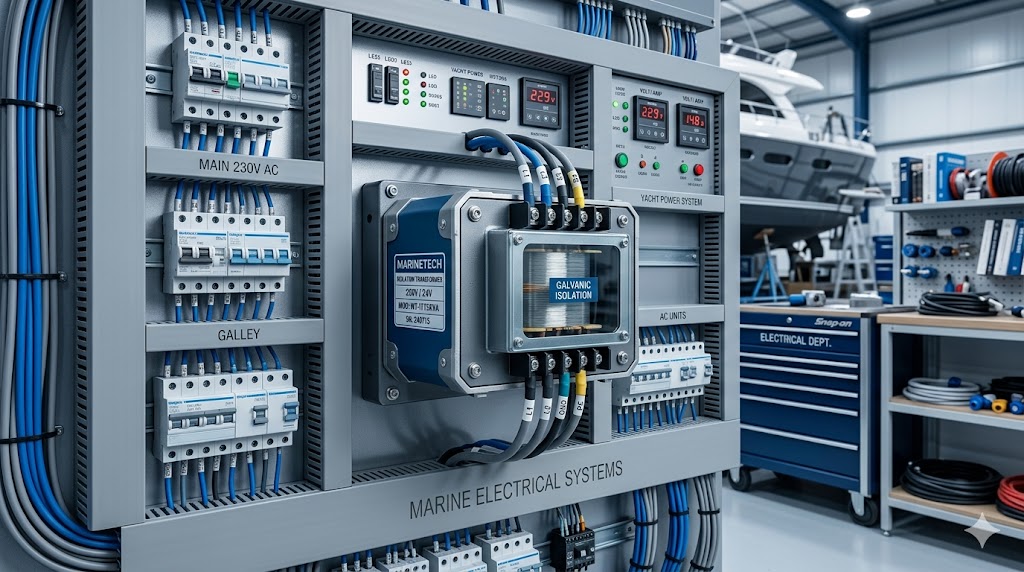
How a marine isolation transformer works is straightforward: shore power enters the primary winding, energy passes through a magnetic field in the transformer core, and power is induced into the secondary winding.
Because there is no direct metallic electrical connection between primary and secondary, the transformer creates separation between shore and vessel systems. That is the foundation of galvanic isolation on boats.
This design can also be configured for voltage conversion, such as 230V to 120V, 120V to 120V isolation, or 400V three-phase adaptation in commercial applications.
What Problems a Marine Electrical Safety Transformer Solves
A marine electrical safety transformer solves more than one problem. Good installations deliver five major shore power isolation transformer benefits:
Corrosion control by blocking a major galvanic current path from shore grounding systems
Leakage current risk reduction through electrical separation
Dockside safety improvement by isolating onboard systems from some shore faults
Voltage matching for imported or non-standard vessel power systems
Cleaner onboard power with shielding and better power conditioning behavior in quality designs
For vessels that stay plugged in for long periods, these benefits are operational, not theoretical.
Marine Isolation Transformer Purpose vs Galvanic Isolator
This is where many buyers make the wrong decision. A galvanic isolator and an isolation transformer are not equal solutions.
A galvanic isolator is usually installed in the grounding conductor to block low-voltage DC galvanic currents while still passing fault current when needed. It is useful, but it does not provide full electrical separation from shore.
A marine isolation transformer provides broader protection because it separates the entire shore power relationship from the boat’s onboard AC system. That means stronger corrosion control logic, better fault isolation, and possible voltage adaptation.
That is why many commercial vessels, metal-hull boats, premium yachts, and technically conservative operators prefer the transformer route.
Marine Isolation Transformer vs Galvanic Isolator
| Factor | Marine Isolation Transformer | Galvanic Isolator |
|---|---|---|
| Corrosion protection | High; blocks major shore-related galvanic path | Moderate; targets low-voltage galvanic currents only |
| Shock protection | Broader electrical separation from shore faults | Limited; not full system isolation |
| Shore power adaptation | Yes, can support voltage/frequency matching depending on design | No |
| ABYC alignment logic | Strong fit for robust shore power risk control | Useful but narrower in function |
| Installation role | Primary shore power interface device | Grounding conductor accessory |
| Cost | Higher upfront | Lower upfront |
| Best use scenario | Frequent marina connection, metal exposure, and premium safety requirements | Budget-focused basic corrosion mitigation |
Why ABYC and Marine Safety Standards Matter
When I evaluate marine power systems, I do not treat isolation transformers as optional decoration. ABYC shore power guidance, together with marine electrical safety practice under IEC marine installation concepts and IEEE insulation and transformer engineering principles, supports a simple truth: shore-connected boats need controlled fault paths, predictable bonding logic, and minimized stray current exposure.
ABYC frameworks for AC systems are especially important because they address real onboard hazards: shock, leakage, polarity errors, grounding integrity, and fire risk. A transformer is one of the most practical ways to reduce system dependence on unknown dock conditions.
That matters in marinas where wiring age, maintenance quality, and neighboring vessel conditions vary widely.
Real-World Risks Before and After Installing a Marine Isolation Transformer
| Scenario | Before Installation | After Proper Installation |
|---|---|---|
| Fast zinc loss in the marina | Anodes disappear in weeks or a few months | Corrosion rate often drops sharply |
| Reversed polarity concern | Higher uncertainty, frequent alarms, or nuisance trips | Safer onboard power architecture with controlled interface |
| Dock leakage exposure | Greater risk of shock pathways through the shore connection | Improved separation from dockside faults |
| Imported yacht voltage mismatch | Equipment overheating, charger issues, and breaker trips | Voltage adaptation becomes manageable |
| Sensitive electronics instability | Noise, inconsistent chargers, erratic behavior | Cleaner and more stable supply in quality transformer systems |
How Much Corrosion and Safety Risk Can It Reduce?
In the right marina environment, a properly installed isolation transformer can reduce the main shore-linked galvanic corrosion pathway enough to cut visible corrosion problems by 90%+. That number depends on hull material, neighboring boats, bonding configuration, and water chemistry, but the field trend is strong.
On aluminum and steel vessels, the economic impact is bigger because even small stray currents or galvanic issues become expensive quickly. One damaged propeller set, pitted saildrive housing, or through-hull replacement can exceed the cost of the transformer.
Safety improvement is harder to express with a single percentage, but the engineering benefit is clear: the boat is less directly exposed to marina-side grounding and leakage conditions.
Common Boat Types That Need Marine Isolation Transformers Most
Some boats can live without one. Many should not.
Sailboats with saildrives, through-hulls, and long marina stays
Motor yachts with high-value onboard systems and constant shore connection
Fishing boats using the marina shore supply for battery charging and support loads
Aluminum hull vessels where corrosion risk is especially severe
Steel hull vessels with high exposure to electrochemical damage
Catamarans with multiple systems and frequent shore hookups
Imported boats are facing a voltage or frequency mismatch
If your vessel plugs into marina shore power often, this topic applies to you.
How to Choose the Right Marine Isolation Transformer for Your Boat
Do not buy by price first. Size and design errors ruin performance.
Choose based on these factors:
Shore power voltage: 120V, 230V, 240V, 400V, single-phase or three-phase
Frequency: 50Hz or 60Hz compatibility
Total onboard load: continuous kVA demand and peak startup current
Hull material: aluminum and steel usually justify a stronger protection logic
Equipment sensitivity: chargers, inverters, nav electronics, pumps, HVAC
Installation space: transformer size, weight, and ventilation clearance
Protection grade: enclosure durability and moisture resistance
I strongly recommend adding load margin rather than sizing at the exact steady-state draw. Air conditioning, refrigeration, compressors, and chargers create transient demand.
How to Size a Marine Isolation Transformer
| Boat Type | Shore Power Input | Onboard Load | Recommended Transformer Rating | Typical Application Notes |
|---|---|---|---|---|
| Small sailboat | 120V / 30A | Battery charger, outlets, small water heater | 3.5-5 kVA | Good for Marina corrosion control and safer charging |
| Mid-size yacht | 230V / 32A | HVAC, chargers, galley loads | 7-10 kVA | Add margin for compressor startup loads |
| Sportfishing boat | 120/240V split phase | Freezers, pumps, electronics, air conditioning | 10-15 kVA | Check simultaneous cooling and deck equipment demand |
| Aluminum workboat | 230V / 63A | Heavy support loads and charging systems | 15-25 kVA | Corrosion protection priority is high |
| Commercial vessel | 400V three-phase | Mixed hotel and operational loads | 25 kVA and above | Requires engineering review and custom design |
Key Features to Look for in a High-Quality Marine Isolation Transformer
Not all transformers survive marine life. The build details matter.
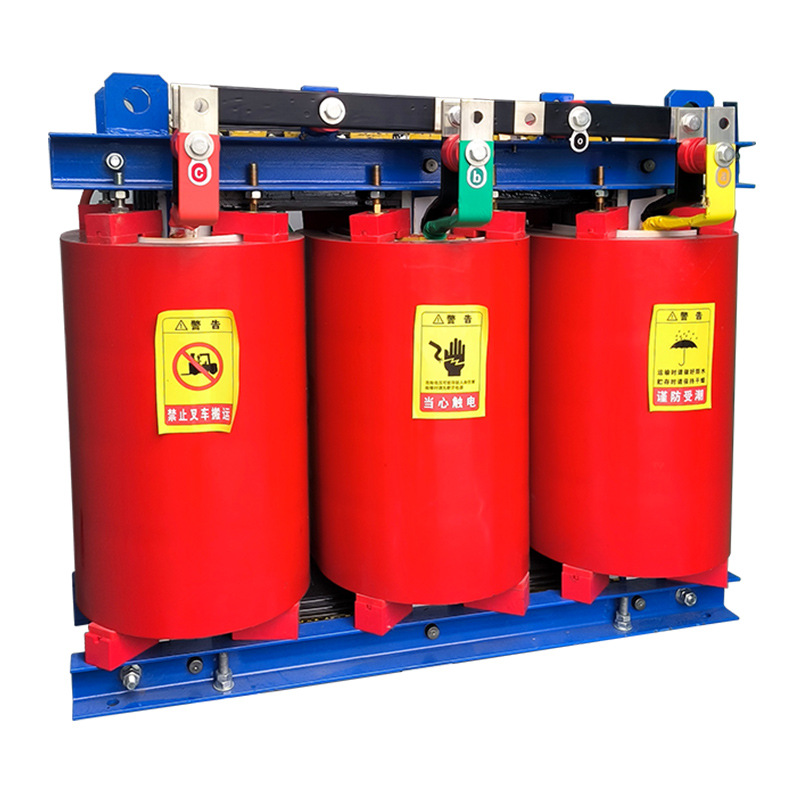
Full copper windings for thermal stability and conductivity
Marine-grade insulation system with high dielectric strength
IP-protected enclosure suited to moisture and salt air
Thermal protection and temperature rise control
Electrostatic shielding for cleaner onboard power
Low noise design to reduce audible hum and vibration
UL-related certification support where required
Customization for voltage, frequency, taps, enclosure, and mounting
These are not brochure extras. They determine whether the transformer performs safely in a hot, damp, vibration-prone engine room or lazarette.
Weisho Electric Marine Isolation Transformers for Demanding Marine Environments
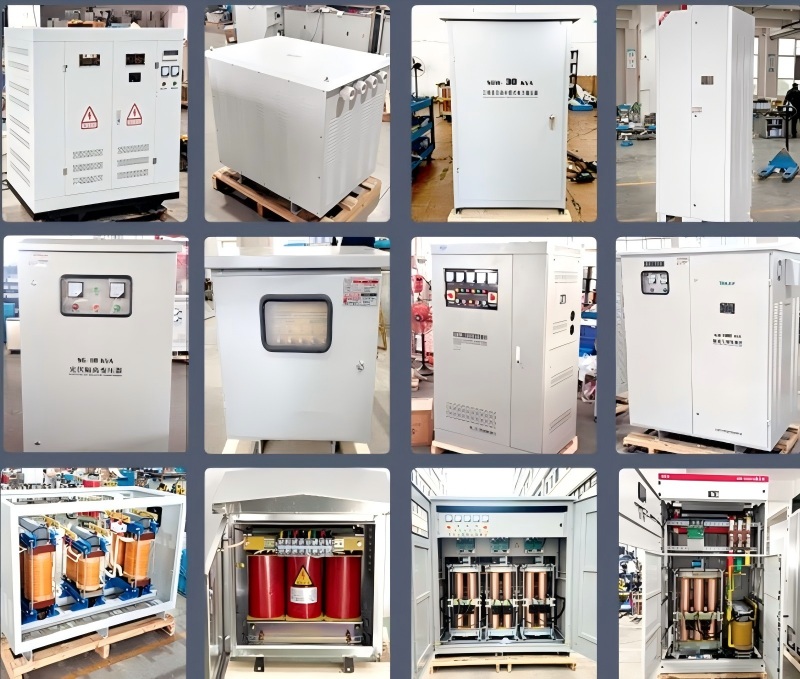
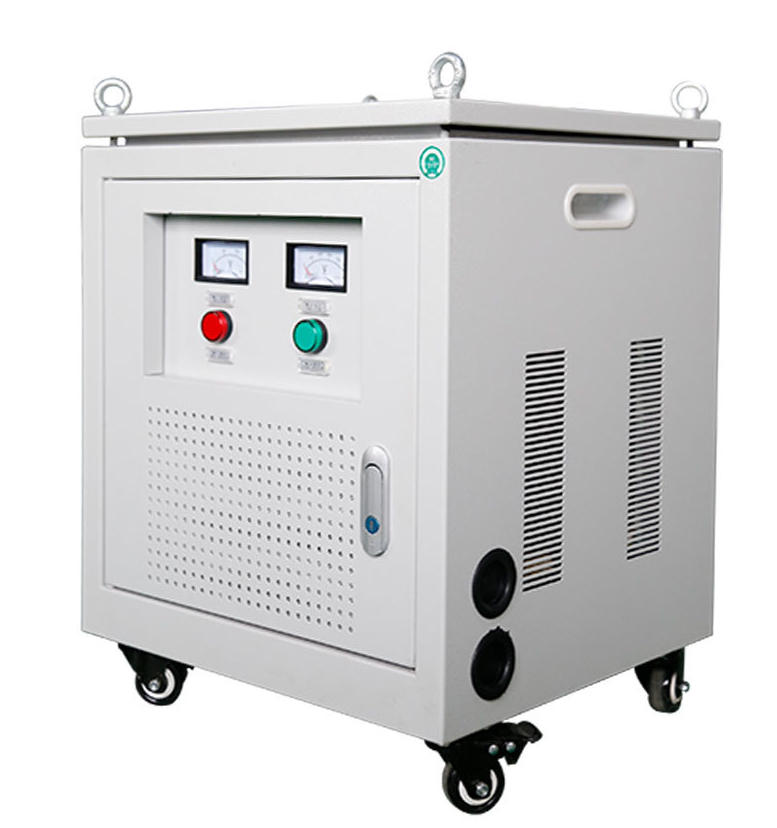
WeishoElectric is positioned for exactly these demands. Its marine isolation transformer range includes full copper winding, IP-protected enclosures, UL-certified options, and custom engineering support for diverse vessel power systems.
That matters when your boat needs more than a generic industrial transformer. Marine installations require correct adaptation to grounding logic, voltage conversion, enclosure protection, and long-term thermal reliability.
Weisho Electric Marine Isolation Transformer Selection Guide
| Application | Voltage / Frequency | Power Range | Protection | Certification | Customization |
|---|---|---|---|---|---|
| Small recreational boats | 120V or 230V, 50/60Hz | 3.5-5 kVA | Marine IP enclosure | UL-supported models available | Mounting, cable entry, enclosure finish |
| Yachts and catamarans | 120/240V or 230V | 7-15 kVA | Enhanced moisture protection | UL-certified options | Shielding, thermal upgrade, low-noise design |
| Fishing and work boats | 230V, 240V, custom | 10-25 kVA | Heavy-duty IP protection | Project-based compliance support | Custom voltage taps and load design |
| Commercial vessels | 400V three-phase, 50/60Hz | 25 kVA and above | Industrial marine-grade enclosure | Certification supported by the project | Full electrical system adaptation |
Installation and Use Mistakes That Cause Failure or Poor Protection
A good transformer can still fail in a bad installation.
Undersizing so the unit runs hot under normal vessel load
Poor grounding design that defeats the intended isolation logic
Bad ventilation in tight lockers or engine rooms
Wrong voltage assumptions at foreign marinas
Improper neutral bonding on the vessel side
Using non-marine enclosures that corrode internally
One field detail many buyers miss: transformer temperature rises fast when mounted next to chargers or inverter equipment with poor airflow. Heat stacking shortens insulation life.
Real User Discussions from Boating Communities
Across large public boating discussions and owner forums, the same real-world concerns appear again and again, even when users do not use perfect technical language.
“My zincs disappear too fast” after moving to a new marina
“I measured a strange voltage on the hull,” and cannot tell whether it comes from my boat or the dock
“I am worried about hot-skin risk” when swimmers are nearby
“The transformer hum is louder than I expected” in lightweight bulkheads
“Marina's power is inconsistent,” and imported equipment does not like it
A recurring firsthand observation is that corrosion often becomes obvious only after a berth change. Owners think the problem is a bad anode brand, but the root cause is frequently the new dock electrical environment.
Another common user complaint is installation placement. People mount the transformer in a confined locker, then later report heat, noise, and difficult cable routing. The lesson is simple: the electrical device is correct, but the mechanical planning was poor.
Original Field Insights Most Buyers Miss
Here are the details that matter in actual marine work and are often missing from generic articles.
First, mixed-metal marinas accelerate corrosion faster than many expect. If neighboring boats include aluminum hulls, steel craft, saildrives, bronze hardware, and inconsistent bonding quality, the corrosion environment becomes more aggressive and less predictable.
Second, transformer heat is often underestimated. In cramped spaces, ambient temperature plus charger heat plus engine room residual heat can push operating temperature well beyond what buyers imagined from the catalog rating.
Third, imported boats often struggle quietly. The owner sees charger nuisance faults, humming equipment, or unreliable appliances, but the deeper issue is shore power mismatch in voltage, frequency, or neutral-ground logic.
Fourth, audible hum is not always a product defect. It can come from mounting surface resonance, loose hardware, or harmonic-rich marina power.
Cost vs Value: Is a Marine Isolation Transformer Worth It?
For shore-connected boats, especially metal-sensitive or premium vessels, the answer is usually yes.
Think in avoided costs:
Corrosion repairs avoided
Electrical troubleshooting hours reduced
Better compliance confidence
Improved crew and passenger safety
Higher resale confidence for informed buyers and surveyors
A single season of corrosion on underwater metals can cost more than the transformer. From a business standpoint, this is asset protection.
FAQ
What does a marine isolation transformer do on a boat?
It electrically separates shore power from the boat, improving safety, reducing a major galvanic corrosion path, and creating a cleaner, more controlled onboard AC power system.
How does a marine isolation transformer work?
It uses magnetic coupling between primary and secondary windings to transfer power without a direct electrical connection from shore to boat.
Does a marine isolation transformer stop galvanic corrosion?
It blocks a major shore-related galvanic current path and can significantly reduce corrosion in many marina conditions, though total corrosion behavior still depends on bonding, hull material, and water chemistry.
Is a marine isolation transformer better than a galvanic isolator?
In most cases, it provides broader protection because it offers full electrical separation and can also help with power adaptation, but the right choice depends on vessel risk profile, usage, and budget.
Do I need a marine isolation transformer for shore power?
If your boat plugs into marina power frequently, has valuable underwater metals, uses sensitive electronics, or operates with aluminum or steel exposure, the answer is often yes.
What size marine isolation transformer do I need?
Size it based on shore power voltage, available current, continuous onboard load, and startup demand from equipment like air conditioning, pumps, and chargers.
Can a marine isolation transformer reduce electric shock risk?
Yes. When installed correctly, it improves separation from dockside electrical faults and supports a safer onboard electrical architecture.
Where should a marine isolation transformer be installed?
Install it in a dry, ventilated, structurally supported location with marine-compliant wiring access, heat clearance, and protection from direct spray or flooding.
How long does a marine isolation transformer last?
A high-quality unit can often last 10 to 20 years or more, depending on build quality, operating temperature, salt exposure, vibration, and maintenance conditions.
What features should I look for in a marine isolation transformer supplier?
Look for engineering support, certification capability, full copper winding quality, marine enclosure protection, customization, reliable delivery, and responsive after-sales service.
Why Weisho Electric Stands Out as a Marine Isolation Transformer Supplier
Weisho Electric stands out because it addresses the real marine failure points, not just the nameplate rating. That includes copper quality, marine-grade enclosure protection, certification support, stable manufacturing, and customization for different vessel power architectures.
For buyers comparing suppliers, that means fewer compromises on thermal performance, insulation reliability, environmental protection, and compatibility with actual onboard conditions.
If your application involves unusual voltage, limited installation space, imported vessel conversion, or high corrosion sensitivity, Weisho Electric has a practical advantage: it can support customization instead of forcing a generic fit.
Get Expert Help Choosing the Right Marine Isolation Transformer
If you are dealing with fast anode loss, corrosion, shore power uncertainty, or you simply want the right transformer before problems start, now is the time to act.
Leave a comment below with your boat type, shore power voltage, and main onboard loads. Or send an inquiry directly to Weisho Electric for model selection, technical advice, and quotation support.
For faster response, contact Weisho Electric on WhatsApp today. Tell us your voltage, frequency, hull material, and kVA demand, and we will help you choose a marine isolation transformer that actually fits your vessel.