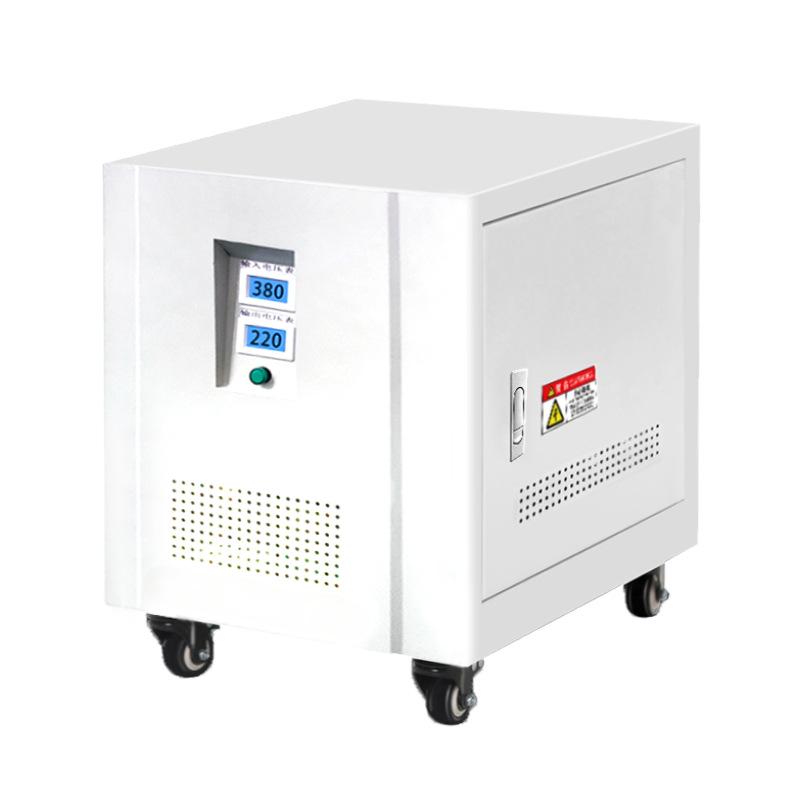
A standard transformer has separate primary and secondary windings, while an autotransformer uses one shared winding with taps. That single structural difference changes safety, grounding, fault behavior, compliance, and total project cost.
If you finish this article, you will clearly understand the difference between a transformer and an autotransformer, know how to choose the right type for real operating conditions, and know how to screen suppliers before you place an order.
I have worked with export machinery voltage matching, plant retrofits, and control panel integration, and the biggest field mistake I still see is simple: buyers compare only kVA and price, but ignore isolation. That is exactly where expensive failures begin.
Transformer vs Autotransformer in One Minute
A standard transformer, also called a two-winding transformer, transfers energy magnetically between two electrically separate windings. It normally provides galvanic isolation between input and output.
An autotransformer uses part of the same winding for both input and output. It is usually smaller, lighter, and more efficient, but in most cases, it does not electrically isolate the load from the source.
In practical buying terms: if your project needs personnel safety separation, separate grounding, noise isolation, or compliance-driven isolation, start with a standard transformer. If your voltage ratio is close and isolation is not required, an autotransformer can save serious money and space.
Why This Difference Matters in Real Projects
This is not an academic distinction. The wrong choice affects safety, fault current, nuisance tripping, EMC behavior, equipment life, and inspection approval.
In one 480V to 400V packaging line conversion, an autotransformer solved the voltage mismatch cheaply. But because the maintenance team assumed the secondary was isolated, they bonded it like a separately derived system. The result was grounding confusion, unexplained breaker behavior, and two days of commissioning delay.
In another case, a two-winding isolation transformer costs more upfront, but it stopped recurring communication faults on sensitive drives because it broke the noise path between an unstable utility feed and the control electronics.
That is why the real question is not “which is cheaper?” It is what risk are you importing into the system by giving up isolation?
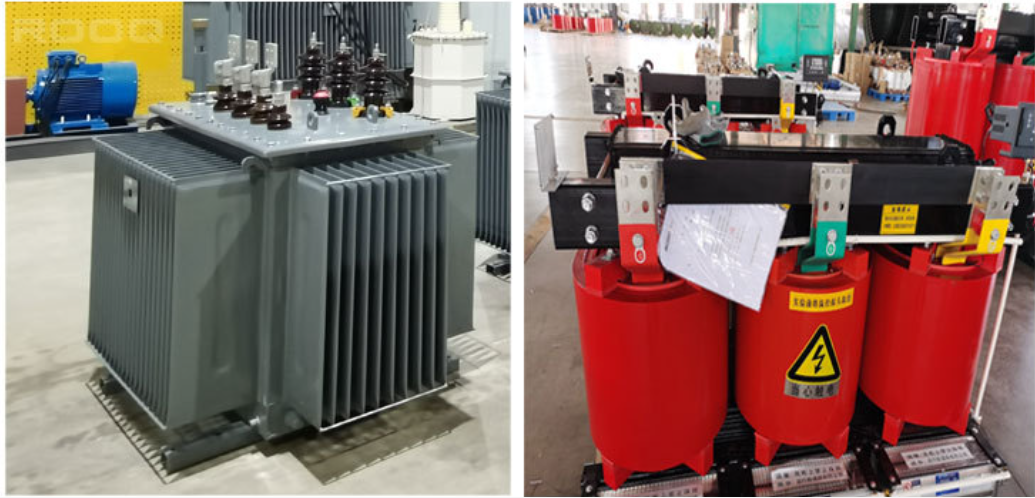
Transformer vs Autotransformer: Core Difference Table
| Factor | Standard Transformer | Autotransformer |
|---|---|---|
| Winding structure | Separate primary and secondary windings | Shared common winding with taps |
| Electrical isolation | Yes, typically provides galvanic isolation | No, usually no galvanic isolation |
| Voltage conversion ratio | Flexible across wide ratios | Best when input/output voltages are relatively close |
| Size | Larger | Smaller |
| Copper usage | Higher | Lower |
| Efficiency | Good | Usually higher for close-ratio conversion |
| Fault transfer risk | Better fault separation | Higher transferred fault risk |
| Insulation requirement | More robust inter-winding insulation design | Different insulation approach, no full isolation barrier |
| Inrush behavior | Can be significant depending on core and design | Can also be high; the field protection setting must be checked carefully |
| Maintenance sensitivity | Generally easier to interpret electrically | More prone to wiring and grounding misunderstandings on-site |
| Typical applications | Isolation, safety, control, power, labs, sensitive electronics | Buck-boost, motor starting, close voltage matching, HVAC retrofits |
What Is a Standard Transformer?
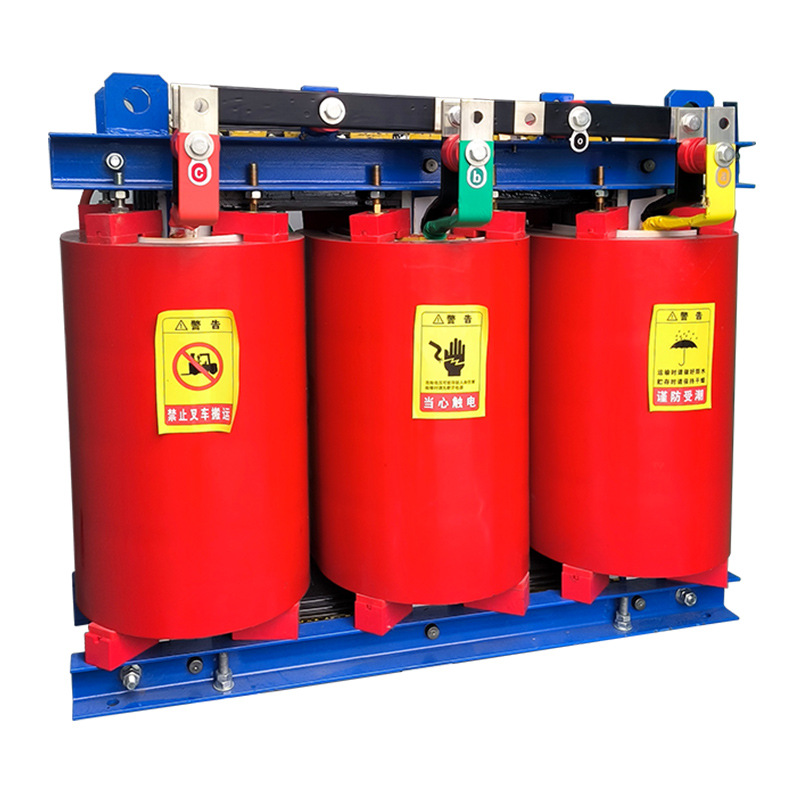
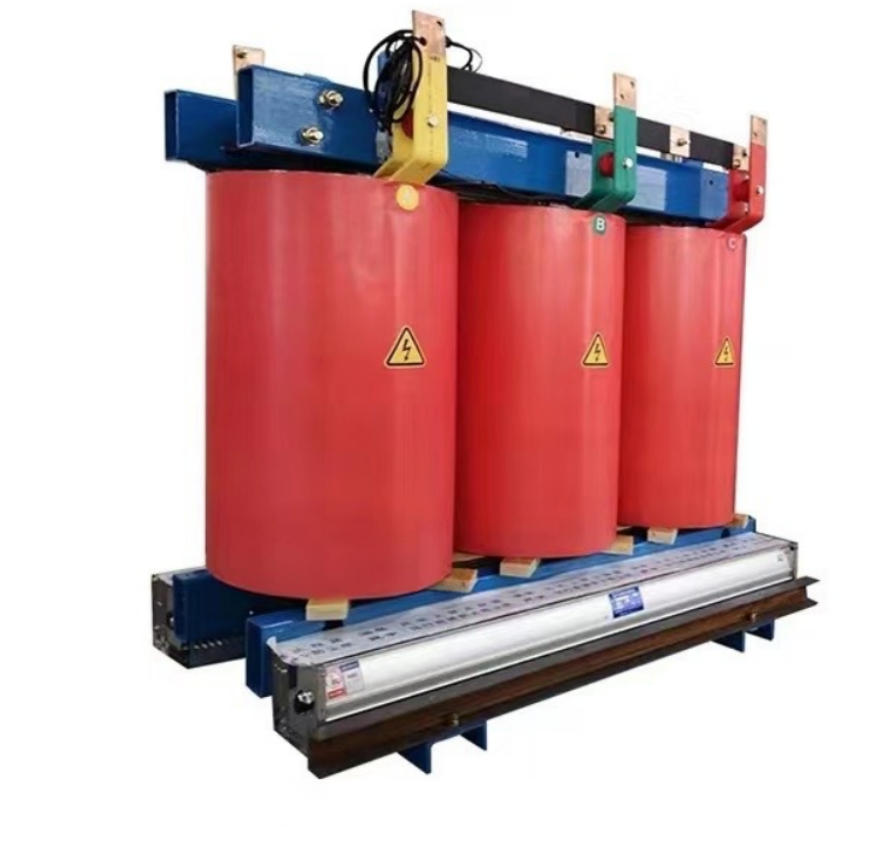
A standard transformer has two separate windings wrapped around a magnetic core. The primary winding receives input power, the magnetic flux couples through the core, and the secondary winding produces the output voltage.
The key practical advantage is electrical separation. Input and output are magnetically linked, but not directly connected electrically.
That means you can create a new grounding reference, reduce conducted noise transfer, and improve protection coordination in many systems. This is why isolation transformers are still preferred in medical support spaces, laboratory benches, industrial control panels, and maintenance outlets.
From a standards perspective, buyers often evaluate these units against applicable IEC and IEEE guidance, plus regional safety and installation codes. In global projects, I always advise matching the transformer design not only to voltage but also to the local grounding and compliance philosophy.
What Is an Autotransformer?
An autotransformer uses one continuous winding with one or more tap points. Part of the winding is shared by both input and output.
This is why it uses less copper and core material. In the real market, that often means a noticeably lower selling price, lower shipping cost, and easier cabinet integration.
But the tradeoff is critical: because the circuits are electrically connected, an autotransformer is more application-sensitive. It is excellent in the right job and a bad choice in the wrong one.
Common field uses include buck-boost correction, 480V to 400V export equipment adaptation, HVAC voltage adjustment, and motor starting arrangements where isolation is not the design intent.
Autotransformer vs Two-Winding Transformer: Winding Configuration Comparison
In an autotransformer vs. two-winding transformer decision, the winding structure is not just a drawing detail. It determines how voltage, fault energy, and insulation stress behave in service.
Two winding transformer: separate coils, separate electrical domains, full magnetic coupling across an isolation barrier.
Autotransformer: shared turns, part conductive transfer, and part inductive transfer.
Tap arrangement: autotransformers rely heavily on correct tap identification; field miswiring is more common than many spec sheets admit.
Insulation design: standard transformers need inter-winding insulation for separation; autotransformers focus more on turn-to-turn and section insulation within a common winding.
One subtle site detail many outsiders miss: on a panel floor, technicians often assume “secondary terminals” means isolated output. With an autotransformer, that assumption can create dangerous bonding errors during installation.
Another detail: in export machine conversions, the winding diagram matters more than the marketing label. I have seen units sold loosely as “step-down transformers” that were in fact autotransformer-connected buck-boost units. The nameplate was legal, but the buyer misunderstood the isolation status.
Isolation Transformer and Autotransformer Difference
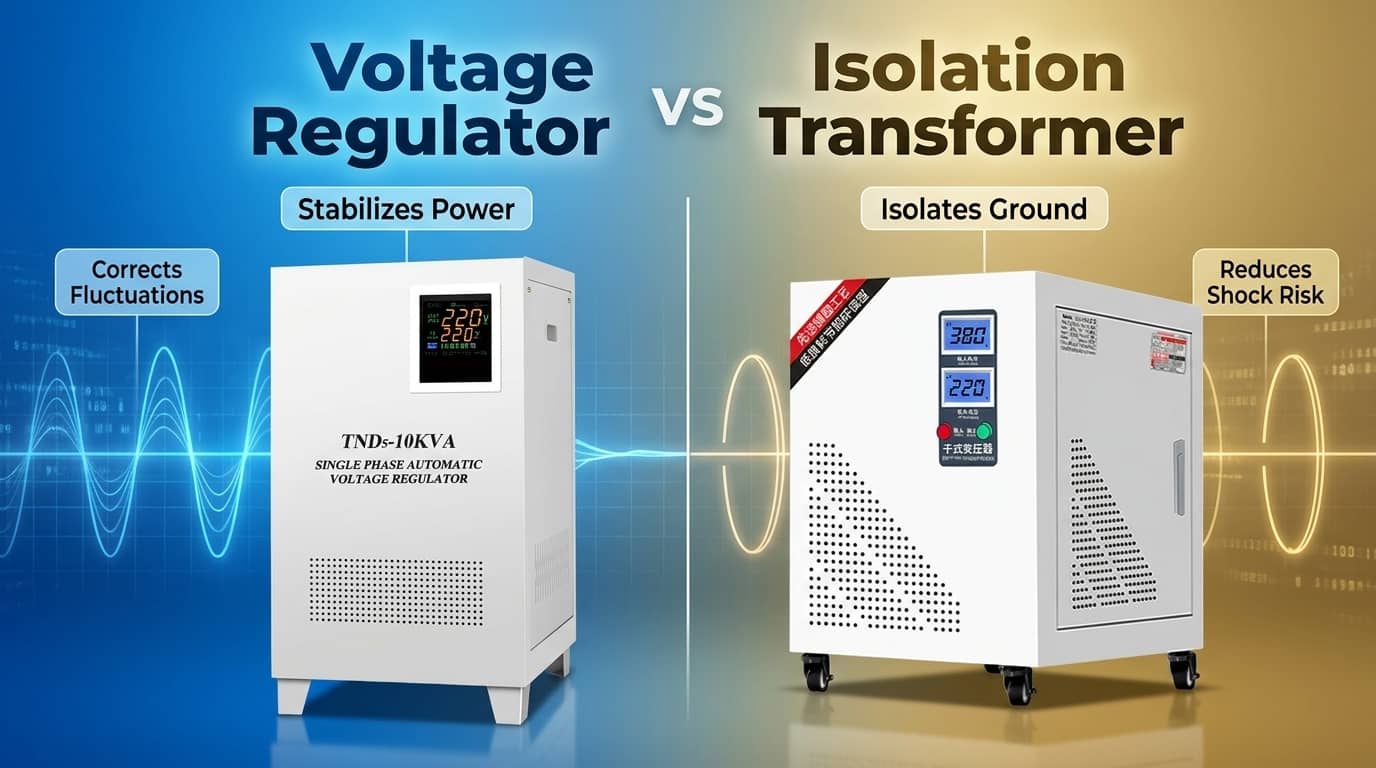
The difference between the isolation transformer and the autotransformer comes down to safety and leakage path control.
An isolation transformer can separate the load from the upstream electrical reference. That can improve shock protection strategy, grounding flexibility, common-mode noise reduction, and fault containment.
An autotransformer does not normally provide that separation. If the line side experiences a surge, a reference shift, or a grounding issue, more of that condition can be transferred directly to the load side.
In maintenance environments, this matters a lot. I have seen technicians use a meter, read an expected reduced output voltage, and wrongly conclude the circuit is isolated. Voltage is correct, but the electrical relationship to the source is not removed.
For buyers handling sensitive instrumentation, variable frequency drives with communication issues, or systems mixing utility power with generator or UPS sources, this difference is often the deciding factor.
Key Advantages of a Standard Transformer
Electrical isolation for safer system separation
Better personnel protection strategy in many applications
Flexible grounding schemes, including separately derived system arrangements, are permitted
Better compliance suitability for safety-driven installations
Improved fault containment between the source and the load
Better noise isolation than autotransformer designs in many cases
Wider compatibility with sensitive electronics and mixed-source systems
Key Advantages of an Autotransformer
Lower purchase cost
Smaller footprint
Lower copper and core material use
Lighter weight for skids, cabinets, and rooftop installs
Better efficiency when the voltage ratio is close
Strong value for buck-boost and export voltage matching
Autotransformer Advantages and Disadvantages Table
| Category | Advantages | Disadvantages |
|---|---|---|
| Efficiency | Often higher in close-ratio conversion | Efficiency benefit may not justify safety tradeoff in isolation, for critical systems |
| Compactness | Smaller and lighter | A compact enclosure can run hotter if the ventilation is poor |
| Cost | Lower material and shipping cost | The wrong application can create higher downstream troubleshooting costs |
| Isolation | Not required in some industrial matching applications | No galvanic isolation |
| Fault behavior | Useful where source-load continuity is acceptable | Higher transferred fault and surge risk |
| Application scope | Excellent for buck-boost and close voltage adaptation | Narrower safe-use scenarios |
Standard Transformer Advantages and Disadvantages Table
| Category | Advantages | Disadvantages |
|---|---|---|
| Isolation | Provides galvanic isolation | Higher cost than an autotransformer in many cases |
| Safety | Safer separation for personnel and sensitive systems | A larger size may complicate retrofit installations |
| Compatibility | Broader application suitability | Higher material use |
| Grounding flexibility | Allows separate grounding design options | More design decisions required |
| Noise control | Better at reducing transferred electrical noise | May have slightly lower efficiency than an autotransformer at certain ratios |
| Fault containment | Better separation of source and load faults | Heavier and usually more expensive to ship |
Real-World Data: Where Each Type Performs Better
Below is a field-style summary based on common industrial use patterns and repeated buyer feedback. Exact performance depends on design and loading, but these use cases are reliable selection anchors.
| Application | Better Choice | Why |
|---|---|---|
| 480V to 400V export equipment matching | Autotransformer | Close voltage ratio, cost, and size advantage are commonly used in OEM adaptation |
| Buck-boost correction for low/high line voltage | Autotransformer | Efficient and economical for small voltage adjustment |
| Lab benches and test stations | Standard transformer | Isolation and noise control are usually more important than compactness |
| Industrial control panels with sensitive electronics | Standard transformer | Better separation from line disturbances and grounding complexity |
| HVAC retrofit in a tight mechanical room | Autotransformer | A smaller footprint can be decisive if isolation is not required |
| Maintenance outlets and service work areas | Standard transformer | Safer when personnel contact risk is part of the design concern |
| Utility substation voltage adjustment | Autotransformer | Widely used where efficiency and material savings matter, and system design supports it |
| Medical-support or isolation-sensitive environment | Standard transformer | Isolation is usually non-negotiable |
One practical benchmark from export OEM work: when converting 480V plants to run 400V-rated European machinery, autotransformers are often the default commercial choice because the ratio is close. But where the machine includes sensitive PLC I/O, analog sensors, or communication instability, some integrators step up to an isolation transformer just to avoid commissioning chaos.
Real buyer pattern from field and community discussions: “The autotransformer fixed the voltage problem immediately, but then we spent more time than expected sorting out grounding, shield termination, and breaker coordination.”
Practical Selection Guide: Which One Should You Choose?
Use this decision logic in order, not backward.
1. Do you need electrical isolation? If yes, choose a standard transformer.
2. Is the voltage ratio close? If yes, the autotransformer becomes attractive.
3. Will people touch the downstream equipment? If personnel safety exposure is meaningful, favor isolation.
4. What is the grounding method? If you need a separate grounding reference, use a two-winding transformer.
5. What is the load type? Motors, drives, and nonlinear loads need careful inrush and harmonic review.
6. What is the short-circuit level? Do not ignore fault contribution and protection settings.
7. How tight is the space? Small cabinets and rooftop skids often favor autotransformers.
8. What do codes and client specs require? Never guess.
My rule from real projects: choose by isolation need first, voltage ratio second, and price third. Doing it in reverse is where procurement often gets burned.
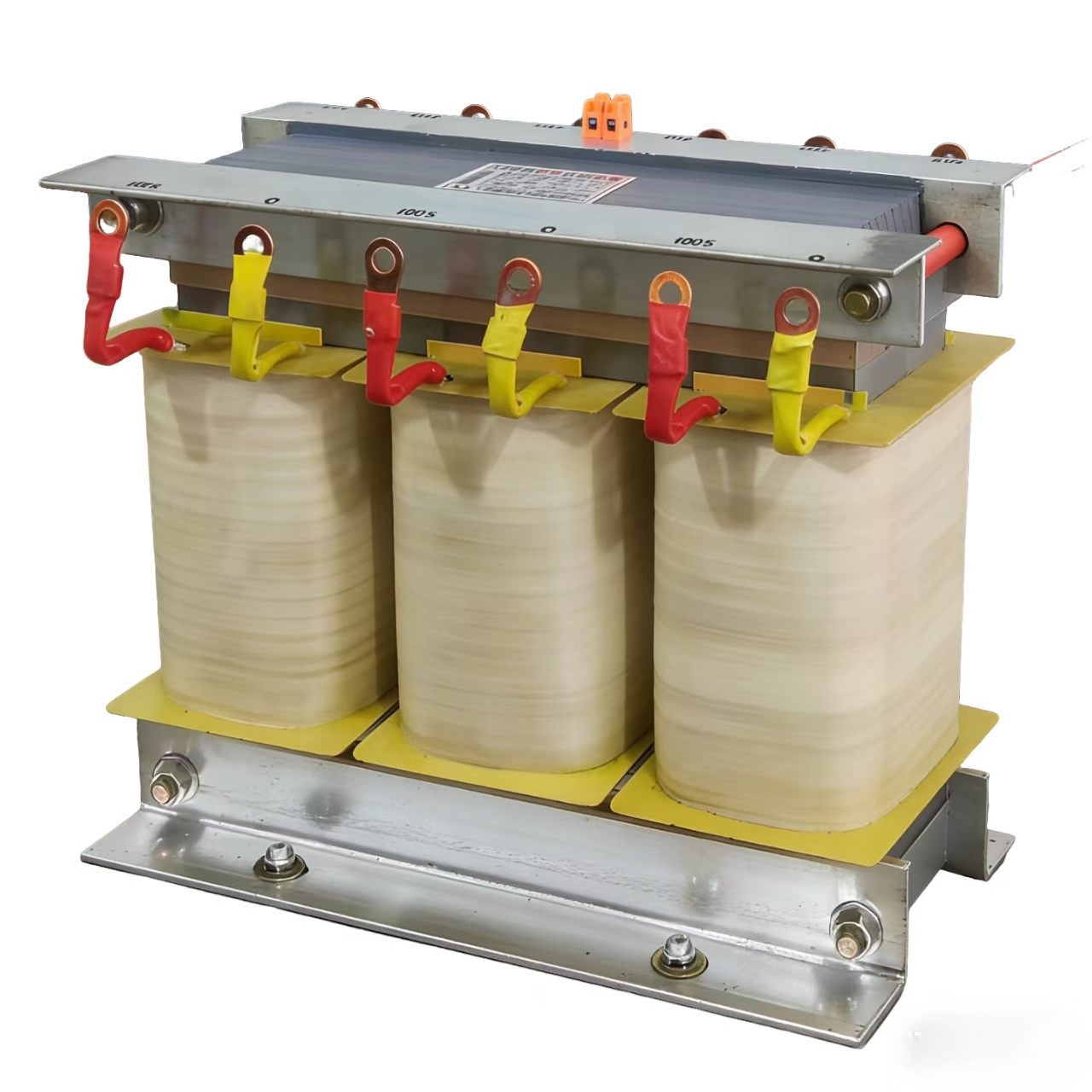
When an Autotransformer Is the Better Choice
Buck-boost voltage correction
Close voltage conversion, such as 480V to 400V
Weight-sensitive installations
Space-constrained retrofits
Efficiency-driven designs where isolation is not required
Utility and industrial systems designed with a common reference in mind
If the source and load can safely share an electrical relationship, and the design team understands grounding implications, autotransformers can deliver excellent value.
When a Standard Transformer Is the Better Choice
Personnel safety matters
Separate grounding is required
Noise isolation is needed
Sensitive electronics are downstream
Mixed-source systems, such as a utility plus a generator or a UPS
Client or code requires isolation
Maintenance environments where wrong assumptions could create shock risk
When in doubt, isolation is usually the more conservative engineering decision.
Hidden Site-Level Pitfalls Most Articles Miss
Most online articles stop at “autotransformers are cheaper but not isolated.” That is true, but it is not enough to protect a buyer.
Shared neutral misunderstanding: teams assume a new neutral exists when it does not.
Transferred surges: line disturbances can pass through more directly than expected.
Grounding errors: secondary bonding practices from isolation transformers are wrongly copied onto autotransformer outputs.
Tap mislabeling or misreading, especially on custom export units.
Enclosure heating: compact autotransformer cabinets run hotter than expected in high ambient areas.
Nuisance tripping: upstream protection not adjusted for actual inrush and load profile.
Unexpected fault current during commissioning: because the team underestimated the source-load electrical continuity.
One hard-to-see detail from plant retrofits: if the transformer sits near VFDs and cable trays in a poorly ventilated electrical room, nameplate temperature rise can look acceptable on paper, but the enclosure skin temperature in summer can still become a complaint point. Cheap units with marginal thermal design show this fast.
What Real Users Complain About in Forums and Field Discussions
Across installer groups, engineering discussions, and buyer communities, the complaints are surprisingly consistent.
“The autotransformer fixed the voltage mismatch, but grounding became confusing.”
“The cheaper unit ran hot even below nameplate load.”
“The nameplate data did not clearly explain the tap arrangement.”
“Supplier support vanished after delivery.”
“We thought step-down meant isolated.”
“The documentation did not match the actual terminal markings.”
This matches what I have seen in the field. The biggest buyer pain point is not usually catastrophic failure on day one. It is ambiguity: unclear wiring, weak documentation, and slow supplier response when the installer is standing at the cabinet with a meter in hand.
Common Mistakes That Cause Costly Failures
Assuming every step-down transformer isolates
Ignoring fault-current contribution
Undersizing for motor starting or inrush-heavy loads
Overlooking ambient temperature derating
Buying only on price
Ignoring harmonic content from nonlinear loads
Not checking frequency compatibility for 50Hz and 60Hz projects
Failing to verify compliance marks and test reports
One of the most expensive errors is choosing an autotransformer for a load that later proves sensitive to noise, reference shifts, or grounding interactions. The transformer itself may be fine. The system behavior is what fails.
How to Read Nameplate Data Before You Buy
Before ordering, check the following points line by line.
kVA rating: continuous or intermittent duty?
Input and output voltage: exact nominal values, phase, and connection method
Tap positions: clear labeling and actual intended use
Frequency: 50Hz, 60Hz, or dual-rated
Insulation class: not just temperature rise
Temperature rise: verify ambient assumptions
Impedance: especially important for protection and fault analysis
Duty cycle: continuous, motor starting, intermittent, or special duty
Enclosure rating: indoor, outdoor, dusty, washdown, or corrosive environment
Certification marks: match destination market requirements
If the nameplate or datasheet does not clearly state whether the design is isolating or autotransformer-connected, stop and ask. Never infer it from the voltage alone.
Supplier Evaluation Checklist: How to Find a Reliable Transformer Manufacturer
| Supplier Checkpoint | What Good Looks Like | Red Flag |
|---|---|---|
| Engineering support | Asks about load type, inrush, grounding, ambient, and harmonics | Only asks for voltage and kVA |
| Winding material transparency | Clearly states copper or aluminum and design basis | Vague wording |
| Test reports | Provides routine test data and insulation test records | No formal reports |
| Insulation system | Documented insulation class and thermal system | Only marketing claims |
| QA process | Traceable production and inspection steps | No traceability |
| Thermal design | Explains temperature rise, cooling path, and enclosure assumptions | Avoids thermal questions |
| Certification | Can align with IEC, IEEE-related requirements, and target market compliance | Generic “international standard” claim only |
| Lead time accuracy | Realistic schedule with production milestones | Overpromises delivery |
| Customization ability | Can adapt taps, enclosure, terminals, impedance, and application details | Only standard catalog talk |
| After-sales response | Fast technical feedback during installation and startup | Sales disappear after payment |
Questions to Ask a Supplier Before Ordering
Is this unit a standard transformer or an autotransformer?
Does the output provide galvanic isolation?
What load profile was the design based on?
Can it handle motor starting current or inrush peaks?
What is the expected behavior with harmonic-rich loads?
Can you provide insulation resistance and routine test records?
Do you have temperature rise test data?
What short-circuit withstand assumptions were used?
Is the unit suitable for my local standards and installation practices?
What support will you provide during commissioning?
Good suppliers answer these quickly and specifically. Weak suppliers answer with catalog language.
Cost, Efficiency, and Lifecycle Value Comparison Table
| Cost Factor | Standard Transformer | Autotransformer |
|---|---|---|
| Purchase cost | Higher | Lower |
| Installation cost | Can be higher due to size and weight | Usually lower due to compactness |
| Operating loss | Good, but may be higher than an autotransformer in close-ratio use | Often lower in close-ratio conversion |
| Downtime risk | Lower in isolation-sensitive systems | Can be higher if grounding/noise issues are overlooked |
| Maintenance burden | Usually more straightforward electrically | Higher if staff misunderstand the wiring or grounding relationship |
| Replacement risk | Broader application reuse | More application-specific |
| Lifecycle economics | Better where safety, compliance, and system stability matter | Better where isolation is unnecessary and the voltage ratio is close |
Quick Decision Matrix for Engineers, Buyers, and OEMs
| Operating Condition | Recommended Type |
|---|---|
| Need personnel safety separation | Standard transformer |
| Need a separate grounding reference | Standard transformer |
| Close voltage correction, no isolation needed | Autotransformer |
| Tight cabinet or rooftop weight limit | Autotransformer |
| Sensitive electronics or noise concerns | Standard transformer |
| Budget-driven retrofit with known grounding design | Autotransformer |
| Compliance-driven isolation requirement | Standard transformer |
| Buck-boost application | Autotransformer |
FAQ
What is the main difference between a transformer and an autotransformer?
The main difference is the winding structure. A standard transformer has separate primary and secondary windings and usually provides electrical isolation, while an autotransformer uses a shared winding and usually does not. In most real projects, isolation is the deciding factor.
Is an autotransformer safer than a standard transformer?
It depends on the application, but for personnel protection and sensitive systems, a standard transformer is usually safer because it provides galvanic isolation. An autotransformer can be perfectly acceptable in the right design, but it does not offer the same separation between source and load.
Why is an autotransformer smaller and cheaper?
An autotransformer uses less copper and less core material because part of the winding is common to both input and output. That reduces material cost, size, weight, and often shipping cost as well.
Can an autotransformer be used for 480V to 240V?
Technically, yes, in some cases, but suitability depends on whether isolation is required, how grounding is handled, what local code expects, and what type of load you are feeding. Do not choose it based on voltage ratio alone.
When should I use an isolation transformer instead of an autotransformer?
Use an isolation transformer when you need a shock protection strategy, noise isolation, separate grounding, better fault containment, support for sensitive electronics, or when the installation is compliance-driven, and isolation is required.
What are the disadvantages of an autotransformer?
The main disadvantages are no galvanic isolation, higher transferred fault and surge risk, more grounding complexity, and a narrower range of safe-use scenarios. It is excellent in the right application, but not forgiving in the wrong one.
Does an autotransformer reduce electrical noise?
Usually not as effectively as an isolation transformer. Because the circuits are electrically connected, an autotransformer is less capable of separating common-mode noise and source-side disturbances from the load.
How do I choose between an autotransformer and a two-winding transformer?
Use a short checklist: check the voltage ratio, determine whether isolation is required, review the grounding method, evaluate fault level and protection coordination, consider load sensitivity and harmonics, and then compare efficiency and budget. Start with safety, not price.
Are buck-boost transformers autotransformers?
Many buck-boost transformers are commonly connected and used as autotransformers in practical voltage correction applications. The exact answer depends on how the unit is wired in the field.
What should I check before choosing a transformer supplier?
Check test documentation, certifications, insulation and thermal design details, real delivery cases, warranty terms, commissioning support, and how quickly the engineering team responds to technical questions. Fast and precise support is often more valuable than a slightly lower price.
Conclusion: Choose by Isolation Need, Not Just Price
If you remember only one thing, remember this: the real difference between transformer and autotransformer is not just construction, but isolation. That single point affects safety, grounding, fault transfer, noise behavior, and project risk.
Autotransformers are efficient, compact, and cost-effective. Standard transformers are broader, safer, and more forgiving. Neither is universally better.
The right choice depends on your actual operating conditions, local standards, and system behavior. In serious projects, I strongly recommend reviewing the design against IEC, IEEE, and destination-market requirements before ordering.
CTA: Need Help Selecting the Right Transformer for Your Application?
If you want a fast recommendation, send us your input voltage, output voltage, load type, kVA, installation environment, grounding method, and compliance requirements.
We can help you compare autotransformer vs two winding transformer options, identify hidden risks, and shortlist a reliable supplier for your project.
Send us an inquiry today or contact us directly on WhatsApp for a quick technical review, comparison sheet, and supplier recommendation.