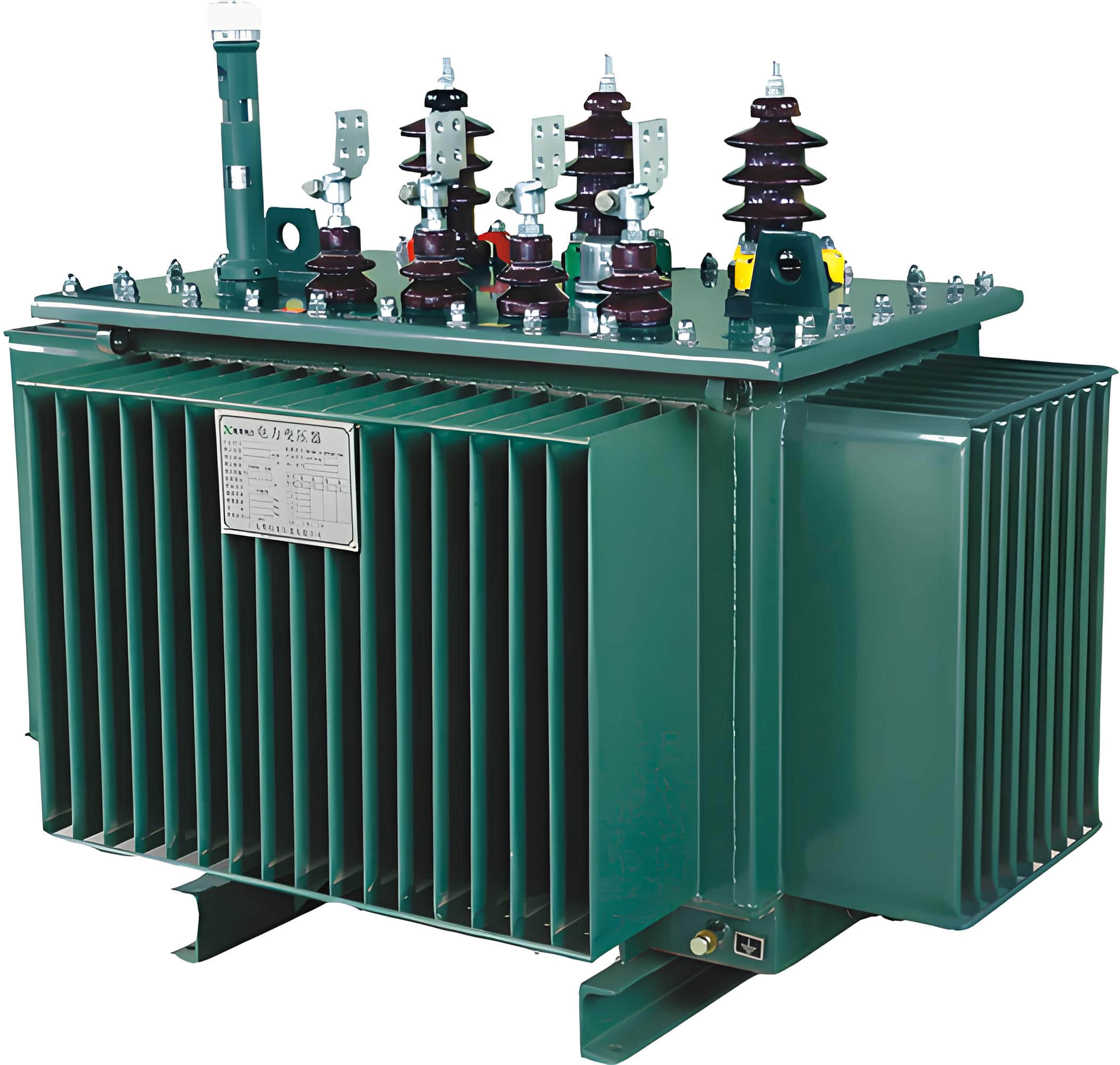
A two-winding transformer is one of the most common power conversion devices used in electrical systems. It has one primary winding and one secondary winding, with energy transferred through electromagnetic induction rather than direct electrical contact.
That sounds simple, but in real procurement and engineering practice, choosing the wrong type causes expensive problems. Typical failures include overheating, insulation breakdown, voltage mismatch, nuisance tripping, poor equipment performance, and even electric shock or fire risk.
In actual projects, many users focus only on kVA and voltage ratio. That is where mistakes start.
A transformer for a hospital isolation room, a factory 11 kV/0.4 kV substation, a CNC control cabinet, and a high-voltage withstand test bench may all be called “two-winding transformers,” but they are not interchangeable. Their insulation design, cooling method, structure, protection level, and operating duty are very different.
This guide explains the working principle of two-winding transformers, their major classifications, practical uses, common faults, troubleshooting logic, and how to select the right model without falling into common purchasing traps.
What Is a Two-Winding Transformer and Why Does the Type Matter?
A two-winding transformer has two separate electrical windings: the primary side connected to the source and the secondary side connected to the load. The windings are magnetically coupled through a laminated magnetic core.
Because the windings are separate, a true two-winding transformer can provide voltage conversion and, where designed, electrical isolation. This is a major reason why it remains essential in distribution, industrial control, medical systems, and testing applications.
The type matters because transformer performance depends on much more than input and output voltage. A wrong selection may result in:
Overheating because the cooling method does not match the load or ambient temperature
Insulation failure because operating voltage class or impulse level is too low
Voltage mismatch because taps, load characteristics, or phase type are wrong
Safety risks because isolation level is inadequate for medical, laboratory, or operator-access applications
Installation problems because outdoor oil-immersed units are specified for indoor fire-restricted rooms, or vice versa
High lifecycle cost because maintenance requirements were ignored during selection
In short, the right two-winding transformer type is determined by use case, not by one nameplate number.
How a Two-Winding Transformer Works
The operating principle is electromagnetic induction. When AC voltage is applied to the primary winding, alternating current creates alternating magnetic flux in the core.
This changing flux links the secondary winding and induces a voltage on it. There is no direct metallic connection between the two windings in a standard isolated two-winding transformer.
The ideal voltage relationship is approximately:
V1 / V2 = N1 / N2
Where:
V1 = primary voltage
V2 = secondary voltage
N1 = primary turns
N2 = secondary turns
If the secondary has fewer turns than the primary, the unit is a step-down two-winding transformer. If the secondary has more turns, it is a step-up two-winding transformer.
This distinction is functional. It does not change the fact that both are still structurally two-winding transformers.
In real equipment, there are additional design elements: core material, insulation system, winding conductor type, cooling path, tap changer arrangement, shielding, enclosure, and temperature rise class. These directly affect loss, noise, durability, and safety.
Common Problems Users Face When Choosing Two-Winding Transformers
Most procurement mistakes come from mixing up different classification dimensions. Buyers may ask for a “three-phase dry transformer” when what they actually need is an 11 kV/0.4 kV three-phase dry-type isolation transformer for a hospital imaging floor.
That missing detail changes the design completely.
The most common confusion points are:
Voltage class: low-voltage control transformer vs medium-voltage distribution transformer
Cooling method: oil-immersed vs dry-type
Phase: single-phase vs three-phase
Function: standard step-down vs isolation vs rectifier duty
Installation form: floor-mounted, cabinet-type, wall-mounted
Core structure: core type vs shell type transformer
Isolation level: ordinary conversion vs reinforced isolation
For example, a machine tool may need only 380V to 24V control power, but if the secondary feeds PLC I/O, relays, solenoid valves, and indicator lamps in a noisy environment, the buyer should also review inrush, short-duration overload, ambient temperature, and interference sensitivity.
Likewise, a shopping mall transformer room may prioritize dry-type fire performance, while a remote outdoor construction site may favor oil-immersed high-capacity distribution units due to better cooling and lower upfront cost per kVA.
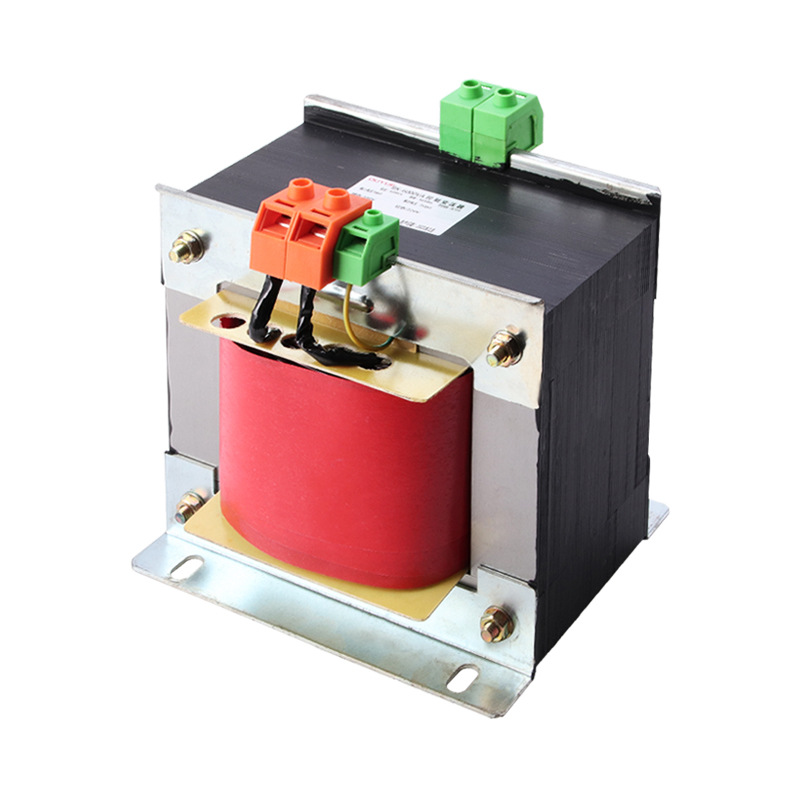
Two-Winding Transformer Classification by Voltage Level
Voltage class is often the first filter in real projects. It directly affects insulation design, clearances, test standards, enclosure approach, and safety procedures.
Low-Voltage Two-Winding Transformers
Low-voltage two-winding transformers generally have input and output voltages both below 1 kV. These are widely used in equipment control, local power conversion, and isolation applications.
Typical examples include:
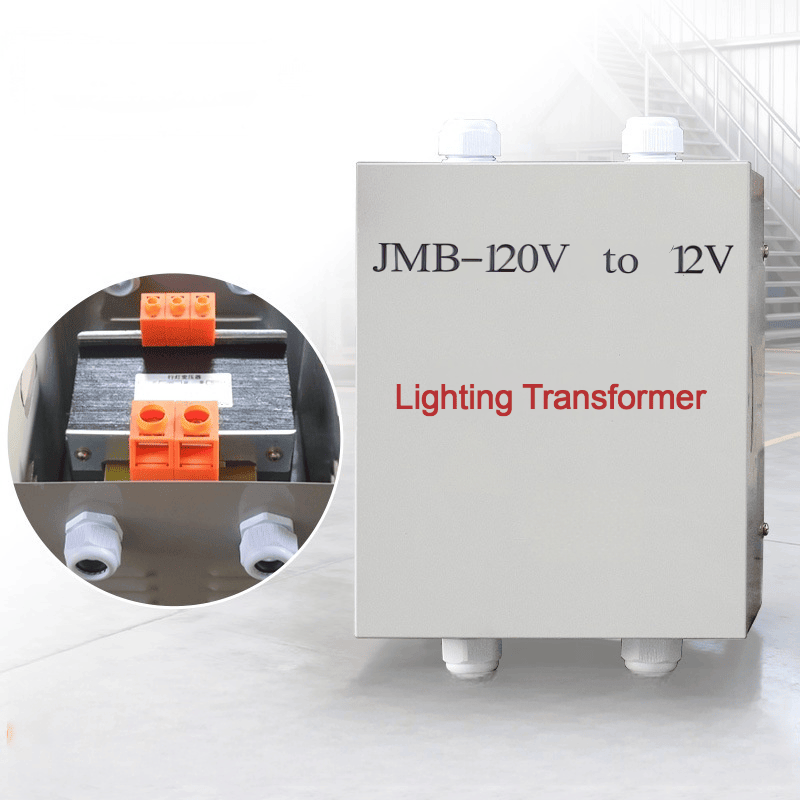
Machine tool transformers
380V/220V to 12V, 24V, or 36V transformers
These are common in CNC machines, packaging lines, injection molding machines, elevators, control cabinets, laboratory benches, and medical support systems.
A typical machine tool transformer might convert a 380V three-phase system auxiliary supply to 220V or 24V control voltage. In many factories, 24V AC or 24V DC control circuits are selected for operator safety and component standardization.
Real-world example: many industrial control panels use a low-voltage transformer rated from 100 VA to 2 kVA. A compact control transformer feeding contactors, lamps, and relays may only require 200 VA to 500 VA, but if the circuit includes multiple solenoids with simultaneous inrush, oversizing margin becomes necessary.
Medium- and High-Voltage Two-Winding Distribution Transformers
These are the backbone of commercial and industrial electrical supply. Common ratings include 10 kV/0.4 kV, 11 kV/0.4 kV, and 35 kV/0.4 kV.
They are used in:
Factories
Construction sites
Residential communities
Warehouses and logistics centers
Office parks
Both oil-immersed and dry-type versions are common. The choice depends on installation location, fire regulations, ventilation, maintenance preference, and capacity requirements.
Typical capacity range in distribution use is broad, but the most common commercial ratings are often 100 kVA to 2500 kVA. In utility and industrial projects, 500 kVA, 800 kVA, 1000 kVA, 1250 kVA, 1600 kVA, and 2000 kVA are frequently specified.
Real-world example: an 11 kV/0.4 kV, 1000 kVA three-phase two-winding distribution transformer can serve a medium-sized manufacturing workshop with mixed motor, HVAC, and lighting loads. If average power factor is 0.9, the available active load is roughly 900 kW under ideal loading assumptions, though actual usable demand depends on starting currents, diversity, and temperature rise limits.
High-Voltage Two-Winding Test Transformers
These are special high-voltage two-winding test transformers used for electrical testing rather than ordinary distribution. Typical applications include power-frequency withstand-voltage tests for cables, switchgear, insulators, bushings, and electrical apparatus.
Voltage output can range from several kilovolts to hundreds of kilovolts. These units are common in power utilities, transformer factories, cable manufacturers, testing labs, and commissioning teams.
Because they are used for dielectric testing, key design concerns include:
insulation reliability
partial discharge performance
short-duration duty
operator safety interlocks
accurate voltage measurement compatibility
Unlike standard distribution transformers, high-voltage test transformers are selected around test voltage, test current, waveform, insulation class, and protection arrangement.
Two-Winding Transformer Classification by Cooling Method
Cooling method is not a secondary detail. It determines thermal stability, maintenance frequency, installation environment, fire performance, and achievable capacity density.
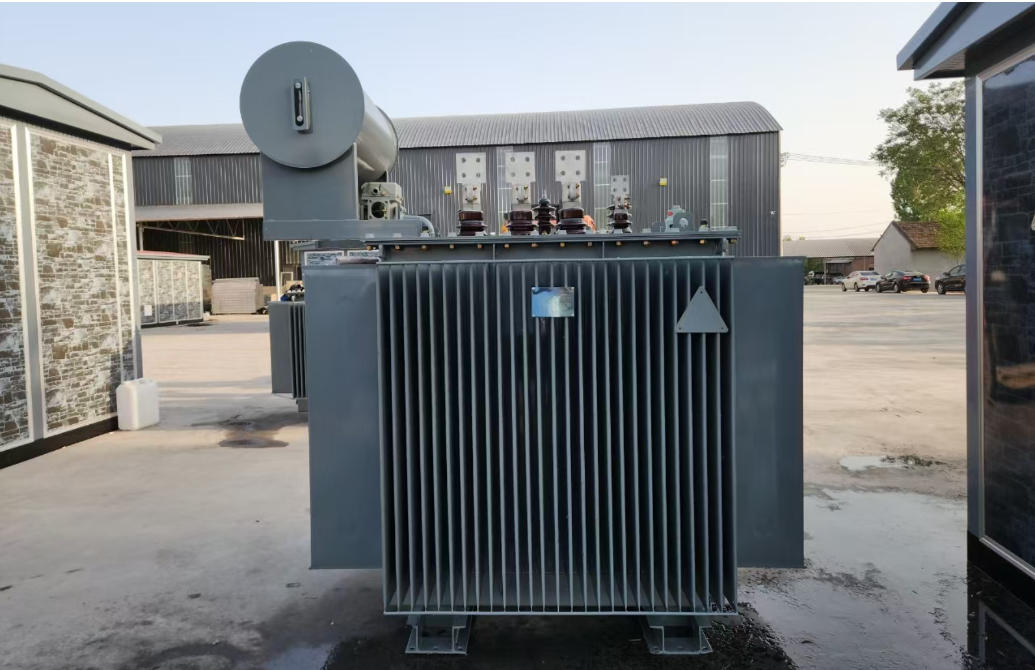
Oil-Immersed Two-Winding Transformers
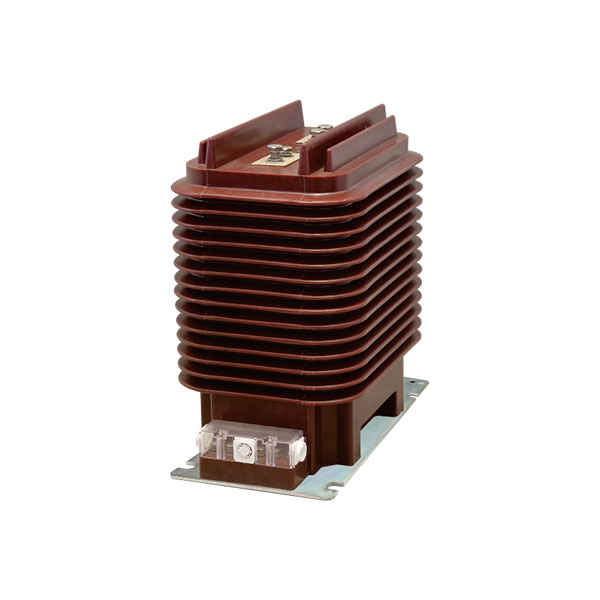
An oil-immersed two-winding transformer has its core and windings immersed in insulating oil. The oil serves two major functions: electrical insulation and heat dissipation.
This design allows strong thermal performance and is especially suitable for higher capacities and outdoor distribution applications.
Main characteristics:
Better heat dissipation than many dry-type units at the same rating
Large capacity range
Widely used outdoors
Generally lower initial cost per kVA in many capacity bands
Requires oil-related maintenance and leakage management
Typical applications include outdoor utility pads, industrial substations, mining areas, remote projects, and construction power supply stations.
Oil-immersed transformers remain dominant in many power and distribution two-winding transformers because their cooling efficiency supports long service life under substantial load.
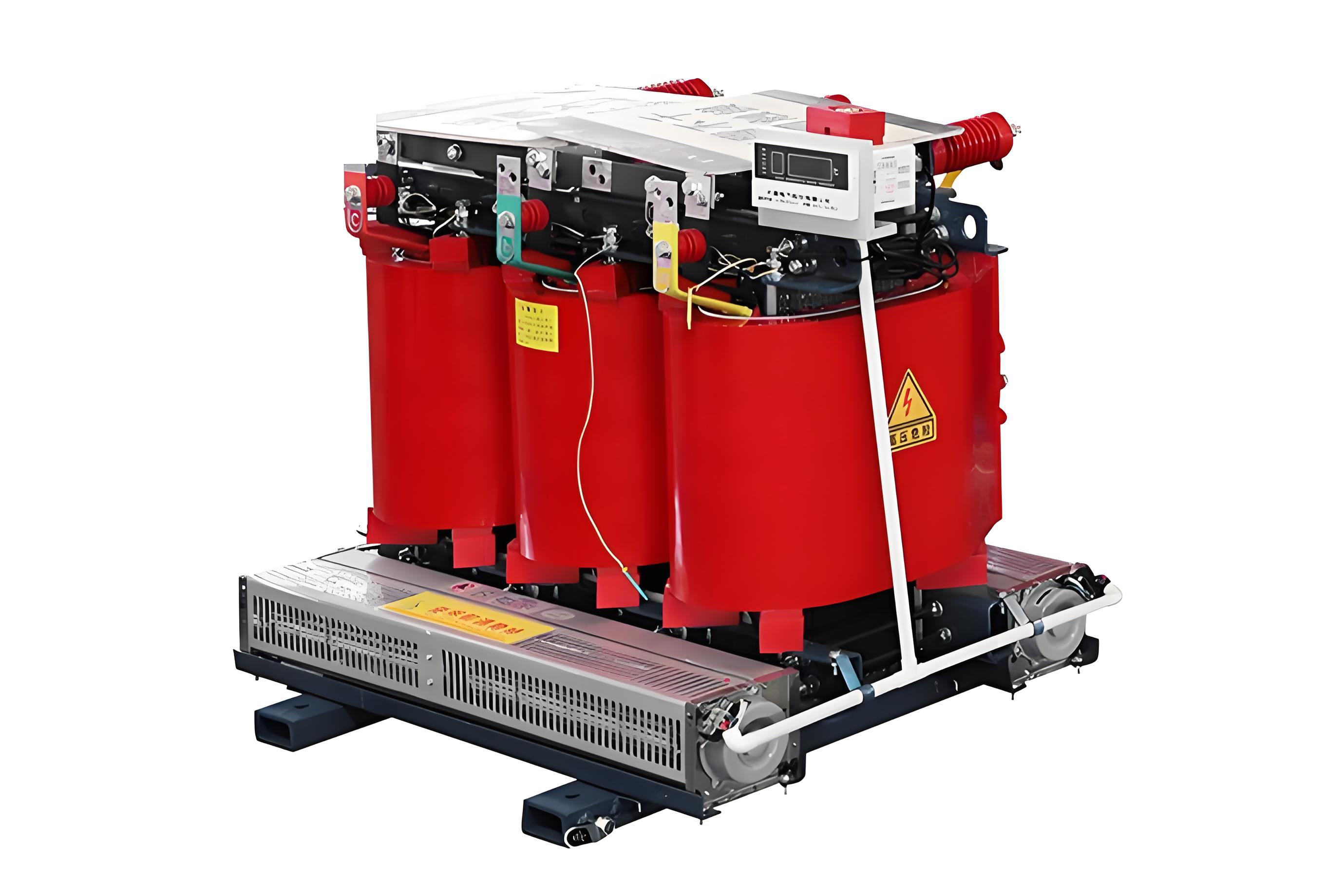
Dry-Type Two-Winding Transformers
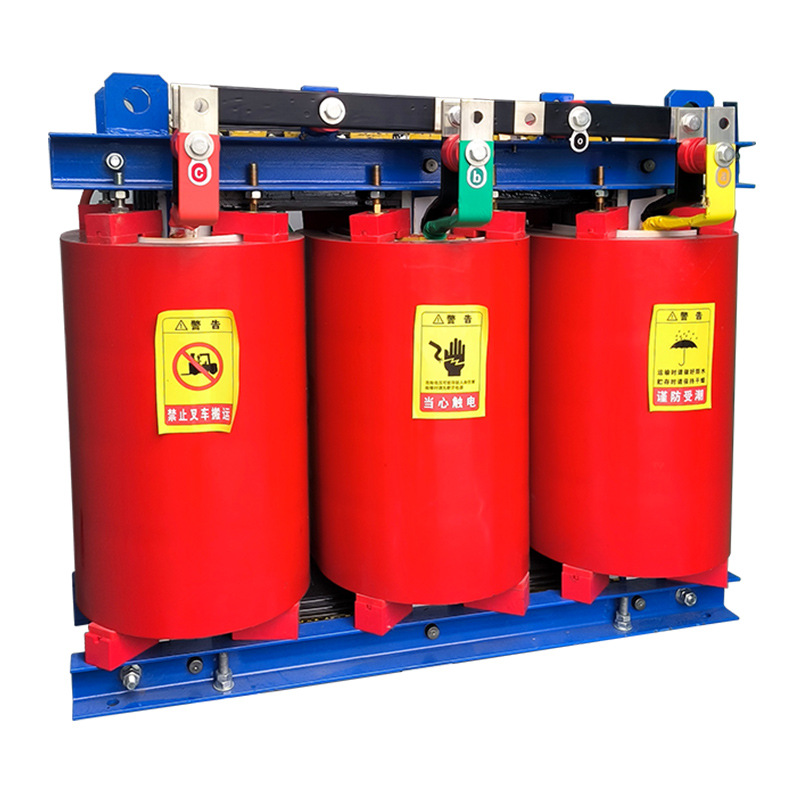
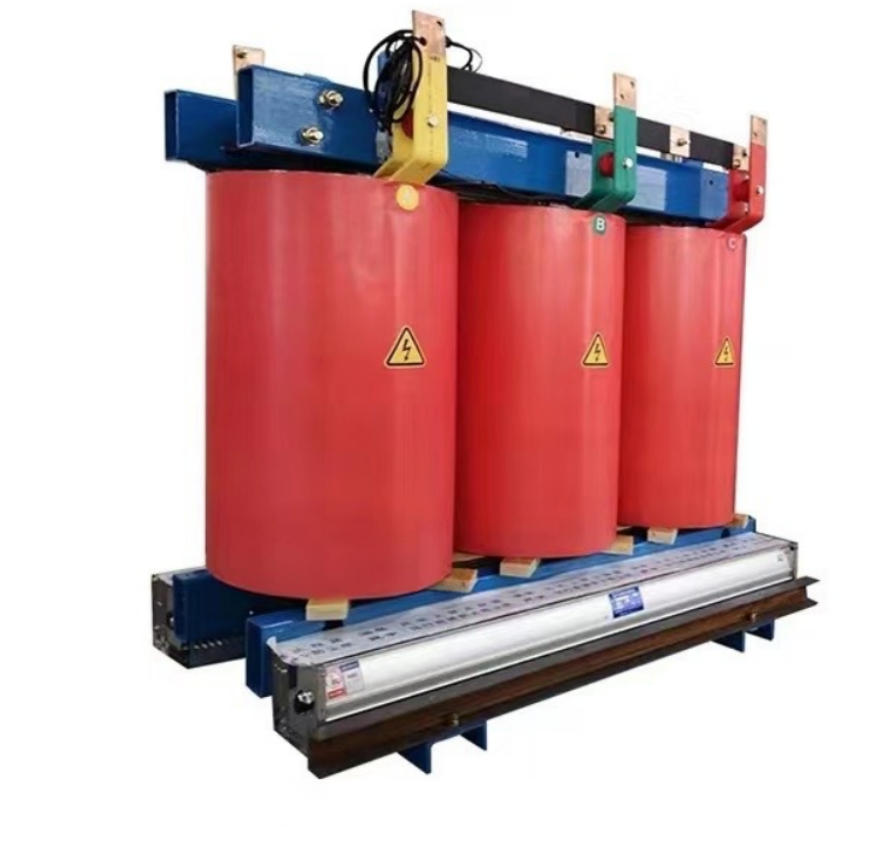
A dry-type two-winding transformer uses air cooling and solid insulation systems, often with epoxy resin cast coils. Because there is no insulating oil, the unit eliminates oil leakage risk and usually offers better fire performance for indoor applications.
Main characteristics:
No oil leakage
Good fire safety
Well suited for indoor installation
Lower routine fluid maintenance
Often preferred in public buildings
Typical applications include:
Hospitals
Shopping malls
Office towers
Indoor substations
Schools and metro systems
In real practice, dry-type units are often selected where fire code, occupant density, environmental cleanliness, and indoor equipment access matter more than absolute compact cost per kVA.
Two-Winding Transformer Classification by Function and Application
This is one of the most important dimensions because it directly matches transformer design to load behavior and safety needs.
Step-Up and Step-Down Two-Winding Transformers
Step-up and step-down two-winding transformers are the standard voltage-conversion types used in power systems and industrial equipment.
A step-down transformer reduces voltage, such as 11 kV to 0.4 kV in a factory substation or 380V to 24V in a control panel. A step-up transformer increases voltage, such as boosting generator output or adapting special industrial process equipment.
These are the classic power and distribution two-winding transformers used across the electrical industry.
Isolation Two-Winding Transformers
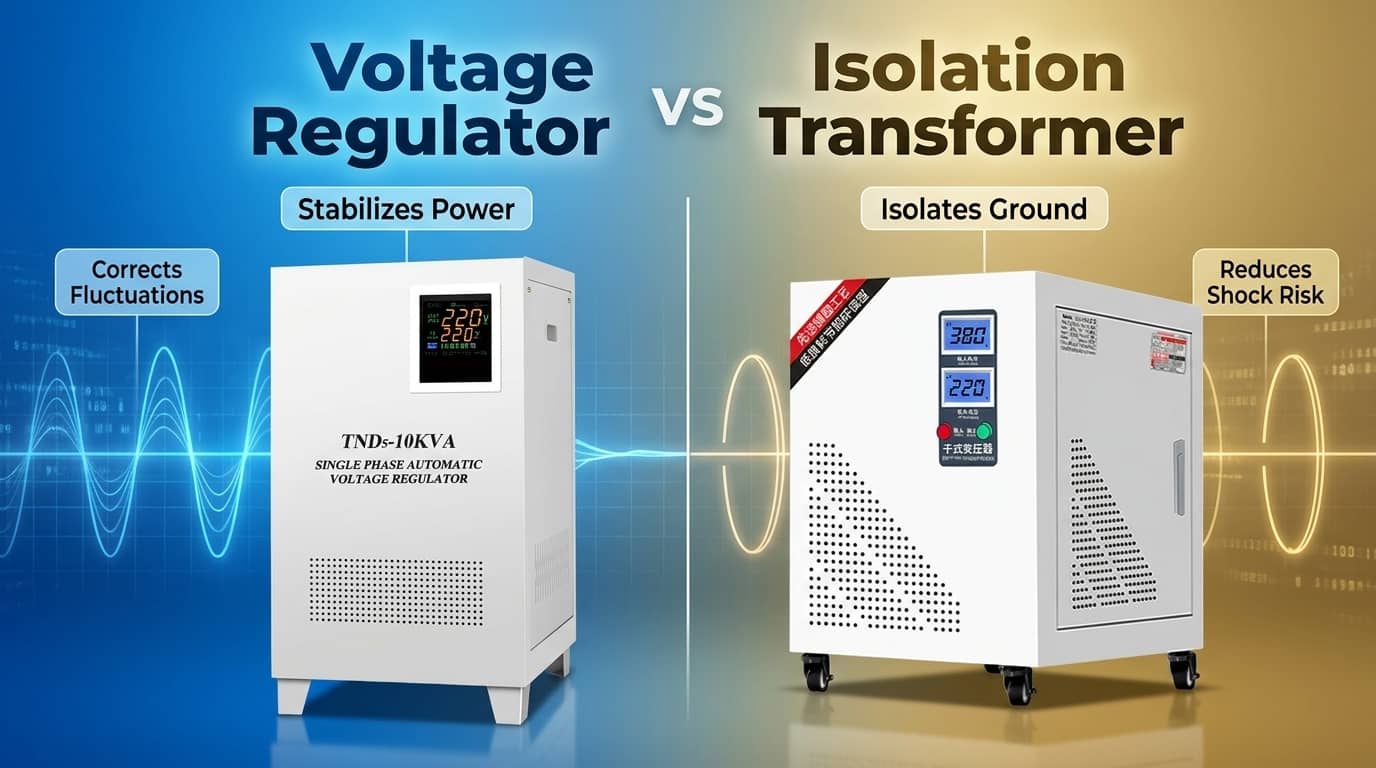
An isolation two-winding transformer is designed with reinforced insulation and fully separate primary and secondary windings. Its purpose is not only voltage conversion but also safety isolation and interference control.
Key functions include:
Protection against electric shock
Reduction of common-mode noise
Suppression of harmonic and interference coupling
Improved supply quality for sensitive equipment
These are widely used for:
Medical equipment
Laboratory instruments
Precision measurement systems
IT and communication equipment
Audio and test platforms
In hospitals, isolation transformers are often installed in critical power systems to improve patient safety and reduce leakage path risks in sensitive care areas.
Control Two-Winding Transformers
Control two-winding transformers are generally small-capacity units designed to provide safe low-voltage power to control circuits.
Typical loads include:
Contactors
Indicator lamps
Relays
PLC auxiliary circuits
Control cabinets
They are common in machine tools, conveyor systems, elevator control, textile machinery, and packaging lines.
The most frequent mistake here is undersizing for inrush. A transformer that can support steady-state relay load may still suffer voltage sag or overheating when several contactor coils energize at once.
Rectifier Duty Two-Winding Transformers
Rectifier duty two-winding transformers are built to work with rectifier power supplies, charging equipment, electroplating systems, battery charging stations, and DC conversion systems.
These often use multi-tap secondary windings or special output arrangements to support rectification and voltage adjustment.
Selection must consider:
harmonic content
DC load profile
secondary tap requirements
heating under nonlinear load
duty cycle
Ordinary distribution transformers may not perform well in heavy rectifier service if harmonic heating is ignored.
Two-Winding Transformer Classification by Phase
Phase selection is basic but critical. It determines system compatibility, conductor arrangement, load balance, footprint, and cost per kVA.
Single-Phase Two-Winding Transformers
Single-phase two-winding transformer types are commonly used for:
220V residential loads
small machines
laboratory equipment
medical isolation units
light commercial auxiliary circuits
These are suitable where the supply and load are single-phase, or where the capacity is small enough that a three-phase unit would be unnecessary.
Single-phase transformers are also frequently selected for dedicated equipment with one independent load, such as a diagnostic medical device or a specialized test bench.
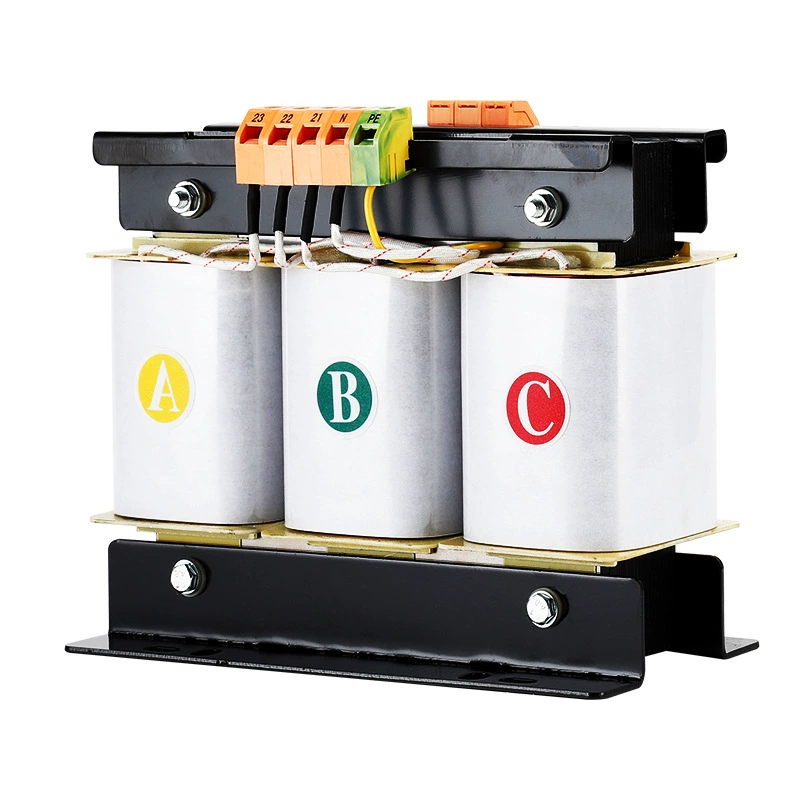
Three-Phase Two-Winding Transformers
Three-phase two-winding transformer classification covers the mainstream products used in industrial and utility power systems.
These are preferred for:
factory distribution
commercial building supply
motor loads
centralized substations
utility voltage transformation
For medium and larger capacities, a three-phase transformer is usually more economical and compact than using three separate single-phase units, although there are applications where single-phase banks are still chosen for redundancy or logistics reasons.
Two-Winding Transformer Classification by Core Structure
Core structure affects magnetic path, mechanical strength, cooling behavior, short-circuit performance, and manufacturing complexity. This is where the LSI intent core type vs shell type transformer becomes important.
Core-Type Two-Winding Transformers
In a core-type two-winding transformer, the windings surround a considerable portion of the core limbs. This is the most common arrangement in distribution and power applications.
Main advantages:
Simple construction
Easier cooling
Widely used in distribution transformers
Good manufacturability over many ratings
Because of its practical design and thermal accessibility, the core-type structure is frequently used in standard oil-immersed and dry-type distribution transformers.
Shell-Type Two-Winding Transformers
In a shell-type two-winding transformer, the core surrounds more of the winding structure. This design can offer better mechanical support and improved short-circuit strength in certain applications.
Main advantages:
Better mechanical rigidity
Improved short-circuit performance in selected designs
Useful in some industrial and special-duty applications
While shell-type construction is not always the default for standard distribution use, it remains valuable where mechanical robustness and special electrical performance are priorities.
Two-Winding Transformer Classification by Enclosure and Installation Form
Installation form matters because transformers do not operate in theory. They operate in rooms, yards, rooftops, substations, cabinets, and production lines.
Floor-Mounted Oil-Immersed Distribution Transformers
These are common for outdoor utility and industrial installation. They are usually placed on concrete foundations or designated transformer pads.
They suit applications where:
higher capacity is needed
outdoor space is available
fire separation can be managed
maintenance access is planned
Cabinet-Type Dry Transformers
Cabinet-type dry transformers are widely used in indoor switch rooms, basements, and commercial electrical rooms. The enclosure helps with protection, appearance, and safety separation.
They are especially suitable for:
shopping malls
office buildings
hospitals
subway and rail facilities
Wall-Mounted Small Control Transformers
These compact units are typically found in control panels, small equipment cabinets, and machine enclosures.
They are chosen where:
space is limited
low-voltage control power is needed
local mounting convenience matters
What Is Not a Two-Winding Transformer?
Procurement errors often happen because people use familiar words loosely. Two products may both transform voltage, but that does not mean they belong to the same transformer class.
Autotransformer vs Two-Winding Transformer
An autotransformer uses one shared winding with taps. The primary and secondary are electrically connected through part of the same winding.
That means it is not a true two-winding transformer.
Main differences:
Autotransformer: one winding, no full isolation, smaller and cheaper for some applications
Two-winding transformer: separate primary and secondary, isolation possible, better safety separation
Autotransformers are useful for voltage adjustment and motor starting in some cases, but they should not be substituted where electrical isolation is required.
Three-Winding Transformer vs Two-Winding Transformer
A three-winding transformer has three separate windings, usually serving more complex system requirements such as supplying two different secondary voltage levels or linking multiple network sections.
It is therefore not a two-winding transformer.
When requesting quotations, this distinction must be explicit. A “three-winding 110/35/10 kV transformer” is a completely different product class from a standard 35 kV/0.4 kV two-winding distribution unit.
Real-World Application Examples of Two-Winding Transformer Types
Real projects show why classification matters.
Case 1: 11 kV/0.4 kV factory distribution
A metal fabrication plant with welding machines, air compressors, and motor loads uses a three-phase oil-immersed or dry-type two-winding transformer rated 1000 kVA to 1600 kVA. Choice depends on whether the transformer room is indoor and subject to strict fire requirements.
Case 2: 380V/24V CNC control power
A CNC machine control cabinet uses a low-voltage control two-winding transformer to supply contactors, PLC inputs, sensors, and lamps. Typical rating may be 250 VA to 1 kVA, but inrush current of solenoids must be checked.
Case 3: hospital isolation transformer room
Critical healthcare areas use isolation two-winding transformers with reinforced insulation and monitoring arrangements to improve safety and reduce interference to sensitive devices.
Case 4: high-voltage cable testing
A test laboratory uses a high-voltage two-winding test transformer to perform power-frequency withstand tests at tens of kilovolts. Selection focuses on insulation class, output voltage stability, and protection chain rather than distribution efficiency.
Case 5: shopping mall indoor substation
A commercial building chooses a cabinet-type dry transformer because no oil leakage is acceptable inside the building, and local fire rules favor dry-type equipment.
Two-Winding Transformer Types Comparison Table
| Classification Basis | Type | Typical Voltage Class | Cooling Method | Phase | Insulation Purpose | Typical Capacity | Installation Location | Common Applications |
|---|---|---|---|---|---|---|---|---|
| Voltage level | Low-voltage two-winding transformer | Below 1 kV / below 1 kV | Dry or small oil-immersed | Single-phase or three-phase | Basic or reinforced | 100 VA to tens of kVA | Panels, machines, indoor equipment | Control, isolation, machine tools |
| Voltage level | Medium/high-voltage distribution transformer | 10 kV, 11 kV, 35 kV to 0.4 kV | Oil-immersed or dry-type | Mostly three-phase | Distribution-grade | 100 kVA to 2500 kVA common | Substations, factories, communities | Power distribution |
| Voltage level | High-voltage test transformer | Several kV to hundreds of kV | Special design | Single-phase common | High dielectric strength | Test-duty dependent | Labs, test fields | Withstand-voltage testing |
| Function | Isolation transformer | Low-voltage common | Dry-type common | Single-phase or three-phase | Reinforced isolation | 500 VA to hundreds of kVA | Hospitals, labs, precision rooms | Shock protection, anti-interference |
| Function | Control transformer | 380V/220V to 12V/24V/36V common | Dry-type | Single-phase common | Low-voltage control isolation | 100 VA to 5 kVA | Control cabinets, machines | Contactors, lamps, relays |
| Function | Rectifier duty transformer | Project-specific | Oil or dry | Single-phase or three-phase | Designed for nonlinear load | Wide range | Power rooms, charging systems | Rectifier and DC systems |
Oil-Immersed vs Dry-Type Two-Winding Transformers Table
| Item | Oil-Immersed Two-Winding Transformer | Dry-Type Two-Winding Transformer |
|---|---|---|
| Fire safety | Requires oil fire risk management | Better indoor fire performance |
| Maintenance | Oil inspection, sealing, leakage checks | Lower routine fluid maintenance |
| Heat dissipation | Generally stronger | Good, but more dependent on air path and enclosure ventilation |
| Efficiency | Often very competitive at higher capacities | Good modern performance, varies by design |
| Noise | Usually acceptable outdoors | Can be suitable indoors with acoustic treatment |
| Cost | Often lower initial cost per kVA | Often higher initial indoor-friendly solution |
| Best-use environment | Outdoor substations, factories, utility distribution | Hospitals, malls, office buildings, indoor substations |
| Leakage risk | Yes, must be managed | No oil leakage |
Single-Phase vs Three-Phase Two-Winding Transformers Table
| Item | Single-Phase Two-Winding Transformer | Three-Phase Two-Winding Transformer |
|---|---|---|
| Voltage system | Single-phase supply/load | Three-phase supply/load |
| Typical size | Small to medium common | Medium to large mainstream |
| Cost per kVA | Often higher at larger capacities | Usually more economical for larger loads |
| Use case | Homes, small machines, medical isolation, test benches | Factories, substations, commercial buildings, motor loads |
| Installation scenario | Dedicated equipment or local circuits | Centralized power distribution |
| Load balance concern | Not a three-phase balancing issue | Three-phase load balance is important |
Typical Ratings and Real-World Data Table
| Application | Example Rating | Phase | Typical Capacity | Type | Real-World Note |
|---|---|---|---|---|---|
| Machine control power | 380V/220V to 24V | Single-phase common | 250 VA to 1 kVA | Control two-winding transformer | Used for relays, contactors, indicator lamps, PLC auxiliaries |
| Machine tool auxiliary supply | 380V to 36V | Single-phase common | 500 VA to 2 kVA | Low-voltage transformer | Chosen for operator-safe low voltage |
| Factory distribution | 10 kV/0.4 kV | Three-phase | 100 kVA to 2500 kVA | Distribution transformer | Very common in industrial parks and workshops |
| Commercial building supply | 11 kV/0.4 kV | Three-phase | 800 kVA to 2000 kVA | Dry-type distribution transformer | Preferred indoors where fire safety matters |
| Residential community distribution | 10 kV/0.4 kV | Three-phase | 400 kVA to 1250 kVA | Oil-immersed or dry-type | Depends on substation layout and code requirements |
| Hospital isolated power | 380V/220V to isolated 220V or project-specific | Single-phase or three-phase | 5 kVA to 200 kVA | Isolation transformer | Used in medical rooms and sensitive equipment supply |
| High-voltage testing | 50 kV, 100 kV, 200 kV and above | Single-phase common | Duty-specific | High-voltage test transformer | Used for dielectric withstand testing |
Working Principle to Selection: How to Choose the Right Two-Winding Transformer Without Costly Mistakes
Good transformer selection follows a clear decision path. Do not start from price. Start from electrical and installation reality.
1. Confirm input voltage
Is the source 220V, 380V, 400V, 10 kV, 11 kV, or 35 kV? Wrong primary specification is an immediate mismatch.
2. Confirm required output voltage
Examples include 24V control, 220V isolated supply, or 0.4 kV low-voltage distribution.
3. Define the load type
Motor, control coil, resistive heating, rectifier, medical electronics, or mixed building load all stress transformers differently.
4. Check whether electrical isolation is required
If personnel safety or interference control matters, choose an isolation two-winding transformer, not an autotransformer.
5. Select phase correctly
Use single-phase two-winding transformer types for single-phase loads and three-phase two-winding transformer classification for mainstream industrial supply.
6. Choose cooling method
For outdoor high-capacity service, oil-immersed is often preferred. For indoor public buildings, dry-type is often safer and more practical.
7. Review installation environment
Indoor or outdoor? Dusty? Humid? Corrosive? High altitude? Poor ventilation? Fire-restricted zone?
8. Set realistic capacity margin
Do not size only to current steady load. Consider inrush, future expansion, temperature rise, and harmonics.
9. Evaluate efficiency and lifecycle cost
A cheaper transformer may cost more over years if losses, maintenance, and downtime are higher.
10. Verify standards and testing
For distribution and special-use units, request routine test data, temperature rise information, impedance data, and insulation class details.
A practical capacity rule in many industrial projects is to leave 10% to 25% margin depending on load uncertainty and future expansion. However, the correct margin depends on duty cycle, harmonic content, ambient temperature, and redundancy philosophy.
Another common mistake is ignoring harmonics. If the load includes VFDs, UPS systems, chargers, or rectifiers, transformer heating may exceed what a purely linear load calculation suggests.
Common Faults of Two-Winding Transformers and Troubleshooting
Even a correctly selected transformer can fail if it is overloaded, poorly ventilated, badly maintained, or incorrectly connected. Fault diagnosis should begin with symptoms, then move to probable causes and measurable checks.
Overheating
Overheating is one of the most common transformer problems. It shortens insulation life rapidly.
Likely causes include:
Overload
Poor ventilation
Loose cable or busbar connections
Harmonic distortion
Cooling fan failure on forced-air dry-type units
Oil circulation or radiator issues on oil-immersed units
First-line checks should include load current, hot-spot temperature, terminal tightness, ambient temperature, ventilation path, and harmonic content where nonlinear loads exist.
Abnormal Noise
Transformer noise is not always a fault, but a sudden change in sound usually deserves attention.
Common causes include:
Core looseness
Overload
Voltage imbalance
Mechanical vibration transmitted through mounting structure
A louder hum under abnormal voltage or unbalanced three-phase conditions may indicate electrical stress rather than just mechanical looseness.
Insulation Failure
Insulation failure is a serious condition that can lead to flashover, short circuit, or complete transformer loss.
Typical causes:
Moisture ingress
Thermal aging
Dust or contamination
Overvoltage
Repeated overheating
Dry-type units in dusty or humid indoor spaces may accumulate conductive contamination. Oil-immersed units may suffer insulation degradation if moisture control and sealing are poor.
Oil Leakage in Oil-Immersed Units
Oil leakage is a common maintenance issue in oil-filled transformers. It can reduce insulation performance, create environmental issues, and increase fire risk.
Typical causes:
Aging gaskets
Weld defects
Mechanical damage
Poor maintenance practice
Even minor leakage should not be ignored. Small seepage can become a larger sealing failure under temperature cycling.
Output Voltage Abnormality
If output voltage is too high, too low, or unstable, connected equipment may malfunction or suffer damage.
Possible causes:
Wrong tap setting
Input voltage fluctuation
Winding fault
Connection mistake
Unexpected overload
On control transformers, heavy inrush loads may create transient voltage sag. On distribution transformers, incorrect tap configuration during commissioning is a very common and avoidable problem.
Two-Winding Transformer Fault Diagnosis Table
| Fault Symptom | Likely Cause | Inspection Point | Urgency Level | Recommended Action |
|---|---|---|---|---|
| Transformer overheating | Overload, blocked ventilation, harmonics, loose terminals | Load current, temperature, cooling path, terminals | High | Reduce load, tighten connections, improve cooling, review sizing |
| Abnormal humming or vibration | Core looseness, overvoltage, imbalance, mounting vibration | Core clamps, supply voltage, phase balance, mounting base | Medium to high | Inspect mechanical structure and power quality |
| Insulation alarm or breakdown | Moisture, aging, contamination, thermal stress | Insulation resistance, cleanliness, temperature history | Critical | De-energize if necessary, test insulation, repair or replace |
| Oil leakage | Gasket aging, weld crack, sealing failure | Tank seams, valves, radiators, gasket joints | High | Repair leakage point, restore oil level, inspect insulation condition |
| Low output voltage | Wrong tap, low input, overload, winding issue | Tap position, input voltage, load current, winding continuity | High | Correct tap, stabilize source, reduce load, test winding |
| High output voltage | Wrong tap setting, source overvoltage | Tap plate, primary voltage measurement | High | Adjust tap and verify incoming supply |
| Frequent tripping | Short circuit, overload, insulation weakness, inrush issue | Protection records, insulation tests, load pattern | Critical | Investigate before re-energizing repeatedly |
How to Select a Two-Winding Transformer by Use Case
The easiest way to avoid mistakes is to begin with the actual application category.
For Factory Power Distribution
Factories typically need three-phase medium-voltage to 0.4 kV two-winding transformers. The common choice is 10 kV, 11 kV, or 35 kV to 0.4 kV.
If the transformer is outdoors or in a separate yard, oil-immersed units are often economical and robust. If installed indoors where fire safety and maintenance access matter, dry-type transformers are often preferred.
Check motor starting current, load diversity, harmonic distortion from drives, and future line expansion before deciding kVA.
For Indoor Commercial Buildings
Commercial buildings such as malls, office towers, hotels, and hospitals usually prioritize dry-type transformers.
The main reasons are:
better fire performance
no oil leakage
cleaner indoor installation
lower routine maintenance complexity
Do not forget ventilation and access clearance. A dry transformer still produces heat and noise.
For Medical and Precision Equipment
Choose an isolation two-winding transformer where reinforced insulation, shock protection, and low interference are important.
This is especially relevant for:
medical rooms
laboratory instrumentation
measurement systems
sensitive electronics
In these applications, cheap substitution with an ordinary non-isolated or lightly specified unit can create safety and signal integrity problems.
For Control Cabinets and Machine Tools
Use a small low-voltage control transformer with the correct secondary voltage such as 12V, 24V, 36V, 110V, or 220V depending on circuit design.
Selection tips:
sum steady-state loads
check contactor and solenoid inrush
leave capacity margin
confirm frequency and ambient temperature
verify enclosure fit and mounting method
For High-Voltage Testing
Use only a dedicated high-voltage test transformer with verified insulation class, test duty, and protection design.
Do not attempt to adapt a standard distribution transformer for withstand testing. The insulation system, output characteristics, and safety arrangement are completely different.
FAQ
What are the main types of two-winding transformers?
The main types of two-winding transformers can be grouped by voltage level, cooling method, function, phase, core structure, and installation form. In practice, that includes low-voltage transformers, medium- and high-voltage distribution transformers, high-voltage test transformers, oil-immersed and dry-type transformers, step-up and step-down transformers, isolation transformers, control transformers, rectifier duty transformers, single-phase and three-phase units, core-type and shell-type designs, plus floor-mounted, cabinet-type, and wall-mounted installation forms.
What is the difference between a two-winding transformer and an autotransformer?
A two-winding transformer has separate primary and secondary windings, which allows electrical isolation when designed for it. An autotransformer uses one shared winding with taps, so the primary and secondary are electrically connected. That makes autotransformers smaller and often cheaper for some voltage-conversion tasks, but they do not provide the same isolation and safety benefits as true two-winding transformers.
Which is better: oil-immersed or dry-type two-winding transformer?
Neither is universally better. Oil-immersed two-winding transformers are often better for outdoor use, larger capacities, and lower initial cost per kVA. Dry-type two-winding transformers are often better for indoor commercial buildings, hospitals, and areas where fire safety, clean installation, and no oil leakage are priorities. The right choice depends on capacity, location, maintenance conditions, and budget.
What is an isolation two-winding transformer used for?
An isolation two-winding transformer is used where separate windings and reinforced insulation help improve safety and power quality. Typical uses include medical equipment, laboratory systems, instrumentation, precision electronics, anti-interference power supply applications, and shock-protection scenarios. It also helps reduce common-mode noise and unwanted coupling between source and load.
How do I choose between single-phase and three-phase two-winding transformers?
Choose based on the supply system, load type, capacity, and installation cost. If the source and load are single-phase, or the load is small and dedicated, a single-phase unit is usually appropriate. If the application is factory distribution, commercial building supply, or motor-heavy service, a three-phase transformer is generally the correct and more economical choice.
What are the most common faults in two-winding transformers?
The most common faults are overheating, insulation failure, oil leakage in oil-immersed units, abnormal noise, and output voltage abnormalities. These problems are usually linked to overload, poor ventilation, aging insulation, moisture, wrong tap settings, loose connections, or poor maintenance. Early diagnosis is important because insulation damage becomes much more expensive once thermal stress accumulates.
Can a step-up transformer also be a two-winding transformer?
Yes. Step-up and step-down describe the transformer’s function, while two-winding describes its structure. A transformer can therefore be both a step-up transformer and a two-winding transformer at the same time, as long as it has separate primary and secondary windings.
Are control transformers and distribution transformers both two-winding transformers?
Yes, both can be two-winding transformers, but they are designed for very different duties. Control transformers are usually small-capacity units for relays, lamps, and control circuits, often with low-voltage outputs. Distribution transformers are much larger units designed to supply buildings, factories, or network loads. Their ratings, insulation levels, cooling methods, and duty requirements are very different.
Conclusion: Best Two-Winding Transformer Type for Your Application
The best two-winding transformer type always depends on the full application picture: input voltage, output voltage, load type, phase, cooling method, isolation requirement, installation environment, and maintenance expectations.
If you are powering a factory, the answer is often a three-phase medium-voltage to 0.4 kV distribution transformer. If you are designing an indoor commercial power room, a dry-type transformer may be the right fit. If you are protecting sensitive equipment or medical systems, an isolation two-winding transformer is usually essential. If you are supplying relays and contactors, a correctly sized control transformer is the smarter and safer choice.
The key is simple: do not buy by name alone. Buy by voltage class, load behavior, safety requirement, site condition, and long-term operating reality.
Get Expert Help Choosing the Right Two-Winding Transformer
If you want to avoid costly selection mistakes, send your project details before ordering. The fastest way to get the right recommendation is to provide:
Primary voltage
Secondary voltage
Required capacity or load list
Single-phase or three-phase
Oil-immersed or dry-type preference
Installation environment
Application type such as distribution, control, isolation, or high-voltage testing
Weisho Electric can help you shortlist the correct two-winding transformer type based on real operating conditions, not guesswork. Whether you need a low-voltage control transformer, an isolation transformer for medical or precision equipment, or a medium-voltage distribution transformer for industrial power systems, Weisho Electric can provide technical guidance and a fast quotation process.
Contact Weisho Electric now with your voltage, kVA, phase, cooling method, and installation details to get an expert recommendation, technical confirmation, and a competitive quote. If you are planning procurement, retrofitting an existing system, or comparing oil-immersed vs dry-type options, send your inquiry today.