I. Introduction
1.1 What is a Glass Insulator?
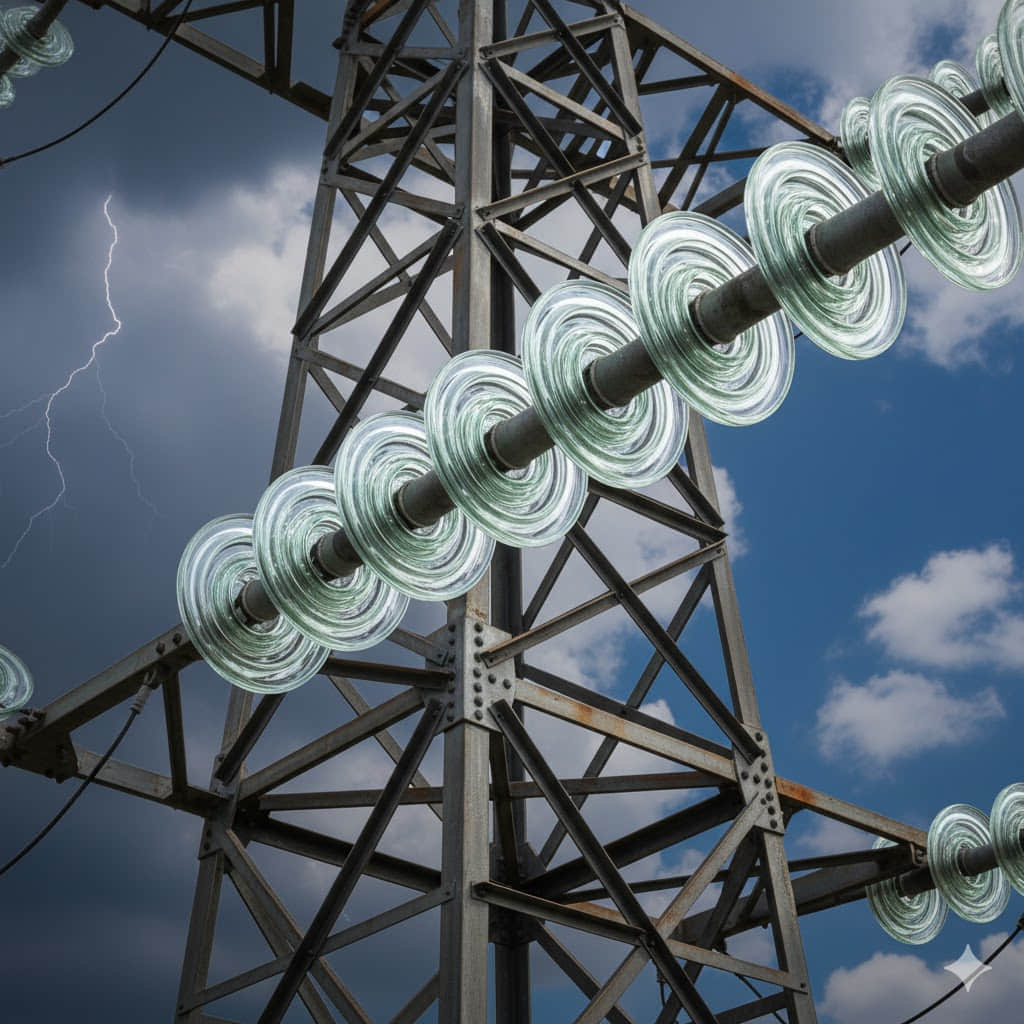
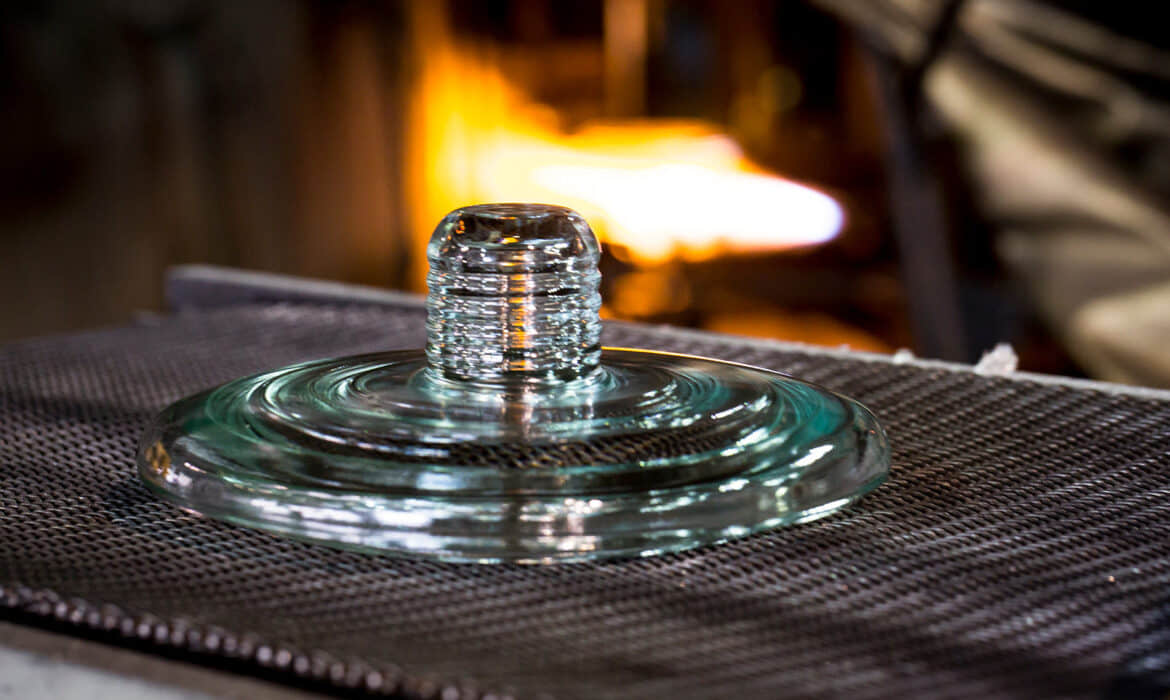
A glass insulator is essentially an electrical non-conductor meticulously crafted from glass material. Its standard and most common configuration presents itself as a disk-shaped component with an umbrella skirt, frequently referred to in the industry as a disc or suspension insulator.
The production process involves the high-temperature fusion of high-purity raw materials, such as lime and quartz powder, followed by a rapid, controlled cooling process. This carefully executed procedure creates a durable, toughened, or tempered glass assembly.
The primary function of a glass insulator is fundamentally dualistic and critical for grid stability. Physically, it provides robust mechanical support, hanging and securing transmission conductors while maintaining safe separation from the grounded tower structures. Electrically, it serves as an indispensable insulating barrier, reliably isolating high-voltage live conductors from the supporting mast or tower to prevent short circuits, current leakage, and catastrophic failures.
Consequently, the glass insulator stands as a core foundational element, guaranteeing the safe, efficient, and exceptionally reliable operation of the electrical power grid.
1.2 Historical Evolution and Contemporary Significance
Insulators have been pivotal components in power transmission since the dawn of the electrical age, with early systems predominantly relying on ceramics or porcelain. However, as voltage levels dramatically escalated, particularly through the mid-20th century, glass insulators began to find widespread adoption in high-voltage transmission due to their unique performance characteristics.
The maturation of tempered glass technology was the game-changer in this evolution. This key technological leap solidified their preeminent position, lending the insulators exceptional mechanical strength and robust thermal stability within modern Extra-High Voltage (EHV) and Ultra-High Voltage (UHV) transmission networks.
Today, glass insulators are globally recognized and favored for their outstanding electrical attributes, unparalleled ease of fault detection, and strong environmental profile. They remain one of the three foundational pillars—alongside porcelain and composite insulators—that underpin the critical infrastructure of modern electrical power delivery systems.
Key Takeaways
Definition & Function: Glass insulators are umbrella-skirted, disk-shaped units made from tempered glass; their crucial role is to both mechanically support conductors and ensure total electrical isolation from grounded structures.
Material Advantage: Utilizing tempered glass endows them with extreme mechanical resilience and thermal stability, with the added benefit that the glass material itself is 100% recyclable.
Engineering Maintenance Edge: The defining "self-shattering" property allows maintenance crews to detect a failed unit visually from the ground, dramatically simplifying inspection procedures and lowering fault localization costs.
Critical Selection Factors: Engineers must prioritize the Mechanical and Electrical Load (M&EL), Impulse Withstand Voltage, and Nominal Creepage Distance when selecting units to match specific mechanical stresses and environmental pollution levels.
Design Challenge: Insulation string design necessitates the use of components like grading rings to actively mitigate the challenge of non-uniform voltage distribution across the individual discs in the series.
Visual Supplement: Introduction to the Role of Glass Insulators
Before delving into the specific engineering details of these components, please take a moment to watch the following video. It illustrates the core functions and unique benefits of glass insulators within both electrical power and telecommunication networks.
II. Materials, Structure, and Manufacturing Process of Glass Insulators
2.1 Primary Material Composition
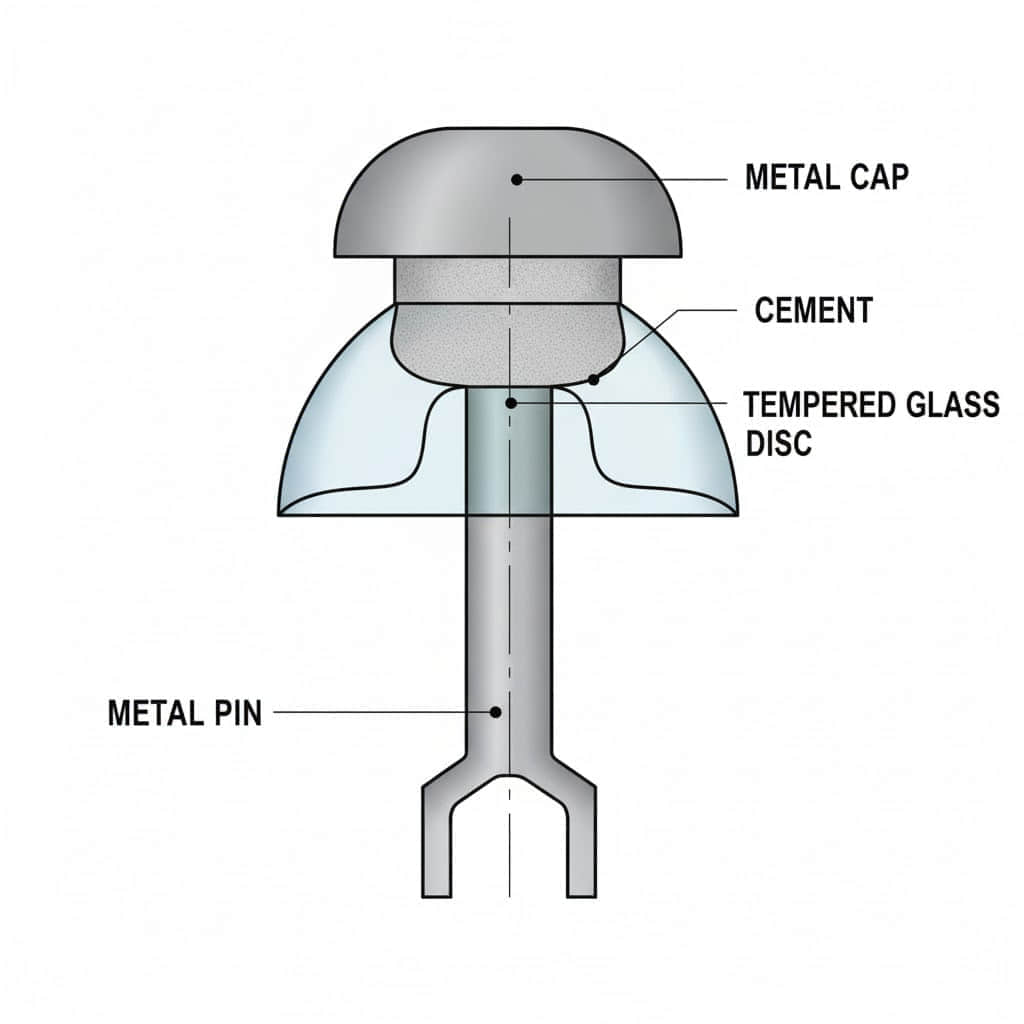
The main body of the glass insulator is composed of high-grade tempered glass. Unlike standard utility glass, the specific formula for insulator glass is meticulously controlled and blended, incorporating key raw materials such as quartz sand (for silica), limestone, feldspar, and soda ash.
This specialized composition ensures the finished product exhibits superior dielectric strength, excellent volume resistivity, and an optimally low coefficient of thermal expansion, all critical for electrical isolation under load.
A complete, ready-to-use disc glass insulator is a composite assembly requiring several auxiliary parts. The Metal Cap, typically manufactured from high-strength cast iron or forged steel, is designed to connect to the preceding insulator or to the line hardware.
The Metal Pin is usually a forged steel component that passes through the central hole of the glass disc, serving as the secure point of connection for the subsequent unit in the string. All these elements are permanently bonded using a high-quality fastening material, such as specialized Portland cement or adhesive compounds, ensuring long-term stable mechanical and electrical performance.
2.2 Core Manufacturing Process: Tempering and Performance Enhancement
The manufacturing sequence for glass insulators is an extremely precise and carefully managed industrial process. After the raw materials have been melted at extreme temperatures and the discs have been cast into their final shape, the most crucial and transformative step is the controlled heat treatment process known as tempering.
Immediately after the shaping stage, the glass disc undergoes a rapid cooling procedure, precisely controlled to create a permanent, powerful compressive stress layer across the entire surface of the glass, while the inner core is held in tension. Since virtually all glass failure originates from surface cracks propagating under tension, this artificially induced surface compression is engineered to effectively counteract any tensile stress caused by external loads or internal manufacturing defects.
This revolutionary process endows the tempered glass insulator with mechanical resilience, anti-fatigue strength, and resistance to thermal shock that is many times greater than that of ordinary glass. This technological mastery is what allows the insulator to safely manage the enormous mechanical loads imposed by conductors, heavy icing, and extreme wind forces.
2.3 Typical Structural Types
On high-voltage transmission lines, the Disc or Suspension Glass Insulator remains the overwhelmingly dominant design. This component features the characteristic umbrella-skirt profile, which is engineered specifically to maximize the creepage distance along the surface. This extended path is vital for effectively repelling rainwater and environmental contaminants, thereby maintaining high insulation integrity.
By utilizing the metal cap and pin, numerous discs can be connected in series to form an insulation string of the required length and mechanical capacity. This configuration accommodates voltage ratings from 35 kV up through 1000 kV and beyond.
While other structural forms like pin-type insulators or post insulators exist for applications within substations or at lower voltage levels, the suspension disc insulator holds an indisputable majority in long-distance, high-voltage power transmission applications globally.
III. Core Characteristics and Arc Endurance Analysis
3.1 Superior Electrical Performance
The inherent nature of glass as a superb insulating medium grants glass insulators remarkably high standards of electrical performance. They possess a high dielectric strength, enabling them to withstand intensely high voltages without suffering an internal insulating breakdown.
Furthermore, their smooth surface texture and the material’s excellent volume resistivity help maintain low leakage current. This action effectively inhibits the flow of current (or creepage) along the surface, which is absolutely vital for maintaining grid efficiency and safety.
The glass surface also benefits from a degree of self-cleaning, as it is non-porous and highly smooth, making contaminant adhesion difficult. Heavy rainfall can often sufficiently wash away deposits, helping to maintain surface integrity.
3.2 Exceptional Mechanical Characteristics
The tempering process elevates the mechanical robustness of glass insulators to an exceptional level. They are designed for high mechanical load capacity, capable of enduring tensile and torsional stresses measured in hundreds of kilonewtons (kN). This allows them to stably support large-diameter conductors over long spans and handle the severe added loads imposed by extreme weather events, such as heavy icing or hurricane-force winds.
Their most critical safety feature is their unique residual strength. If the glass skirt section is completely shattered or self-explodes due to external impact or electrical flashover, the connecting metal cap and pin components are meticulously engineered to remain securely locked together.
The compromised insulator string will still retain 80% or more of its original residual mechanical carrying capacity. This failsafe mechanism ensures that the line does not immediately break or drop, affording maintenance crews significant time for planned, non-emergency replacement.
3.3 Electrical Engineer’s Perspective: Arc Characteristics and Anti-Flashover Mechanisms
From an engineering standpoint, the endurance rating of an insulator is a defining criterion for its deployment suitability. When an instantaneous overvoltage event—such as a lightning strike or a switching operation—causes an electrical flashover across the insulator surface, an arc momentarily burns on that surface.
Glass material exhibits good resistance to this intense heat and energy, but prolonged or repetitive arcing can cause surface deterioration. To combat this, designs frequently incorporate grading rings that strategically channel the arc away from the vulnerable glass surface and onto the protected metal fittings.
Crucial selection parameters include the Lightning Impulse Withstand Voltage (LIWV) and the Switching Impulse Withstand Voltage (SIWV). These ratings quantify the insulator’s resistance to extreme, transient high-voltage surges.
Engineers must rigorously ensure that the insulator’s LIWV and SIWV significantly exceed the maximum overvoltage that the power system is statistically likely to encounter. This engineering prudence is fundamental to safeguarding the transmission line’s lightning protection performance and overall operational safety.
Note: The fundamental design goal for high-voltage insulators is not necessarily to prevent every single flashover. The primary objective is to ensure that when a flashover inevitably occurs, the arc follows a designated, safe path—either through the air gap or via protective hardware. This prevents permanent, irreparable damage to the insulator body or catastrophic internal puncture.
IV. Application Fields and Selection Standards
4.1 Primary Application Scenarios
Due to their superior performance profile and high reliability, glass insulators are extensively utilized across virtually all segments of the electrical power system. They are the component of choice for Extra-High Voltage (EHV) and Ultra-High Voltage (UHV) transmission lines.
Their combination of massive mechanical strength and high electrical performance makes them uniquely suited for long-distance, high-capacity transmission projects operating at the highest voltage levels. They are also widely deployed in High-Voltage Distribution Lines, serving in transmission networks ranging from 35 kV up to 220 kV, where they provide essential, stable support and reliable electrical isolation.
Within Substations, glass units are used to support busbars and isolate critical equipment. They serve as vital insulating support structures throughout the facility.
4.2 Key Engineering Factors Influencing Selection
The process of selecting the correct insulator is a complex, multi-variable engineering calculation that demands comprehensive consideration of several critical factors. The most basic criterion is the line voltage level and the required insulation margin. This directly dictates the necessary length of the insulator string and the minimum number of discs required to achieve adequate electrical separation.
Secondly, the mechanical load and environmental stresses must be calculated with precision. This includes factoring in conductor tension, maximum wind loads, and anticipated ice or sleet accumulation, with the resultant extreme loads defining the required Mechanical and Electrical Load (M&EL) rating for the insulator.
Finally, environmental pollution levels are a critical design input; insulators are highly susceptible to performance degradation from atmospheric contaminants like industrial dust or marine salt fog. Based on the assessed severity of contamination at the line location, engineers must specify an insulator profile with a sufficient Creepage Distance to effectively prevent pollution flashover.
V. Core Engineering Design: Insulator String Configuration and Performance Metrics
5.1 Insulator String Design Principles and Calculation
The engineering design of the insulator string is a central task in power line construction, focused on achieving optimal insulation performance and mechanical reliability while adhering to cost efficiencies. String Length Calculation is not merely an additive process based on nominal voltage.
Engineers must apply local standards for Specific Creepage Distance (mm/kV) and the determined local pollution level (Eₙ) to calculate the minimum total creepage distance required. This ensures anti-pollution performance and dictates the number of discs to be connected in series.
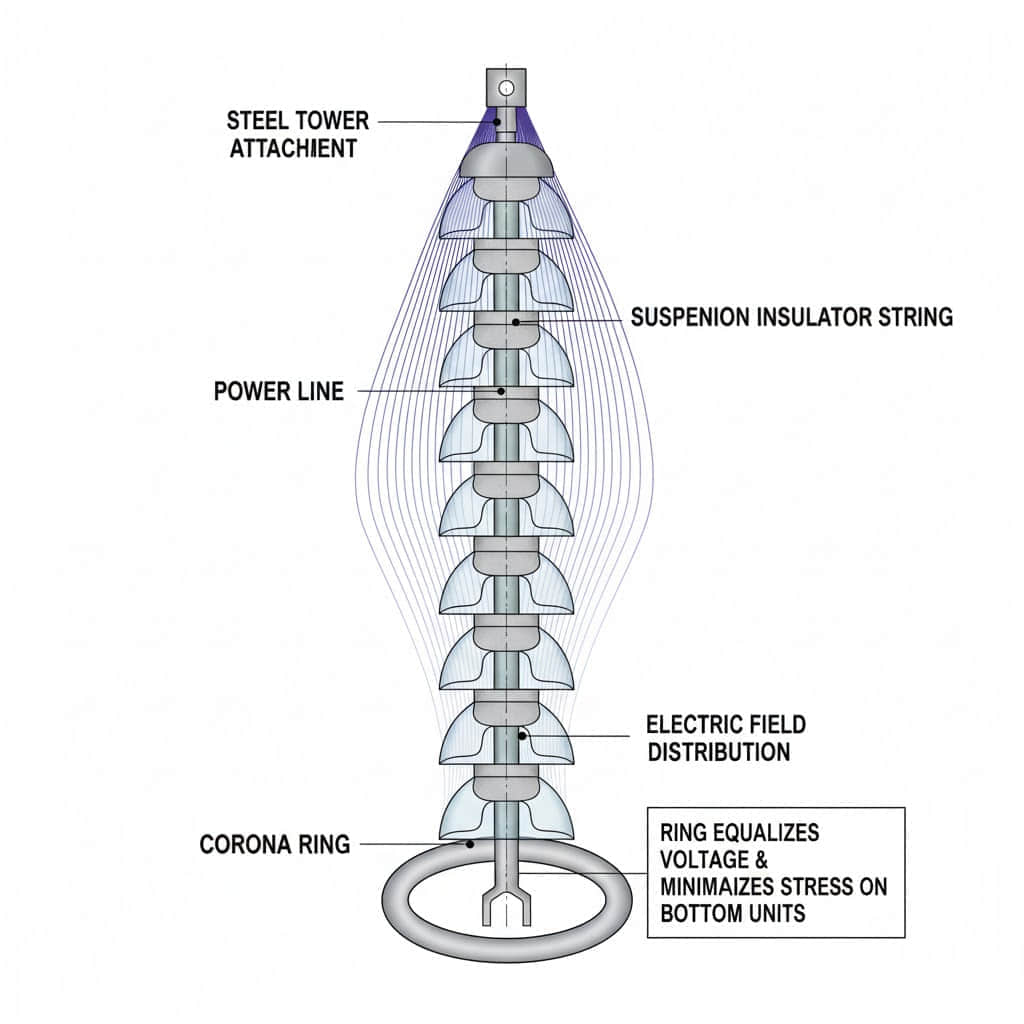
The phenomenon of Non-Uniform Voltage Distribution presents a common and persistent challenge in series-connected insulators. Due to the inherent presence of parasitic capacitance between individual insulator discs, the conductor, and the tower structure, the insulator units nearest to the high-voltage conductor (the line end) are subjected to a voltage that is significantly higher than the average. This concentration of electrical stress can prematurely lead to partial discharge or electrical breakdown in the end-section insulators.
The crucial solution involves the application of a Grading Ring (or Corona Ring). To actively manage the non-uniform stress problem, engineers install this metallic ring at the high-voltage end of the insulator string. The grading ring modifies the electric field geometry at the high-voltage terminal, effectively balancing the voltage distribution across the string, greatly reducing the electric field concentration on the end discs, and simultaneously suppressing corona losses.
Note: The function of the grading ring extends beyond simply balancing voltage; it serves as a designated path to deflect any developing electrical arc away from the fragile insulator skirts, protecting the glass body from potentially catastrophic damage.
5.2 Interpreting Core Engineering Parameters
When reviewing technical specifications, several parameters are absolutely critical for the electrical engineer making the selection.
Mechanical and Electrical Load (M&EL): This parameter is the definitive measure of an insulator's comprehensive performance. It specifies the minimum electrical puncture voltage the unit can withstand while undergoing mechanical destruction. A high M&EL value directly translates to a greater safety margin and enhanced reliability in the field.
Nominal Creepage Distance: This is the shortest distance measured along the surface of the insulator skirt. It is the defining indicator of the unit's ability to resist pollution flashover. In environments classified as heavily polluted, designers must select an anti-pollution profile that provides a significantly extended creepage distance.
Impulse Withstand Voltage: These parameters, primarily Lightning Impulse Withstand Voltage (LIWV) and Switching Impulse Withstand Voltage (SIWV), quantify the unit's resistance to transient high-voltage surges. They are critical for system protection against natural events like lightning strikes and artificial events like substation switching operations.
VI. Comparative Analysis of Glass, Porcelain, and Composite Insulators (with Table)
6.1 The Engineering Value of Comparison
The choice of material is one of the most vital decisions in power line design or system upgrades. Glass, porcelain (ceramic), and composite (silicone rubber) insulators each present unique advantages, specific applications, and inherent limitations. A comprehensive comparison enables engineers to strike the optimal balance between performance, cost, and lifespan for a given operational environment.
6.2 Comparison Table of the Three Mainstream Insulator Types
| Feature | Glass Insulator | Porcelain Insulator | Composite Insulator |
| Primary Material | Tempered glass, metal fittings | Ceramic (quartz, feldspar, clay), metal | Silicone rubber, fiberglass core rod, metal |
| Fault Detection | High Advantage: Self-shatters upon puncture, visible from the ground for quick detection. | Requires specialized instruments; visual detection is difficult. | Requires specialized instruments; internal core damage is not visually evident. |
| Mechanical Strength | High strength; excellent residual strength after shattering. | High strength; superb compression resistance. | Lightweight; reliable tensile strength. |
| Self-Cleaning/Hydrophobicity | Smooth surface, easy to clean. | Smooth surface, easy to clean. | High Advantage: Silicone rubber inherently provides superb hydrophobicity. |
| Aging/Lifespan | Minimal aging; long life ($>50$ years); 100% recyclable. | Long life ($>50$ years). | Susceptible to UV and moisture degradation; relatively shorter life ($<30$ years). |
| Weight | Moderate weight. | Heaviest. | High Advantage: Lightest weight. |
VII. Major Advantages and Limitations of Glass Insulators
7.1 Core Advantages
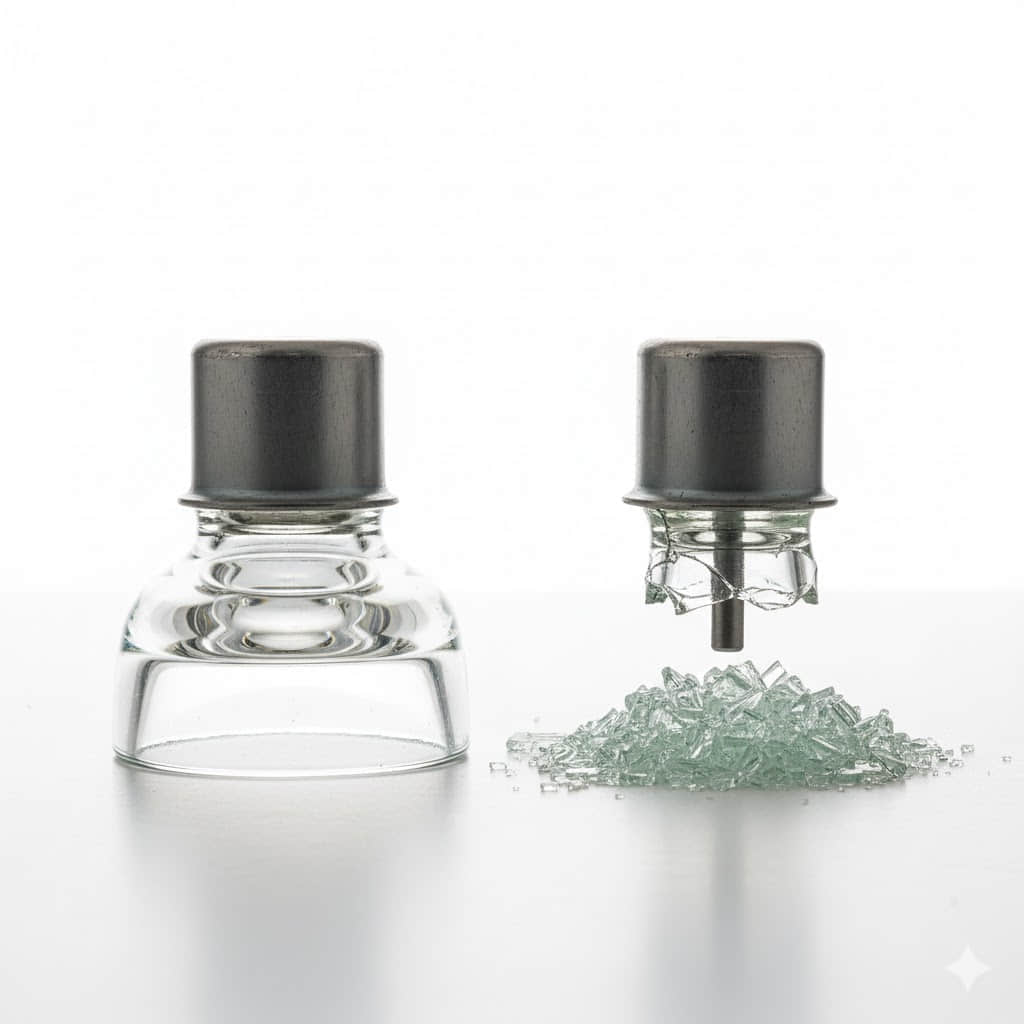
Ease of Maintenance and Safety: The singular most distinguishing feature is the "self-shattering" property. When a disc suffers an internal electrical puncture, the stored internal stress in the tempered glass is instantly released, causing the glass skirt to fully disintegrate, leaving only the metal hardware. This allows maintenance crews to visually detect a failed disc from ground level without climbing or using expensive instruments, drastically enhancing fault location efficiency and cutting maintenance costs.
Reliable Residual Strength: Even with a catastrophic self-shatter event, the mechanical integrity of the insulator string remains at a high level. This crucial residual strength prevents an immediate line failure, providing a critical time buffer for the maintenance team to schedule a planned replacement, rather than forcing an emergency outage.
Environmental Sustainability: Glass is a highly inert material that is 100% recyclable. This gives glass insulators a distinct environmental advantage over many composite materials, aligning better with modern sustainability goals.
7.2 Limitations and Quantification of Risk
Analysis of the "Spontaneous Shattering Rate": Although self-shattering is a major benefit, glass insulators exhibit an extremely low but measurable "spontaneous shattering rate" (SSR). This refers to a break occurring without external overvoltage or overload, typically due to minor internal defects or long-term stress release from manufacturing. As engineers, the key mitigation strategy is to mandate strict Factory Quality Control (QC) and demand comprehensive batch testing reports from the manufacturer to minimize this statistical risk.
Transportation and Installation Costs: Compared to their composite counterparts, the greater weight of both glass and porcelain insulators significantly increases the cost and logistical complexity of transportation and on-site installation, particularly in remote or challenging terrain.
VIII. Maintenance and Pollution Mitigation Measures
8.1 The Impact of Contamination on Performance
High-voltage transmission lines traverse diverse environments, making surface contamination the primary factor degrading insulator performance over time. Contaminants such as industrial dust, road grime, or marine salt fog, when combined with moisture, create a conductive film across the insulator surface.
This conductive path sharply reduces the surface resistance, leading to increased leakage current flow. As this leakage current generates heat (expressed asI2R), the moisture evaporates, creating dry bands where the voltage concentrates.
This process ultimately precipitates a Pollution Flashover (or Pollution Flashover), leading to a line trip and a service outage.
8.2 Mitigation Strategies
Selection of Anti-Pollution Profile: For heavily polluted operating environments, the only effective long-term solution is to specify anti-pollution type insulators. These units feature deeper and larger-diameter skirts, which maximize the creepage distance and force the current to follow a far longer, more difficult path.
Application of Hydrophobic Coatings: In areas of extreme contamination, the application of Room Temperature Vulcanized Silicone Rubber (RTV Silicone) coatings is a highly effective mitigation measure. The RTV coating imbues the glass surface with superior hydrophobicity, causing water to bead up rather than form a continuous, conductive film. This action effectively prevents the formation of a continuous conductive path, significantly enhancing resistance to pollution flashover.
Scheduled Cleaning: In situations where dependence on anti-pollution design or coatings is insufficient, scheduled maintenance is mandatory. Regular live-line washing (using demineralized water) or manual cleaning remains a necessary and effective means of maintaining insulation integrity.
IX. Professional Perspective on Operations, Maintenance, and Lifecycle Management
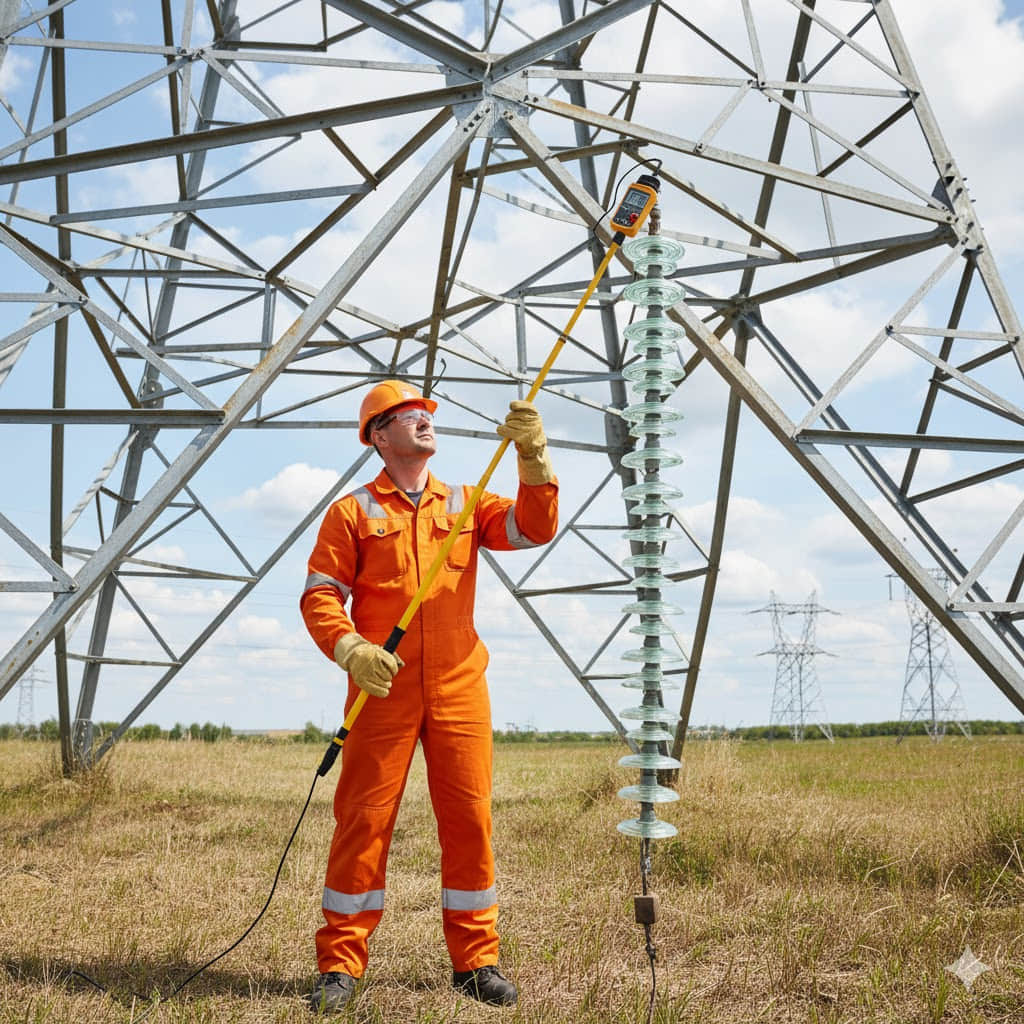
9.1 Defect Identification and "Zero-Value" Insulator Detection
In the domain of operations and maintenance, a "Zero-Value" insulator refers to a unit that has suffered an internal electrical puncture and is completely non-insulating, yet retains a visually intact exterior.
Residual Strength Assessment Post-Shattering: The self-shattering characteristic, while visually flagging a defect, enables engineers to adopt a strategic "continue operation, schedule replacement" approach. Because of the high residual mechanical strength, the need for an immediate, emergency outage is averted. Replacement work can be efficiently integrated into the next scheduled maintenance period, greatly improving grid operating flexibility.
The Challenge of Live-Line "Zero-Value" Detection: The detection of an unshattered, but internally punctured, "zero-value" insulator poses a significant challenge. Maintenance engineers must deploy specialized live-line testing tools (such as specialized insulation testers or infrared/ultraviolet cameras) to measure the voltage distribution across individual discs in the string. If the voltage drop across a particular disc approaches zero, it conclusively indicates that the unit has failed and must be promptly added to the replacement list.
9.2 Insulator Monitoring in the Smart Grid Era
As the evolution toward smart grid infrastructure accelerates, insulator management is transitioning from reactive, periodic inspections to proactive, predictive maintenance.
Online Monitoring Systems: The trend involves integrating online monitoring sensors directly onto the glass insulator strings. These sensors continuously monitor critical operational parameters, including leakage current magnitude, partial discharge (PD) signals, and ambient environmental conditions (temperature, humidity).
Predictive Maintenance (PdM): By analyzing the influx of real-time monitoring data, engineers can develop sophisticated health index models for the insulators. This allows for accurate forecasting of performance degradation trends. Such data-driven insights empower utility companies to shift from traditional “reactive repair” or “time-based inspection” to Predictive Maintenance, intervening before a failure occurs. This capability fundamentally boosts supply reliability and optimizes asset utilization.
X. Conclusion
10.1 Summary: A Reliable Cornerstone of the Power System
The glass insulator has unequivocally proven itself over decades to be one of the most reliable and critical foundational components within high-voltage transmission networks. This is due to its potent combination of superior electrical and mechanical performance, its unique self-shattering warning system, and its strong environmental profile.
It successfully meets modern grid demands for high strength, extended lifespan, and reduced maintenance costs. The inherent transparency of the unit, allowing for verifiable condition assessment, provides revolutionary benefits for field maintenance teams.
10.2 Outlook: Materials, Design, and Intelligent Integration
Looking ahead, the future development of glass insulators is concentrating on three key vectors. The first is the continuous optimization of material formulations and manufacturing processes to further elevate the Mechanical and Electrical Load (M&EL) ratings.
The second involves the design of heavier-duty, UHV products to accommodate the larger spans and higher voltage levels of next-generation transmission needs.
Finally, the third vector is the deep integration with intelligent monitoring technology, transforming the glass insulator into a sensing and communicating component of the modern smart grid. This capability is essential for achieving the highest possible level of reliability management.
FAQ & Professional Consultation Call to Action (CTA)
Frequently Asked Questions (FAQ)
Q1: If a glass insulator disc "self-shatters," will the transmission line immediately break?
A1: Absolutely not. This is a primary safety advantage that differentiates glass units. The self-shatter event only destroys the glass skirt; the core metal pin and cap hardware are meticulously engineered to remain securely locked together.
Industry standards dictate that the insulator string must retain 80% or more of its residual mechanical strength. This safety margin means engineers can schedule the replacement during a planned outage, avoiding an emergency call-out.
Q2: How can field crews confirm if a visually intact disc in a string has failed (a "Zero-Value" unit)?
A2: The most straightforward method is the visual check for a self-shattered disc. However, to find a "zero-value" unit that looks intact but is electrically punctured, specialized equipment is necessary.
Engineers use a live-line insulator tester to measure the voltage drop across each disc in the energized string. A voltage reading near zero across any disc conclusively confirms its electrical failure, flagging it for replacement.
Q3: Why are glass insulators still widely used in heavy pollution zones instead of switching entirely to more hydrophobic composite units?
A3: While composite units offer intrinsic hydrophobicity, glass insulators can achieve superior contamination resistance through the application of an RTV Silicone coating. Furthermore, glass provides non-negotiable advantages in mechanical strength, resistance to long-term aging, and low-cost visual fault detection.
This combination of high reliability and low maintenance cost makes it the preferred choice for critical, high-grade transmission lines, even in polluted environments.
Q4: What is the primary role of the grading ring in a high-voltage insulator string?
A4: The grading ring has a two-fold function. Firstly, it equalizes the electric field across the string, solving the non-uniform voltage distribution problem that stresses the high-voltage end discs.
Secondly, it provides arc protection, diverting the intense heat and energy of a flashover away from the glass surface and onto the metal hardware, thereby protecting the insulator from permanent damage.
Q5: What is the expected lifespan of a glass insulator, and what is its environmental benefit?
A5: High-quality glass insulators are engineered for a design life typically exceeding 50 years, often lasting longer than the transmission line itself, as the glass material is resistant to degradation.
Its key environmental benefit is that the material is 100% recyclable and can be melted down and repurposed after decommissioning, leading to a much lower environmental footprint compared to the disposal of composite materials.