I. Introduction: Core Logic and the Professional Engineering Viewpoint
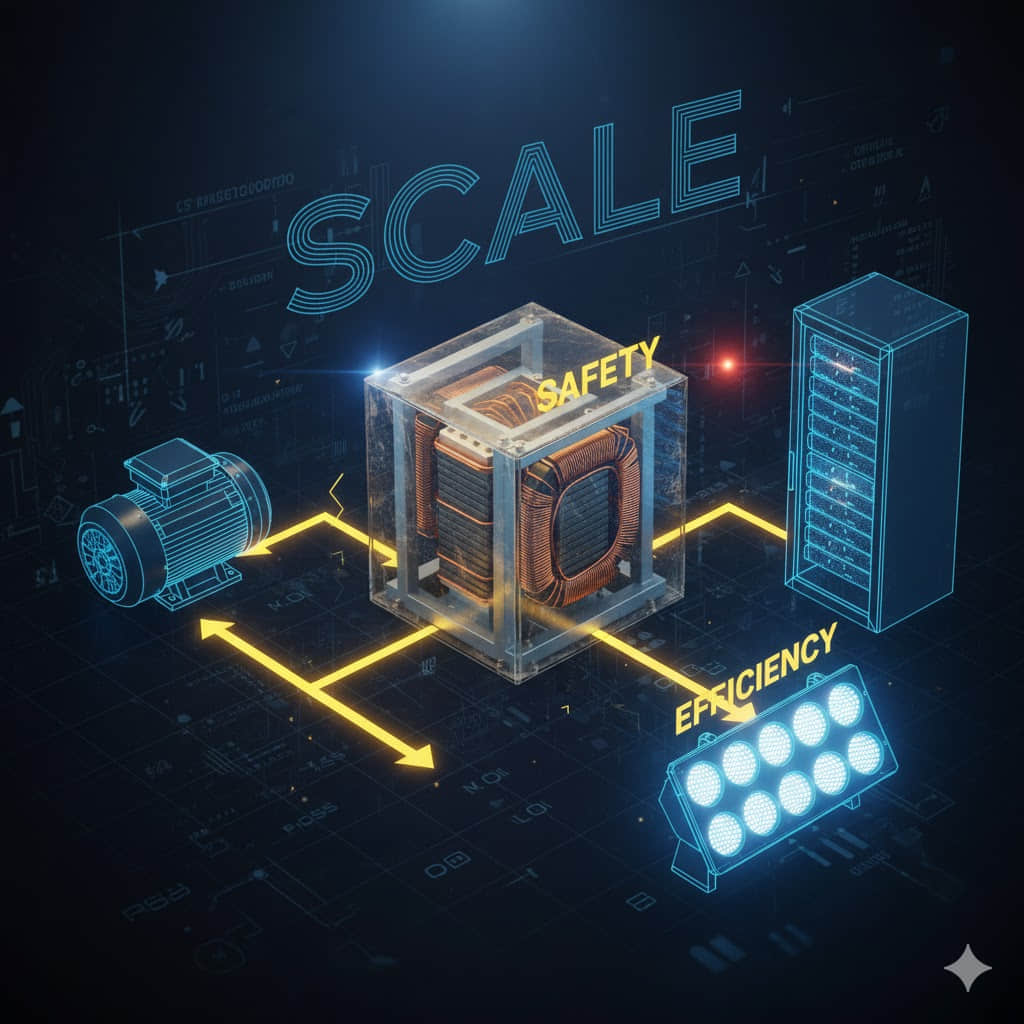
Selecting the appropriately sized transformer is a non-negotiable process that stands as one of the most critical decisions in any electrical power system design. This choice is far more complex than a simple arithmetic problem; it dictates the safety, energy efficiency, and operational lifespan of the entire downstream electrical infrastructure.
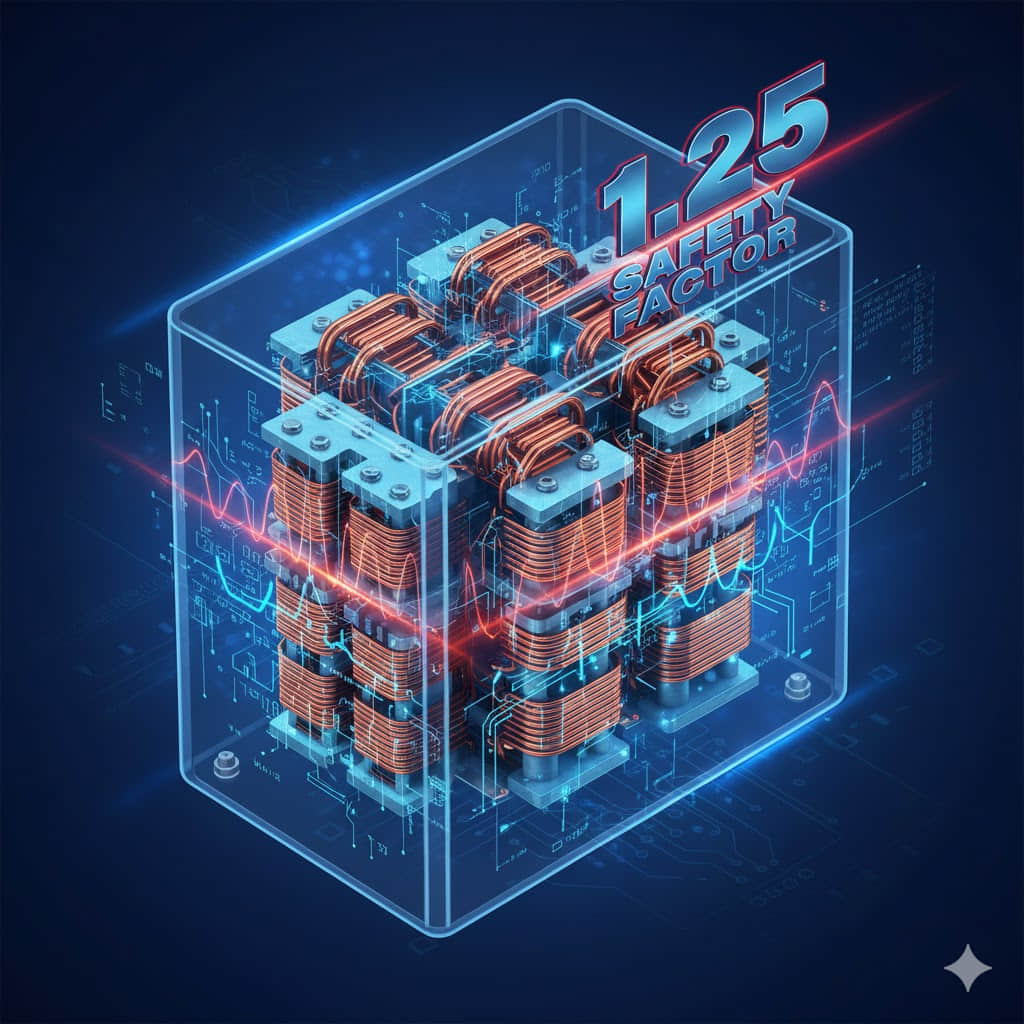
The professional sizing sequence begins by establishing a precise baseline calculation for the connected load. Following this critical step, engineers must immediately apply mandatory safety factors, including the continuous load rule and the necessary starting margins for inductive loads, as mandated by the National Electrical Code (NEC).
Crucially, in today's electronic-heavy environments, a modern engineering assessment demands a thorough evaluation of harmonic distortion. This necessitates the proper selection of a factor-rated electrical transformer to handle non-linear loads effectively.
The final selection must always exceed the calculated requirements. It ultimately ensures the transformer operates reliably and economically within its highest efficiency zone, typically falling between and load utilization.
Many non-specialists mistakenly size a transformer based only on what is technically "usable," completely overlooking the far more important criteria of long-term efficiency, service life, and regulatory compliance. A certified electrical engineer understands that an improperly sized transformer introduces cascading, systemic risks that are often catastrophic to the facility's operation.
A common oversight is undersizing, which inevitably leads to severe overheating of the transformer windings and a dramatically shortened insulation life. More dangerously, undersizing can cause momentary, yet disruptive, voltage sags during motor start-up, potentially tripping sensitive equipment like Programmable Logic Controllers (PLCsPLCs) or industrial computers and crippling production continuity.
Conversely, a significantly oversized unit, while technically safe, represents a major financial burden due to excessive capital expenditure and sunk costs. An oversized transformer operating consistently below its efficient load range, say under capacity, will incur disproportionately high no-load losses (core losses) relative to its output.
This constant energy waste translates directly into unnecessarily inflated utility bills throughout the equipment's entire service life.
Perhaps the greatest hidden hazard in modern sizing is the failure to anticipate and mitigate harmonic risks. Installing a standard transformer in an environment dominated by modern electronics and variable frequency drives creates a ticking time bomb. This inevitably leads to premature failure from localized hotspots long before the unit even reaches its nameplate rating.
This guide is specifically designed to move beyond the simplistic, outdated "three-step calculation method" often cited in generic guides. It provides a robust, comprehensive framework that aligns with the complex demands of modern industrial and commercial power distribution.
By mastering this methodology, you will gain an in-depth command of the following essential professional principles:
The meticulous calculation of base values and the critical classification of diverse load types.
The decisive and often overlooked role of non-linear loads and the K-Factor in contemporary power systems.
The advanced strategies required to meticulously balance system efficiency and long-term economic viability while rigorously adhering to all required safety margins.
The profound impact of critical parameters like transformer impedance and taps on overall system protection, short-circuit current control, and power quality.
Key Takeaways: Engineering Imperatives
Primary Goal: The selected nominal transformer capacity, kVAselected, must exceed the calculated load, kVAcalculated, multiplied by the necessary starting margin (typically 1.25). Simultaneously, its long-term average load factor must be strategically targeted to fall within the high-efficiency operational range of 70%.
Fundamental kVA Formulas:
Single-Phase: kVA=(V×A)÷1000.
Three-Phase: kVA=(V×A×1.732)÷1000.
Modern System Upgrade: Any load environment featuring non-linear components absolutely requires the introduction of the K-Factor (K-Factor) concept. This mandates selecting a specialized transformer with an appropriate rating (e.g., K-13 is common for data centers and server farms).
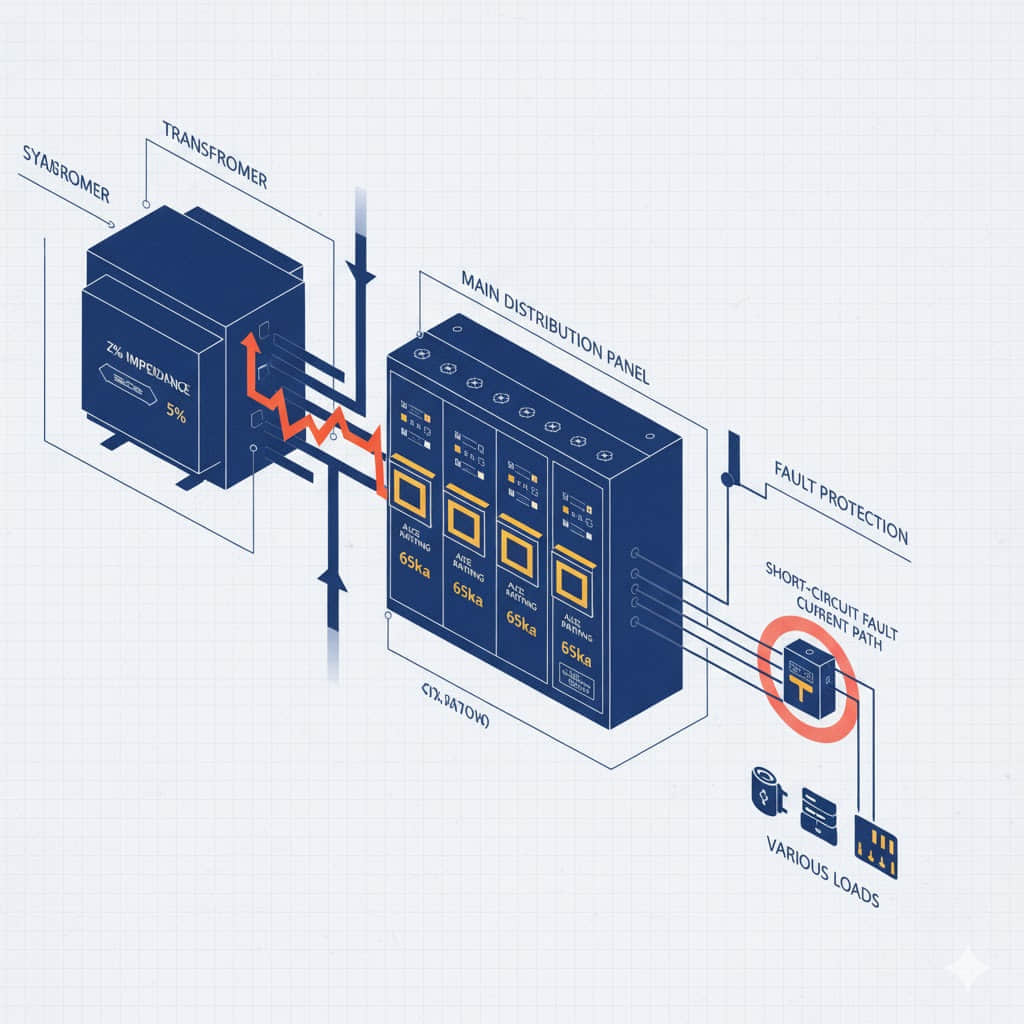
System Coordination: The transformer’s Impedance (Z%) is a pivotal parameter that directly governs the maximum available short-circuit current in the system. This value must be rigorously coordinated with the interrupting rating (AIC) of all downstream protective devices.
Economic Analysis: Long-term operational cost is heavily influenced by the transformer’s no-load loss (Core Loss), which represents the energy consumed even when the unit is idle. Engineers must prioritize energy efficiency ratings as a core component of the total cost of ownership.
Deep Dive Video Resource: The Professional Approach to Transformer Sizing
To provide a more intuitive and visual understanding of the complex factors involved in professional transformer sizing—specifically its deep relationship with load characteristics, system coordination, and efficiency—we highly recommend reviewing this industry-leading technical video:
How to buy the right transformer
Section II. Core Fundamentals: Defining and Calculating Apparent Power (kVA)
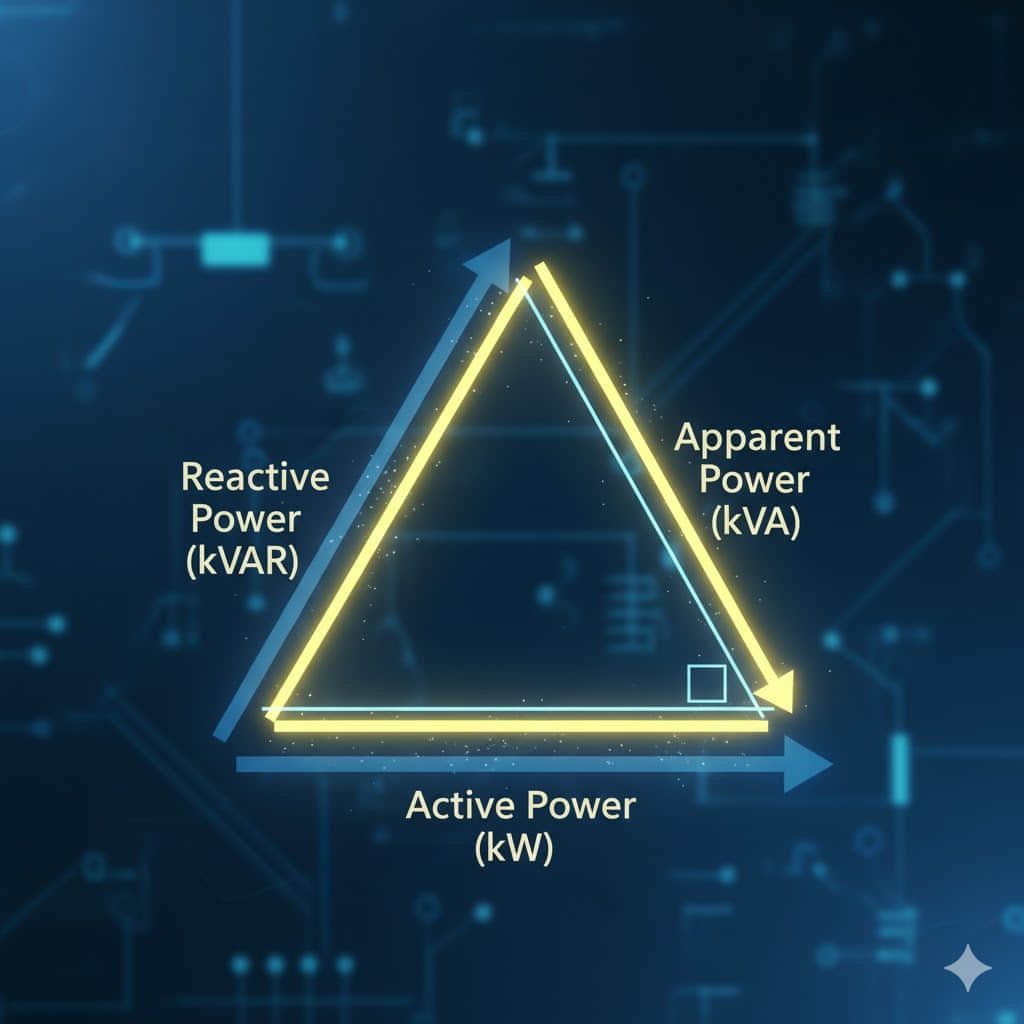
The foundational expertise in transformer sizing begins with a comprehensive grasp of kVA, the unit of apparent power. Understanding the kVA’s engineering definition requires a brief review of the electrical concept known as the power triangle.
The Engineering Definition of kVA: The Power Triangle
In any alternating current (ACAC) circuit, power can be mathematically decomposed into three distinct components that form a right-angled vector relationship.
These components include Real Power (kW), which is the actual power component consumed and used to perform useful work, such as driving mechanical loads. It also includes Reactive Power (kVAR), which is necessary for establishing and maintaining the electromagnetic fields required by inductive devices like motor windings.
The third component is Apparent Power (kVA), which is the vector sum of the real power (kW) and the reactive power (kVAR), representing the total power the source must supply.
Why is a Transformer Rated in kVA and not kW?
The reason is fundamentally physics-based, and electrical engineers must understand: the capacity limit of a transformer is not defined by the useful work it can deliver inkW. Instead, the limit is strictly determined by the **total current (A) ** that its internal windings and insulation system can safely tolerate.
Both the current component responsible for real power (kW) and the current component responsible for reactive power (kVAR) flow through the primary and secondary windings. As current flows, it generates heat—known as copper loss or loss—and this heat is the ultimate factor limiting the transformer's life and capacity. Therefore, the transformer's rating must be based on the total current carried, which is the definition of apparent powerkVA.
The inaugural step in the selection process is rigorous calculation, a phase where accuracy depends entirely on comprehensive data gathering and precise load categorization.
1. Comprehensive Load Data Acquisition and Classification
Load identification must extend beyond just the nameplate ratings; it involves classifying the operational behavior of each device.
The Continuous Load category, as defined by theNEC, includes any load where the maximum current is expected to run for three hours or more. Examples include primary units, ventilation systems, or automated industrial assembly lines.
NEC Compliance mandates that continuous load calculations must incorporate a safety factor. These are loads that operate for less than three hours, typically including items like elevators, temporary portable tools, or emergency standby pumps.
The Non-Continuous Load are loads that operate for less than three hours, typically including items like elevators, temporary portable tools, or emergency standby pumps.
Motor Loads require specialized attention to two distinct currents. These are the lower, long-term rated running current and the momentary, high-demand locked rotor current required for start-up.
2. The Strict Application of kVA Calculation Formulas
Once the total amperage (A) and rated voltage (V) for all equipment have been compiled, the following fundamental formulas are applied. They establish the total base requirement.
Single-Phase System:
kVA=(V×A)÷1,000For example, a 220V,400A single-phase load yieldskVA=(220×400)÷1,000=88 kVA.
Three-Phase System:
kVA=(V×A×1.732)÷1,000Engineering Note: The multiplier is the industry-standard approximation for3. This constant is essential for accurately reflecting the phase-to-line voltage relationship and calculating the total three-phase apparent power.
| System Type | kVA Calculation Formula | Key Engineering Context |
| Single-Phase | kVA=(V×A)÷1,000 | Standard for general lighting, residential, and smaller single-phase utility equipment. |
| Three-Phase | kVA=(V×A×1.732)÷1,000 | The factor (3) is mandatory for all three-phase apparent power calculations. |
Note: In complex systems with varying voltage levels or diverse loads, the highest level of accuracy is achieved by calculating the individual for each load category first, and then accumulating these values to derive the total base requirement. Engineers should avoid the common mistake of applying a generalized formula to a single, monolithic system current figure, which introduces errors.
Section III. Advanced Sizing: The Decisive Role of Harmonics and the K-Factor
After precisely establishing the base requirement, the most challenging and frequently mismanaged step in modern sizing is accounting for harmonic pollution. This is a factor that separates a diligent, code-compliant electrical engineer from an outdated practitioner.
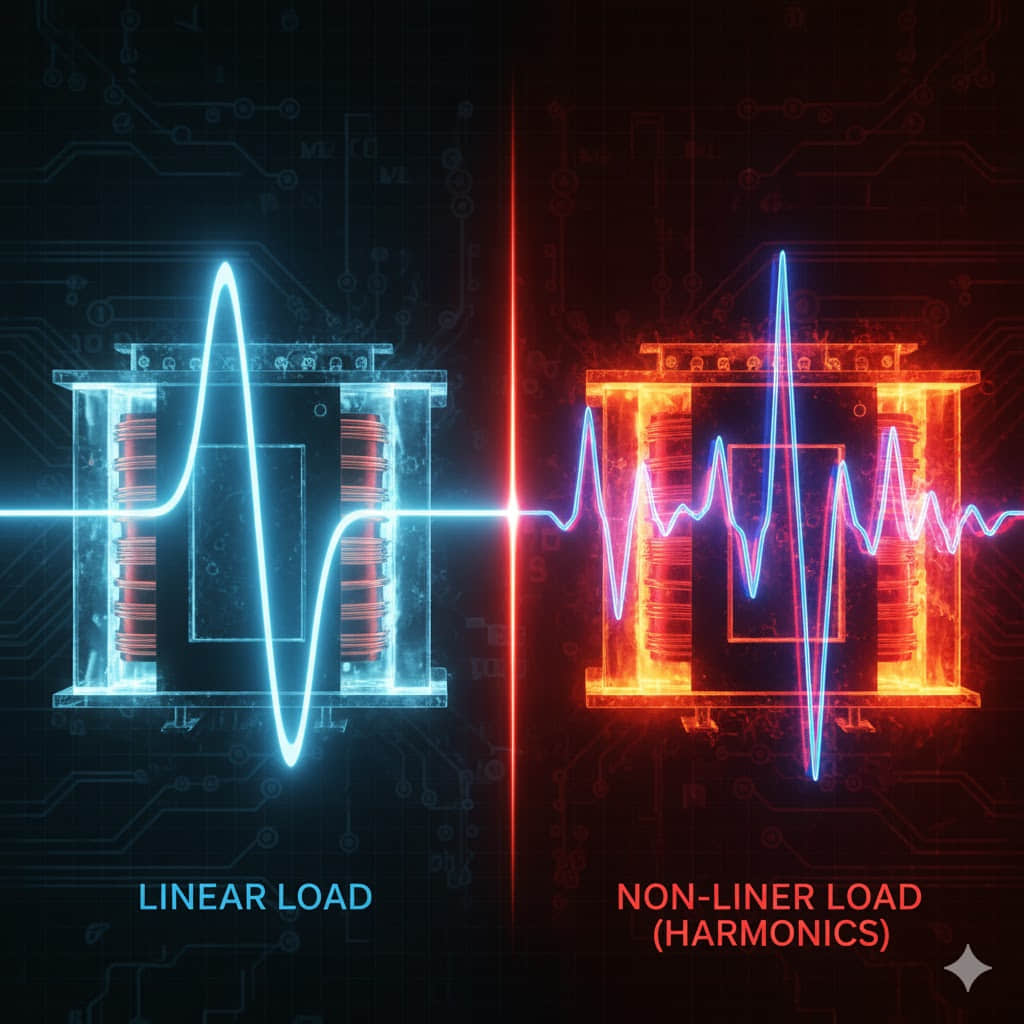
Historically, electrical loads were predominantly linear—resistive heating elements, conventional incandescent lighting, and standard induction motors—which draw current with a clean, synchronized sinusoidal waveform. This simpler era is gone, fundamentally replaced by a massive global proliferation of non-linear loads in modern industrial and commercial settings.
Examples of these problematic non-linear loads include computer equipment, servers, and data centers (SMPS or Switch-Mode Power Supplies). They also feature Variable Frequency Drives (VFDsVFDs) for motor control, LED lighting, and Uninterruptible Power Supplies (UPS).
These devices employ internal rectifier circuits to convert incoming power toDC. This results in a distorted, non-sinusoidal current waveform that is rich in high-order harmonic components (e.g.,3rd,5th, 7th harmonics).
When these parasitic harmonic currents circulate through a standard transformer's windings, they induce two severe and often fatal consequences.
Excessive Eddy Current Losses: Standard transformer designs are fundamentally optimized for the fundamental frequency. The high-frequency harmonic currents cause a rapid, exponential increase in eddy current losses within the copper windings.
This generates heat far in excess of the transformer's thermal rating.
Localized Thermal Hotspots: The additional heat generated by harmonic losses is not distributed uniformly throughout the transformer; instead, it is concentrated in specific areas of the windings. These extreme hotspots accelerate the degradation of the unit's insulation system, leading to premature thermal failure well before the transformer reaches its rated capacity or its intended service life.
The engineering response to this pervasive harmonic threat is the K-Factor designation.
Defining the K-Factor: The KFactor is a standardized metric that quantifies a transformer's verified capability to safely withstand the heat generated by harmonic currents. A higher K value signifies superior performance and thermal tolerance in heavily distorted environments. The standard linear-load transformer is designated as K=1.
The Selection Protocol: A rigorous engineering process requires using a specialized Power Quality Analyzer to measure the actual harmonic content of the load environment. This data is then used to mathematically calculate the required KFactor for the specific load.
The selected transformer must then be specified with a K-Factor rating that is equal to or slightly greater than the calculated load K-Factor.
Professional K-Factor Selection Matrix
| Typical Application Environment | Dominant Load Type | Recommended Minimum K-Factor | Engineering Implication |
| Traditional Manufacturing/Heating Elements | Purely Linear | K-1 | A standard transformer is adequate. |
| General Office Buildings/Light VFD Use | Mildly Non-Linear | K-4 | Suitable for environments where the linear load dominates, but computers and electronic lighting are present. |
| Hospitals/Broadcast Equipment/High-Frequency Lighting | Moderately Non-Linear | K-9 | Suitable for environments where the linear load dominates, but computers and electronic lighting are present. |
| Data Centers/Server Farms/Dense VFD Arrays | Severely Non-Linear | K-13 or K-20 | These critical environments absolutely mandate a high-K transformer; failure to use one requires extreme capacity de-rating (often to or less). |
Note: When designing a system from scratch, and precise harmonic measurements are not yet possible, the engineer must proactively specify a K-Factor transformer (K-13 or K-20) based on the intended use, particularly for data centers. This is a foundational risk mitigation strategy that guarantees reliability in harmonically aggressive environments.
Even if a standard transformer theoretically meets the base calculation, its use in a high-harmonic environment (e.g., a calculated load) forces a thermal de-rating of the unit. The de-rating process, determined by complex thermal analysis, is necessary to prevent the total heat generation from exceeding the insulation limit.
This results in the standard unit operating at a drastically reduced capacity, perhaps to of its nameplate rating, thereby wasting capital. The clear engineering conclusion is that selecting the correct KFactor transformer initially is far superior, both economically and reliably, to attempting to de-rate a standard unit later on.
Section IV. Third-Stage Analysis: Optimizing Safety Margins and System Efficiency
With the base established and the harmonic KFactor applied, the next critical step is incorporating the mandatory safety margins. It also involves strategically planning for maximum operational efficiency. This is where engineering judgment optimizes the entire system.
The Standard NEC Safety Margin: Based on and common engineering practice, the calculated baseline is typically multiplied by a factor, which represents a margin.
Preliminary Required kVARating=(Continuous Load kVA×1.25+Non-Continuous Load kVA)×(K-Factor Correction)Engineering Emphasis—Motor Starting: Induction motors and other high-inertia loads require a massive, instantaneous locked rotor amperage (LRA) during their brief start-up cycle, which can be to times their normal running current. The transformer must be capable of momentarily supplying this enormous current without causing an unacceptable voltage dip on the secondary side.
The margin ensures that the transformer’s instantaneous capacity and thermal reserve are sufficient to prevent severe voltage sags. This ultimately avoids critical protective devices from nuisance tripping.
In installations featuring large, frequently starting motors, the engineer must perform a more detailed transient voltage drop analysis to confirm the factor is adequate, or if a larger margin is required.
The NEC 80% Rule: The National Electrical Code strictly mandates that a transformer's continuous load cannot exceed of its nameplate capacity. This regulatory requirement exists to ensure a minimum thermal safety buffer is always maintained, safeguarding the windings from overheating and guaranteeing long-term system reliability.
The Balance of Efficiency and Economics: The long-term cost of ownership is intrinsically linked to the transformer's efficiency profile.
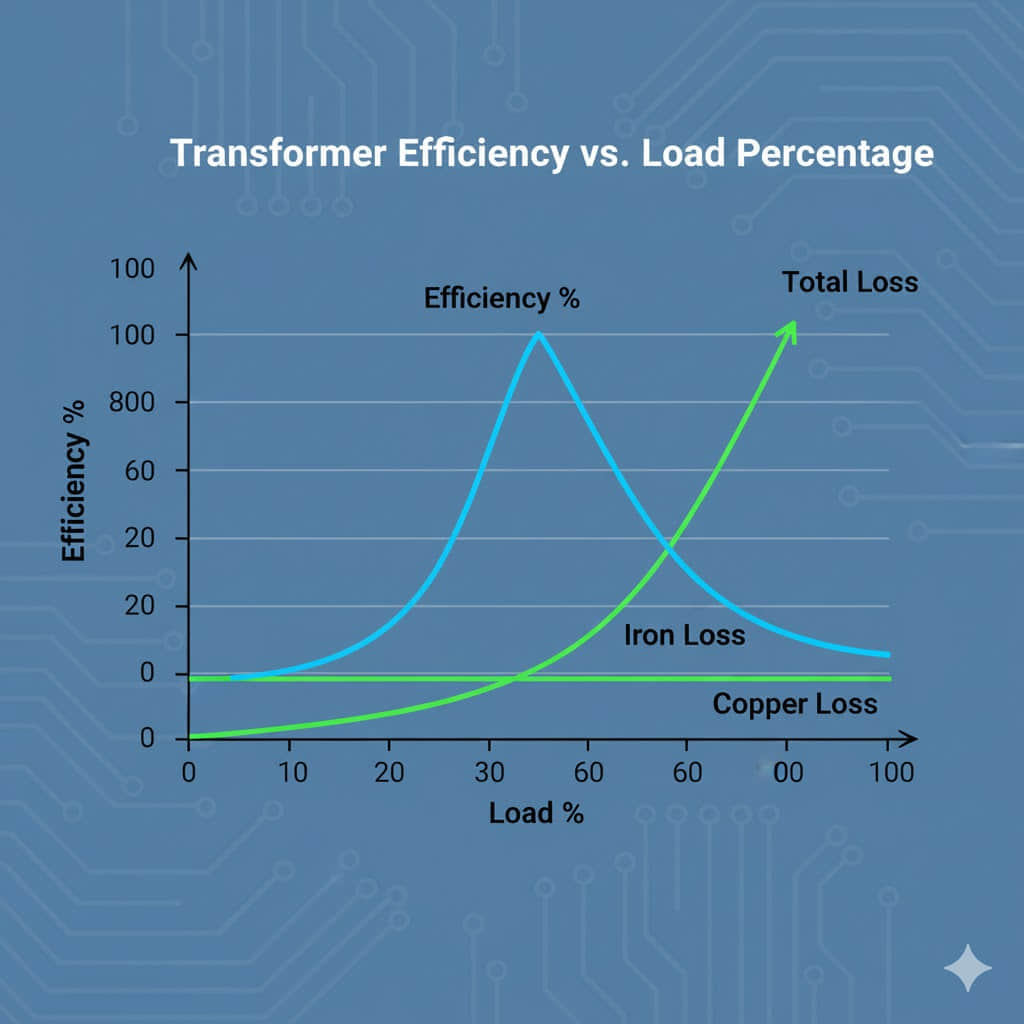
Transformer losses are categorized into two primary types: Core Loss (No-Load Loss) and Copper Loss (Load Loss).
Core Loss is a constant energy drain, determined by the magnetic flux, and exists whenever the transformer is energized, irrespective of the downstream load size. Copper Loss is generated by current flowing through the winding resistance and increases proportionally to the square of the load current.
The transformer's Peak Efficiency Point is the exact loading level where the Copper Loss equals the Core Loss. For the majority of professionally designed distribution transformers, this optimal point of operation typically occurs when the unit is loaded between and of its full kVA rating.
Tip: A professional electrical engineer should deliberately select a nominal transformer size that allows the anticipated average operating load to fall precisely within that high-efficiency to band. A transformer that consistently operates at a very low load factor, perhaps below30%, will see its high core loss dominate the efficiency calculation, resulting in continuous, unnecessary energy wastage.
Section V. Fourth-Stage Protocol: Final Selection, System Coordination, and Asset Management
The final stage of the sizing process moves from calculation to selection. It demands a holistic view of the transformer as a long-term capital asset and a critical component within a larger protective system.
1. Standardized Sizing and Future-Proofing
Selecting the Standard Rating: The final calculated value (which must already incorporate the KFactor correction and the starting margin) must be rounded up to the next available standard industry size. Standard nominal ratings are universally defined (e.g., 15 kVA,25 kVA,45 kVA,75 kVA,112.5 kVA,150 kVA,225 kVA etc.).
Asset Management and Capacity Reserve: A transformer is a capital investment with a service life ranging from years; therefore, engineers must budget for future load growth. It is highly recommended to project the anticipated load growth rate over the next years (e.g., 3% annually compounded) and incorporate an additional buffer for expansion capacity. This proactive approach is overwhelmingly more cost-effective than the major expense and disruption of replacing an undersized unit prematurely.
2. Critical Technical Vetting (The Electrical Engineer’s Checklist)
The final technical review is the demarcation point between a mere calculator and a true system engineer. This step ensures complete system compatibility and safety.
| Technical Element | Professional Vetting Detail | Impact on System Performance and Safety |
| Voltage and Tap Changer | Confirm the primary and secondary voltage ratings, and verify the presence of a Tap Changer. Standard units typically offer adjustments to compensate for grid fluctuation. | Ensures stable, compliant secondary-side voltage is maintained for downstream equipment, even if the utility’s input voltage fluctuates. This is paramount for maintaining power quality. |
| Impedance (Z%) | Scrutinize the percent impedance, which typically ranges from to6%. High Impedance (e.g., 6%) can limit downstream short-circuit current, lowering the requirement for protective devices. | Low Impedance (e.g., 3%) can limit voltage drop but results in a significantly higher maximum fault current. |
| Impedance (Z%) - Impact | This is critically important! The transformer's impedance defines the maximum available short-circuit current that the system must safely interrupt. Downstream circuit breakers must have an Interrupting Rating (AIC) that is certified to safely handle a current greater than this maximum fault current, or a severe safety hazard exists. | |
| Efficiency Class | Confirm that the unit complies with all current local and national energy efficiency standards (e.g., DOE 2016 standards in the US). Engineers should perform a Life Cycle Cost Analysis (LCC) by capitalizing the cost of both core and copper losses over the unit’s lifespan to select the most economical model overall. | Directly affects the total operational cost of the transformer over its entire service life, often resulting in massive savings for high-efficiency models. |
| Temperature Rise and Insulation | Verify the insulation temperature rating (e.g., 220∘C or 185∘C) and the corresponding temperature rise (e.g., 150∘C or 80∘C). A lower temperature rise (e.g., 80∘C) results in a substantially longer insulation life, but the unit will carry a higher initial cost. | Determines the transformer's reliability and longevity when operating under full load or in high ambient temperature environments. |
Tip: A common cost-saving trap is selecting a low-impedance transformer to minimize voltage drop. However, this may result in the high short-circuit current forcing the procurement of extremely expensive, high-interrupting-capacity circuit breakers. Impedance selection must always be a systemic balance between performance, protection, and cost.
Section VI. Conclusion: The Principle of Safe, Economic, and Sustainable Sizing
The complexity of transformer sizing has fundamentally evolved from simple load calculation into a rigorous, multidisciplinary system engineering assessment.
The Professional Four-Stage Protocol Summary
Stage 1: kVA Baseline Calculation. → Precisely establish the total required base for all connected loads.
Stage 2: Harmonic and Margin Assessment.→ Incorporate the mandatory starting margin and introduce the KFactor to address modern non-linear loads.
Stage 3: Efficiency and Compliance Balance. → Ensure the unit operates safely within the rules and strategically target the high-efficiency operating zone.
Stage 4: Technical System Vetting → Critically review the Impedance, Tap Settings, and Efficiency Class to ensure flawless coordination with the overall electrical distribution and protection system.
The Final Engineer's Counsel
The act of correctly sizing a transformer extends far beyond merely satisfying the immediate power demand. It is the single most critical decision that guarantees long-term system safety, promotes maximum energy efficiency, and minimizes operational costs over a multi-decade service life.
Engineers must adopt a comprehensive system-level mindset. This ensures that factors like harmonic contamination, transient motor starting, short-circuit current limitation, and asset life cycle costing are all simultaneously factored into the final specification.
It is now non-negotiable to apply traditional, outdated calculation methods to modern electrical environments dominated by non-linear loads. Only through this type of professional, thorough, and systematic evaluation can an engineer ensure the selected transformer is the safest, most economically sound, and most sustainable solution for the intended application.
Appendix: Frequently Asked Questions (FAQ)
What is Power Factor (PF) and how does it influence transformer sizing?
Answer: Power Factor (PF) is the mathematical ratio of the real power (kW) to the apparent power (kVA), essentially defined asPF=kW/kVA. This value quantifies how effectively the system is utilizing the total delivered electrical power.
A low Power Factor dramatically impacts transformer selection because the system must draw a significantly larger kVA (i.e., higher current) to deliver the same required amount of real power. Therefore, when load power is known only inkW, the conversion must be used, rather than a direct calculation.
Engineers commonly improve by installing Power Factor Correction (PFC) equipment. This reduces the required size of the upstream transformer, leading to substantial cost savings.
What is the fundamental difference between a K-Factor transformer and a standard transformer?
Answer: A K-Factor transformer is a specialized, thermally robust unit explicitly engineered to manage the destructive thermal effects of harmonic currents generated by non-linear loads. The primary design difference lies in the unit's winding construction, which often utilizes multiple smaller parallel conductors (known as Litz wire) or flat conductors.
This design minimizes the skin effect and proximity effect caused by high-frequency harmonic currents, thereby drastically reducing the critical eddy current losses. While a K-Factor transformer may have the same nameplate rating as a standard unit, it can safely operate at full capacity in a high-harmonic environment.
Conversely, the standard unit would necessitate severe thermal de-rating to prevent premature failure.
Why does a transformer’s peak efficiency occur between the load factor, and how should I use this knowledge?
Answer: The highest efficiency point is achieved when the Copper Loss (which varies with the square of the current) is perfectly balanced with the Core Loss (which is constant regardless of the load). For the typical distribution transformer, this specific crossover point is empirically found to be between and of the nameplate load rating.
It is absolutely crucial to understand that you should never purposely select an undersized transformer merely to hit this peak efficiency point. The engineer's primary duty is to satisfy all mandatory safety rules and the motor starting margin.
The correct engineering approach is this: after all safety and capacity requirements are met, the final selected nominal size should, ideally, allow the system’s average daily operating load to fall within the optimal band. This ensures the lowest total energy consumption and highest long-term economic return.
How does transformer Impedance (Z%) directly influence my choice of protective circuit breakers?
Answer: The transformer’s percent impedance (Z%) is the single most critical parameter governing the maximum available short-circuit current on the secondary side. The lower the impedance value, the higher the available fault current.
The maximum short-circuit current is mathematically determined by the formula:
Your selected downstream circuit breakers and fuses must possess an Interrupting Rating (AIC) that is certified to safely clear a current greater than this maximum calculated fault current. A very low-impedance transformer (e.g., 3%) will yield extremely high fault currents, potentially forcing you to purchase prohibitively expensive, high-rated protective equipment. Therefore, the engineer must make a strategic choice, balancing the impedance’s effect on acceptable voltage drop against its direct impact on the cost and specification of the entire downstream protection system.
What is the purpose of a Tap Changer on a transformer, and when is it necessary to adjust it?
Answer: The Tap Changer is a set of connection points located on the transformer’s windings, typically on the primary side, that allow for minor adjustments to the turns ratio. Its critical function is to fine-tune and stabilize the secondary-side output voltage as a compensatory measure for fluctuations in the incoming utility voltage.
If the grid's input voltage is consistently running too high or too low (e.g., more than outside the nominal voltage), an engineer will manually switch the transformer to a different tap setting. This action ensures that the downstream loads receive a stable, standards-compliant voltage (e.g., 480V or 208V). This tap adjustment is a fundamental mechanism for preserving power quality and protecting sensitive equipment.
Why is the service life of an oil-filled transformer typically longer than that of a dry-type unit?
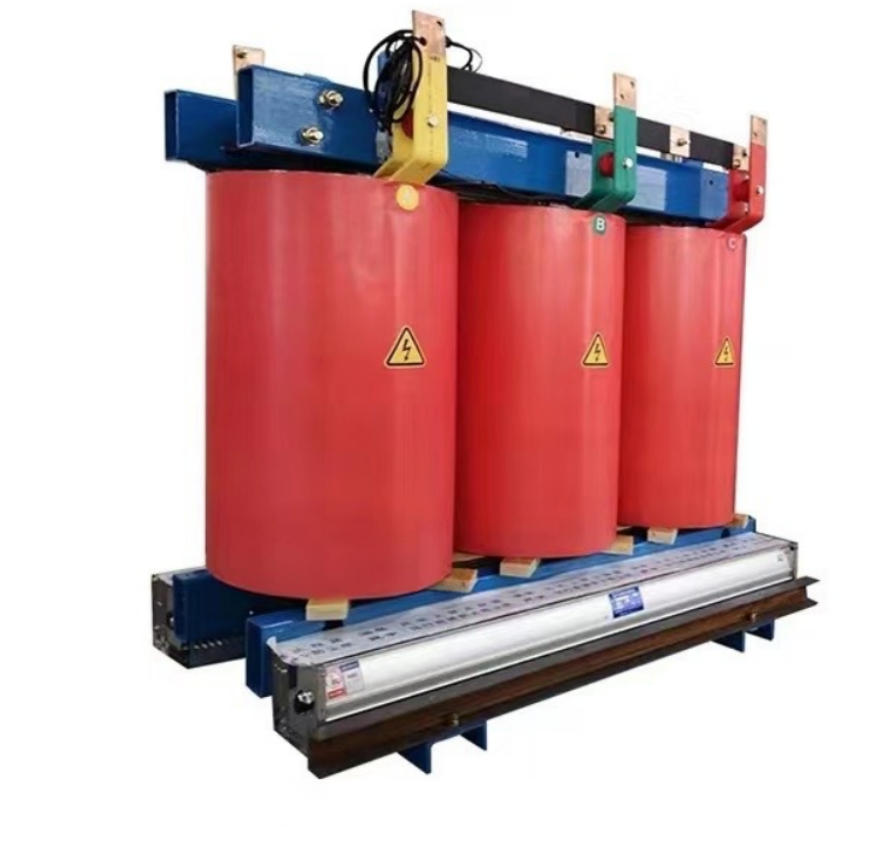
Answer: While dry-type transformers offer undeniable advantages in fire safety and installation flexibility, oil-filled transformers use mineral or synthetic oil as both a dielectric insulator and a highly efficient cooling medium. The oil's insulating strength and thermal conductivity are significantly superior to the air used in dry-type units.
A transformer's lifespan is fundamentally limited by the operating temperature of its insulation material. Oil-filled units are substantially more effective at removing heat from the internal hot spots of the windings, allowing the insulation to operate at a lower, more stable temperature. This superior thermal management translates directly into a demonstrably longer service life for oil-immersed transformers under identical load conditions.