
Are you struggling to balance mechanical reliability with long-term maintenance costs on your transmission lines?
Choosing the wrong insulation can lead to catastrophic line drops and expensive, unplanned downtime.
As an industry professional, you know that Glass Insulators offer unique advantages over porcelain and polymer—but only if you select the correct specifications.
From navigating complex IEC 60383 standards to determining the exact Mechanical Failing Load (kN) for your specific voltage class, the details matter.
In this guide, you’re going to get a comprehensive breakdown of technical selection criteria, pollution performance, and the critical engineering advantages of toughened borosilicate glass.
No fluff. Just the technical data you need to make the right call for your grid.
Let’s get to work.
Material Science: Why Toughened Glass?
At Weisho Electric, we don’t just pick materials off the shelf; we engineer solutions for the grid’s toughest challenges. The core of our high-voltage suspension insulators lies in the specific properties of toughened borosilicate glass. This isn’t your standard window glass—it is a material engineered to withstand the immense electrical and mechanical stresses of modern transmission systems, from 11kV distribution networks to 1000kV ultra-high voltage lines.
Structure Matters: Compressive Prestress vs. Annealed Glass
The secret to the durability of our glass insulators for power lines is the toughening process. Unlike annealed glass, which is prone to cracking under stress, our toughened borosilicate glass undergoes a thermal treatment that creates high compressive stress on the surface. This structural integrity enables our units to withstand significant mechanical tensile loads—ranging from 70 kN to 300 kN—without compromising performance. This prestressed structure is what gives the insulator its ability to support heavy conductors while resisting the mechanical fatigue that often plagues lesser materials.
The Self-Shattering Advantage: Safety Mechanisms and Inspection Benefits
One of the most critical advantages we offer is visibility. Opaque materials like porcelain can hide internal defects, leading to catastrophic failures that are hard to predict. Our glass insulators are visually inspection-friendly.
Immediate Detection: Because the glass is transparent, any internal defect or failure is instantly visible.
Simplified Maintenance: Line crews can identify damaged units from the ground or via helicopter without needing complex diagnostic tools.
Safety: This “self-shattering” characteristic ensures that if the dielectric shell fails, the stub remains mechanically intact, but the glass portion crumbles, making the need for replacement obvious and preventing hidden faults from lingering on the line.
Dielectric Performance: Low Dielectric Constant and Thermal Shock Resistance
Electrical reliability is the baseline for any insulator. Our units deliver a Flashover Voltage (Dry) of ≥ 70kV, ensuring robust insulation even under heavy load. Beyond raw voltage handling, the material excels in thermal shock resistance. Whether installed in freezing mountainous regions or scorching coastal areas, the glass withstands rapid temperature fluctuations without fracturing. Furthermore, the smooth surface of the glass minimises pollution and salt accumulation—a key factor in maintaining high dielectric breakdown strength and preventing flashovers in harsh environments where UV radiation and acid rain degrade other materials.
Technical Selection Guide: Matching Specs to Application
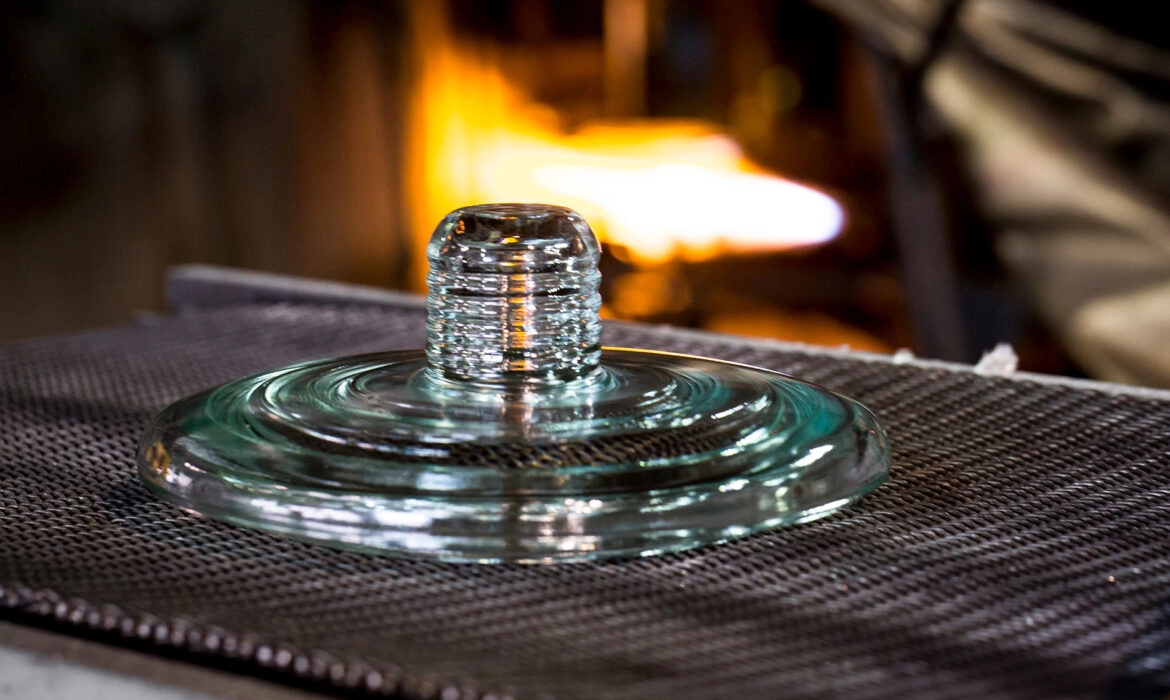
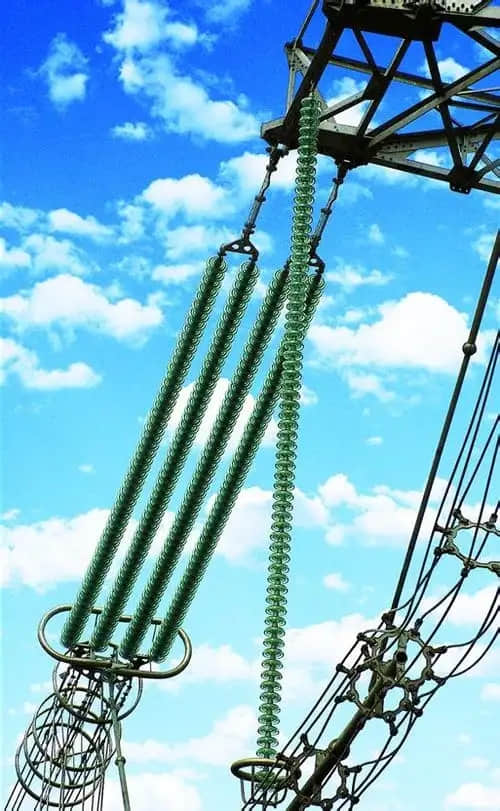
Selecting the right high voltage suspension insulators isn’t just about picking a voltage rating; it’s about matching the mechanical and environmental realities of your grid. We engineer our toughened borosilicate glass units to handle specific stress factors, ensuring stability from 11kV distribution networks up to 1000kV transmission superhighways.
Mechanical Failing Load: Ratings and Applications
The mechanical failing load (kN) is the critical threshold where the insulator string physically yields under tension. We offer a range from 70kN to 300kN to accommodate different conductor weights, span lengths, and ice loading conditions. Over-specifying adds unnecessary weight and cost, while under-specifying risks catastrophic line drops.
Here is a quick reference for aligning load ratings with typical utility applications:
| Mechanical Load (kN) | Typical Application Scope |
|---|---|
| 70kN – 100kN | Standard distribution lines (11kV – 33kV) and light transmission. |
| 120kN – 160kN | High-voltage transmission (66kV – 220kV) and tension towers. |
| 210kN – 300kN | EHV/UHV transmission (up to 1000kV), heavy ice zones, and long-span river crossings. |
Pollution and Creepage Distance
In coastal or heavy industrial zones, surface contamination is the enemy. Salt spray and conductive dust can create leakage paths that lead to flashovers. To combat this, accurate creepage distance calculation is essential.
Our glass insulators feature creepage distances ranging from 300mm to 1000mm. For areas with high pollution levels, we increase the leakage distance without significantly altering the string length. The smooth surface of our toughened glass prevents contaminants from sticking, making it far more resilient than porcelain in environments prone to acid rain or salt fog.
Aerodynamic vs. Anti-Fog Profiles
The physical shape of the insulator shed plays a massive role in self-maintenance. We design our profiles to leverage natural weather elements for cleaning.
Aerodynamic Shed Profile: These feature an open design that allows wind to flow freely. This airflow naturally scours dust away, while rain washes the smooth glass surface clean. This “self-cleaning” effect is vital for reducing maintenance costs in remote or hard-to-access locations.
Anti-Fog / Deep-Ribbed Types: For areas with extreme pollution or heavy fog, we utilise profiles with deeper under-ribs. This design maximises the protected creepage distance, breaking up the conductive water path and maintaining high dielectric performance even when the outer surface is wet.
Navigating Standards: IEC and ANSI Compliance
When dealing with high-voltage transmission, standards aren’t just guidelines—they are the definition of safety. We ensure every unit leaving our facility meets strict international and regional criteria, guaranteeing that our glass insulators perform reliably whether they are installed in a coastal wind farm or a desert substation.
The Global Benchmark (IEC): IEC 60383, 60433, and 60815
For the majority of global projects, the International Electrotechnical Commission (IEC) sets the rules. We strictly adhere to IEC 60383 standard compliance, which governs the testing of ceramic and glass insulators for overhead lines with a nominal voltage above 1000V. This standard ensures that our toughened borosilicate glass can withstand the electrical and mechanical stresses of modern grids.
IEC 60433: This specifies the characteristics of string insulator units of the cap and pin type. It ensures that our coupling sizes and dimensions fit universally with existing hardware.
IEC 60815: Critical for pollution management, this guides the selection of insulators based on environmental conditions, helping us determine the right creepage distance for your specific site.
Regional Standards: ANSI C29.2B and GB/T 1001
While IEC is the global baseline, we understand the specific needs of the United States market. Our manufacturing process aligns with ANSI C29.2B, the American standard for wet-process porcelain and toughened glass insulators. This compliance ensures that our products meet the specific dielectric and mechanical requirements expected by US utilities. We also maintain compliance with GB/T 1001, ensuring our production quality meets rigorous domestic and international expectations for high voltage suspension insulators.
The Weisho Commitment: Tensile and Steep-Front Wave Testing
Compliance is nothing without verification. At Weisho Electric, we don’t just rely on material sheets; we prove performance through rigorous testing protocols. Our ISO 9001:2015 certified process includes comprehensive electromechanical testing to verify the mechanical failure load of every batch.
Our Quality Assurance Protocol Includes:
Mechanical Tensile Testing: Every batch undergoes tension tests to verify ratings from 70kN up to 300kN.
Steep-Front Wave Testing: We verify the insulator’s ability to withstand rapid voltage rises, ensuring resilience against lightning strikes and switching surges.
100% Visual Inspection: Taking advantage of the glass’s transparency, we inspect every unit for internal defects before packing.
Salt Fog Pollution Tests: We validate performance in harsh environments to minimise flashover risks.

Installation and Maintenance Best Practices
Proper handling and installation are critical for maximising the lifespan of high-voltage suspension insulators. While our toughened glass units are engineered for extreme resilience, following specific protocols ensures safety and performance from the warehouse to the transmission tower.
Handling: Transporting Crated Glass Safely
We ship our glass insulators for power lines in standard export wooden crates designed with anti-shock and moisture-proof protection. Despite the material’s high mechanical strength, proper care during logistics is essential to prevent micro-fractures before installation.
Crate Orientation: Always keep crates upright to prevent stress on the sheds.
Impact Protection: While toughened borosilicate glass is resistant to thermal shock, avoid dropping individual units on hard surfaces like concrete or steel during unboxing.
Batch Tracking: Keep units associated with their specific production batch for traceability, especially regarding our tensile testing records.
String Assembly: Coupling Types and Cotter Key Installation
Assembling disc insulator string units requires attention to the coupling hardware to ensure the string can handle the rated mechanical failure load (kN). Whether you are working with a 70kN distribution line or a 300kN ultra-high voltage system, the connection points are the linchpin of structural integrity.
Coupling Verification: Ensure the ball-and-socket or clevis-tongue connections fit smoothly without forcing.
Cotter Keys: Always install the split pin (cotter key) fully. This locking device prevents the string from uncoupling under line vibration or wind galloping.
Alignment: Check that the string hangs vertically (or at the correct angle for tension strings) to avoid uneven stress distribution on the glass electrical insulators.
The Zero-Maintenance Reality: Visual Inspection Protocols
One of the biggest advantages of choosing glass over porcelain is the simplified maintenance. Our glass power line insulators feature a self-shattering characteristic that makes diagnostics immediate and unmistakable. You do not need expensive electromechanical testing equipment to find a fault.
Visual Checks: If a unit fails, the glass shell shatters completely, leaving only the mechanical stub. This is easily visible from the ground or by helicopter.
Fail-Safe Design: Even after the glass shatters, the remaining stub maintains the mechanical strength of the string, preventing line drops until a crew can replace the unit.
Reduced O&M Costs: The transparency of the material allows for easy detection of internal defects, while the smooth surface facilitates self-cleaning in rain, reducing the need for manual washing in polluted areas.
For more insights on maintaining grid reliability and industry updates, check our industry insights blog.
Case Study and Application Scenarios

Real-world performance is where technical specifications meet grid reality. At Weisho, we don’t just test in the lab; we prove our high voltage suspension insulators in some of the most demanding environments on earth.
Scenario A: Coastal Wind Farm Solutions
Coastal grids face a constant enemy: salt spray. In high-salinity environments, traditional insulators often suffer from rapid pollution accumulation, leading to dangerous flashovers. We deployed our toughened borosilicate glass units for a major 220kV wind farm project in Spain to address these specific risks.
The Challenge: High humidity and heavy salt fog pollution levels.
The Solution: The smooth surface of our glass provides a “self-cleaning” effect. Unlike other materials that trap grime, our glass allows rain to easily wash away conductive salt deposits.
The Result: The project has achieved over 18 months of incident-free operation. This success underscores why glass is the superior choice for offshore and coastal applications where corrosion and salt buildup are constant threats.
Scenario B: Mountainous Transmission Challenges
Running transmission lines through mountain ranges introduces unique maintenance hurdles, primarily regarding accessibility and extreme weather conditions.
Visual Inspection: In remote areas, crews cannot easily climb every tower for testing. Our glass insulators offer a distinct advantage: if a unit fails, the dielectric shell shatters while the mechanical stub remains intact. This allows maintenance teams to spot defects instantly via helicopter or drone without expensive climbing equipment.
Environmental Resilience: Mountainous regions expose components to intense UV radiation and rapid temperature swings. Our glass offers exceptional thermal shock resistance, ensuring stability even when temperatures plummet rapidly, protecting the integrity of the transmission line insulation.
Frequently Asked Questions About Glass Insulators
Navigating the specs for overhead power lines can get technical fast. Here are the answers to the most common questions we get from utility operators and engineers regarding our high voltage suspension insulators.
Why choose toughened glass over porcelain for transmission lines?
The biggest advantage of toughened borosilicate glass is transparency. Unlike porcelain, which requires complex testing to find internal cracks, glass allows for immediate visual inspection. If a glass insulator fails, the shell shatters in a specific, visible way (self-shattering), making it obvious to maintenance crews from the ground or by helicopter. Additionally, our glass units offer superior resistance to thermal shock and don’t suffer from the ageing issues that can degrade porcelain over time.
How does the pollution level affect insulator selection?
Pollution is a major factor in determining the required creepage distance. In coastal areas with high salt spray or industrial zones with heavy particulate matter, contaminants can build up on the insulator surface, leading to flashovers. Our glass insulators feature a smooth, self-cleaning surface that allows rain to wash away dust and salt more effectively than other materials. For areas with high pollution levels (ESDD/NSDD), we recommend selecting profiles with extended creepage distances (up to 1000mm) to ensure grid stability before the power reaches the prefabricated substation cabin.
What are the key IEC standards for glass insulators?
Compliance is non-negotiable for safety. Our products are manufactured and tested strictly according to international benchmarks. The primary standards you need to look for include:
IEC 60383: The general standard for insulators on overhead lines with a nominal voltage above 1000V.
IEC 60433: Specifically for ceramic and glass string insulator units.
GB/T 1001: The national standard aligns with international quality protocols.
ISO 9001:2015: Ensures our quality management systems are consistent across every batch.
How do you determine the correct mechanical failure load?
You need to match the mechanical failing load (kN) to the physical tension and weight of your transmission line. We offer a range of ratings to suit different applications:
70kN – 120kN: Typically used for standard distribution and lower voltage transmission lines (11kV – 220kV).
160kN – 300kN: Designed for ultra-high voltage (UHV) lines (up to 1000kV) and heavy-duty suspension strings where mechanical stress is highest.
Always calculate the maximum tensile load your line will experience under extreme weather conditions (wind, ice) and select a rating that provides a sufficient safety margin.