I. Introduction: The Direct Answer and Core Definition
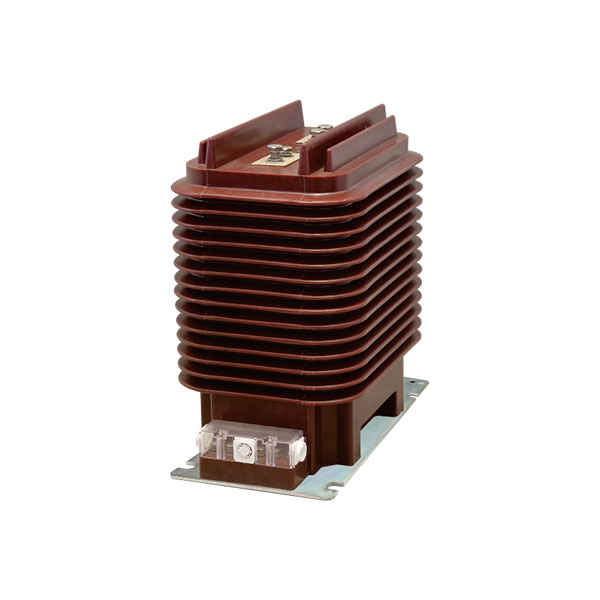
We absolutely require Current Transformers (CTs) because they are engineered to safely and precisely step down hazardous, high-magnitude currents from the power system's primary circuit to a standardized, low-voltage level. This crucial conversion is indispensable for achieving both accurate electrical metering and reliable protective relay operations across the entire grid infrastructure. The CT successfully resolves the fundamental conflict between high-energy power transmission and the safe, functional operation of sensitive electronic control devices.
Modern high-voltage grids routinely operate with normal currents reaching thousands of amperes; such immense energy levels, along with the accompanying high voltages, cannot be handled directly by conventional measuring instruments or protective relaying equipment. Consequently, the CT is designed as a high-precision instrument transformer, serving as the essential "sensor" and "safety interface" that accurately mirrors the primary circuit's operational state to the control center. Its function transcends mere current scaling by providing complete and robust galvanic isolation, which is critical for securing both sensitive control systems and the safety of field maintenance personnel.
Key Takeaways (Core Concepts at a Glance)
Foundation of Safety: CTs reduce the primary current—often thousands of amperes—to a safe, standardized 5A or 1A level while providing vital galvanic isolation between the high-voltage power path and the low-voltage control circuits.
Metering Integrity: They deliver high-accuracy current signals (e.g., 0.2S class), forming the technical basis for precise commercial energy billing and maintaining market fairness.
Protection Core: Protection CTs are specifically designed to resist saturation (high ALF), ensuring they faithfully transmit peak fault currents to guarantee that protective relays can rapidly and accurately isolate faults.
Engineering Differentiator: Precise secondary burden management is a primary field concern for engineers, as inaccurate burden calculation can lead to performance degradation in both measurement and protection functions.
Future Trajectory: Traditional iron-core CTs are increasingly being replaced by saturation-free, high-precision Non-Conventional Instrument Transformers (NCITs), such as Rogowski coils and Optical CTs, to meet the demand for high-speed, digital signals in smart substations.
II. Core Pillar One: The Safety Mandate (Ensuring Personnel and Equipment Integrity)
A. Proportional Conversion: Taming the High-Voltage Current
The CT’s foremost engineering mission involves achieving the precise, proportional reduction of current. It reliably converts the enormous current flowing through high-voltage transmission lines into a standardized secondary signal of 5A or 1A that is easily managed. This standardized scaling is a prerequisite for instrument compatibility, as all low-voltage measuring devices and protective relays are designed to operate around this unified output specification.
Through this methodology, utilities are able to procure and utilize standardized, low-cost general control equipment at scale, significantly enhancing the economic efficiency and modularity of grid construction. This essential technology eliminates the need to manufacture prohibitively large, costly, and difficult-to-maintain specialty meters for direct high-voltage current measurement.
B. The Galvanic Isolation Barrier (Current Isolation)
Within the CT, a robust and reliable insulation layer is established between the primary and secondary windings. This isolation barrier is a critical line of defense, effectively preventing dangerous primary circuit high voltages from transferring through induction or leakage into the secondary control circuits and instrument terminals. This non-contact isolation mechanism is vital for safeguarding the lives of field operators, allowing technicians to safely measure and maintain equipment without direct exposure to the high-voltage environment.
Moreover, this isolation also protects the sensitive electronic devices and digital relays connected on the secondary side, shielding them from potential voltage spikes or transient high potentials originating in the primary circuit. The CT physically and dependably separates the hazard source from the operational area, making it a core component of essential electrical safety procedures.
C. The Golden Safety Rule: Secondary Short-Circuit Requirement
Under no circumstances, while primary current is flowing through the CT, is the secondary circuit ever permitted to operate in an open condition; this is the highest safety protocol universally recognized in the power industry. If the secondary circuit is inadvertently opened, the total magnetomotive force from the primary current acts solely across the core's high excitation impedance, which then induces an extremely high voltage—potentially thousands of volts—at the open secondary terminals due to the high turns ratio. This catastrophic high voltage poses a lethal threat to personnel and can instantly destroy the secondary winding insulation, causing permanent CT damage or even fire.
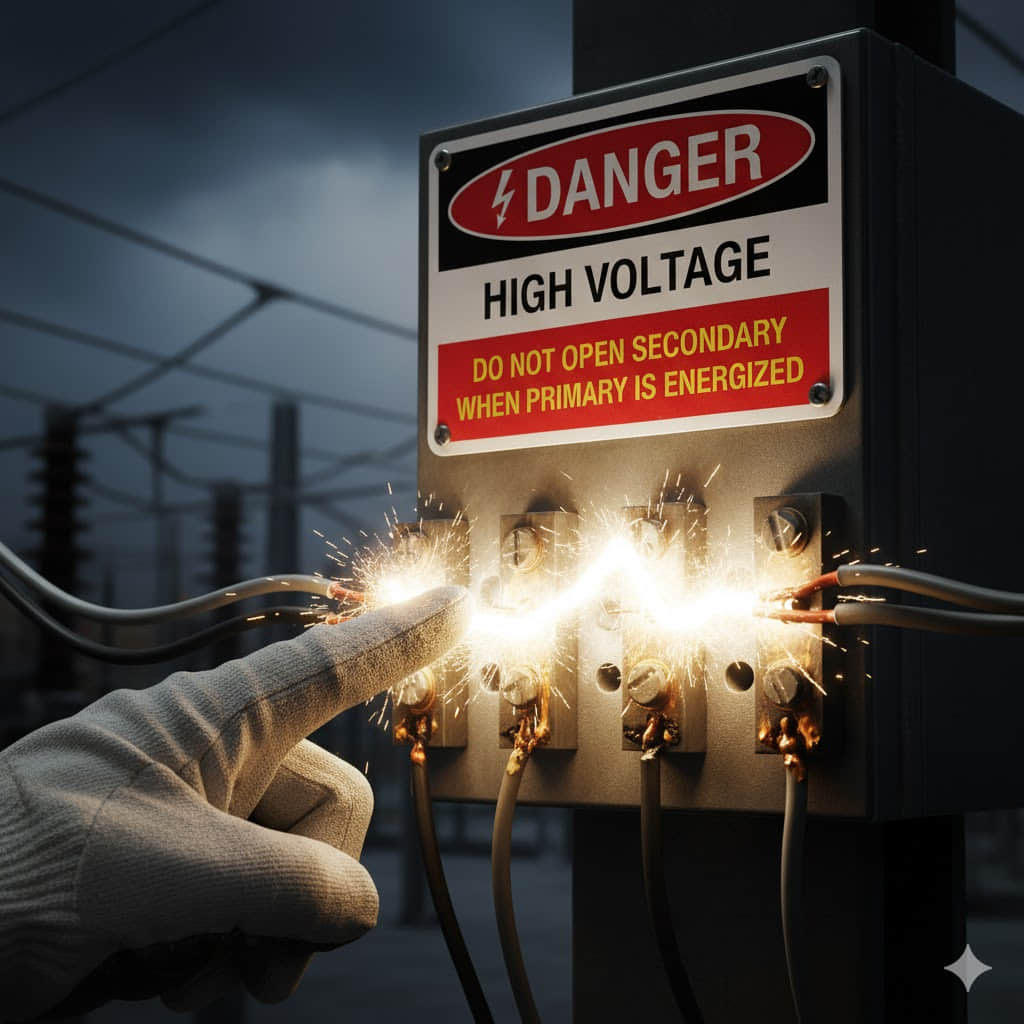
For this reason, all maintenance procedures strictly mandate that before disconnecting a meter or replacing a relay, the CT's secondary terminals must first be permanently short-circuited using a dedicated shorting link. The short-circuited state is the safest operating condition for the CT because the magnetomotive forces produced by the windings essentially cancel each other out, preventing core saturation and eliminating the risk of dangerous high-voltage induction.
Note: The secondary short circuit is the CT's safe state, whereas an open circuit represents a failure or dangerous state. Adherence to this principle is the foremost requirement for guaranteeing site safety, and the terminals must never be opened while the primary circuit is energized.
III. Core Pillar Two: Enabling Accurate Metering and Commercial Equity
A. The Foundation of Commercial Billing
The precise current signal provided by the Current Transformer is the technical bedrock for establishing a fair and trustworthy system for commercial energy settlement. Whether dealing with large inter-utility power trading or calculating daily consumption for end-users, all financial transactions rely on the accurate data supplied by the CT and Voltage Transformer. The CT ensures that the utility company can meticulously account for every unit of energy flowing through its lines, thereby guaranteeing revenue accuracy while simultaneously protecting the user’s right to be billed equitably.
This high level of metering accuracy is directly related to the enforcement of national energy policies and the fulfillment of commercial contracts. Consequently, CTs used for revenue metering must meet extremely demanding accuracy standards and undergo rigorous third-party certification and regulatory oversight.
B. The Need for High Accuracy Classes (e.g., 0.2S Class)
Revenue metering CTs must possess a high accuracy class, such as a 0.2S class, which requires their ratio error and phase angle error to be contained within extremely tight tolerances. The "S" designation here signifies "Special," specifically emphasizing that the CT must maintain this high metering precision even at loads as low as 1% of its rated current. This accuracy at low-load conditions is critical because many commercial users operate at very light loads during off-peak hours, yet their consumption still requires precise recording for billing purposes.
Metering CTs are designed with linearity as their core objective, often utilizing core materials that exhibit high permeability and low residual magnetism. While this design approach ensures near-perfect signal reproduction throughout the normal operating range, it carries the deliberate trade-off that the core will quickly saturate under high fault currents to protect the sensitive instruments connected to it.
C. System Monitoring and SCADA Integration
The standardized 5A output signal from the CT serves as the vital data source feeding into the substation automation systems and the SCADA (Supervisory Control and Data Acquisition) system. Through the continuous acquisition and analysis of this real-time current data, power engineers can accurately track instantaneous loads, determine the magnitude and direction of power flows, and conduct targeted load balancing and reactive power optimization. The SCADA system utilizes this data for wide-area monitoring, identifying potential system bottlenecks and overload risks.
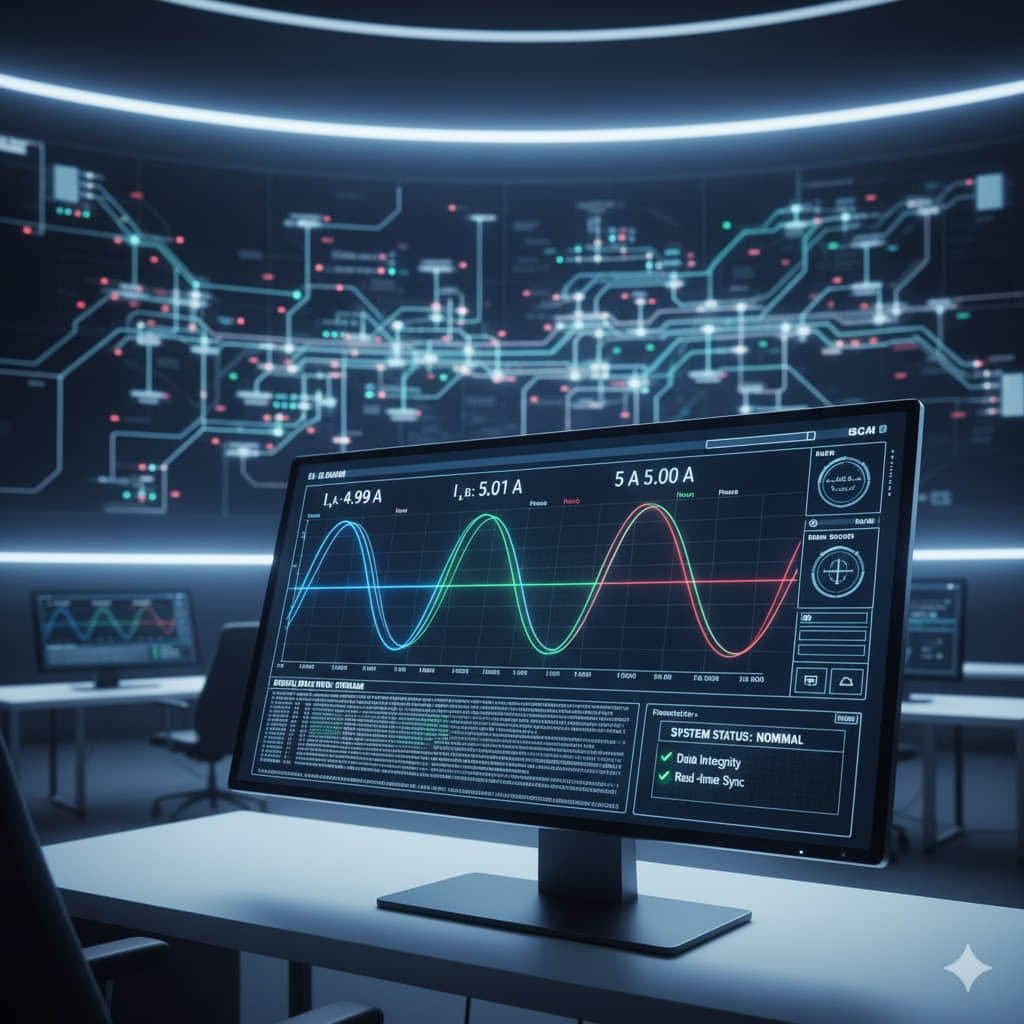
Without the CT to transform the massive current of the primary system into a manageable low-voltage electrical signal that can be processed by SCADA's digital processors, centralized monitoring and intelligent management of the entire grid would be utterly impossible. The CT stands as the forefront sensor enabling the electrification, automation, and intelligent operation of the power system.
IV. Core Pillar Three: The Guardian of Grid Stability (Protective Relaying)
A. Fidelity of the Fault Signal
During the extreme moments when a short-circuit fault occurs on the grid—caused by lightning strikes or equipment failure—the fault current magnitude can instantaneously surge to ten times the normal rated current or more. The primary responsibility of a Protection CT during this brief transient event is to rapidly and completely transmit this massive current peak to the protective relay with the highest possible fidelity. This fast, undistorted signal is the lifeblood of the relay, enabling it to correctly diagnose the fault type and execute the trip operation.
Any signal distortion or delay, even a matter of milliseconds, can cause the relay to misinterpret the event, delaying the fault isolation time. The Protection CT must complete this transient current transfer within a few milliseconds, a capability that is crucial for maintaining the dynamic stability of the power grid.
B. The Requirement for High Accuracy Limit Factor (ALF)
Unlike metering CTs, the core design requirement for a Protection CT is resistance to saturation, which is quantified by its high Accuracy Limit Factor (ALF). For instance, a 5P20 class CT guarantees that its total composite error will remain within 5% even when the current reaches 20 times its nominal rated current. This specialized design utilizes core materials with larger cross-sections and higher saturation flux density to ensure that the CT's core does not immediately saturate when subjected to the highest fault current levels.
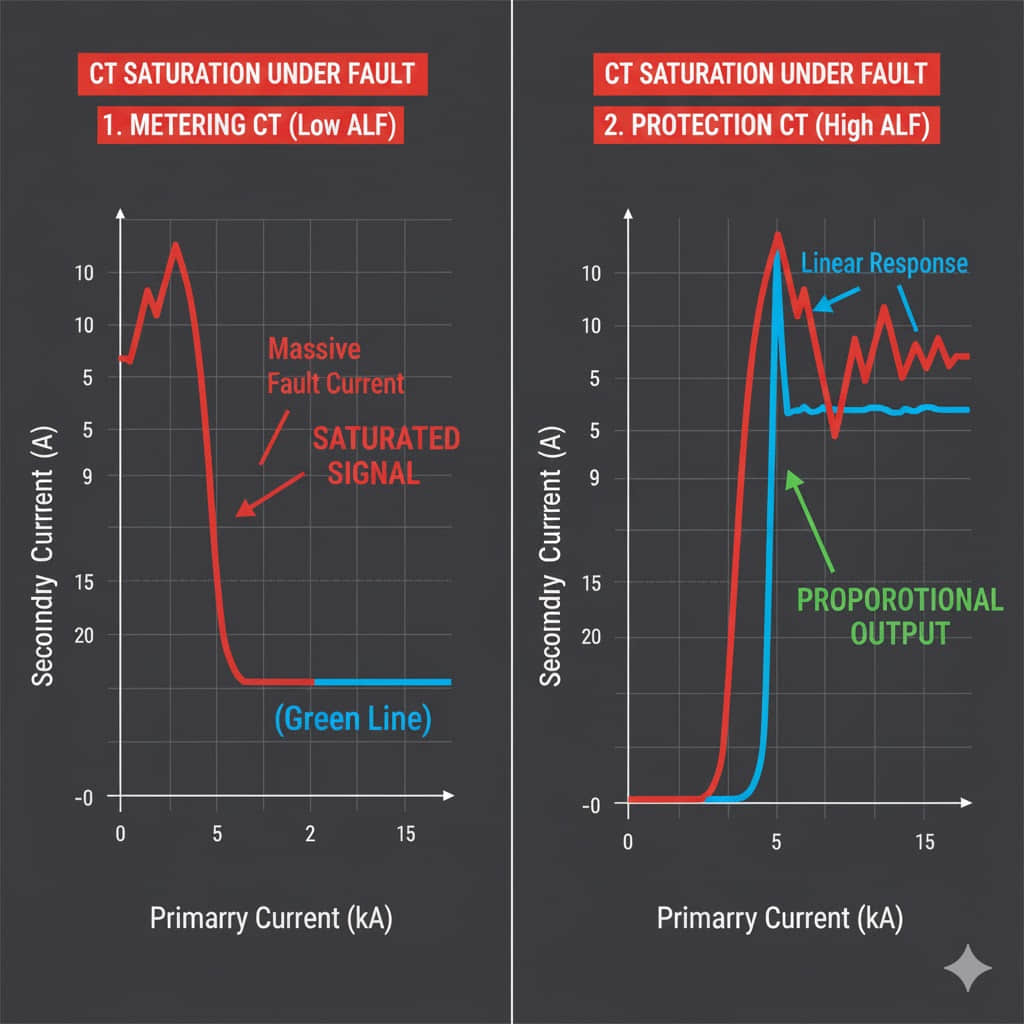
The high ALF ensures that the CT core does not instantly become "blind" to the magnitude of the fault, thereby avoiding signal clipping. If the Protection CT were to saturate during a fault, the current received by the relay would be significantly lower than the actual fault current, potentially causing the protection system to "fail to operate." This failure to operate can lead to the fault persisting and escalating, resulting in catastrophic equipment damage and potentially grid instability.
C. Preventing Maloperation
The quality of the CT signal is paramount in preventing protective system maloperations, specifically failure to trip and false tripping. A failure to trip (or "refusal to operate") is disastrous, as it means the fault is not cleared, which can incinerate expensive equipment like transformers and generators. While less immediately harmful, false tripping (unnecessary power interruption) severely impacts supply reliability and erodes customer satisfaction.
The stable output of the CT is the prerequisite for the correct execution of all complex protection logic, including differential protection and directional protection schemes. If a CT's polarity is reversed or its signal is distorted, it can cause the relay to operate during normal conditions (false tripping) or remain silent during a fault (failure to trip). Therefore, strict adherence to correct CT installation and polarity verification is a critical electrical engineering standard.
Note: The fundamental value of a Protection CT lies in its range of non-saturation, not its absolute everyday accuracy. It ensures reliable signaling precisely when the system needs it most—during a fault event.
Visual Supplement: In-Depth CT Analysis
To reinforce the understanding of the CT's roles in safety, metering, and protection, we recommend viewing this in-depth educational video provided by a leading power systems company.
Current Transformers (CT) - Eaton Power Systems Experience Center
V. Deep Dive into Field Operations: CT Burden and Life-Cycle Management
A. The Precision Requirement for Secondary Burden Management
In practical substation engineering, the precise calculation and management of the CT’s secondary burden is a critical challenge that determines its long-term performance and is often a common source of field accuracy problems. Secondary burden refers to the total apparent power (VA) consumed by all equipment connected to the CT's secondary winding, including the coils of relays, the coils of meters, and critically, the impedance of the connecting cables themselves. Accurately quantifying this total burden is essential for reliable operation.
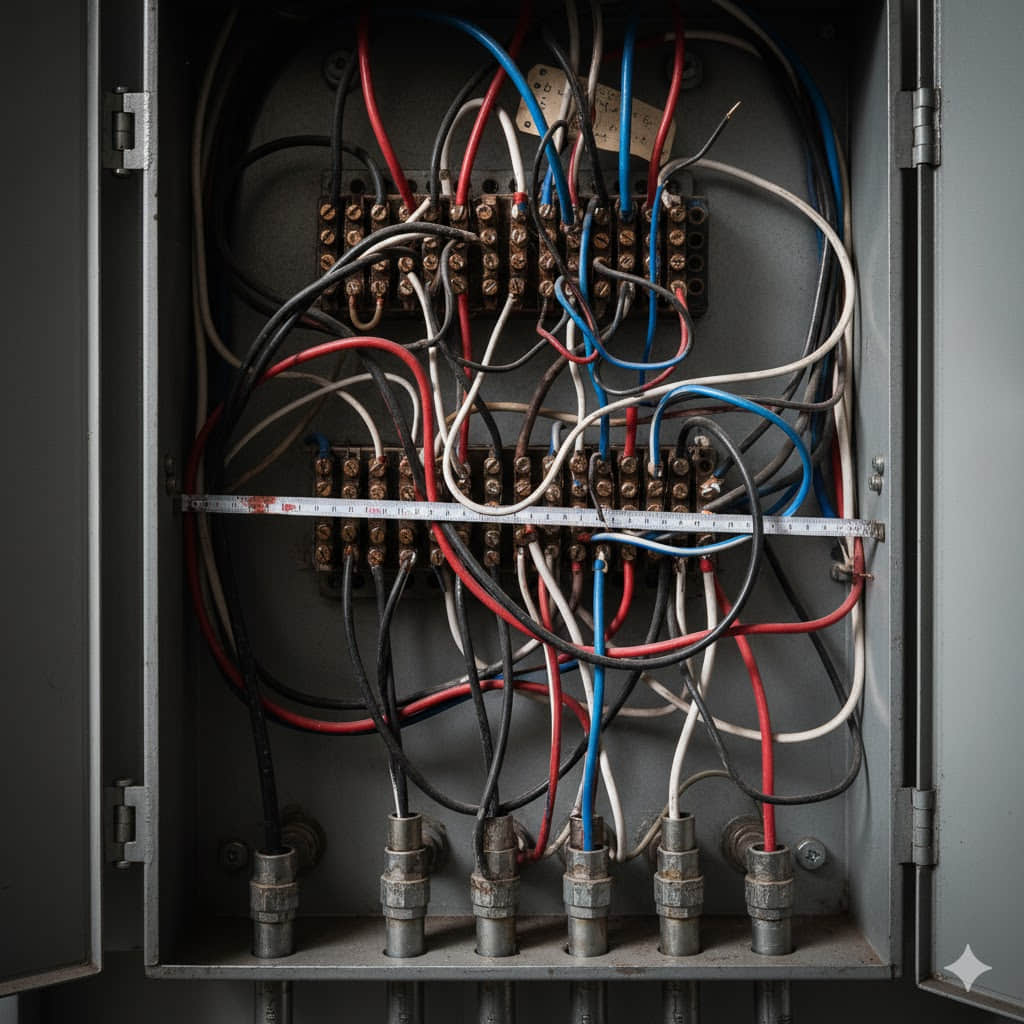
The engineering difficulty lies in the fact that the length and gauge of the secondary cables are the largest source of uncertainty; cable impedance can account for a substantial portion of the overall burden. Designers must incorporate sufficient burden margin, ensuring that the CT’s rated burden is significantly higher than the calculated actual burden to accommodate future equipment changes or increased cable impedance due to aging.
B. The Field Effects of Burden Mismatch
A burden mismatch can lead to two distinct, yet equally detrimental, negative impacts on CT performance. Firstly, Burden Overload means the connected impedance exceeds the CT’s design capacity, causing the CT to enter saturation prematurely; this results in the fault signal received by the protective relay being clipped, potentially delaying or preventing the correct trip operation. Secondly, Burden Underrating (too light a burden) is also detrimental, particularly for metering CTs, because an overly light load can increase the ratio of the exciting current. This causes the ratio error to exceed the strict tolerances required by the 0.2S class accuracy, resulting in long-term financial loss through inaccurate billing.
Field engineers must use specialized test equipment to regularly verify the comparison between the actual burden and the rated burden. Any deviation from the original design parameters must be treated as a potential fault hazard and corrected immediately.
C. Long-Term Reliability and Environmental Challenges
As long-term operational assets, CTs face severe long-term reliability challenges posed by the operating environment and their own insulation condition. Insulation materials—such as oil-impregnated paper or epoxy resin—gradually degrade over time and through thermal cycling. High humidity, salt spray corrosion, and prolonged mechanical stress all accelerate this aging process, leading to the phenomenon of Partial Discharge (PD). Partial Discharge is a critical precursor signal indicating that the CT’s insulation is deteriorating towards eventual catastrophic failure.
Engineers must therefore rely on specialized maintenance methods to assess the CT’s health status. For oil-filled CTs, Dissolved Gas Analysis (DGA) is the preferred diagnostic technique for predicting internal insulation faults and overheating. Furthermore, if a CT has experienced a high-impact fault or an open secondary circuit, its core may retain residual magnetism; in this scenario, Demagnetization procedures must be performed to eliminate the remnant flux and restore the CT’s normal accuracy and transient performance.
VI. Standardization, Flexibility, and Design Comparison
A. Benefits Derived from Signal Standardization
The standardization of the CT current signal to 5A or 1A is a foundational prerequisite for enabling the mass industrial production of electrical equipment worldwide. This uniform output standard allows for the generic design and manufacturing of protective relays, ammeters, and power meters. It has significantly reduced the cost of equipment procurement and management for utilities while simultaneously increasing equipment interchangeability, permitting seamless integration of different manufacturers' products into a unified protection network.
The advantage of this standardization is most clearly seen in maintenance flexibility: when one brand of relay needs replacement, any other standard-compliant relay can be directly wired and put into service, simplifying inventory and training requirements.
B. Engineering Flexibility (Split-Core CTs and Non-Intrusive Installation)
The Split-Core CT is the member of the CT family that offers the greatest flexibility for field operations. Its core design allows the magnetic ring to be opened, enabling technicians to "clamp" it around an existing cable or busbar without needing to interrupt the primary circuit power or dismantle the main conductor. This non-intrusive installation method offers irreplaceable value during substation upgrades, temporary load auditing, or emergency fault diagnosis.

This convenience dramatically reduces outage time and saves significant operational costs and labor input. While split-core CTs may offer slightly lower accuracy than traditional wound-type CTs, their unmatched flexibility makes them ideal for many non-revenue metering and temporary monitoring applications.
C. Design Comparison: Metering CT vs. Protection CT
| Characteristic | Metering CT (Measurement CT) | Protection CT (Protection CT) |
|---|---|---|
| Primary Objective | Maximize accuracy within the normal operating range (5%–120% of rated current) | Maintain linearity and resist saturation under high fault currents (up to 20× rated current) |
| Accuracy Class | Defined by percentage error (e.g., 0.2S, 0.5 class) | Performance defined by Accuracy Limit Factor (ALF) (e.g., 5P10, 10P20) |
| Saturation Profile | Small core section, designed to saturate easily to protect secondary instrumentation | Large core section, high saturation resistance, designed to faithfully transmit fault peaks |
| Application | Revenue meters, energy quality monitors, panel ammeters | Overcurrent, differential, ground fault, and distance protective relays |
| Core Material | High permeability, low remanence, prioritizing linearity | High saturation flux density, prioritizing high ALF |
VII. Extensive Range of Applications
A. Transmission and Distribution Main Grids
CTs are core sensing components that support the operation of the entire transmission and distribution system, widely utilized on outgoing lines, busbars, and transformer neutrals within high-voltage substations. They are prerequisites for status monitoring and operational control of all high-voltage circuit breakers and disconnect switches. By being installed at critical grid nodes, CTs provide the most fundamental, real-time data for power flow control and fault localization.
The current information they supply forms the basis for constructing complex grid protection systems, such as bus differential and line differential protection, ultimately ensuring grid reliability and rapid self-healing capabilities after a fault.
B. Industrial and Commercial Facilities
In large industrial and commercial facilities, CT applications are equally crucial; they are used to monitor the heavy loads of large motors, inverters, and heating equipment. Engineers utilize CT data to implement efficient energy management, perform power factor correction, and monitor current imbalance in three-phase systems. Current imbalance is a leading cause of motor overheating and efficiency loss, and the CT provides immediate data for early warning.
For multi-tenant commercial buildings, CTs are combined with multi-function meters to accurately allocate energy costs among tenants. This fine-grained metering management is an essential tool for optimizing the energy efficiency of commercial real estate.
C. Emerging and Specialized Applications
With the massive integration of renewable energy sources, CTs play an indispensable role in solar and wind farms. They monitor both the DC and AC side currents of inverters and combiner boxes to ensure optimal generation performance and safe grid synchronization. The data provided by the CTs informs the grid control center's decisions regarding grid connection control and frequency/voltage regulation.
In highly specialized scientific fields, such as high-energy physics accelerators, specially designed CTs are employed for non-contact, high-sensitivity measurement of particle beam currents. This application strongly demonstrates the universality and extreme professional adaptability of the core CT technology principle.
VIII. Future Development: Transitioning to Non-Conventional Instrument Transformers (NCITs)
A. Limitations of Conventional Iron-Core CTs
The inherent limitations of traditional electromagnetic CTs primarily revolve around their size, weight, and transient performance. At high voltage levels, the core and housing must be designed to be very bulky to meet insulation requirements, which increases the space needs and construction costs of substations. More critically, the core's inherent magnetic saturation characteristics restrict the CT's ability to handle the increasingly complex transient faults and high-frequency harmonics present in modern grids. These physical bottlenecks are driving the development of new sensing technologies.
Furthermore, traditional analog output signals are susceptible to electromagnetic interference and require extensive copper cabling for connection, leading to complex wiring and high maintenance costs. As the grid advances toward digitalization and miniaturization, the limitations of conventional CTs become more pronounced.
B. The NCIT Revolution (Rogowski Coils and Optical CTs)
Non-Conventional Instrument Transformers (NCITs) represent the future direction of current measurement technology. Rogowski Coils are air-core designs that fundamentally eliminate the issue of magnetic saturation, allowing them to maintain perfect linearity under extremely high current transients. This capability makes Rogowski coils the ideal choice for high-speed, accurate fault recording and transient protection applications.
Optical CTs (OCTs) operate based on the Faraday magneto-optic effect, and their signal is transmitted entirely via optical fiber. This not only provides absolute galvanic isolation, eliminating high-voltage risk, but also makes them completely immune to external electromagnetic interference.
C. The Inevitable Demand of the Digital Substation
NCIT technology is the key enabling factor for the Digital Substation standard defined by the International Electrotechnical Commission (IEC) 61850. NCITs directly output digital Sampled Values (SVs) compliant with IEC 61850 specifications, which are transmitted over fiber optic networks, replacing traditional analog current signals and complicated copper wiring.
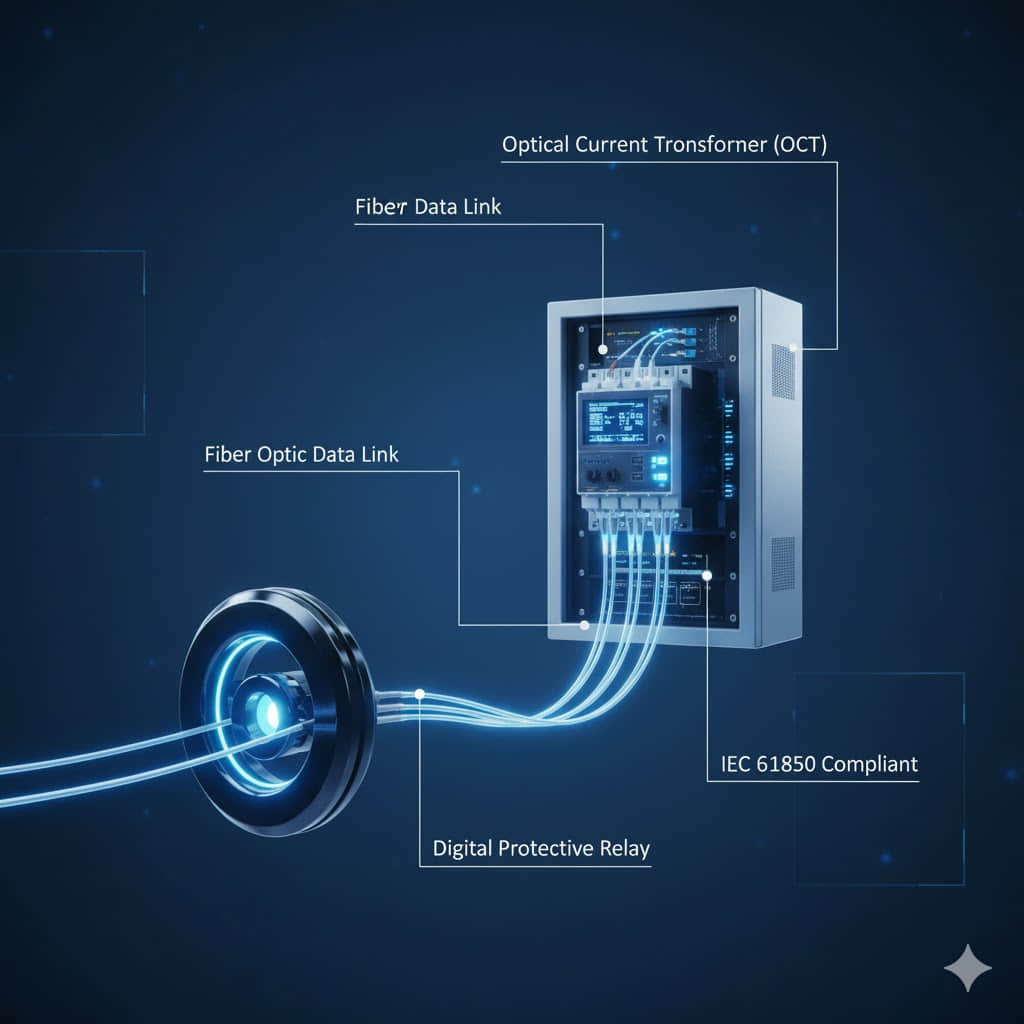
This wholesale transition from analog to digital sensing fundamentally simplifies the substation’s secondary circuit architecture, significantly enhancing the speed, accuracy, and noise immunity of data transmission. By providing high-fidelity, high-speed digital current data, NCITs support the advanced automation and control strategies required for the future smart grid.
IX. Conclusion: The Indispensable Necessity
The necessity of the Current Transformer in the modern power system is collectively determined by the triple core functions it fulfills in the domains of safety, metering, and protection. They are the indispensable sensors within the grid that translate the high-energy physical world into actionable digital intelligence.
Whether ensuring the fairness of commercial transactions, guaranteeing the safety of field operating personnel, or making millisecond decisions that determine grid stability, the CT plays an irreplaceable role. Although future technology will continue to advance toward NCITs, the core principles established by the CT—high-precision proportional scaling and reliable isolation—will forever remain the foundation for stable power system operation.
❓ Authentic and Credible Professional FAQs
Q1: Why are Metering CTs typically designed to saturate more easily than Protection CTs?
A: This specific design choice is implemented to protect the sensitive meters and equipment connected on the secondary side. Metering CTs are engineered with a smaller core or materials that saturate more readily. During a severe fault, the high fault current quickly drives the metering CT into saturation, which limits the current flowing into the secondary instruments, preventing these low-VA (apparent power) precision devices from being destroyed by the overwhelming fault current. Protection CTs, conversely, must resist saturation to faithfully transmit the fault signal.
Q2: In field maintenance, what is a simple way to verify the CT's polarity is correct?
A: The simplest method to check CT polarity in the field is using the DC impulse or the instantaneous voltage method. The typical procedure involves connecting a DC voltmeter to the CT's secondary terminals and then applying an instantaneous positive DC voltage pulse to the primary winding. If the meter's needle deflects momentarily in the positive direction when the voltage is applied, the polarity connection is correct (i.e., the positive terminal of the applied voltage corresponds to the primary P1 terminal, and the secondary S1 terminal is the positive output). Correct polarity is a non-negotiable prerequisite for accurate differential protection and energy metering.
Q3: Why is a "Burden Underrating" (too light a load) on the CT's secondary side also detrimental to metering accuracy?
A: Although it is commonly thought that only overload affects the CT, a light burden can also compromise metering accuracy. Metering CTs are typically designed to operate on a specific portion of the excitation curve to achieve optimal accuracy. When the actual burden is much lower than the rated burden, the demagnetizing force produced by the secondary current is reduced, causing the core to operate in an unexpectedly high magnetic flux density region. This condition significantly increases the ratio of the exciting current, which can cause the ratio error to exceed the strict limits required by the 0.2S class, thereby impacting commercial billing accuracy.
Q4: Given that the Rogowski Coil has no iron core, how does it measure current? What is its primary advantage?
A: The Rogowski Coil operates based on the principle of mutual inductance and Faraday's Law of Induction. It measures the rate of change of the magnetic flux (dΦ/dt) produced by the measured current in space, resulting in an output signal that is proportional to the current's derivative with respect to time (dI/dt). Its primary advantage is the complete elimination of magnetic saturation, giving it an extremely wide linear range and excellent transient response characteristics. This makes the Rogowski Coil ideally suited for measuring non-sinusoidal waveforms, high-frequency harmonics, and transient fault currents.
Q5: If the Dissolved Gas Analysis (DGA) results for an oil-filled CT show an excess of acetylene (C₂H₂), what serious fault is this indicating?
A: The presence of acetylene gas is a strong indicator that the CT's internal insulation system has experienced severe arcing or extremely high-temperature localized overheating. This gas is typically only generated under high-energy fault conditions where temperatures exceed 700°C. An excess of acetylene suggests that an internal breakdown path or localized arcing in the winding insulation may already be present. This finding indicates that the CT is near the brink of failure and must be immediately taken out of service for detailed inspection to avert a potential explosive fault.