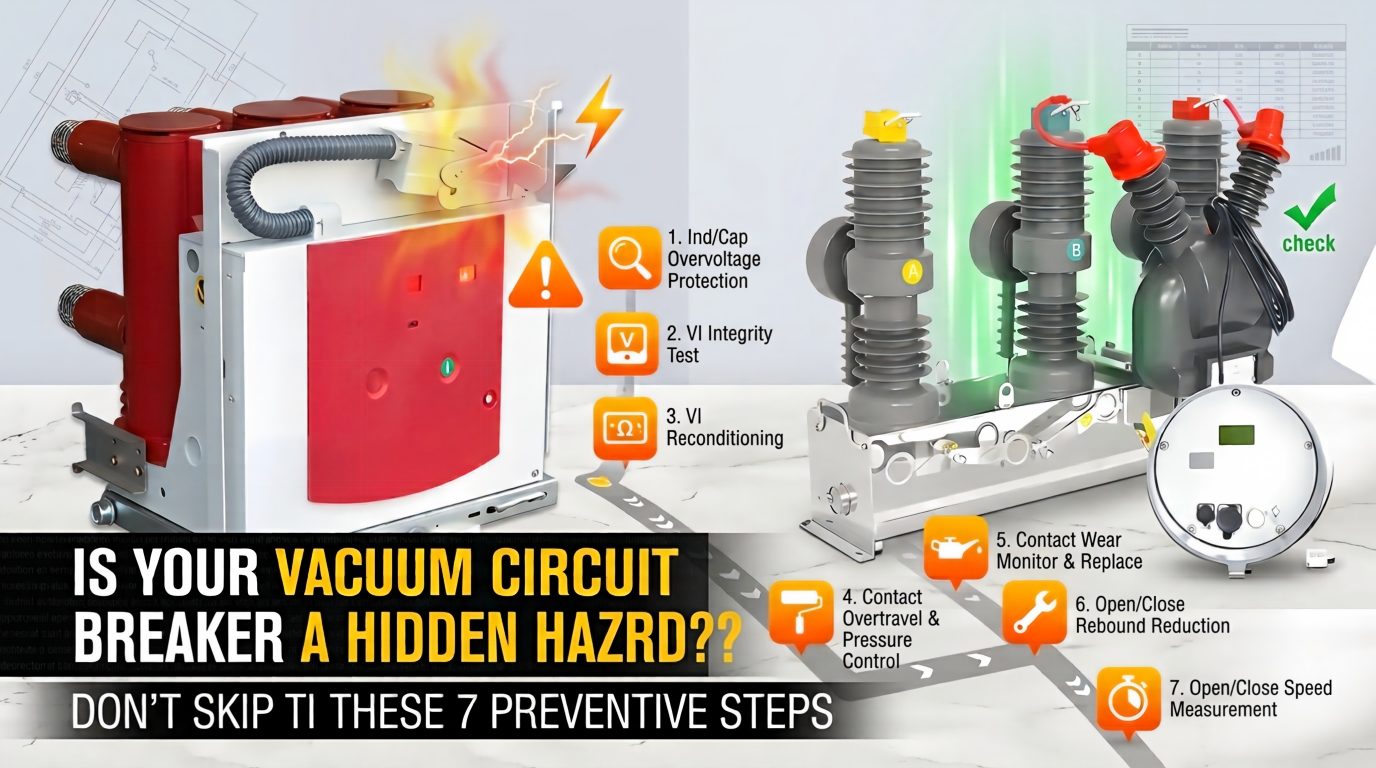
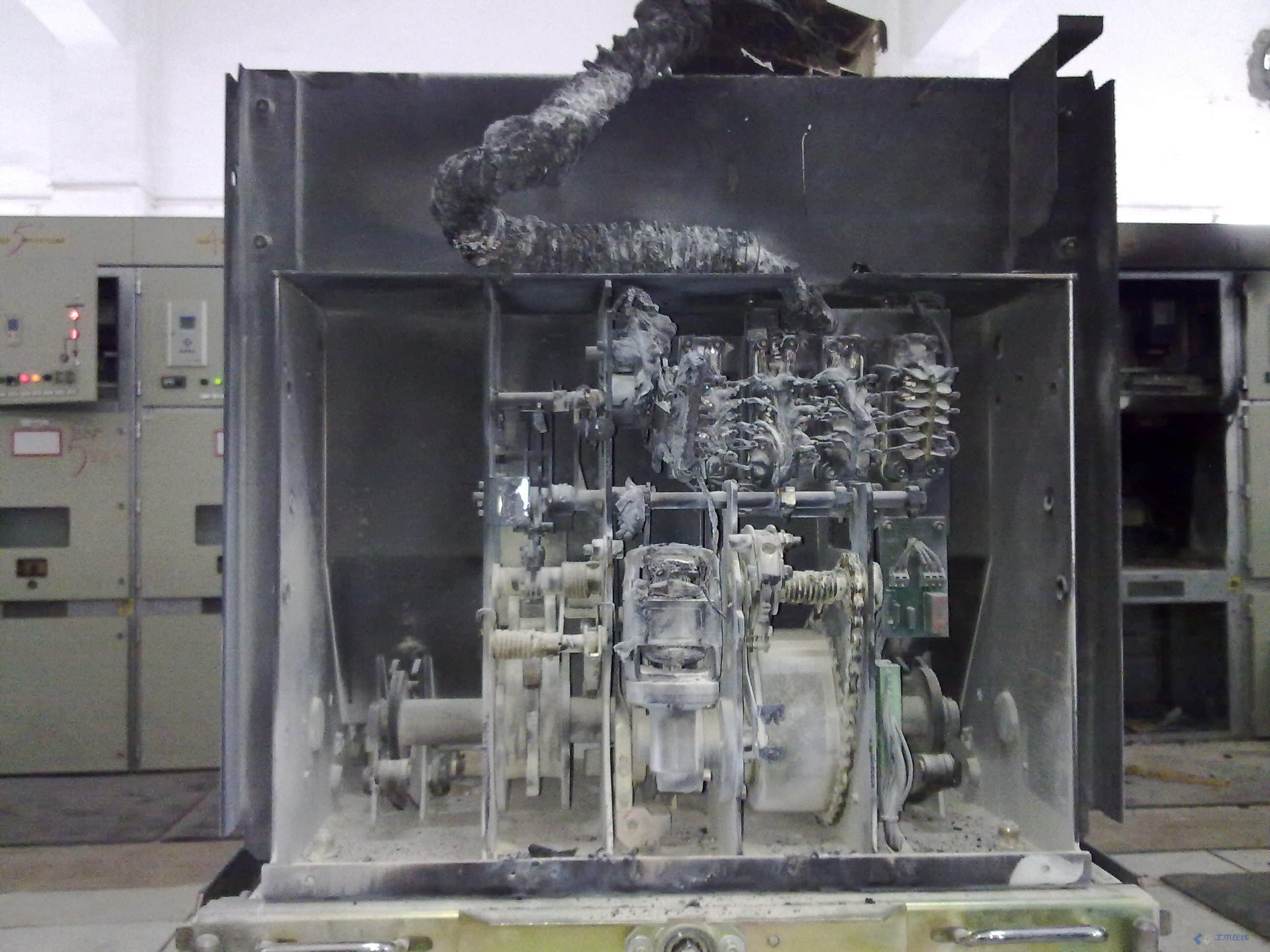
A vacuum circuit breaker explodes for a direct reason: the catastrophic failure of its core component, the vacuum interrupter. This failure often happens after a loss of vacuum, preventing the breaker from effectively clearing a fault and triggering a chain reaction that ultimately destroys the equipment. It's a complex issue stemming from the accumulation of multiple technical and operational problems.
The vacuum circuit breaker (VCB) acts as a loyal guardian for electrical systems, swiftly interrupting fault currents in milliseconds to protect downstream equipment. Yet, even this reliable device can erupt like a provoked giant, causing a catastrophic explosion.
This article will take you through a deep, engineer-driven look at the technical reasons and contributing factors behind these explosions.
Tip: An explosion is the ultimate symptom of failure. The root cause is often a long-term "sub-healthy" state, which is why preventative maintenance is so crucial.
Part 1: The Core Failure—The Vacuum Interrupter's Fatal Flaw
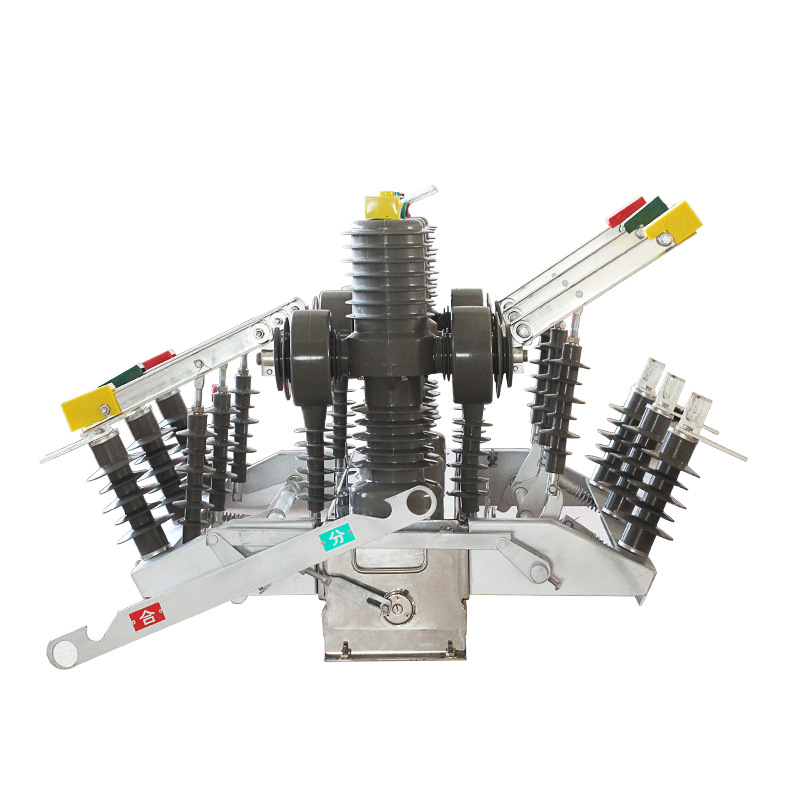
The VCB’s ability to extinguish an arc is all thanks to its heart: the vacuum interrupter. This sealed container houses two contacts that move apart to break a circuit in a high-vacuum environment.
In this vacuum, the arc's charged particles are too scarce to sustain it, causing it to die out almost instantly.
Note: The vacuum interrupter is the heart of the VCB. Its health directly determines the overall safety and reliability of the breaker.
1.1 Vacuum Loss: The Explosive Primer
Vacuum interrupters aren't designed to last forever. Over time, their vacuum level slowly degrades in what we call a "sub-healthy" state, making them prone to failure.
As the vacuum weakens, the breaker’s ability to interrupt current drops dramatically. It's like trying to fire a gun without any ammunition.
Causes of this vacuum loss often go beyond manufacturing defects, stemming from various operational stresses. Constant vibrations during shipping, improper installation, and routine operations can cause micro-cracks in the interrupter’s bellows or ceramic insulation, leading to slow leaks.
Another major factor is outgassing, where internal materials release trapped gases like nitrogen or oxygen due to prolonged thermal and electrical stress. Even without an external leak, these gases accumulate, significantly reducing the vacuum’s insulating properties and creating a medium that fuels a continuous arc.
When the vacuum level hits a critical point, the interrupter's arc-extinguishing capacity is compromised, turning any fault interruption into a potential trigger for an explosion.
Tip: Vacuum degradation is irreversible and determines the interrupter’s "electrical life." That's why regularly testing the vacuum level is so critical.
1.2 Interruption Failure: The Arc's Deadly Counterattack
A weakened vacuum makes the VCB extremely likely to experience an interruption failure during a fault. This isn’t just a simple failure to clear the arc; it’s an uncontrolled chain reaction.
Two of the most significant issues are insufficient contact gap and contact welding. Mechanical or linkage failures can prevent the contacts from opening to the required distance, making it impossible to extinguish the arc.
Repeatedly interrupting high currents also erodes contact material, which can lead to the contacts melting and welding together. Once the contacts are welded, the breaker loses its ability to open, facing an immediate explosion risk during the next fault.
This is where thermionic emission and arc re-ignition come into play. A sustained arc can heat the contact surfaces to a temperature where they start emitting a stream of free electrons.
These electrons then feed the arc, creating a runaway feedback loop known as thermal runaway that a compromised breaker cannot contain. The arc will continue to burn until it destroys the outer casing of the interrupter.
A crucial, yet often overlooked, factor is three-phase synchronicity. If the contacts of a three-phase breaker don't open at the same time, the first phase to open has to withstand the full recovery voltage, allowing the arc to persist.
This creates a weak point where an arc re-ignition or even a phase-to-phase short circuit can occur, releasing massive amounts of energy that overwhelm the interrupter.
Note: Thermionic emission is a key technical detail that explains why even a minor loss of vacuum can lead to catastrophic failure.
Part 2: Contributing Factors—The Perfect Storm
A VCB explosion is rarely caused by a single failure. It’s more often the result of multiple factors aligning, with a seemingly minor issue acting as the final straw that triggers a major catastrophe.
2.1 The "Sub-Healthy" Mechanical System
The VCB's mechanical operating system is its heart, responsible for ensuring the contacts open and close properly. Any "sub-healthy" state can directly lead to an interruption failure.
For instance, frequent operation in high-frequency applications, like those in steel mills or with capacitor banks, can accelerate the fatigue of the spring mechanism and other linkages. This leads to a drop in the opening and closing speed, which is critical for successful arc interruption.
Furthermore, issues like poor lubrication or component deformation can cause the operating mechanism to stick, preventing the contacts from opening fully and maintaining the required safety gap.
Tip: A breaker's mechanical life is a key parameter. Exceeding its rated number of operations can significantly compromise its reliability.
2.2 A Disconnected Protection and Control System
The protective relay is the "brain" of the breaker, responsible for sending a trip signal during a fault. If the relay settings are incorrect or the operating delay is too long, the breaker won’t trip in time.
This forces the breaker to withstand a fault current that exceeds its interrupting capacity, leading to an inevitable failure.
Likewise, a simple control circuit failure can be devastating. Even if the protective relay sends a trip signal, a loose wire, a faulty trip coil, or a low voltage supply can prevent the breaker from responding.
The breaker is left "deaf" to the command, allowing the fault current to flow and causing it to explode.
Note: A single fault that is not cleared in time can cause irreversible damage to the breaker.
2.3 Environmental and Operational Stress
External factors can also contribute to a breaker's failure. Transient overvoltages caused by lightning strikes or switching operations can directly puncture the insulation of a degraded interrupter.
Furthermore, a system with high harmonic content can make arc interruption far more difficult.
Tip: When choosing a breaker, always consider the actual operating environment. Selecting a model with a higher insulation margin can be an important preventative step.
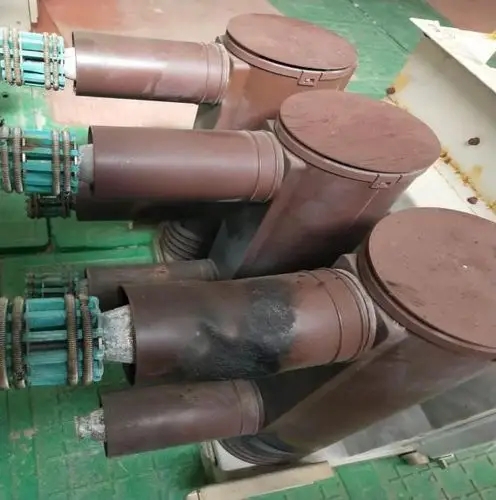
Part 3: Prevention and the Future—Stopping Failure Before It Happens
As engineers, our job isn't just to analyze failures; it's to prevent them from ever occurring. This requires a comprehensive approach to asset management, from design and manufacturing to installation and maintenance.
3.1 An Engineer's Experience: Proactive Testing
Proactive testing is the most effective way to detect a breaker’s "sub-healthy" state. It's not just a routine task; it's a full-body checkup for the equipment.
Key tests include insulation resistance and leakage current tests, which evaluate the integrity of the breaker's insulation. Contact resistance tests check for hot spots and contact wear in the main circuit, while mechanical characteristic tests are the gold standard for assessing the health of the operating mechanism.
These tests measure crucial parameters like opening/closing speed, synchronicity, and contact bounce.
Advanced technologies like the Magnetron Atmospheric Condition Test (MAC Test) allow us to precisely measure the vacuum level of an interrupter without having to remove it from the circuit breaker. This enables a shift from time-based to predictive maintenance, allowing us to replace at-risk breakers before they fail.
Note: Mechanical characteristic tests are the gold standard for diagnosing a breaker’s health, as they directly reflect its ability to operate reliably.
3.2 The Future of Smart Maintenance: From Reactive to Proactive
Future maintenance will be data-driven and intelligent. We can use IoT sensors to monitor key data points in real time, such as the number of operations, coil current, and partial discharge.
This data can be analyzed with machine learning algorithms to create a fault prediction model. When the model detects an abnormal pattern, it can issue an early warning, allowing maintenance crews to intervene before a failure occurs.
This is the goal of condition-based maintenance—only servicing equipment when it’s actually needed, which boosts efficiency and dramatically reduces risk.
Tip: The ultimate goal of smart maintenance is to transition to condition-based servicing, which significantly improves efficiency and lowers risk.
FAQ (Frequently Asked Questions)
Q1: If VCBs have all these problems, why don't we use other types of breakers?
A1: VCBs are the dominant technology in medium-voltage applications due to their speed, low maintenance, and environmental friendliness. While they have potential risks, these are manageable with strict standards and scientific maintenance.
Q2: Why do some breakers explode, but the vacuum interrupter inside appears intact?
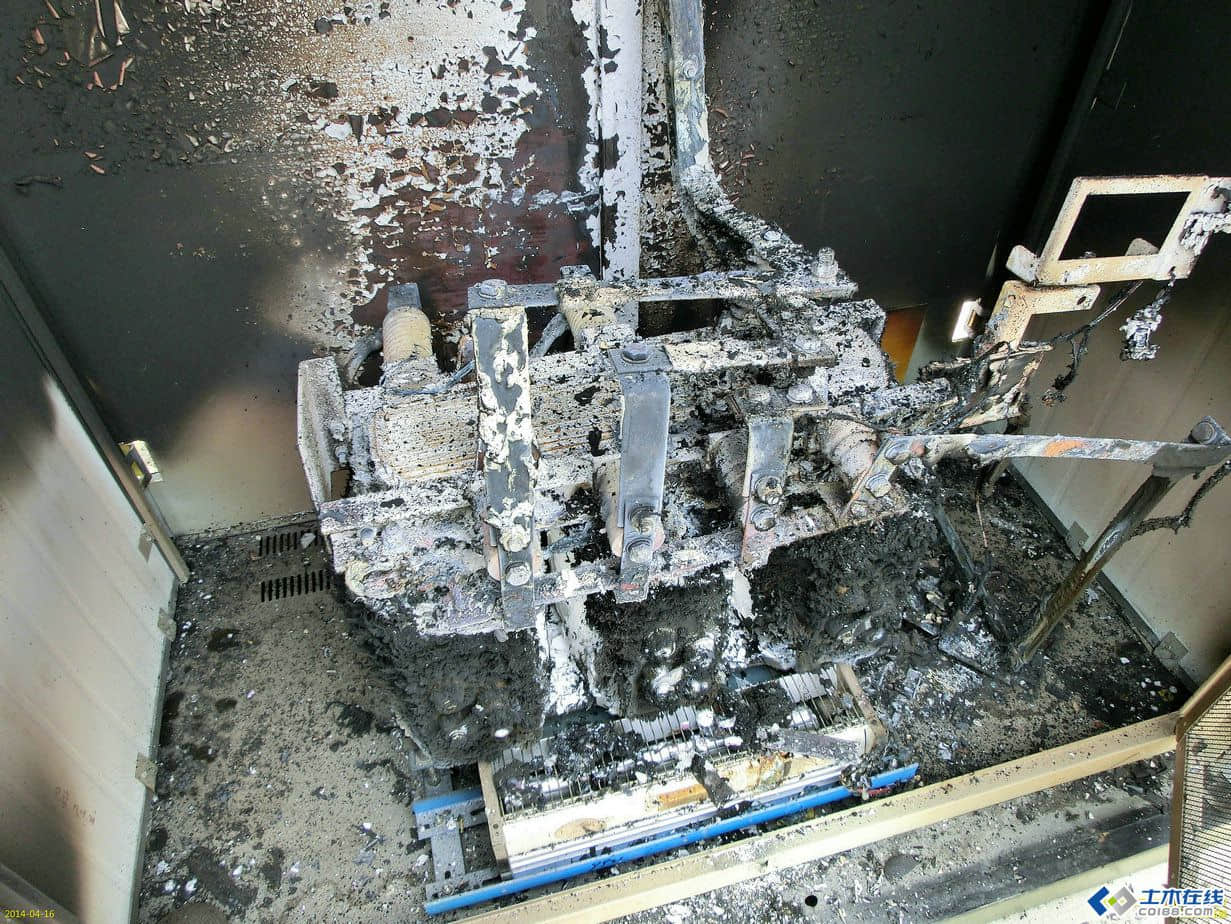
A2: An explosion doesn't always mean the vacuum interrupter itself ruptured. In some cases, a failed interruption can cause a powerful arc to spread outside the interrupter, leading to a phase-to-phase short circuit or an insulator flashover, which then triggers an external explosion.
Q3: Does frequent operation really affect a breaker's lifespan?
A3: Yes. A breaker’s life depends on both its mechanical life and electrical life. Each operation causes wear on the mechanism and contacts, accelerating fatigue and consuming the contact material.
Q4: Why is three-phase synchronicity so important?
A4: It’s critical for ensuring all three phases of a fault are cleared at the same time. If they're out of sync, the first phase to open has to withstand the full system recovery voltage, making it susceptible to arc re-ignition. This can lead to a more severe three-phase fault and, potentially, an explosion.