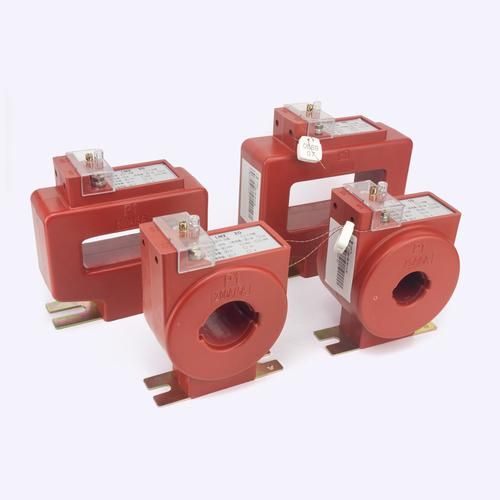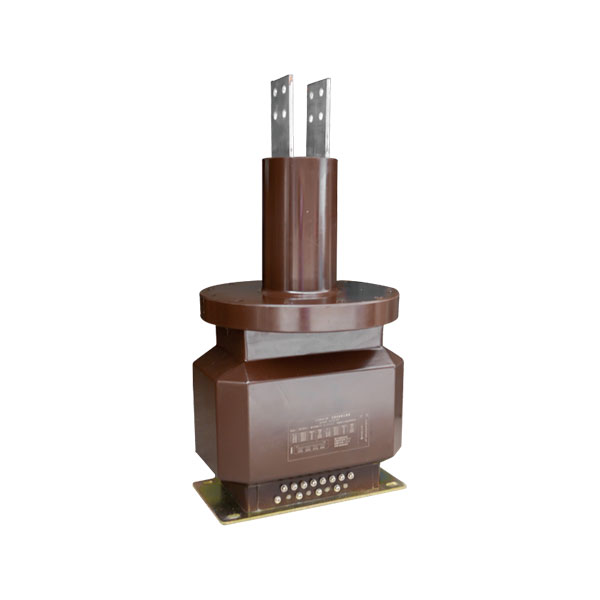
A device small enough to fit in one hand routinely protects equipment worth millions. That device is the current transformer, and in modern power systems, it quietly enables accurate measurement, revenue billing, relay protection, and operational visibility without exposing instruments or personnel to dangerous primary current.
This is the paradox at the heart of power engineering: very large current cannot be used directly by meters, relays, and automation devices, yet those devices must still “see” the system truthfully. The current transformer solves that problem through controlled current scaling and galvanic isolation.
The Problem: Why High Current Cannot Be Measured or Relayed Directly
In industrial feeders, motor circuits, generator outputs, and utility substations, primary currents commonly range from 100 A to several thousand amperes. During faults, those values may rise dramatically, often reaching 10 kA, 20 kA, or more, depending on system strength.
Directly connecting a measuring device to such a current is technically impractical and operationally unsafe. Instrument coils, relay inputs, and electronic acquisition circuits are designed for standardized low-current inputs, not for carrying busbar-level current.
There are two core issues:
Safety: direct measurement would expose instrumentation circuits to high energy and high insulation stress.
Usability: protection relays and meters require standardized signals, typically 1 A or 5 A secondary, for calibration and interoperability.
Without the current transformation, every meter or relay would need to be custom-built for the full circuit current. That would increase cost, reduce standardization, and severely compromise isolation.
Current Transformer Basics for Measurement and Protection
A current transformer (CT) is an instrument transformer that converts a large primary current into a smaller, proportional secondary current suitable for metering, monitoring, and protection. It is one of the foundational devices in the basics of current transformers for measurement and protection.
Its role is not merely to reduce current. It also provides electrical isolation between the high-energy primary system and the low-energy secondary circuit used by meters, relays, SCADA inputs, and recorders.
In practical engineering, CTs are used in:
Revenue and panel metering
Protective relay inputs
Motor protection circuits
Feeder monitoring
Substation automation and SCADA
Fault recording and disturbance analysis
Current Transformer Working Principle
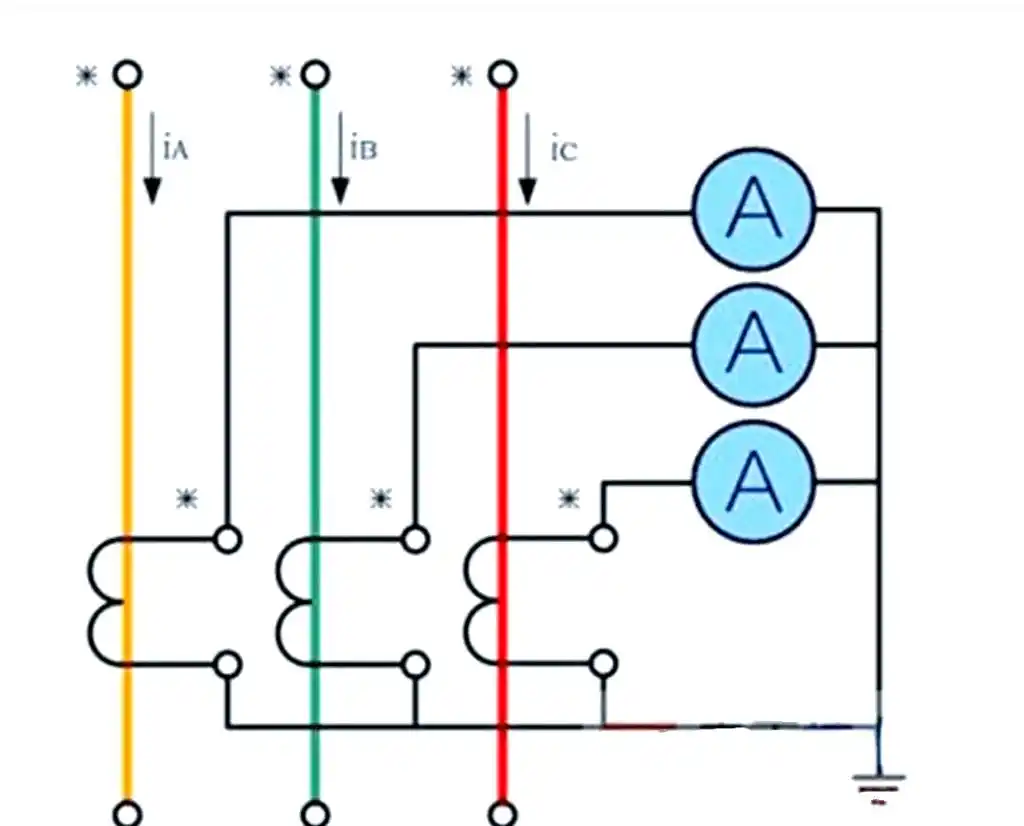
The working principle of the current transformer is based on electromagnetic induction. When alternating current flows through the primary conductor, it creates a changing magnetic flux in the CT core. That flux induces a current in the secondary winding.
Under normal operation, the secondary current is proportional to the primary current according to the transformer ratio. If a CT is rated 1000:5, then a primary current of 1000 A ideally produces 5 A in the secondary circuit.
The proportional relationship can be expressed simply as:
Primary current / Secondary current ≈ CT ratio
This proportionality is the reason engineers rely on CTs for both accurate measurement and dependable relay inputs. However, that proportionality holds only when the CT is correctly selected, correctly connected, and operating within its burden and saturation limits.
How Does a Current Transformer Work Step by Step
To answer how does a current transformer work in engineering terms, the process can be broken into a clear sequence.
1. Primary current flows through a conductor, busbar, or built-in primary winding.
2. A magnetic field forms in the CT core due to the alternating primary current.
3. Magnetic flux varies continuously with the AC waveform.
4. A secondary current is induced in the CT winding because of electromagnetic induction.
5. The connected burden draws current, and the secondary settles to a value proportional to the primary current.
6. Meters and relays receive a standardized input, usually 1 A or 5 A, rather than the actual line current.
The important operating concept is that a CT is not a passive current divider. Its behavior depends on the magnetic core, the secondary winding, and the connected load, usually called the burden.
Current Transformer Ratio and Burden Explained
Among the most important topics in practical CT engineering are current transformer ratio and burden. These two parameters directly influence whether the device will perform accurately under load and remain stable under fault conditions.
The ratio defines how primary current is translated into standard secondary current. The burden defines the total impedance or VA load connected to the secondary, including relay coils, meter inputs, lead resistance, terminal blocks, and test links.
When ratio selection is poor, the CT may operate too lightly loaded or too close to its thermal and magnetic limits. When burden is excessive, the CT may develop higher secondary voltage, increasing ratio error and the risk of core saturation.
Current Transformer Ratio: 1000:5, 200:1, and Other Common Examples
A CT ratio expresses the relationship between rated primary current and rated secondary current. In a 1000:5 CT, every 1000 A primary corresponds to 5 A secondary at rated conditions.
Likewise, in a 200:1 CT, 200 A primary corresponds to 1 A secondary. These standard outputs are used because modern relays, analyzers, and metering systems are designed around interoperable low-current inputs.
Common examples include:
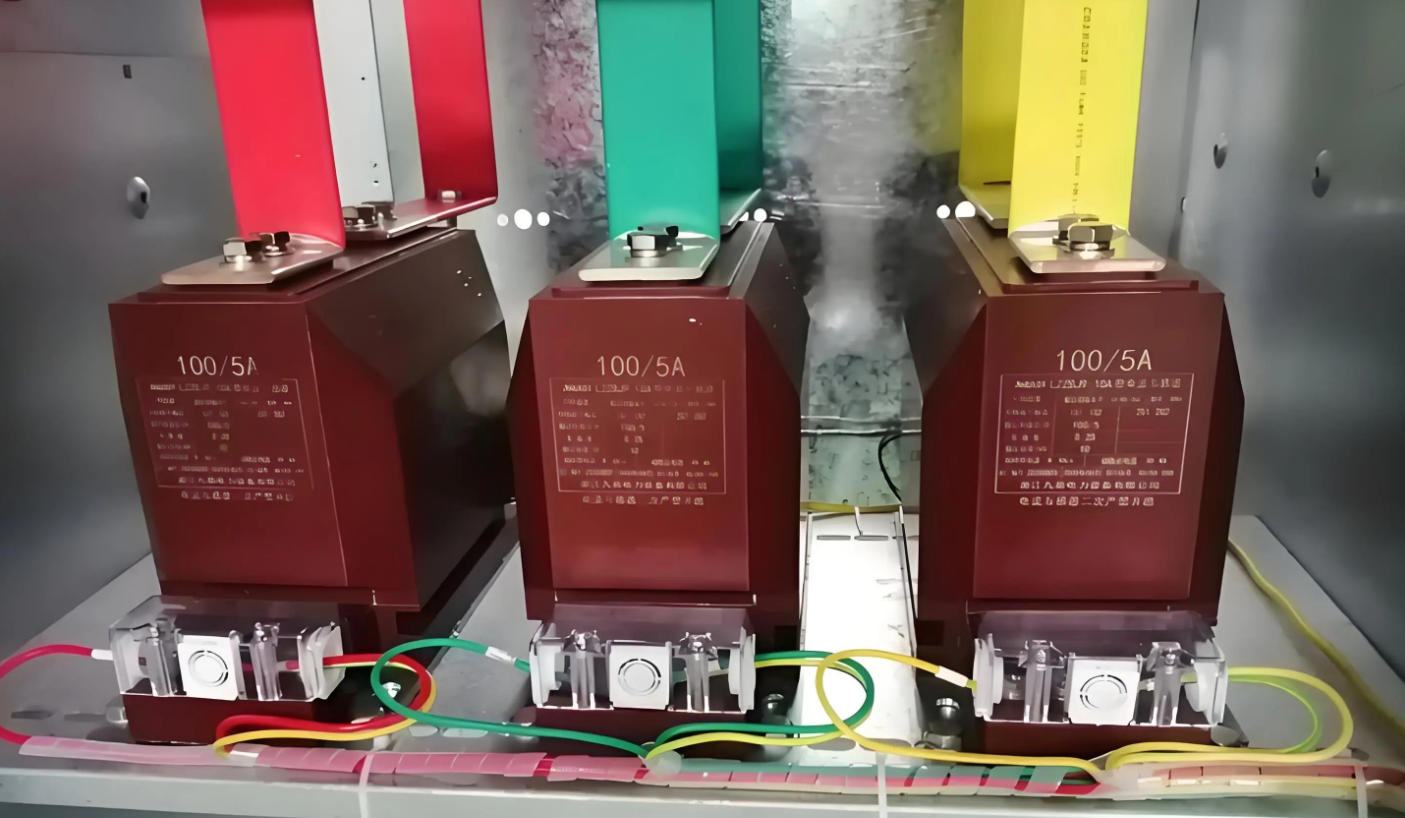
100:5 for small distribution panels
200:1 for longer secondary runs where lower copper loss is desirable
400:5 for motor feeders and MCC sections
800:1 for digital protection schemes and substation IEDs
1000:5 for larger feeders and incomers
2000:5 for utility-grade high-current circuits
Ratio choice should reflect expected load current, overload profile, fault contribution, and relay sensitivity. Selecting an oversized ratio often reduces measurement resolution during normal operation.
What Is CT Burden and Why It Changes Performance
CT burden is the total load connected to the secondary circuit, usually expressed in VA at rated secondary current. It includes the internal consumption of meters or relays plus the resistance of secondary wiring.
This matters because the CT must generate enough secondary voltage to drive current through that burden. As burden increases, the required secondary voltage rises. Once the core approaches its magnetic limit, saturation begins, and the secondary current no longer faithfully reproduces the primary waveform.
In metering circuits, excessive burden causes ratio error and phase angle error. In protection circuits, it can cause a much more serious issue: relay underperformance during faults.
CT Operation in Power Systems
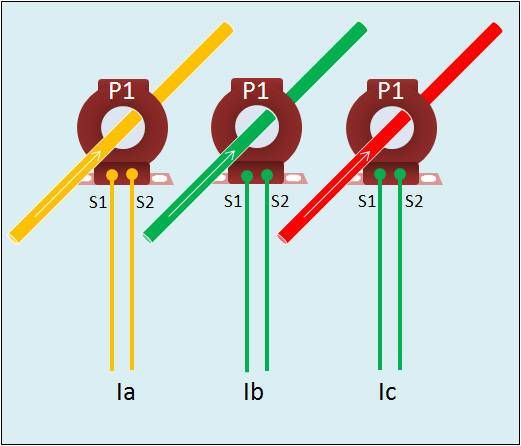
CT operation in power systems is central to both steady-state monitoring and transient event response. A CT may sit on a switchgear feeder, a transformer bushing, a motor starter, or a GIS compartment, but its system function is always strategic.
In real installations, CTs support:
Overcurrent protection
Differential protection
Earth fault and residual protection
Energy metering and billing
Power quality analysis
SCADA trend data and remote monitoring
For example, a feeder relay may depend on the CT to detect a fault within a few cycles. If the CT saturates too early, the relay may see a distorted current waveform and delay or miscoordinate its trip decision.
Metering CT vs Protection CT
Metering CTs are optimized for high accuracy around normal operating current, especially in the lower and mid-range of load. Their purpose is to support billing, monitoring, and power measurement with low error.
Protection CTs are optimized to remain useful during high fault current. They must reproduce current more faithfully over a wider dynamic range so that relays can identify abnormal conditions reliably.
The distinction is practical, not cosmetic:
Metering CT priority: low ratio error at nominal load
Protection CT priority: controlled saturation behavior under fault current
Metering concern: billing accuracy and energy confidence
Protection concern: relay dependability and security
In many substations, separate CT cores are provided within one assembly: one core for metering, another for protection. This avoids compromise between two fundamentally different performance objectives.
Ring-Type, Wound-Type, and Bar-Type Current Transformers
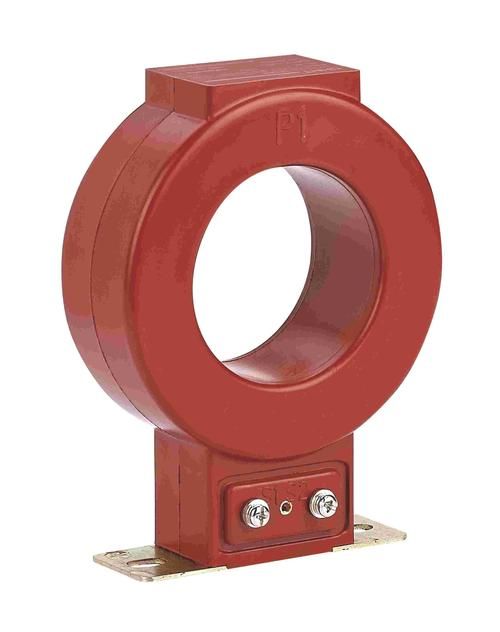
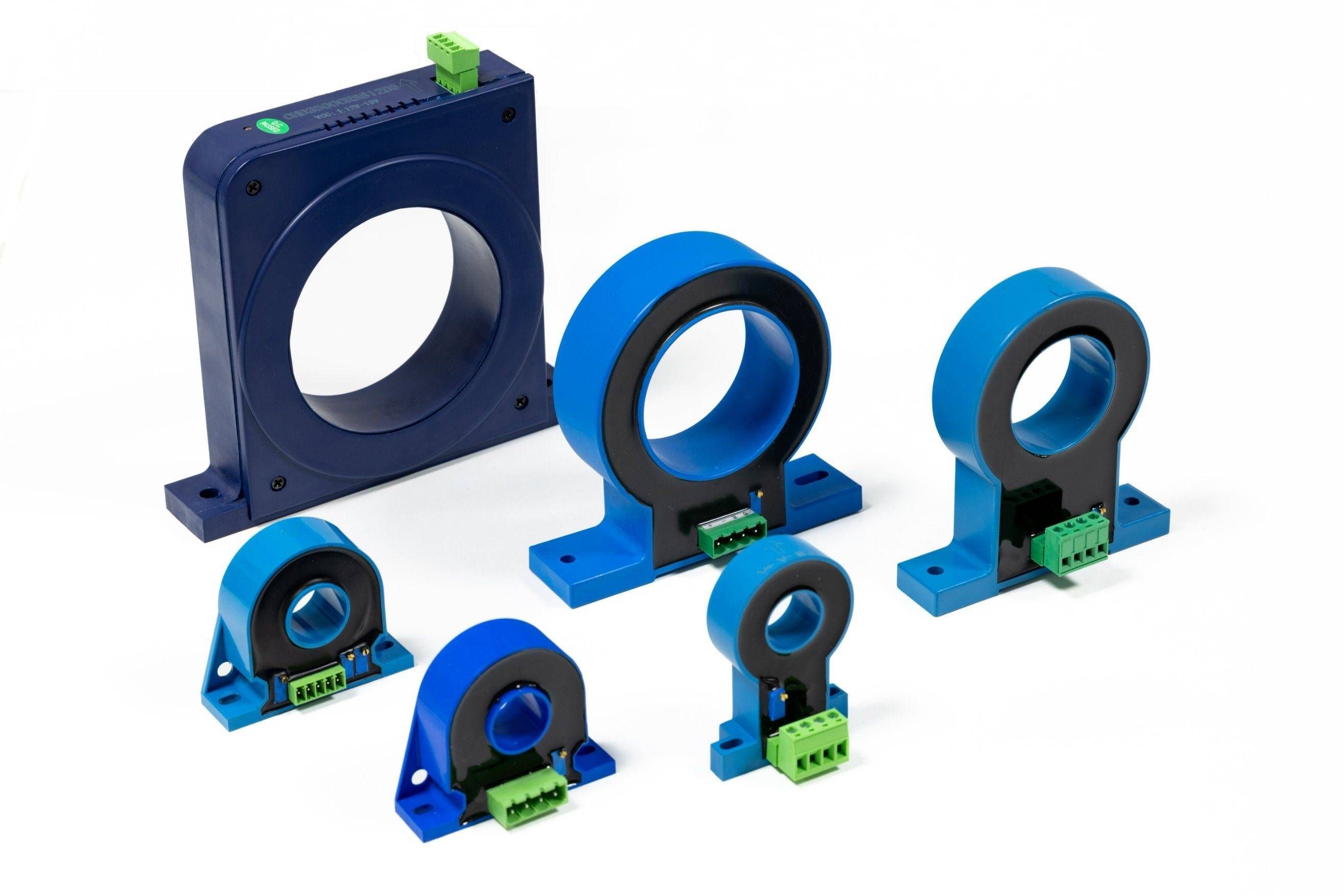
Ring-type CTs, also called window-type CTs, allow a conductor or cable to pass through the core opening. They are widely used in panelboards, switchgear, and retrofit applications because installation is straightforward.
Wound-type CTs include an actual primary winding as part of the transformer construction. They are used when a specific transformation characteristic is needed or where the primary conductor arrangement cannot simply pass through a window.
Bar-type CTs use a solid bar as the primary conductor. These are common in medium- and high-current equipment, where robust mechanical construction and compact integration are important.
Real-World Example: How Current Transformers Work in a Substation Feeder
Consider a medium-voltage feeder in an industrial substation carrying 800 A under heavy process load. The feeder is protected by a digital relay that accepts a 1 A nominal current input.
The engineer selects an 800:1 protection CT. Under normal rated current, the relay receives 1 A secondary. If the feeder current rises to 400 A, the relay sees approximately 0.5 A.
Now consider a fault event where current rises to 8 kA. Ideally, the CT should deliver a proportional secondary current of 10 A to the relay long enough for the relay algorithm to detect and classify the fault. If the burden is too high or the CT knee point is inadequate, the core may saturate early and distort the waveform.
That distortion matters in practice. In feeder protection studies, even a short interval of deep saturation can affect:
Instantaneous overcurrent pickup accuracy
Time-current coordination
Differential restraint behavior
Event record credibility
This is why CT selection is never just a catalog exercise. It is a protection engineering decision.
Data Table: Common Current Transformer Ratios and Typical Applications
| CT Ratio | Secondary Rating | Typical Application | Remarks |
|---|---|---|---|
| 100:5 | 5 A | Small panel metering | Suitable for low-current distribution boards |
| 200:1 | 1 A | Digital meter input, long cable runs | Lower secondary current reduces wiring loss |
| 400:5 | 5 A | Motor protection and MCC feeders | Common in industrial plants |
| 600:5 | 5 A | Main LV incomers | Often paired with multifunction meters |
| 800:1 | 1 A | Substation feeder protection | Preferred for numerical relays and longer secondary circuits |
| 1000:5 | 5 A | Large feeders and transformer incomers | Traditional standard in many legacy systems |
| 2000:5 | 5 A | Utility substations and bus section circuits | Requires careful review of fault performance |
Data Table: Typical Current Transformer Secondary Ratings, Burden, and Accuracy Classes
| Secondary Rating | Representative Burden | Typical Accuracy Class | Common Use |
|---|---|---|---|
| 1 A | 2.5 VA | 0.5 | Digital metering with longer wiring runs |
| 1 A | 5 VA | 5P10 | Protection relay input in modern substations |
| 1 A | 10 VA | 10P20 | Fault detection with a higher output requirement |
| 5 A | 5 VA | 0.2S | Revenue metering where precision is critical |
| 5 A | 10 VA | 0.5 | General industrial measurement |
| 5 A | 15 VA | 5P10 | Conventional relay circuits |
| 5 A | 30 VA | 10P20 | Older high-burden electromechanical protection schemes |
Data Table: Example Error Trends Under Different Burden and Fault Conditions
| Condition | Approx. Ratio Error | Approx. Phase Angle Error | Saturation Tendency |
|---|---|---|---|
| Rated current, low burden | 0.2% to 0.5% | Low | Very low |
| Rated current, near rated burden | 0.5% to 1.0% | Moderate | Low |
| Overload, burden above design | 1% to 3% | Elevated | Moderate |
| High fault current, proper protection CT | Controlled for relay use | Acceptable for the protection window | Managed |
| High fault current, excessive burden | Can exceed 5% | High | High |
| Severe fault with undersized CT | Potentially large and non-linear | Severe distortion | Very high |
Proof and Technical Evidence: Why Correct CT Selection Improves Accuracy and Protection Reliability
In practical substation upgrades, moving from legacy 5 A circuits with long copper runs to 1 A CT secondaries often reduces secondary loop burden substantially. In many retrofit cases, engineers observe lower wiring losses and improved effective accuracy at the relay input.
As a numerical example, a 5 A secondary circuit with the same loop resistance as a 1 A circuit imposes much greater VA burden because burden scales with current squared. This is one reason modern digital protection systems frequently prefer 1 A CT inputs.
Field experience also shows that correctly classed protection CTs improve relay dependability during fault events. In feeder and transformer protection, the difference between an adequately dimensioned CT and an underrated one can determine whether the relay sees the first few fault cycles clearly enough to trip in time.
From a safety standpoint, CTs also provide an essential isolation function in medium- and high-voltage systems. That isolation allows meters, IEDs, and test equipment to interface with the system without direct exposure to the primary conductor energy level.
In revenue metering, even a seemingly small ratio error can become commercially important. Over a year of high-energy industrial consumption, a persistent metering deviation of less than 1% may still represent a significant financial discrepancy. That is why metering-class CT selection is tightly controlled in utility and large-facility billing applications.
Engineering takeaway: correct CT selection improves measurement confidence, relay reliability, fault visibility, and personnel safety simultaneously.
Common Mistakes in Current Transformer Use
Many CT failures in the field are not caused by manufacturing defects. They arise from avoidable specification or installation mistakes.
Open-circuiting the secondary: a dangerous condition that can produce very high secondary voltage.
Choosing the wrong ratio: too high a ratio reduces low-load sensitivity; too low a ratio risks overload and saturation.
Ignoring burden: long cable runs and multiple connected devices can push the CT beyond its intended output capability.
Using metering CTs for protection duty: they may saturate too early in fault conditions.
Incorrect polarity connection: especially harmful in differential, directional, and residual protection schemes.
Mismatched accuracy class: a CT suitable for panel indication may be unsuitable for relay performance.
Poor secondary grounding practice can create safety and noise issues.
The most dangerous mistake remains the open secondary. When primary current exists, and the secondary is left open, the CT may generate dangerously high voltage across the secondary terminals. This can damage insulation and create a severe shock risk.
How to Select the Right Current Transformer
Good CT selection begins with the application, not the catalog. The right approach is to define the electrical duty first, then match the CT specification to that duty.
1. Determine the actual operating current range. Use normal load, overload, and future expansion data.
2. Identify the application type. Metering, protection, or dual-core combined service.
3. Select the ratio carefully. Match rated primary current to realistic system loading, not only breaker frame size.
4. Choose 1 A or 5 A secondary. Consider relay compatibility and wiring distance.
5. Calculate total burden. Include relay input, meter input, terminal resistance, and cable resistance.
6. Choose the accuracy class. Metering classes for precision, protection classes for fault fidelity.
7. Review insulation level and system voltage. Particularly important in MV and HV switchgear.
8. Check the installation environment. Indoor, outdoor, humidity, temperature, contamination, and enclosure constraints all matter.
9. Validate short-time thermal and dynamic withstand. This is essential for high fault-level systems.
If the application involves differential protection, transformer REF, busbar protection, or utility revenue metering, the specification should be reviewed by a qualified protection engineer. These are not areas where generic selection is acceptable.
Featured Snippet Section: How Does a Current Transformer Work in One Clear Answer
A current transformer works by using electromagnetic induction to convert a large AC in a primary conductor into a smaller, proportional secondary current, usually 1 A or 5 A, so that meters and protective relays can safely measure and monitor power system current with electrical isolation.
FAQ
What is the working principle of a current transformer?
The working principle of a current transformer is electromagnetic induction. Alternating current in the primary creates changing magnetic flux in the core, which induces a proportional current in the secondary winding.
How does a current transformer work in simple terms?
In simple terms, a current transformer takes a very large current flowing in a power cable or busbar and converts it into a much smaller standard current that a meter or relay can safely read.
What happens if the secondary of a current transformer is left open?
If the secondary is left open while primary current is flowing, the CT can develop dangerously high voltage at the secondary terminals. This can damage insulation, create shock risk, and permanently harm the transformer.
What is the difference between a current transformer and a potential transformer?
A current transformer scales current for measurement and protection, while a potential transformer scales voltage. CTs are connected in series with the primary path, whereas potential transformers are connected across the voltage source.
Why are 1 A and 5 A secondary currents commonly used in CTs?
They are standardized values that match the input design of metering and protection devices. A 1 A secondary is often preferred in modern systems because it reduces secondary wiring burden and copper losses, especially over longer distances.
How do the CT ratio and burden affect accuracy?
The ratio determines how primary current is scaled to the secondary, and the burden determines how hard the CT must work to drive that current through the connected circuit. If the ratio is poorly chosen or the burden is too high, accuracy decreases and saturation risk increases.
Where are current transformers used in power systems?
Current transformers are used in substations, switchgear, industrial motors, feeders, generator circuits, transformer protection schemes, SCADA monitoring systems, and revenue metering installations.
Conclusion: From Measurement Device to Protection Backbone
Understanding current transformer how it works is not a narrow technical exercise. It is essential to safe measurement, correct relay operation, accurate energy accountability, and resilient power system performance.
The CT may appear simple, but its influence is system-wide. When correctly specified, it gives operators trustworthy data and gives protection relays a reliable view of both normal load and abnormal fault behavior.
When incorrectly selected, however, the consequences are immediate: poor accuracy, hidden error, relay misoperation, and avoidable safety exposure. That is why serious engineers treat CT selection as part of power system design integrity, not as a routine accessory purchase.
For organizations that need dependable current measurement and protection performance, Weisho Electric stands out as a partner worth serious attention. With a focus on practical electrical applications, specification support, and product reliability, Weisho Electric is well-positioned for customers who cannot afford guesswork in CT selection.
CTA: Evaluate Your CT Specification Before the Next Installation
Before your next installation, compare your required ratio, burden, accuracy class, insulation level, and application duty against the actual system conditions. Do not assume an existing CT specification is still correct for upgraded relays, longer cable runs, or changing fault levels.
If you are reviewing a new project, retrofit, or protection upgrade, consult a qualified engineer and talk to Weisho Electric for a specification review that aligns measurement accuracy with real protection reliability.