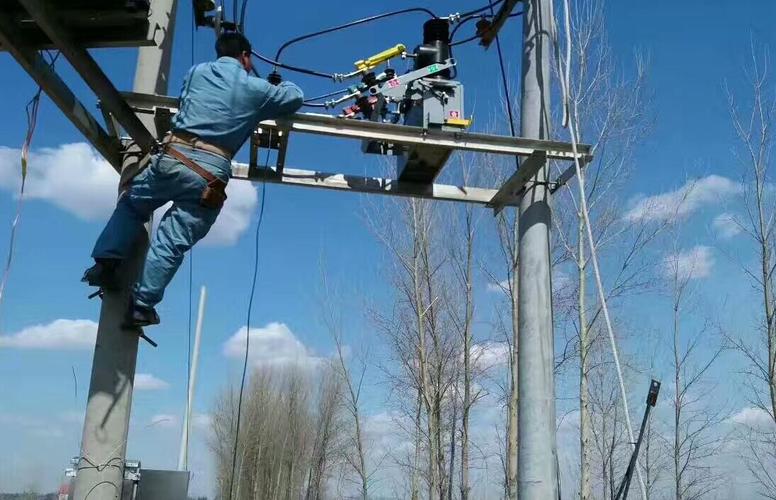
The loud, metallic "clack" of a 12kV Vacuum Circuit Breaker (VCB) closing is usually the sound of reliability. In the engineering world, we were sold a dream: the "maintenance-free" breaker. Marketing brochures from the 90s and early 2000s promised that because the contacts were sealed in a vacuum, these units would outlast the buildings they powered.
But reality has a different plan. After 12 years in the trenches of medium voltage (MV) commissioning and emergency repairs, I have seen these "indestructible" units explode, seize, and fail to trip during critical faults. A 12kV VCB is not a "set and forget" device; it is a precision-engineered machine operating under extreme electrical and mechanical stress.
When a VCB fails, it isn't just a nuisance. It is a catastrophic event that can lead to arc flash incidents, total plant blackouts, and millions of dollars in lost production. This guide exposes the industry myths and provides a roadmap for 12kV vacuum circuit breaker maintenance best practices based on hard-won field experience.
The Hook: Why Your "Maintenance-Free" VCB is a Ticking Time Bomb
If you believe your VCB is maintenance-free, you are likely ignoring the operating mechanism. While the vacuum interrupter (VI) itself is indeed a sealed unit, the thousands of moving parts that drive those contacts are subject to the laws of physics and chemistry.
I have walked into substations where 12kV breakers had been sitting in the "ON" position for seven years without a single operation. When we finally hit the trip button for a routine test, nothing happened. The breaker was physically frozen in place. In a real fault scenario, that breaker would have failed to clear, leading to the destruction of the upstream transformer.
Industry standards like IEC 62271-100 and IEEE C37.04 provide the framework for design, but they don't account for the "real world" variables: humidity, coal dust, salt air, and the slow degradation of factory lubricants. We are currently seeing a wave of failures in aging infrastructure that requires a shift from reactive to preventive maintenance for 12kV electrical breakers.
The Top 5 Root Causes of VCB Failures: Beyond the Data Sheet
Understanding the common causes of VCB failure in switchgear requires looking past the electrical ratings and into the mechanical soul of the device. Here are the primary culprits we encounter in the field:
Mechanical Linkage Seizure: Over 70% of failures are mechanical, not electrical. Lubricants dry out, and pivot points corrode, preventing the spring energy from reaching the contacts.
Control Circuit Failure: Blown trip coils or burnt-out auxiliary switches often prevent the breaker from responding to relay commands.
Environmental Contamination: Dust and moisture create "tracking" paths across the insulating poles, leading to phase-to-ground faults.
Loss of Vacuum: While rare, a "leaky" vacuum interrupter turns a circuit breaker into a potential bomb during an opening operation.
Improper Commissioning: Units that were never leveled correctly or had their contact wipe settings ignored during installation.
Pro Tip: Always check the "Operations Counter." If a breaker has exceeded its mechanical endurance rating (typically 10,000 to 30,000 operations), it is no longer a question of if it will fail, but when.
The "Hardened Grease" Epidemic: A Field Technician’s Perspective
If you spend any time on Reddit’s r/ElectricalEngineering or Quora’s power systems forums, you’ll find a recurring nightmare: the "glue-like" substance that used to be grease. Manufacturers often use lithium-based greases that are excellent for the first five years.
However, in the heat of a 12kV switchgear room, the oil separates from the thickener. What remains is a hard, waxy residue. This residue acts as an adhesive rather than a lubricant. I once worked on a 12kV VCB in a chemical plant where the grease had become so hard we had to use a heat gun and a chisel just to move the charging handle.
This is the #1 hidden pain point in the industry. Mechanical seizure is the silent killer. When the protection relay sends a trip signal, the trip coil fires, but the latch is stuck in the "hardened grease." The coil then stays energized too long and burns out, leaving the breaker permanently "live" and un-trippable.
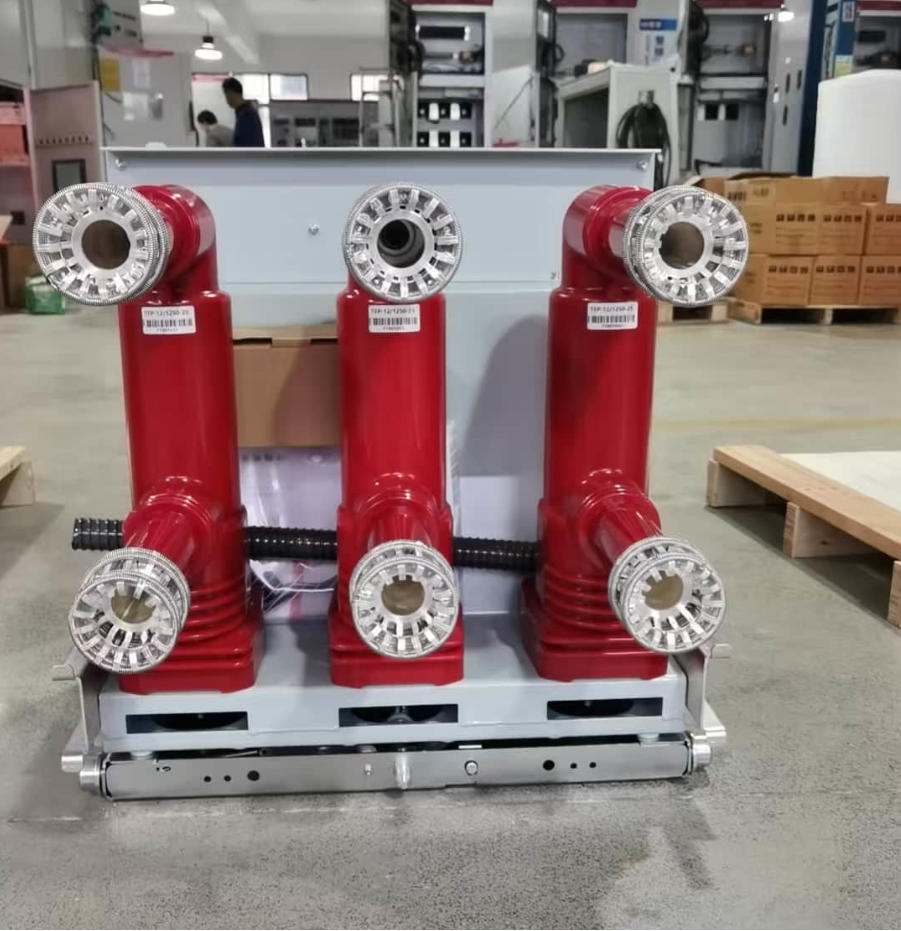
Table: Failure Mode and Effects Analysis (FMEA) for VCBs
To better manage your assets, use this FMEA table derived from a decade of field data and IEEE 3007.2 maintenance recommendations.
| Component | Primary Failure Mode | Field Frequency | Detection Method | Standard Reference |
|---|---|---|---|---|
| Vacuum Interrupter | Dielectric Breakdown / Loss of Vacuum | Low (but Critical) | High-Pot / Contact Resistance | IEC 62271-1 |
| Operating Mechanism | Mechanical Seizure / Spring Fatigue | High | Timing Test / Visual Inspection | IEEE C37.06 |
| Auxiliary Switches | Signal Misalignment / Contact Pitting | Medium | Continuity Testing / Ohmmeter | IEC 62271-100 |
| Insulating Poles | Surface Tracking / Carbonization | Medium | IR Scan / Insulation Resistance | IEEE C37.20.2 |
| Trip/Close Coils | Burnout due to Latch Sticking | Medium | Coil Resistance / Voltage Drop | Manufacturer Specs |
Troubleshooting Vacuum Interrupter Dielectric Breakdown
When we talk about vacuum interrupter dielectric breakdown troubleshooting, we are looking for two things: Is the vacuum still there? And can the gap still withstand the rated voltage? A vacuum interrupter works because of Paschen's Law—in a high vacuum, the breakdown voltage is incredibly high even for small gaps.
If the vacuum is lost (a "leaker"), the pressure inside rises to atmospheric levels. At this point, the 12kV will easily jump the small contact gap even when the breaker is "Open." This is why High-Potential (Hi-Pot) testing is non-negotiable. We typically apply an AC or DC voltage (usually around 27kV to 36kV for a 12kV rated unit) across the open contacts.
Warning: During Hi-Pot testing, vacuum interrupters can emit X-rays. Always stay at least 3 meters away from the front of the breaker and ensure the metal housing is grounded. If the unit fails the Hi-Pot test, it must be replaced immediately. There is no "repairing" a vacuum seal in the field.
Commissioning Procedures for Medium Voltage Circuit Breakers: Preventing Day-Zero Failures
Many failures are "baked in" during the installation phase. Proper commissioning procedures for medium voltage circuit breakers are your last line of defense against manufacturing defects or shipping damage. I have seen brand-new breakers arrive with cracked ceramic insulators that were invisible to the naked eye but failed immediately during a moisture test.
A robust commissioning protocol must include:
1. Contact Resistance Measurement (CRM): Using a micro-ohmmeter (100A DC), we measure the resistance across the closed contacts. For a 12kV VCB, this should typically be under 50 micro-ohms. High resistance means heat, and heat leads to contact welding.
2. Timing and Velocity Analysis: We use a breaker analyzer to measure opening and closing times in milliseconds. If the three poles don't close within 2ms of each other (pole discrepancy), it creates massive transients in the system.
3. Minimum Pickup Test: We reduce the control voltage to 70% of the rating to ensure the coils can still trip the breaker during a battery-low scenario.
4. Insulation Resistance (Megger): Testing phase-to-phase and phase-to-ground at 5kV DC to ensure no shipping damage to the insulating structures.
The Humidity Factor: Why 12kV Electrical Breakers Fail in Tropical Climates
In regions with high humidity—like Southeast Asia, the Gulf Coast, or even damp basements in London—the 12kV VCB faces a relentless enemy: condensation. Moisture combines with dust to form a conductive "slurry" on the surface of the insulating poles.
This leads to surface tracking. You will see tiny "lightning bolt" patterns etched into the plastic or ceramic. This is the path the electricity is taking to ground. Eventually, this path becomes low-resistance enough to cause a full phase-to-ground explosion.
The solution is simple but often ignored: Space Heaters. Every MV switchgear cubicle has a small heater. If that heater fails or is turned off by an operator who thinks they are "saving energy," the breaker is likely to fail within six months. Preventive maintenance for 12kV electrical breakers must include a functional check of the cubicle heaters and thermostats.
Vacuum Circuit Breaker Maintenance Best Practices: The 12-Year Checklist
Based on over a decade of field experience, here is the ultimate maintenance roadmap. Following this will extend the life of your 12kV assets by decades.
Annual Maintenance (Minor):
Visual inspection for signs of overheating (discoloration of busbars).
Check the operations counter and record.
Test cubicle heaters and verify thermostat settings.
Clean external insulators with lint-free cloths and denatured alcohol.
Three-Year Maintenance (Major):
Perform Contact Resistance Measurement (CRM).
Conduct AC High-Pot testing on vacuum interrupters.
Execute Breaker Timing Tests to check for mechanical slowing.
Re-lubricate: Remove old, hardened grease and apply high-quality synthetic lubricant (like Mobilith SHC or manufacturer-approved equivalents).
Verify auxiliary switch timing and contact condition.
Six-Year Maintenance (Overhaul):
Inspect primary disconnects (the "fingers" that plug into the bus) for tension and wear.
Check charging motor brushes and commutator.
Secondary injection testing of the protection relays to ensure the entire "chain" (Relay -> Coil -> Breaker) works.
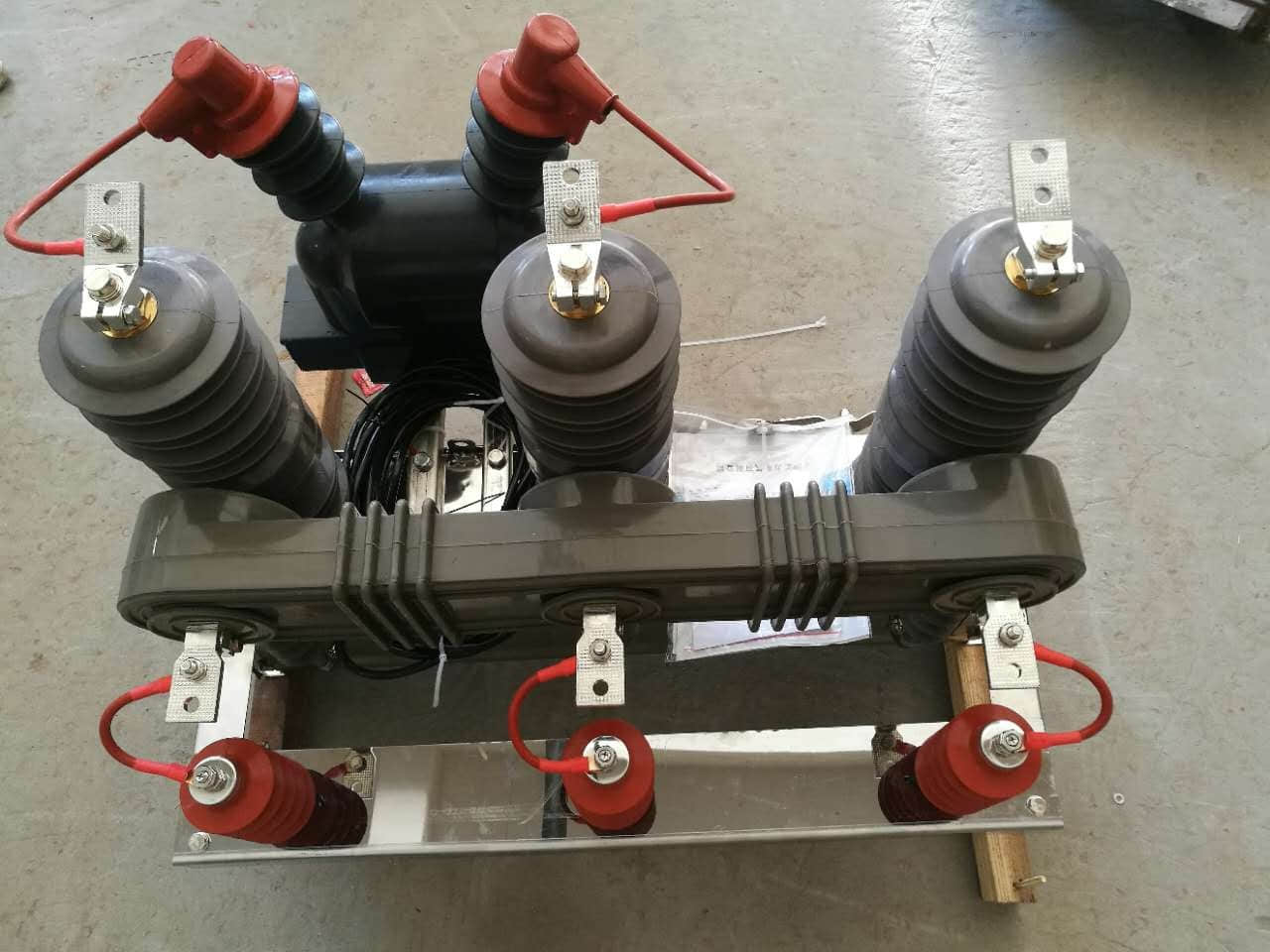
Case Study: The $50,000 Outage Caused by a $5 Auxiliary Switch
Last year, I was called to a data center that had suffered a total power loss. The 12kV VCB had tripped correctly due to a downstream fault, but the auxiliary switch—a small plastic component that tells the system if the breaker is open or closed—had snapped.
Because the auxiliary switch failed to move, the control system "thought" the breaker was still closed. It prevented the auto-transfer switch from engaging the backup generator. For four hours, a multi-million dollar data center was dark because of a $5 plastic part that had become brittle over 10 years of heat exposure.
The lesson? 12kV vacuum circuit breaker maintenance best practices must include the "minor" components. We now recommend replacing auxiliary switches every 10 years regardless of their apparent condition. It is cheap insurance against a catastrophic system failure.
Frequently Asked Questions (FAQ)
How can I tell if a vacuum interrupter has lost its vacuum without a high-pot test?
You cannot reliably determine vacuum integrity through visual inspection alone. While some older VIs had "getters" that would change color if the vacuum was lost, modern units are opaque. The only definitive field methods are the AC High-Pot test or the Magnetron Atmospheric Control (MAC) test, which measures the actual pressure inside the bottle. If you see a "glow" during a high-pot test, it is a sign of ionization and potential vacuum loss.
Why does my 12kV VCB trip randomly during periods of high humidity?
This is usually caused by nuisance tripping due to leakage currents. When humidity is high, surface tracking on the insulators can create small currents that the sensitive earth-fault protection relays detect. If your relay is set to a very low threshold, these "leakage paths" look like a fault. Cleaning the insulators and ensuring your cubicle heaters are working is the first step in troubleshooting this issue.
What is the most reliable lubricant for VCB mechanical linkages in extreme temperatures?
Field experience shows that synthetic-based greases with PTFE additives (like Super Lube) or specialized aerospace lubricants (like AeroShell) perform much better than standard mineral-based lithium greases. They have a wider temperature range and do not "oxidize" or harden into a waxy substance over time. Always consult the manufacturer's manual, but if you are in a pinch, look for a "non-drying" synthetic grease.
How often should a 12kV VCB be functionally tested in a standby environment?
For breakers that rarely operate (such as those in standby generator circuits), we recommend a "monthly exercise" where the breaker is tripped and closed manually or via the control system. This prevents the lubricant from settling and ensures the linkages remain free. If a monthly schedule isn't possible, a six-month functional test is the absolute minimum to prevent mechanical seizure.
Secure Your Power Infrastructure: Expert VCB Audits and Training
Don't wait for a "bang" in the middle of the night to realize your maintenance program is insufficient. The complexity of modern 12kV vacuum circuit breaker maintenance best practices requires specialized tools and deep technical knowledge.
Are you ready to move beyond "maintenance-free" myths? We provide comprehensive site audits, advanced diagnostic testing (including MAC testing and timing analysis), and specialized training for your facility technicians. Ensure your medium-voltage circuit breakers are ready when a fault occurs.
Contact our engineering team today for a comprehensive VCB health check and protect your critical assets from the hidden dangers of mechanical and dielectric failure.