Are you planning to install a high-power device like a hot tub or an EV charger? These projects all need a dedicated 60-amp circuit. Choosing the right wire size is one of the most critical decisions you will make.
This isn’t just a technical matter; it's a safety decision that affects your family and your property. Selecting the wrong wire can lead to dangerous overheating, melted insulation, and even fires. As a seasoned electrician, I know no detail can be overlooked here.
Understanding the Basics: Ampacity & Wire Gauge
Before we go any further, you need to understand two key concepts. They are ampacity and American Wire Gauge (AWG).
Ampacity is the maximum current a wire can safely handle. Think of it as a water pipe’s capacity. A larger pipe can handle more flow, just as a thicker wire can safely carry more current.
American Wire Gauge (AWG) is the standard for measuring wire thickness in the U.S. A lower number means a thicker wire. An AWG #10 wire is much thicker than a #14 wire, so it can handle more current.
The Four Key Factors in Choosing the Right Wire
Choosing the correct wire for a 60-amp circuit is much more than a simple lookup in a table. A lack of attention to any of these factors could turn your circuit into a ticking time bomb.
1. Conductor Material: Copper vs. Aluminum
This is the most fundamental choice you will make. While both materials have their place, copper is almost always the preferred choice for residential wiring.
Copper Wire is highly conductive, allowing it to handle more current than aluminum wire of the same size. It’s also very flexible and resistant to oxidation. This is why you will find copper wire throughout most homes.
Aluminum Wire is cheaper and lighter, which is why it's commonly used for long-distance power lines. However, it's not as conductive as copper.
Aluminum can also oxidize, and that can cause connections to overheat and become loose. This can lead to arcing and fires, so its use is heavily regulated. If you must use aluminum wire, you must use connectors and circuit breakers rated for it.
2. Circuit Length and Voltage Drop
This is a critical factor that many DIYers overlook. The longer a wire, the more resistance it has, causing a small loss of voltage known as a voltage drop.
If the voltage drop exceeds the recommended 3%, your devices might not function properly. Motors might struggle to start, and lights can become dim.
The drop can also force devices to pull more current to compensate. This in turn makes the wire hotter, leading to a dangerous cycle.
To avoid this, you must upgrade to a thicker wire for longer runs. Even if a #6 AWG copper wire is sufficient for a short run, you may need to use a #4 AWG copper wire or even thicker wire for runs over 50 feet.
This ensures the voltage stays within a safe and functional range.
3. Load Type: Continuous Loads
This is what separates a novice from a professional. According to the National Electrical Code (NEC), if you’re wiring a device that will run for three hours or more, it’s a continuous load. This requires an extra margin of safety.
The NEC mandates that a circuit breaker’s continuous load should not exceed 80% of its rating. A 60-amp breaker, for example, should not carry more than 48 amps of continuous current.
For maximum safety, many electricians will choose a wire that can handle 125% of the breaker’s full rating. This is 75 amps, and a #4 AWG copper wire is rated for that.
4. Installation & Environmental Factors
A wire's ability to dissipate heat is critical to its ampacity.
If a wire is run through a tight conduit, its ability to cool down is reduced. In these cases, you must “derate” the wire.
This means you need to use a larger wire size to compensate for the lack of heat dissipation. Similarly, wires installed in hot environments, such as an attic, can have their ampacity reduced.
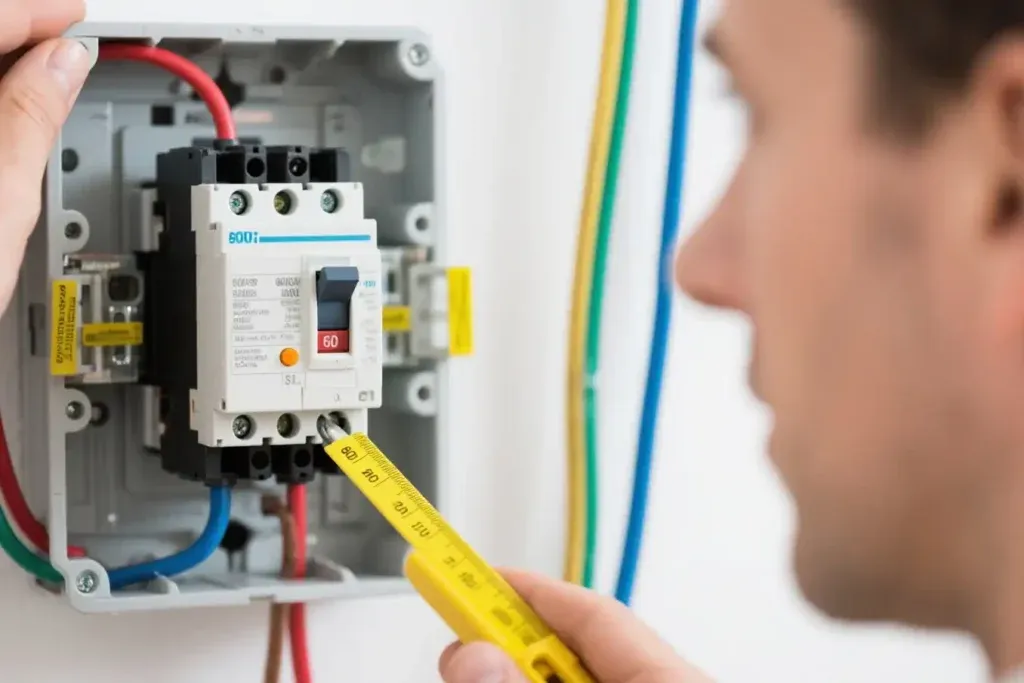
Authoritative Recommendations for 60-Amp Wiring
Based on all the factors above, here is your definitive guide to wire selection. Remember, this isn't just about technical compliance; it's about protecting yourself and your home.
This video provides a brief visual overview of common wire and breaker sizes, including a look at 60-amp circuits.
Final Safety Warning: Always Hire a Licensed Electrician
Please note: This article is for educational purposes only and is not a substitute for professional advice.
Electrical work is highly dangerous. A single mistake can have devastating consequences.
Undersized wires can turn into dangerous heating elements, melting insulation and causing fires. They can also cause breakers to fail to trip during an overload, which can be deadly.
Improperly done work can also void your home insurance. If an accident occurs and your wiring isn't up to code, you alone will be held liable.
Use this article as a guide when speaking to your electrician. Never compromise on safety to save a few dollars on wire.
Always hire a licensed professional. They can properly evaluate your specific situation and perform a safe and compliant installation.
Frequently Asked Questions (FAQs)
Why does my 60-amp breaker keep tripping?
Your breaker is most likely tripping due to an overload. This happens when the total power draw of connected devices exceeds the circuit's 60-amp capacity. If you're not overloading the circuit, the wire itself might be too small, causing it to overheat. In all cases, you should stop using the circuit immediately and call an electrician.
Can I use #8 AWG wire for a 60-amp device?
Absolutely not. According to the NEC, #8 AWG copper wire is only rated for 40 amps. #8 AWG aluminum wire is rated for just 30 amps. Using this undersized wire for a 60-amp load will cause severe overheating and fire. This is a highly dangerous practice and violates all safety codes.
How do you calculate voltage drop for a long wire run?
Precise calculations consider wire material, length, and current. A simplified formula is "Voltage Drop = Current × Resistance". For a 60-amp circuit, if the drop exceeds 3%, you need to go up at least one or two wire gauges.
Why does aluminum wire need to be a larger size? Is it unsafe?
Aluminum is a less conductive material than copper. It produces more heat when carrying the same current, so a larger size is required to stay safe. Aluminum itself isn't inherently unsafe, but it does have properties—like a high thermal expansion rate and a tendency to oxidize—that make proper installation critical to prevent loose connections. With a qualified electrician and the right materials, aluminum wire can be a viable option.
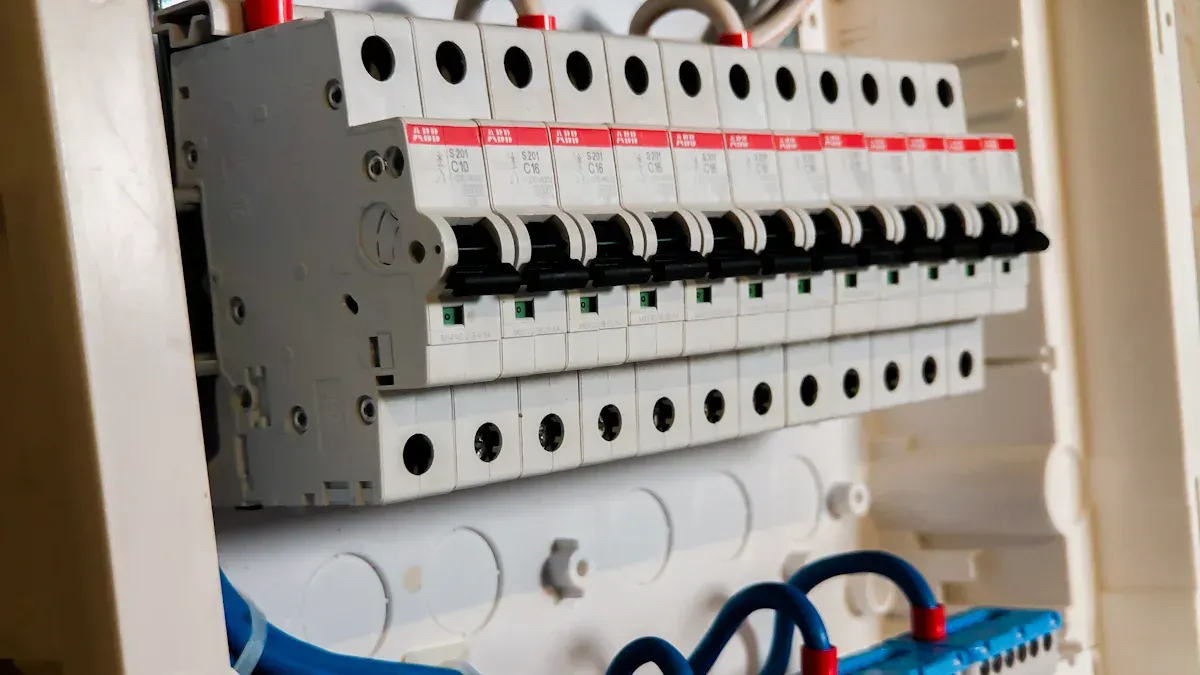
What type of breaker is needed for a 60-amp circuit?
A 60-amp circuit requires a double-pole 60-amp breaker. This breaker takes up two spaces in the panel and simultaneously disconnects both 120-volt hot wires to protect a 240-volt circuit. Make sure the breaker's brand and model are fully compatible with your electrical panel.
Do I need a ground wire for a 60-amp circuit? What size should it be?
Yes, all circuits require a ground wire as a critical safety feature. It safely diverts fault current to the ground, preventing electric shock and fire. For a 60-amp circuit, the NEC requires a minimum #10 AWG copper ground wire or a minimum #8 AWG aluminum ground wire. However, many electricians will choose to run the same size ground wire as the main conductors.