I. Introduction: Definition and Context
1.1. Core Definition
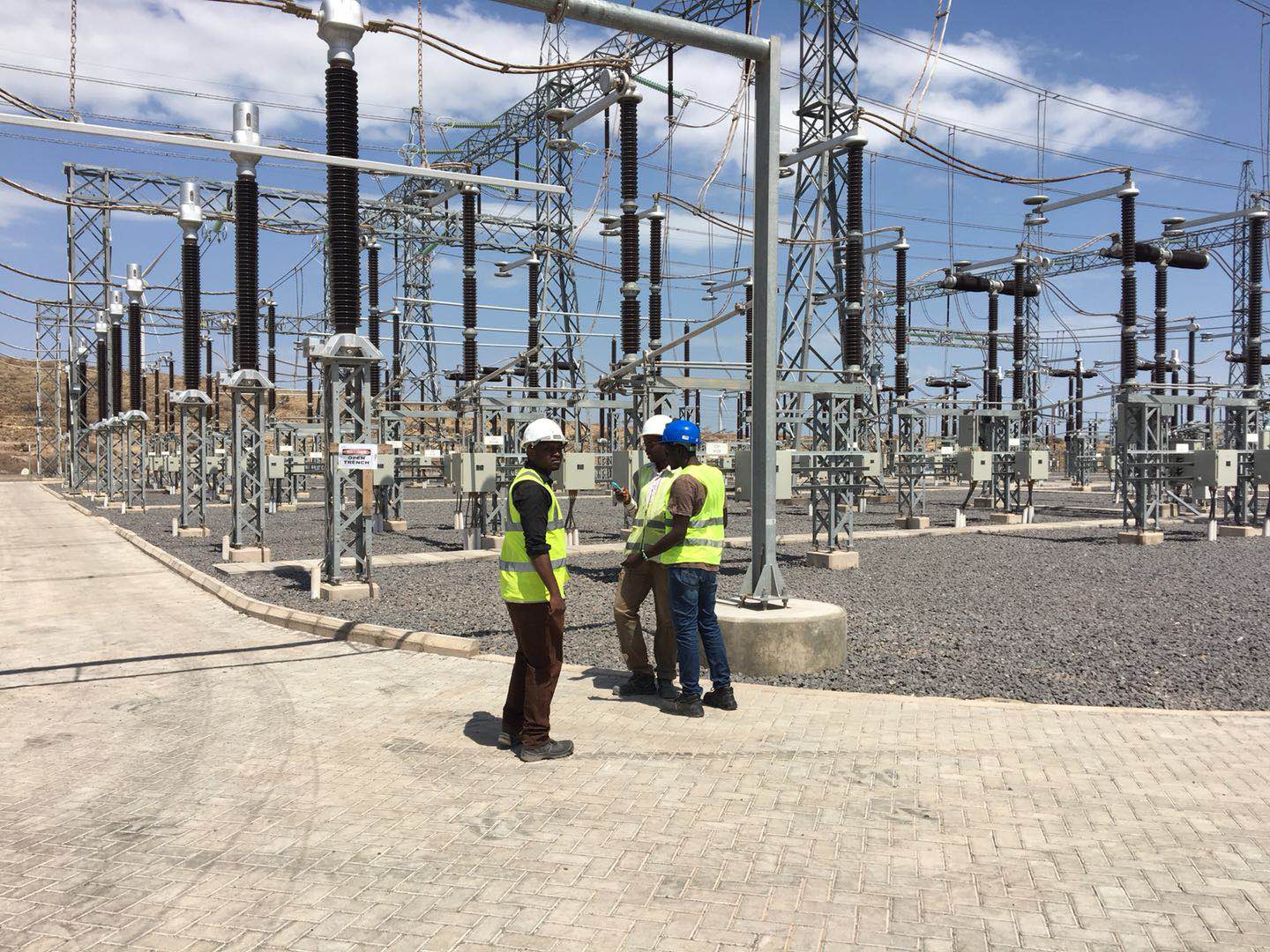
In the architecture of a Compact Substation (CSS), the Feeder is an essential conductor or cable. Its critical responsibility is to transport distribution-level power, stepped down by the substation's transformers, from the high-voltage switchgear or busbars to external load centers or the broader distribution network. It serves as the indispensable "last-mile" artery connecting the substation's internal power resources to the end-user environment, fundamentally ensuring the high efficiency and reliability of the entire power distribution system.
1.2. Context of Compact Substations
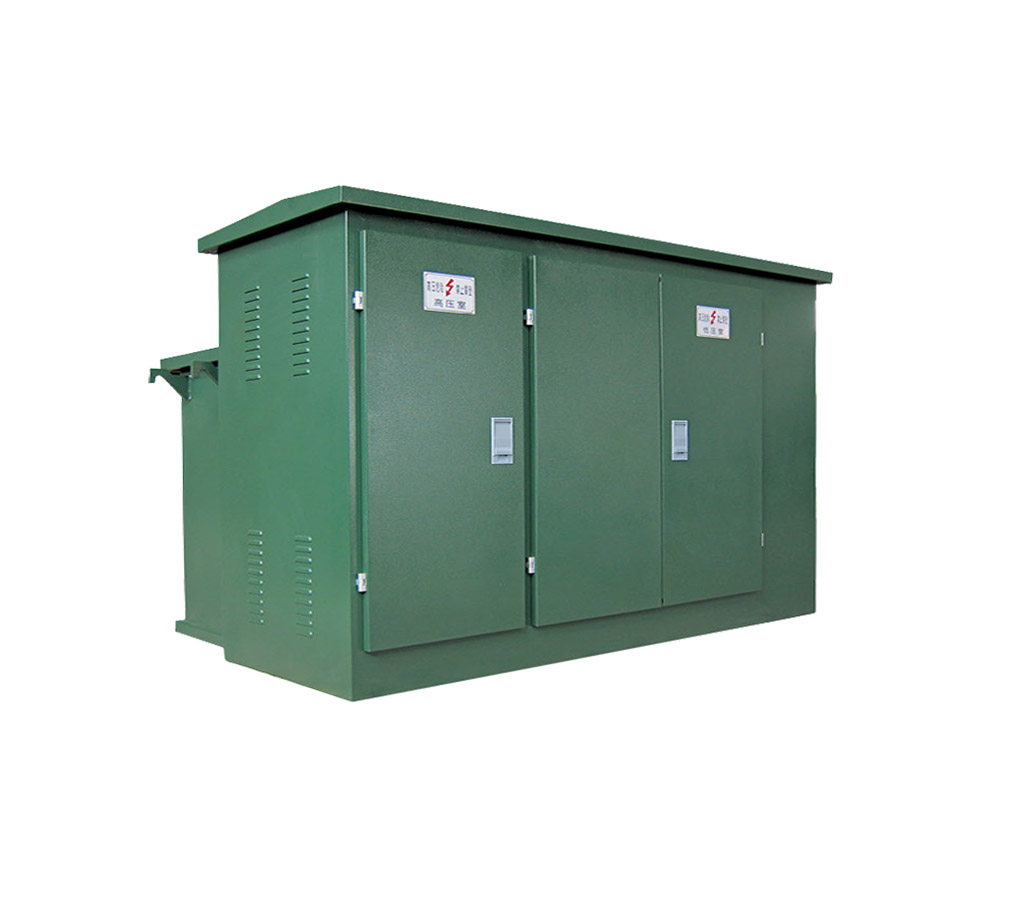
Compact Substations, often referred to as Package Substations or modular units, are characterized by high integration, minimal footprint, and rapid installation cycles. Given the increasing constraints on space in urban and industrial zones, they have become the preferred solution for modern power grids. Within this constrained environment, the design and management of the feeder are paramount, as it must satisfy stringent requirements for high current-carrying capacity, system safety, and ease of maintenance within limited space.
1.3. Article Objective
This comprehensive article aims to provide an in-depth analysis of the feeder's core functions and structural characteristics, specifically adopting the perspective of an electrical engineer. We will focus particularly on the critical quantitative considerations in electrical design (e.g., voltage drop and ampacity) and explore its vital role in advanced protection and distribution automation, offering differentiated and high-value reference material for industry professionals and researchers.
Key Takeaways
Feeder Essence: The feeder acts as the distribution network's main artery, exiting the substation busbar to deliver distribution-level power to specific load points; crucially, it typically does not have taps along its length.
Design Forms: Feeders in CSS units predominantly utilize XLPE cables for outgoing lines and must integrate seamlessly with compact switchgear like GIS/GCS (Gas Insulated Switchgear/Cabinets).
Design Core: Beyond just ensuring adequate ampacity, feeder design must undergo rigorous voltage drop calculations and short-circuit capacity verification to guarantee power quality and equipment safety.
Protection Foundation: Feeder protection is central to distribution reliability, achieved through 50/51 (Overcurrent) relays to establish selectivity, ensuring faults are isolated only in the smallest possible area.
Future Trajectory: Feeders will integrate with Feeder Automation (FA) and smart grid technologies to enable fast fault localization and self-healing functions, dramatically improving supply resilience.

II. Core Functions of the Feeder in the Distribution Network
The feeder holds a critical, intermediary position in the overall power system architecture, making its core functions extend well beyond merely acting as a conductive path.
2.1. The Artery for Power Delivery
The feeder's primary mandate is to serve as the main transmission channel. It efficiently and economically delivers the stepped-down energy, originating from the substation's low- or medium-voltage busbars, to designated primary distribution points or large industrial loads. The feeder's inherent structure dictates its specificity—it is engineered to carry the entire current to the end of the line, unlike a distributor, which uses numerous low-voltage taps along its length to disperse power.
2.2. Connecting Busbars to External Loads
The feeder functions as the physical interface linking the substation's internal electrical core to the demanding external distribution environment. Upstream, it connects to the substation's distribution busbar via a feeder switch, which is typically a circuit breaker or a load break switch. Downstream, the feeder connects to sectionalizing switchgear, distribution panels, local transformers, or directly to high-voltage customers.
Note: The feeder represents the "exit point" of the distribution grid. Its operational voltage level (e.g., 10kV, 35kV) directly dictates the operating conditions for all downstream equipment and the overall grid segment.
2.3. Ensuring System Reliability and Safety
High reliability is the ultimate measure of any modern power grid's success. As feeders are often the most exposed component to external factors (such as weather events or third-party construction), robust protection mechanisms are absolutely mandatory. The circuit breakers and associated relay protection systems installed on the feeder are the central components responsible for fault isolation. Should a short circuit, ground fault, or overload occur, the protection system must accurately identify and clear the faulty section within milliseconds. Effective feeder protection design is crucial for preventing local failures from escalating into widespread power outages, thereby avoiding catastrophic cascading events within the substation or the upstream grid.
III. Feeder Design Forms and Topology
In practical Compact Substation installations, feeder design involves more than just selecting a cable; it includes selecting the optimal network topology and, critically, the conductor materials and laying methods.
3.1. Review of Feeder Topology
The choice of feeder topology directly influences the distribution system's reliability and operational flexibility.
Radial Feeder: This is the simplest and least costly structure, supplying power unidirectionally from a single source to the load. Its major drawback is the lowest reliability, as any fault isolation leads to an outage for all downstream users; it is most common in low-density load areas.
Ring Feeder: This topology forms a loop, allowing power to supply the load from two different directions. It offers significantly higher reliability because power can be rerouted through the alternate path if a fault occurs somewhere on the loop, making it the preferred choice for urban medium-voltage distribution networks (e.g., Ring Main Unit systems).
Parallel or Grid Feeder: This represents the highest complexity and reliability, involving multiple substations and feeders interconnected to form an intricate grid. A failure of any single substation or feeder is unlikely to interrupt supply, making this system ideal for critical, high-density urban core zones.
3.2. Differentiating Content: Specific Forms in Compact Substations
In the constrained environment of a Compact Substation, overhead bare conductors are typically avoided in favor of high-reliability power cables to maximize space efficiency and safety.
Cable Type: Cross-Linked Polyethylene (XLPE) Cables
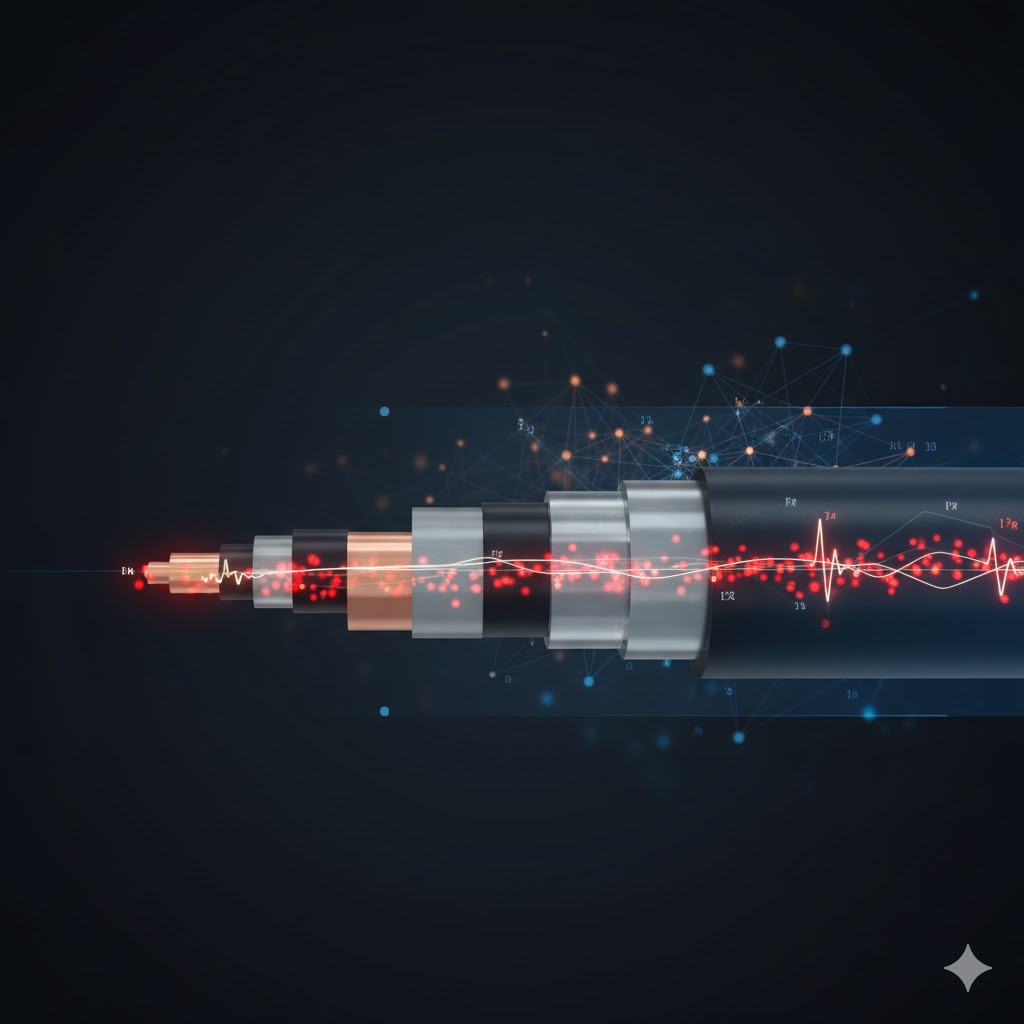
Advantages: XLPE insulated cables are the industry standard for MV feeders due to their superior thermal endurance, high dielectric strength, and minimal dielectric loss. This insulation permits a higher conductor operating temperature (usually up to 90 degrees C), resulting in a greater current-carrying capacity for a given cross-sectional area.
Installation: Feeder exits from CSS units are almost always via underground direct burial, cable trenches, or conduit installation, making XLPE’s robust waterproofing and mechanical protection properties essential.
GIS/GCS Exit Mode:
In highly integrated Compact Substations, the MV switchgear may be implemented as Gas Insulated Switchgear (GIS) or Gas-filled Cabinets (GCS). This requires the feeder cable to terminate into the gas-insulated busbar through specialized cable terminations, establishing a fully enclosed and highly secure outgoing line configuration.
Note: XLPE cables are the backbone of modern distribution feeders. However, engineers should be aware that early generation XLPE cables were susceptible to "water treeing" degradation, necessitating careful monitoring of older cable maintenance and installation records.
IV. Electrical Design and Parameter Considerations
Electrical engineers must perform rigorous quantitative calculations when designing a feeder to ensure the system consistently meets both performance and safety standards under all operating conditions.
4.1. Principles for Conductor Cross-Section Sizing
Determining the feeder's cross-sectional area is a central design task that must simultaneously satisfy three crucial criteria.
Maximum Ampacity Requirement (Thermal Limit):
The cable’s cross-section must be large enough to carry the rated current under maximum load conditions (including diversity factors) without exceeding the cable's long-term permissible operating temperature (e.g., 90 °C for XLPE).
Formula Basis: The conductor current (I) must be less than or equal to the permissible current ().
Voltage Drop Limitation (Voltage Drop Limit):
Under peak load current, the voltage drop at the feeder’s end must be kept within the allowable tolerance (typically 2% to 5%). For long-distance feeders, voltage drop verification often becomes the decisive factor in determining the required conductor size.
Short-Circuit Thermal Withstand (Safety Requirement):
The cable must be capable of withstanding the thermal stress produced by the maximum calculated short-circuit current for the duration of the circuit breaker’s operating time, preventing insulation damage or melting.
4.2. Voltage Drop and Voltage Regulation
The calculation of the voltage drop (ΔV) is essential for ensuring high-quality power delivery. In alternating current (AC) distribution systems, this calculation must carefully account for both the conductor’s resistance and reactance.
Voltage Drop Formula:
Pure Text Formula Representation:
Voltage Drop (V_drop) is approximately equal to Current (I) multiplied by the sum of:
(Resistance (R) × Power Factor Cosine) + (Reactance (X) × Power Factor Sine).
Engineering Application:
In practical design, engineers use manufacturer-provided unit-length values for Resistance (R) and Reactance (X), applying them according to the expected load current and the designed feeder length (L).
Voltage Tolerance:
The permissible voltage deviation range is strictly defined by national and international standards. Feeder design must ensure that the voltage delivered to end users remains within these specified limits.
Tip: For long feeders operating with a low power factor, the influence of the Reactance (X) significantly outweighs that of the Resistance (R), making Reactance the primary contributor to the total voltage drop.
4.3. Short Circuit Capacity Verification
The feeder and all associated accessories, such as splices and terminations, must possess sufficient dynamic and thermal stability to withstand the stresses of a short-circuit fault. Thermal stability verifies the cable’s ability to handle the temperature rise caused by the fault current during the brief time the circuit breaker takes to trip. Dynamic stability verifies that the physical fixings and support structures can resist the massive electromagnetic forces generated by the peak short-circuit current without damage.
V. Advanced Protection, Selectivity, and Automation
Feeder protection is the heart of distribution system reliability. It requires the protection scheme to exhibit four key qualities: selectivity, speed, sensitivity, and reliability.
5.1. Protection Device Configuration and Function
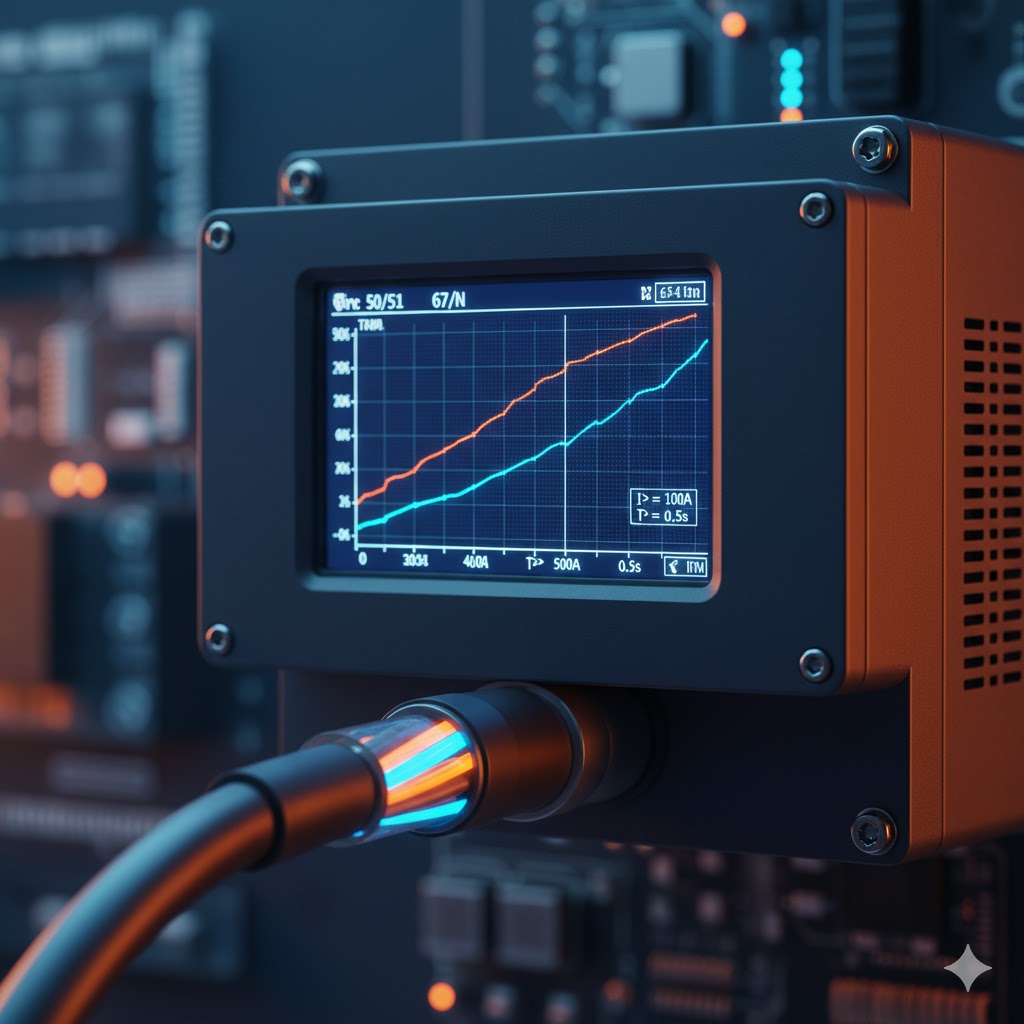
Feeders typically employ microprocessor-based digital relay protection equipment (such as the Schneider Easergy P5 or GE Multilin series).
Instantaneous Overcurrent Protection (Device 50): Operates with no intentional time delay, used for rapidly clearing high-current short-circuit faults near the substation end of the protected zone.
Time-Delayed Overcurrent Protection (Device 51): Incorporates a specific time delay, necessary for coordinating with downstream protective devices to achieve true selectivity.
Ground Fault Protection (Devices 50N/51N): Specifically designed for ground faults (which often involve smaller currents), detection is achieved by measuring the zero-sequence current. The system's neutral grounding method (e.g., ungrounded or resistance grounded) directly determines the required sensitivity of the ground fault protection.
5.2. Selectivity and Coordination in Relay Protection
Selectivity is the core principle of feeder protection. Its fundamental objective is to ensure that for any fault occurring on the line, only the protective device physically closest to the fault, and situated on the source side of the fault, will operate, leaving all other healthy parts of the network energized.
Current Selectivity: Achieved by setting different pickup current levels for various protective devices.
Time Selectivity: More commonly used, achieved by setting progressively increasing time delays for devices working in series. For example, a downstream switch might have a 0.2s delay, while the upstream feeder breaker is set to 0.4s.
Directional Protection (Device 67): Essential in ring or multi-source systems, this element ensures the relay only trips for fault current flowing in a specific, predefined direction, thereby preventing nuisance tripping.
5.3. Fault Indication and Automation (FA)
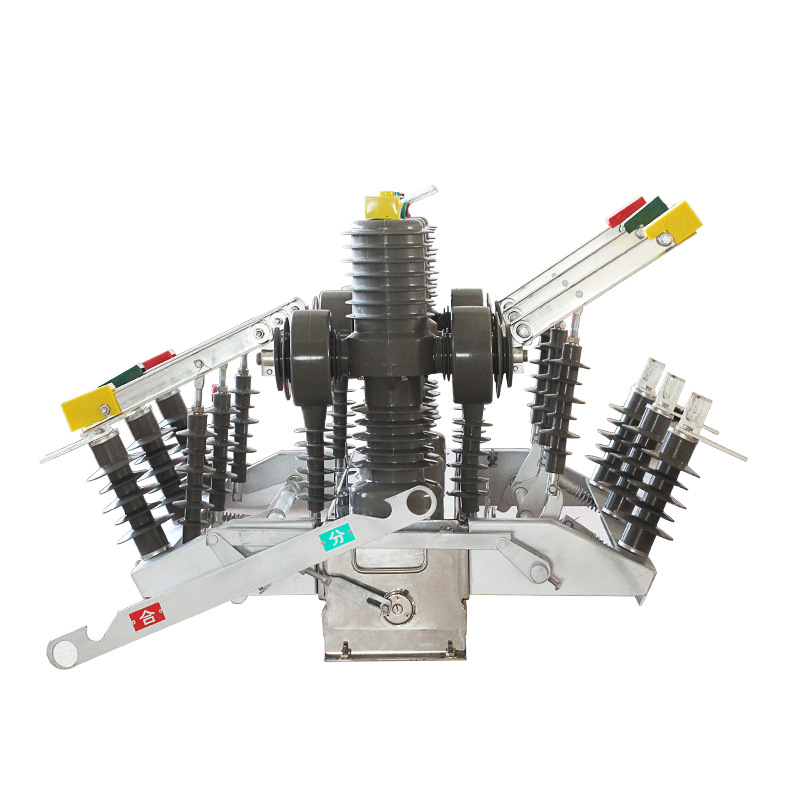
Feeder Automation (FA): This technology is deployed to significantly enhance the grid's self-healing capability. It uses remotely controlled load break switches (Reclosers) and Fault Indicators (FI) along the feeder. This combination allows the system to achieve rapid fault localization, isolation, and quick service restoration to non-faulted sections.
3S Functions: The core capabilities of an automation system are Telemetry (TM), Tele-signaling (TS), and Telecontrol (TC). These crucial functions transmit data and commands back to the substation's master control system via robust communication networks, such as fiber optics or power line carrier technology.
VI. Comparative Analysis of Core Components
The table below provides a detailed comparison between the Feeder, the Busbar, and the Distributor to clarify the Feeder's unique function within a Compact Substation.
| Feature | Feeder | Busbar | Distributor |
| Primary Function | Transports power from the substation to a single distribution point. | Collects and distributes power; acts as the common connection point. | Distributes power to end-users via numerous taps along its route. |
| Voltage Level | Distribution voltage (e.g., 10kV). | Distribution voltage (internal to the substation). | User-level voltage (e.g., 0.4kV). |
| Installation Form | Primarily underground XLPE cables. | Internal metal or gas-insulated conductors. | Overhead wires or low-voltage cables. |
| Taps Configuration | Usually, no taps; current is relatively constant along the line. | No taps; serves as an assembly node for circuits. | Numerous taps are used; the current diminishes along the route. |
| Protection Level | High-level (relay protection and circuit breakers). | Relies on the protection of the connecting feeders and outgoing circuits. | Lower-level (fuses or small circuit breakers). |
VII. Feeder Significance, Efficiency, and Future Trends
7.1. Economic Considerations: Loss and Efficiency
Engineers must carefully balance the capital expenditure associated with increasing conductor cross-section against the long-term operational cost of energy loss when designing feeders.
Active Power Loss (I²R Loss):
This represents the primary energy loss caused by the feeder’s resistance. The loss is directly proportional to the square of the current (I) and the resistance (R). By selecting a larger conductor cross-section (A) to reduce resistance, these losses can be effectively minimized—although doing so increases the initial investment.
Economical Cross-Section:
The goal in feeder design is not simply achieving the lowest possible loss, but achieving economical operation. Ideally, the annual savings from reduced energy loss should be approximately equal to the additional annual investment cost and depreciation associated with selecting a larger conductor size.
7.2. Specific Requirements for Operations and Maintenance
Feeder maintenance—especially for underground cables—requires specialized procedures.
Partial Discharge (PD) Testing:
This method detects microscopic insulation defects or voids. It is critical for evaluating cable health, predicting insulation aging, and preventing catastrophic failure.
DC Withstand / VLF Testing:
Periodic overvoltage testing verifies that cable insulation strength continues to comply with relevant standards.
Fault Localization:
When a cable fault occurs, engineers use specialized diagnostic devices—such as Time Domain Reflectometry (TDR) testers—to accurately pinpoint the fault location, significantly reducing outage and repair time.
7.3. Role in the Smart Grid and Digital Substation
The future development of feeders is closely tied to digital and intelligent technologies.
Digital Feeder:
This involves implementing communication protocols based on IEC 61850 to transmit protection, measurement, and control data in real time to the digital substation’s automation and control systems.
Self-Healing Networks:
Feeder automation continues to evolve toward higher levels of “self-healing,” where the system automatically detects, isolates, and reconfigures the network using intelligent sectionalizers and reclosers to restore supply to healthy sections without manual intervention.
VIII. Conclusion and FAQ
8.1. Concluding Summary
A feeder is far more than a physical extension of the Compact Substation—it represents the reliability, safety, and economic performance of the distribution network. Every step of feeder design—from selecting the appropriate cable type (e.g., XLPE), calculating voltage drop and short-circuit capacity, to coordinating selective relay protection—reflects the rigorous technical standards upheld by electrical engineers. As the smart grid continues to advance, feeders are rapidly evolving toward full automation and digitalization, reinforcing their indispensable role in ensuring a stable and dependable urban power supply.
8.2. Frequently Asked Questions (FAQ)
Q1: What is the primary difference between a feeder and a distributor?
A: A feeder primarily transmits power; it typically has no taps, current remains constant, and its design focuses on minimizing losses and controlling voltage drop. A distributor supplies power to various loads through multiple taps, causing current to diminish along its length. Its design focuses on maintaining acceptable voltage regulation.
Q2: Why is voltage drop often more critical than ampacity in feeder design?
A: For long-distance feeders, even if ampacity requirements are satisfied, cumulative resistance and reactance can cause end-of-line voltage drop (ΔV) to exceed acceptable limits (e.g., 5%). Therefore, voltage drop frequently determines the minimum conductor size.
Q3: How is “selectivity” achieved in feeder protection?
A: Selectivity is achieved primarily through time-graded coordination. Protective devices in series are set with progressively increasing operating delays so that the device closest to the fault trips first. For example, the feeder protection at the substation operates slower than downstream sectionalizers or reclosers.
Q4: What are the advantages of XLPE cables in a Compact Substation environment?
A: XLPE cables offer excellent insulation and high thermal stability, supporting continuous operation at 90°C. This enables higher current density in limited underground space. They are also compact, moisture-resistant, and highly suitable for underground applications within CSS installations.
Q5: What is the key difference between Feeder Automation (FA) and traditional protection?
A: Traditional protection isolates only the faulted section. Feeder Automation enables self-healing by using telemetry and remote control to identify faults, isolate the impacted segment, and reconfigure the network by closing healthy paths. This greatly improves reliability indicators such as SAIFI and SAIDI.