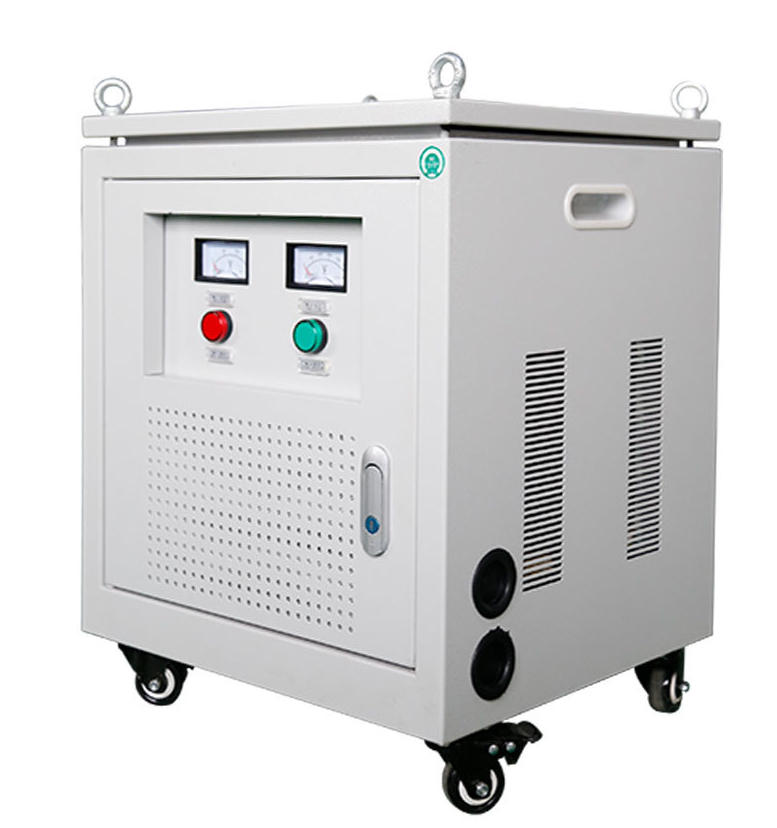
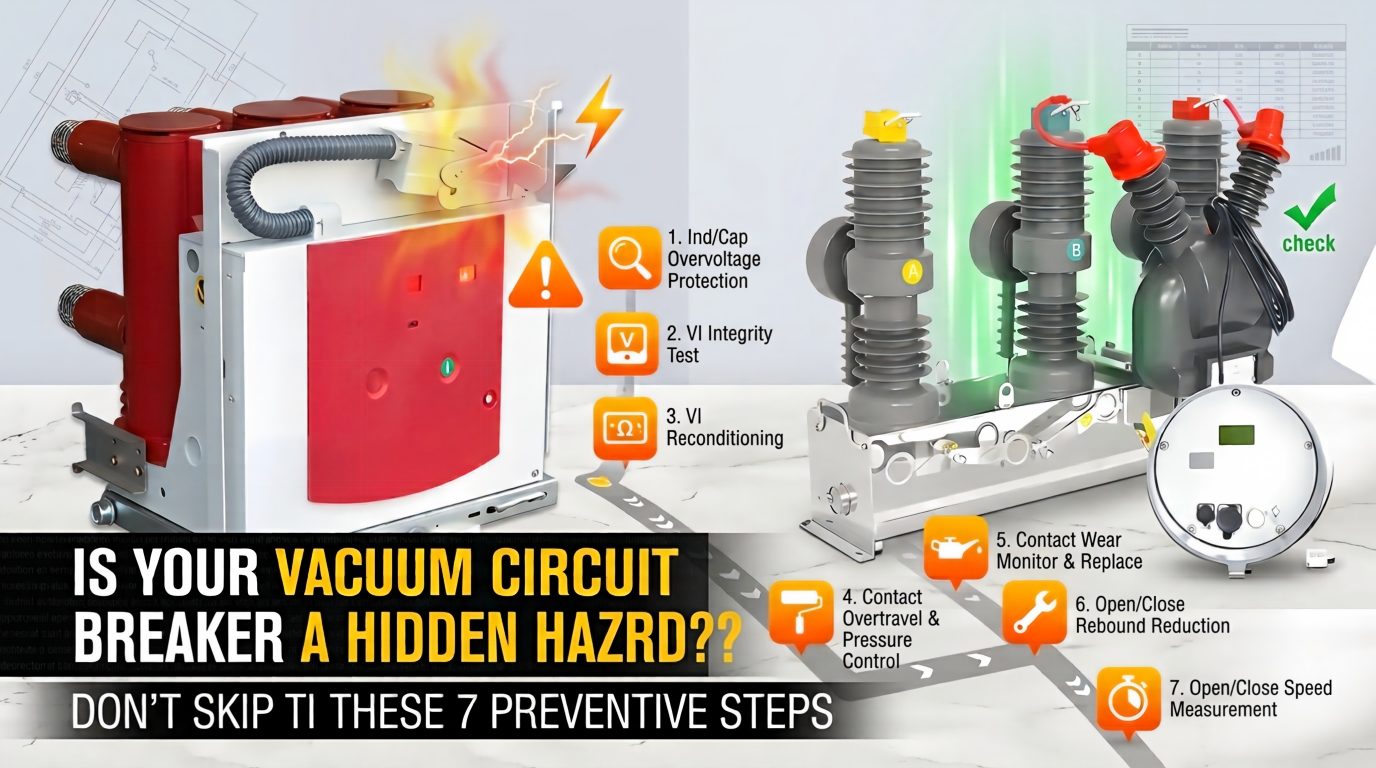
Even a brief outage can disrupt operations in power distribution, costing thousands in losses. As an engineer at Wei Shoe Elec, I often hear customers ask, "Can an auto recloser really reduce downtime?" or "Is it just a fancy circuit breaker?" This article explains the purpose, core functions, and benefits of auto reclosers in medium-voltage systems, helping you decide if they’re right for your network.
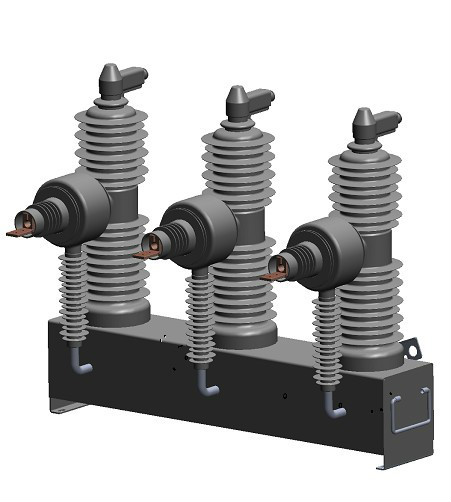
What Is an Auto Recloser?
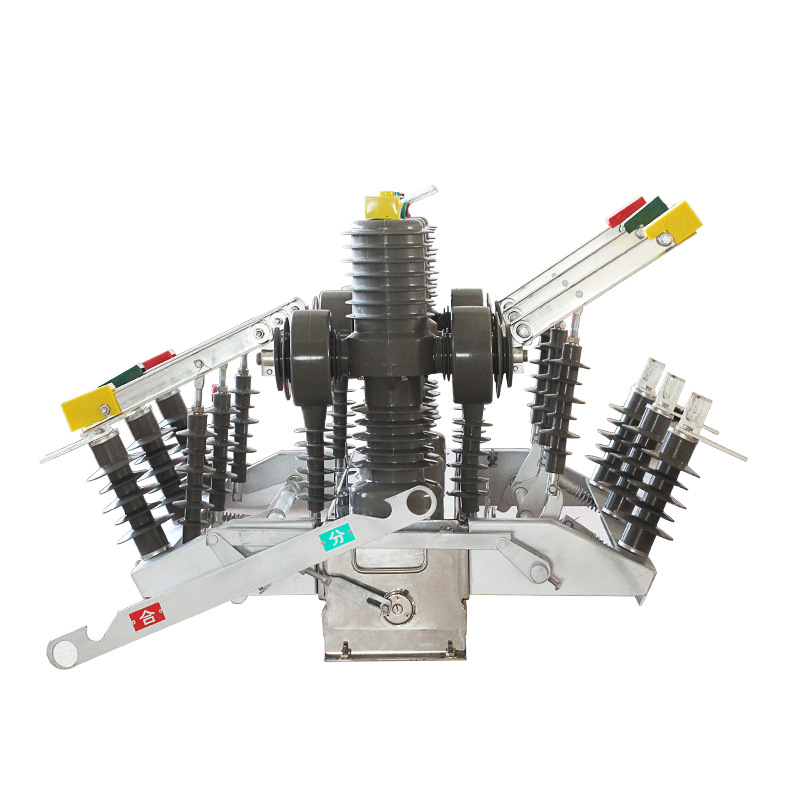
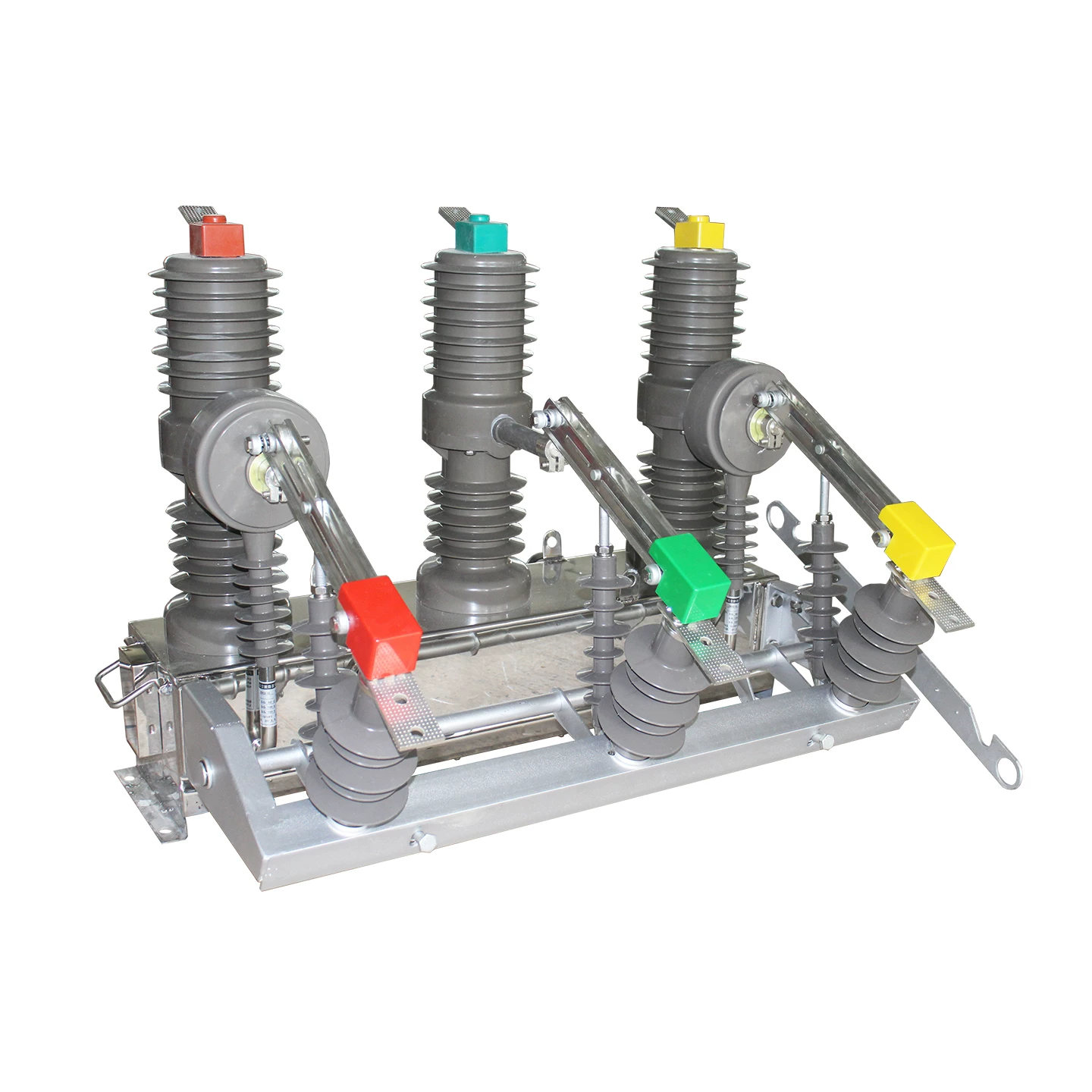
An auto recloser is an intelligent switchgear that automatically opens and recloses a circuit when a fault (e.g., short circuit or overcurrent) is detected. Unlike standard circuit breakers requiring manual resets, auto reclosers distinguish between short-term (transient) and long-term (permanent) faults, restoring power automatically if the fault clears. They are widely used in 11kV, 15kV, 22kV, and 33kV overhead line networks.
Key features:
Automatic trip and reclose cycles
Differentiates transient vs. permanent faults
Programmable reclosing attempts (typically 1–4)
Integrates with SCADA for remote monitoring and control
Core Functions of an Auto Recloser
The primary purpose of an auto recloser is to minimize power outages by handling short-term faults efficiently. For example, a tree branch touching a power line may cause a temporary short circuit. A standard breaker would trip and stay open, requiring manual intervention. An auto recloser, however, interrupts the current and attempts to restore power after a short delay.
Core functions:
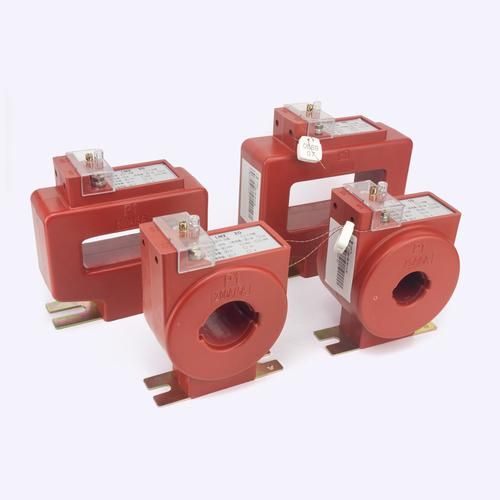
Fault Detection: Uses current and voltage transformers (CTs/PTs) to identify abnormalities like short circuits or ground faults.
Automatic Circuit Interruption: Opens the circuit to isolate the fault, protecting equipment.
Delayed Reclosing: Attempts to restore power after a programmed interval (e.g., 0.5–15 seconds).
Multiple Trip-Reclose Sequences: Repeats up to 4 times before locking open if the fault persists.
In 33kV systems, reclosers enhance grid stability, especially in rural or renewable energy networks prone to transient faults like lightning.
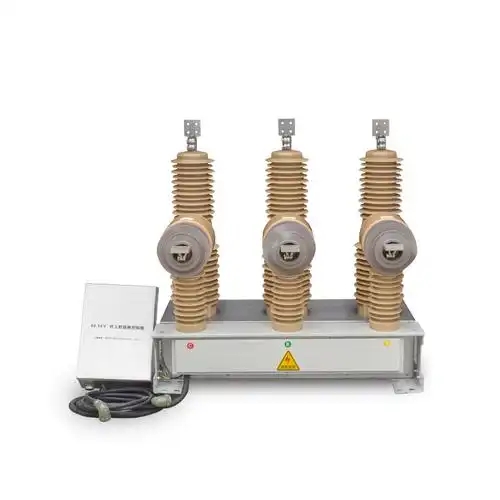
Auto Recloser vs. Circuit Breaker: Key Differences
While both devices interrupt faults, auto reclosers offer advanced automation:
| Feature | Auto Recloser | Circuit Breaker |
|---|---|---|
| Auto Reclosing | Yes | No (unless with an added controller) |
| Installation | Pole-mounted, outdoor lines | Indoor panels, substations |
| Control Logic | Built-in intelligence & timing | Manual or relay-based |
| Remote Operation | Yes (via SCADA) | Limited unless upgraded |
Auto reclosers excel in overhead distribution, where transient faults are common (e.g., 80% of line faults).
Major Benefits in Distribution Systems
Auto reclosers deliver significant advantages for utilities and industrial operators:
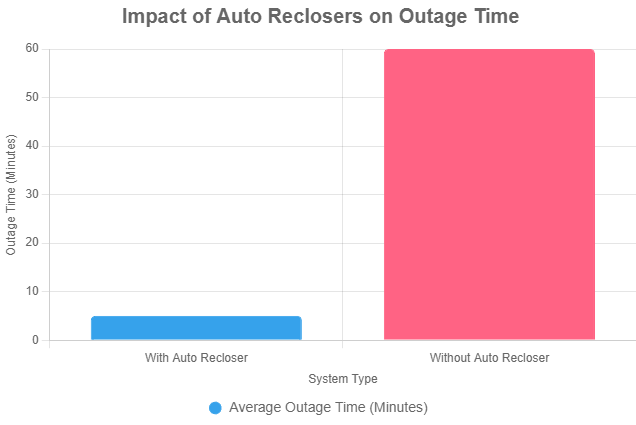
Reduced Downtime: 80% of line faults are transient and clear within seconds. Reclosers restore power automatically, minimizing outages.
Lower Maintenance Costs: Fewer manual resets and truck rolls save time and money.
Enhanced Safety: Remote operation reduces technician exposure to hazardous conditions.
Grid Resilience: Maintains stability during transient events like storms or animal contact.
Data Integration: SCADA compatibility enables real-time monitoring, fault logging, and predictive maintenance.
Case Study: In South Africa, Eskom’s deployment of auto reclosers in rural 22kV networks reduced unplanned outages by 65% (Eskom report, 2021).
Cost-Benefit Example: A 33kV recloser costs $5,000–$15,000 but can save $20,000 annually by reducing downtime and maintenance. For a facility facing a 1-hour outage costing $10,000 in losses, the recloser pays for itself in under a year.
How Does an Auto Recloser Work?
Auto reclosers use sensors to detect faults and follow a programmed sequence:
Fault Detection: CTs/PTs identify abnormal current or voltage (e.g., short circuits).
Circuit Opening: The recloser interrupts the circuit to isolate the fault.
Delay Period: Waits a set time (e.g., 0.5–15 seconds) for the fault to clear.
Reclosing Attempt: Closes the circuit to restore power.
Repeat or Lockout: Repeats up to 4 times; locks open if the fault persists.
This process prevents prolonged outages from transient issues like lightning or debris.
Trip-Reclose Flowchart (simplified for clarity):
Start → Detect Fault → Open Circuit → Wait (0.5–15s) → Reclose → Fault Cleared? → Yes: Restore Power / No: Repeat (up to 4 times) → Lock Open
Global Applications and Standards
Auto reclosers are deployed worldwide, with region-specific standards:
Europe/Asia: Comply with IEC 62271-111, ideal for 11kV–33kV networks.
North America: Meet ANSI/IEEE C37.60 standards, suited for urban and rural grids.
Emerging Markets (e.g., India, Southeast Asia): Critical for rural networks with frequent lightning or vegetation-related faults.
In some regions, reclosers are called “sectionalizers” or “automatic circuit reclosers,” but their core function remains the same.
Global Case Study: In Australia, NOJA Power reclosers reduced rural network outages by 50%. In China, a 33kV substation using Wei Shoe Elec reclosers cut fault response time to 5 seconds.

Are There Any Disadvantages?
Auto reclosers have limitations:
Higher Initial Cost: $5,000–$15,000 vs. $1,000–$5,000 for standard breakers.
Complex Setup: Requires configuration for fault thresholds and reclose timing.
Limited for Underground Cables: Best suited for overhead lines.
Risk of Misconfiguration: Reclosing into persistent faults can stress equipment.
Application Scenarios
Auto reclosers are ideal for:
Overhead medium-voltage lines (11kV–33kV)
Remote substations
Renewable energy interconnections (e.g., solar, wind)
Rural utility pole lines
They are less common in urban underground systems, where permanent faults dominate.
Role in Smart Grid & SCADA Integration
Modern auto reclosers support smart grid automation:
Remote Fault Isolation: Pinpoint issues without site visits.
Data Logging: Records fault events for analysis.
Load Management: Optimizes power distribution.
Predictive Maintenance: Identifies potential issues early.
SCADA integration makes reclosers essential for smart grid strategies.
Frequently Asked Questions (FAQ)
Q1: What is the purpose of an auto recloser?
A: To reduce outages by automatically restoring power after short-term faults.
Q2: How does it differ from a circuit breaker?
A: Circuit breakers trip and stay open; reclosers attempt automatic restoration.
Q3: How many reclose attempts does it make?
A: Typically 1–4, programmable based on network needs.
Q4: What causes a recloser to trip?
A: Short circuits, overcurrents, ground faults, or voltage anomalies.
Q5: Is auto-reclosing safe?
A: Yes, when configured correctly, but misconfiguration risks reclosing into permanent faults.
Q6: Which recloser is best for a 33kV network?
A: Choose a model that is compliant with IEC or ANSI standards and has SCADA integration for remote monitoring.
Summary of Key Points
| Aspect | Details |
|---|---|
| Purpose | Reduce outages, restore power automatically |
| Applications | Overhead lines, rural networks, substations |
| Key Benefit | 80% reduction in transient fault downtime |
| Cost Consideration | Higher upfront cost, ROI in 1–2 years |
Conclusion
Auto reclosers are intelligent devices that enhance power reliability, reduce downtime, and lower maintenance costs. For utilities and industrial operators, they offer a cost-effective solution to automate fault recovery. At Wei Shoe Elec, our reclosers are designed for global markets, with 24/7 support and multilingual manuals to meet diverse needs.
Contact Thor, Electrical Engineer at Wei Shoe Elec
Phone: 86-0577-62788197
WhatsApp: +86 159 5777 0984
Email: [email protected]
Let us help you select the right auto recloser for your power distribution needs.