I. Introduction: The Professional Foundation of Power Distribution
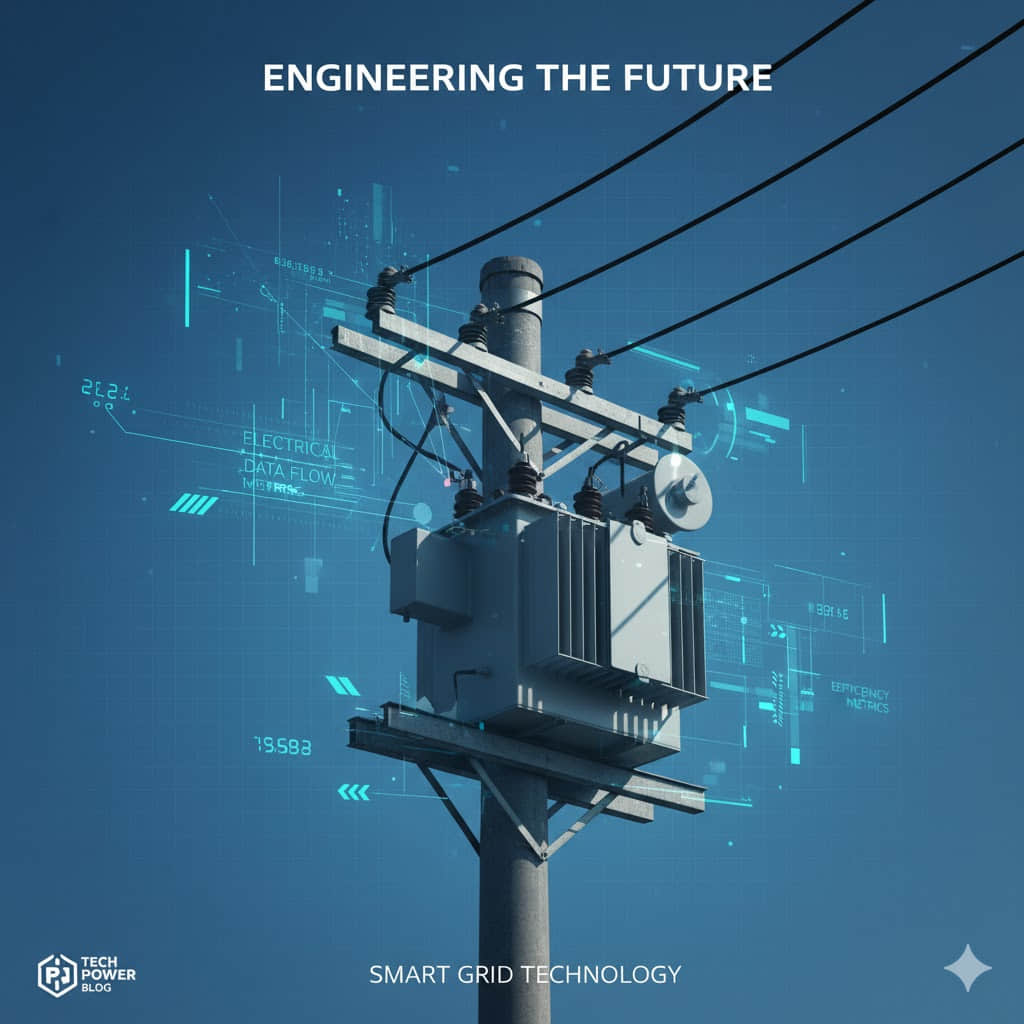
The pole-mounted transformer is an electrical apparatus installed on utility poles. Its primary function is to step down high-voltage electrical energy to a safer, lower voltage level suitable for local distribution and residential use.
This essential device is the most common and crucial step-down unit in the distribution grid. It silently supports our daily energy demands, ensuring power flows continuously.
High-voltage electricity, often tens or hundreds of thousands of volts, is generated at power plants and transmitted long distances to minimize energy loss. This power, however, cannot be directly consumed by homes and businesses.
It must undergo several stages of voltage reduction near the end-user. The pole-mounted transformer is the critical executor of this "last mile" task, ensuring power is delivered safely and reliably.
It serves not only as a physical connection point but also as an indispensable stabilizer within modern urban and rural infrastructure.
This guide adopts the perspective of an electrical engineer, moving beyond typical consumer-level explanations. We will deeply analyze the transformer's design philosophy, operational efficiency, key safety mechanisms, and required professional maintenance standards.
The goal is to provide a comprehensive, insightful understanding of its reliability and importance for industry professionals.
Key Takeaways (Core Insights)
Primary Function: Pole transformers step down high voltage (HV) from the utility line to safe utilization levels (e.g., 240V/120V) for homes and businesses.
Technical Anatomy: Core components include windings (which dictate the turns ratio), a laminated iron core (designed to minimize eddy current losses), and dielectric oil (essential for cooling and insulation).
Safety Compliance: Mandatory safety features include lightning arresters and cutout fuses, along with robust grounding systems.
Efficiency Metrics: Operational losses are categorized as Core Loss (no-load) and Copper Loss (load-dependent); optimal design aims to balance these two to maximize efficiency.
Expert Diagnostics: Dissolved Gas Analysis (DGA) is the most authoritative tool for predictive maintenance, allowing engineers to identify early signs of internal faults like overheating and partial discharge.
II. Structure, Protection, and Professional Safety Design
The pole-mounted transformer may appear to be a straightforward metal cylinder on a pole. However, its internal design is a sophisticated convergence of electromagnetism, material science, and safety engineering principles.
Its construction must meticulously account for harsh outdoor environmental conditions. This includes constantly fluctuating load demands and stringent safety regulations.
2.1. A Review of Core Structural Components
A. Windings:
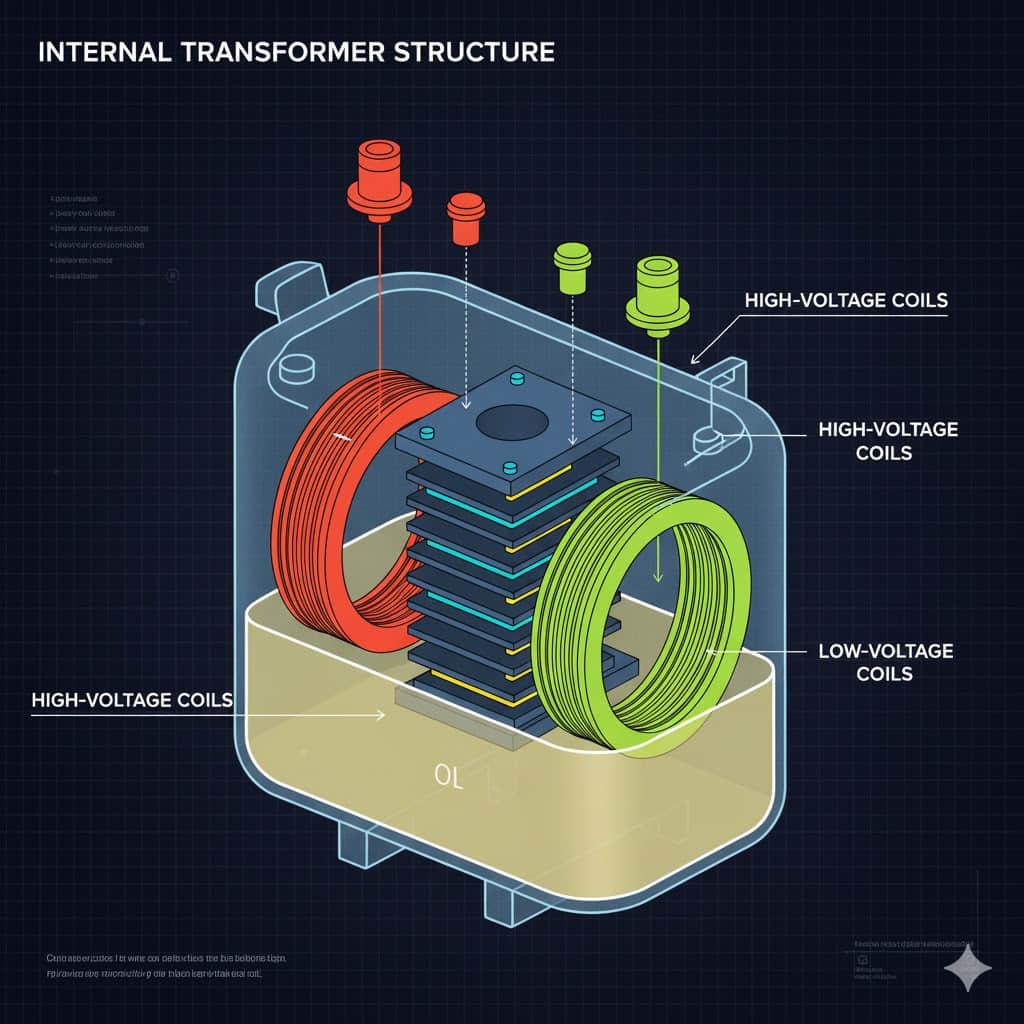
The windings constitute the functional heart of the transformer, where the electromagnetic conversion takes place. This area consists of two distinct, insulated sets of coils: the primary (HV) winding connected to the utility line, and the secondary (LV) winding connected to the customer load.
The critical factor for achieving voltage reduction is the turns ratio, which is the difference in the number of coil loops between the primary and secondary sides. Designers must precisely calculate this ratio to guarantee the reliable and safe transformation of thousands of volts down to a usable level.
B. Iron Core:
The core’s purpose is to provide a low-reluctance pathway for the magnetic flux. This ensures the electromagnetic energy is contained and concentrated as efficiently as possible.
It is typically constructed from high-permeability laminated silicon steel sheets. This layered configuration, as opposed to a solid block, is necessary to minimize eddy current losses.
Each thin sheet of steel is coated with an insulating varnish. This coating helps confine the magnetic flux while effectively blocking parasitic eddy currents, thereby ensuring highly efficient energy transfer.
C. Insulating Medium:
Most pole-mounted transformers use an oil-immersed structure. This means the core and windings are submerged in transformer oil.
This specialized oil, which can be traditional mineral oil or a more environmentally friendly bio-degradable fluid, performs two essential, vital functions. Firstly, it acts as a superior insulating material, preventing internal short circuits between the live windings and the core or tank.
Secondly, through natural convection, the oil carries heat generated by the windings and core to the outer tank or cooling fins. This highly effective cooling action is vital for maintaining the equipment's long-term operational stability.
Note: The quality and level of transformer oil are primary determinants of the unit's operational lifespan. For every 8°C (14.4°F) increase in oil temperature, the rate of degradation of the transformer's paper insulation approximately doubles.
2.2. Critical Protection and Safety Devices
Given their location in exposed outdoor environments, transformers must be equipped with multiple layers of protection. This is necessary to withstand lightning strikes, short circuits, and overload conditions.
These mechanisms are crucial for securing both the equipment and public safety.
A. Lightning Arresters:
The lightning arrester serves as the "lifeline" for the high-voltage side of the equipment. It is mounted near the HV bushing and connected directly to the ground system.
Under normal operating voltage, the arrester acts as an insulator, remaining non-conductive. However, when a transient high-voltage surge occurs (such as from lightning or switching operations), the arrester instantaneously becomes conductive.
This action diverts the high-energy pulse harmlessly into the earth. This is crucial to protecting the delicate insulation of the transformer windings and bushings from failure.
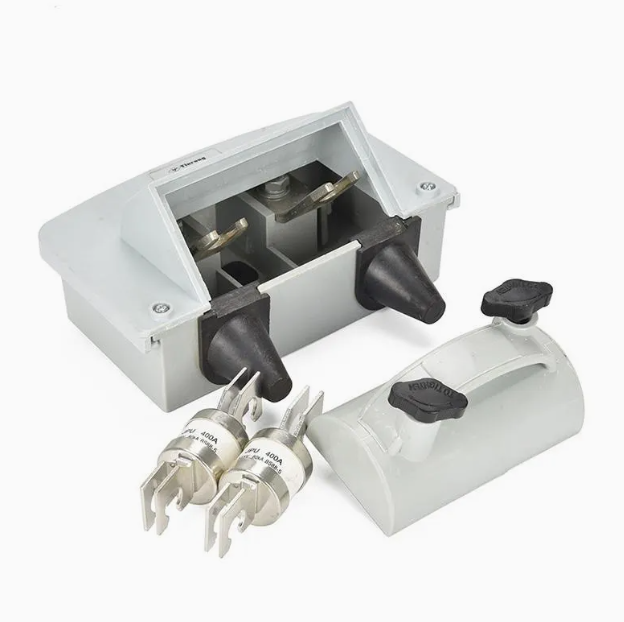
B. Cutout Fuse:
Pole-mounted transformers typically rely on a cutout fuse for overcurrent protection. This device is installed in series with the high-voltage lead and the primary winding.
Should the transformer experience a severe overload or an internal short circuit, the fusible link melts rapidly. This action disconnects the high-voltage input and isolates the fault.
A key benefit of its design is that upon activation, the fuse holder visibly drops down. This provides a clear and immediate visual indication of a fault for maintenance crews.
C. Grounding System:
Proper grounding is arguably the most fundamental safety measure in any power system. Both the transformer's metal casing and the neutral point on the low-voltage side must be connected to a reliable, low-impedance earth ground.
Casing grounding provides a low-resistance path for fault current during a leakage event. This ensures protective devices trip quickly to prevent electrocution hazards.
Neutral point grounding is critical for stabilizing the low-voltage output. It prevents dangerous voltage rises (due to HV faults or load imbalance) that could compromise customer safety.
2.3. Professional Interpretation of Nameplate Data
The professional information found on the transformer nameplate is the basis for evaluating and selecting the correct equipment. This data is essential for electrical engineers when performing load calculations and procurement.
• kVA (kilo-Volt-Amperes): The rated capacity. This number represents the maximum apparent power the transformer can continuously supply without exceeding its thermal limits.
• Temperature Rise Limit: This value indicates the maximum permissible temperature increase (e.g., 65°C) the winding or oil is designed to tolerate above the ambient temperature. This is directly tied to the thermal rating of the insulation materials used. This thermal rating is the primary factor dictating the transformer's operational life.
• Insulation Class (BIL): This parameter defines the voltage level that the windings and bushings can withstand. It is commonly quantified by the Basic Impulse Level (BIL). A higher BIL value signifies superior resilience against transient events like lightning strikes and switching surges.
This video offers a professional, visual walkthrough of the overhead transformer. Watch it to understand the external components, internal structure (windings and core), and the electromagnetic principle governing its operation.
III. Operating Principle, Efficiency, and Energy Analysis
From an engineering standpoint, a transformer is much more than a simple voltage converter. It must perform its voltage transformation task with maximum efficiency to minimize wasted electrical energy.
Achieving this balance between function and minimal waste is a primary focus of modern transformer design.
3.1. Electromagnetic Induction and the Turns Ratio
The transformer operates fundamentally on Faraday's Law of Electromagnetic Induction. When alternating current flows through the primary winding, it establishes a constantly changing magnetic flux within the iron core.
This alternating magnetic flux links with the secondary winding, inducing an electromotive force (EMF) and thereby creating an AC voltage on the secondary side.
The ratio of voltage step-down is precisely governed by the ratio of the number of turns in the primary winding to the number of turns in the secondary winding. The ratio of the primary voltage to the secondary voltage is exactly equal to the ratio of the primary winding turns to the secondary winding turns.
This fundamental relationship is known as the turns ratio or transformation ratio. The reliable transformation from thousands of volts to safe utilization levels is secured by the accurate calculation and manufacturing of this turns ratio.
Tip: The turns ratio is the foremost parameter when selecting a transformer. It must align perfectly with the local utility's high-voltage standard and the customer's required low-voltage output (e.g., 13.8 kV primary to 240V secondary).
3.2. Transformer Efficiency and Loss Quantification
Transformers are among the most efficient electrical machines ever designed. Yet, they still experience inevitable energy losses during operation.
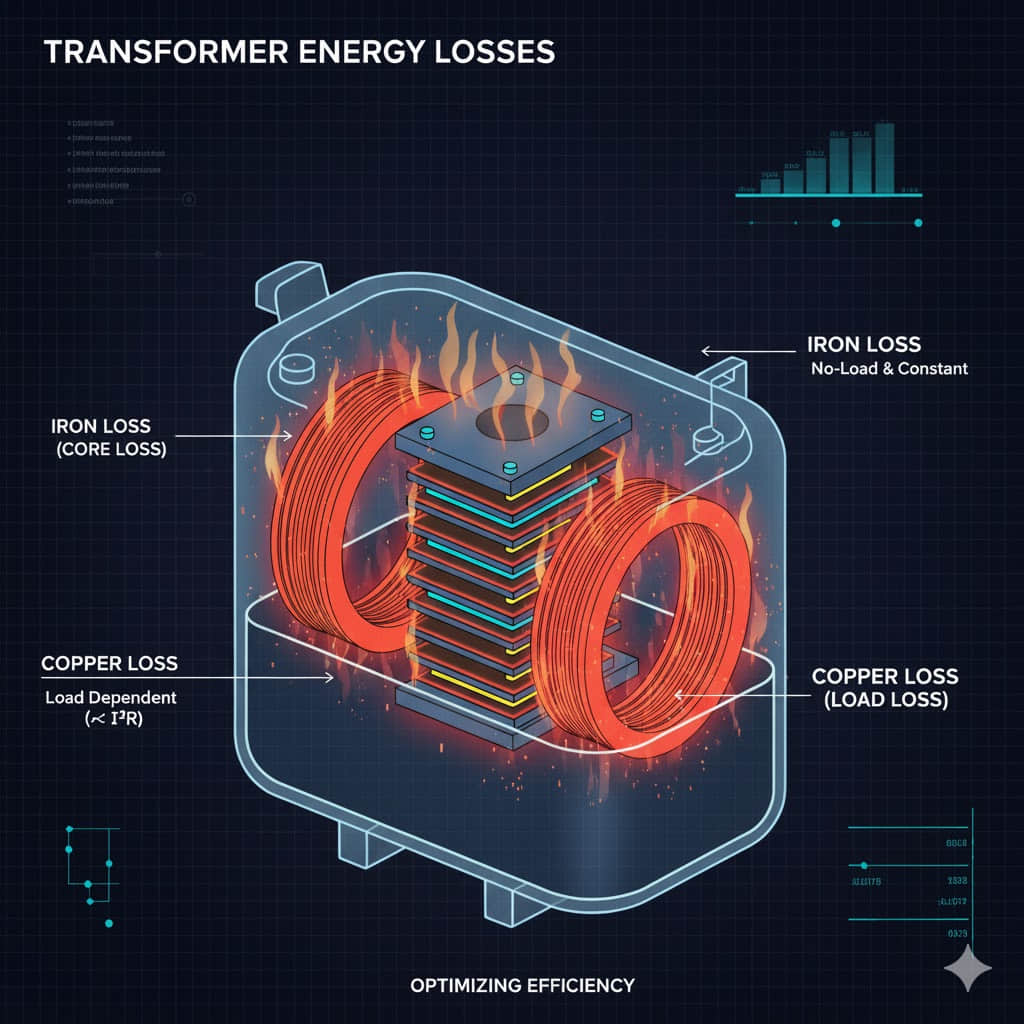
These losses are primarily categorized into two distinct types. Understanding the nature of these losses is central to efficiency-focused design.
A. Core Loss (Iron Loss / No-Load Loss):
Core loss consists mainly of hysteresis loss and eddy current loss within the iron core as it is subjected to the alternating magnetic field. Hysteresis loss results from the energy required to continuously magnetize and demagnetize the core material.
Eddy current loss is the heat produced by small, localized currents induced within the core itself. Crucially, core loss is dependent on the voltage and exists as long as the transformer is energized, regardless of whether a load is connected. Hence, it is called no-load loss.
Designers minimize this loss by using high-quality, grain-oriented silicon steel and a laminated core structure.
B. Copper Loss (Load Loss):
Copper loss is the heat generated by electrical current flowing through the resistive conductors of the windings, commonly known as Joule heating. This form of loss increases proportionally to the square of the load current.
As the load increases, copper loss increases at an accelerated rate. Copper loss is a primary source of transformer heating.
It is mitigated by employing high-quality copper or aluminum conductors with low resistivity. Increasing the cross-sectional area of the wire is another effective measure.
The core objective of transformer design is to achieve peak efficiency at the unit’s typical operating load point. For distribution transformers, which spend a large amount of time at light or medium load, designers prioritize the reduction of core loss. This focus minimizes continuous, round-the-clock energy consumption.
3.3. Core Differentiation Table
| Feature Dimension | Pole-Mounted Transformer | Pad-Mounted Transformer |
| Installation Advantage | Saves ground space, is removed from ground moisture and vandalism, and generally lower installation cost. | Aesthetically pleasing, easier routine maintenance access, better resistance to natural disasters (e.g., strong winds). |
| Common Standards | Primarily follows Overhead Distribution Standards, with significant emphasis on lightning protection. | Primarily follows Underground Distribution Standards, with focus on fire safety and tamper-proofing. |
| Loss Optimization | Design emphasis usually prioritizes high efficiency and low Core Loss under light load conditions. | Design may optimize Copper Loss management based on specialized thermal and cooling constraints. |
| Typical Capacity | Small to medium capacities (10 kVA - 500 kVA). | Medium to large capacities (50 kVA - 2500 kVA). |
IV. Professional Installation, Connection Groups, and Fault Diagnostics
An excellent transformer design is only realized when paired with professional installation and meticulous operational monitoring. As electrical engineers, our focus extends beyond the individual unit.
We must ensure its correct integration and monitor its health status within the overall grid system.
4.1. Three-Phase Connection Groups
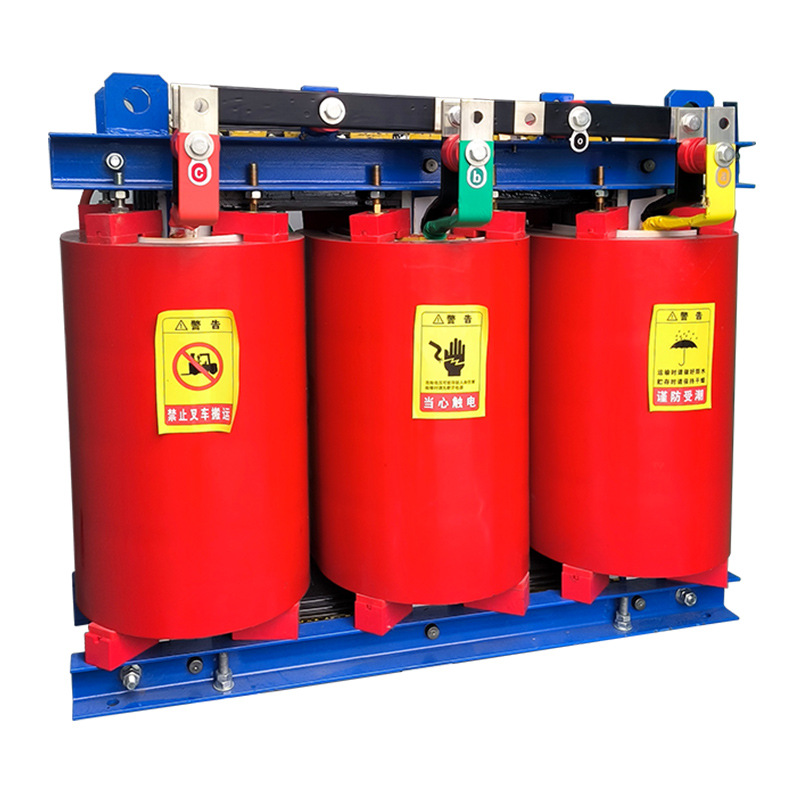
Three-phase transformers are essential for commercial and industrial areas that drive motors and heavy machinery. The configuration of their windings is critically important and is standardized into connection groups, such as Dy11 and Yyn0.
Selecting the correct connection group is fundamental for managing parallel operation and handling unbalanced three-phase loads effectively.
Dy11 Connection:
The high-voltage side uses a Delta (D) connection, while the low-voltage side uses a Wye (y) connection. This results in an 11 (330$^\circ$) clock-hour phase displacement.
This arrangement is commonly used for step-down applications. The Wye connection on the low-voltage side provides a crucial neutral point for grounding and for supplying single-phase loads. This configuration is particularly effective at suppressing high-order harmonics and tolerating a degree of phase load imbalance.
Yyn0 Connection:
Both the high-voltage and low-voltage sides employ a Wye (Y) connection, resulting in a 0 clock-hour phase displacement. This specific setup is highly desirable for the parallel operation of multiple transformers.
It is also the simplest configuration for directly providing a common neutral line. Incorrect connection groups can lead to circulating currents within the transformer, neutral point shifting, and ultimately, excessive heating and equipment damage.
4.2. Critical Field Installation Steps and Checkpoints
Before a transformer is energized and placed into service, mandatory field acceptance testing and checks must be performed. These steps ensure the unit’s integrity following transportation and installation.
• Insulation Test (Megger Test): An insulation resistance test must be performed using a megohmmeter (Megger) between the windings, and between each winding and the ground. The measured resistance value must meet the factory standards and industry specifications. This verifies that the internal insulation has not been compromised during transit or placement.
• Turns Ratio Test: A specialized TTR (Transformer Turns Ratio) test set is used to confirm the actual measured turns ratio exactly matches the value listed on the nameplate. This test is vital to prevent operational errors resulting from incorrect internal wiring or accidental coil damage.
• Grounding Check: The grounding resistance must be measured and verified. This value must be lower than the maximum value required by local codes (typically less than 4 Ohms). Robust grounding remains the absolute final line of defense against electrical hazards for both equipment and personnel.
Note: Any high-voltage equipment, once fully installed, must undergo stringent pre-energization testing performed exclusively by qualified and certified professional personnel to guarantee safe and reliable operation.
4.3. Professional Fault Diagnostics: Dissolved Gas Analysis (DGA)
Professional transformer maintenance goes far beyond superficial visual inspection. The most advanced and reliable diagnostic technique available is Dissolved Gas Analysis (DGA), often referred to as oil chromatography.
This technique is the cornerstone of an electrical engineer’s predictive maintenance program.
The fundamental principle of DGA is based on the decomposition of insulating materials. When internal faults, such as localized overheating or electrical discharge, occur, the insulating materials (both oil and solid paper) decompose, producing trace gases that dissolve in the transformer oil.
By regularly sampling the transformer oil and analyzing the concentrations of these key dissolved gases, engineers can accurately diagnose the nature, location, and severity of an impending problem.
Key Gas Indicators:
Acetylene: This gas is the unmistakable signature of high-energy discharge, such as internal arcing. The presence of acetylene at significant levels indicates an extremely serious fault condition that necessitates immediate shutdown and internal inspection.
Methane and Ethylene: These gases are the typical byproducts of low-temperature and high-temperature overheating, respectively. Analyzing the ratio between these two can help pinpoint whether the overheating is occurring in the oil or within the solid paper insulation.
Hydrogen: Hydrogen is generally an early indicator of partial discharge or low-temperature overheating. A slight, sustained increase in its concentration is often one of the first signals that a fault is beginning to incubate.
DGA empowers engineers to diagnose the nature and exact location of a problem in its earliest stages, often before any catastrophic failure occurs. This capability facilitates non-invasive health monitoring and dramatically increases grid reliability and maintenance efficiency.

For professional maintenance staff, the correct procedure for collecting a DGA sample is paramount. Watch this video to learn the standardized, safe, and step-by-step process for drawing an oil sample from the transformer's valve tap.
V. Conclusion and Future Outlook
5.1. Summary: Technical Specifications and Reliability
The pole-mounted transformer remains a central pillar of the modern electrical power system. Its dependable operation is the essential bedrock for social stability and economic activity.
Every stage of the transformer’s life, from the initial selection of core materials to the final configuration of protective devices, must rigorously adhere to international standards such as IEEE and IEC. Only by strictly following these high-level engineering practices can we ensure the power system operates reliably, efficiently, and safely.
5.2. The Evolution toward Smart Transformers
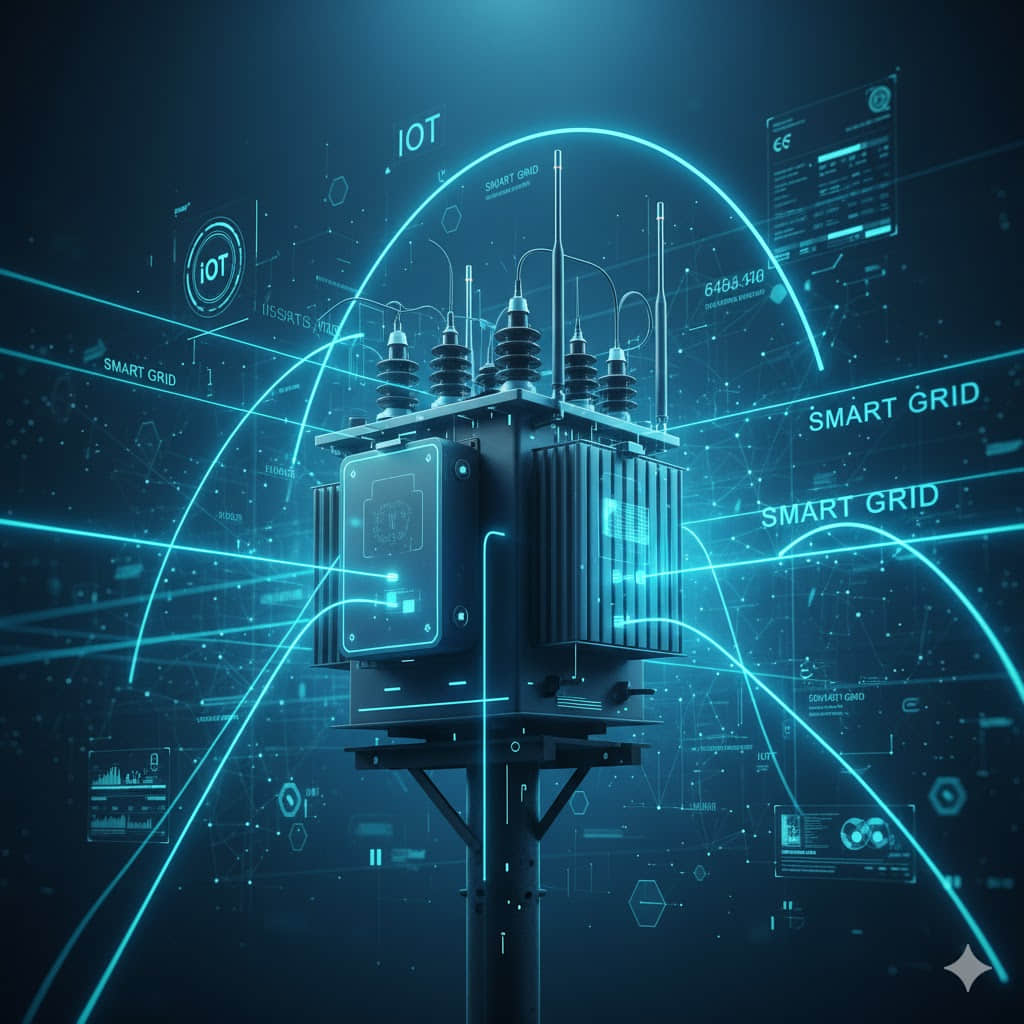
Driven by the rapid development of the Smart Grid, traditional pole-mounted transformers are actively evolving toward intelligence and digitization. In the near future, the transformer will transition from a passive step-down device into an actively sensing and responsive node within the power network.
By integrating advanced sensors for temperature, oil level, vibration, and load current, combined with remote monitoring technologies (SCADA/IoT), the Smart Transformer will be capable of several new functions. These capabilities fundamentally change the maintenance paradigm.
• Real-Time Status Monitoring: Continuously reporting health data and operational load profiles back to the control center.
• Self-Diagnosis: Automatically analyzing data streams to predict potential failure points. This effectively shifts maintenance from reactive to truly predictive.
• Dynamic Optimization: Adjusting voltage or reactive power output dynamically based on grid demands and energy pricing signals. This enables more sophisticated energy management and loss reduction.
The Smart Transformer is thus poised to become the foundational technology necessary for future distribution networks to achieve ultra-high reliability, maximized efficiency, and enhanced resilience.
VI. Frequently Asked Questions (FAQ)
1. Q: Why does the pole transformer make a "humming" noise? Is this normal?
A: It is entirely normal for a transformer to emit a "humming" sound during operation. This noise is caused by two main physical factors.
The primary source is magnetostriction, where the iron core experiences minute, periodic dimensional changes as it is subjected to the alternating magnetic field. The second factor is electromagnetic force, as the current flowing through the windings generates forces that cause the coils to vibrate slightly.
As long as the "hum" remains within normal decibel limits and is stable in frequency, it is considered standard operation. However, if the noise suddenly intensifies or includes sharp cracking sounds or irregular snapping, this may indicate serious faults like internal partial discharge, loose windings, or short circuits. This would require immediate utility inspection.
2. Q: Can a transformer operate in an overloaded condition? What are the consequences?
A: While transformers are designed with a rated capacity (kVA), and brief, minor overloading is sometimes unavoidable (e.g., during extreme summer heat peaks), long-term or severe overloading is extremely dangerous and must be avoided.
Overloading leads to a massive increase in winding current, which causes Copper Loss to rise sharply (proportional to the square of the current). This rapid heat generation significantly raises the temperature of the oil and windings.
Sustained high temperatures dramatically accelerate the aging and decomposition of the insulating material. This drastically reduces the equipment’s lifespan and potentially triggers catastrophic failures like internal short circuits and tank breaches.
3. Q: How do engineers use DGA analysis to assess the oil's health status?
A: DGA analysis focuses intently on observing the concentration levels and production rates of key dissolved gases. Engineers utilize standardized tools like the Duval Triangle or the IEC Gas Ratio Method for accurate diagnosis.
For instance, detecting Acetylene or high concentrations of Hydrogen typically signifies high-energy arcing or partial discharge, demanding urgent attention. Conversely, elevated levels of Methane and Ethylene indicate a phenomenon of localized overheating within the core or windings.
If the gas growth rate exceeds specified limits, regardless of whether the absolute concentration is over the threshold, it is considered a sign of a rapidly escalating fault. This would require immediate maintenance planning.
4. Q: Why are distribution transformers typically mounted on poles rather than in ground-level enclosures?
A: This choice is primarily driven by considerations of cost, space efficiency, and safety. Pole mounting (for overhead lines) offers several distinct advantages:
1. Lower Cost: It eliminates the need for expensive underground cable infrastructure and civil engineering works.
2. Enhanced Safety: The equipment is elevated beyond the reach of unauthorized personnel, significantly reducing the risk of vandalism or accidental contact.
3. Easier Maintenance: The aerial placement facilitates easier access for maintenance and replacement. This is critical in areas relying heavily on overhead line infrastructure.
Pad-mounted transformers (for underground lines) are mainly used in dense urban areas where aesthetics and flood resistance are prioritized. However, they involve higher initial investment and maintenance costs.
5. Q: If the transformer oil changes color, does that mean the transformer is about to fail?
A: A darkening of the transformer oil is a significant indicator of insulating oil degradation, but does not necessarily mean the transformer is about to fail immediately. Darkening usually results from oxidation caused by sustained high temperatures, air, and moisture during operation.
This leads to the formation of acidic compounds and sludge in the oil. While this condition reduces the oil’s dielectric strength and cooling efficiency, the transformer’s safety must be determined by a comprehensive professional assessment.
This involves oil dielectric strength tests (for insulation integrity), acid number tests, and DGA analysis. If these tests are within safe operational limits, the unit can continue service, though oil reclamation or replacement may be scheduled.
6. Q: What is the typical service life of a pole-mounted transformer?
A: A well-designed, modern pole-mounted transformer, provided it adheres strictly to a professional maintenance schedule (including regular oil testing and fastener checks), has an expected service life typically ranging from 25 to 40 years.
However, the actual lifespan is highly sensitive to operational factors such as average load rate, ambient temperature, frequency of lightning exposure, and the quality of maintenance received. If a transformer is subjected to long-term high temperatures or severe overloading, the accelerated aging of its insulation materials will drastically shorten its useful life.