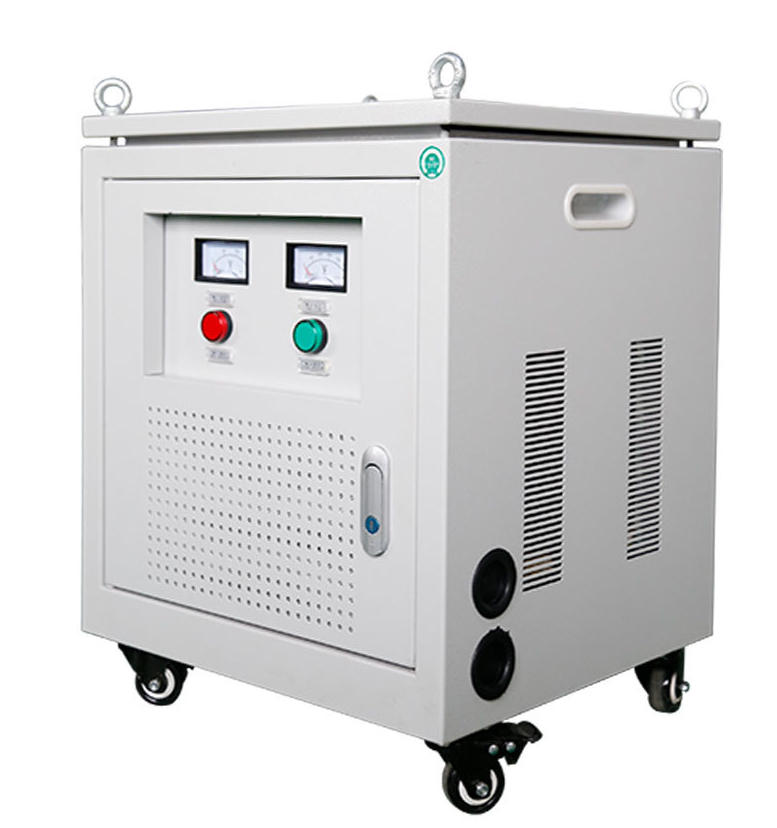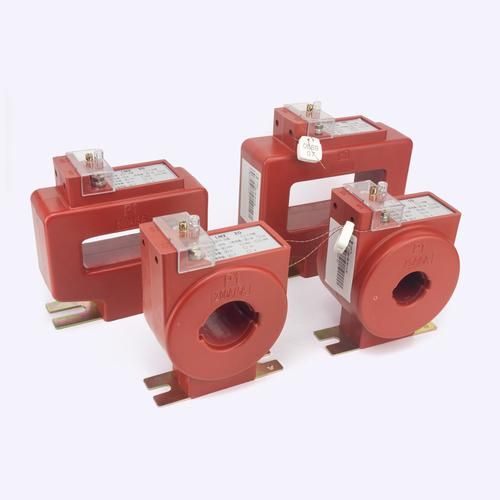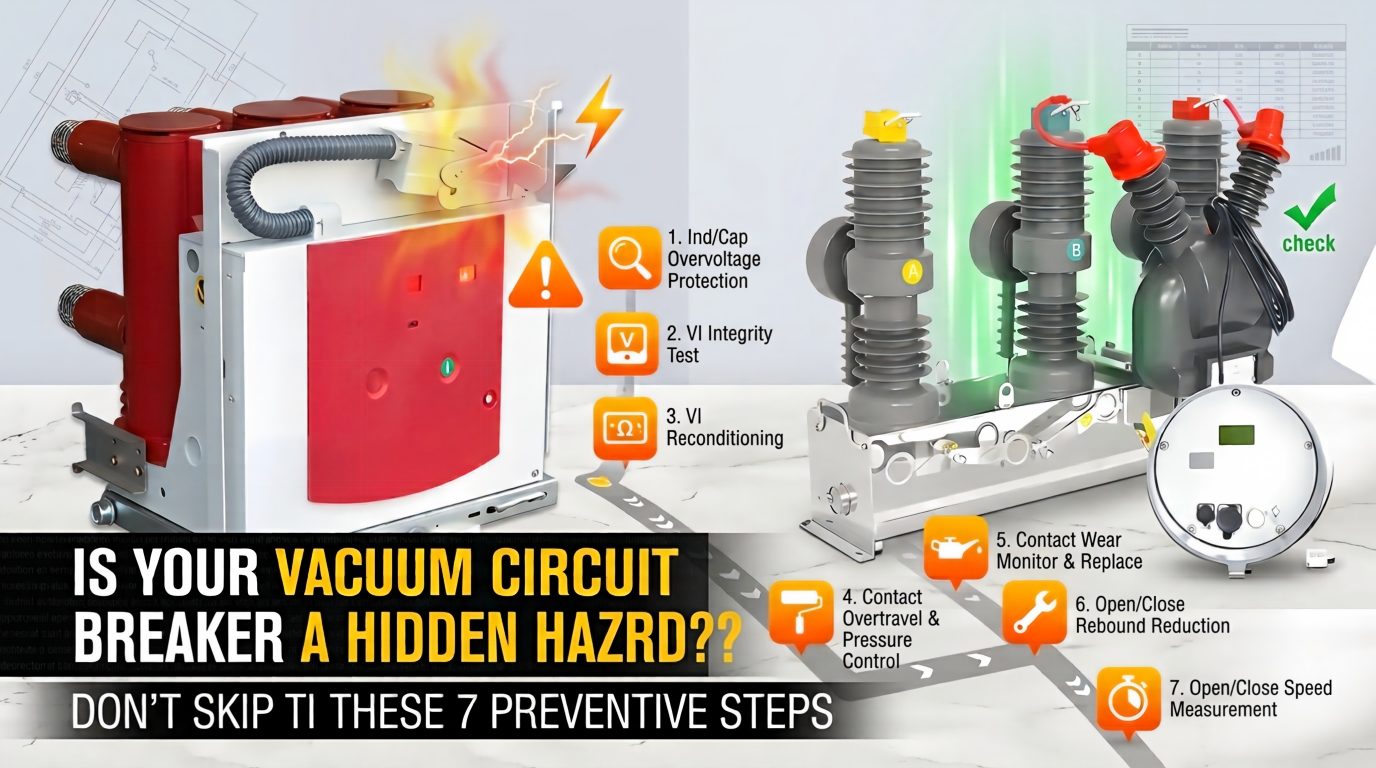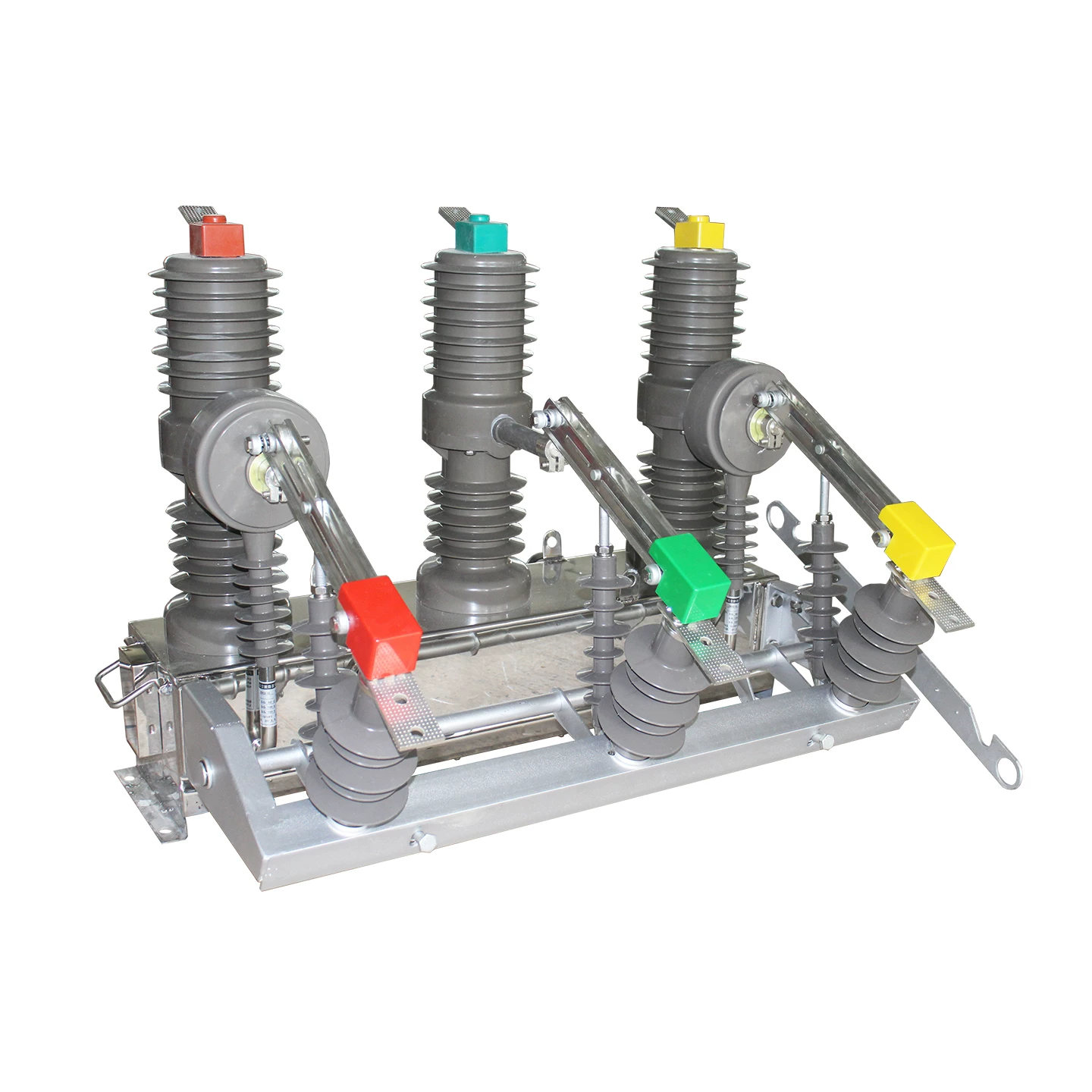
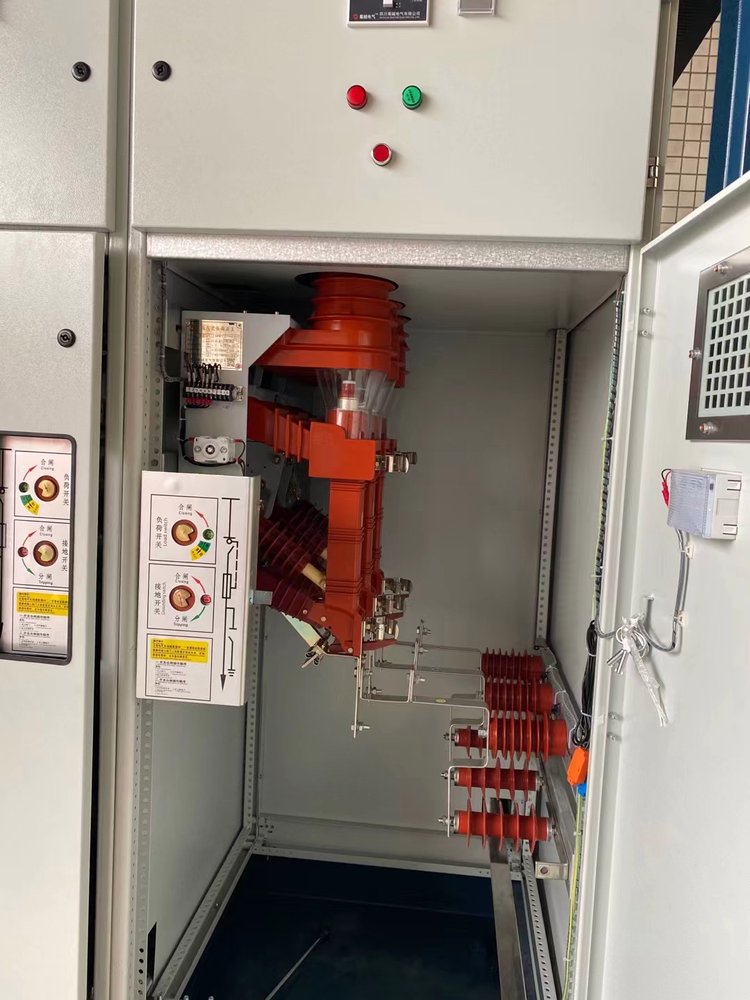
What Is a Load Interrupter Switch?
Let’s start simple:
A load interrupter switch (often called a load break switch or LBS) is a medium-voltage switch designed to open and close circuits safely while they are carrying normal load current. It is not a full circuit breaker, and it is not just a simple disconnect – it sits right in between.
If you work around 5–38 kV distribution systems, you’ll run into these devices everywhere: in pad-mounted gear, RMUs, compact switchgear, and vault installations.
Simple Definition in Plain Language
In simple terms:
A load interrupter switch is a switch that can turn medium-voltage circuits on and off under normal load, while safely controlling the arc that forms when current is interrupted.
Key points:
It is designed to interrupt load current, not large fault currents.
It provides switching and isolation for feeders, transformers, and laterals.
It’s widely used where you need safe, reliable switching but don’t need (or want to pay for) a full circuit breaker.
Standards-Based Definition (IEC / IEEE)
International standards define this more precisely:
IEC 62271-103 (Load break switches):
A load break switch is “a switch capable of making, carrying and breaking currents under normal circuit conditions, including specified overload conditions, and also carrying for a specified time currents under abnormal circuit conditions such as short-circuits”.
IEEE C37.71 / ANSI C37.72 (for high-voltage and distribution switches):
These documents define performance requirements for load-interrupter switches and switchgear used in North American systems.
In practice, this means:
The LBS is tested and rated to:
Make and break rated load current
Withstand (but not necessarily interrupt) fault currents for a short duration
Maintain the required insulation level and safety clearances
What “Interrupting Load Current” Actually Means
When you open a switch carrying current, an electric arc forms between the contacts. A load break switch is designed to manage and extinguish this arc safely.
So, interrupting load current means:
Safely breaking normal operating current:
Feeder loads
Transformer loads
Cable charging current (within limits)
Without:
Excessive arcing
Contact damage
Endangering the operator or equipment
An LBS uses arc control techniques (SF₆ gas, vacuum, special air chambers, puffer mechanisms, etc.) to:
Stretch, cool, and extinguish the arc as the contacts separate
Ensure a clean break at its rated current and voltage
Load Current vs Fault Current
A lot of confusion comes from mixing up load current and fault current. The difference matters because it defines whether you can use an LBS alone or you must add a circuit breaker or fuse.
Quick comparison:
| Term | What It Is | Typical Level (MV systems) | Can LBS Interrupt It? |
|---|---|---|---|
| Load current | Normal operating current flows to loads | Hundreds to a few thousand amps (e.g., 400–1250 A) | Yes – this is what it’s built for |
| Overload | Higher-than-normal but not short-circuit | 1.1–1.3× rated current, sometimes higher | Some LBS are rated to break specified overloads |
| Fault current | Short-circuit current during a fault (line-to-line, line-to-ground) | Can be 10–40 kA or more, depending on the system | Usually No, No-LBS typically cannot clear high fault currents; they can only withstand them for a short time |
So in real-world design:
LBS + fuses or LBS + upstream breaker are common:
The LBS handles routine switching
Fuses/breakers handle fault interruption
Typical Voltage and Current Ratings
Load interrupter switches are medium-voltage devices. You’ll typically see them in these ranges:
Common voltage classes (US market):
| Nominal System Voltage | Typical LBS Class Name | Approx. Max Rating |
|---|---|---|
| 4.16 kV | 5 kV class | ~4.76 kV |
| 12.47 kV | 15 kV class | ~15/17.5 kV |
| 24.9 kV | 27 kV class | ~27/29 kV |
| 34.5 kV | 38 kV class | ~38/40.5 kV |
Typical continuous current ratings:
400 A
630 A
800 A
1000 A
1250 A
Some designs go 1600 A+ for specialized applications
Other key ratings (at a high level):
Short-time withstand current (e.g. 16 kA, 20 kA, 25 kA for 1–3 seconds)
Momentary peak withstand (e.g. 40–63 kA peak)
Basic Insulation Level (BIL) (e.g. 95 kV, 125 kV, 150 kV impulse depending on class)
These ratings ensure the switch can:
Carry load current continuously
Survive fault currents for a short time until a protective device trips
Maintain insulation during lightning or switching surges
Where a Load Interrupter Switch Fits in the MV System
In a medium-voltage distribution network (utility, campus, industrial plant), a load interrupter switch usually sits:
Downstream of primary protection, like:
Substation breakers
Reclosers
Fuse cutouts
Upstream of:
Power transformers
Distribution feeders
Underground cable laterals
RMU branches and loops
Common roles in a one-line:
Feeder sectionalizing: splitting a feeder into segments so you can isolate a faulted section
Loop or ring main switching: opening/closing in RMUs and loop-fed systems
Transformer switching: connecting/disconnecting MV transformers under load
Source transfer: switching between normal and backup feeds (with proper interlocks)
In short:
Use a load interrupter switch when you need:
Safe, routine switching of MV circuits under load
Compact, cost-effective switchgear
High reliability with minimal maintenance
Pair it with fuses or breakers when:
The availablefault current is high
You need fault interruption and protection, not just switching and isolation
How a Load Break Switch Actually Works
Basic working principle of a load interrupter switch
A load interrupter switch (load break switch or LBS) is built to switch normal load current safely on medium-voltage systems, typically 5–38 kV. It’s not a full circuit breaker; its job is to:
Open and close circuits carrying rated load current
Control feeders, loops, and transformers
Provide isolation with a high insulation level
Inside the LBS, you have main contacts that carry current and a dedicated arc-quenching chamber (SF₆, vacuum, or air-based) that controls and kills the arc when the switch opens under load.
Step-by-step: opening and closing a load break switch
Closing sequence (energizing the circuit):
1. Operator gives the close command (handle, pushbutton, or motor/SCADA).
2. Mechanism charges springs and snaps the contacts together at high speed.
3. Contacts touch, current transfers through the main conducting path.
4. Arc is minimal because the voltage difference is small at the instant of contact.
Opening sequence (interrupting load current):
1. The operator gives the open command.
2. Stored-energy mechanism separates the contacts very quickly.
3. As the contact parts, an arc forms between them.
4. The arc is driven into the arc-quenching medium (SF₆, vacuum, or air).
5. The interrupter cools, stretches, and de-ionizes the arc path.
6. At the next current zero (50/60 Hz), the arc goes out and does not re-strike.
7. Once the arc is cleared, you have a safe insulation gap between source and load.
The entire opening process is designed and type-tested so operators can break the load safely and repeatably without needing a full circuit breaker.
Arc formation and arc extinction are explained simply
When you open a switch carrying current, the current doesn’t want to stop instantly. The voltage across the separating contacts gets high enough to jump the gap, creating an arc.
A load break switch controls the arc using:
High-speed contact motion – to shorten arc duration
Controlled medium – gas, vacuum, or air to cool and stretch the arc
Contact design – tips, nozzles, and shields that guide the arc
Once the arc is stretched and cooled, it naturally dies at current zero, and the dielectric strength of the gap recovers quickly, so it won’t re-strike.
If you want more basics on arc control and medium-voltage devices, it’s similar in concept to how a vacuum contactor interrupts current inside sealed vacuum bottles.
Main arc extinction methods in load interrupter switches
I use several interruption technologies across our medium-voltage load break switch lineup:
1. SF₆ gas load break switch
How it works: Contacts open inside a sealed SF₆ (sulfur hexafluoride) chamber. SF₆ is highly insulating and very effective at cooling and de-ionizing the arc.
Pros: Compact size, excellent dielectric strength, high interrupting performance.
Cons: SF₆ is a greenhouse gas; handling, monitoring, and end-of-life recovery must follow strict rules.
2. Vacuum load break switch
How it works: Contacts open inside a vacuum interrupter bottle. With almost no gas present, the arc is tiny and extinguishes quickly at a current of zero.
Pros:
Practically maintenance-free over the device’s life
No SF₆ gas handling
Very long electrical and mechanical endurance
Cons: Slightly higher component cost, but usually lower lifetime cost.
3. Air-insulated / air-break, puffer, and rotary blade
Air-break LBS: Contacts open in air; special arc chutes guide and cool the arc.
Puffer LBS: Contact motion compresses air (or gas) and “puffs” it through a nozzle across the arc, improving interruption.
Rotary blade LBS: A rotating blade pulls the arc into specially shaped arc chutes, stretching and cooling it.
Air-based options are straightforward and cost-effective but typically bulkier and with lower interrupting performance than SF₆ or vacuum at higher voltage and current ratings.
Visible break vs non-visible break load break switches
For U.S. users, especially in utilities and industrial plants, visible isolation is a big deal for lockout/tagout and OSHA compliance.
Visible break LBS:
The operator can physically see a gap or position indicator linked mechanically to the contacts.
Often provided via inspection windows, viewing ports, or external blades.
Makes it easier for crews to verify the line is isolated before grounding.
Non-visible break LBS:
Interruption happens fully enclosed (e.g., in SF₆ or vacuum bottles).
Position is shown by mechanical indicators and/or auxiliary contacts.
Common in compact RMUs and pad-mounted gear where space is limited.
We design visible-break options where U.S. customers need a clear, physical confirmation of isolation, especially in outdoor and substation-style switchgear.
Manual vs motorized/remote operation
You can operate a medium-voltage load break switch in two main ways:
Manual LBS:
Operated via a handle, lever, or operating shaft
Best for:
Simple feeders
Smaller facilities
Locations with easy, safe physical access
Lower initial cost, minimal control wiring
Motorized/remote LBS:
Fitted with a motor operator and auxiliary contacts
Can be controlled from:
Local control panel
SCADA system
Remote control center
Ideal for:
Utilities and campuses with multiple feeders
Solar, wind, and microgrids need remote switching
Dangerous or hard-to-access sites (vaults, traffic-heavy areas)
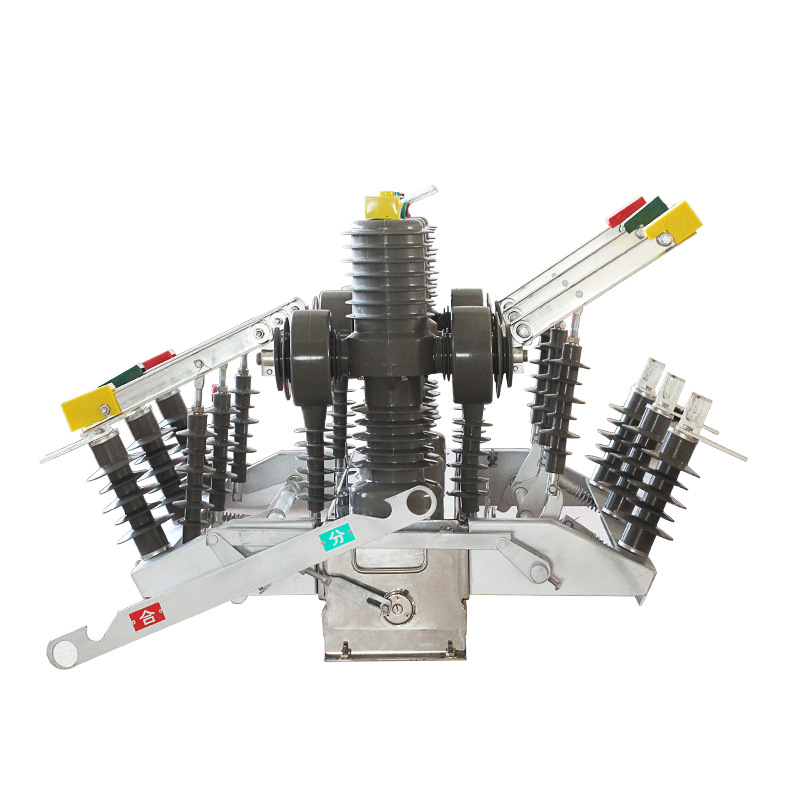
When customers want remote switching but still need full interruption of normal load, I’ll typically pair a motorized load break switch with SCADA-ready controls, and, if needed, coordinate it with an upstream protection device like an outdoor vacuum circuit breaker, such as our ZW32SR-12 mounted breaker.
Safety interlocks and anti-misoperation features
To keep operators safe and protect equipment, I always focus on mechanical and electrical interlocks in the LBS design. Typical features include:
Open/close interlocks with access doors
Can’t open the door if the switch is closed (live); can’t close the switch with the door open.
Earthing switch interlock
Prevents closing the earthing/ground switch unless the LBS is open.
Prevents closing the LBS if the earthing switch is engaged.
Padlock provisions and key interlocks
Support strict lockout/tagout procedures.
Useful for substations, plants, and shared utility/customer interfaces.
Mechanical position indicators
Directly linked to the shaft and contacts, reducing the chance of false indication.
Electrical interlocks
Auxiliary contacts to feed status to relays, PLCs, or SCADA.
Logic blocks conflicting commands (for example, can’t close from remote if locally locked out).
All of this ensures the load interrupter switch can interrupt load current reliably while protecting people in the field and keeping your medium-voltage system running safely and predictably.
Load Break Switch vs Circuit Breaker vs Disconnector
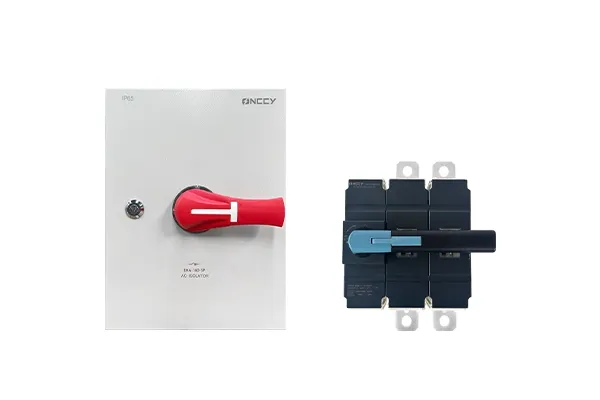
Why do people confuse these three devices?
People mix up load break switches (LBS), circuit breakers (CB), and disconnectors because:
They all “open and close” medium voltage circuits
They’re often installed inside the same switchgear lineup
On a single-line diagram, the symbols look similar
In reality, they do very different jobs:
One is mainly for safe switching of load (LBS)
One is for fault protection (circuit breaker)
One is for visible isolation only (disconnector/isolator)
If you’re building or upgrading MV distribution in the U.S. (11 kV–38 kV class), getting this distinction right is critical for safety, reliability, and cost.
Core difference: Load Break Switch vs Circuit Breaker
Load Break Switch (LBS) – “Switch load, not faults”
Designed to switch the normal load current safely
Can handle limited fault making (closing onto a fault) in many designs, but not high fault interrupting
No full protective tripping functions by itself
Often manually operated, but can be motorized for SCADA
Simpler mechanism, fewer moving parts
Circuit Breaker (CB) – “Interrupt faults safely”
Designed to interrupt high fault current (short circuits)
Works with protection relays to trip automatically on overcurrent, ground fault, etc.
Much higher interrupting rating than an LBS
More complex: spring-charged mechanisms, trip coils, relays, CTs
Standard choice at substations, generator interconnections, and high-fault locations
Bottom line:
If you must clear faults, use a circuit breaker.
If you just need to switch load and sectionalize in a distribution network where fault protection is handled upstream, a load break switch is usually enough and much more economical.
Core difference: Load Break Switch vs Disconnector
Disconnector / Isolator – “Visible isolation only”
Built for no-load switching only
Must be opened after the current is already interrupted elsewhere
Provides a visible open gap for clear safety isolation
Typically, no arc-quenching capability
Used for lockout/tagout and maintenance boundaries
LBS vs Disconnector in simple terms:
An LBS can interrupt the load current safely
A disconnector should never be used to break load or fault current
In many U.S. installations, we combine these functions. For example, a ring main unit (RMU) may use load break switches with integrated visible isolation features or paired grounding and disconnect devices to keep operations safe and clear to operators.
Fault interrupting capability: side by side
Load Break Switch
Interrupts: rated load current
May “make” on limited fault current (check spec)
Does not interrupt high fault current
Circuit Breaker
Interrupts: full short-circuit current per IEC/IEEE/ANSI rating
Designed for repeated fault interruptions
Works with relays for time-current coordination
Disconnector
Interrupts: zero current only
Never used to clear faults or load
If your available fault level is high (common in U.S. industrial campuses, data centers, or near utility substations), you size the circuit breaker to that fault level and use LBS/disconnectors only where their duty is clearly within spec.
Cost, size, and complexity differences
LBS
Lower cost than breakers
Compact, simple mechanism
Ideal for pad-mounted gear, RMUs, and compact MV switchgear
Circuit Breaker
Highest cost per feeder position
Larger footprint, more auxiliaries (relays, CTs, trip circuits)
Needed where you truly need fault clearing
Disconnector
Lowest cost device
Very simple, but also most limited function
For many U.S. distribution feeders, a mixed approach is optimal:
Circuit breakers at the main substation or the main incoming
Load break switches in downstream cabinets, RMUs, or pad-mounted units
Disconnectors where safe physical isolation is needed at low cost
Protection roles vs isolation roles
Circuit Breaker – Protection + switching
Trips automatically on faults
Often also used for normal switching
Load Break Switch – Operational switching + sectionalizing
Switches feeders, loops, and transformers on/off under load
Works with upstream breakers and relays for actual fault protection
Disconnector – Isolation only
Creates a visible, lockable isolation point
Used after the circuit is de-energized by a breaker or LBS
Think of it this way:
CB = “protect and interrupt”
LBS = “operate and reroute”
Disconnector = “make it visibly dead and safe to touch”
Maintenance, lifespan, and reliability
Typical trends (actual values depend on manufacturer and type):
Load Break Switch
Fewer parts, sealed designs (especially vacuum or SF6 LBS)
Very long mechanical life with minimal maintenance
Vacuum LBS designs are often essentially maintenance-free for decades
Circuit Breaker
More complex mechanisms and control circuits
Requires periodic inspection, testing, and sometimes refurbishment
Higher maintenance cost over 20–30 years
Disconnector
Mechanically simple, but exposed contacts may need regular cleaning, lubrication, and inspection
Reliability is high if maintained, but they’re more sensitive to outdoor conditions
For U.S. utilities, campuses, and industrial plants pushing for 30+ year service with minimal downtime, vacuum load break switches in sealed metal-enclosed switchgear or RMUs are a very attractive option.
Typical use cases in real projects
Load Break Switch (LBS):
Medium voltage loop and sectionalizing points in distribution
Ring Main Units for urban and campus networks (e.g., hospitals, airports, universities)
Pad-mounted switchgear for underground distribution in commercial areas
Incoming and outgoing feeders at solar farms and wind collection systems, where fault protection sits at a main breaker
Simple, operator-friendly switching where operations staff change feeder configurations regularly
(When we design RMU-based MV systems, we rely heavily on LBS to keep the gear compact and cost-effective, while using upstream breakers for fault clearing. You can see this approach in our metal-enclosed ring main unit solutions.)
Circuit Breaker:
Utility and industrial substations
Main incoming feeders to data centers, refineries, mills, and large campuses
Generator interconnections and tie breakers
Locations with high fault levels and strict coordination requirements
Disconnector / Isolator:
Bus and line isolation in HV/MV substations
Clearly visible, lockable isolation before maintenance work
As part of grounding and earthing arrangements in metal-enclosed gear
Quick comparison: LBS vs Circuit Breaker vs Disconnector
| Feature / Function | Load Break Switch (LBS) | Circuit Breaker (CB) | Disconnector / Isolator |
|---|---|---|---|
| Interrupts normal load current | Yes | Yes | No |
| Interrupts fault current | No (or very limited) | Yes – main purpose | No |
| Makes one fault (closing onto fault) | Sometimes (check “fault-make” rating) | Yes | Not intended |
| Provides visible isolation | Sometimes (design-dependent) | Usually, no, needs added disconnect | Yes – main purpose |
| Works with protection relays | Usually no (manual/SCADA switching) | Yes – integral to protection scheme | No |
| Complexity | Low–medium | High | Low |
| Typical cost per feeder (relative) | Medium/cost-effective | High | Low |
| Main role | Operational switching, sectionalizing | Fault protection + switching | Safe, visible isolation |
| Typical locations | RMUs, pad-mounted gear, MV distribution | Substations, high-fault nodes, main incomers | Substations, isolation points, bus sections |
Use this table as a quick design check:
If your primary concern is protection, start with circuit breakers.
If your priority is simple and safe switching in an MV network, look at load break switches.
If what you need is visible, lockable isolation, you’re talking about disconnectors.
Main Types of Load Interrupter Switches
When you’re planning or upgrading a medium voltage system in the U.S. (11 kV, 15 kV, 27 kV, 38 kV), the type of load interrupter switch you choose has a big impact on reliability, footprint, and long‑term cost. Here’s how the main options compare in real-world use.
SF₆ Gas Load Break Switches
SF₆ load break switches use sulfur hexafluoride (SF₆) gas as both the insulation and arc-quenching medium. They’re very common in compact MV switchgear and RMUs.
Basic construction and key parts:
Sealed metal tank filled with SF₆ gas at controlled pressure
Fixed and moved contacts inside the gas tank
Operating mechanism (manual handle or motor drive)
Bushings or cable terminations (often dead-front for safety)
Gas density/pressure monitoring device
Pros of SF₆ insulation and interruption:
Very high dielectric strength → allows compact, space-saving designs
Strong arc-quenching capability → clean, reliable load interruption
Long service life when the tank is sealed properly
Ideal for indoor metal-enclosed switchgear and RMUs with tight space
Cons and trade-offs:
SF₆ is a potent greenhouse gas → growing regulatory pressure in the U.S. and EU
Requires gas monitoring and proper handling procedures
De-gassing and refilling need trained personnel and special equipment
Environmental compliance is getting stricter, driving many users toward vacuum designs
If you’re designing new gear right now, SF₆ can still make sense, but you need to consider future regulations and corporate ESG commitments.
Vacuum Load Break Switches
Vacuum load break switches use sealed vacuum interrupters to handle the arc. This is the go-to technology if you want long life, low maintenance, and a cleaner environmental profile.
How vacuum interrupters handle the arc:
When the contacts open under load, an arc forms inside the vacuum interrupter
The vacuum has almost no gas molecules, so the arc collapses very quickly
At current zero, the dielectric strength recovers fast, stopping re-strike
The arc products are contained inside the sealed bottle, not in your switchgear
Key advantages:
Maintenance-light / maintenance-free: interrupter bottles are sealed for life
Long lifetime: often 10,000+ mechanical operations, suitable for frequent switching
Environmentally friendly: no SF₆ gas, easier to meet sustainability targets
Excellent for medium voltage load interrupter switchgear in data centers, campuses, industrial plants, solar and wind farms
Across most new MV systems in the U.S., vacuum LBS is becoming the preferred standard because of its lifecycle cost and regulatory stability.
Air-Insulated Load Break Switches
Air-insulated load break switches use air (at atmospheric pressure) as the insulating and arc-quenching medium. These are usually more open and accessible designs.
Where air-insulated LBS make sense:
Outdoor pole-mounted or simple metal-enclosed switchgear
Applications with plenty of space and lower insulation demands
Rural distribution, small substations, and cost-sensitive projects
Systems where visual inspection and simple mechanical design are a priority
Limitations in medium voltage:
Air has lower dielectric strength than SF₆ or vacuum → larger clearances, bigger enclosures
More exposure to dust, pollution, salt, and moisture → more maintenance in harsh c" climates
Not as compact as SF₆ or vacuum designs, especially above 15 kV
Less suited for very high BIL and compact medium voltage distribution equipment
Air-insulated LBS can still be a smart choice if you have space for moderate voltages and want a very straightforward easy-to-service design.
Pad-Mounted Load Break Switches
Pad-mounted load break switches are factory-assembled tamper-resistant units installed on concrete pads commonly used by U.S. utilities and large campuses.
Typical pad-mounted configurations:
Radial-fed or loop-fed distribution schemes
2- 3- or 4-way switching with load break ways and optional fuse ways
Dead-front cable terminations with elbow connectors for safety
Often combined with power distribution cabinets and other MV gear in compact layouts
(see how we integrate pad-mounted equipment with our medium voltage power distribution cabinets)
Where they’re used:
Underground residential distribution (URD)
Commercial centers , campuses and business parks
Solar farm collection systems and small substations
Microgrids and backup power tie points
Pad-mounted LBS units are ideal when you want compact footprint, public-area safety and underground cable connections in one sealed outdoor-rated package.
Vault and Substation Style Load Break Switches
Vault type load break switches are built for underground or below-grade installations often in urban areas while substation style LBS are typically metal-enclosed or metal-clad indoors.
Indoor vs. underground vault:
Vault type:
Designed for confined damp and sometimes flooded spaces
Corrosion-resistant tanks and enclosures
Cable entry via elbows or terminations optimized for vault access
Indoor/substation style:
Installed in switchgear lineups MCC rooms or dedicated electrical rooms
Easier access for inspection and operation
Often integrated with metering relays and other protection devices
Integration into metal-enclosed switchgear and RMUs:
LBS modules can be combined with:
Fuses for transformer protection
Voltage transformers and sensors for monitoring
Fault indicators and remote status contacts
Common in ring main unit (RMU) load break switch designs for urban utility networks
This style is your best fit where space aesthetics and safety around the public are critical—downtown networks hospitals airports transit systems.
Motorized vs Manual Load Break Switches
For any of the technologies above (SF₆ vacuum air) you can typically choose manual or motorized operation.
Manual LBS (hand-operated):
Lower upfront cost
Simple and rugged easy to understand for field crews
Best for infrequent switching or local-only operation
Common in basic utility distribution and small industrial sites
Motorized / remotely operated LBS:
Fitted with an electric motor operator auxiliary switches and control wiring
Can be operated from a control room SCADA system or remotely via communications
Allows fast fault isolation and service restoration without rolling a truck
Ideal for data centers hospitals airports mines and large campuses where downtime is very costly
SCADA-ready and automation options:
Remote open/close with status indication
Integration with protection relays reclosers and auto-transfer schemes
Event logging and condition monitoring (operations count gas pressure etc.)
Supports advanced grid automation and “self-healing” feeder schemes
(for comparison many users pair motorized LBS with devices like our auto-recloser solutions outlined in our automatic recloser pricing and applications guide)
As a rule of thumb:
If your outage cost is high or your feeders are part of an automated grid go motorized and SCADA-ready.
If the system is simple and interruptions are tolerable a manual LBS can be the most economical and robust option.
In short choosing between SF₆ vacuum air-insulated pad-mounted vault/substation style and manual vs motorized load break switches is about matching the technology to your voltage level environment space maintenance strategy and automation needs. For U.S. users vacuum and pad-mounted or metal-enclosed solutions with remote capability are where most new projects are heading.
Common Applications and Industries for Load Interrupter Switches
Utility Distribution Networks & Feeder Switching
In U.S. medium-voltage (MV) distribution (typically 5–38 kV) a load interrupter switch is a go‑to device for safe fast feeder switching. Utilities use 11 kV 15 kV 27 kV and 38 kV load break switches to:
Switch feeders and laterals under normal load
Isolate lines or transformers for maintenance
Reroute power during storms or faults to reduce outage time
You’ll often see pad-mounted load break switches on sidewalks in residential neighborhoods and along commercial feeders because they’re compact tamper-resistant and easy for linemen to operate. When paired with gas‑insulated switchgear like HXGN15‑12 units they give you a very compact footprint for crowded urban networks.
Loop and Sectionalizing in MV Distribution
On looped or networked systems utilities use MV load interrupter switches for:
Loop switching – opening/closing ties between feeders
Sectionalizing – splitting long feeders into smaller sections so a fault doesn’t take everyone down
Backfeeding – feeding loads from an alternate source during maintenance or outages
Here the priority is high reliability and simple operation. A manually operated LBS with clear open/closed indication is usually enough but many U.S. utilities now favor motorized SCADA-ready load break switches to restore power remotely and cut truck rolls.
Ring Main Unit (RMU) Applications
In compact networks ring main unit load break switches give you multiple MV functions in one sealed metal-enclosed cabinet:
Two to three load break switches for incoming and outgoing feeders
A fused or breaker-protected transformer feeder
Visible or indicated isolation for safety
RMUs with SF6 or vacuum load break switches are common in:
Urban underground distribution
Commercial complexes and mixed-use buildings
Small substations where space is extremely tight
Gas‑insulated RMUs like our compact MV switchgear solutions are designed for 30+ year life with very little maintenance which lines up well with U.S. utility and campus expectations.
Renewable Energy: Solar Farms and Wind Farms
Large-scale solar farms and wind farms in the U.S. rely heavily on medium voltage load interrupter switches for:
Switching and isolating MV collector circuits
Sectionalizing strings of inverters or turbines
Manual or remote switching at pad‑mounted transformer stations
Key needs here are:
MV ratings like 15 kV 27 kV and 34.5 kV
Outdoor weatherproof housings for harsh sites
Easy integration with plant SCADA and protection relays
Vacuum or SF6 MV load interrupters are preferred because they’re sealed low‑maintenance and handle frequent switching well.
Commercial and Industrial Facilities
Commercial and light industrial users in the U.S. use load break switches inside:
Commercial buildings and office towers
Retail centers and malls
Light manufacturing and logistics hubs
Typical roles:
Main MV incoming switch for building substations
Feeder switching for multiple transformers or buildings
Safe isolation for facility maintenance crews
In these applications medium voltage load interrupter switchgear is chosen over full breakers when:
Fault protection is already handled by upstream utility breakers
The user wants a simpler lower-cost and more compact solution
Data Centers Hospitals Airports & Campuses
For critical power sites like data centers hospitals airports and university campuses the priority is uptime and safe predictable switching. Load break switches support:
Redundant MV feeds (A/B utility or utility plus generator)
Rapid reconfiguration of MV rings or loops
Isolation for maintenance without shutting down the entire facility
Common setups include:
Ring main units with load break switches on incoming feeders
Pad-mounted load interrupter switchgear feeding multiple transformers
Motorized LBS integrated into automation schemes to transfer loads within seconds
Here a load break switch provides high reliability and a very clear switching status, which operators and facility teams in the U.S. value for both safety and compliance.
Industrial Plants Mining & Heavy Manufacturing
Heavy industry runs on robust simple MV gear. In steel mills paper plants chemical facilities mines and refineries load interrupter switches are used to:
Switch and isolate large MV motors and drives
Control MV feeders to different production lines
Segment plant distribution networks into manageable zones
What matters most:
High short-time withstand and momentary ratings
Rugged enclosures for dust vibration and corrosive environments
Straightforward operation so plant electricians can work quickly and safely
When you pair a load break switch with a dedicated indoor or outdoor isolator switch for clear visible isolation you get an MV system layout that satisfies both OSHA lockout expectations and internal safety standards.
Backup Power Systems and Microgrids
In backup power and microgrid projects a medium voltage load interrupter switch is often the backbone of how sources and loads are tied together. Typical roles:
Switching between utility and generator or CHP source
Isolating battery energy storage or inverter blocks
Reconfiguring feeders in campus or community microgrids
Engineers in the U.S. choose motorized SCADA-capable LBS switches so they can:
Automate transfer sequences
Island and resync microgrids safely
Reduce the complexity and cost compared with installing full MV breakers everywhere
With the right controls a medium voltage load break switch gives you reliable repeatable switching at a lower cost and smaller footprint than a full breaker lineup which is key when you’re trying to keep project budgets under control while still meeting utility interconnection and reliability requirements.
Advantages of Modern Load Interrupter Switches
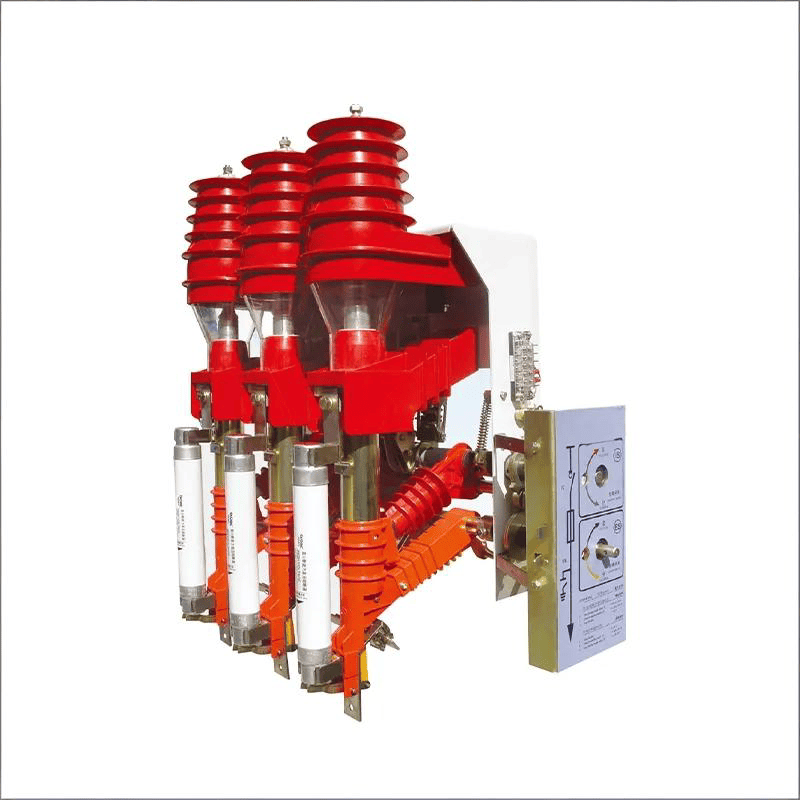
Why engineers choose load break switches over breakers
In a lot of medium voltage jobs across the U.S. a modern load interrupter switch (load break switch) is simply the more practical choice than a full circuit breaker. If you mostly need safe load switching and visible isolation—not complex protection functions—an LBS gives you:
Lower cost per bay
Smaller footprint
Less maintenance and setup hassle
Very high reliability over decades of service
You still pair it with upstream protection (relays + breakers or fuses) but for feeder switching loops and sectionalizing an LBS is often the smarter investment.
Compact footprint and space savings
Modern medium voltage load break switches are built for tight spaces—exactly what we see in U.S. data centers hospitals campuses and urban substations:
Slim metal-enclosed or RMU-style cabinets that fit in narrow electrical rooms
Pad-mounted load break switch designs that minimize pad size and site work
Easier layout in retrofit projects where space is already locked in
That smaller footprint usually means lower building cost simpler cable routing and easier clearances.
High reliability and long service life (30+ years)
A good MV load interrupter switch is designed to stay in service for 30+ years with minimal issues:
Vacuum load break switch designs have sealed interrupters so there’s no contact erosion to worry about like old air-break gear
Fewer moving parts than a circuit breaker which means fewer mechanical failures
Tested to high mechanical and electrical endurance cycles under IEC and IEEE standards
For utilities industrial plants and commercial sites that long predictable life is a big part of the buying decision.
Lower total cost of ownership vs circuit breakers
Up front a load break switch is typically cheaper than an equivalent circuit breaker panel. Over the life of the equipment the cost gap usually grows:
Lower purchase cost and simpler switchgear design
No complex trip units or breaker maintenance programs
Less downtime for inspections and servicing
Fewer spare parts to stock
You still use vacuum circuit breakers where you truly need fault interruption and advanced protection—if you’re comparing it’s worth reviewing a dedicated vacuum circuit breaker selection guide to see where breakers make sense and where an LBS is enough.
Simple operation and quick training
Operators in U.S. facilities—especially where crews are small—tend to prefer equipment that’s straightforward:
Clear ON/OFF/EARTH (ground) positions with mechanical indicators
Simple handle operation or push-button controls for motorized units
Obvious mimic diagrams and status windows on the front of the gear
Training a crew to safely use a load break switchgear lineup is usually much faster than training them on multiple breaker settings and coordination details.
Fast installation and commissioning
Modern load interrupter switchgear is often factory-assembled and type-tested which speeds up field work:
Pre-configured cubicles for 11 kV 15 kV 27 kV and 38 kV systems
Less field wiring and fewer components to integrate
Straightforward functional checks—no complex protection tuning on the device itself
That’s a big plus on U.S. projects with tight schedules like new data halls solar farms or hospital expansions.
Reduced maintenance with vacuum and sealed designs
Today’s vacuum load break switches and sealed SF₆ or solid-insulated designs are built to be almost maintenance-free:
Sealed-for-life interrupters (no contact cleaning or gap adjustments)
Long intervals between inspections compared to older air-break switches
Minimal or no gas handling for vacuum and solid-insulated models
For owners that translates into lower annual O&M budgets and fewer shutdowns to open up gear.
Safety features and visible isolation options
Safety is non‑negotiable in U.S. utility and industrial environments and modern load break switches are designed around that:
Visible break options (viewing windows or withdrawable/three-position designs) to confirm isolation
Key interlocks and mechanical interlocks to prevent closing onto a fault or operating with doors open
Clear grounding/earthing positions built into the switch for safe work on cables
Internal arc–tested enclosures on many models to improve operator protection
This combination of load interrupting capability with strong isolation and safety features is why so many engineers specify a load interrupter switch as the core of their MV distribution layout.
Key Technical Specifications You Should Know
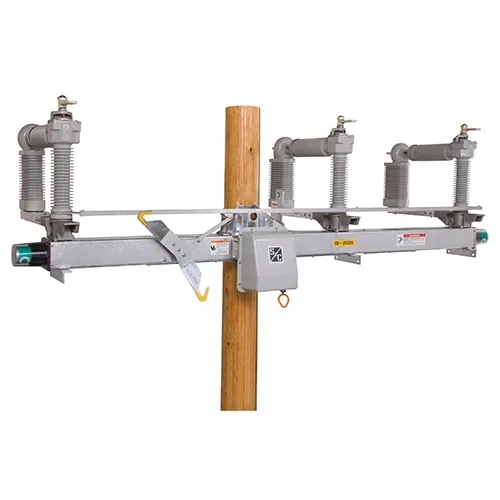
When you’re picking a medium voltage load interrupter switch (LBS) the specs matter. Here are the key numbers I always look at first.
Voltage Classes (kV Levels)
Most US MV load break switches fall into a few common voltage classes:
| Nominal System Voltage | Typical LBS Class | Common Use Case |
|---|---|---|
| 4.16 kV / 5 kV | 5 kV / 7.2 kV | Small plants campuses retrofit |
| 11 kV / 12.47 kV | 15 kV class | Utilities commercial light industry |
| 13.2 / 13.8 kV | 15 kV class | Data centers hospitals campuses |
| 24.9 / 25 kV | 27 kV class | Sub-transmission long feeders |
| 34.5 kV | 38 kV class | Wind solar utility substations |
Always match the rated voltage to your system and check for enough margin for overvoltages.
Continuous Current Ratings
Continuous current is the load the switch can carry all day every day:
Typical ratings: 400 A 630 A 800 A 1 200 A 1 250 A
Heavy utility / industrial: up to 2 000 A–2 500 A on metal‑enclosed gear
Pick a rating that:
Covers present load
Has 20–40% margin for future growth
Matches cable size and busbar rating
Short-Time Withstand & Momentary Ratings
Load interrupter switches do not clear faults like breakers but they must survive them briefly:
Short-time withstand current (Ith)
Typical: 16 kA 20 kA 25 kA for 1–3 seconds
The switch must withstand fault current long enough for upstream protection to trip.
Momentary / peak withstand current (Ip)
Often 2.5 × Ith (e.g. 25 kA RMS → ~62.5 kA peak)
Make sure Ith and Ip are higher than your available fault current at that location.
Basic Insulation Level (BIL) & Impulse Withstand
BIL is critical for lightning and switching surges:
| Voltage Class | Typical BIL (kV) |
|---|---|
| 15 kV | 95 kV |
| 27 kV | 125 kV |
| 38 kV | 150 kV |
Look at both power-frequency withstand (e.g. 1‑minute test) and lightning impulse withstand.
For outdoor gear in high lightning areas don’t compromise on BIL.
Mechanical & Electrical Endurance
You want an LBS that lasts:
Mechanical operations (no current):
Often 5 000–10 000+ operations
Electrical operations (under load):
Typically 100–1 000 load break operations depending on rating
For automated/SCADA switching go for higher endurance ratings and vacuum or SF6-sealed designs.
Duty Cycle & Switching Performance
Check how the switch is tested and rated:
Duty cycle tests per IEC 62271‑103 / IEEE C37.71:
Repeated close–open sequences under rated load
Short-time current withstand tests
Confirm:
Rated normal load switching
Cable charging current switching
Transformer magnetizing current switching
If you’re doing frequent feeder or loop switching this matters a lot.
Environmental Ratings
For US installations the environment can make or break reliability:
Indoor vs Outdoor
NEMA enclosures (e.g. 1 3R 4X) for metal‑enclosed and pad‑mounted gear
Altitude
Above 3 300 ft (1 000 m) dielectric strength drops – derating or special design may be needed.
Temperature
Typical: -30°C to +40°C (or better for utility-grade)
Pollution / Contamination
Coastal industrial or desert sites require higher creepage distance and better sealing.
For outdoor isolation and switching many engineers pair LBS with robust equipment like a GW5-35 outdoor disconnect switch on the HV side when visible isolation is needed.
Cable Connection Options
How you terminate cables is a big practical choice:
Dead-front terminations
Fully insulated no exposed live parts
Standard for pad-mounted vault and RMU gear
Safer for public and utility environments
Live-front terminations
Exposed bushings usually on older or outdoor gear with clearances
Lower cost but more safety and clearance requirements
Elbow terminations (IEEE 386)
Widely used in US underground and loop systems
Ideal for pad-mounted and RMU-type medium voltage switchgear
Allow easy loop reconfiguration and testing
When I size or specify a load interrupter switch I always line up these specs with the system study (short-circuit levels load flow and protection coordination). That’s how you avoid surprises later and keep both reliability and safety where they need to be.
Standards and Certifications for Load Interrupter Switches
Why standards matter for a load interrupter switch
When you’re buying a medium voltage load interrupter switch for a U.S. facility or utility standards aren’t optional—they’re your safety net. The right IEC/IEEE/ANSI certifications tell you:
The switch can handle your system voltage and fault levels safely
The arc interruption is proven and repeatable
The insulation mechanical strength and thermal performance are verified in a lab not “assumed”
The product will be accepted by inspectors utilities and insurers
In short: if a load break switch doesn’t clearly show its standards compliance on the nameplate and in the test reports I wouldn’t put it in a live 15 kV–38 kV system.
IEC 62271‑103 – Core standard for load break switches
For IEC-based designs the main reference is IEC 62271‑103 (High-voltage switchgear and controlgear – Switches for rated voltages above 1 kV and up to and including 52 kV). This standard defines:
Rated voltage classes (e.g. 12 kV 24 kV 36/38 kV)
Rated continuous current and short-time withstand current
Requirements for load interrupting capability including:
Normal load current
Cable/line charging current
Transformer magnetizing current
Mechanical endurance (number of open/close operations)
Dielectric performance including:
Power-frequency withstand voltage
Lightning impulse withstand (BIL)
If you see IEC 62271‑103 on a medium voltage load break switch data sheet it means the product has been type-tested to a consistent global benchmark.
IEEE C37.71 and ANSI C37.72 – North American perspective
In the U.S. market you’ll typically see IEEE and ANSI references alongside or instead of IEC:
IEEE C37.71 – Covers high-voltage switches including load interrupter switches mainly for metal-enclosed and pad-mounted gear
ANSI C37.72 – Specifies requirements for pad-mounted equipment including load break switchgear used on distribution systems
These standards define:
Ratings for 5 kV–38 kV class MV systems
Load-break and fault-make capability (for switches designed to close onto a fault within limits)
Short-time and momentary current ratings
Temperature rise limits (how hot the conductors and contacts are allowed to run under full load)
Mechanical and electrical endurance requirements
For U.S. utilities compliance with IEEE/ANSI is often non-negotiable. When we design or supply switchgear for North American customers we align ratings and test sequences with these standards from the start.
If you’re also integrating vacuum circuit breakers or auto-reclosers in your system it’s common to pair a load break switch lineup with devices tested under related standards like the ones used for medium voltage vacuum circuit breakers.
Type testing vs routine testing
When you look at a spec sheet or bid package you’ll usually see two key test categories:
1. Type tests (design-level tests)
Performed on a few representative units to prove the design:
Dielectric (insulation) tests
Short-circuit / short-time withstand tests
Temperature rise tests
Mechanical endurance tests
Making and breaking tests (load current cable charging transformer magnetizing)
These are the “once per design family” heavy tests that tell you the design is fundamentally sound.
2. Routine tests (production-level tests)
Performed on every single unit leaving the factory:
Power-frequency withstand (dielectric) test
Functional checks of opening/closing mechanisms
Contact resistance check (often)
Control wiring verification (for motorized / SCADA-ready units)
You should always ask the manufacturer for the type test reports (or a ) and routine test certificates for your specific shipment.
Key test categories: dielectric thermal and short-circuit
For a medium voltage load interrupter switch these are the big three:
Dielectric tests
Prove insulation strength under normal and overvoltage conditions:
Power-frequency withstand: AC test at a specified kV level for a set time
Lightning impulse (BIL): Simulated lightning surges e.g. 95 kV BIL for 15 kV class higher for 27/38 kV
Thermal tests
Verify that at rated current:
Temperature rise stays within limits at terminals and contacts
No hotspots that could damage insulation or accelerate aging
Short-circuit tests
Even though a load break switch is usually not meant to interrupt high fault current like a circuit breaker it still must:
Withstand short-circuit current for a defined time (e.g. 12.5 kA or 25 kA for 1 s or 3 s)
Survive electrodynamic forces (momentary current rating) without deformation or failure
For “fault-make” rated switches the tests confirm the device can close onto a short circuit once without exploding within the specified making current rating.
Arc fault behavior and internal arc classification
In the U.S. market especially for indoor switchgear and urban installations arc flash risk is a top concern. Modern load interrupter switchgear is often tested for:
Internal arc classification (IAC) specifying:
Accessibility type (e.g. personnel standing in front of the gear)
Arc duration (commonly 0.5 s or 1 s)
Test current level
These tests verify that if an internal arc occurs:
Doors and panels stay in place
Hot gases and fragments are directed away from the operator
The enclosure provides a defined level of protection
You want to see internal arc classification clearly stated in the documentation especially for metal-enclosed switchgear and RMU-style load break switchgear.
Compliance labeling and documentation to expect
From a buyer’s point of view you should insist on clear traceable compliance. At minimum I’d expect:
Nameplate markings showing:
Rated voltage (kV) and insulation level (BIL)
Rated current (A)
Short-time withstand and momentary current (kA duration)
Standards applied (IEC 62271‑103 IEEE C37.71 ANSI C37.72 etc.)
Test reports / certificates including:
Type test for the product family
Routine test certificate for your delivered units
Instruction manual with:
Installation operation and maintenance procedures
Safety instructions and interlocking details
Wiring diagrams for motorized / SCADA-ready configurations
Compliance statements for relevant utility or AHJ (Authority Having Jurisdiction) requirements
For U.S. projects it’s also smart to confirm:
UL listing or recognition where applicable (for assemblies)
Alignment with local utility standards and company specifications
If a manufacturer can’t provide proper documentation or references to IEC/IEEE/ANSI standards it’s a red flag—especially for 11 kV/15 kV up through 27 kV and 38 kV load interrupter switchgear used in critical facilities like data centers hospitals and industrial plants.
How to Select the Right Load Interrupter Switch
Choosing the right load interrupter switch (load break switch) isn’t guesswork. In medium voltage (MV) systems in the U.S. I always start with the basics: system data fault levels environment and how operators will actually use the gear. Here’s a straight practical checklist you can follow.
1. Start With System Voltage and Load Current
First lock in your electrical ratings. Everything else hangs on this.
Match the system voltage: Common MV levels are 5 kV 11 kV 15 kV (15 kV load interrupter) 25/27 kV and 34.5/38 kV. Your load interrupter switch must be rated at or above your system voltage (including Basic Insulation Level or BIL).
Check continuous current: Typical medium voltage load break switch ratings are 400 A 600 A 800 A and 1 250 A. Pick a continuous current rating higher than your maximum expected load.
Add a growth margin: For most U.S. commercial and industrial sites I like 20–30% headroom for future expansion (new feeders added chillers EV charging process lines etc.).
2. Understand Fault Level at the Installation Point
A load interrupter switch is for load current not for clearing major short circuits but it still has to survive them.
Check available fault current (kA): Use your utility or system study data (short-circuit study) to get the maximum fault level at that location.
Match short-time withstand: Verify the LBS short-time withstand current and momentary rating (e.g. 12.5 kA 16 kA 25 kA for 1 or 3 seconds) are equal to or higher than what your system can deliver.
If you’re comparing protection devices around it this overview on relay vs circuit breaker differences gives good context for how fault clearing and switching roles split up.
3. Indoor vs Outdoor and Environmental Conditions
U.S. installations range from clean data halls to dusty substations and coastal yards and that matters a lot.
Indoor: Metal-enclosed or metal-clad switchgear for data centers hospitals airports campuses and industrial plants. Look for NEMA 1 or similar.
Outdoor: Pad-mounted or metal-enclosed gear with NEMA 3R or higher; consider snow ice UV and vandalism.
Pollution and humidity: In coastal chemical or dusty environments sealed SF6 or vacuum load break switchgear often outlasts open air-insulated designs.
Ingress protection: Check enclosure ratings so you’re not fighting condensation rodents or dust inside your MV switchgear.
For a broader picture of how this fits into the distribution network a quick read on how power grids work can help you place the LBS correctly in your system.
4. Seismic Altitude and Temperature
In many U.S. regions code and insurance requirements tighten here.
Seismic: For West Coast and seismic zones confirm certified seismic ratings (IEEE/UBC/IBC) and anchoring options.
Altitude: Above about 3 300 ft (1 000 m) insulation and cooling performance change. Make sure the load interrupter switch is rated for your site altitude.
Temperature: Check operating temperature range vs. your expected ambient (rooftops in Arizona vs. indoor gear in a conditioned space are very different).
5. Manual vs Motorized vs Fully Automated LBS
Select the operating mode based on how often and how quickly you need to switch.
Manual load break switch: Good for small facilities rarely operated feeders or backup tie points with on-site staff.
Motorized load break switch: Best when you need frequent switching but still have local control and periodic operator presence.
Fully automated / SCADA-ready: For utilities microgrids and critical sites like data centers and hospitals where remote fault isolation and fast reconfiguration are required.
6. SCADA Integration and Remote Control
If you’re running a modern MV distribution system SCADA integration is not optional.
Confirm the load interrupter switchgear offers motor operators position indication and status contacts.
Check communication options: DNP3 Modbus IEC 61850 or what matches your existing SCADA.
Make sure the vendor supports remote open/close interlocks and event indications that your operators can see in real time.
7. Interfacing With Protection Relays and Controls
Even though an LBS is not a circuit breaker it still has to fit into the protection scheme.
Make sure your switchgear provides clean reliable auxiliary contacts for open/close and lockout signaling.
Confirm compatibility with your feeder protection relays reclosers and upstream breakers.
If you’re using ring main unit (RMU) or loop schemes check that the LBS positions and interlocks support your switching procedures safely.
8. Space Mounting and Layout Constraints
Real-world projects in the U.S. often come down to footprint and routing.
Pad-mounted load break switch: Ideal for utility distribution networks solar farms and campuses with underground cables.
Wall-mounted / indoor metal-enclosed: Common in mechanical/electrical rooms for commercial and industrial buildings.
Compact RMU-style gear: Best where space is tight but you need multiple feeders and loop/sectionalizing functions.
Verify cable entry (top/bottom) bending radius and dead-front or live-front terminations match your cable system.
9. Price vs Lifecycle Cost
Don’t just chase the lowest quote; look at the full life of the medium voltage load break switch.
Compare initial cost vs. expected maintenance and downtime.
Vacuum load interrupter switches and sealed SF6 designs often offer maintenance-free or very low-maintenance operation over 25–30+ years.
Factor in the cost of outages truck rolls and operator training when you choose between a basic manual LBS and a motorized SCADA-ready unit.
10. Work With the Right Manufacturer and Support Team
Finally the best tech still fails if you can’t get support when you need it.
Ask for complete technical data sheets type test reports and routine test certificates.
Make sure you can reach an applications engineer who understands U.S. codes utility requirements and your specific use case (solar data center industrial plant etc.).
Confirm spare parts availability lead times and field service options.
For complex projects (microgrids campus networks or utility tie stations) involve the manufacturer early so they can help with sizing selection and layout before you lock in gear.
Follow this checklist and you’ll narrow down to a load interrupter switch that fits your voltage handles your load and fault levels matches your environment and supports the level of automation and reliability your U.S. site really needs.
WEISHO Load Interrupter Switch Solutions
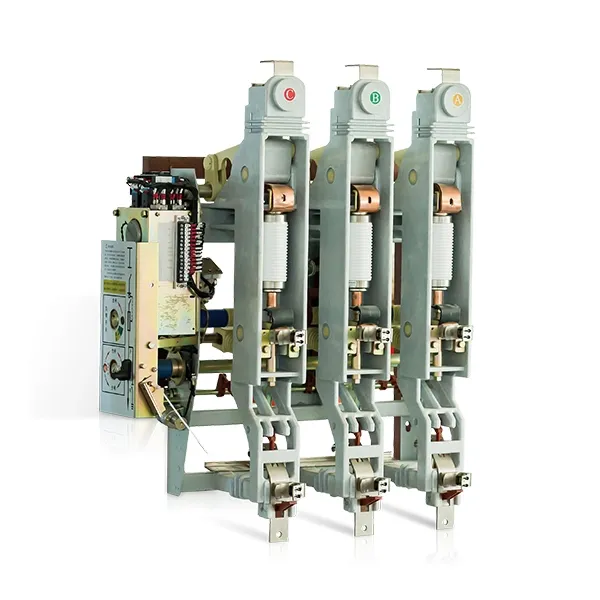
WEISHO Medium Voltage Load Interrupter Switch Lineup
At WEISHO we focus on practical robust medium voltage load interrupter switchgear that fits how U.S. utilities contractors and facility owners actually build and operate their systems. Our MV load break switches are designed for primary distribution networks commercial campuses industrial facilities and renewable projects that need reliable load switching and clear isolation without the cost and complexity of full breaker lineups.
Our portfolio covers:
Metal-enclosed and RMU-ready load break switches
Pad-mounted and compact outdoor units for distribution networks
Vault and indoor switchgear styles for space-limited substations and buildings
Vacuum-based designs built for low maintenance and long life
For high-voltage coordination our switches work seamlessly alongside medium-voltage protection and accessories such as drop-out fuses and lightning arresters similar in function to WEISHO’s porcelain bushing arresters.
Typical Voltage and Current Ranges
Our medium voltage load interrupter (MV LBS) lineup is tuned to the most common U.S. distribution levels:
Voltage classes
5 kV / 7.2 kV
11 kV / 15 kV
24 kV / 27 kV
33 kV / 38 kV
Continuous current ratings
400 A 630 A 800 A
1 000 A and 1 250 A options for heavy distribution feeders
Short-time withstand / momentary ratings
Coordinated with typical utility fault levels so the LBS can withstand short-circuit stresses (while upstream breakers or fuses clear the fault)
This range lets U.S. engineers apply WEISHO LBS solutions in standard 15 kV class systems as well as 27 kV and 38 kV feeder and sub-transmission segments.
Flagship WEISHO Load Break Switch Series & Core Features
Our flagship WEISHO load break switch series is built around a few non-negotiables: safety reliability and simple operation.
Key features typically include:
Medium voltage ratings up to 38 kV
High mechanical and electrical endurance for frequent switching
Dead-front or live-front options depending on utility standards
Load switching and isolation in a compact metal-enclosed package
Manual and motorized (SCADA-ready) versions
Optional integration with protection fuses or upstream breakers
Where you need fault interruption with reclosing we position WEISHO vacuum circuit breakers and reclosers (for example similar to our outdoor ZW32-12G mounted breaker) to complement the LBS and complete the protection scheme.
Maintenance-Free Vacuum Interrupter Designs
We design our vacuum load break switches around sealed vacuum interrupters so you can minimize maintenance and truck rolls:
No gas handling – no SF₆ top-ups no leak checks
Sealed-for-life vacuum bottles with 20–30+ year service expectations
Very low contact wear under normal load switching
Less downtime and simpler long-term asset management
This approach is especially attractive for U.S. utilities data centers and industrial plants that are pushing for predictable O&M budgets and reduced site visits.
Visible
Frequently Asked Questions About Load Interrupter Switches
Can a load break switch clear fault current or short circuits?
In general no. A standard load interrupter switch (LBS) is designed to safely switch normal load current not to interrupt high fault current.
A typical LBS:
Can make and break load current (rated amps).
Can usually withstand short-circuit current for a short time (e.g. 1–3 seconds).
Cannot interrupt high fault current the way a medium-voltage circuit breaker can.
If you need fault interruption (short-circuit clearing) you should be using:
A circuit breaker or
A fault-make load break switch combined with upstream protection (fuse or breaker) that actually clears the fault.
When should I use a load break switch vs a circuit breaker?
Use a load break switch when you need:
Simple reliable switching of feeders transformers or loops.
Medium-voltage distribution (11 kV 15 kV 27 kV 38 kV) where protection is handled by fuses or upstream breakers.
Sectionalizing and isolation in pad-mounted gear RMUs or compact substations.
A lower-cost low-maintenance alternative to a full breaker lineup.
Use a circuit breaker when you need:
Full fault interruption capability at the point of installation.
Selective protection with relays (overcurrent distance differential etc.).
Frequent switching or automatic reclosing.
High duty applications like main incomers generator connections and critical loads.
A common setup in the U.S. is:
Circuit breakers at the substation or main service entrance.
Load interrupter switches (often fused) downstream for feeders transformers and building or campus distribution.
If you’re considering breaker vs switchgear for your site it’s worth looking at how we approach switchgear supplier selection and lifecycle costs in our guide on how to choose an electrical switchgear supplier.
What is the difference between a load break switch and a recloser?
A recloser is basically an automatic medium-voltage circuit breaker with a control that:
Interrupts fault current.
Opens and recloses automatically a set number of times.
Is used mostly in overhead utility distribution lines.
A load break switch:
Is for manual or motorized switching of load current.
Usually does not interrupt fault current.
Is used in pad-mounted gear RMUs vaults and indoor MV switchgear.
If you need automatic fault clearing and reclosing on a feeder you want a recloser not a load break switch.
How long do vacuum load interrupter switches usually last?
Modern vacuum load break switches are designed for decades of service when properly applied:
Typical design expectations:
30+ year service life in normal utility or industrial environments.
High mechanical endurance (e.g. thousands of operations).
Minimal contact wear because the arc is handled inside a sealed vacuum interrupter.
In many U.S. installations (utilities data centers hospitals) vacuum LBS are effectively treated as “maintenance-light” assets—they mostly need periodic checks not frequent part replacement.
Is SF₆ being phased out and what are the alternatives?
SF₆ gas load break switches are still widely used in the U.S. but there is strong pressure to reduce SF₆ use because it’s a high global-warming-potential gas.
Trend in the market:
Some regions and utilities are limiting or discouraging SF₆ in new gear.
Manufacturers are pushing:
Vacuum load break switches with air or solid insulation.
Dry air N₂ or fluoroketone mixtures as alternative insulating media.
If you’re planning new installations especially for renewables campuses or corporate ESG-driven projects it’s smart to:
Favor vacuum LBS and SF₆-free designs where available.
Reserve SF₆ for cases where there’s no practical alternative yet (tightest footprints specific retrofit constraints).
Can I retrofit an old air-break or disconnect switch with an LBS?
Often yes but it needs engineering review.
You can usually retrofit an old:
Air-break switch or
Non-load-break disconnector
with a modern load interrupter switch if:
The bus/cable layout and clearances can be adapted.
The short-circuit withstand rating of the new LBS matches your system fault level.
The mounting and operating mechanisms can be integrated without compromising safety.
Many U.S. facilities replace aging disconnects with:
Visible-break load break switches or
Sealed vacuum LBS in metal-enclosed gear
to get both safe isolation and load switching capability in one device.
What maintenance do modern load interrupter switches actually need?
For modern vacuum or sealed load interrupter switches maintenance is usually light:
Typical requirements:
Periodic visual inspections (external compartment and visible break where applicable).
Functional checks of:
Operating mechanism (manual handle or motor).
Interlocks and position indicators.
Cleaning of insulators and compartments where dust salt or pollution are an issue.
Torque checks on primary connections and ground connections as per manufacturer’s schedule.
What you usually don’t need with sealed designs:
Regular contact replacement.
Frequent lubrication (beyond the recommended interval).
Internal gas handling (for non-SF₆ units).
Always follow the manufacturer’s maintenance schedule—it’s the key to getting the full 30+ years of life.
How do I know if my system needs automation or a motorized LBS?
Consider motorized or SCADA-ready load interrupter switches if:
You’re a utility or campus with:
Multiple feeders loops or ring systems.
A need for remote switching to restore power fast.
You operate a data center hospital airport or industrial plant where:
Downtime is very expensive.
You want remote transfer schemes tie switching or automatic load transfer.
Your site is:
Hard to access (underground vaults remote wind or solar sites).
Exposed to bad weather or safety risks.
If most of your switching is:
Infrequent and
Done by on-site staff
then a manual LBS may be enough.
If you ever say “we wish we didn’t have to roll a truck for this switching ” you should be looking at motorized and SCADA-capable LBS.
What documents and test reports should come with a new LBS?
For a medium-voltage load interrupter switch in the U.S. market I would always expect:
Type test reports showing compliance with:
IEC 62271-103 (for load break switches).
Or IEEE C37.71 / ANSI C37.72 where applicable.
Routine test certificates for the actual unit or batch covering:
Dielectric tests.
Contact resistance.
Mechanical operation checks.
Nameplate and rating data:
Rated voltage (e.g. 15 kV 27 kV 38 kV).
Continuous current rating.
Short-time withstand current.
Basic Insulation Level (BIL).
Installation operation and maintenance manual.
Wiring diagrams and control schematics (especially for motorized or SCADA-ready units).
Factory acceptance test (FAT) reports if FAT was requested.
Arc fault or internal arc classification data where applicable (for metal-enclosed gear).
If your supplier can’t provide proper standards compliance and test documentation that’s a red flag—especially for critical U.S. applications like utilities campuses and industrial plants.
" post draft 2025/11/23 14:24 What is a load interrupter switch? "what is a load interrupter switch load break switch load interrupter switchgear medium voltage load break switch MV load interrupter SF6 load break switch vacuum load break switch air insulated load break switch pad mounted load break switch vault type load break switch ring main unit load break switch LBS switch load break switch working principle difference between load break switch and circuit breaker load break switch vs disconnector fault make load break switch medium voltage switchgear 11kV load break switch 15kV load interrupter 27kV load break switch 38kV load break switch visible break load break switch motorized load break switch SCADA ready load break switch IEC 62271-103 standard IEEE C37.71 ANSI C37.72 load interrupter switch applications utility distribution load break switch renewable energy switchgear data center MV switchgear industrial load break switch RMU load break switch medium voltage isolation switch load break switch specifications short time withstand current basic insulation level BIL maintenance free vacuum interrupter arc extinction in load break switch visible isolation in MV switchgear compact MV switchgear design medium voltage distribution equipment MV switchgear buyer guide load break switch selection checklist load interrupter switch price ABB load break switch alternative Siemens load break switch alternative WEISHO load interrupter switch "