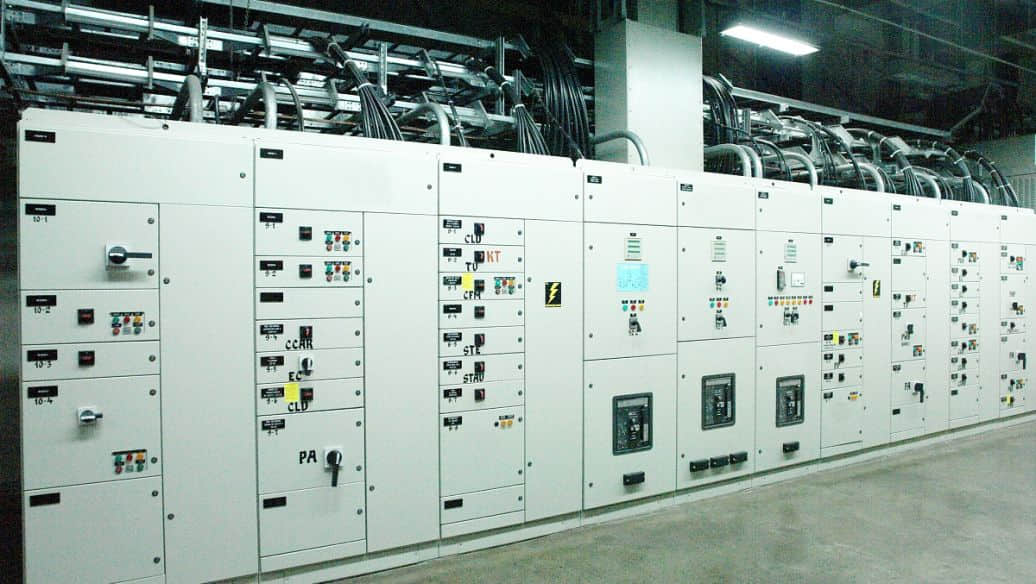
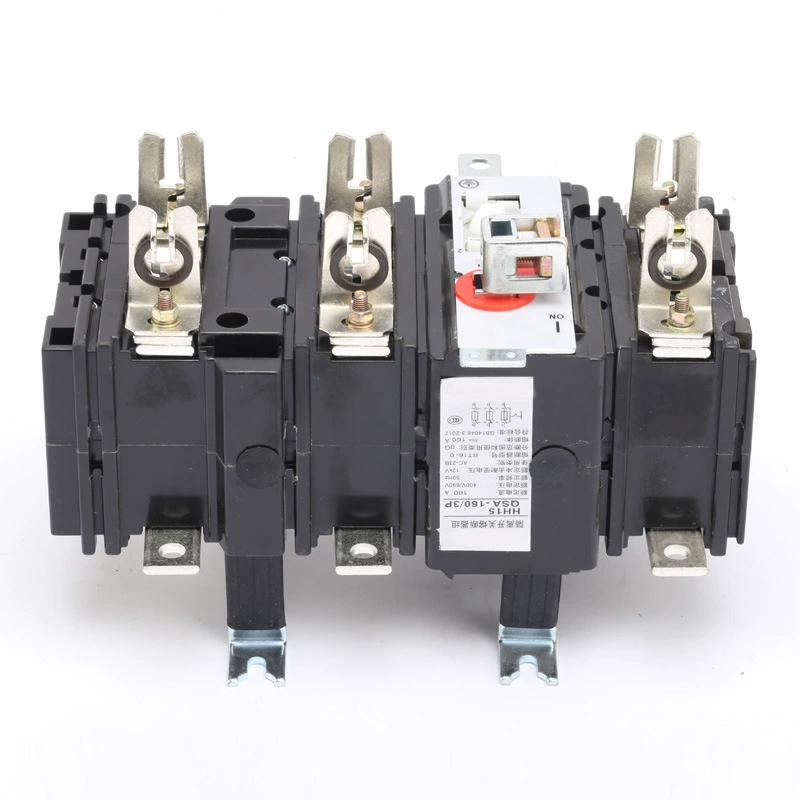
Most facilities don't think much about electrical distribution until something goes wrong. When it does, the cost of unplanned downtime can run anywhere from a few thousand to tens of thousands of dollars every hour the system stays offline. And more often than not, the root cause traces back to a single, deceptively ordinary component — one that gets overlooked during specification or misunderstood during installation, quietly turning into the weak point of an otherwise solid power architecture.
The fuse switch disconnector combines three critical functions — electrical isolation, load switching, and overcurrent protection — into a single compact device. Yet despite its prevalence in low-voltage switchgear installations worldwide, it remains one of the most frequently misspecified components in distribution board design.
This guide provides industry professionals with a thorough technical understanding of how these devices operate, where they belong in a distribution system, and how to select the right unit for any given application. Whether you are designing a new motor control center, upgrading an aging commercial panel board, or specifying circuit protection equipment for a renewable energy installation, this resource covers the critical decision points.
Fuse Switch Disconnector — Definition & Operating Principle
What Exactly Is a Fuse Switch Disconnector?
A fuse switch disconnector is a mechanical switching device capable of making, carrying, and breaking currents under normal circuit conditions while simultaneously providing isolation and integrated fuse-link protection against overcurrent and short-circuit faults. It is classified under IEC 60947-3 as a "fuse-combination unit" — specifically a switch incorporating fuse links in series with the main contacts.
This distinguishes it clearly from two related but functionally limited devices. A simple isolator can provide a visible break for safe maintenance but cannot interrupt load current. A standalone fuse holder provides overcurrent protection but offers no switching capability or guaranteed isolation gap. The fuse switch disconnector eliminates the need for both by merging their functions into one electrical isolation device.
How the Fuse Carrier Mechanism Works
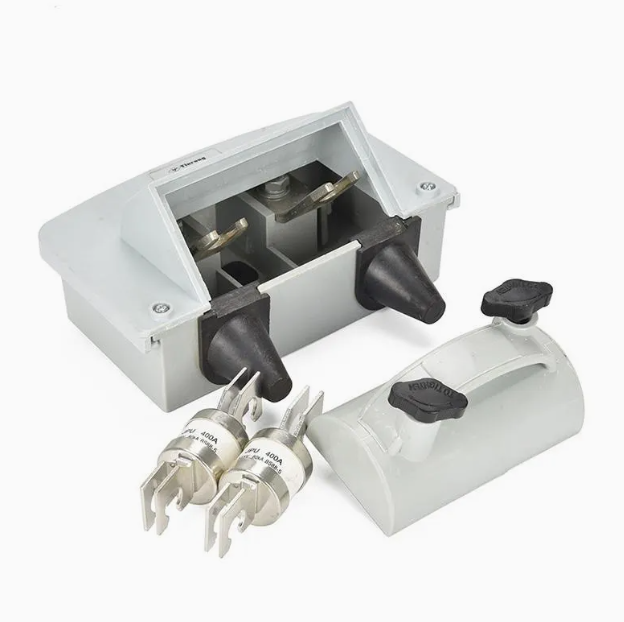
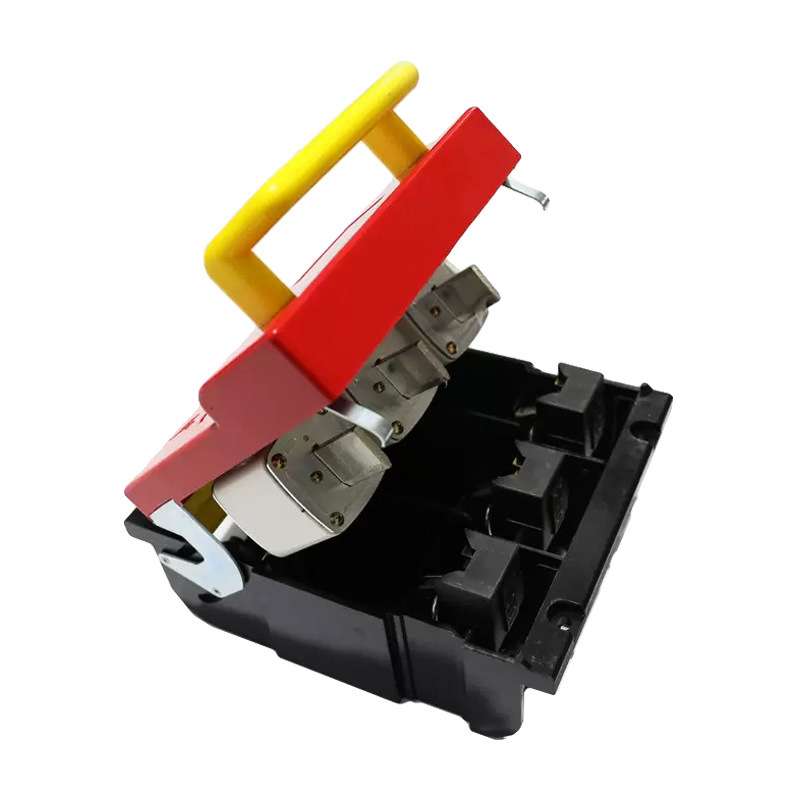
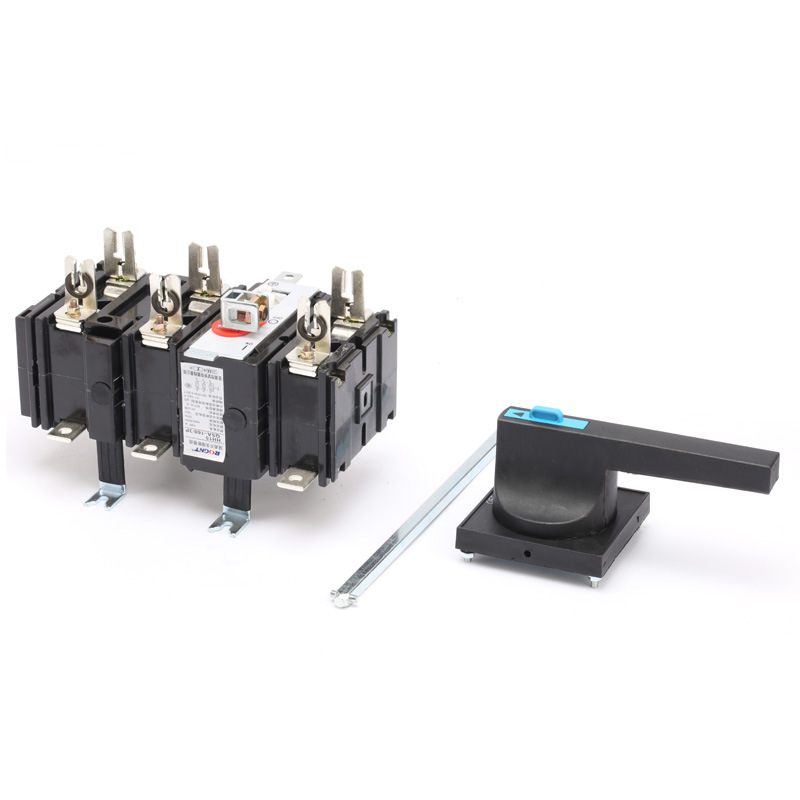
The operating sequence of a fuse switch disconnector follows a precisely engineered mechanical path. When the operator actuates the external handle, a linkage mechanism rotates the fuse carrier — the insulated assembly that holds the HRC fuse link — away from the fixed contacts inside the device body.
The sequence proceeds as follows: handle actuation engages the operating mechanism, the fuse carrier rotates through approximately 90 degrees, the fuse link contacts separate from the fixed jaw contacts, and a visible isolation gap is established. This gap is directly observable through an inspection window or by the physical position of the carrier itself.
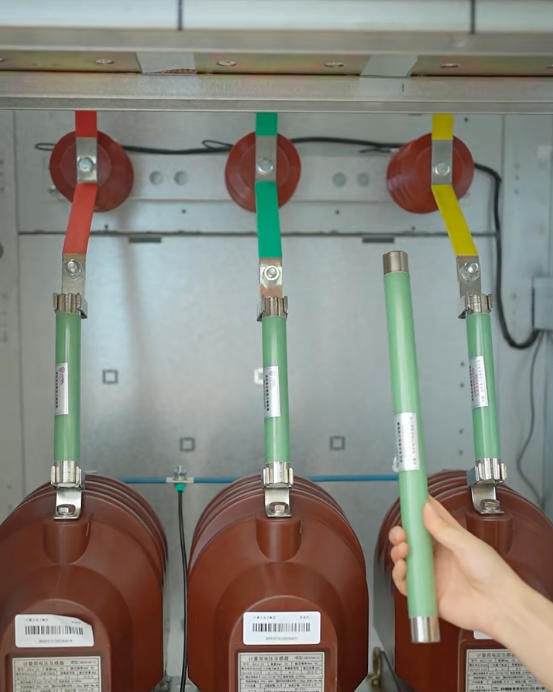
The fuse carrier mechanism serves a dual purpose that is central to the device's value proposition. It acts as the current-carrying element during normal operation — conducting load current through the fuse link and into the downstream circuit. It also functions as the means of safe fuse replacement, since withdrawing the carrier completely removes the fuse link from the circuit and presents it for inspection or replacement without any residual stored energy risk.
Key Standards Governing Design & Performance
The primary international standard governing fuse switch disconnectors is IEC 60947-3, titled "Low-voltage switchgear and controlgear — Part 3: Switches, disconnectors, switch-disconnectors and fuse-combination units." Regional equivalents include BS EN 60947-3 in the UK and Europe, and UL 98 in North America.
These standards define rated operational categories that determine the device's suitability for different load types:
AC-21: Switching of resistive loads, including moderate overloads (e.g., heating circuits, lighting distribution)
AC-22: Switching of mixed resistive and inductive loads including moderate overloads (e.g., general commercial distribution)
AC-23: Switching of motor loads or other highly inductive loads (most demanding category, requires robust arc suppression)
Specifying the correct operational category ensures the device will not suffer premature contact degradation or dangerous arc events during routine switching operations.
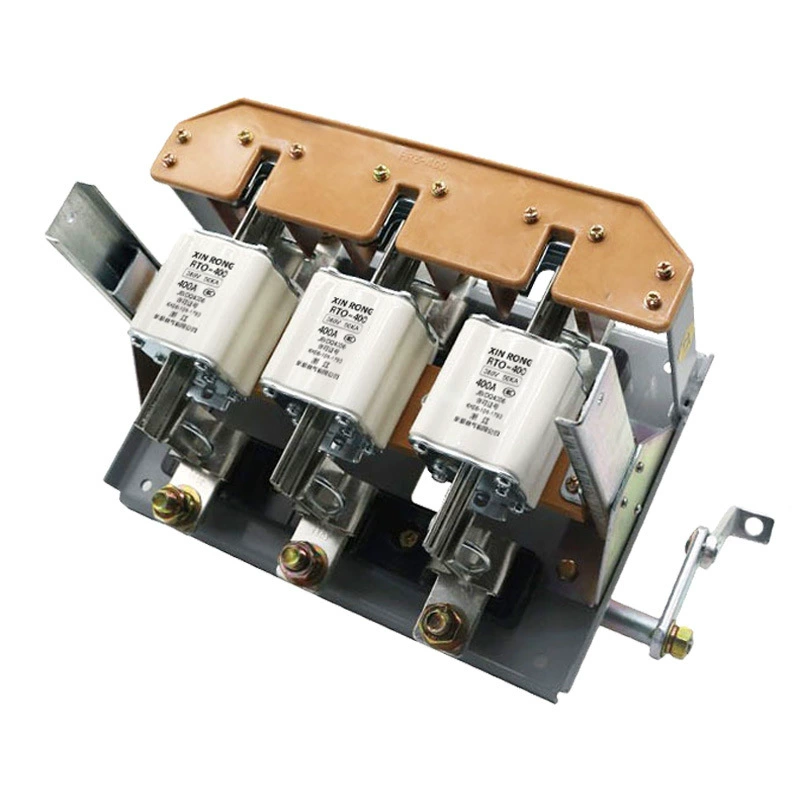
Core Functions of a Fuse Switch Disconnector
Electrical Isolation for Safe Maintenance
The visible break provided by a fuse switch disconnector is not merely a convenience — it is a regulatory and safety requirement for maintenance isolation points. When the fuse carrier is in the open position, the operator can physically confirm that no conductive path exists between supply and load sides.
Most units incorporate a padlocking facility in the OFF position, enabling full compliance with lockout/tagout (LOTO) procedures under standards such as OSHA 29 CFR 1910.147. This is particularly critical in arc flash safety programs where de-energization verification directly impacts incident energy exposure for maintenance personnel.
Load Switching Under Normal Conditions
Unlike no-load disconnectors that must only be operated when the circuit is already de-energized, a fuse switch disconnector is designed and tested to interrupt full rated operational current. This means it can be used as a functional ON/OFF switch for the protected circuit under normal working conditions.
The rated operational current (Ie) specified for each operational category defines the maximum current the device can safely make and break for the number of cycles specified by the manufacturer — typically 1,000 to 10,000 mechanical operations depending on rating and class.
Overcurrent & Short-Circuit Protection via Fuse Links
The integrated HRC (High Rupture Capacity) fuse links provide exceptionally fast fault clearance with breaking capacities that far exceed those of most circuit breakers at equivalent frame sizes. Typical breaking capacity ratings for industrial fuse switch disconnectors range from 80 kA to 120 kA at 415 V AC — values that would require extremely expensive moulded case circuit breakers to match.
This high fault-clearing capability makes fuse switch disconnectors particularly valuable at points in the distribution system where prospective fault currents are highest, such as immediately downstream of transformers or at main switchboard incomers.
Fuse Switch Disconnector vs. Related Devices
| Feature | Fuse Switch Disconnector | Switch Disconnector (No Fuse) | MCCB | Isolator |
|---|---|---|---|---|
| Load switching | ✓ | ✓ | ✓ | ✗ |
| Visible isolation | ✓ | ✓ | ✗ | ✓ |
| Integrated fuse protection | ✓ | ✗ | Built-in trip | ✗ |
| Short-circuit breaking capacity | Very high (fuse-limited) | Limited | Moderate–High | None |
| Fuse replacement simplicity | ✓ | N/A | N/A | N/A |
| Typical relative cost | Medium | Low–Medium | High | Low |
This comparison highlights why fuse switch disconnectors remain the preferred solution where high breaking capacity, visible isolation, and cost efficiency are all required simultaneously.
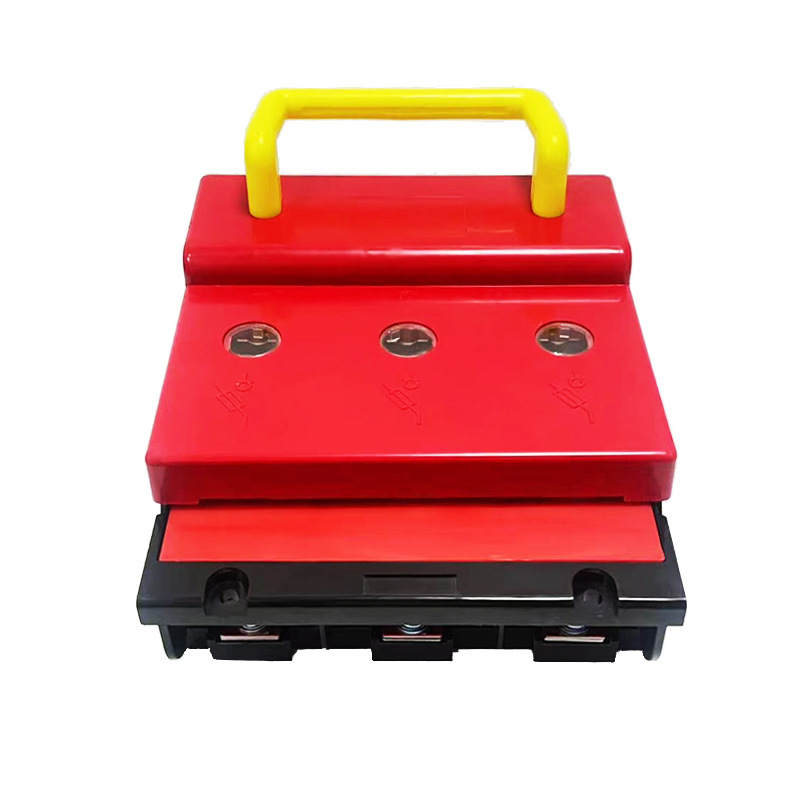
Types & Configurations
By Pole Count
Single-pole (SP): Used in DC systems or individual phase protection in specialized applications
Triple-pole (TP): Standard for three-phase loads where the neutral is not switched — the most common industrial configuration
Triple-pole + Neutral (TPN): Three switched and fused phases plus a solid neutral link, used where neutral isolation is required for safety but neutral fault protection is not needed
Four-pole (4P): All four conductors switched and isolated — required in installations with multiple supply sources or where regulations mandate neutral switching
By Mounting Arrangement
DIN-rail mounted units cover ratings up to approximately 160 A and are typical in sub-distribution boards and small motor control panels. Their compact form factor allows high-density installations in standard enclosures.
Panel or base-mounted configurations cover ratings from 160 A through 630 A and above, suited to main distribution boards and large feeder applications. These units require dedicated mounting plates and typically offer more robust terminal arrangements for large conductor sizes.
Busbar-mounted configurations bolt directly to the busbar system within main LV switchboards, eliminating the need for separate cable connections at the supply side and reducing installation time significantly.
By Current Rating & Fuse Size
| Fuse Size (BS 88 / IEC) | Typical Rated Current Range | Common Application |
|---|---|---|
| Size 00 (A1) | Up to 160 A | Sub-distribution boards |
| Size 1 (A2) | Up to 250 A | Motor feeders, larger sub-mains |
| Size 2 (A3) | Up to 400 A | Main incoming supply |
| Size 3 (A4) | Up to 630 A | Main LV switchboard incomers |
| Size 4 | Up to 800 A+ | High-capacity industrial incomers |
Where Fuse Switch Disconnectors Are Used — Real-World Applications
Commercial & Industrial Distribution Boards
The most widespread application is as the main switch and outgoing way protection in panel boards. In retail parks, a single distribution board may use a 400 A fuse switch disconnector as the main incomer with multiple 100–160 A outgoing units feeding individual tenant supplies.
Data center UPS distribution architectures frequently use these devices for static bypass isolation and maintenance bypass paths, where the combination of high breaking capacity and guaranteed visible isolation is non-negotiable. Manufacturing facilities rely on them at every level of the distribution hierarchy, from the main transformer LV output down to individual production line feeds.
Motor Control Centers (MCCs)
Within MCCs, the fuse switch disconnector serves as the incoming isolation and protection device positioned ahead of contactors and motor starters. This placement ensures that maintenance on the contactor or overload relay can be performed with a confirmed isolation point upstream.
Motor-rated fuse links (typically designated as "aM" or "motor-rated" per IEC 60269) are selected to allow motor starting inrush currents to pass without nuisance operation, while still providing short-circuit backup protection for the contactor — a coordination requirement that the fuse switch disconnector function fulfills with precision.
Photovoltaic & Renewable Energy Systems
DC-rated fuse switch disconnectors are increasingly deployed in string combiner boxes for large-scale photovoltaic arrays. Each string requires individual fuse protection and isolation capability, making the combined device ideal for this application where panel space is limited and maintenance access may be infrequent.
The distributed generation sector has driven growing demand for units rated at 1000 V DC and above, reflecting the trend toward higher string voltages that improve system efficiency by reducing conductor losses.
Utility & Infrastructure
Street lighting distribution pillars use compact fuse switch disconnectors to provide individual circuit isolation and protection for lighting groups. EV charging hub supply panels increasingly rely on these devices as the main isolation and protection point for clusters of fast chargers.
Rail traction substations employ them for LV auxiliary supply distribution, where the combination of high reliability, simple maintenance, and robust fault protection aligns with the demanding operational requirements of rail infrastructure.
Selection Criteria — How to Specify the Right Unit
Rated Current & Voltage
The device's rated operational voltage (Ue) must equal or exceed the system nominal voltage. The rated operational current (Ie) must accommodate the maximum continuous load current with appropriate margin for future expansion — typically 20% above calculated maximum demand.
Ambient temperature derating is critical and often overlooked. Most manufacturers rate their devices at 35°C or 40°C ambient. In enclosed panels where internal temperatures may reach 50–55°C, a derating factor of 0.8 to 0.9 must be applied, effectively reducing the usable current capacity.
Breaking Capacity & Fuse Coordination
The prospective fault current at the installation point — as calculated or measured — must not exceed the combined breaking capacity of the fuse link and disconnector assembly. This information is found in the manufacturer's coordination tables, not simply by reading the fuse link rating alone.
Proper coordination ensures that the fuse link will clear the fault before the disconnector contacts sustain damage from the let-through energy. This is why using manufacturer-approved fuse link types is essential rather than substituting generic alternatives.
Operational Category (AC-21 / AC-22 / AC-23)
Selecting the wrong operational category leads to premature contact erosion and potential device failure. For general distribution boards with mixed loads, AC-22 is typically appropriate. For motor feeder applications, AC-23 is mandatory. Under-specifying this parameter is a common design error that may not manifest until months or years of operation have degraded the contacts.
Environmental & Mechanical Considerations
The IP rating of the enclosure system, operating temperature range, mechanical endurance class, and terminal compatibility all influence the final selection. For outdoor installations, IP65 or higher enclosure ratings are typical. For high-cycling applications such as process control isolation points, specifying enhanced mechanical endurance (Class E3 or above per IEC 60947-3) prevents premature mechanical failure.
Installation, Maintenance & Safety Best Practices
Correct Installation Procedure
Terminal torque settings must follow manufacturer specifications precisely — over-torquing damages terminals while under-torquing creates high-resistance connections that generate heat and may lead to thermal failure. Supply connections are typically made to the top terminals (top-fed), ensuring that when the device is in the OFF position, the exposed fuse carrier contacts are on the de-energized (load) side.
Phase sequence verification and correct conductor sizing per the device's terminal accommodation range should be confirmed before energization. For busbar-mounted units, bolt torque and contact area cleanliness are critical to maintaining low contact resistance.
Routine Maintenance Schedule
Recommended inspection intervals depend on environment and load profile, but a general baseline includes annual visual inspection, thermographic scanning at operating load for hot joint detection, and mechanical operation verification. NFPA 70B (Recommended Practice for Electrical Equipment Maintenance) provides comprehensive guidance on condition-based maintenance intervals.
Thermographic surveys are particularly effective at identifying developing connection problems before they escalate to failures. A temperature differential exceeding 10°C above ambient at any connection point warrants investigation.
Safe Fuse Replacement Procedure
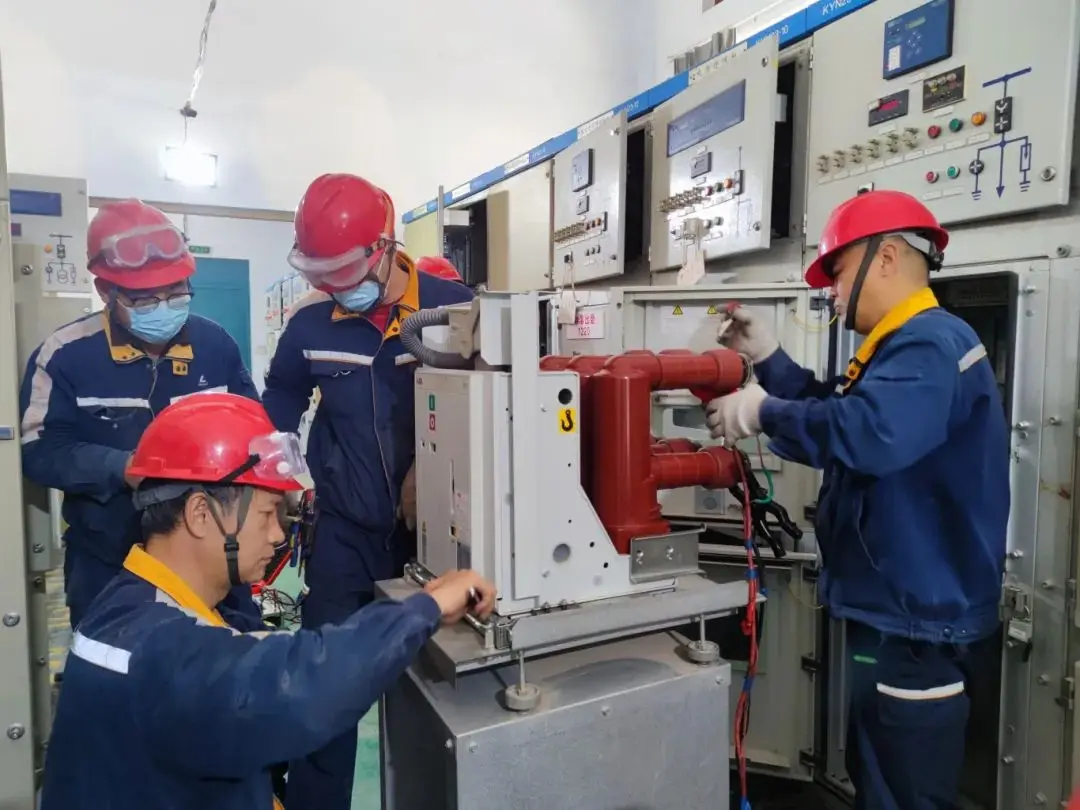
Before any fuse replacement, the device must be switched to the OFF position and, where possible, locked out. Isolation should be verified using a proven voltage indicator tested immediately before and after use. Only approved fuse pullers should be used to extract the fuse carrier — improvised tools risk contact with live parts in adjacent phases.
After inserting the replacement fuse link of the correct type and rating, the circuit should be re-tested for correct phase rotation and insulation resistance before re-energization under controlled conditions.
Emerging Trends in Fuse Switch Disconnector Technology
Integration with Smart Monitoring
Leading manufacturers are now embedding digital current and temperature sensors within the fuse carrier assembly itself. These sensors communicate via wireless protocols to building management systems or cloud-based predictive maintenance platforms, providing real-time load monitoring and early warning of thermal anomalies without requiring any modification to the host switchboard.
This represents a significant evolution for what has traditionally been a purely passive component, bridging the gap between conventional circuit protection equipment and modern IIoT-enabled electrical infrastructure.
Higher DC Ratings for Energy Storage & EV Infrastructure
Battery energy storage systems (BESS) operating at 1000 V DC and 1500 V DC architectures require fuse switch disconnectors specifically designed for DC duty. DC arc extinction is fundamentally more challenging than AC, as there is no natural current zero-crossing point — the arc must be actively stretched, cooled, and extinguished through magnetic blowout or extended arc chute designs.
The ultra-fast EV charging sector, with stations now deploying 350 kW chargers operating at up to 920 V DC, is accelerating development of compact, high-rated DC fuse switch disconnectors suitable for roadside and forecourt installations.
Sustainability & Material Efficiency
Current development programs focus on reducing material usage through optimized mechanical design, extending mechanical endurance life beyond 10,000 operations to reduce replacement frequency, and using recyclable thermoplastic housings. Some manufacturers have committed to eliminating fluorinated gas-based insulation materials from their entire low voltage portfolio, a trend that reflects broader regulatory pressure on high-GWP substances.
Frequently Asked Questions
What is the difference between a fuse switch disconnector and a switch disconnector?
A fuse switch disconnector incorporates HRC fuse links within the fuse carrier, providing both overcurrent and short-circuit protection in addition to isolation and load switching. A switch disconnector provides isolation and load switching only — it has no integral fault protection capability and must be used in conjunction with a separate upstream protective device such as a circuit breaker or fuse.
Can a fuse switch disconnector be used as a main switch?
Yes. Provided the device meets the rated current, prospective fault level breaking capacity, and isolation requirements of the installation, it is widely accepted and commonly used as the main incoming device in distribution boards. In many jurisdictions, its visible break and lockout capability make it the preferred main switch solution for compliance with wiring regulations.
How often should fuse links be replaced?
HRC fuse links do not degrade under normal operating conditions and have no predetermined replacement interval. They only require replacement after a fault operation (when they have operated to clear a fault) or if routine thermographic or resistance testing reveals abnormal deterioration. Preventive replacement without evidence of degradation is unnecessary and not recommended by manufacturers.
What does "visible break" mean and why does it matter?
Visible break means the operator can physically observe and confirm that the contacts are separated and no conductive path exists between supply and load terminals. This eliminates reliance on indicator flags or position switches, providing absolute confirmation that the downstream circuit is de-energized. It is a fundamental requirement for safe maintenance under LOTO procedures and is mandated by electrical safety regulations in most countries.
Are fuse switch disconnectors suitable for DC circuits?
Only units specifically designed and rated for DC operation may be used on DC systems. DC arcs behave fundamentally differently from AC arcs — they do not self-extinguish at a current zero crossing and require specialized arc suppression technology. Using a standard AC-rated device on a DC circuit creates a serious risk of sustained arcing, device destruction, and fire. Always verify the DC voltage and current ratings independently of any AC ratings printed on the same device.
Take the Next Step in Your Specification Process
Correctly specifying a fuse switch disconnector is not simply about matching a current rating to a load — it requires careful consideration of fault levels, operational categories, environmental factors, and coordination with upstream and downstream devices.
To move forward with confidence in your next project:
Download a specification checklist that walks through every selection parameter covered in this guide, ensuring nothing is missed during the design phase
Engage a qualified low voltage switchgear engineer for project-specific fault level calculations and protection coordination studies — particularly where prospective fault currents exceed 25 kA
Request current product data sheets from leading manufacturers such as Schneider Electric, ABB, Eaton, or Siemens and compare technical specifications directly against your application requirements
The difference between a reliable installation and a problematic one often comes down to the quality of specification at the design stage. Invest the time in proper selection now, and your fuse switch disconnectors will deliver decades of dependable isolation, switching, and protection with minimal intervention.