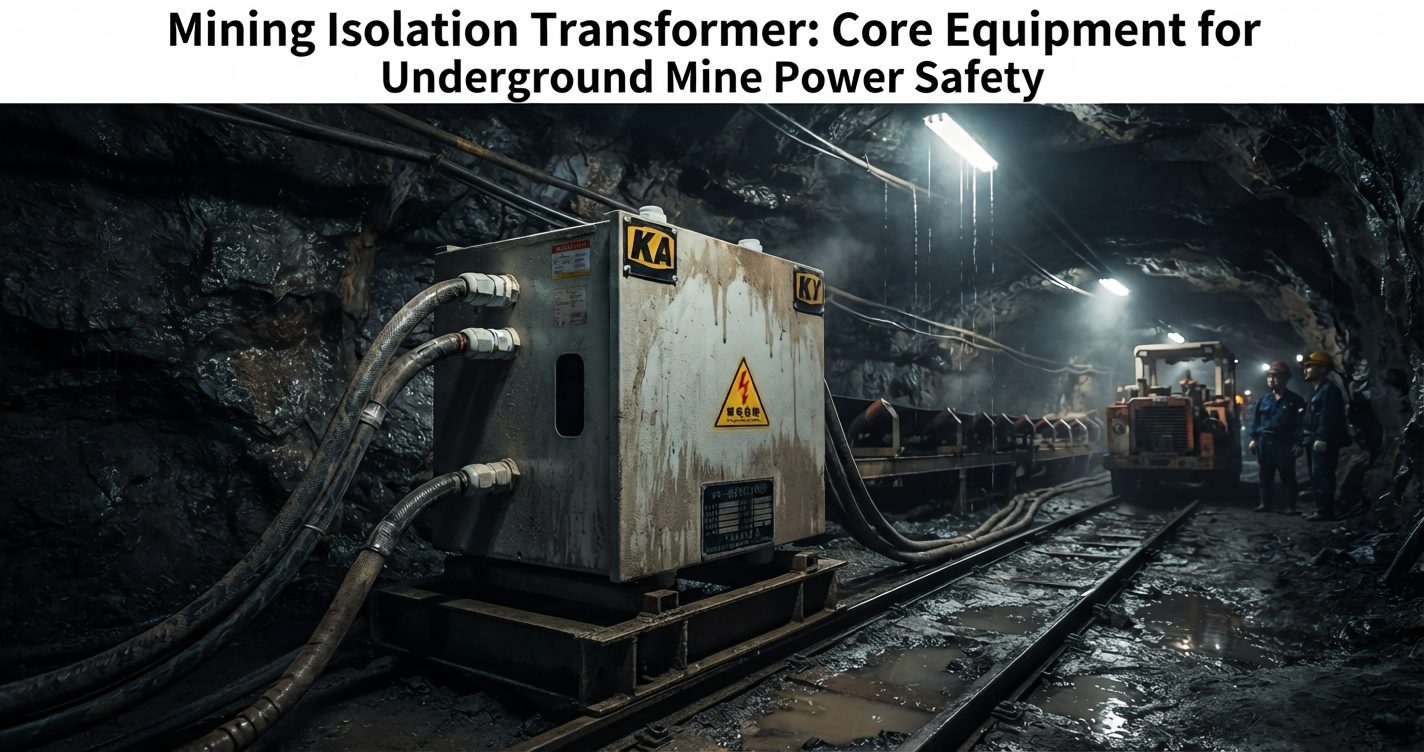
Why Electrical Isolation Matters in Modern Mining
Mining is one of the most electrically unforgiving industrial environments in the world. Power systems must operate in wet headings, abrasive dust, corrosive air, confined tunnels, blast zones, and remote surface installations where any failure can quickly become a safety event, a production stoppage, or both.
Electrical isolation matters because the consequences of a fault underground are far more severe than in a normal plant. A single ground fault, insulation breakdown, or transient event can shut down conveyors, pumps, fans, drills, hoists, and communications at the exact moment they are most critical.
According to global mining safety data and regulatory reporting trends from agencies such as MSHA and national mining authorities, electrical incidents continue to be a recurring cause of serious injuries, fires, and operational interruptions. Even when a fault does not injure personnel, downtime costs in large mines routinely run into tens of thousands of dollars per hour for constrained production assets.
That is why the isolation transformer for underground mining equipment is not a niche accessory. It is a strategic protection layer that supports worker safety, equipment reliability, and distribution system resilience.
The Core Problem: Electrical Hazards in Mining Environments
Mining power systems are exposed to a unique mix of hazards. These hazards are persistent, cumulative, and often interacting.
Electric shock risk from damaged cables, wet surfaces, and conductive enclosures
Ground faults caused by insulation degradation, cable impact, and water ingress
Arc events triggered by loose terminations, switching errors, or internal equipment faults
Moisture exposure in underground workings, sumps, dewatering areas, and washdown zones
Conductive dust from coal, ore fines, and mineral processing residues
Downtime from nuisance tripping, control instability, and cascading distribution faults
In many mines, cables are dragged, reeled, spliced, and repositioned constantly. This creates an environment where insulation is under mechanical stress every day.
At the same time, high-horsepower motors generate switching transients and inrush currents that can disturb sensitive electronics. Without proper isolation, one fault can propagate across feeders and control networks far beyond the original point of failure.
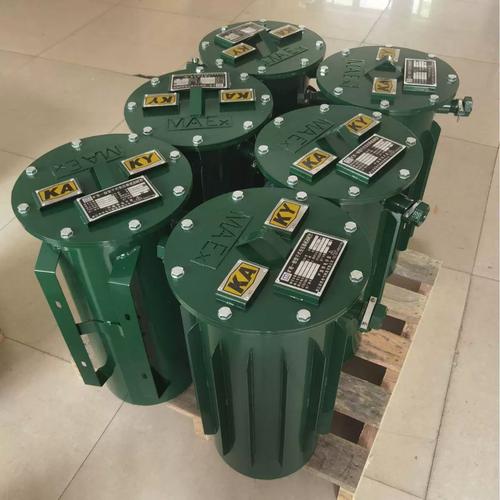
Why Underground and Surface Mines Face Different Electrical Risks
Underground mines typically present the highest shock and fault exposure because of confined spaces, higher humidity, restricted egress, methane or dust hazards, and heavy reliance on mobile electrical equipment. Transformer selection underground often prioritizes galvanic isolation, rugged enclosures, flameproof or explosion-protected construction, and tight protection coordination.
Surface mines face a different but still severe profile. Long cable runs, lightning exposure, temperature extremes, dust loading, mobile substations, and vibration from crushers or shovels can place greater emphasis on surge performance, mechanical durability, and weather-resistant enclosures.
In both settings, the transformer is not selected in isolation. It must fit the mine’s grounding philosophy, load behavior, hazard classification, and maintenance capability.
What Is an Isolation Transformer and How Does It Work in Mining?
An isolation transformer transfers electrical energy from a primary winding to a secondary winding through magnetic coupling. There is no direct conductive path between the two circuits.
That separation is called galvanic isolation. It breaks the direct electrical continuity between supply and load, which helps contain faults, limit noise transfer, and reduce the chance that upstream disturbances will directly appear on downstream equipment frames or circuits.
In mining, this matters because galvanic isolation creates a controlled electrical boundary. Engineers can define a new secondary reference, apply dedicated grounding or monitoring methods, and separate critical loads from unstable or contaminated parts of the network.
For mining electrical safety and galvanic isolation, the value is practical rather than theoretical. If a feeder section experiences insulation damage or common-mode noise, the isolated secondary can reduce the impact on controls, instruments, and personnel exposure.
Isolation transformers can be configured for voltage conversion, for example 11 kV to 1,000 V, 6.6 kV to 690 V, or 600 V to 120 V control supply. They can also be 1:1 units, used primarily to isolate rather than step voltage.
Key Benefits of Isolation Transformers in Mining Power Systems
The strongest case for isolation transformers in mining is that they improve both safety and operational continuity. Mines do not buy transformers merely to satisfy a schematic requirement; they invest in them to reduce risk and keep production moving.
Safer personnel environment through electrical separation
Better containment of faults and fewer fault propagation pathways
Cleaner power for automation, PLCs, sensors, and communication systems
More selective protection in complex radial and sectionalized networks
Support for mobile and localized distribution close to loads
Improved compliance pathway for mining electrical codes and hazardous-area designs
Improved Mining Electrical Safety Through Galvanic Isolation
The primary safety benefit is straightforward. Galvanic isolation separates the load side from the source side, which reduces direct fault transfer and helps engineers control touch voltage exposure more effectively.
In mines, cable damage is common. When insulation begins to fail, a directly connected system may allow fault energy and reference shifts to spread through a larger part of the installation.
By contrast, an isolation transformer can create a localized secondary system with its own grounding strategy, monitoring devices, and protection thresholds. This is one of the clearest answers to search intent around mining electrical safety and galvanic isolation.
Reduced Fault Propagation in Harsh Mining Networks
Mining distribution systems often feed mixed loads: large motors, VFDs, battery chargers, control panels, communication equipment, and portable substations. A disturbance on one branch can ripple through the rest of the network if boundaries are not properly designed.
Isolation transformers reduce the tendency for upstream faults and common-mode disturbances to propagate directly into critical downstream loads. They do not eliminate all faults, but they create a segmentation point that improves fault containment.
That segmentation is especially useful underground, where continuity of ventilation, pumping, and communication can be life-critical.
Better Power Quality for Sensitive Mining Equipment
Modern mines depend heavily on electronics. PLCs, Ethernet switches, gas monitoring systems, instrumentation loops, and machine control systems are far more sensitive than traditional electromechanical loads.
Isolation transformers help by reducing transferred electrical noise, improving reference stability, and supporting better EMC behavior when combined with proper shielding and grounding. In variable-speed drive environments, this can materially improve reliability of control circuits and reduce unexplained resets or communication dropouts.
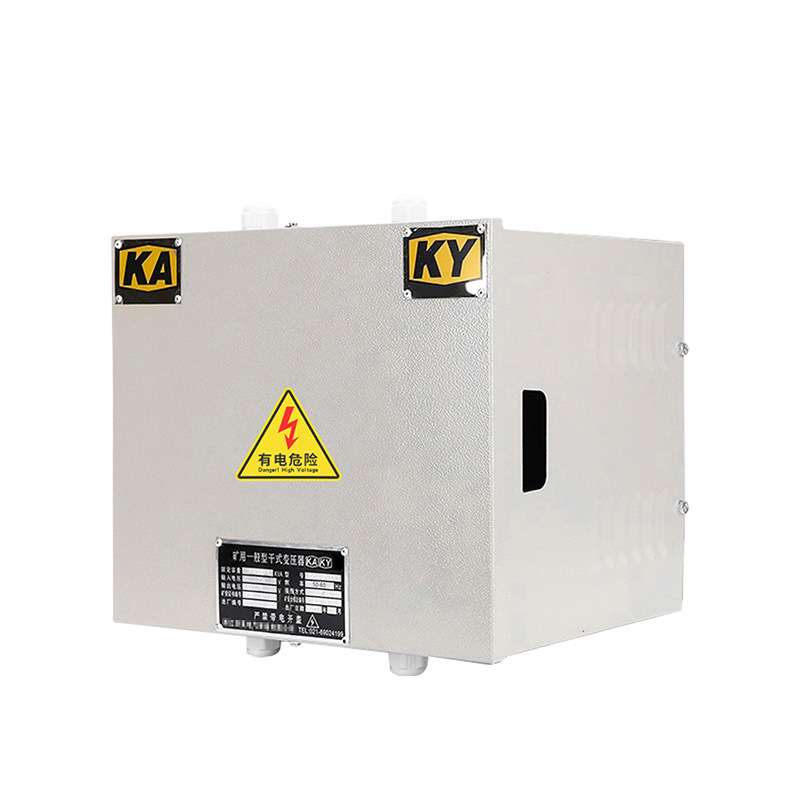
Isolation Transformer for Underground Mining Equipment
The isolation transformer for underground mining equipment is most commonly used where a mine needs localized voltage conversion, safer distribution boundaries, or better immunity for mission-critical loads.
Typical underground applications include:
Continuous miners and drills with demanding motor and control requirements
Face conveyors and belt systems where uptime is essential to material flow
Dewatering pumps operating in wet, fault-prone conditions
Ventilation auxiliaries that cannot tolerate extended outage
Refuge chamber support systems and emergency communication equipment
Portable power centers that distribute power deeper into advancing sections
Battery charging and maintenance stations with mixed AC and control loads
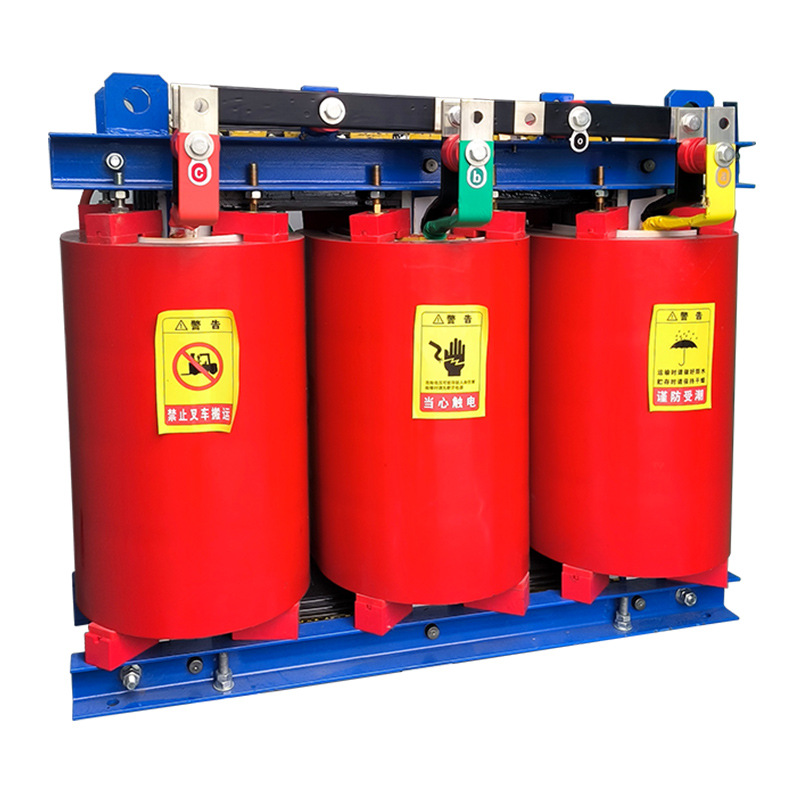
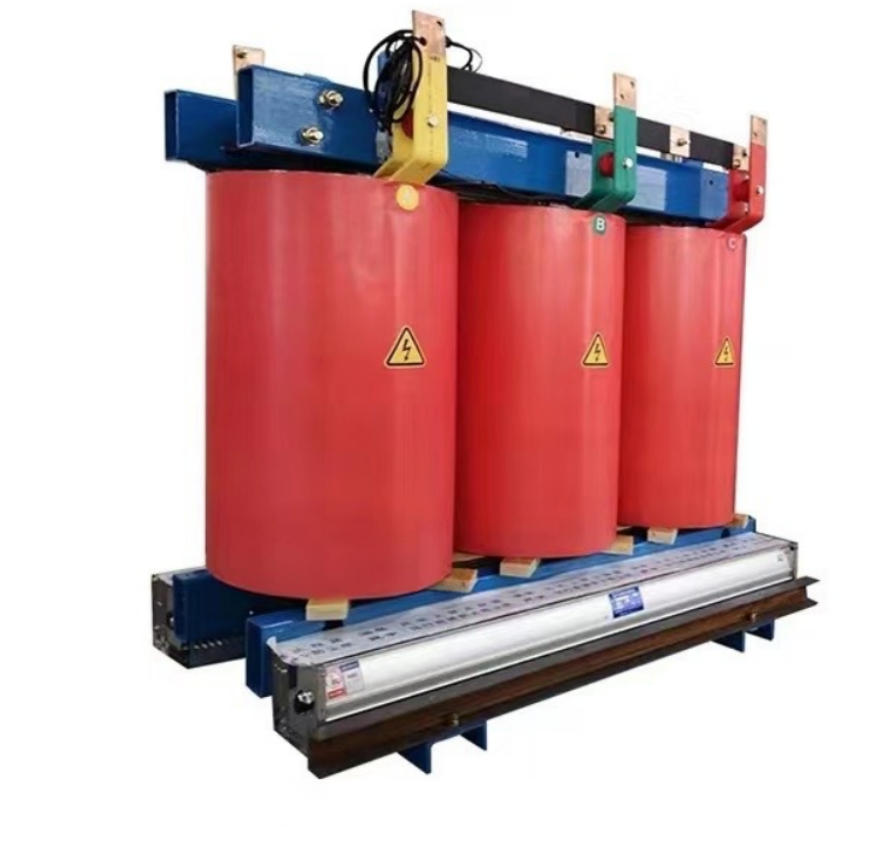
Underground installations often require compact footprint, high mechanical robustness, and enclosures designed for coal dust, rock dust, or moisture. Dry-type cast resin designs are increasingly used where low maintenance and fire performance are priorities, while oil-filled units remain relevant for higher ratings and certain thermal demands if permitted by site rules.
Explosion-Proof Transformer Applications in Mines
Explosion-proof transformer applications in mines are essential where methane, coal dust, or other combustible atmospheres can form. In these zones, the transformer cannot be treated as an ordinary industrial device.
Coal mines are the most obvious example. Methane liberation and fine combustible dust create conditions where an arc, hot surface, or internal failure can become an ignition source.
In such environments, engineers may require flameproof, explosion-proof, or certified hazardous-area transformer assemblies depending on jurisdiction and mine classification. Relevant frameworks may include IECEx, ATEX, local mining approvals, and national regulations.
The key point is that certification must match the actual zone, gas group, temperature class, and installation method. A robust enclosure alone is not enough.
Explosion-protected designs typically address:
Containment of internal ignition
Limitation of surface temperature
Ingress protection against dust and moisture
Mechanical integrity under mining conditions
Compatibility with protected cable entries and glands
Failure to match certification to the hazard assessment is a serious engineering error. It can create legal exposure, invalidate insurance assumptions, and most importantly, increase ignition risk underground.
Grounded Versus Ungrounded Power Systems in Mining
The debate around grounded versus ungrounded power systems in mining is longstanding because each approach offers real advantages and meaningful trade-offs. Isolation transformers are often central to this decision because they allow designers to create a secondary system that matches the mine’s operational philosophy.
No single grounding method is universally best. The correct choice depends on whether the mine prioritizes immediate fault clearing, continuity of service, fault visibility, equipment sensitivity, and the regulatory framework in force.
Grounded Mining Power Systems: Benefits and Limits
Grounded systems provide a deliberate path to earth, which usually makes fault detection easier and protection coordination more straightforward. Ground faults tend to produce clearer current signatures for relays and protective devices.
This can be an advantage in mines where rapid automatic disconnection is required, where maintenance teams want simpler troubleshooting, or where equipment is predominantly fixed and well-monitored.
Benefits include:
Clearer fault detection
More predictable protective device operation
Simpler coordination studies
Reduced risk of sustained overvoltage on healthy phases
Limits include the fact that a first ground fault may cause immediate trip and production loss. In critical processes, this can be undesirable if a single non-destructive fault interrupts ventilation or ore flow unnecessarily.
Ungrounded or High-Resistance Grounded Mining Systems: Benefits and Limits
Ungrounded and high-resistance grounded systems are often chosen where continuity of service on the first fault is valuable. The first line-to-ground fault may not produce enough current to force immediate shutdown, allowing controlled operation until maintenance can intervene.
This can be attractive in underground sections where immediate outage would create operational or safety complications. However, the benefit comes with a serious condition: the first fault must be detected and addressed quickly.
Benefits include:
Improved continuity on first fault
Lower fault current in some system designs
Reduced nuisance tripping when paired with monitoring
Limits include hidden fault risk. If a second ground fault occurs on another phase before the first is cleared, the result can be severe phase-to-phase fault conditions, arc damage, and broader outage.
That is why ungrounded or high-resistance grounded systems require insulation monitoring, disciplined maintenance, and clear response procedures. Isolation transformers fit naturally into these architectures because they establish a distinct secondary system where monitoring and grounding can be purpose-designed.
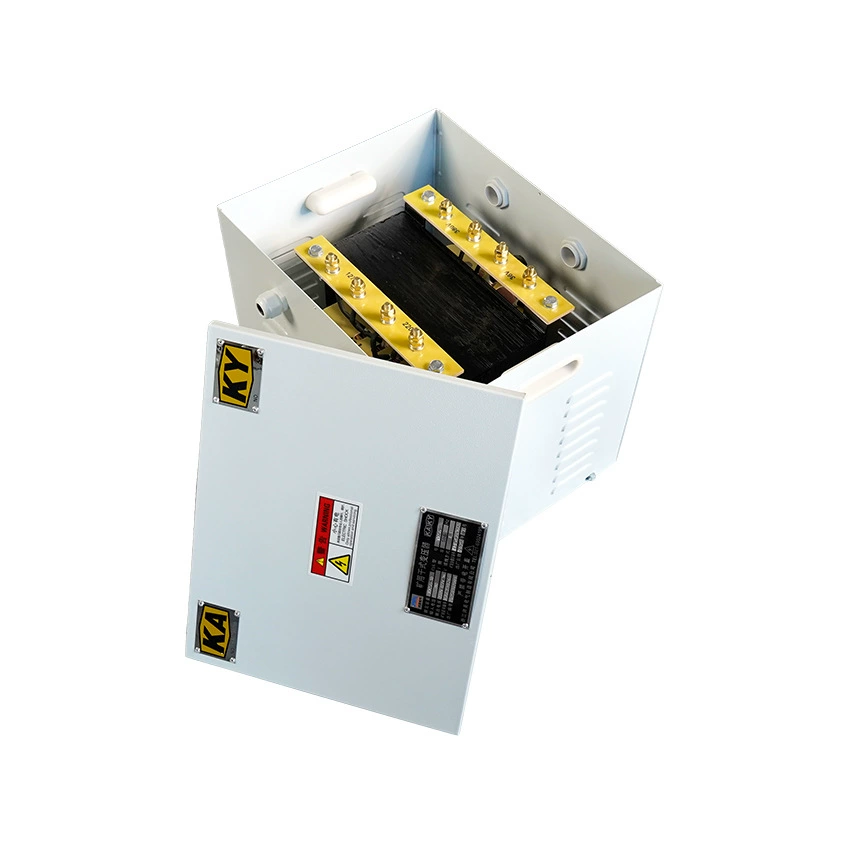
Fault Current Protection for Mining Power Distribution
Fault current protection for mining power distribution is not just about installing breakers. It is about shaping the network so faults are detected selectively, cleared safely, and prevented from escalating into larger operational failures.
Isolation transformers support this goal by dividing the network into smaller electrical zones. Each zone can have its own protective philosophy, fault thresholds, and monitoring devices.
This is especially useful in mines where one feeder serves mixed load types and multiple downstream environments. Without isolation boundaries, protection coordination becomes more difficult, and the consequences of a single failure become broader.
How Isolation Transformers Help Reduce Ground Fault Impact
On an isolated secondary, the first ground fault can be limited in impact depending on the grounding scheme and monitoring strategy. The transformer effectively prevents direct conductive continuity from the primary, allowing designers to manage fault behavior differently on the secondary side.
This means the fault current protection for mining power distribution strategy can be more selective. Instead of one upstream event dropping a wide swath of equipment, the fault may be confined to a local zone and detected by dedicated instrumentation.
For high-risk underground areas, this reduced fault spread can materially improve safety response and restoration time.
Protection Devices Commonly Paired With Isolation Transformers
Isolation transformers are most effective when integrated with coordinated protection and monitoring. Common devices include:
Overcurrent relays for feeder and transformer protection
Ground fault relays for sensitive earth fault detection
Insulation monitoring devices for ungrounded or IT-style systems
Residual current devices (RCDs) for personnel protection on suitable low-voltage circuits
Circuit breakers with adjustable trip units
Differential protection for internal transformer fault detection
Temperature sensors and thermal relays for overload and cooling supervision
Surge protective devices where lightning or switching transients are significant
In advanced mines, these devices are integrated into SCADA or power management platforms. That allows faster diagnosis of insulation degradation, overload patterns, and repetitive nuisance-trip causes.
Where Isolation Transformers Are Used Across Mining Operations
Isolation transformers are used from utility intake all the way to low-voltage electronics. Their placement depends on where engineers need a safety boundary, voltage conversion, fault containment, or cleaner power.
Underground Distribution Rooms and Portable Power Centers
Underground distribution rooms frequently use isolation transformers to feed localized mine sections. This approach reduces feeder complexity, supports safer voltage transformation near the load, and enables a local grounding and protection strategy.
Portable power centers are especially important in advancing headings. They must move with production while continuing to supply drills, pumps, conveyors, and auxiliary systems under constantly changing physical conditions.
Crushing, Conveying, Ventilation, and Dewatering Systems
These are some of the most mission-critical power consumers in any mine. A conveyor outage can choke production, a pump outage can flood a section, and a ventilation outage can force immediate operational restrictions.
Isolation transformers help segment these systems so faults are less likely to spread from one load group to another. They are also useful where large motors coexist with sensitive control circuits.
Automation, Communications, and Monitoring Equipment
Automation loads often require low-noise, stable power more than raw kVA capacity. PLC panels, sensors, analyzers, Ethernet switches, leaky feeder communication systems, and monitoring equipment benefit from dedicated isolated supplies.
In high-noise mining environments, this can be the difference between stable operation and persistent intermittent failures. Many engineers underestimate how often poor control power quality causes lost production.
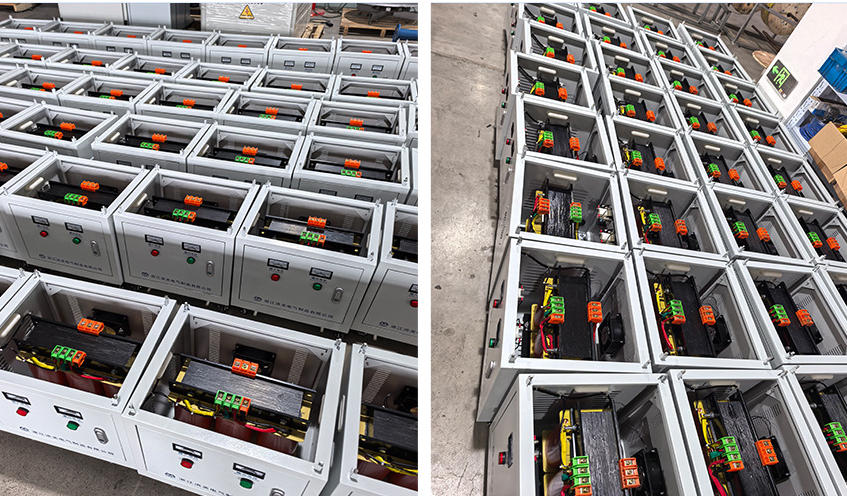
Selection Criteria for Isolation Transformers in Mining Environments
Transformer selection in mining must be based on actual load behavior and environmental severity, not catalog convenience. A design that works in a clean factory may fail quickly in a mine.
Voltage Class, kVA Rating, and Load Profile
Start with system voltage and load type. A transformer feeding a bank of motors requires different sizing logic than one feeding instrumentation and communication racks.
Key factors include:
Primary and secondary voltage
Continuous kVA demand
Motor starting current and repetitive inrush
Harmonic content from VFDs and rectifiers
Duty cycle and load diversity
Future expansion margin
For example, if a 250 kW pump motor at 690 V has a starting current of 5 to 6 times full load current, the transformer and protection scheme must accommodate that inrush without unacceptable voltage dip or nuisance tripping. Undersizing is one of the most common field mistakes.
IP Rating, Thermal Class, and Mechanical Durability
Mining environments punish weak enclosures. Dust and water ingress protection must match the installation reality, not the ideal drawing.
Important criteria include:
IP rating appropriate for dust, splash, washdown, or immersion risk
Thermal class based on ambient temperature and overload pattern
Vibration resistance for mobile or crusher-adjacent equipment
Impact resistance in traffic or mobile installation zones
Altitude correction where cooling performance is reduced
Corrosion resistance for aggressive atmospheres
A transformer in a dry electrical room may need IP23 or IP31 depending on the arrangement. A unit in a wet underground chamber may require much higher ingress protection plus sealed cable entry practices.
Compliance, Certifications, and Mine Safety Standards
Compliance is not optional. Mining transformers may need to align with a combination of standards and approvals depending on geography and mine type.
MSHA for U.S. mining applications where applicable
IEC transformer and insulation standards
IEEE design and application guidance
IECEx for hazardous-area equipment certification
ATEX for equipment intended for explosive atmospheres in relevant jurisdictions
Local electrical and mining codes governing grounding, protection, and installation
Documentation should include routine test results, insulation class, temperature rise data, short-circuit withstand capability, enclosure rating, hazardous-area approvals where required, and maintenance instructions. Experienced manufacturers such as Weisho Electric typically support engineering teams with this documentation during specification review and project approval.
Typical Isolation Transformer Selection Criteria for Mining Applications
| APPLICATION | TYPICAL PRIMARY/SECONDARY VOLTAGE | TYPICAL POWER RATING | ENCLOSURE TYPE | HAZARD RATING | PROTECTION REQUIREMENTS |
|---|---|---|---|---|---|
| Underground portable power center | 6.6 kV / 1,000 V | 300 kVA to 2,500 kVA | Flameproof or rugged enclosed | Methane/coal dust dependent | Ground fault relay, differential, thermal sensors, insulation monitoring |
| Conveyor and belt drives | 3.3 kV / 690 V | 150 kVA to 1,500 kVA | Dust-tight industrial enclosure | Area classification based on zone | Overcurrent, earth fault, breaker coordination, temperature monitoring |
| Dewatering pump station | 1,000 V / 400 V | 75 kVA to 800 kVA | High-IP moisture-resistant enclosure | Wet area, non-hazardous or hazardous by site | Ground fault protection, overload, insulation testing access |
| Ventilation auxiliary system | 6.6 kV / 690 V | 200 kVA to 1,200 kVA | Industrial enclosed dry-type | Depends on mine section | Selective coordination, thermal alarm, short-circuit protection |
| PLC and communication panels | 600 V / 120 V or 230 V | 1 kVA to 50 kVA | Control cabinet or shielded enclosure | Usually non-incendive area specific | RCD where appropriate, surge protection, EMI control |
| Crusher plant auxiliary systems | 11 kV / 400 V | 500 kVA to 3,000 kVA | Outdoor weatherproof enclosure | Surface industrial | Overcurrent, differential, surge protection, thermal monitoring |
Real-World Example: Underground Coal Mine Power Isolation Upgrade
A mid-sized underground coal mine in Asia-Pacific operating longwall support equipment and section conveyors experienced repeated nuisance trips on a 1,000 V distribution network feeding pumps, communications, and localized motor loads. The mine also reported frequent insulation alarms after heavy water ingress periods.
The original configuration used a direct low-voltage distribution approach with limited segmentation between motor loads and control circuits. Maintenance logs over 12 months showed recurring ground fault investigations, cable replacement costs, and intermittent PLC resets that delayed restart after trips.
The upgrade introduced a dedicated isolation transformer at the portable power center, creating a separated secondary system for downstream section loads. The design also added insulation monitoring, revised ground fault relay settings, and thermal monitoring on the transformer windings.
Within six months, the mine recorded a measurable reduction in nuisance trip frequency. More importantly, the maintenance team could locate faults faster because the isolated section was easier to diagnose.
While project economics vary, internal mine analysis estimated that every avoided hour of section conveyor downtime saved approximately USD 18,000 to USD 28,000 in deferred production losses, depending on coal quality and shift conditions. Even a modest reduction in unplanned outage created a fast payback period.
Example Performance Data Before and After Isolation Transformer Installation
| METRIC | BEFORE INSTALLATION | AFTER INSTALLATION | CHANGE |
|---|---|---|---|
| Ground fault incidents requiring shutdown per quarter | 11 | 4 | -63.6% |
| Nuisance trip events per quarter | 17 | 6 | -64.7% |
| Unplanned downtime hours per quarter | 38 hours | 14 hours | -63.2% |
| Maintenance callouts related to control power instability | 9 | 3 | -66.7% |
| Recorded voltage disturbance events affecting PLCs | 22 | 7 | -68.2% |
| Average time to isolate fault source | 3.1 hours | 1.2 hours | -61.3% |
Real-World Example: Metal Mine Control System Protection
A hard rock metal mine using VFD-driven crushers, thickener drives, and underground pumping experienced chronic communication instability between PLC cabinets and field instrumentation. The power quality survey found elevated common-mode noise and repeated control supply disturbances during motor switching events.
The engineering team installed shielded low-voltage isolation transformers dedicated to PLC panels, network switches, and instrumentation power supplies. They also separated control power routing from high-current motor cable paths and improved grounding discipline.
After implementation, the mine reported a sharp decline in unexplained PLC reboots and analog signal drift alarms. Communication availability on the affected control network improved significantly during heavy process cycling periods.
This example matters because not all transformer value shows up as avoided electrocution or major arc events. Sometimes the benefit is cleaner power that stabilizes the digital nervous system of the mine.
Comparison of Isolation Transformer Use by Mining Area
| MINING AREA | RISK LEVEL | TYPICAL LOAD TYPE | PRIMARY ISOLATION TRANSFORMER NEED | COMMON TRANSFORMER DESIGN |
|---|---|---|---|---|
| Underground coal | Very high | Portable substations, conveyors, pumps, sections, communications | Safety boundary, hazardous-area compliance, fault containment | Flameproof/explosion-protected, rugged enclosed, monitored |
| Underground hard rock | High | Drills, loaders, pumps, ventilation, control rooms | Ground fault management, localized distribution, reliability | Dry-type or enclosed industrial, high-IP as needed |
| Mineral processing plant | Medium to high | Crushers, mills, flotation, thickening, PLCs | Power quality improvement, selective coordination | Outdoor/indoor industrial, harmonics-aware design |
| Surface auxiliary systems | Medium | Workshops, camps, water treatment, communication hubs | Voltage conversion, clean control power, segmentation | Weatherproof or panel-mounted isolated supply transformers |
Common Mistakes When Applying Isolation Transformers in Mines
Isolation transformers deliver strong results only when applied correctly. Several mistakes recur across mining projects.
Undersizing for motor inrush and short-term overload behavior
Poor grounding coordination between primary and secondary systems
Ignoring hazardous-area certification in methane or dust-risk sections
Installing without insulation monitoring on ungrounded or IT-style secondaries
Assuming isolation alone solves harmonics without proper filter or K-factor evaluation
Neglecting cooling and enclosure derating in high ambient or high altitude areas
Using generic industrial designs in mobile or vibration-heavy mining locations
Another common issue is incomplete documentation. If maintenance teams do not understand the transformer grounding concept and protection settings, they may bypass alarms or misinterpret normal first-fault indications.
Best Practices for Installation and Maintenance
Successful mining transformer projects rely on disciplined commissioning and lifecycle maintenance. The installation should be treated as part of a protection system, not as a stand-alone asset.
Confirm load study assumptions before energization
Verify polarity, ratio, and grounding connections against design drawings
Test insulation resistance and document baseline values
Commission all relays and monitoring devices with recorded settings
Perform thermal scanning after initial load stabilization
Inspect cable terminations for torque, sealing, and mechanical strain relief
Trend temperature and alarm data through SCADA where possible
Schedule periodic insulation testing and compare trend deterioration, not just pass/fail values
Clean ventilation paths and enclosure surfaces to avoid thermal stress
Plan end-of-life replacement based on duty history, not only age
For high-value installations, online partial discharge monitoring and continuous winding temperature measurement are becoming more common. Vendors such as Weisho Electric increasingly support these smarter maintenance strategies with sensor-ready transformer options.
Future Trends in Mining Power Isolation
The next generation of mining isolation systems will be more connected, more compact, and more diagnostic-driven. Mines are moving away from reactive maintenance toward predictive reliability.
Important trends include:
Smart monitoring for temperature, insulation health, and load profile
Predictive maintenance analytics based on alarm history and operating stress
Compact dry-type transformer designs for constrained underground spaces
Improved materials with better fire performance and moisture resistance
Integration with electrified mining fleets and charging infrastructure
Higher expectations for cybersecurity in intelligent protection devices
As mines electrify more mobile equipment and deepen automation, isolated power architectures will become even more important. The electrical system is no longer just a utility; it is a core enabler of autonomous and low-emission mining.
FAQ
What is the main purpose of an isolation transformer in mining?
The main purpose is to create galvanic separation between the supply and the mining load. This improves personnel safety, helps contain faults, supports a better grounding strategy, and protects sensitive equipment from disturbances in harsh mining networks.
Are isolation transformers required for underground mining equipment?
They are not universally mandatory for every item of underground equipment, but they are often required or strongly recommended depending on voltage level, grounding method, hazard classification, mine regulations, and the nature of the load. In portable power centers, hazardous sections, and critical distribution boundaries, they are commonly used because they materially improve safety and operational control.
How do isolation transformers improve mining electrical safety?
They improve safety by providing galvanic isolation, which separates the downstream circuit from the upstream source. This reduces direct fault transfer, limits propagation of certain disturbances, allows a controlled secondary grounding approach, and can reduce shock risk when paired with proper protection and monitoring.
What is the difference between grounded and ungrounded power systems in mining?
Grounded systems have a defined connection to earth, making fault detection and protection operation more straightforward but often causing a faster trip on the first fault. Ungrounded or high-resistance grounded systems can continue operating through a first fault, but they require insulation monitoring and rapid maintenance response because a second fault can become much more dangerous.
Can isolation transformers be used in explosion-risk mining areas?
Yes, but only if the transformer design and complete assembly are suitable for the hazardous area classification. For explosion-proof transformer applications in mines, engineers must verify the required certification such as IECEx, ATEX, or local mining approvals, along with correct temperature class, enclosure integrity, and approved cable entry methods.
How do you size an isolation transformer for mining equipment?
Sizing should consider primary and secondary voltage, continuous kVA, motor inrush current, load diversity, duty cycle, ambient temperature, altitude, harmonics, enclosure derating, and future capacity margin. For mixed mining loads, engineers should also assess voltage dip tolerance and whether control circuits need separate isolated supplies from large motor feeders.
What protection devices should be used with isolation transformers in mining power distribution?
The most common devices for fault current protection for mining power distribution include overcurrent relays, ground fault relays, insulation monitoring devices, circuit breakers, residual current devices where appropriate, differential protection, surge protection, and thermal sensors or relays. The correct combination depends on system voltage, grounding method, hazard zone, and the criticality of the connected loads.
Conclusion: Why Isolation Transformers Are a Strategic Investment for Mines
Isolation transformers are not merely passive components in a mine’s electrical single-line diagram. They are a strategic tool for reducing electrical risk, improving uptime, and creating a more controllable power distribution architecture.
In underground coal, hard rock, mineral processing, and surface support systems, the right isolation strategy can reduce nuisance trips, limit fault spread, stabilize sensitive controls, and support compliance with demanding mine safety standards. That is why serious mine operators treat electrical isolation as part of risk management and production assurance, not just procurement.
When properly engineered, specified, installed, and monitored, isolation transformers deliver value across the full mine lifecycle: safer people, more reliable equipment, fewer disruptive faults, and better long-term cost control.
CTA: Evaluate Your Mine’s Power Isolation Strategy
Do not wait for the next ground fault, control system crash, or hazardous-area compliance gap to expose weaknesses in your electrical network. Evaluate your mine’s current power isolation strategy now.
Review your grounding design, localized distribution architecture, transformer sizing, hazardous-area requirements, and protection coordination. If your operation includes underground sections, portable power centers, sensitive automation, or repeated nuisance trips, a professional transformer specification review can reveal immediate opportunities to improve safety and uptime.
Take action today: request a detailed assessment of your mining power system, compare your current design against modern isolation best practices, and consult a qualified mining electrical specialist to specify the right isolation transformer solution for your site.