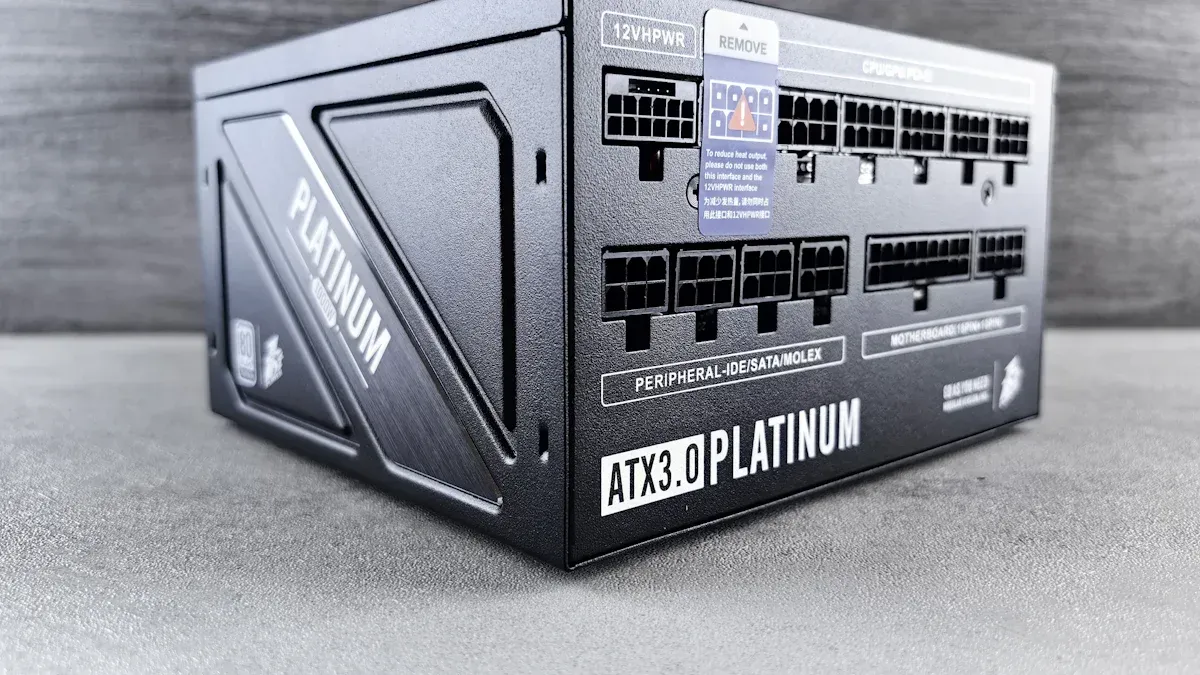
SMPS stands for Switched Mode Power Supply. It’s a highly sophisticated electronic power converter designed to efficiently transform electricity from one form to another.
For example, it can take the high-voltage AC power from your wall outlet and convert it into the stable, low-voltage DC power your electronic devices need.
An SMPS is the unsung hero behind modern electronics. Thanks to its remarkable efficiency, compact size, and light weight, it has become a cornerstone of the industry.
It has effectively replaced bulky, inefficient linear power supplies in everything from phone chargers to computers and LED lighting systems.
The Core Principles and Key Components of an SMPS
To truly grasp why an SMPS is so efficient and compact, you have to understand how it works. This isn't like a traditional linear power supply, which is like a tap controlling water flow.
An SMPS is more like a gate that opens and closes thousands or even millions of times a second to precisely regulate the energy flowing out.
High-Frequency Switching
The magic behind an SMPS comes from its core high-frequency switching technology. While linear power supplies waste excess voltage as heat, an SMPS operates differently, using a semiconductor device called a switch to turn the power on and off at a blistering pace.
When the switch is on, energy pulses are stored in a magnetic component. When it's off, that stored energy is released to the output.
This "on-off" process generates almost no energy loss. This is why an SMPS can achieve impressive efficiency ratings, often reaching 80% to 95% or more.
Note: High-frequency switching is the fundamental reason why SMPS units are so efficient and compact.

Key Components and the Feedback Loop
A complete SMPS system relies on several key components working together in a precise control loop. This entire process is controlled by the PWM controller, which acts as the "brain" of the SMPS.
The controller continuously monitors the output voltage and adjusts the width of the switching pulses to maintain a stable output. When the voltage is too low, it widens the pulses to let more energy through; when it is too high, it narrows them.
This rapid, millisecond-by-millisecond adjustment ensures the output voltage remains perfectly stable.
The feedback loop is the heart and soul of the SMPS’s accurate regulation. A small sample of the output voltage is constantly compared to a pre-set reference, and if there's any difference, an error signal is sent back to the PWM controller to correct.
This closed-loop system acts like a tireless robot, always monitoring and correcting to keep the voltage exactly where it needs to be, even if the input power or the load on the circuit changes.
Note: The PWM controller and feedback loop are the "brains" that allow an SMPS to regulate voltage with extreme precision.
To see a step-by-step visual explanation of how an SMPS works, from the input rectifier to the output filter, watch the video below.
Common SMPS Topologies
An SMPS isn’t just one single circuit design. It's a family of different circuit "topologies," each tailored for specific applications.
Understanding these topologies can give you a deeper appreciation for the versatility of SMPS.
Buck (Step-Down): The Buck converter is a simple design used to lower a voltage. It’s perfect for applications like stepping down a laptop battery's 12V to the 1.2V a CPU needs, or converting a car's 12V to 5V to charge a phone.
Boost (Step-Up): The Boost converter does the opposite of a Buck, raising a low voltage to a higher output. A classic example is the circuit that takes a small battery's 3.7V and "boosts" it to the higher voltage needed to power an LED light string.
Buck-Boost (Step-Down/Up): This smart hybrid topology can either lower or raise the voltage depending on what’s needed. This makes it an ideal solution for things like automotive electronics, where the input voltage from the car battery can fluctuate.
Isolated Topologies (e.g., Flyback): In some cases, it's critical to completely isolate the input from the output for safety. Topologies like the Flyback converter use a transformer to achieve this separation, ensuring that a high-voltage input can't accidentally harm a user. Your everyday phone charger is a common example of a Flyback topology.
Note: Different SMPS topologies serve different voltage conversion needs, such as Buck for step-down and Boost for step-up, to fit a wide range of applications.
The Key Advantages and Common Applications of an SMPS
An SMPS has become the industry standard because of its undeniable advantages. These benefits have fundamentally shaped the design of modern electronic devices.
Core Advantages
High Efficiency: This is the biggest selling point of an SMPS. Because so little energy is wasted as heat, an SMPS can be incredibly efficient, unlike linear power supplies.
Compact and Lightweight: Traditional power supplies use large, heavy transformers, while an SMPS uses a much smaller high-frequency version. This allows for massive reductions in size and weight.
Versatility: An SMPS unit can be designed to provide multiple output voltages from a single unit. This makes it perfect for complex systems like computer motherboards that need to power a variety of components with different voltage requirements.
Tip: High efficiency, a compact size, and light weight are the three core advantages of an SMPS over a traditional power supply.
Common Applications
SMPS technology is everywhere you look in your daily life. It’s the driving force behind most of the electronics you use.
Consumer Electronics: From your smartphone charger and laptop power adapter to your flat-screen TV, an SMPS ensures these devices are efficient, powerful, and conveniently portable.
LED Lighting: LEDs need a stable DC power supply to run. The SMPS is the go-to solution for LED drivers, allowing for compact and energy-saving lighting fixtures.
Industrial and Telecom: In data centers, telecom base stations, and automated factories, SMPS provides a highly reliable power source. They can deliver clean, stable power to sensitive equipment even in unstable industrial environments.
Medical Equipment: Many medical devices that require a precise, low-noise power supply—like ultrasound machines and CT scanners—rely on high-quality SMPS units to ensure accuracy and patient safety.
Note: The SMPS is the ubiquitous power solution for modern consumer electronics, lighting, and industrial equipment.
Design Challenges and Protection Features
While an SMPS has many benefits, it’s not without its challenges. From an engineer's perspective, every design choice involves trade-offs that have to be carefully managed.
Design Challenges and Limitations
Electromagnetic Interference (EMI): The high-frequency switching inside an SMPS generates a significant amount of electromagnetic noise. If this "electronic static" isn’t properly handled, it can interfere with nearby radios, Wi-Fi, or other sensitive circuits.
Output Ripple: Despite the use of filters, the output voltage of an SMPS will always have a tiny amount of fluctuation, known as "ripple." In applications that demand extremely clean power, like with precision instruments, this ripple can affect performance and requires additional filtering circuits.
Design Complexity: Compared to a simple linear power supply, an SMPS is far more complex to design and fine-tune. It requires specialized knowledge of component selection, circuit layout, and thermal management; a single mistake can cause a catastrophic failure.
Tip: While high-frequency switching delivers efficiency, electromagnetic interference (EMI) and design complexity are the primary challenges engineers face with an SMPS.
Essential Protection Features and Industry Standards
To ensure a reliable and safe product, modern SMPS units must include multiple built-in protection features.
Over-Voltage Protection (OVP): If the output voltage unexpectedly rises to a dangerous level, the OVP feature will immediately shut down the power. This prevents the high voltage from damaging the connected device.
Over-Current Protection (OCP): The OCP feature monitors the output current. If the current exceeds a safe threshold, it will trip the circuit to prevent overheating and fire from a short circuit or an overload.
Over-Temperature Protection (OTP): If the internal temperature of the SMPS gets too high from poor ventilation or a fault, the OTP will cut the power. This prevents the components from failing due to overheating.
Additionally, any commercial SMPS product must meet strict international standards and certifications, such as UL in North America and CE in Europe. These certifications are a product's "safety passport," assuring both the industry and consumers that it’s reliable and compliant.
Note: A safe SMPS will have OVP, OCP, and other protection features, and will be certified by industry-leading organizations like UL or CE.
Conclusion
In short, the SMPS—or switched mode power supply—is a cornerstone of modern technology. Its high-frequency switching has revolutionized power delivery, making our devices more efficient, compact, and powerful.
Despite its design challenges, careful engineering and built-in protection have made the SMPS a highly reliable and safe technology. As the demand for energy efficiency and smaller devices grows, the SMPS will continue to evolve and remain an indispensable part of our connected world.

Frequently Asked Questions (FAQ)
Q: What is the main difference between an SMPS and a linear power supply?
A: The fundamental difference is how they convert power. A linear supply constantly consumes excess voltage to regulate it, making it inefficient and hot, but it provides a very clean output. An SMPS uses high-speed switching, which makes it far more efficient and compact, but it can introduce some electronic noise.
Q: Why is an SMPS so much more efficient?
A: An SMPS is efficient because it doesn't "burn off" excess energy. A switch in an ideal state has zero power loss. This allows an SMPS to make the most of the input power, rather than turning it into useless heat.
Q: What does "high frequency" mean? Is a higher frequency always better?
A: "High frequency" refers to the switching rate of the SMPS, which ranges from tens of kilohertz to a few megahertz. A higher frequency allows for smaller and lighter components, like inductors and transformers.
A: However, a higher frequency also generates more electromagnetic interference (EMI), so engineers must find a balance.
Q: Why do SMPS units sometimes produce noise or EMI?
A: The rapid switching of voltage and current in an SMPS creates fast-changing electric and magnetic fields. These fields radiate electromagnetic waves that can interfere with nearby electronics, which is why proper shielding and filtering are critical in SMPS design.
Q: Is my phone charger an SMPS?
A: Yes. Almost all modern USB chargers are based on SMPS technology. They are designed to efficiently convert the high-voltage AC from your wall outlet into the low-voltage DC needed to charge your phone, all while keeping the charger small and light.
Q: If an SMPS unit breaks, can I fix it myself?
A: No, it's not recommended. An SMPS contains high-voltage circuitry, and dangerous voltages can remain stored in the capacitors even after it's unplugged.
A: Attempting to fix it yourself poses a serious risk of electric shock. The safest option is always to replace the unit or have it serviced by a professional.