Arc Fault Circuit Breakers: A Game-Changing Technology for Electrical Safety
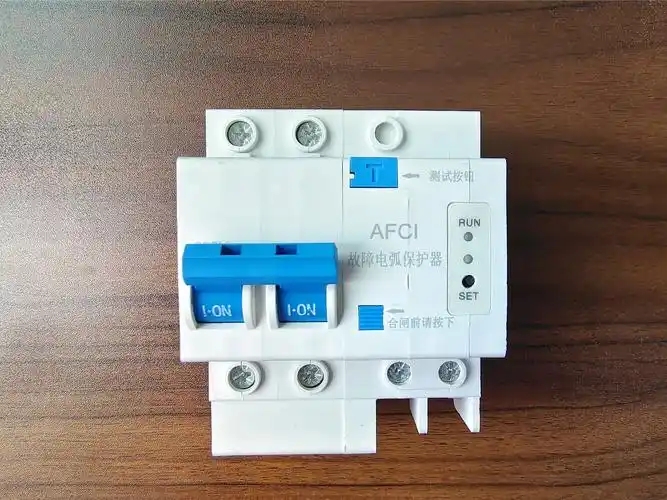
In modern society, electricity powers our lives and industries, yet it also brings increasing electrical safety concerns. Data from the National Fire Protection Association (NFPA) shows that electrical failures are a leading cause of structural fires, with many stemming from arc faults in wiring.
These alarming statistics highlight a universal safety concern for countless homes and businesses. They underscore the urgent need to address electrical fires at their very source. It's against this backdrop that the Arc Fault Circuit Breaker (AFDD) emerged.
It's not just a technological innovation, but a groundbreaking solution for electrical safety. It marks a pivotal shift from merely "reacting" to fires towards "proactively preventing" them.
The "Silent Killer" of Electrical Fires: Understanding Arc Fault Hazards and Causes
The causes of electrical fires are far more complex than many realize. Beyond common ground faults, parallel arcs and series arcs—collectively known as "arc faults"—are insidious, hidden dangers. As an electrical engineer with 12 years in the field, I’ve personally witnessed how these seemingly small "sparks" can escalate into major disasters.
The terrifying power of arc faults lies in their extreme energy density. Local temperatures can instantly soar to 3000-4000°C, easily igniting surrounding flammable materials. Furthermore, the fault develops incredibly fast; only minutes elapse from the arc's inception to the spread of fire, leaving minimal reaction time.
Arc faults are practically ubiquitous in daily life, and even minor oversight can plant the seed for a fire:
Aging and Damaged Wiring: Over time, wire insulation degrades due to oxidation or high temperatures. I recall working on older residential buildings where simple issues like a nail piercing a cable during renovation, furniture constantly pressing against wires, or even rodent gnawing led to insulation breaches, creating perfect conditions for arcs between exposed conductors.
Improper Connection of Joints: Wire connections are a high-risk area for faults. I’ve seen cases where loose connections, due to inadequate tightening during installation, sparked under current surges. Accumulation of dust, oil, or grime at these points also increases contact resistance, causing localized overheating and arc formation. In high-temperature, humid, or corrosive environments, joint insulation deteriorates even faster, amplifying the arc risk.
Potential Risks from Home Appliances: Not all appliances are inherently safe. Older appliances often have degraded internal wiring or excessive dust accumulation, leading to reduced insulation performance. Some lower-quality appliances feature poorly designed internal wiring that can chafe and break down with long-term use, creating a breeding ground for arc faults.
Limitations of Traditional Protection: Why AFDDs Are Indispensable
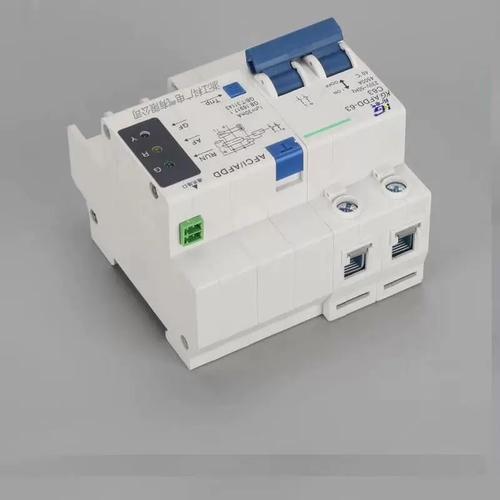
For a long time, we've relied on MCBs (Miniature Circuit Breakers) and RCDs (Residual Current Devices) to guard against electrical risks. MCBs excel at overload and short-circuit protection, while RCDs focus on leakage current detection. However, both fall short when confronted with arc faults: they cannot effectively detect parallel or series arcs.
This critical "blind spot" means that when dangerous arc faults quietly occur, traditional devices might remain "unaware" until the fire expands. By that point, it could be too late to intervene. This technological gap is precisely why the advent of Arc Fault Detection Devices (AFDDs) is revolutionary.
Specifically designed for arc fault protection, AFDDs utilize embedded digital circuitry and unique arc signature recognition algorithms. They can precisely differentiate between hazardous fault arcs and the harmless arcs produced by normal appliance operation (like the brief spark when you switch on an air conditioner). The core advantage lies in their ability to detect all types of faults—ground, parallel, and series arcs—while also integrating residual current protection.
This creates a fully automated "monitor-identify-disconnect" protective loop, effectively nipping fire hazards in the bud. AFDDs ensure a proactive and comprehensive approach to electrical safety.
The Core Advantages of AFDDs: Technology, Functionality, and Applications
The safety value of Arc Fault Circuit Breakers stems from their cutting-edge technical principles and comprehensive functional design. They employ a dual detection method: "time-domain current signature analysis + frequency-domain FFT analysis." This is like giving your electrical system "dual vision."
Time-domain detection captures instantaneous current changes, while frequency-domain analysis identifies the unique frequency characteristics of an arc. Combined, these methods ensure precise fault localization, significantly reducing the risk of false positives or missed detections.
As part of Weishoe Electric, we understand the paramount importance of AFDDs in the international market. Their functional design comprehensively covers all electrical safety needs:
Precise and Rapid Protection: They can quickly identify dangerous arcs (ground, parallel, series) and trip the circuit in 0.1-0.5 seconds. This extinguishes a potential fire at its earliest stage.
Integrated Multi-Protection: Beyond core arc detection, AFDDs also integrate protection against earth leakage, overcurrent, short circuits, and overvoltage. This is akin to installing a "comprehensive security monitoring center" for your electrical system.
Smart Assistance and Easy Maintenance: Featuring a fault memory function, they record the type and time of each fault, simplifying later troubleshooting. Indicator lights and fault display functions intuitively highlight problems, significantly reducing maintenance complexity.
Broad Adaptability: They support various rated currents (3A-63A) and voltages (230V/400V). Their rust-proof, moisture-resistant design makes them suitable for diverse environments like homes, factories, and commercial buildings. When installed in distribution boards, they achieve an IP40 protection rating, guarding against dust and moisture ingress.
From an application perspective, AFDDs are highly adaptable across virtually all electrical environments. This includes living rooms and kitchens in homes (high appliance density areas), concentrated power strip zones in offices, and crowded venues like shopping malls, hospitals, and airports. They are even crucial in flammable/explosive environments like oil depots and refineries. Wherever electricity is needed, an AFDD provides a reliable safety barrier.
International Standards and Future Trends: AFDDs as the New Global Electrical Safety Benchmark
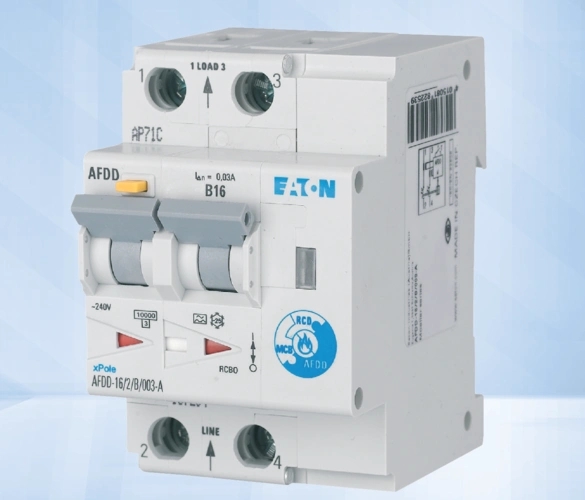
As global awareness of electrical fire hazards deepens, AFDD adoption is progressively expanding and becoming mandated by standards in many countries. As a manufacturer serving clients in Europe, the US, the Middle East, and "Belt and Road" countries, we are keenly aware of these critical standards:
International Electrotechnical Commission (IEC): In IEC 60364-4-42, "Low-voltage electrical installations – Part 4-42: Protection for safety – Protection against thermal effects," AFDD installation is explicitly recommended or even required in residential, public, and combustible material storage areas.
US National Electrical Code (NEC® - NFPA 70): Since its 2008 edition, it has mandated AFDD installation in specific circuits within residential dwellings (e.g., bedrooms, kitchens). This reflects a strong commitment to enhanced home safety.
Multiple European Countries: Standards like Germany's DIN VDE 0100-420 and the UK's BS 7671 "IET Wiring Regulations" have similarly stipulated or strongly recommended AFDD installation in certain applications. These regional adoptions highlight a growing global consensus.
The widespread adoption of these international standards unequivocally demonstrates the necessity and effectiveness of AFDDs in enhancing electrical safety. They are now a vital component of modern electrical design and installation. Looking ahead, with the rapid advancement of the Internet of Things (IoT) and Artificial Intelligence (AI), AFDDs will further integrate into smart home and building systems.
Imagine your AFDD proactively monitoring power consumption data via the cloud, sending pre-alerts to your phone before potential dangers arise, or even linking directly with fire suppression systems. This isn't just protection; it's the future of predictive safety management. As manufacturers, we are actively exploring the deep integration of AFDDs with intelligent platforms, aiming to make electrical safety more transparent and controllable than ever before.
Frequently Asked Questions (FAQ)
Q1: Do AFDDs cause nuisance tripping?
A1: High-quality AFDDs use advanced arc recognition algorithms to precisely differentiate between "harmless arcs" (like momentary sparks when switching on an appliance or a vacuum cleaner starting) and genuinely dangerous fault arcs. This ensures a very low likelihood of nuisance tripping, maintaining stable operation and normal power supply for users.
Q2: Is AFDD installation complex? Can I install it myself?
A2: AFDD installation must be performed by a qualified, licensed electrician. They need to be correctly wired into specific circuits in your electrical panel, ensuring all connections comply with local electrical codes. Attempting self-installation without professional expertise can lead to serious safety hazards.
Q3: AFDDs are more expensive than traditional breakers. Is it a worthwhile investment?
A3: While the initial investment for an AFDD might be slightly higher than traditional MCBs or RCDs, consider its ability to effectively prevent electrical fires. These fires can lead to personal injury or even fatalities, and millions of dollars in property damage. Given this, the investment is worthwhile. Electrical safety is priceless, and an AFDD provides a superior level of protection for your family and assets.
Q4: Can I install an AFDD in my older home?
A4: Absolutely. AFDDs are suitable for both new and existing electrical systems. For older homes, where wiring degradation risks are often higher, installing AFDDs can significantly enhance electrical safety. We highly recommend having a qualified electrician comprehensively assess your current electrical system before installation.
Conclusion: Choosing an AFDD Means Embracing Proactive Protection
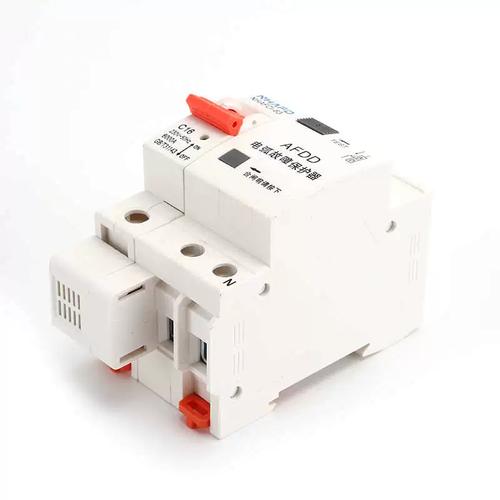
As electrical fires continue to threaten safety at an alarming rate globally, the emergence of Arc Fault Circuit Breakers marks a pivotal shift. It moves electrical protection from "reactive response" to "proactive prevention." This isn't merely a technological innovation; it's an upgrade in our philosophy towards life and property safety. Why react to a fire after it starts, when you can deploy advanced protection to prevent it?
Today, AFDDs are being incorporated into electrical design codes worldwide, becoming a standard feature in new residential constructions and large public venues. For homeowners, installing an AFDD in your electrical panel is like building an impenetrable "electrical firewall" for your entire family. For businesses, it effectively mitigates the risks of production halts, substantial property losses, and even legal liabilities stemming from electrical fires.
Electrical safety is no small matter; a tiny arc can lead to irreversible consequences. Choosing an Arc Fault Circuit Breaker isn't just adopting a new technology; it's choosing a responsible stance towards your family, employees, and property. After all, when it comes to safety, every preventive measure deserves top priority.
About the Author and Weishoe Electric
Thor brings 12 years of experience as an Electrical Engineer, currently serving at Weishoe Electric Co., Ltd. As a leading Chinese foreign trade manufacturer, Weishoe Electric is dedicated to providing high-quality electrical products and solutions that comply with international standards (such as IEC, UL, CE) to clients across Europe, the US, the Middle East, "Belt and Road" countries, and beyond.
Contact Us: Weishoe Electric Co., Ltd.
Thor
Phone: +86-0577-62788197
WhatsApp: +86 159 5777 0984
Email: [email protected]