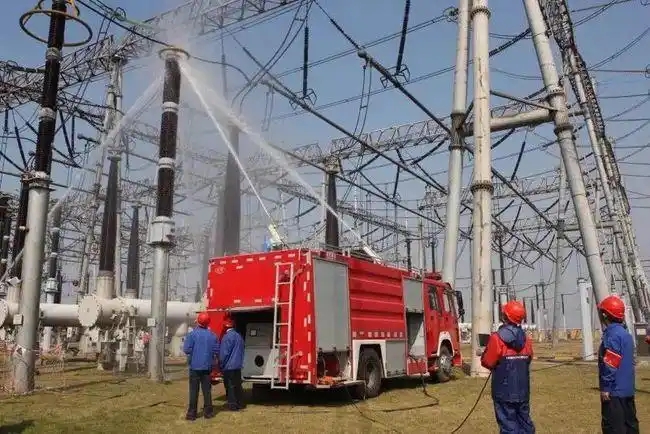
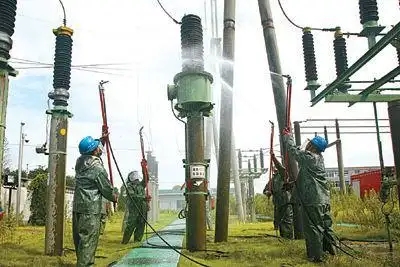
Have you ever imagined that water could be used to clean equipment in a substation, where voltages soar from 35 kilovolts to a staggering 500 kilovolts? It sounds unbelievable, doesn't it? These voltages are far beyond the human safety threshold of 36V, making ordinary water a "dangerous element" that could instantly cause electrocution if it touched live conductive parts. Yet, in professional operations, live-line washing is a vital "secret weapon" for ensuring the safe operation of substations. It's quite remarkable, isn't it? Let's dive deeper into this fascinating technology.
The Core Value of Washing and Restricted Zones
It's common knowledge that insulation porcelain insulators and posts in substations act like "protective shields" for electrical equipment. However, if these "shields" become covered with contaminants, their insulation performance will significantly degrade over time. This can even lead to serious incidents like short circuits or ground faults. That's where live-line washing comes in. Regular washing is highly effective in preventing "flashovers" caused by pollution, essentially providing a "safety lock" for the stable operation of substations.
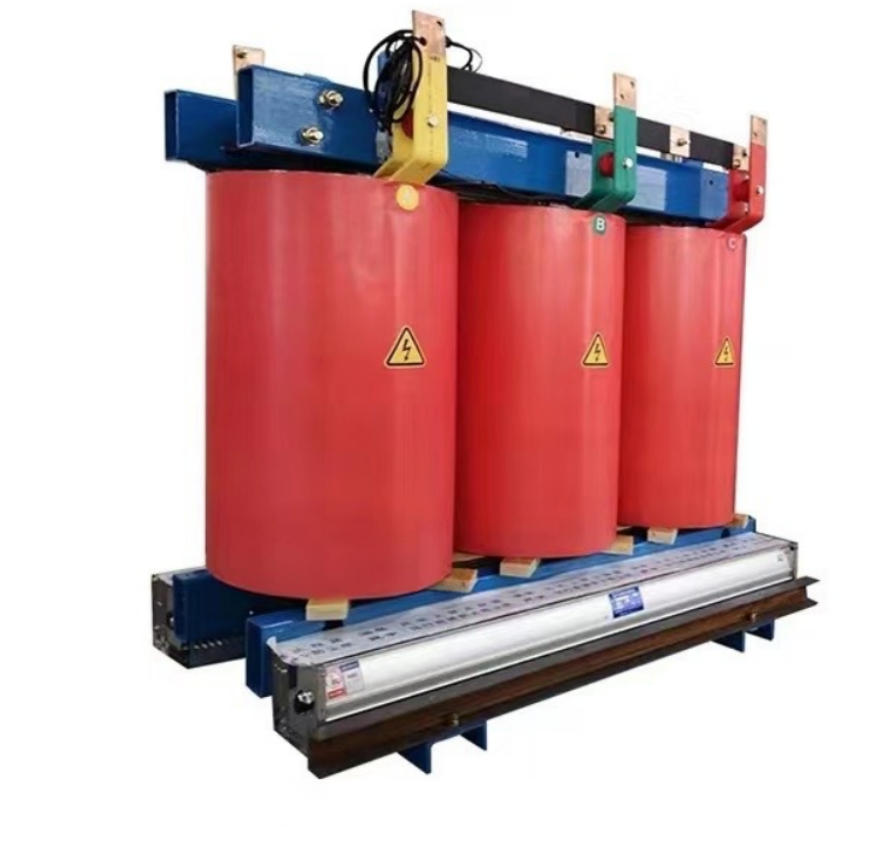
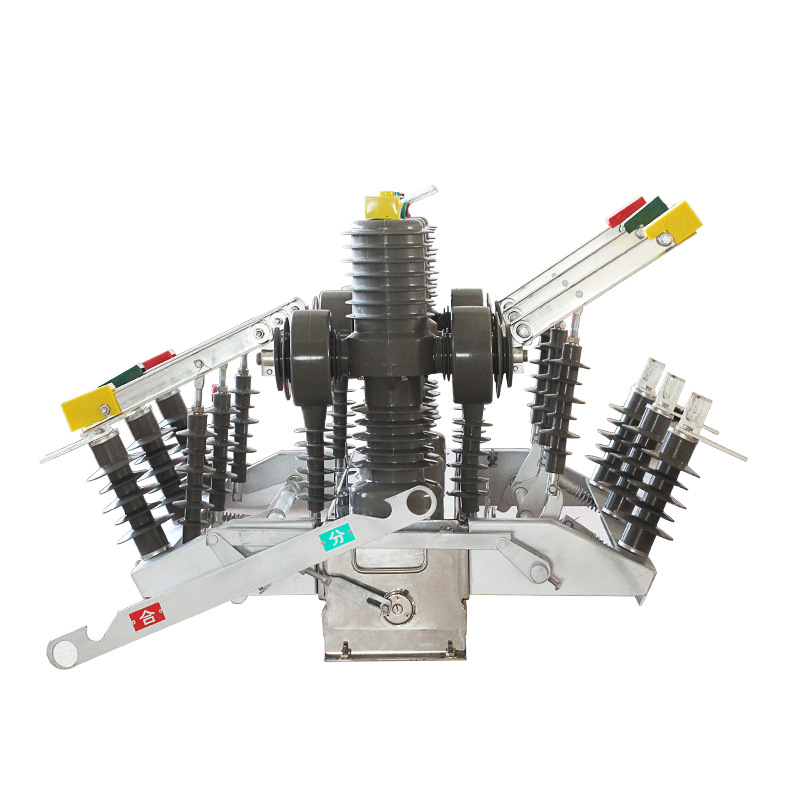
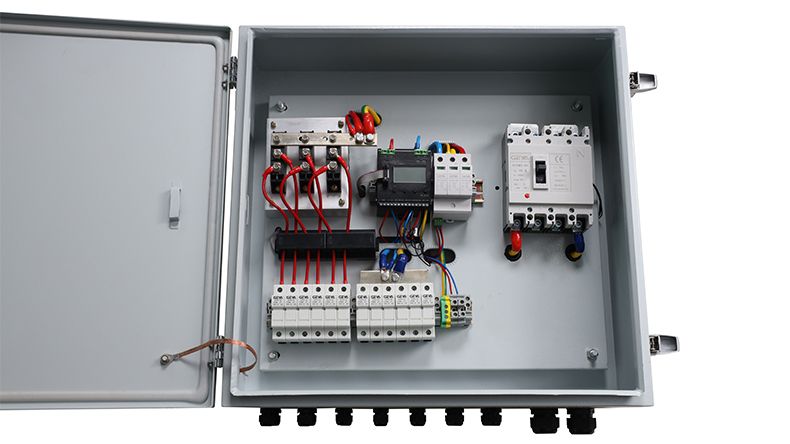
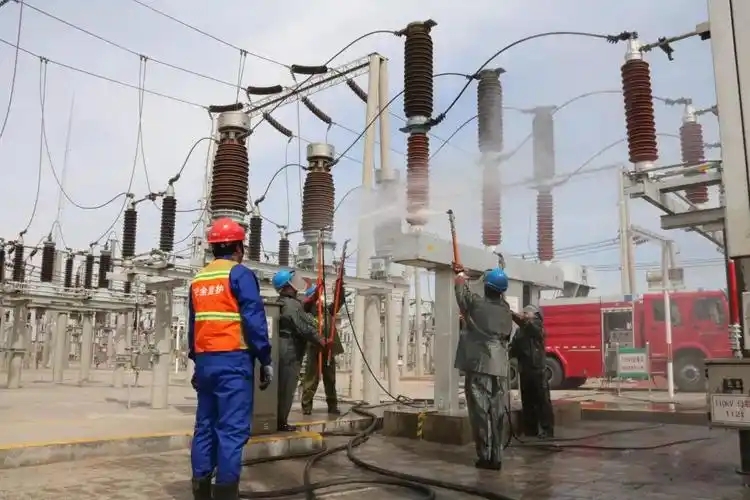
However, this isn't a casual splash-and-dash operation. There's a clear "target list" and strict "no-go zones." The primary components for cleaning are line insulators, disconnect switch support insulators, and transformer bushings, as their cleanliness directly impacts the equipment's insulation strength. Conversely, all conductive metal parts, such as the actual power lines, transformer casings, and disconnect switch blades, are forbidden from being washed. Also, extreme caution must be taken to prevent washing water from seeping into terminal boxes, as moisture in the secondary wiring could lead to serious short circuits.
The Magic of Specially Treated Washing Water
You might be wondering if ordinary water is off-limits; what kind of water is used for live-line washing? The answer is specially treated, "high-tech water"! Regular tap water or drinking water contains mineral ions like calcium and magnesium, making it highly conductive – essentially a "ticking time bomb" when used on live equipment. Specialized washing water undergoes multiple industrial filtration processes, achieving a resistivity of at least 100,000 Ω·cm. This means that conductive ions in the water are significantly removed, effectively blocking any current path.
Furthermore, this water must strictly comply with the specific standards for live-line work outlined in the "Electric Power Safety Work Regulations" (Safety Regulation 11.6.5 - 8), eliminating the risk of electric shock from the source. But remember, while this high-purity water is incredibly effective for cleaning electrical equipment, it's absolutely not for drinking. It lacks essential minerals and might contain trace amounts of filtration media, so don't get them confused!
Environmental Requirements and Full Operational Procedures
Did you know that live-line washing has very "picky" environmental requirements? It can only be performed under specific "auspicious conditions." Wind speeds must be less than Force 4 on the Beaufort scale; otherwise, the water stream could be blown off course, potentially coming too close to live conductive equipment and compromising safety distances. The air temperature must also be above 0℃ (32°F). Below freezing, water can turn to ice, significantly reducing cleaning effectiveness and potentially affecting equipment insulation.
Operations are strictly prohibited during rain, snow, dust storms, fog, or thunderstorms. These conditions not only reduce washing efficacy but can also lead to issues like leakage or equipment dampness. During the washing process, the water's "identity" also changes. As dust, oil, salt, and other contaminants are rinsed off the insulation surfaces, the once-pure washing water becomes "dirty." Therefore, effective wastewater collection and treatment procedures must be planned concurrently to prevent this contaminated water from polluting the surrounding environment of the substation.
Smart Washing Technology: A Leap from Manual to Automation
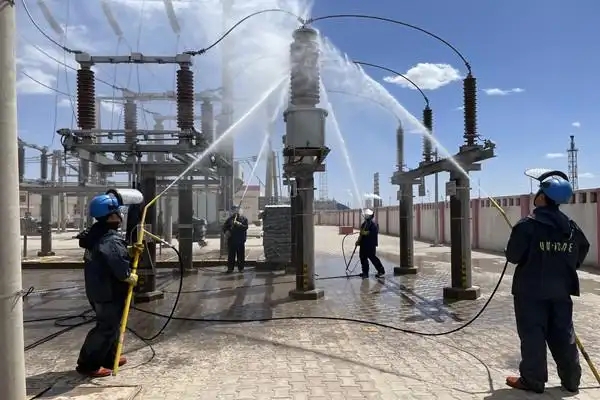
In the past, manual live-line washing was incredibly challenging! Equipment at high elevations was hard to reach, stubborn stains often remained, and personnel had to brave the risks of high-voltage environments – just thinking about it makes you anxious. But things are different now! China Southern Power Grid has developed "smart washing" technology, which has completely resolved these issues. This technology centers around intelligent robots mounted on large and small vehicle platforms, acting like two "super assistants" for washing operations.
These robots integrate high-definition visual recognition and precise positioning control, enabling "dead-angle-free, zero-residue, and high-safety" washing, no matter how high or difficult the equipment is to clean. The results of this technology are truly impressive! Over three years, more than 20 R&D personnel from Guangdong Foshan Power Supply Bureau overcame core technologies like photogrammetry positioning and robot path planning. In 2012, they first integrated photogrammetry and robotics into live-line washing.
Today, this technology is widely applied across multiple 500 kV and 220 kV substations in the Guangdong grid, achieving an operation coverage rate exceeding 90%! Where manual washing once required 6-7 people, it now only needs 3-4, significantly reducing labor costs and mitigating safety risks. Furthermore, this technology has been granted 4 utility model patents and 5 invention patent applications, earning industry recognition for its capabilities.
Looking ahead, with the development of DC transmission and UHV (Ultra-High Voltage) technologies, smart washing technology will continue to "shine brightly," extending its application to more scenarios and providing new solutions for the safe operation and maintenance of even higher voltage level equipment! Isn't this technology even more intriguing now?
Frequently Asked Questions (FAQ)
Now that you understand the principles and importance of live-line washing, you might still have some questions. We've compiled a few common FAQs to help you better grasp this technology:
Q1: Does live-line washing damage substation equipment?
A1: No, it doesn't. Professional live-line washing uses high-resistivity pure water that has undergone strict filtration and deionization, making it extremely low in conductivity. As long as operators strictly follow safety procedures, ensuring the water flow pattern, impact force, and safe distance from live equipment meet standards, it will not cause damage. Instead, it effectively improves insulation performance.
Q2: How often should live-line washing be performed?
A2: The washing frequency depends on various factors, such as the substation's environmental pollution level (industrial pollution, salt spray, dust, etc.), climatic conditions, and equipment operational status. In heavily polluted areas, it may need to be performed more frequently to ensure insulator cleanliness. This is typically scheduled periodically by power utilities based on actual conditions and regulations.
Q3: Is smart washing robot technology applicable to all voltage levels of substations?
A3: Smart washing technology is continuously evolving and becoming more widespread. Currently, it's widely applied in 500 kV and 220 kV substations within the Guangdong power grid. With ongoing technological advancements, it will support the safe operation and maintenance of even higher voltage levels (like UHV) in the future. Its applicability is constantly expanding.
Q4: Besides preventing "flashovers," what other benefits does live-line washing offer?
A4: Beyond preventing "flashover" trips, live-line washing effectively extends the lifespan of insulation equipment, reduces the frequency of power outages for maintenance, and enhances the reliability of grid operation and power supply quality. Simultaneously, the application of smart washing technology significantly improves operational safety, lowering human operational risks and labor costs.
Q5: Can individuals outside the power industry learn about live-line washing technology?
A5: Absolutely! This article is specifically designed to popularize this specialized technology for a broader audience. Understanding live-line washing helps us recognize the complexity behind power supply and the diligent efforts of engineers. It also provides a deeper appreciation for the safe operation and maintenance of the power system
About the Author:
The author of this article, Thor, is a seasoned Electrical Engineer at Weishoelec. As a Chinese manufacturing company, Weishoelec is dedicated to providing high-quality electrical products and solutions to global clients, particularly in the European, American, and other overseas markets, leveraging excellent technology and reliable quality.
Connect with Us!
If you have any questions about electrical safety operation and maintenance technologies for substations, or if you're interested in our power products and solutions, please don't hesitate to reach out! Weishoelec is committed to providing professional and efficient services to our global customers.
Phone: +86-0577-62788197 WhatsApp: +86 159 5777 0984 Email: [email protected]