
I. Introduction
The core strategy for Ring Main Unit (RMU) maintenance has fundamentally moved past traditional periodic shutdowns toward condition-based monitoring (CBM) tactics. This modern approach relies on real-time data and state assessment to ensure continued operational safety and power supply reliability, even under high-load conditions.
RMUs are essential components within medium-voltage distribution networks. They are fundamentally responsible for managing power connections, protection, and switching operations.
Given their compact design and reliance on highly specialized insulation, typically using SF₆ gas or solid dielectrics, any failure can lead to prolonged outages. Such complex repairs often necessitate extended and disruptive service shutdowns.
Traditional preventive maintenance, like annual routine checks, is time-driven and fails to accurately detect the early stages of potential equipment faults. The global energy industry’s digital transformation mandates that modern RMU maintenance philosophies evolve from merely reactive fault finding to proactive fault prediction and sophisticated risk management.
This vital shift hinges on adopting advanced sensors and powerful data analytics to build a robust CBM framework. This approach ultimately maximizes asset longevity and ensures peak grid reliability.
Key Takeaways (Core Insights)
Maintenance Evolution: RMU upkeep is transitioning from time-based preventive maintenance (PM) to Condition-Based Monitoring (CBM). This uses sensor data for precise fault prediction.
Safety Imperative: All service operations must strictly adhere to Lockout/Tagout (LOTO) protocols. Appropriate PPE must be selected based on calculated Arc Flash risk levels.
Deep Testing Benchmarks: Insulation Resistance (IR) testing demands specific high-voltage application, such as 5kV. Successful polarization index (PI) results must exceed established technical standards, such as a PI value greater than 2.0.
CBM Technology: Online Partial Discharge (PD) monitoring is recognized as the most effective method for predicting degradation in solid and gaseous insulation systems. This process serves as the cornerstone for differentiated maintenance.
Data-Driven Decisions: Maintenance data should be seamlessly integrated into SCADA/DMS systems. This allows the judgment of equipment health based on trend analysis rather than relying solely on single-point readings.
II. The Prerequisite for Service: Industry Safety Standards and LOTO Protocol
The absolute highest priority for any RMU maintenance activity remains the safety of personnel and the protection of assets. All work must be conducted within the most stringent industry safety standards and operational guidelines.
2.1 Mandatory Safety Procedures: Isolation and Zero-Voltage Verification
Before maintenance can begin, these steps must be meticulously followed. They are required to guarantee the equipment is in a safe, non-energized state.
Complete De-energization: Every incoming and outgoing power circuit connected to the RMU must be physically disconnected. This includes the opening of both breakers and isolators.
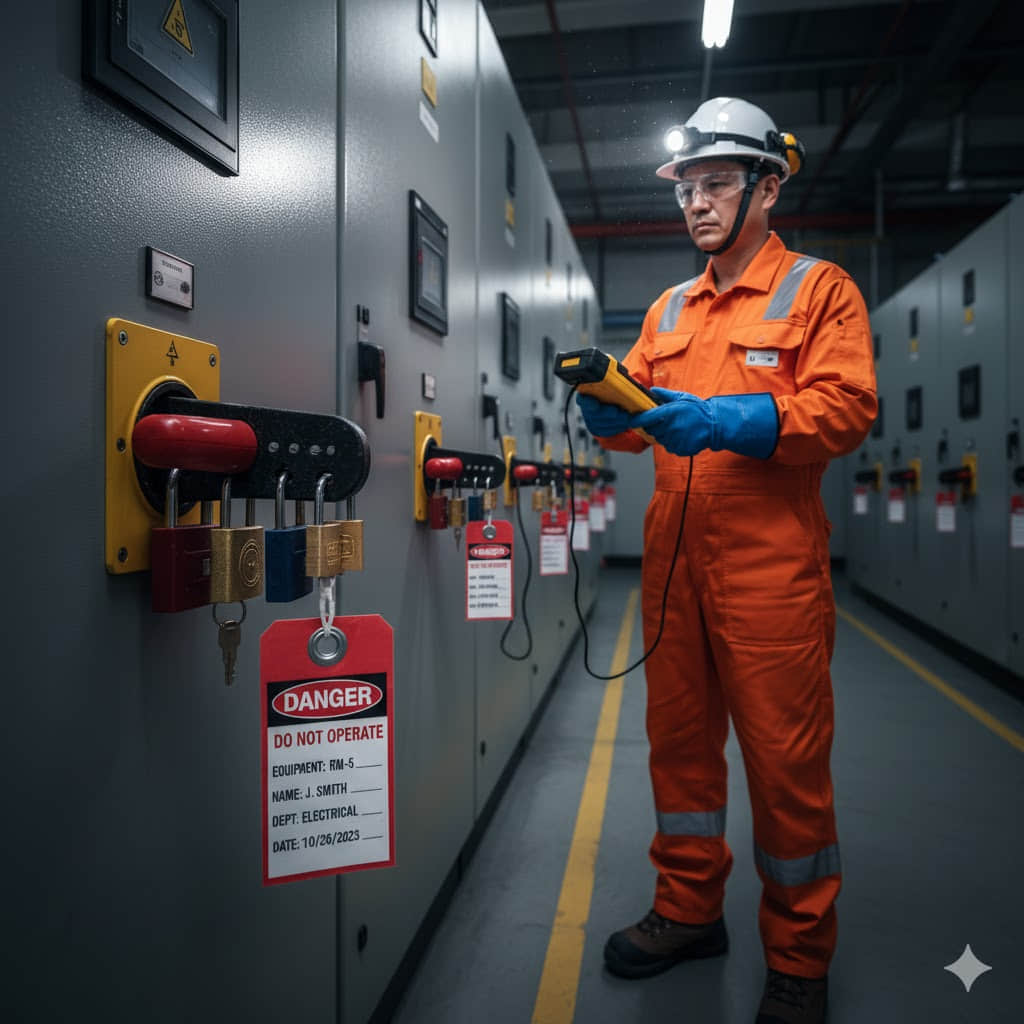
Lockout/Tagout (LOTO): Approved physical locks must be affixed to all disconnection points. These locks must be accompanied by "Do Not Operate" warning tags.
LOTO is a critical administrative procedure. It requires documented responsibility from the operating, supervising, and authorizing parties.
Zero-Voltage Verification: Utilizing a calibrated, appropriately rated voltage detector, technical staff must perform multi-point tests on all main circuits. This is necessary to confirm the complete absence of voltage.
Grounding Application: Temporary grounding leads must be reliably connected between the isolation points and the working area. Alternatively, the RMU's internal grounding switch must be operated to establish an equipotential zone.
2.2 Risk Assessment: Arc Flash Hazard and PPE Selection
Modern safety protocols must integrate the often-underestimated risk of Arc Flash. Arc flash incidents represent one of the most destructive hazards in medium-voltage equipment.
This hazard poses a threat even after disconnection due to potential capacitive discharge or induced voltages.
Arc Risk Analysis: Calculations, often based on standards like IEEE 1584, must be performed. This determines the incident energy in Calories per square centimeter expected in the specific operating area.
PPE Selection: Based on the calculated incident energy, staff must select and wear Arc-Rated (AR) protective clothing. This includes insulated gloves, face shields, and helmets with the corresponding caloric rating.
This dictates that personal protective equipment (PPE) must be dynamically selected for the task at hand. It must not be merely a single, generalized uniform.
Visual Aid and Practice Extension
To visually reinforce the critical procedures of safe operation and isolation steps discussed in this section, practical field demonstrations are highly valuable. The following video offers a step-by-step tutorial guiding engineers and technicians through the safe operation and safety precautions of a common RMU type. This directly supports the implementation of isolation and LOTO procedures.
III. In-Depth Analysis: Preventive Maintenance Tests and Benchmarks
The core function of preventive maintenance is to quantify the asset's health through precise electrical testing methodologies. For RMUs, these test results must meet stringent industry acceptance standards. This validates the long-term effectiveness of the service.
3.1 Insulation System Health Assessment
The insulation system—including solid dielectrics, SF₆ gas, cable terminations, and busbars—represents the most vulnerable component of an RMU. Insulation testing is therefore crucial for determining its long-term viability and safety.
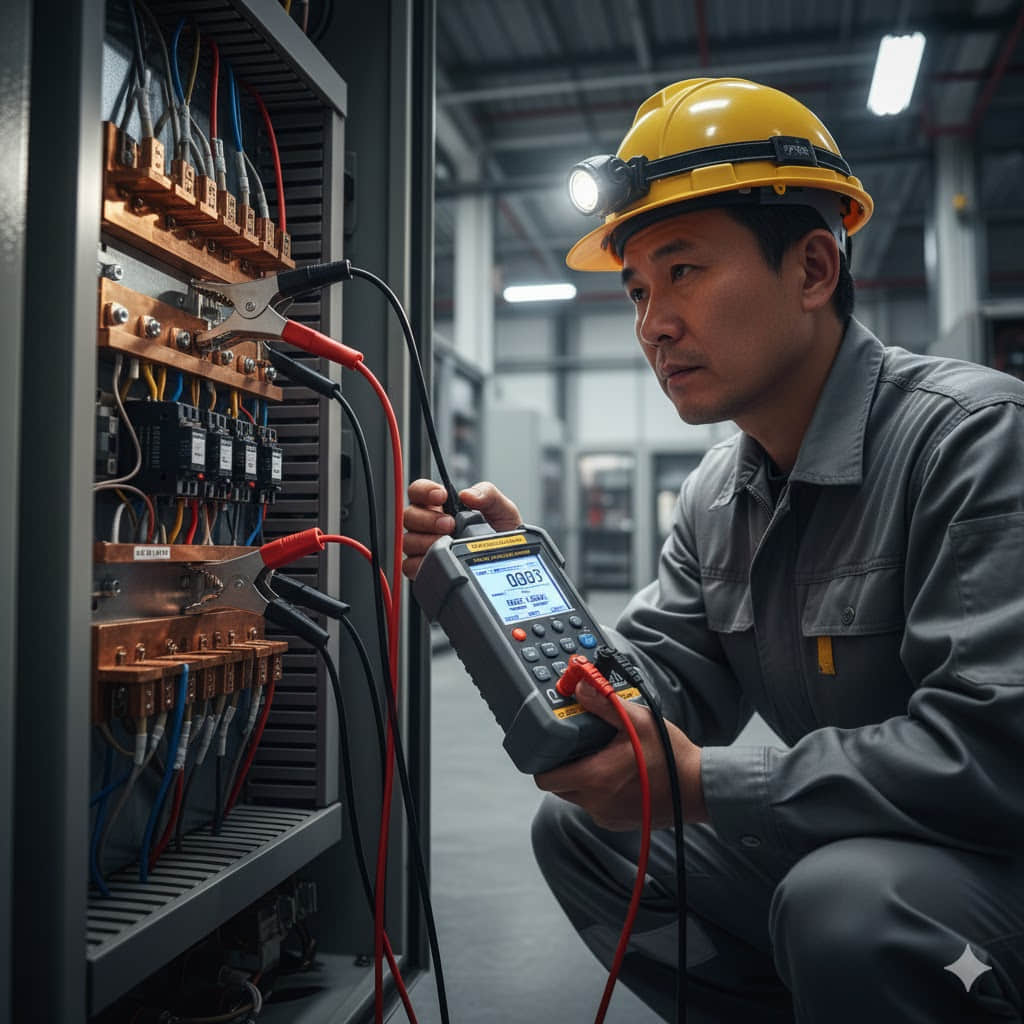
Insulation Resistance (IR) Testing: The appropriate megohmmeter (or "megger") must be used, applying 2.5kV or 5kV test voltage, dependent on the RMU's rated voltage level. For 10kV or 35kV class RMUs, the 5kV application is strongly recommended to adequately stress the insulation.
Acceptance Criteria: The measured value must adhere to or exceed relevant national standards, such as ANSI/NETA specifications. This typically requires the resistance reading after 60 seconds to be greater than 1000 Mega-ohms.
Absorption Ratio (DAR) and Polarization Index (PI): These time-based parameters provide a far more nuanced view than the single 60-second resistance reading alone. They are essential for accurately reflecting the degree of moisture ingress or thermal aging within the dielectric system.
PI Calculation and Standard: The Polarization Index (PI) is calculated as the ratio of the resistance reading after ten minutes divided by the resistance reading after one minute. A healthy, dry insulation system is typically required to maintain a PI value greater than 2.0.
If the PI falls between 1.0 and 2.0, the insulation may suffer from significant moisture or contamination. This necessitates further drying or cleaning.
3.2 Contact Resistance Testing for Moving and Fixed Contacts
An increase in the resistance of the main contacts is a common precursor to severe local overheating and eventual failure. This rise in resistance is a primary contributor to potential thermal runaway.
Testing Procedure: Highly accurate micro-ohmmeters must be used for testing. They typically apply a high current of 100 Amperes or more across the main circuit path.
Data Comparison: The resulting measurement must be meticulously compared against the unit's original factory test report. Alternatively, it can be compared against the results from the previous maintenance cycle.
| Assessment Metric | Acceptance Criterion (Relative to Factory/Adjacent Phase) | Potential Risk | Corrective Action |
| Absolute Value | Contact resistance must be less than the specified threshold, typically less than 100 micro-ohms. | Contamination or oxidation, leading to low-level heating. | Mechanical cleaning of the contacts and application of appropriate conductive lubricant. |
| Relative Trend | Value should not exceed the factory baseline or the last measured value by more than 120 percent. | Reduced contact spring pressure, indicating severe overheating risk. | Replacement of the contact elements or adjustment of the operating mechanism's tension. |
| Three-Phase Deviation | The maximum deviation among the three phase resistance values should not exceed 10 percent of the average. | Unbalanced resistance, leading to potential unequal load distribution. | Inspection and calibration of the operating mechanism to ensure correct contact alignment. |
3.3 Mechanical Interlocks and Operating Mechanism Integrity
RMU operation depends entirely on complex mechanical interlock systems. These systems ensure that hazardous sequences, such as closing the main switch while the grounding switch is engaged, are physically impossible.
Interlock Verification: Test all potential misoperation paths, like attempting to close the main switch while the unit is grounded. This confirms that the interlock mechanism reliably prevents the action.
Operating Timing Checks: If the RMU incorporates a circuit breaker, a specialized test set must be used to measure the closing and opening times. This ensures the timing falls strictly within the manufacturer's technical requirements.
Tip: The PI (Polarization Index) is a more valuable insulation health indicator than a single IR value alone. If your resistance reading after 60 seconds is high, but your PI is close to 1.0, it means the insulation surface may be severely contaminated, indicating poor internal health.
IV. The Differentiator: Condition-Based Maintenance (CBM) and Digital Transformation
To achieve service differentiation and high performance, the maintenance strategy must embrace intelligent monitoring technologies. This elevates RMU upkeep to the level of true predictive maintenance.
4.1 Partial Discharge (PD) Online Monitoring: The Insulation Stethoscope
Partial Discharge is the single most reliable early indicator of degradation within solid or gaseous insulation media. Performing PD monitoring while the unit remains energized is a critical element of CBM.
Technology and Application: Ultra-High Frequency (UHF) sensors are specifically suitable for Gas-Insulated Switchgear (GIS) and RMU components. These sensors capture high-frequency electromagnetic waves to detect internal insulation flaws.
Acoustic Sensing: Ultrasonic sensors are utilized to detect airborne discharge, such as corona or surface discharge, that may occur around external cable terminations or switchgear surfaces.
Data Interpretation (PRPD): By analyzing the Phase-Resolved Partial Discharge (PRPD) patterns, engineers can precisely distinguish between void discharge, surface discharge, and corona. This mapping plots PD signals against the AC voltage cycle.
This accurate classification allows for targeted, efficient outage planning and repair.
4.2 Continuous Environmental and Thermal Monitoring
Smart Temperature and Humidity Sensing: Fiber-optic or infrared sensors should be installed inside the RMU, particularly near cable connections and busbar joints. Significant fluctuations in temperature and humidity are major drivers of condensation and accelerated insulation aging.
Dynamic Inspection: Real-time environmental data provides a robust input for dynamically scheduling thermal imaging inspections. This moves away from arbitrary annual checks towards event-driven maintenance.
SF₆ Density Relay Interlock: The SF₆ density relay not only requires annual calibration to ensure its accuracy, but also necessitates its output signal be constantly fed into the SCADA system. Should the gas density drop to the critical lockout value, the system must automatically prevent any further switch operation. This prevents unsafe operation under compromised insulation strength.
4.3 Integrating Maintenance Data with SCADA/DMS
Modern RMU maintenance data cannot remain siloed in paper reports or simple spreadsheets. It must be centralized and leveraged.
Data Trend Analysis: Historic data, including Insulation Resistance, contact resistance, and operating times, must be continuously input into a central database. Regression analysis or machine learning models can then be applied to predict the asset's "failure inflection point."
For example, if contact resistance is observed to increase at a steady 5 percent annual rate, the system can proactively predict the exact year it will exceed the 120 percent alarm threshold.
Risk Modeling: By combining the RMU's load factor, operational age, environmental data, and CBM monitoring results, a comprehensive Health Index can be established. This powerful metric guides distribution operators in prioritizing the replacement or advanced maintenance of units with the lowest health scores.
Note: CBM's core value lies in reducing unplanned downtime. Through PD monitoring, we can de-escalate the risk of a "catastrophic failure" into a "scheduled maintenance intervention," a leap traditional maintenance cannot achieve.

V. Specific Environment Adjustments and Typical Failure Modes
RMU failures are often heavily dependent on both environmental factors and structural vulnerabilities. A thorough failure mode analysis is key to formulating the most effective maintenance plan.
5.1 Maintenance Adjustments for Harsh Environments
| Environmental Type | Potential Risk | Maintenance Focus and Strategy |
| High Humidity/Coastal | Internal condensation, contact oxidation, corrosion, and surface flashover risk on external insulation. | Annual inspection of gasket integrity is mandatory; ensure heating/dehumidification units are fully functional. Increase the frequency of external insulation cleaning. |
| High Altitude | Potential misoperation of SF₆ density relays due to atmospheric pressure differences, reduced air insulation margins. | Recalibrate or adjust the SF₆ density relay settings; pay close attention to stress cones and sealing on cable terminations. |
| Heavy Pollution (Industrial/Mining) | Accumulation of conductive external contaminants (dust, chemicals), leading to surface discharge. | Implement more aggressive and frequent external cleaning regimens; consider applying hydrophobic coatings like silicone rubber to insulating surfaces. |
5.2 Five Common RMU Failure Modes and Countermeasures
| Fault Symptom | Root Cause (Failure Mechanism) | Typical Data Indicator | Corrective Action |
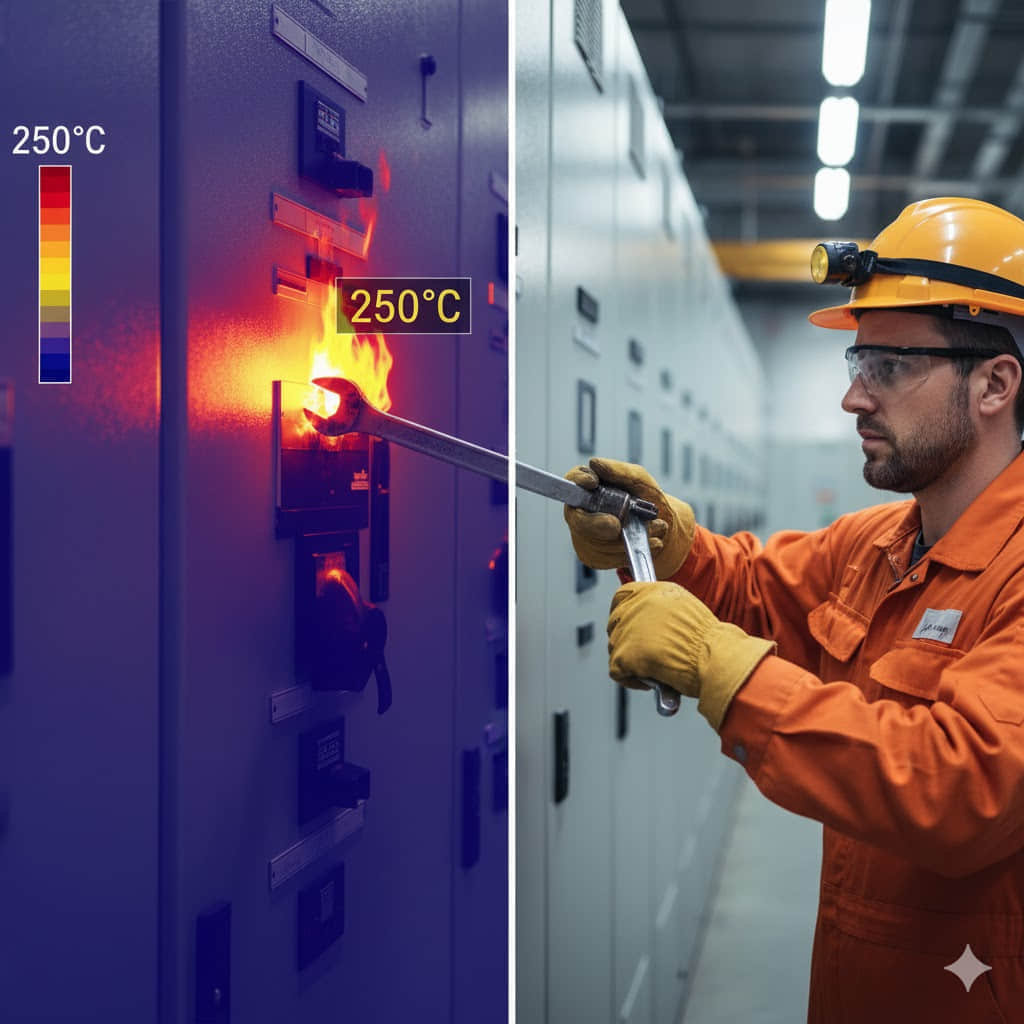
| Contact Overheating | Weakened contact spring pressure, oxidation or contamination of the contact surface, loose connection bolts. | Contact resistance exceeds 120 percent of baseline; Thermography shows a temperature differential greater than 20 degrees Celsius. | Cleaning and tightening connections; replacement of contact elements or springs. Necessary overhaul of the operating mechanism. |
| Insulation Degradation | Internal void discharge, moisture penetration in solid insulation, low SF₆ density. | Polarization Index is less than 1.5; localized discharge PRPD signals are enhanced. | Insulation drying treatment; SF₆ gas replenishment or recycling; replacement of insulating bushings or cable terminations. |
| Mechanism Failure | Fatigue of stored energy springs, wear and tear on mechanical interlocks, lubricant breakdown. | Operating timing exceeds specifications; manual or motorized operation binds or sticks. | Lubrication of the mechanism, adjustment, or replacement of key mechanical components like limit switches or trip coils. |
| SF₆ Leakage | Aging of sealing gaskets, loose flange connections, defects in the pressure vessel welds. | Gas density relay alarm activation; continuous, gradual pressure decline. | Use a gas leak detector to pinpoint the source; replace sealing components. Perform pressure testing before refilling SF₆. |
| Cable Termination Failure | Installation defects (improper stress cone application), moisture ingress into the terminal, external damage. | Insulation resistance reading is low; audible corona or loud discharge noise near the terminal. | Replacement of the cable termination head, followed by strict adherence to installation quality standards. |
Tip: For SF₆ RMU, a common but easily overlooked problem is trace moisture content. Moisture reacts with SF₆ to create corrosive substances, which accelerate solid insulation aging. Therefore, annual maintenance should include testing for trace moisture content.
VI. Documentation and Compliance
Professional RMU maintenance activities must be underpinned by rigorous documentation. This is necessary to establish value and ensure traceability.
Test Report Templates: All technical measurements (IR, PI, contact resistance, SF₆ density) must be recorded using standardized templates. These results must be explicitly compared against the equipment’s historical baseline data.
Corrective Action Records: Detailed logs are required for all identified deficiencies and the specific corrective actions taken. This includes recording the serial numbers of replacement parts and the signatures of the technicians involved.
Health Assessment and Recommendation: The final section of the maintenance report must provide the unit's current Health Index, such as Good, Monitor, or Urgent Action Required. This is essential for determining the suggested interval for the next maintenance cycle.
Electronic Archiving: It is strongly recommended that all paper records be digitized and integrated into an Enterprise Asset Management (EAM) system. This facilitates remote retrieval, long-term trend analysis, and simplifies regulatory compliance.
VII. Frequently Asked Questions (FAQ)
Here are five critical questions frequently addressed by electrical engineers during RMU maintenance.
Q1: Can the Isolator Switch be operated while the RMU is under load?
A1: Absolutely not under any circumstances. The isolator switch or Load Break Switch (LBS) within the RMU is fundamentally not designed to interrupt fault currents or load currents.
It must only be operated in a zero-current condition, or at most, under a negligible excitation current, such as de-energizing an unloaded cable or transformer.
Should the RMU include a Circuit Breaker (CB), the breaker must first interrupt the load to establish a no-current state before the isolator is operated. Failure to follow this strict sequence will invariably result in a severe arc flash event and catastrophic equipment destruction.
Q2: My SF₆ RMU gas density relay alarms when the temperature drops. Is this a leak?
A2: Not necessarily. The SF₆ gas density relay is calibrated to measure density, not simple pressure.
Because the RMU is designed to maintain a constant gas density, the gas pressure will naturally decrease when the ambient temperature falls. If the density relay lacks a built-in temperature compensation feature, the pressure drop can incorrectly trigger an alarm.
This is typically a temperature effect rather than a genuine leak. The correct procedure is to check the density reading, not just the pressure gauge, or convert the pressure reading back to the equivalent pressure at a standard temperature of 20 degrees Celsius to confirm the actual density status.
Q3: How do I differentiate between an "internal void discharge" and "corona discharge" on the PD signal?
A3: Accurate distinction requires analyzing the PRPD (Phase-Resolved Partial Discharge) pattern plot. Internal void discharge signals typically cluster around the voltage peaks, near plus or minus 90 degrees, exhibiting large pulse energy. This indicates an internal insulation defect and carries a high risk of failure.
Corona discharge signals are usually concentrated in the rising and falling slope regions of the voltage waveform, near zero degrees and 180 degrees. These pulses are high in number but low in energy. Surface discharge signals also often cluster near zero degrees and 180 degrees, but with noticeable asymmetry between the two half-cycles.
Q4: What are the thermal standards for infrared scanning? What temperature difference ($\Delta T$) requires immediate action?
A4: Industry practice combines the temperature rise method and the temperature differential method. The temperature rise method considers a local temperature exceeding the ambient temperature by over 40 degrees Celsius, or exceeding the equipment's absolute specified maximum temperature.
The differential method is more commonly used: if a connection point is 20 degrees Celsius hotter than an identical, healthy connection point on the same equipment, it is classified as a severe anomaly requiring immediate scheduling for inspection. A differential greater than or equal to 40 degrees Celsius indicates an imminent failure risk and necessitates immediate emergency shutdown and corrective maintenance.
Q5: If the Polarization Index (PI) test fails, what is the required course of action?
A5: A failed PI test, such as a PI value less than 1.5, strongly suggests that the insulation system is severely contaminated or has experienced significant moisture ingress. First, identify the moisture source by checking the cabinet seals and verifying the unit is not exposed to persistent dampness.
Second, clean the insulation surfaces and ensure that the ventilation or dehumidification system is fully functional. Third, safely, the RMU should undergo a heating and drying process, using space heaters or circulating hot air, and the PI test should be re-performed after 24 hours of drying. If the PI value remains low after drying, irreversible insulation aging may be present, requiring consideration for replacement or extensive refurbishment.
VIII. Conclusion: Elevating Maintenance to Strategic Asset Management
RMU maintenance has successfully transitioned from physically intensive manual work to a knowledge-intensive discipline driven by data and technology. By adhering to stringent LOTO safety protocols, combining traditional deep electrical testing with modern CBM technologies, maintenance engineers can extract valuable health intelligence from the asset's operating state.
This "Safety-First, Standards-Driven, Predictive-Status" maintenance model achieves more than simply mitigating the risk of sudden catastrophic failure and ensuring personnel safety. Crucially, it elevates RMU maintenance to a strategic level of asset management.
Through accurate prediction, maintenance departments can optimize spare parts inventory, streamline outage planning, and base asset retirement decisions on the equipment's true health profile. This ultimately maximizes the utility of the grid assets and continuously improves supply reliability. Verified, digitized, and professional maintenance forms the robust cornerstone supporting the stability of the smart grid.