
Introduction
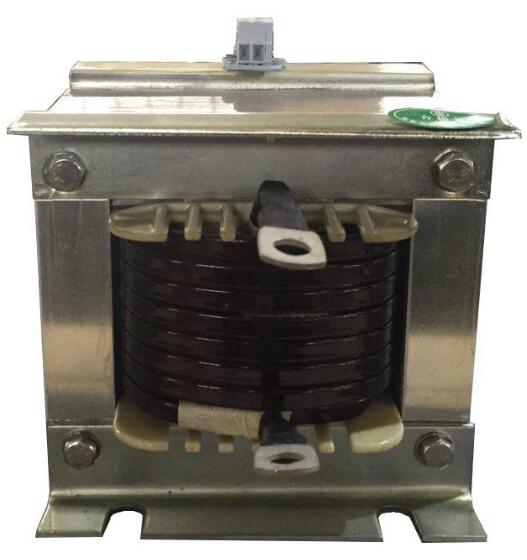
Reactors, also known as inductors, can convert electrical energy into magnetic energy themselves and store that energy. They can also control the increase and decrease of electric current.
Shift classification from “structural attributes” to “function-scenario dual mapping,” adding categories for power electronics and renewable energy to align with modern grid needs.
Use “harmonic coupling dynamic calculation” for reactance rate sizing to avoid harmonic amplification from fixed values.
Establish a 3D “environment-performance-cost” model for structural selection, balancing scenario adaptability and lifecycle efficiency.
Conduct “stress-voltage” dual verification for installation locations, prioritizing shock resistance on the power supply side and cost control on the neutral side.
Implement a 3-step engineering execution process—“system modeling → solution comparison → type testing”—to avoid sizing errors.
A reactor’s purpose defines its system role, requiring segmentation based on typical U.S. and European scenarios:
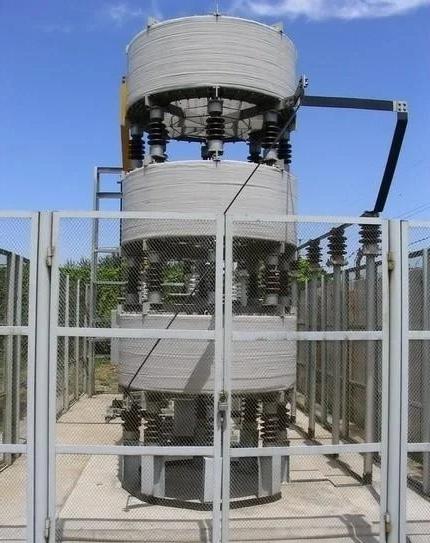
Current-Limiting Reactors (protect equipment by limiting short-circuit current)
Standard short-circuit limiting: Suits 110kV and below suburban U.S. distribution networks and European industrial park substations, handling 20–50kA short-circuit currents with a 3-second short-time withstand current rating.
EHV system limiting: Designed for 220kV+ cross-border European submarine cables (e.g., UK-France links) and U.S. shale gas field transmission projects, managing 80–120kA short-circuit currents with a 4-second short-time withstand current; dynamic stability current is 2.5–3x the short-time withstand current, and transient reactance must be verified to ensure voltage dip ≤15%.
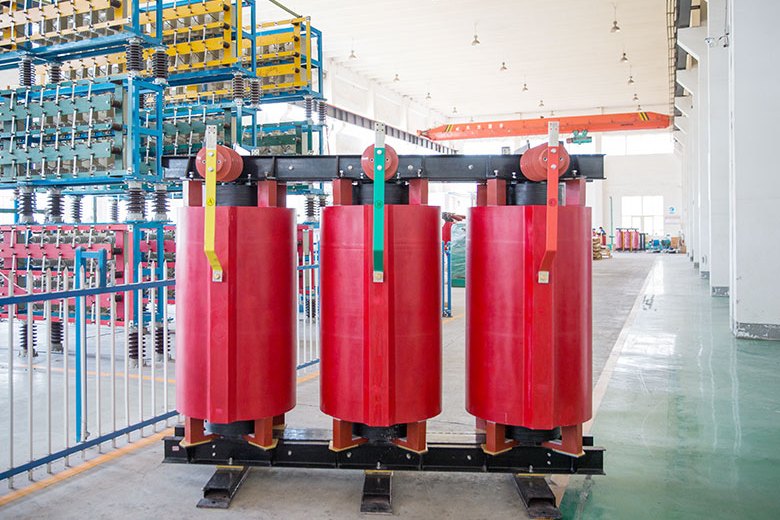
Shunt Reactors (compensate for line capacitive reactive power and prevent voltage rise)
Fixed-type: Ideal for long-distance Nordic pure transmission lines with stable loads, requiring no real-time adjustment—offering low cost and simple maintenance.
Controlled-type (paired with SVC/STATCOM): Used in German North Sea wind power transmission and U.S. Midwest metallurgical load centers, enabling 20–100% continuous capacity adjustment via thyristors to suppress voltage fluctuations in real time with ≤50ms response time.
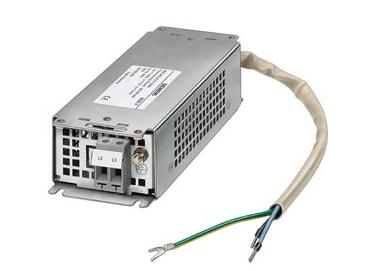
Filter Reactors (suppress harmonic pollution, segmented by harmonic order)
3rd harmonic-specific: Matches U.S. data center UPS systems and European electrified railway traction converters, forming a 150Hz resonant circuit with capacitors to achieve ≥85% suppression and resolve neutral current叠加 issues.
5th/7th harmonic-specific: Suits German automotive factory inverters and European aluminum electrolysis cells; 5th harmonic resonant frequency is 250Hz, 7th is 350Hz, with suppression rates of ≥90% and ≥85% respectively, covering 60–80% of total harmonic content.
Broadband: Adapted for European industrial parks with multiple harmonic sources, using segmented winding and amorphous alloy cores to suppress 2–13th harmonics with THD ≤5%.
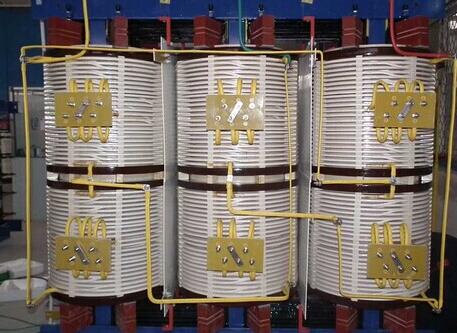
Arc-Suppression Reactors (compensate for ground capacitive current)
Auto-tap-adjusted: Fits rural U.S. distribution networks, providing 5–10% precision stepwise compensation with 1–2s response time and low maintenance costs.
Thyristor-controlled: Used in European urban distribution networks and U.S. high-rises, delivering ≤2% precision continuous compensation with ≤50ms response time—paired with arc protection for fast fault clearance.

Furnace Reactors (limit short-circuit current and stabilize smelting processes)
Arc furnace-specific: Designed for German ThyssenKrupp steel plants, with short-time withstand current 10–15x the rated value; inductance adjusts dynamically as furnace charge melts.
Induction furnace-specific: Matches U.S. aluminum smelting facilities, working with filter capacitors to ensure power supply sinusoidality and suppress 5th/7th harmonics.

Starting Reactors (limit motor starting current)
Asynchronous motor-specific: Suits European wind turbines and U.S. 6kV/10kV water pumps; a circuit breaker disconnects the reactor post-startup, and the oil-immersed design ensures efficient heat dissipation.
Synchronous motor-specific: Used in U.S. compressors and European large-scale water pumps, collaborating with excitation systems to adjust power factor—dry-type construction enables easy integration.
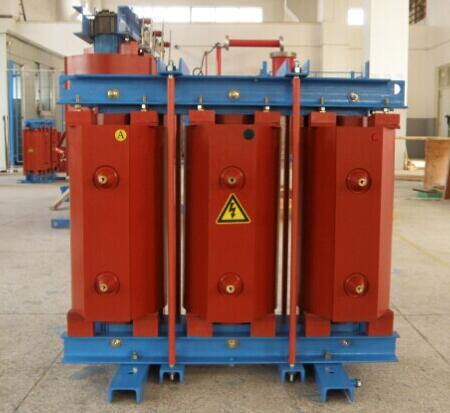

Air-Core Reactors (no magnetic core, excellent linearity with ≤5% inductance fluctuation and 20–30x short-circuit current capacity, segmented by encapsulation material)
Epoxy glass fiber encapsulated: Ideal for U.S. Southwest solar farms and northern European outdoor substations, offering H-class insulation and strong weather resistance but higher cost.
Silicone rubber encapsulated: Adapted for European Alpine regions and U.S. Rocky Mountain wind farms, withstanding -40℃ to 60℃ temperatures and reducing weight by 15–20%—though not oil-resistant.
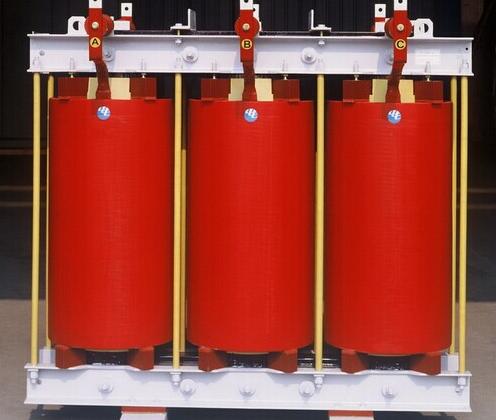
Iron-Core Reactors (magnetic flux closed via core, 30–50% lower losses and 40–60% smaller volume than air-core, segmented by saturation state)
Unsaturated: Fits European filtering and U.S. shunt applications, with magnetic flux density ≤1.4T for stable inductance.
Saturated: Designed for U.S. low-voltage distribution network current limiting (≤10kA), with magnetic flux density 1.8–2.0T; inductance drops sharply when current exceeds 1.2x rated, making it unsuitable for short-circuit currents >15kA.
Semi-Core Reactors (core column inside air-core coil, balancing advantages of both designs, segmented by core material)
Silicon steel core column: Suits 10kV/500A–1000A European suburban distribution networks, with permeability ≥1.5×10⁴ H/m and 20–30% lower losses than air-core.
Amorphous alloy core column: Used in European urban cores and U.S. residential areas, with permeability ≥2.0×10⁴ H/m and an additional 15–20% loss reduction—though cost is 30–40% higher.
(3) Classification by Insulation and Heat Dissipation

Dry-Type Reactors (solid insulation, air cooling)
Epoxy cast: Fits European indoor switchgear and U.S. urban distribution networks, with dielectric strength ≥30kV/mm—suitable for dry environments but prone to creepage in humidity.
Natural air-cooled: Ideal for U.S. industrial park switchgear, relying on natural convection for low cost; rated current ≤1000A.
Forced air-cooled: Adapted for South American Andes and European Alpine regions (≥3000m elevation), improving heat dissipation efficiency by 50–80% with rated current ≤2000A; insulation must be adjusted for elevation (8–10% strength reduction per 1000m).

Oil-Immersed Reactors (oil-paper insulation, oil circulation cooling)
Open-type: Suits arid U.S. Midwest regions, with a breather-equipped tank for low cost, though oil is prone to moisture absorption.
Hermetically sealed: Designed for northwestern European coastal areas and South American Amazon basins, filled with inert gas to maintain ≤30ppm moisture; low maintenance cost, and acid rain-prone areas require epoxy zinc-rich + polyurethane topcoat for corrosion protection.
SVG-matched: Series reactors suppress 11th+ high-frequency harmonics (≥95% suppression, ≤3% linear error), while shunt reactors supply fundamental reactive power (≤0.3% losses)—ideal for German grid frequency regulation SVG projects.
Inverter input/output: Input-side reactors improve power factor to ≥0.92, and output-side reactors suppress dv/dt ≤500V/μs; mandatory for long cables (>100m) in U.S. automotive factories and European chemical plants.
PV combiner side: Fits ≥100MW U.S. California and Spanish southern PV clusters, suppressing 3rd/5th harmonics with inrush current ≤2x rated and IP65 protection.
Wind converter side: Adapted for the European North Sea and the U.S. Texas wind farms, smoothing current fluctuations (≥80% suppression) on the input side and suppressing 13th/15th harmonics (THD ≤3%) on the output side—with 0.5g vibration resistance.

II. Core Sizing Logic: From “Parameter Matching” to “System Lifecycle Adaptability”
Inrush current limiting only (THD <3%, nonlinear load ≤10%): K=0.5–1%, ensuring fundamental voltage drop ≤1% and inrush current ≤20x rated; note that 5th harmonic amplification is 2–3x, requiring re-verification if load increases later.
5th harmonic dominance (content >60%, ≤15% rated current):
Content ≤10%: K=4.5%, with 235Hz resonance frequency (15Hz gap from 250Hz) and ≤1.3x 3rd harmonic amplification.
Content >10%: K=6% (internationally preferred), with 204Hz resonance frequency (45Hz gap) for ≥90% 5th harmonic suppression and ≥80% 7th harmonic suppression—providing sufficient margin.
3rd harmonic dominance (content >50%, ≥8% rated current): K=12%, with 130Hz resonance frequency for ≥85% suppression and neutral current ≤1.5x phase current; neutral reactors are required if exceeding this threshold, making it suitable for high-density European data centers.
Measure spectra: Use Fluke 1770 to collect data across operating conditions and build a harmonic database.
Generate curves: Use PSCAD/EMTDC to calculate suppression rates for 3%, 4.5%, 6%, and 12% reactance rates, then plot curves.
Optimize selection: Choose K-values to meet IEC 61000-3-6 targets (THD ≤5%). Example: A European industrial park with 6% 3rd harmonic and 12% 5th harmonic achieves 75% 3rd and 88% 5th suppression with K=7%.
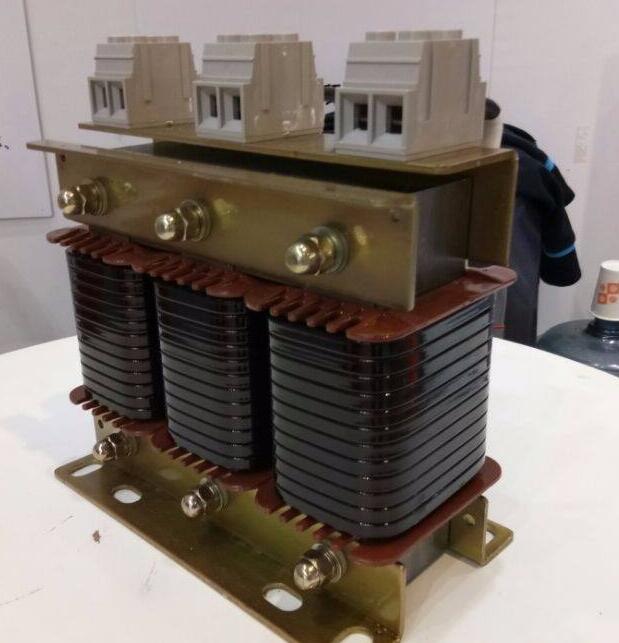
2. Structural Type Selection: 3D “Environment-Performance-Cost” Decision Model
Dry Iron-Core: First choice for space-constrained areas
Oil-Immersed Iron-Core: First choice for outdoor high-capacity applications
Air-Core: First choice for high short-circuit currents
Semi-Core: Balanced choice for medium capacity
Characteristics: Endures high short-circuit current surges and system-rated voltage, requiring strict dynamic/thermal stability.
Applications: U.S. grid substations (short-circuit ≥60kA), European semiconductor factories (high reliability).
Requirements: Dynamic stability ≥2.5x short-circuit current, thermal stability ≥1.3x (3s), insulation ≥1.2x rated voltage, partial discharge ≤10pC (1.73x voltage).
Selection: Prioritize epoxy glass fiber encapsulated air-core reactors for no saturation, strong shock resistance, and compatibility with U.S. grid capacitor banks.
Characteristics: Short-circuit current attenuated by capacitors, voltage = rated/√3, and lower requirements.
Applications: European urban distribution (short-circuit ≤50kA), U.S. commercial buildings (cost-sensitive).
Requirements: Dynamic stability ≥2x rated, thermal stability ≥1.5x, insulation ≥3kV, partial discharge ≤20pC.
Selection: Oil-immersed for humid European coastal areas, dry-type for arid U.S. deserts, and air-core for current-limiting needs.
Note: Neutral-side installations lack power supply-side shock protection; current-limiting fuses are required for short-circuit currents ≥60kA.
4. Sizing for Special Scenarios
(1) High Harmonic Pollution (Metallurgy, Arc Furnaces)
Scenario: European metallurgical plants with THD ≥10% and multiple coexisting harmonics (e.g., 3rd, 5th, 7th).
Strategy: Combine “broadband reactors + Active Power Filters (APFs)”; reactors suppress 3rd/5th/7th harmonics, while APFs compensate for 11th+ harmonics, with PLC-based coordinated control to ensure THD ≤5%—proven effective in French Alstom steel plants.
(2) High Elevation/Low Temperature (≥3000m/-20℃)
Scenario: South American Andes Mountains and European Alpine wind farms, where low temperatures impede heat dissipation and high elevation reduces insulation strength.
Strategy: Select dry-type air-core reactors (oil-free design resists low-temperature freezing); add forced air cooling (fans activate at -30℃) to boost heat dissipation by 50–80%; upgrade insulation class (e.g., 10kV → 15kV at 3500m) per IEC 60664-1 (8–10% insulation reduction per 1000m elevation).
(3) Smart Grids (U.S. California Smart Distribution, European “Super Grid”)
Scenario: Grids requiring real-time monitoring, remote maintenance, and predictive fault detection to support high renewable energy penetration.
Strategy: Deploy “smart reactors” integrated with fiber-optic temperature sensors (±1℃ accuracy), vibration sensors (≤0.1g alarm threshold), and partial discharge sensors (≤10pC detection limit); transmit data via 4G/5G to cloud platforms, complying with IEC 61850 for interoperability with grid control systems.
Sizing Logic Video: Reactance Rate Calculation & Structural Decision Demonstration
III. Sizing Pitfalls & Engineering Execution Guidelines
1. Common Pitfalls & Solutions
(1) Obsessing Over Low Losses While Ignoring Current-Limiting Capability
Case Study: A German Munich automotive plant selected iron-core reactors (≤0.2% losses) for cost savings; during a 70kA short-circuit event, core saturation rendered current limiting ineffective, destroying capacitors and causing a 3-day production shutdown—resulting in €1 million in losses.
Solution: Quantify the tradeoff between losses and current-limiting based on annual operating hours: for ≥6000 hours/year, prioritize low-loss + shock-resistant designs (e.g., air-core); for ≤3000 hours/year, iron-core designs may balance cost and performance.
(2) Assuming Higher Reactance Rate = Better Performance, Ignoring Voltage Drop
Case Study: A U.S. Chicago commercial building installed reactors with K=15% to maximize 3rd harmonic suppression (90% efficiency), but the 8% fundamental voltage drop exceeded the 5% industry limit—causing motor startup failures and HVAC system malfunctions.
Solution: Calculate voltage drop using ΔU% = K×Q_C/S_n×100% (Q_C = capacitor reactive power, S_n = system rated capacity); ensure ΔU% ≤5%; if exceeded, reduce K or increase system capacity.
(3) Neglecting Structure-Environment Compatibility, Leading to Early Failures
Case Study: A Brazilian Rio de Janeiro coastal substation used standard dry-type reactors without corrosion protection; within 2 years, insulation creepage and bracket rust forced a full replacement, costing $500,000.
Solution: Match reactor structure to environment:
Humid/coastal areas: Hermetically sealed oil-immersed or silicone rubber-encapsulated reactors.
High-temperature/arid areas: Forced air-cooled or open-type oil-immersed reactors.
Corrosive areas (acid rain, salt spray): Epoxy-encapsulated reactors + stainless steel brackets; oil-immersed reactors require Q345R steel tanks with triple coatings (zinc-rich epoxy 80μm + epoxy mid-coat 120μm + polyurethane topcoat 80μm).
2. 3-Step Engineering Execution Process (Aligned with U.S./European Standards)
(1) System Requirement Modeling
Task: Develop a “Sizing Requirement Document” including:
Electrical parameters: Voltage, current, short-circuit current, annual operating hours.
Harmonic data: Measured spectra (Fluke 1770) and harmonic source types (inverters, motors).
Environmental parameters: Location, temperature/humidity range, elevation, corrosion class (per ISO 12944).
Constraints: Space limitations (modeled via Autodesk Revit), budget, and compliance standards (IEC 60076, ANSI C57.14).
(2) Technical-Economic Comparison of Multiple Solutions
Technical Evaluation: Score solutions (100-point scale) on harmonic suppression, current-limiting capability, environment adaptability, and reliability; only consider solutions with ≥80 points.
Economic Evaluation: Calculate 20-year Lifecycle Cost (LCC) including:
Initial costs: Procurement, transportation, installation.
O&M costs: Inspection, maintenance, energy losses.
Failure costs: Repair, downtime, replacement.
Selection: Choose the solution with the lowest LCC that meets technical requirements.
(3) Type Test Verification
Mandatory Tests:
Temperature rise test: Ensure ≤65K temperature rise (IEC 60076-2).
Short-circuit test: Confirm no deformation or insulation damage after a 3-second thermal stability test.
Harmonic suppression test: Validate compliance with THD ≤5% (IEC 61000-3-6).
Environmental tests: High/low temperature (-40℃ to 60℃), damp heat (95% humidity), and salt spray (1000h per ISO 9227) resistance.
Certification: Conduct tests via accredited labs (e.g., Germany’s TÜV, U.S.’s UL) and obtain reports compliant with IEC 60076 and ANSI C57.14 for acceptance.
Note: Domestic Chinese manufacturers now independently perform temperature rise tests for reactors, using precision data acquisition systems to ensure compliance with international safety standards.
Engineering Execution Video: Full Process from Modeling to Testing
IV. Future Trends: Digitalization & Intelligence
1. Digital Twin Sizing
Technology: Build multi-physics models (electromagnetic, thermal, mechanical) using ANSYS Multiphysics; import grid parameters (load profiles, short-circuit data) via PSCAD/EMTDC; simulate reactor performance under dynamic conditions (harmonic fluctuations, temperature changes) and visualize results in 3D.
Application: European North Sea wind farms used digital twins to select “air-core + K=6%” reactors, reducing O&M costs by 15% compared to traditional sizing—predicting 5-year insulation degradation and optimizing maintenance schedules.
2. Modular Sizing
Technology: Standardize reactor modules by voltage (10kV/35kV/110kV), capacity (100–1000kvar), and function (filtering/current-limiting/starting); add optional modules (forced air cooling, broadband filtering) for special scenarios.
Benefits: Reduce lead times from 3–6 months (custom) to 1–2 months (modular); enable on-site expansion (e.g., adding a 200kvar module to a 500kvar system) to support U.S./European renewable energy rapid deployment targets.
3. AI-Powered Sizing Platforms
Technology: Develop machine learning algorithms trained on 1000+ U.S./European reactor case studies; allow users to import data via Excel or integrate with GIS for environmental parameters; auto-generate sizing reports, 3D models, and BOMs.
Application: A major U.S. utility company adopted such a platform, increasing sizing efficiency by 60% and reducing error rates by 40%—eliminating manual calculation mistakes and ensuring compliance with NERC standards.
V. Frequently Asked Questions (FAQs)
Q1: What reactor type is best for a 110kV European substation with 70kA short-circuit current (power supply side)?
Q2: A U.S. data center has 8% 3rd harmonic and neutral current 1.4x phase current—what K-value should I choose, and do I need additional equipment?
Q3: For a European Alpine wind farm at 3500m elevation, what cooling method and insulation class are needed for dry-type reactors?
Q4: A German automotive plant has 12% 5th harmonic and 6% 7th harmonic—how to balance K-value for dual harmonic suppression?
Q5: A Canadian food plant (10kV/600A, budget-constrained) needs a long-term reactor solution—what structural type is optimal?
Q6: A Dutch coastal substation (≥85% humidity, salt spray) uses oil-immersed reactors—what insulation and corrosion measures are required?