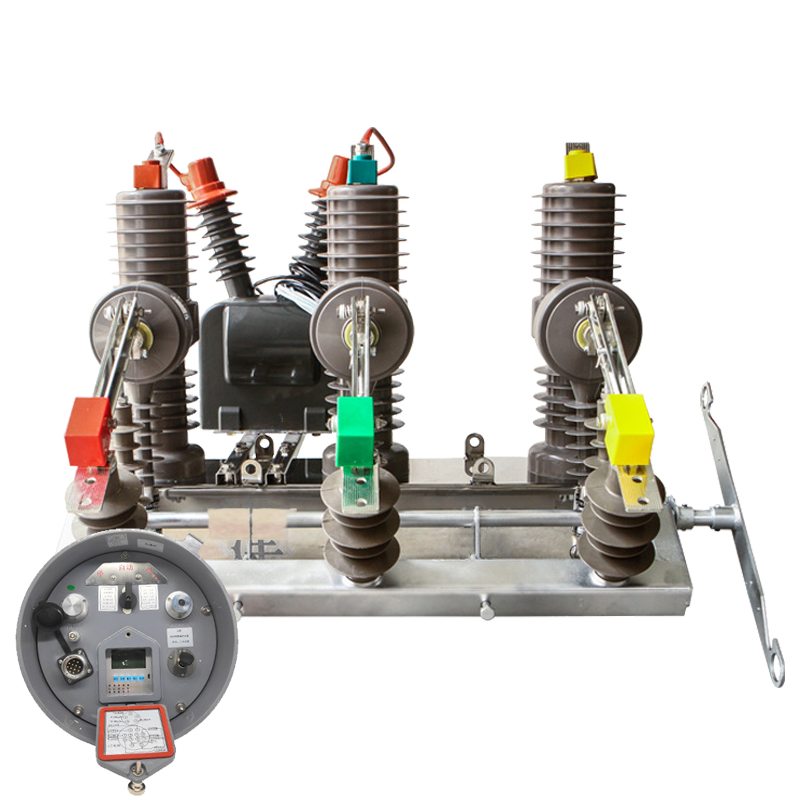
The global power sector is not upgrading distribution networks for style. It is upgrading them because the old model no longer fits reality.
Utilities now face tighter reliability targets, more distributed generation, harsher environmental scrutiny, and higher customer expectations. In that environment, the vacuum circuit breaker has moved from being a strong option to being, in many medium-voltage outdoor applications, the more rational engineering choice.
That shift is especially visible in urban feeder automation and rural network modernization. Pole-mounted switching points are no longer passive devices. They are expected to isolate faults quickly, communicate with control centers, support reclosing logic, and work reliably in rain, dust, UV exposure, condensation, salt fog, and winter cold.
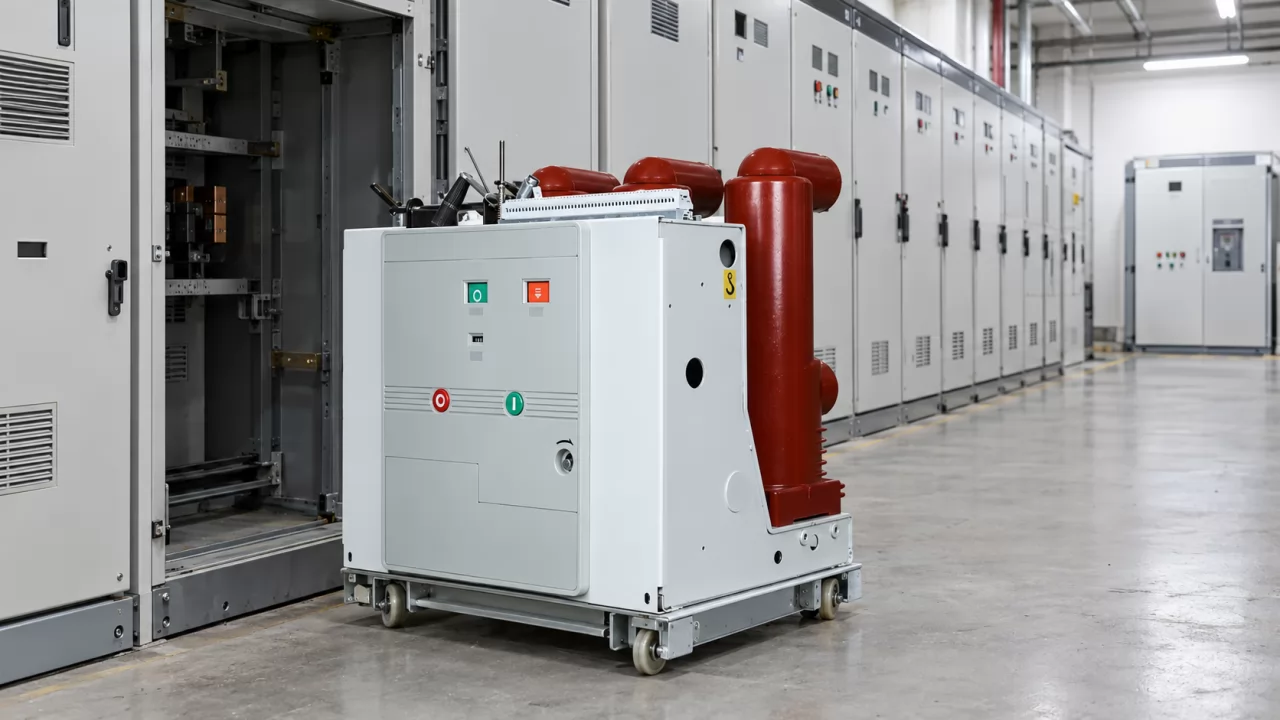
This is exactly where the modern smart grid vacuum circuit breaker stands out. It combines proven vacuum interruption technology with intelligent control, sensing, and communications in a way that aligns with today’s grid priorities: cleaner operation, lower maintenance burden, better automation, and faster restoration after faults.
In practical terms, utilities are increasingly comparing two familiar outdoor choices: the vacuum circuit breaker and the SF6 circuit breaker. Both have served the industry. But their differences are no longer minor. They affect maintenance planning, environmental compliance, operating safety, and total lifecycle value.
This article examines those differences in depth, then uses the ZW32-12 Outdoor Intelligent High-Voltage Vacuum Circuit Breaker as a concrete product example. The goal is simple: explain why intelligent outdoor vacuum technology is becoming a preferred path for modern medium voltage distribution protection systems.
Why Vacuum Circuit Breakers Matter in Smart Grid Distribution
A smart grid is not just a digital layer placed on top of an old network. It is a distribution philosophy built around visibility, controllability, resilience, and efficiency.
That means outdoor switching equipment must do more than interrupt current. It must help the system detect, isolate, communicate, and recover.
In medium-voltage overhead networks, especially 10 kV and 12 kV class systems, switching devices are often installed in exposed field conditions. Access may be easy in a city street, but difficult on a rural branch line or mountainous route. Every unnecessary truck roll costs money. Every delayed isolation event increases outage scope.
For that reason, utilities now favor equipment that offers:
Fast fault interruption with stable performance
Remote operation from control centers or feeder automation systems
Low routine maintenance in outdoor service
High mechanical durability for repeated operations
Environmental compliance without greenhouse gas handling complexity
Support for automation, telemetry, and intelligent protection logic
The vacuum circuit breaker fits this profile unusually well. It is not hype. It is the result of decades of engineering improvement in vacuum interrupters, insulation systems, spring operating mechanisms, and controller integration.
The Smart Grid Challenge: Why Traditional Outdoor Switching Equipment Falls Short
Urban and rural networks do not fail in the same way, but they now demand the same thing: intelligence at the edge.
In dense urban systems, load concentration is high, and outage tolerance is low. A feeder fault can affect commercial buildings, transport systems, telecom infrastructure, data facilities, and residential users all at once. Fast sectionalizing and remote restoration are essential.
In rural systems, feeders are long, branches are dispersed, and fault exposure is often worse. Trees, lightning, wind, ice, animals, and conductor contact events create recurring disturbance patterns. Without automated sectionalizing, one fault can black out a wide area and keep field crews driving for hours before they even identify the location.
Traditional outdoor switching assets often fall short because they were designed mainly for local switching, not for real-time automated network management.
The modern grid requires:
Remote fault isolation and grid reliability improvement across feeders
Telemetry for current, status, events, and alarms
Protection logic that coordinates with sectionalizers and reclosers
Integration with SCADA and feeder management platforms
Condition visibility for better maintenance planning
Stronger compliance with environmental and safety expectations
When outdoor equipment lacks these capabilities, utilities compensate with manpower. That approach is expensive, slow, and increasingly difficult to justify.
Why SF6 Circuit Breakers Are Losing Ground in Modern Power Systems
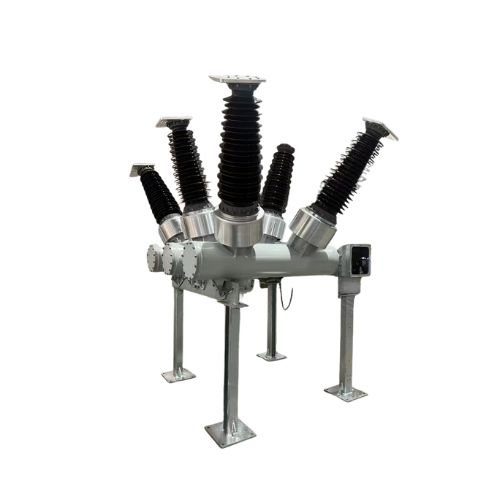
SF6 circuit breakers have a long service history in power systems. They have been used because sulfur hexafluoride has strong dielectric and arc-quenching properties. But what once looked like an all-around solution now presents clear disadvantages in many outdoor distribution applications.
The issue is not whether SF₆ equipment can operate. It can. The issue is whether it remains the best fit for today’s smart grid priorities.
More utilities are concluding that it does not.
SF₆ Leakage and Maintenance Complexity
One of the biggest weaknesses of SF₆-based switching equipment is gas containment over the full service life.
Industry data commonly cited in power engineering discussions shows that the electrical power sector consumes roughly about half of global SF₆ production, and that high-voltage switchgear accounts for more than 80% of SF₆ use within the power segment. Those numbers matter because they reveal how concentrated the emission challenge is.
In theory, a sealed gas system sounds manageable. In field reality, maintaining long-term leak-tight performance is demanding.
Sealing technology depends on gasket quality, machining precision, assembly consistency, metal-to-metal interfaces, and the aging behavior of elastomers under thermal cycling, moisture, UV exposure, and pollution. In outdoor service, these variables are not trivial.
Once leakage risk becomes part of the lifecycle equation, maintenance complexity rises. Utilities may need dedicated leak detection tools, gas filling devices, gas recovery equipment, handling procedures, and trained personnel. That adds cost, time, and compliance burden.
For a utility managing hundreds or thousands of outdoor switching points, this is not a small operational issue. It scales quickly.
Environmental and Safety Risks of SF₆ Switching
SF₆ is also under growing environmental pressure because it is a potent greenhouse gas. This is one reason why regulators, utilities, and procurement teams increasingly prefer alternatives where technically appropriate.
There is another issue that engineers know well but purchasers sometimes underestimate: under high-temperature arc interruption, SF₆ can decompose and produce hazardous byproducts.
That does not mean every operation creates a field emergency. It means the gas handling and post-fault servicing environment becomes more complicated, especially after interrupting high short-circuit currents. Safety procedures, protective equipment, and handling discipline matter.
In a world moving toward decarbonization, lower-emission equipment portfolios, and safer field maintenance practices, SF₆-based devices face a harder value proposition than they did 20 years ago.
What Makes a Vacuum Circuit Breaker Better for Smart Grid Applications
The case for the vacuum circuit breaker is not based on one advantage. It is based on a combination of technical, environmental, and operational strengths that match current distribution system needs.
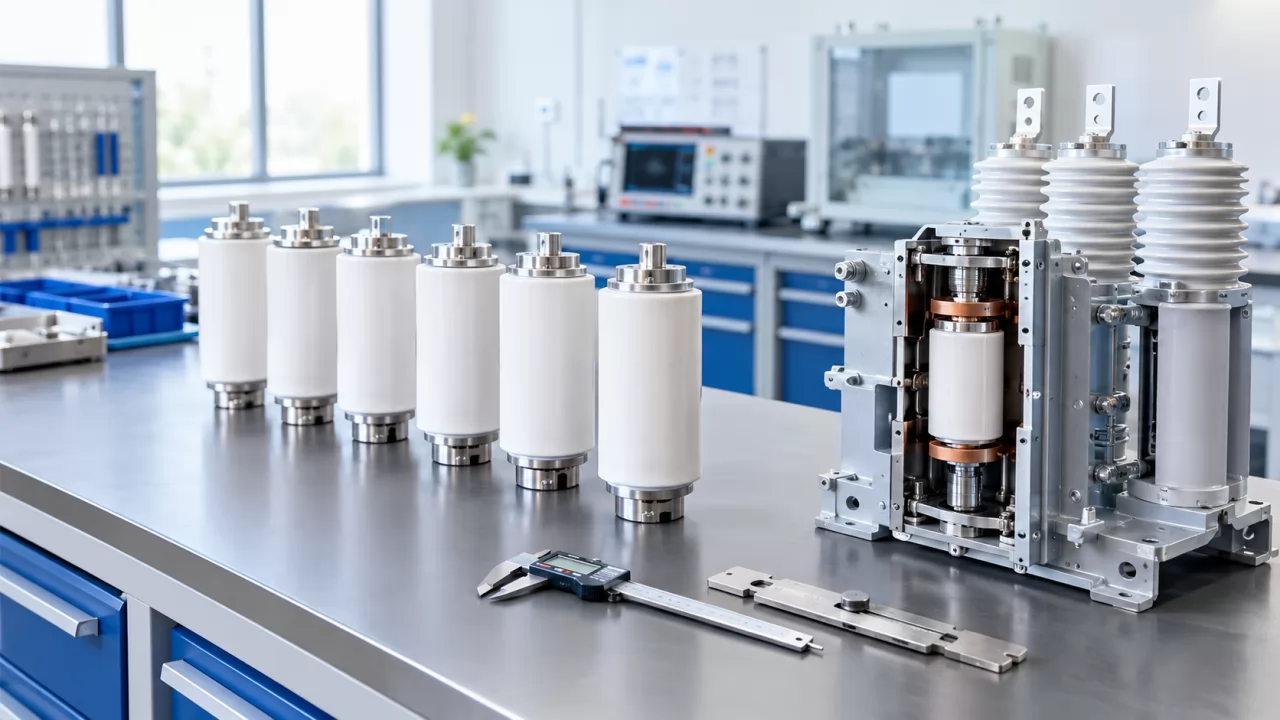
Vacuum interrupters use a vacuum as the arc extinguishing medium. This eliminates dependence on greenhouse gas filling for interruption performance. It also simplifies lifecycle management in many outdoor applications.
For utilities modernizing feeders, that alone is attractive. But the real advantage goes further: vacuum technology is mature, reliable, and increasingly easy to integrate into intelligent field equipment.
Mature Vacuum Interruption Technology
Modern vacuum interruption technology is no longer an emerging concept. It is a proven, industrially mature solution with extensive service experience.
Its practical strengths include:
Excellent breaking performance for medium-voltage distribution duty
Low chopping current, which helps reduce switching stress in many applications
Long mechanical life, commonly exceeding 10,000 operations
Stable reliability with comparatively low maintenance requirements
Strong economic value over the equipment lifecycle
For pole-mounted devices operating on automated feeders, mechanical endurance matters a lot. Equipment may perform load switching, sectionalizing coordination, test operations, fault interruption, and reclosing sequences over many years. A durable mechanism is not a luxury. It is central to service continuity.
Built for Smart Distribution Automation
The modern outdoor vacuum circuit breaker is increasingly electromechanical and digital at the same time. That is exactly what smart distribution systems require.
With intelligent controllers, these devices can support:
Pre-fault monitoring and abnormal condition detection
Inverse-time overcurrent protection
Automatic reclosing logic
Fault indication and location assistance
Remote opening and closing
Remote signaling and status feedback
Remote measurement for feeder visibility
This is the foundation of outdoor intelligent switchgear automation. Instead of sending crews first and understanding the event later, operators can see the event, isolate the section, and restore healthy portions of the feeder far more quickly.
Better Support for Remote Fault Isolation and Grid Reliability
One of the clearest benefits of intelligent vacuum switching is its contribution to service continuity.
When a fault occurs on an overhead line, the utility’s real objective is not only to interrupt fault current. It is to limit outage scope. Intelligent vacuum circuit breakers make that possible by acting as switching nodes inside an automated feeder scheme.
With proper coordination, a faulted branch can be isolated remotely while upstream and downstream healthy sections are restored. This directly improves SAIDI- and SAIFI-related performance in practical network terms, even if the exact metric improvement depends on system architecture.
That is why utilities investing in remote fault isolation and grid reliability programs often prioritize intelligent vacuum devices for feeder segmentation points.

How Outdoor Intelligent Vacuum Circuit Breakers Support Distribution Automation
The real strength of an outdoor intelligent vacuum circuit breaker is not only the interrupter. It is the system design around it.
A complete field solution typically includes the switching body, current sensing, a controller, a communications interface, and logic for protection and automation. Together, these elements enable autonomous or remotely supervised operation.
This combination is especially valuable in medium voltage distribution protection systems, where the field device must operate reliably with minimal intervention.
Remote Control, Telemetry, and Fault Signaling
In older networks, field response often started with a phone call from customers and ended with patrol crews searching for a faulted span. That model is too slow for today’s reliability expectations.
Intelligent outdoor breakers change that by providing status visibility and command capability through SCADA or feeder automation platforms.
Typical capabilities include:
Remote open and close commands
Breaker position indication
Fault current and event reporting
Alarm signaling for abnormal conditions
Integration with feeder automation logic
In operational terms, that means dispatchers can make informed switching decisions within minutes instead of waiting for manual inspection.
IoT-Enabled Circuit Breaker Monitoring in the Field
The next layer is condition visibility.
IoT-enabled circuit breaker monitoring is becoming more relevant as utilities move from time-based maintenance to data-driven maintenance. For outdoor equipment, this shift has real value because environmental stress is uneven across locations. A breaker near the coast, in heavy pollution, or in a freeze-thaw zone does not age in the same way as one in a mild inland area.
Intelligent monitoring can support:
Operation count recording
Event and fault log storage
Current trend observation
Battery or power supply supervision where applicable
Controller health diagnostics
Condition-based maintenance planning
That does not eliminate routine inspection. It makes inspection smarter and more targeted.
Vacuum Circuit Breaker vs SF₆ Circuit Breaker: Key Differences
When utilities evaluate technology for outdoor medium-voltage projects, the right comparison is not only interrupting performance. It is total field suitability.
The table below summarizes the main differences that matter in practical project planning.
Comparison Table: Vacuum Circuit Breaker vs SF₆ Circuit Breaker
| Comparison Item | Vacuum Circuit Breaker | SF₆ Circuit Breaker |
|---|---|---|
| Arc extinguishing medium | Vacuum interrupter | SF₆ gas |
| Environmental impact | No SF₆ greenhouse gas handling in interruption chamber | High global warming concern if gas leaks occur |
| Leakage risk | No gas leakage issue in interrupter medium | Gas sealing integrity is critical over lifecycle |
| Maintenance needs | Generally lower routine medium-handling burden | Leak checking, gas handling, filling, and recovery may be required |
| Operational safety after interruption | No SF₆ decomposition byproduct handling | Arc interruption can create hazardous decomposition products |
| Mechanical life | Often exceeds 10,000 operations | Varies by design; gas system adds lifecycle considerations |
| Automation readiness | Highly compatible with intelligent controllers and feeder automation | Can be automated, but environmental and maintenance burden remain |
| Lifecycle cost | Often favorable due to lower maintenance complexity | Can increase due to gas management and compliance requirements |
| Suitability for smart grid projects | Excellent for clean, automated, low-maintenance outdoor distribution | Less aligned with modern environmental and operational priorities |
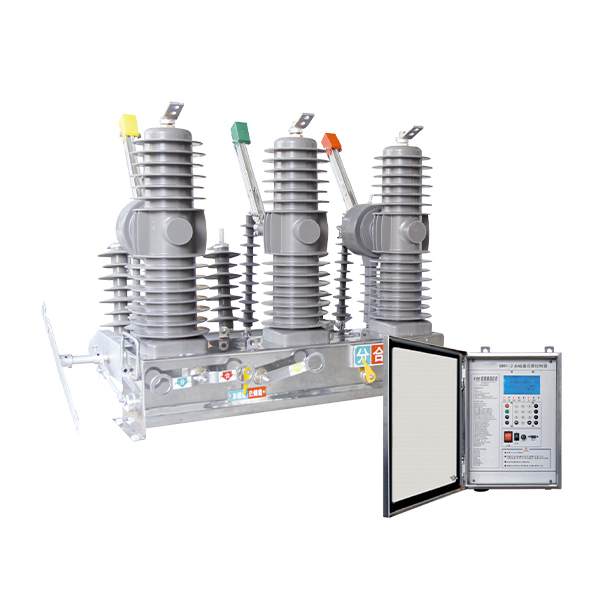
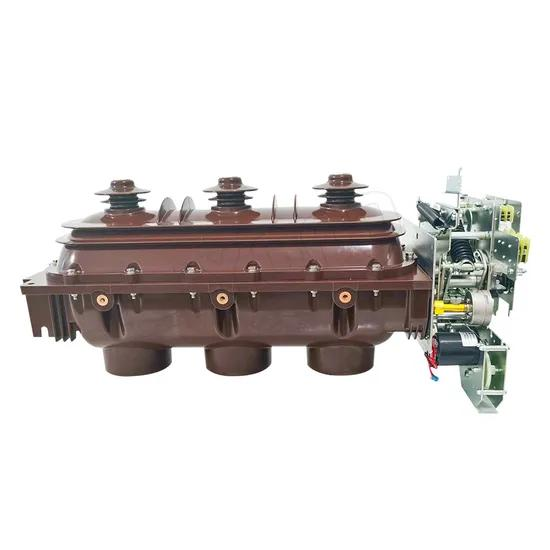
Product Example: ZW32-12 Outdoor Intelligent High-Voltage Vacuum Circuit Breaker
Technology arguments become more useful when tied to an actual product structure. The ZW32-12 Outdoor Intelligent High-Voltage Vacuum Circuit Breaker is a good example of how modern design supports smart grid performance in the field.
For utilities and project engineers, products in this class are not judged by brochure language. They are judged by whether they can survive outside, interrupt reliably, integrate with control systems, and reduce outage time.
The ZW32-12 is designed around exactly those realities.
Core Specifications of the ZW32-12
The ZW32-12 is a 12 kV-rated, three-phase AC outdoor vacuum circuit breaker built for pole-mounted medium-voltage distribution applications.
Its key functional characteristics include:
Rapid fault isolation and location support
Vacuum interrupter design with environmentally cleaner operation
Remote operation capability for automated networks
Compatibility with intelligent control for smart distribution systems
In plain language, it is built not just to switch power, but to act as an intelligent network node.
Structural Design Advantages
One notable design feature is the three-phase separated pole structure.
This matters because a single-phase fault does not inherently escalate into a three-phase short-circuit event through a shared chamber arrangement. In distribution networks where fault selectivity and localized isolation are critical, that structural independence helps improve operational robustness.
Engineers who work on overhead networks appreciate this point because line faults are often asymmetrical in nature. Equipment that supports controlled, contained interruption behavior is valuable in real feeder conditions.
Sealed Insulation and Weather Resistance
Outdoor medium-voltage devices live hard lives. Moisture ingress, condensation, and temperature shock are common causes of long-term performance decline in poorly designed equipment.
The ZW32-12 uses a fully enclosed design intended to resist moisture and condensation. That makes it suitable for cold regions, humid climates, and areas with frequent weather transitions.
This is more important than it sounds. In many field failures, the problem is not rated interrupting capacity. The problem is insulation degradation caused by the environment over time.
Silicone Rubber and Epoxy Solid Insulation Benefits
The breaker uses an outdoor insulation system based on epoxy resin solid insulation with silicone rubber external encapsulation.
This combination offers several practical benefits:
Resistance to contamination and pollution flashover risk
Strong UV resistance for long outdoor exposure
Good anti-aging performance
Stable insulation behavior under demanding environmental conditions
For utilities serving coastal, industrial, dusty, or high-UV territories, insulation material choice directly affects service reliability.
Compact Spring Operating Mechanism
The ZW32-12 adopts a small-sized spring operating mechanism with low energy consumption for opening and closing actions.
Its direct-acting transmission path supports high reliability. The mechanism design also emphasizes corrosion resistance, which is especially important for outdoor installations exposed to moisture and airborne contaminants.
This kind of mechanism design is one of the quiet reasons vacuum devices perform well over time. Reliable interruption means little if the operating mechanism is fragile or maintenance-intensive.
Flexible Operation and Automation Integration
The breaker supports manual operation, electric operation, and remote operation. That flexibility matters in actual utility workflows.
During commissioning or local maintenance, manual control is useful. During normal service, electric and remote operation allow the device to function as part of a feeder automation scheme.
With a suitable controller, the ZW32-12 can be used in distribution automation systems or configured as part of a recloser solution. This makes it highly relevant to utilities upgrading legacy overhead feeders in phases rather than through full network replacement.
Manufacturers such as Weisho Electric are increasingly recognized in this area because utilities do not just need a breaker body. They need equipment that fits the logic of automation, operation, and long-term field service.
CT Options for Protection and Intelligent Analysis
The ZW32-12 can be equipped with two-phase or three-phase current transformers.
These CT options support:
Overcurrent protection functions
Protection coordination in automated feeders
Intelligent signal analysis
Improved event visibility for operation teams
This is an important point for modern grid projects. Sensing is not an accessory anymore. It is part of the protection and automation architecture.
Lightweight and Installation-Friendly Design
With a weight of less than 80 kg, the ZW32-12 offers a practical field advantage. Lighter equipment is easier to transport, lift, and mount on poles or compact structures.
Its compact installation dimensions also help when retrofitting existing sites with limited mechanical space. In real projects, installation efficiency affects total cost just as much as equipment price does.
Real-World Data: Why Utilities Are Moving Toward Intelligent Vacuum Circuit Breakers
The movement toward intelligent vacuum switching is not theoretical. It is driven by how utilities actually operate.
Distribution operators worldwide are under pressure to cut outage duration, automate fault response, reduce field maintenance, and strengthen environmental compliance. Intelligent vacuum circuit breakers answer these needs in a way that is practical for overhead medium-voltage systems.
Consider a familiar scenario. A rural feeder extends 40 to 80 km with multiple branches. A lightning-related temporary fault occurs near a remote lateral. Without automation, the whole feeder may trip and crews may need substantial time to patrol, identify the section, and restore unaffected customers. With intelligent switching points and reclosing logic, the event can be localized and many customers restored quickly from the control center.
In urban systems, the same principle applies differently. Network segmentation and rapid remote switching help reduce outage footprint in dense-load areas where a single feeder interruption can affect thousands of users.
Data Table: Smart Grid Requirements and Vacuum Circuit Breaker Response
| Smart Grid Requirement | Field Problem | Vacuum Circuit Breaker Response | Operational Value |
|---|---|---|---|
| Faster outage restoration | Manual patrol and delayed switching | Remote opening/closing and automation logic | Shorter outage duration for unaffected sections |
| Improved feeder automation | Limited visibility at pole-mounted nodes | Controller integration, telemetry, and fault signaling | Better system awareness and switching coordination |
| Lower maintenance burden | Complex gas handling or frequent site visits | Vacuum interruption with reduced medium-management complexity | Fewer specialized maintenance procedures |
| Environmental compliance | Pressure to reduce greenhouse gas risk | No SF₆ arc-extinguishing gas in interrupter chamber | Better alignment with sustainability goals |
| Reliable outdoor operation | Humidity, pollution, UV, condensation | Sealed design and solid insulation structure | Improved long-term service stability |
| Data-driven asset management | Maintenance based only on time intervals | Event logging and monitoring support | Smarter condition-based maintenance planning |
Data Table: ZW32-12 Feature-to-Benefit Mapping
| ZW32-12 Feature | Technical Meaning | Operational Benefit | Likely Project Impact |
|---|---|---|---|
| 12 kV three-phase AC rating | Suitable for common medium-voltage distribution applications | Broad deployment fit in urban and rural feeders | Simplifies project standardization |
| Vacuum interrupter | Arc extinguishing in vacuum chamber | Clean operation and strong interrupting reliability | Supports lower lifecycle environmental burden |
| Three-phase separated pole structure | Independent pole arrangement | Helps avoid fault escalation characteristics of less isolated structures | Improves network protection behavior |
| Fully enclosed design | Moisture and condensation resistance | Better service in cold or humid climates | Reduced weather-related failure risk |
| Epoxy insulation with silicone rubber | Outdoor-resistant insulation package | Anti-pollution, UV-resistant, anti-aging | Longer dependable field operation |
| Compact spring mechanism | Low operating energy, direct action | High reliability and low operating burden | Improves switching dependability |
| Manual/electric/remote operation | Multiple control modes | Flexible field use and automation compatibility | Supports phased grid modernization |
| Optional 2-phase or 3-phase CTs | Integrated current sensing | Protection and smart analysis support | Enhances automation and fault visibility |
| Weight under 80 kg | Lightweight mechanical design | Easier transport and installation | Lower field deployment effort |
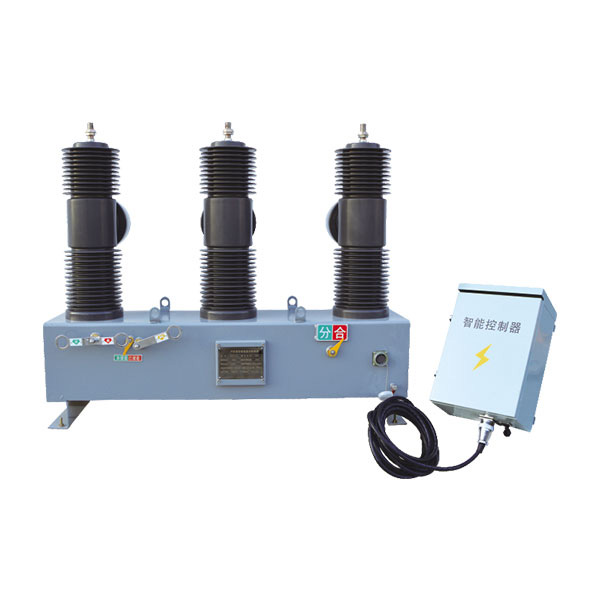
Example Use Cases in Urban and Rural Distribution Networks
Urban feeder automation: A city distribution company installs intelligent pole-mounted breakers at strategic sectionalizing points on 10 kV feeders supplying mixed residential and commercial zones. When a cable-to-overhead transition fault occurs, operators isolate the affected section remotely and restore healthy branches without waiting for a full field inspection.
Rural branch isolation: A long overhead feeder serving villages and agricultural loads is divided with automated switching points. During storm season, temporary faults are cleared through reclosing sequences, while permanent faults on laterals can be isolated remotely, greatly reducing the number of customers left without service.
Harsh-environment switching point: In a humid industrial district with airborne contamination, a sealed solid-insulated outdoor vacuum breaker is preferred over equipment with higher environmental handling complexity. The result is fewer weather-related maintenance concerns and more stable field operation.
Best Applications for Outdoor Intelligent Vacuum Circuit Breakers
Not every grid application is identical, but some environments clearly benefit from intelligent outdoor vacuum technology more than others.
Urban Distribution Network Upgrades
Urban networks need fast restoration, high power quality, and reduced outage footprint. Intelligent vacuum circuit breakers help utilities sectionalize feeders, perform remote switching, and support more responsive network control.
In high-load-density districts, every minute of outage matters. That alone can justify investment in automation-ready field switching.
Rural Grid Modernization
Rural feeders often deliver the strongest return on intelligent switching because line lengths are long and fault location takes time.
Remote isolation reduces unnecessary outage range. It also cuts truck rolls, improves crew utilization, and speeds restoration for customers far from substations.
Renewable and Distributed Energy Interconnection
As distributed energy resources connect deeper into distribution networks, protection coordination becomes more demanding.
Outdoor intelligent vacuum circuit breakers are well suited to switching and protection points near renewable interconnections, branch feeders, and mixed-load zones where visibility and controllability matter more than ever.
How to Select the Right Vacuum Circuit Breaker for Smart Grid Projects
Choosing the right unit is not just a matter of voltage class. Project success depends on matching equipment design to operating environment, control philosophy, and lifecycle expectations.
Key Technical Selection Criteria
Voltage class: Confirm match with network rating, commonly 10 kV or 12 kV distribution systems
Interrupting performance: Verify suitability for expected short-circuit duty and switching application
Operating mechanism: Assess reliability, energy consumption, and maintenance profile
Insulation design: Review sealed structure, anti-condensation performance, and outdoor insulation materials
Communication options: Ensure compatibility with SCADA, feeder automation, or local controller architecture
CT configuration: Determine whether two-phase or three-phase sensing is needed for protection and analysis
Environmental suitability: Check performance for humidity, cold, pollution, UV, salt fog, and altitude if relevant
Questions to Ask Suppliers
How does the breaker integrate with feeder automation and intelligent controllers?
What sealing and anti-condensation measures are used for outdoor reliability?
What mechanical life and operating cycle performance are specified?
What controller and communications protocols are supported?
What standards compliance and test documentation are available?
What lifecycle support, spare parts, and technical service are offered?
Can the unit be configured as part of a recloser or automation scheme?
Buyers should also evaluate supplier responsiveness and engineering depth. A good field device without good application support can still create project delays.
This is where experienced manufacturers such as Weisho Electric can bring real value, especially when projects require not only equipment supply but also practical support for automation integration and outdoor deployment conditions.
Featured Snippet Summary: What Is an Outdoor Intelligent Vacuum Circuit Breaker?
An outdoor intelligent vacuum circuit breaker is a pole-mounted medium-voltage switching and protection device that uses a vacuum interrupter to extinguish arcs and includes intelligent control functions such as remote operation, fault detection, telemetry, signaling, and automation support for smart grid distribution networks.
FAQ
What is a vacuum circuit breaker?
A vacuum circuit breaker is a medium-voltage switching and protection device that interrupts electrical arcs inside a sealed vacuum chamber. It is widely used because it offers reliable arc extinction, long mechanical life, and low maintenance requirements.
Why is a vacuum circuit breaker preferred over an SF₆ circuit breaker?
A vacuum circuit breaker is often preferred because it avoids SF₆ gas leakage concerns, reduces environmental burden, eliminates gas decomposition handling issues associated with SF₆ interruption, and aligns more naturally with modern smart grid automation and lifecycle maintenance goals.
How does an intelligent outdoor vacuum circuit breaker improve grid reliability?
It improves reliability by enabling remote fault isolation, automatic reclosing, telemetry, and fast switching decisions. This helps utilities isolate faulted sections quickly and restore healthy parts of the feeder faster, reducing outage scope and duration.
Where are outdoor intelligent vacuum circuit breakers commonly used?
They are commonly used on urban distribution feeders, rural overhead lines, sectionalizing points, substation outgoing feeders, branch isolation points, and distributed energy interconnection locations where automation and remote control are important.
What are the main features of the W32-12 vacuum circuit breaker?
The product referenced in this article is the ZW32-12. Its main features include a 12 kV rating, sealed outdoor design, three-phase separated pole structure, manual/electric/remote operation, optional two-phase or three-phase CTs, and a lightweight design under 80 kg.
Can a vacuum circuit breaker be integrated with SCADA or IoT monitoring?
Yes. An intelligent outdoor vacuum circuit breaker can support remote signaling, telemetry, controller integration, event logging, and condition-based monitoring, making it suitable for SCADA systems and IoT-enabled circuit breaker monitoring strategies.
What should buyers look for when choosing a vacuum circuit breaker?
Buyers should check voltage and interrupting ratings, protection functions, automation readiness, controller compatibility, insulation and sealing performance, CT configuration, environmental resistance, mechanical life, and expected maintenance profile.
Conclusion: Vacuum Circuit Breakers Are a Smart Grid Priority
The direction of the industry is clear. Smart grids need outdoor switching devices that are reliable, clean, automation-ready, and practical to maintain across large field networks.
SF₆ circuit breakers still exist in many systems, but their disadvantages are becoming harder to ignore. Leakage risk, environmental pressure, gas handling complexity, and post-interruption safety concerns all reduce their attractiveness in modern distribution applications.
The vacuum circuit breaker, by contrast, aligns closely with what today’s utilities actually need. It offers mature interruption technology, long mechanical life, lower lifecycle complexity, and strong compatibility with intelligent distribution automation.
The ZW32-12 Outdoor Intelligent High-Voltage Vacuum Circuit Breaker illustrates this well. With its 12 kV rating, three-phase separated pole structure, sealed design, solid insulation, flexible operation modes, CT options, and lightweight construction, it is engineered for real outdoor service rather than abstract specification sheets.
As smart grid construction accelerates, especially in urban and rural distribution modernization, the market outlook for 10 kV and 12 kV outdoor vacuum circuit breakers is strong. The manufacturers that will lead are those that continue improving design, materials, production quality, and intelligent integration while learning from advanced international practices.
In one sentence: vacuum circuit breakers are increasingly the preferred solution for smart grid distribution because they combine environmental responsibility, operational reliability, and intelligent automation capability in a way SF₆-based alternatives struggle to match.
Call to Action
If you are planning feeder automation, rural grid modernization, or replacement of aging outdoor switching assets, now is the right time to compare your existing SF₆ equipment with a smart-grid-ready vacuum circuit breaker solution.
Review your outage patterns, maintenance costs, environmental obligations, and automation targets. Then choose equipment that supports where your network is going, not where it has been.
Contact a qualified manufacturer today to evaluate outdoor intelligent vacuum circuit breaker options, request technical specifications, and identify the right ZW32-12-based solution for your distribution project.