By: Thor (Senior Engineer, Wei Shoe Electric. Over 12 years of experience in power equipment R&D and application, contributing to numerous national-level power transmission and distribution projects.)
Last Updated: June 29, 2025
1. What is a Load Break Switch (LBS)?
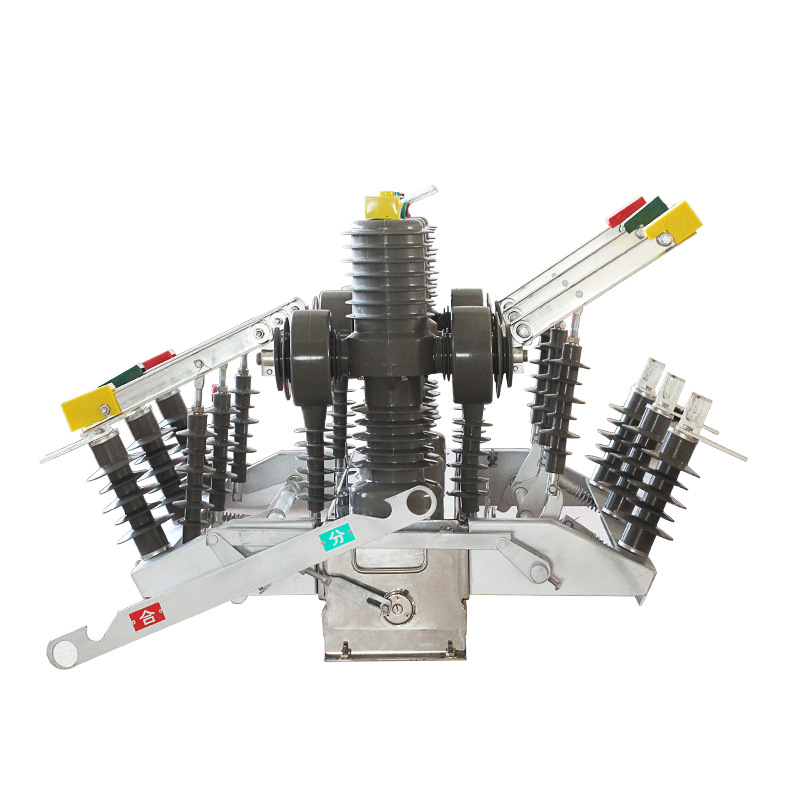
A Load Break Switch (LBS) is an essential switching device designed to make and break normal load currents and to withstand specified short-circuit currents. Unlike circuit breakers, LBS units cannot interrupt fault currents on their own. They typically work in conjunction with high-voltage fuses or circuit breakers to form a "switch-fuse combination" or "switch-breaker combination," providing comprehensive system protection.
[💡 Think of it this way:] Imagine your home light switch. It turns the light on and off (handles the load current), but if there's a short circuit, it won't automatically trip to protect you! A Load Break Switch is like an industrial-grade "heavy-duty light switch." It safely opens or closes power lines, but for severe short-circuit faults, it relies on its partners, like fuses, to disconnect the power and protect the equipment.
2. The Core Role and Importance of Load Break Switches
LBS units play a critical role in power systems:
Load Switching: Safely connecting or disconnecting electrical loads during normal operation.
Isolation: Providing reliable electrical isolation for equipment maintenance or inspection, ensuring personnel and equipment safety.
Sectionalizing: In power distribution networks, LBS units are used to divide lines into sections. When a fault occurs in one section, the LBS can quickly isolate the faulty part, minimizing outage areas and improving power supply reliability.
3. Types of Load Break Switches & Arc Extinguishing Principles
LBS units are categorized by their arc extinguishing medium. Here are common types and their principles:
3.1 Gas-Insulated Load Break Switch (SF6 LBS)
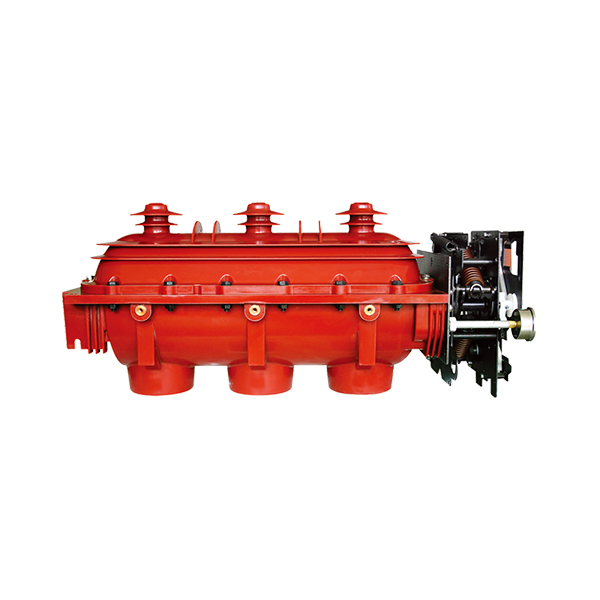
Principle: Utilizes the excellent insulating and arc-extinguishing properties of SF6 gas. When contacts separate, the arc is rapidly cooled and extinguished within the SF6 gas. SF6 boasts high dielectric strength and quick recovery of dielectric strength.
Pros: Strong arc extinguishing capability, compact size, long lifespan, good environmental adaptability.
[❗ Important Note:] While SF6 offers superior performance, it's a potent greenhouse gas. The industry is actively exploring eco-friendly alternatives. According to [Cite an external, reputable source like the EPA, IEEE, or a major research institution, e.g., "the latest report from the U.S. Environmental Protection Agency (EPA)"], the global power industry faces pressure to reduce SF6 emissions. Newer, environmentally friendly gas-insulated technologies (such as Novec 4710 or clean air solutions) are increasingly adopted.
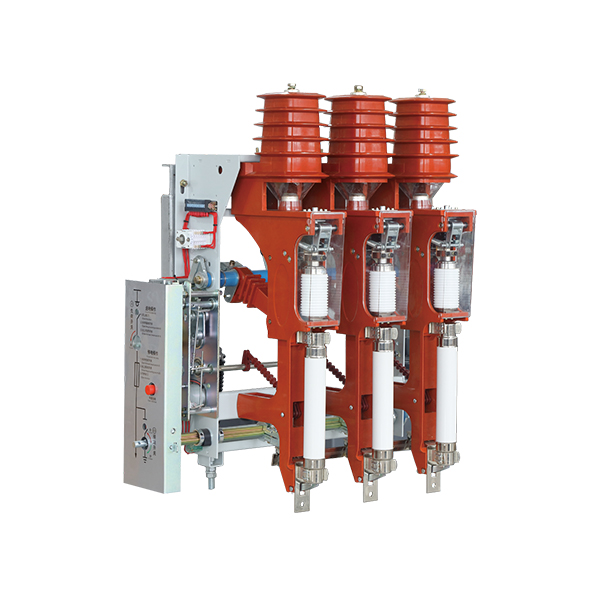
3.2 Vacuum Load Break Switch (Vacuum LBS)
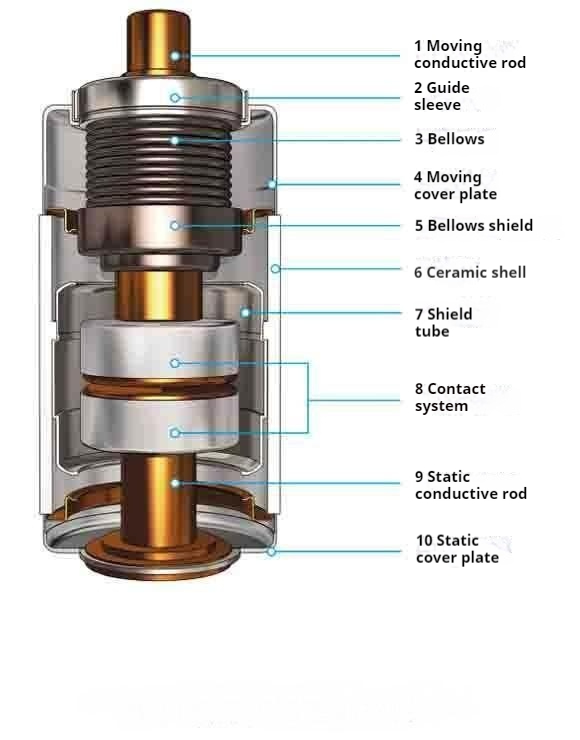
Principle: Leverages the strong insulating properties of a vacuum and its rapid recovery of dielectric strength. In a vacuum, the arc is quickly extinguished at current zero crossings as there's no medium to ionize.
Pros: Pollution-free, maintenance-free, compact, long lifespan, safe, and reliable. This is a predominant eco-friendly LBS type today.
3.3 Air-Blast Load Break Switch (Air-Blast LBS)
Principle: Uses a high-velocity blast of compressed air to extinguish the arc.
Pros: Strong arc extinguishing capability, suitable for higher voltage levels.
Cons: Noisy, requires a compressed air system, and complex maintenance.
3.4 Oil-Immersed Load Break Switch (Oil-Immersed LBS)
Principle: Relies on the cooling and arc extinguishing action of insulating oil.
Pros: Mature technology, relatively lower cost.
Cons: Bulky, fire and explosion risk, frequent maintenance, poor environmental performance, and being gradually phased out.
4. LBS vs. Disconnector vs. Circuit Breaker: Distinctions and Coordination
While all three act as switches in power systems, their functions and applications differ significantly:
5. The Evolution of Intelligent LBS (ILBS) & Its Applications
With the growth of smart grids, traditional LBS units are becoming increasingly intelligent. Intelligent LBS integrates sensors, communication modules, and microprocessors, offering several advantages:
Remote Monitoring & Control: Operators can remotely control and monitor LBS status, boosting operational efficiency.
Rapid Fault Localization & Isolation: Real-time sensor monitoring allows for automatic fault identification and isolation, enabling quick self-healing.
Data Analytics & Prediction: Collected operational data enables big data analysis to predict equipment lifespan and potential faults, facilitating predictive maintenance.
6. Wei Shoe Electric LBS Application Case Studies
Wei Shoe Electric has extensive practical experience in intelligent load break switch solutions. Here are two typical cases:
Case Study 1: Enhancing Reliability in an Industrial Park
Project Background: A large industrial park had a complex power supply system with long lines, making fault localization difficult. This led to extended power outages and production losses.
Solution: Wei Shoe Electric deployed multiple intelligent vacuum load break switches with fault detection and isolation capabilities. These LBS units were connected to the park's power monitoring center via fiber optic communication.
Outcome: When a fault occurred, the intelligent LBS units detected it within milliseconds, automatically tripped to isolate the faulty section, and reported the fault information to the monitoring center. Compared to traditional solutions, the average outage duration was reduced by 60%, significantly cutting production losses.
Case Study 2: Rapid Self-Healing for Suburban Distribution Lines
Project Background: A suburban distribution network suffered from numerous branches and challenging terrain, making fault finding difficult and leading to frequent customer complaints.
Solution: Wei Shoe Electric implemented a distribution automation solution centered on intelligent pole-mounted load break switches with integrated RTUs (Remote Terminal Units). These LBS units monitored voltage and current changes and communicated with the main control center via wireless communication (e.g., 4G/5G).
Outcome: In the event of transient or permanent faults, the intelligent LBS units automatically reclosed or sectionalized, achieving millisecond-level fault self-healing for the distribution network. This dramatically improved residential power reliability and boosted customer satisfaction.
7. Installation, Operation, and Maintenance Tips for LBS
Proper installation, operation, and maintenance are crucial for the safe and reliable performance of LBS units:
Installation: Strictly follow the product manual and national standards (e.g., [Cite relevant US/North American standards like ANSI/IEEE C37.71 or NESC]). Ensure the installation environment meets requirements, avoiding humidity, dust, and corrosive gases.
Operation:
Safety First: Never operate a disconnector under load. Before operating an LBS, always confirm operational permits and safety measures.
Standard Procedures: Follow the prescribed "close-open" sequence and observe the operational indicators.
Maintenance:
Regular Inspections: Conduct annual routine checks, including external appearance, tightness of connecting bolts, and lubrication of mechanisms.
Performance Testing: Periodically perform insulation tests, contact resistance tests, and open/close characteristic tests based on operational years and equipment type.
[External Resource Reference:] We recommend consulting [Cite authoritative safety operation procedures or maintenance manuals from recognized bodies, e.g., "OSHA safety guidelines" or "NFPA 70E Standard for Electrical Safety in the Workplace"] for more detailed maintenance guidance.
8. Frequently Asked Questions (FAQ)
Q1: Can a Load Break Switch replace a Circuit Breaker?A1: No, they cannot. A Load Break Switch can only make and break normal load currents and withstand certain short-circuit currents. It cannot interrupt fault currents. In power systems, circuit breakers are the only devices capable of interrupting all types of normal and fault currents. LBS units typically work with fuses or circuit breakers to provide complete protection.
Q2: How do I choose the right LBS for my needs?A2: Selecting an LBS requires considering several factors: voltage level, rated current, interrupting capacity, operating environment (indoor/outdoor), arc extinguishing medium (vacuum/SF6, etc.), intelligence requirements, and budget. We recommend consulting a professional power equipment supplier (like Wei Shoe Electric) or an engineer. They can provide tailored advice based on your specific project requirements.
Q3: Which is better: Vacuum LBS or SF6 LBS?A3: Vacuum LBS is currently the more environmentally friendly and maintenance-free trend. While SF6 LBS offers excellent arc extinguishing performance, SF6 gas is a potent greenhouse gas, and its long-term use is becoming increasingly restricted. When choosing, you should consider performance, environmental regulations, maintenance costs, and total life-cycle cost.
9. Contact Us
If you have any questions about Load Break Switches or need to learn more about Wei Shoe Electric's solutions, feel free to contact us:
Phone: [+86-0577-62788197]
Email: [[email protected]]
Website: [www.weishoelec.com]
[✅ Engage with Us:]Do you have more questions about Load Break Switches? Or would you like to share your experiences using LBS units? Leave a comment below and let's discuss!
Found this article helpful? Don't forget to share it with your colleagues and network!